
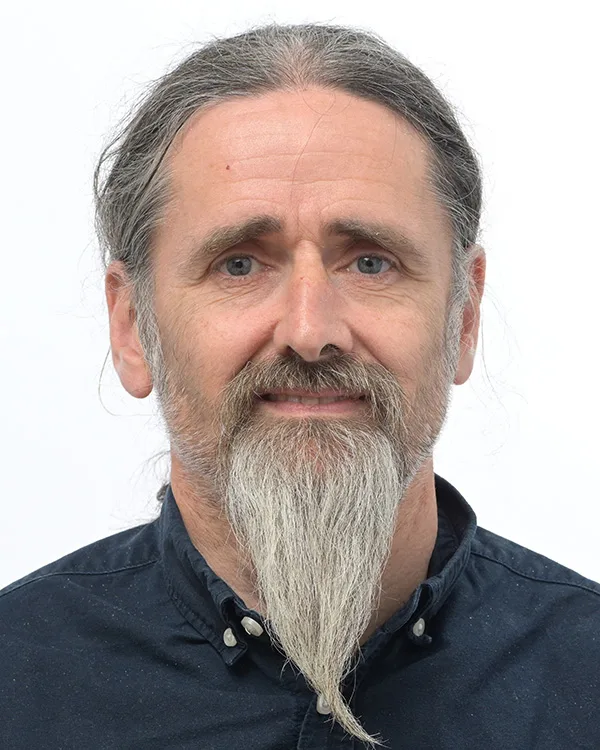






| Rank | Name | Country | Group | Speeches | |
|---|---|---|---|---|---|
| 1 |
|
Lukas Sieper | Germany DEU | Non-attached Members (NI) | 390 |
| 2 |
|
Juan Fernando López Aguilar | Spain ESP | Progressive Alliance of Socialists and Democrats (S&D) | 354 |
| 3 |
|
Sebastian Tynkkynen | Finland FIN | European Conservatives and Reformists (ECR) | 331 |
| 4 |
|
João Oliveira | Portugal PRT | The Left in the European Parliament (GUE/NGL) | 232 |
| 5 |
|
Vytenis Povilas Andriukaitis | Lithuania LTU | Progressive Alliance of Socialists and Democrats (S&D) | 227 |
All Contributions (58)
Cooperation among enforcement authorities regarding unfair trading practices in the agri-food supply chain (debate)
Madam President, I think this is good news. We often get a lot of bad news around here, but this is an improvement. I'd like to congratulate the rapporteur and the shadow rapporteurs, and everyone who was involved in this. I'd like to have been a bit more involved, but unfortunately the review of the other unfair trade practices regulation in the CMO was also being negotiated at the same time. But I have to say, this file turned out to be fairly non-contentious, so it's a question of where do you pick your fight. In the other file, there was a lot more to fight about. On this, I think we've got a good result. It's good to know that you're listened to as a group. We demanded protection for suppliers outside of the European Union, and we've got that. One of the positive elements of the agreement is establishing mechanisms for mutual assistance and coordination among national enforcement authorities. A core element of the legislation is to put an end to the cross-border, unfair trading practices within their territory. Member States with more ambitious approaches in fighting UTPs can now apply new rules to investigate and stop unfair practices prohibited under national law. There are many, many positives to what's been agreed here. It's not going to solve all problems. I hope we get a strong agreement on the other UTP legislation, and together we'll hopefully get something for farmers that we all get – a fair wage for turning up for work, and that's not too much to ask!
Topical debate requested by a political group (S&D) (Rule 169) - State violence in Minneapolis and the rule of law in the United States (topical debate)
Madam President, to the speaker who said this was a waste of time: I suggest you shouldn't have come here in the first place. No one forced you to debate. It is important to discuss this. We need to discuss what our relationship should be with the state that is shooting its citizens dead on the street. We need to discuss whether it should be 'business as usual' with a country that is rounding up EU citizens and putting them in glorified concentration camps – Seamus Culleton being an example that's been used on many occasions here today. Why wouldn't you want to discuss why your fellow EU citizens are being put in a concentration camp? It should also serve as a warning that voting for the far right will lead you to this place. We should also look at police brutality across Europe: people protesting against genocide brutally beaten by German police – I'm sorry to say it – acting like Nazis. We should practice what we preach. And I'd agree with previous speakers: Ireland's leader should not go and present a bowl of shamrock to Donald Trump. The man's a lunatic. He should be in prison!
Recent peace agreement in the Middle East and the role of the EU (debate)
Madam President, so what is the role of the EU in bringing about peace in the Middle East? Firstly, we must recognise the EU's role in facilitating a genocide. We must accept that Ursula von der Leyen's unconditional support for Israel emboldened it in committing the most horrific war crimes. We must accept that the EU's refusal to suspend our trade agreement with Israel has helped it bankroll a genocide. We must accept that, in spite of Israel telling us it would do exactly what it has done, Germany continued to supply it with weapons until two months ago. So now – to make up for this – the EU must recognise the Palestinian State and end all trade with Israel until it removes its war machine from Gaza. The EU must also demand that Israel pays for the reconstruction of Gaza, because the reality is that there will be no peace without justice, and there will be no justice until Gaza is reconstructed and Israel pays for it.
Common agricultural policy (joint debate)
Mr President, Commissioner, we meet again. This time I'm agreeing with you. Everyone should get fair remuneration for their work. It's fundamental. It's a human right. And as things stand, many, many farmers do not get fair remuneration. This proposed improved CMO Regulation goes some way to improving the lot of farmers. It attempts to enhance the existing provision on contracts – written contracts. It shouldn't be that amazing. Some people seem to think that's amazing. Two, to reinforce the bargaining powers of producer organisations. Three, to simplify their recognition and many other areas. Unfortunately, though, we have MEPs, who claim to represent farmers, that want to water all of this down. We have amendments that allow Member States to do nothing, and it is my experience in Ireland that if we may do something, we will never, ever do it. It will be the case here if they are allowed to make their choice. We also see amendments which would see exemptions given to Member States for the milk sector, and I quote: 'at the request of […] an organisation deemed largely representative'. That is wide open to abuse. For example, in Ireland, the IFA potentially could get such a power, an organisation that has worked against this improved regulation. So I'll finish by saying none of those amendments should be passed. I would like to congratulate the rapporteur, Céline Imart, on this. I have to say I was sceptical about her at the beginning, but I have to say I really admire her determination on this. And most of all, I admire her calling out Copa-Cogeca, long overdue.
Post-2027 Common Agricultural Policy (debate)
Madam President, Commissioner, good to talk to you again. I actually think that the current structure of CAP could actually be quite good, and I think many of the people who complain about it have never read it and are just being populist. If they did actually read it and look at it, they could see that if it was applied correctly, it could actually be very good, and it's why I voted for it in the first place. When it comes to fairness, the current CAP structure allows for more fairness. We have a maximum convergence rate of 85 %. Ireland never went any further than that. What I would suggest next time around is to put it at 100 %. When it comes to smaller farms, in the current CAP structure, we have CRISS, a minimum of 10 % has to go to smaller farms. Very few countries went higher than the 10 %. I would suggest in the new CAP that we actually put it higher than that, and countries and regions that have gone as high as 22 % have actually seen good results. When it comes to the environment, eco-schemes, the minimum you can do is 25 %, countries can go further if they wish. And I've seen countries with the Green Party in coalition that haven't gone further – they should have and they could have. But ultimately this is about funding. We are at only 40 % of the funding that we were at in 1991 in Ireland. We need to increase that. You talk about strategic autonomy. European countries are talking about spending 5 % of GDP on weapons. We're not even willing to spend 0.5 % of GDP on our food. We need to spend it on food before we spend it on weapons. That's our...
Situation in the Middle East (joint debate)
Mr President, Commissioner Kallas, what ever happened to the peace project known as the European Union? We are, as my colleague said, watching a live-streamed genocide in Gaza. And rather than taking concrete action to stop the genocide, the so-called 'peace project' is aiding and abetting the aggressor. The EU's largest state, Germany, supplies one third of the instruments of death to Israel. The EU refuses to call a halt to the trade agreement with Israel – instead talking about a possible review. What's to review? We are trading with a psychopathic state, hell-bent on wiping out a nation. Many MEPs here had undermined UNRWA with insinuations that they were infiltrated by Hamas. You got your way with your corrosive lies. Now, in the absence of UNRWA, the people of Gaza are subject to a horror whereby if they wish to receive aid, they must run the gauntlet of being shot! You do not speak for Ireland when it comes to foreign policy. You need to end the trade deal, end all weapons sales, push for UNRWA to be given back its mandate and recognise Palestine ...
European Ocean Pact (debate)
Madam President, the best way to protect our oceans is to support small-scale fishers over super-trawlers, and the best way to protect local fishing communities is to support small-scale fishers over super-trawlers. Is it happening? Not at the moment, no. In Ireland, 87.5 % of all fishers operate out of boats of 12 metres and less, yet they have access to less than 1 % of herring stocks and 4 % of mackerel stocks. When these fishers tried to organise into POs, they were delayed by a regime in Ireland that would prefer if they didn't exist. Now they have been recognised as POs, it is made as difficult as possible for them to access funding. This needs to change if we are serious about an ocean pact and protecting our oceans. Ireland doesn't need permission to do this, however. Article 17 allows for it and encourages it. The EMFAF regulation doesn't preclude funding for POs. So, people might be tempted to blame Europe for the problems of small-scale fisheries in Ireland. That's not the fact. The fact is, it's our own fault and that needs to change.
EU Preparedness Union Strategy (debate)
Madam President, Commissioner Lahbib spoke about anticipating risk. We should have anticipated the risk when we made ourselves dependent on Vladimir Putin for energy and fertiliser. We should now anticipate the risk in leaving ourselves 85 % dependent on the US for soya imports. What looked like a stable relationship with the US is now in tatters. But we're not learning – quite the opposite. Through Mercosur we are now slowly but surely going to make ourselves dependent on them for beef. Is it anticipating risk depending our future on President Milei? In a crisis, in a war, during a massive climate event, there will not be the case that the current policy will keep us safe. You said in your own video we may end up hungry: "You could end up very hungry". With the way the EU policy is going, you will end up hungry. So we have got to change the direction we're going.
A Vision for Agriculture and Food (debate)
Thanks for taking the blue card, MEP Cowen. Like myself, you come from an area which is full of peaty soils, peatlands. When it comes to bogs, I don't think there are two MEPs in here who've actually seen more. There is massive concern in Ireland at the moment about how GAEC 2 will be implemented. People who have 51 % peaty soil in their land parcels are having the whole of that land parcel included as a GAEC 2 area, causing problems when it comes to farming for these people. Can you please explain to me how it's fair that under this system, we now are going to have 100 000 hectares of mineral soils designated under GAEC 2?
A Vision for Agriculture and Food (debate)
Mr President, laced throughout this text is the more positive concept of food sovereignty within the EU, as opposed to food security. It's obviously a good thing. There's a recognition that farmers must get a better return from the marketplace. Excellent! There's a recognition that our dependencies on imported inputs that we have allowed to build up put agriculture in a vulnerable position. That's also true. There's a recognition that our food production is inextricably linked to nature and ecosystems. All excellent! Yet at the same time, you want to do a trade deal with Mercosur – one which will undermine our food sovereignty, reduce the price our suckler farmers get for their beef, deepen our dependency on imported feed and lead to this destruction of the environment. This, in my opinion, isn't a vision. It is myopia. But I couldn't criticise you for not telling us the truth. In the hearing, you said you agreed with Mercosur and you signed up to it. I now look at the MEPs who supported your candidacy. He said he was in favour of Mercosur. It will destroy farming. You need to think again about this. It isn't a vision; it's myopia!
EU-Mercosur Trade Agreement (debate)
You accused MEPs on the left of telling lies about this agreement. It's one hell of a claim to make. What lies are you referring to? Is it a lie to say that, as a result of this agreement, 9 % of all high-value beef cuts being sold in the EU will come from Mercosur? Is it a lie to say that we don't have EUR 1 billion compensation to pay farmers? Is it a lie to say it isn't a win-win, when suckler farmers in Europe are definitely going to lose? And if dairy farmers are going to win in Europe, in Mercosur they're obviously going to lose. Where are the lies? Can you point them out? Because we're having a debate here. I'd like to know what you're talking about.
EU-Mercosur Trade Agreement (debate)
Madam President, in order to properly debate the impact of this proposed agreement – proposed agreement; the title doesn't say proposed, but we haven't agreed to it yet – the proposed agreement on beef farmers in the EU, we need to compare like with like. In other words, you cannot compare carcass waste to processed premium beef waste. But that's what your spin doctors are doing. The reality is that this deal will guarantee that at least 9 % of high-value cuts sold in the EU will come from Mercosur: 209 000 tonnes in a market of 2.3 million. I hear people talk of opportunities. If you're a suckler farmer in the west of Ireland on a 30-hectare farm, where are the opportunities? If it's a win-win, as you say, why then the need for a compensation package? And if there's money, and EUR 1 billion for a compensation package, how come there's no money to increase the farmers' money that they get from the CAP, from what it was in 1991? Farmers in Ireland are facing a 60 % cut in CAP payments since that year. You're talking about a EUR 1 billion compensation package for something that's a win-win deal. There is no win-win – no win-win in science. You cannot destroy or create energy. It's rubbish.
Challenges facing EU farmers and agricultural workers: improving working conditions, including their mental well-being (debate)
Mr President, the title is very important. It talks about improving mental well-being in farmers. Now, I know this is a parliament, and the word 'parliament' comes from the word 'to talk', but it's our job to do more than just talk. It's our job to do something to improve the situation. It's also our job not to make it any worse, and we are doing that. The first thing we could do to improve farmers' mental health is make sure they get paid for their product. How do we do that? We do that by improving the unfair trading practices regulations that we watered down the last time, and left farmers getting paid less than what it cost them to produce their goods. Another thing we could do is to stop asking farmers to compete with each other around the planet – treating them like greyhounds and racehorses in a race to the bottom. Because under a 'survival of the fittest' model of economics, the weak will lose. And on the Mercosur deal, we are about to make a decision that's going to punish dairy farmers in Brazil to benefit dairy farmers in Europe. We are going to punish suckler farmers in Ireland and the rest of Europe to benefit beef farmers in the rest of Mercosur. How is that helping anyone's mental health? Also, there is the ever-reducing commitment of the EU to give money to farmers. In Ireland, the amount of money that we get this year from the CAP will be 40 % of what it was in 1991. We can change all this or we can make it worse in the next five years. Make your choice. Go against Mercosur, increase the budget and make sure farmers get a good price for their living. After that, they'll look after their own mental health.
Presentation by the President-elect of the Commission of the College of Commissioners and its programme (debate)
Madam President, there are so many reasons to vote against this new Commission. We start with the President, von der Leyen. You enabled genocide in Palestine by giving unconditional support to Israel. Christophe Hansen, you were very clear in your support for Mercosur. You also have no ambition to increase the CAP budget, no public money for the Nature Restoration Law. Michael McGrath, from Ireland, you are responsible for the rule of law, yet when it comes to EU market surveillance laws, your government has done everything but protect this rule of law. Then there's the two self-proclaimed fascists. It didn't take Manfred Weber long to get back into bed with Viktor Orbán. All your words about disgust, about him, and still you put one of his friends in as vice-president. I'll finish by quoting the leader of the S&D from her speech today, 'you cannot build Europe with those who destroy it ...'
Ensuring sustainable, decent and affordable housing in Europe - encouraging investment, private property and public housing programmes (debate)
Mr President, this is a very important debate. The Irish Government would absolutely love to blame the European Union for its massive failure to build houses. But the reality is that it's all on them. One of its failures is to get enough workers trained. But the reality is you'll never get enough workers trained in an industry that doesn't provide you with certainty. My father was a builder in Ireland, a carpenter. In the 1960s, he had to emigrate to get work. In the 1970s, there was work in Ireland so he could come back. In the 1980s, he had a family, including myself and my five siblings. He couldn't emigrate. There was no work. All of us had to emigrate. In the late 1990s we had another boom. Then we had another bust in the 2000s, and then everyone had to emigrate again. I met with Christophe Hansen, the potential future Agriculture Commissioner, during the week, and my assistant was with me. And the question was asked, 'would you ask your children to get into agriculture?' And the answer was no, because you can't have a guaranteed future. Likewise, I would not advise my children to go into the building industry until we get a plan – a long term plan that doesn't treat these workers like dirt and provides them with a definite future. You wouldn't do it if you didn't have a future.
Escalation of violence in the Middle East and the situation in Lebanon (debate)
Madam President, the number one thing that EU countries could do to help the people of Palestine is to stop selling Israel weapons. You can't give guns to a crazed individual and then cry when they kill all around them. But that's what EU countries are doing: enabling mass murder and genocide. Ireland, my country, is sadly no better. If you read some international news reports, you'd think that my country had Palestine's back. I'm ashamed to say that this is a horrible lie. If we truly supported the people of Palestine, then the Irish Government would support the Occupied Territories Bill and the EU would suspend its trade agreement with Israel – we don't though. If we truly supported the people of Palestine, then the Irish State would not let weapons transit through our sovereign airspace. But we do, and our leaders lie about it. If we truly supported Palestine, then the Irish State would not let US military use Shannon Airport. There is so much the EU could do to stop this genocide, but you don't; so much Ireland could do, yet my country refuses to do the right thing. Ultimately, trade and kissing the arse of the US is more important than the mincing of children...
The historic CJEU ruling on the Apple state aid case and its consequences (debate)
Mr President, first off, I'd like to congratulate the European Commission for being like a dog with a bone on this one. And if we're talking about trying to convince people that the European Union is a good project, this helps. It really does help. And from the point of view of me being able to tell my constituents that it's a good thing, it's a massive help. But in here, when you're in here, like anywhere in life – even in a classroom or on a board of management in a school or in your local council – you obviously have to be liked and you have to gain influence with people. You've got to get people to work with you. And in the election, we were told: elect EPP members in our country because they'll have influence. And then I come in here and I hear another very influential EPP member say that my country is living at the expense of their neighbours. Now, I look at Séan Kelly – and I have good respect for you, Seán, and people like you around here – but, I mean, how can you hold your head up high when your colleague that you're trying to influence is saying that you and I are living at the expense of their neighbours? Well done! Keep it up! By the way, there might be more there.
Outcome of the Strategic Dialogue on the Future of EU Agriculture (debate)
Mr President, Dia duit, Mairead. One of the highlights in this report is the commitment to deal with the issue of below-cost selling. It's something that should never have happened in the first place. However, I'm old enough to remember when we had a chance to do something about this, but we didn't. On 10 October 2018, this Parliament voted on its position on the UTP Directive. The position adopted called for a ban on below-cost selling. However, in the trilogue process, this was removed. So what's changed? How is it not possible then, but it is now? With regards to funding, in 1997, EUR 45 billion in CAP funding was there for 370 million of a population. For it just to keep pace with inflation and allowing for an increased population from 1997, this year's CAP would need to be EUR 95.8 billion just to match the current figure in real terms. However, instead, it is EUR 53 billion, or EUR 1 in every EUR 330 produced in this economy. In fairness to the proposals put forward, there is a commitment to a temporary just transition fund and also a nature restoration fund. The question is, what will it amount to? Remember, too, that demands on farmers are at a higher level than in 1997. So even if the Commission was to somehow find an extra EUR 40+ billion for farmers, they still would get less than in 1997. So I have a question for MEPs: would you work for less than what you did in 1997? We know the answer is no, so please don't expect others to. An increase in funding to the equivalent of 0.6 % of GDP would more than cover the cost. It is only EUR 1 in EUR 160 produced in this economy. How can we afford not to do this? Watch the news. Look at the mayhem we're facing.
Discharge 2022 (debate)
Mr President, it was good to hear all of the speakers and all the contributions. I think it’s very important that we come in here and we account for how money is spent. But I think it’s also important that we be factual, and I’m looking at the amendment in the EEAS section, and it says ‘is extremely concerned about reports that EU taxpayers’ money could be used by Hamas’. Now, I have to ask the question ‘where do these reports come from’? Is it Fox News? Is it from watching ‘The Wizard of Oz’, or was it just dreamed up? Because, as I said in my original speech, the Commission has done a report into this and they have come to a conclusion, and their conclusion is, after looking in many different areas, that they have no evidence of this. I too would be concerned about things that I dreamed up, like the sky falling down, if they were real, but they’re not real – they’re lies in fact. I’ll go back to what I said earlier: when you trash an organisation as wonderful as UNWRA, and when you decide someone is innocent until proven guilty – and we’re talking about 12 people out of 13 000 – what you do is, and I’ll say it again, you green light the cold murder of anyone who goes in there and tries to help the civilian population. So words are important. Words are important. I too would be extremely concerned if the reports are true. They’re not true. They’re a pile of shite!
Discharge 2022 (debate)
Mr President, it’s good to see such a big crowd. With regard to the European Economic and Social Committee, the Committee of the Regions, the Court of Auditors, the Court of Justice, the European Ombudsman, the European Data Protection Agency and the EPPO, as rapporteur, I will be supporting the discharge of all these institutions. I would, however, in particular, like to see more cooperation between the Committee of the Regions and the EESC. There is more that can be done – one medical service for starters. And, I have to say, I enjoyed engaging with all these groups and getting to understand them more. And I would like to be able to talk about them more but I won’t with the time. I just want to say thanks to everyone for cooperating. With regards to the Council, thanks for nothing. Nothing for 20 years. You’re doing a damn good job at aiding and abetting Eurosceptics in saying that this project is a joke. I don’t think it is, which are making it a bit of a joke. I would, however, like to focus on the European External Action Service and the genocide that’s taking place in Gaza. As you may know, I decided to withdraw my name from the file because I cannot be associated to dangerous and unsubstantiated attacks, to the backbone of the humanitarian response in Gaza and to an irreplaceable actor in the region. I’m obviously talking about UNRWA. First, there is no proof that EU taxpayers’ money has been used by Hamas following the 7 October attacks – and, by the way, history didn’t start on 7 October. The Commission carried out a review of the EU’s financial assistance to Palestine, and its conclusion is clean and positive, and I’ll quote them: ‘Through the review the Commission has preliminary screened a large portfolio of over 100 open projects benefiting Palestine, conducting a feasibility and risk assessment analysis. This analysis has not identified breaches of contractual obligations.’ Furthermore, concerning the involvement of the 12 staff members out of 13 000 employees by UNRWA and Gaza, not only have the agency terminated their contracts immediately, but the UN has also opened an investigation without delay and appointed an independent review group. Suspending funds to funds to UNRWA would mean leaving 2.2 million people in Gaza without help, despite unprecedented challenges, including access impediments and the lack of security for humanitarian workers – by the way, there’s 177 UNRWA colleagues dead at this stage – the agency staff continues to assist civilians affected by the hostilities. Over 1 million people are sheltering in the agency’s facilities across the strip, receiving vital assistance. This Parliament has already rejected, on several occasions, the request for suspension. Please let’s make sure we continue that policy. Redirecting funds from UNRWA to other partners is equal to opening the doors to chaos in the region, ignoring all the basic needs of Palestinian refugees. No other agency is mandated and has the ability to provide government-like services, including education and primary healthcare. It is about security. It is about human decency and respect for the lives of millions of people who have been subjected to years of oppression. Additionally, let me state a simple fact: this agency does not have control over EU funding in Palestine. I’ll finish by talking about the amendment for the chairperson to the Committee. The amendment, which I’m ashamed to say, passed. The amendment, which meant I couldn’t possibly support the report. This particular part of the amendment sticks in my throat: ‘Asks the EEAS to use other trusted partners in Gaza.’ Sorry, Ms Hohlmeier, but the EEAS are trusted partners. I’ll finish by saying this: casting doubt on this agency has emboldened the IDF to target all relief agencies, including those working for the World Central Kitchen, that the IDF murdered in cold blood. When you greenlight the targeting of aid workers, you leave them all open to attack. Be careful with your words. We need those words removed from that report – I certainly won’t vote for it otherwise.
One-minute speeches on matters of political importance
Mr President, for years, I’ve supported the idea of farmers being paid to produce a basket of public goods: clean water, carbon sequestration, biodiversity regeneration. The nature restoration law was the prime opportunity to make this happen. But sadly, this law doesn’t do that. In the supermarket of public goods, under this regulation, the farmer will be met at the cash desk with a customer that has no money. The farmer will be told by the customer as they walk out of the shop, ‘Sure, we’ll tell you what these public goods are worth in 2028. Don’t worry, it’ll all work out.’ It won’t, though, because when 2028 comes, we already know that there is no money. Nothing. Would any of you work today on the promise that you might get paid in 2028? No, you wouldn’t, because you’re not stupid. So why expect others to? This law simply won’t work, because there will be no transition without a just transition.
Tackling the inflation in food prices and its social consequences and root causes (debate)
Mr President, for me, the most important part of this title of this debate is the root causes. What are the root causes of price inflation? For me, it is globalised food supply chains. In a globalised world, depending on goods from faraway producers, it does not give stability of supply and therefore it does not give price stability. We in the European Union promote this policy – you do – with your mantra of free trade pitting farmer against farmer on the opposite sides of the globe. The only winners are the multinationals manipulating the price to the detriment of the consumer. And secondly, deliberately shifting production to where it can be produced cheaply leaves countries open to price shocks when an external event happens. If the Russian invasion of Ukraine had happened two decades ago, it would not have had much of a negative effect on the world market. We allowed the dependence on imported grain to grow and exposed ourselves to volition in price. We should aim for food sovereignty, where countries feed themselves. In the long term, this is the only solution. So if you’re looking for the root cause, you’re the root cause – your policies.
Order of business
Madam President, I keep hearing how this is probably the most important vote of this mandate – probably one of the most important votes that we will have as MEPs. And it certainly is, because nature restoration is vitally important. We are facing a biodiversity crisis and we are facing a climate crisis. So for me, it would be amazing if we didn’t debate this text, because as of yet, we have not debated the text that has come out of the trilogues. And for me, I think it’s essential that we do. Many people in Europe think we try to do things behind closed doors. If we don’t have a debate on this, we’re just adding to that idea. We need a debate. I’m looking for your support on that.
Empowering farmers and rural communities - a dialogue towards sustainable and fairly rewarded EU agriculture (debate)
Mr President, farmers are protesting because, from their perspective, the just transition is just empty words. They are being required to meet ever-higher standards, as they should, and more needs to be done. However, their livelihoods are being undermined by imports from third countries that do not meet the same standards. In Ireland, the most sustainable producers of beef, the suckler farmers, are being paid to reduce their stock while we import beef from South America, which is the other end of the rainbow when it comes to sustainability. Commissioner, you talk about help with sustainability while incentivising the destruction of a sustainable beef production model. The hypocrisy of those supposedly supporting the farmers needs to be called out. The centrist and right wing groups in the European Parliament, now extolling the virtues of the farming community, are the same people who drove the trade liberalisation agenda that has brought us to this point. Every trade deal that further undermine the position of the food producer in the EU was enthusiastically supported by and championed by you. Finally, you are wrong, Manfred Weber – farmers can’t depend on you. On your watch, food has been reduced to a commodity to be traded around the world and exploited for profit by multinationals instead of being valued as an essential human right. Those who produce it should be respected for their work, and ... (The President cut off the speaker)
Humanitarian situation in Gaza, the need to reach a ceasefire and the risks of regional escalation (RC-B9-0068/2024, B9-0068/2024, B9-0069/2024, B9-0071/2024, B9-0073/2024, B9-0075/2024, B9-0077/2024)
Madam President, what does it take to wake the EU up? What does it take to get ye to listen? You didn’t listen in October. Your watery words, along with the thumbs up from von der Leyen, were then taken as permission to commit genocide. Since then, over 24 000 Palestinians have been killed, hundreds upon hundreds of thousands displaced, all in danger of famine. So you think you’d have learned. But no, you’ve learned nothing: no calls for an unconditional cease fire, giving the IDF the thumbs up for another killing spree. But it gets worse, we now have a European Parliament resolution where the majority of its Members refuse to support rulings from the International Court of Justice. Shame on you! There’s already blood on your hands. When you’re watching the carnage on your TV screens over the next month, remember that you refused to shout ‘stop’!