
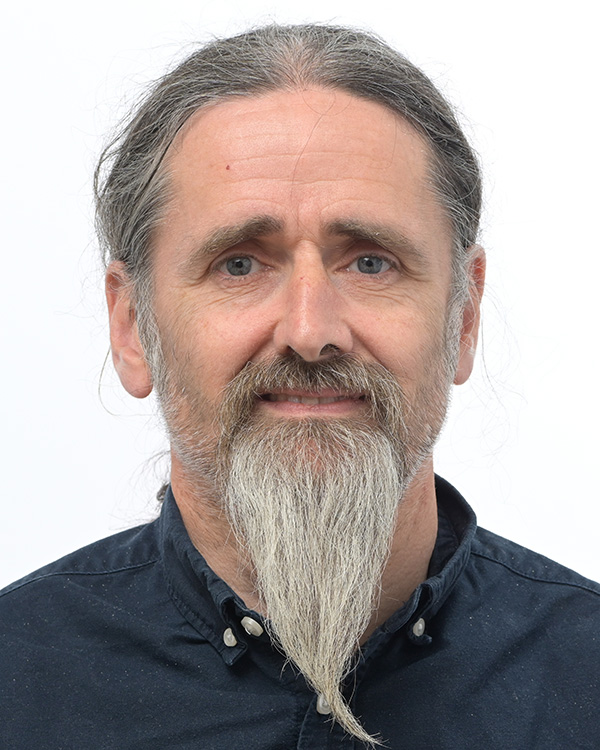






| Rank | Name | Country | Group | Speeches | |
|---|---|---|---|---|---|
| 1 |
|
Lukas Sieper | Germany DEU | Non-attached Members (NI) | 390 |
| 2 |
|
Juan Fernando López Aguilar | Spain ESP | Progressive Alliance of Socialists and Democrats (S&D) | 354 |
| 3 |
|
Sebastian Tynkkynen | Finland FIN | European Conservatives and Reformists (ECR) | 331 |
| 4 |
|
João Oliveira | Portugal PRT | The Left in the European Parliament (GUE/NGL) | 232 |
| 5 |
|
Vytenis Povilas Andriukaitis | Lithuania LTU | Progressive Alliance of Socialists and Democrats (S&D) | 227 |
All Contributions (58)
Humanitarian situation in Gaza, the need to reach a ceasefire and the risks of regional escalation (RC-B9-0068/2024, B9-0068/2024, B9-0069/2024, B9-0071/2024, B9-0073/2024, B9-0075/2024, B9-0077/2024)
Madam President, what does it take to wake the EU up? What does it take to get ye to listen? You didn’t listen in October. Your watery words, along with the thumbs up from von der Leyen, were then taken as permission to commit genocide. Since then, over 24 000 Palestinians have been killed, hundreds upon hundreds of thousands displaced, all in danger of famine. So you think you’d have learned. But no, you’ve learned nothing: no calls for an unconditional cease fire, giving the IDF the thumbs up for another killing spree. But it gets worse, we now have a European Parliament resolution where the majority of its Members refuse to support rulings from the International Court of Justice. Shame on you! There’s already blood on your hands. When you’re watching the carnage on your TV screens over the next month, remember that you refused to shout ‘stop’!
Implementation of the EU-Canada Comprehensive Economic and Trade Agreement (CETA) (A9-0400/2023 - Javier Moreno Sánchez)
Madam President, this report is designed to push for the ratification of the CETA agreement among the 10 Member States that have not already done so, one of which is my own country, Ireland. It is nothing but a celebratory exercise which inflates the benefits without any recognition of the flaws of the agreement. It presents inflated numbers about the increase in trade in goods and trade in services, and on the number of jobs created. The report does not mention the shortcomings of the investment court protection model included in CETA. Our existing court system is well able to deal with business concerns. It also states that CETA fosters climate action, in complete disregard of the negative effects of the investment protection provisions on climate policy. And finally, it’s a lie: the report claims that the review of the trade and sustainable development (TSD) chapter can only happen after full ratification. Well, legal external analysis has indicated that the review of the TSD can be done before ratification. This is a misleading argument used to push countries into ratifying the agreement, and it’s why I voted against.
Improving the socio-economic situation of farmers and rural areas, ensuring fair incomes, food security as well as a just transition (debate)
Mr President, this is a massively important topic. I used to get hope when I’d see the phrase ‘just transition’. But I have to say, every time I see the phrase ‘just transition’ at the moment, I feel like puking, because I’m not seeing any justice in this. I’m seeing elderly people going in, paying EUR 5 for little bags of wood, paying massive money for stuff with carbon tax on it – which is a good idea if it comes back to the poor people – but I’m not seeing it coming back to the people who need it. Farmers must be paid for public goods if there is to be a just transition. So when the Commission comes up with a plan to restore nature, but doesn’t provide money for it, or even a realistic possibility of finding money for it, how can you be surprised when farmers baulk at it? Now, some people will tell me there is money and some people have an idea of what you can live on. I met department officials last week and they tried to convince me by telling me that some people are getting EUR 4 000 a year. There are children of officials around here who get more than that in pocket money. Why would they get excited about EUR 4 000 a year? And I’ll finish by saying: they said there were 112 farmers in a certain scheme. The five people in the room were earning more out of their jobs than the 112 farmers put together. There is no justice if you don’t pay for it, and there’ll be no just transition if you don’t pay for it, and I bloody well will not support it.
Transparency and accountability of non-governmental organisations funded from the EU budget (debate)
Mr President, the original report was simply a constant attack on all NGOs, blamed for everything, including Qatargate, and asked to provide more info than any other private company applying for EU funds. The original report also requested a certification body only for NGOs – an NGO regulation – but none for other beneficiaries, and even proposed to establish a blacklist against NGOs, and – guess what? – only NGOs. The good news, I suppose, is these most problematic points mentioned are no longer part of the final report, but I still consider it a soft attack on the NGOs. There are positives: the report now includes a differentiation between public transparency and information to discharge authorities, and avoids most of the witch-hunt approach present in the report against NGOs. The vital role played by NGOs and the need to fully respect civil society organisation, regardless of their field of actions and their structure, is now part of the report. You can’t pick and choose. Just because you mightn’t like someone, where they’re coming from, you can’t say, ‘take away their money’. Protection and support is an underlying element of the report. Concerns are expressed for the threats and attacks on NGOs in some Member States, including several explicit references to the Hungarian foreign interference and relevant ECJ court ruling against it. I have to say, I’m glad you’re waking up to Orbán in this Chamber, because I remember during the last mandate, there was an attempt to suspend me for calling him out and apparently using a bad word in here. Well, I’ll tell you, he does a lot worse. There’s also a paragraph under ‘General remarks’ chapter, and it is calling for a transparency requirement never to put NGOs and beneficiaries at risk. This general idea is also presented along the report. Also, the transparency requirements are focused only on the budgetary control aspects and are to be applied to all beneficiaries. On the negative elements in the report – and this has to be said – the report has a quite controversial position on Qatargate, still better than the original. It mentions Qatargate as an example of the alleged corruption cases which generated public discontent, and on a second paragraph, the report mentions the possibility for EU funds beneficiaries, including NGOs, to promote false narratives, as allegedly happened in Qatargate. Nevertheless, the paragraph continues by underlining that such concerns should not lead to a stigmatisation of all the NGOs. Overall, the report is better than the draft. Nevertheless, I still think it is a soft attack on NGOs and I’ll be voting against it.
Reducing inequalities and promoting social inclusion in times of crisis for children and their families (A9-0360/2023 - Sandra Pereira)
Madam President, I voted in favour of this report because, I suppose, how could you not? It calls for universal, high-quality public service provision such as education, healthcare, transportation, school activities and healthy nutrition at school. It calls to protect children and their families in the EU at risk of poverty, particularly in times of crisis. It calls for an increase in the public and universal supply of crèche and pre-school education services. How could you not vote for this? I notice an awful lot of people didn’t vote for it, and I have to say, I wonder what’s going on in their heads. But I’ve also noticed other MEPs here who have voted for it. MEPs from Ireland voted in favour of this – people who are in government who can change this. In Ireland in 2022, 188 602 children lived in households that were below the poverty line and 247 574 children were living in households experiencing deprivation. Ireland is, by any standards, a rich country. Members from Ireland voted for this. Instead of coming in here voting for this, can you change what you do at home? Because it’s not going to change it here.
Strengthening the CO2 emission performance targets for new heavy-duty vehicles (A9-0313/2023 - Bas Eickhout)
Madam President, despite an overall downward trend in EU greenhouse gas emissions, the greenhouse gas emissions from the road sector have been on the rise in the EU and it is now responsible for a fifth of the emissions. Heavy-duty vehicles are responsible for 28% of all emissions from the road sector, despite accounting for 2% of the fleet. While this proposal regulates performance of HDVs, a good result will not only benefit the climate, but also be an important step in improving air quality, as the most problematic pollutants – for example nitrous oxide, carbon monoxide, particle measure – come from tailpipe emissions. Transitioning to electric vehicles will have a huge impact on the air quality. And while this is fantastic, and while we need to change and we need to change how we transport our goods, ultimately we have got to reduce the amount of goods that we transport, because otherwise we’re changing technologies to continue to delude ourselves. We need shorter food chains, we need local produce. This year we need Santa Claus to give second hand toys, because at this stage, if we never produced another toy in the world, I’d say there would be more than enough. Give second hand, that will mean less trucks.
The despicable terrorist attacks by Hamas against Israel, Israel’s right to defend itself in line with humanitarian and international law and the humanitarian situation in Gaza (RC-B9-0436/2023, B9-0436/2023, B9-0438/2023, B9-0442/2023, B9-0444/2023, B9-0445/2023, B9-0447/2023, B9-0448/2023)
Mr President, I couldn’t vote for a resolution that was too terrified to use the word ceasefire. In October of last year. President von der Leyen clearly stated that – and she was right – Russia’s attacks against civilian infrastructure, especially electricity, are war crimes. Cutting off men, women, children of water, electricity and heating with winter coming, these are acts of pure terror and we should call it as such. A year later, October of this year, Israeli Defence Minister Yoav Gallant said: ‘I have ordered a complete siege on the Gaza Strip. There will be no electricity, no food, no fuel. Everything is closed. We are fighting human animals and we act accordingly.’ President von der Leyen said nothing, even though the Israeli minister used the language of Joseph Goebbels when describing the Palestinian people. President von der Leyen should resign. She overstepped the mark. In her unconditional support for Israel, she emboldened them to carry out the massacres that are now clear for everyone to see. Resign now, Ursula!
Presentation of the Court of Auditors' annual report 2022 (debate)
Mr President, I wish to thank the ECA President for all the work that his organisation does. It’s essential in providing a vital insight into how EU citizens’ money is spent. Some MEPs might not like what you do or say at times, particularly on the CAP, the RRF or on Ukraine. The truth hurts at times. Some may try to limit your work, but I salute it. In relation to the Commission, the negative trend of the error rate identified by the Court is up from 3% in 2021 to 4.6% in 2022. This is even more worrying if we look at the difference between the error rate provided by the Court and the risk at payment by the Commission, which is only 1.9%. This is far below the Court’s range. It’s hard to believe that all is good considering the huge difference between the Commission and the Court’s evaluation. I understand the different methodology, we’ve heard about it, but when the Commission’s risk at payment is so below the Court’s, and even far below that range, then we have obviously got a problem – in particular when the Court identifies the current limitations in the Commission and Member States’ ex-post checks. So for me, the problem comes from the Commission. The question is – and I asked you at the hearing of the CONT Committee – what are you going to do about it? I didn’t get an answer, unfortunately. In relation to the RRF Fund, the European Court of Auditors has been presented with an impossible task. It can’t even present an error rate, as Petri Sarvamaa has said, and there is no really clear way to identify where the money is being spent and it will provide value for decisions of the European Union. It is like trying to police an unidentified and undefined speed limit. This is unacceptable. It’s our money. It should be spent well.
The new European strategy for a better internet for kids (BIK+) (B9-0386/2023)
Mr President, I supported this resolution, because we do need a better internet for kids and we do need what it says in the resolution. We need to educate children as to what’s safe on the internet. But educating children in itself and doing it in schools, while it is important, children aren’t in schools all the time. Sometimes, a lot of the time, they’re outside school, and they’re with their parents and with other people who might not know or might not understand exactly what they’re doing on the internet. Because of that, I think it’s so important to educate parents as well. As the father of three children brought up in this era where it seems there is a preference for choosing the small screen, as opposed to the massive screen when you take your head away from it, I would be worried about it. A bit like fire, you can play with fire and you can get burnt, but you can do good things with it as well. We are at the moment playing with fire. I’d be worried about all the anxiety it seems to be causing for children. I’d be worried about how it seems to be making them less happy. So I agree with this strategy and we’ve got to do something, because we are carrying out an experiment with our children at the moment, and we’ve got to be bloody well careful. I don’t think we’re being careful enough, though.
Protection of workers from asbestos (A9-0160/2023 - Véronique Trillet-Lenoir)
Mr President, people where I live often ask what relevance does the European Parliament have to their lives? And unfortunately, this has a bit too much of relevance to my life because a week ago, a year ago and a week ago, my father died from asbestosis. So, next time someone asked me what relevance does the European Parliament have, I’ll be able to tell them that we’ve got some good news. We now will have protection from workers from cancer-causing asbestos fibres, which will be significantly improved with this directive. And the agreement is a clear victory for workers and goes beyond what the European Commission and the construction employers had called for. And finally, the removal of all asbestos remains the ultimate goal, and The Left calls on the Commission to put forward the next piece of legislation they have promised a mandatory screening and registration of asbestos in buildings, because while it is good news, unfortunately, we’ve known this for a long, long time and nothing was done. So whatever we can do to maximise this and do it as quickly as possible, the better. Because maybe some people who aren’t with us today might be with us today if we acted quick enough and we act quick enough in the future.
Nature restoration (debate)
Mr President, we need this to work for all our futures. For that to happen, we need to be honest with farmers on what they will have to do. If it is going to cause a problem, then we have to admit it. In the case of re-establishing habitats, Article 4(2), depending on how a Member State interprets it, farmers could be prevented from farming their land. That’s not scaremongering; that’s my honest interpretation. I have tabled two amendments in order to guarantee that when and if this regulation comes into effect, that those farmers who farm in an extensive, sustainable way are protected. Between now and when the trilogues are concluded, this must be dealt with. Thanks to the rapporteur for your email on this and I’ll be talking to you. We also need to fund this. We have been told by the WWF that the regulation will create EUR 1.8 trillion in public funds, yet we can’t find any new public money. In Switzerland, they found the money. In Switzerland, there is very little controversy because farmers are taken care of. To financially match what Switzerland gives to farmers for nature, the EU would only need a mere EUR 0.4 trillion every six years – cheap in comparison to the EUR 1.8 trillion in benefits.
Empowering consumers for the green transition (A9-0099/2023 - Biljana Borzan)
Madam President, I voted in favor of this report, which is about empowering consumers for the green transition through better protection against unfair practices and better information. This, for me, is essential. We can’t transition and people can transition if they’re not given proper information. The amending of these two directives leads to great opportunities. It can be a powerful tool to tackle greenwashing practices. They can also provide powerful tools for consumers by providing better information on the durability and repairability of their products. It can lead to providing information on the repairability of products through a repairability score or other relevant repair information, a ban on displaying a sustainability label which is not based on a certification scheme or not established by public authorities and, also, a ban on making an environmental claim about an entire product when it actually concerns only a certain aspect of that product. I had that myself where I was proudly supposedly buying compostable nappies for years at double the price that normal ones were, and after I finished using them I discovered it was actually the package that was recyclable – and I destroyed my compost bin! So this will help people like me who don’t read things properly!
The role of farmers as enablers of the green transition and a resilient agricultural sector (continuation of debate)
Mr President, if you ignore the climate crisis, if you ignore the biodiversity crisis, then you are not defending farmers. You are destroying them, destroying them for short-term political gain. Five million farmers have disappeared in the last 15 years, 37%. They didn’t leave because they were making too much money, they left because policy had failed them. All the negatives that are in agriculture today are there because that is what policymakers asked farmers to do – to expand, to get bigger, intensify, feed the world – policies that have brought us to where we are today: an agricultural system that is devouring both farmers and the environment. In school in the 1980s, we were taught in Ireland that our hedgerows were a waste of land and that we were a bit thick for not exploiting every last square metre. Now farmers are told the opposite. It’s no surprise farmers are annoyed and confused. But we actually know what we need to do; it isn’t necessary to reinvent the wheel. We must encourage a less intensive agricultural system that respects nature and lives within its means, be that organic farming, agroforestry or paludiculture on organic soils. We need to learn from what has worked. When Natura 2000 was first introduced, there was a guaranteed payment of EUR 242 per hectare for farmers in Ireland. In today’s money, that’s over EUR 500 per hectare. Farmers who weren’t included were livid. The message is clear: if you pay people for doing environmental work, they will do it. If you don’t, they won’t. A strategy to achieve this must look at all aspects. The Green Deal and the biodiversity strategy will only work if they are matched by concrete action in other areas, particularly trade and competition policy. We cannot ask farmers to produce to the highest standards and then undermine their very existence in trade and competition policy.
Discharge 2021 (continuation of debate)
Madam President, first off, I want to thank the Secretariat and The Left staff for all the work they’ve done on these files. I know it’s not easy, so thank you very much. I won’t be supporting discharge on the following institutions and agencies. In relation to the Commission, the ECA issued again an adverse opinion to the Commission, which is parallel to the long-term negative evaluation of The Left group of the way the Commission implements and manages the EU budget. So I can’t support that. In relation to the Council, as you know, the refusal of cooperation in the discharge procedure has led Parliament to refuse discharge to the Council for many years. The decision to postpone the discharge was unanimous in CONT. Numerous media outlets reported the increase in the budget of the President of the European Council, and in particular its travel budget, which exploded compared to its predecessors, showing a preference for expensive and polluting means of transport. My group has tabled an amendment on this, which I hope you’ll support. In relation to the eu-LISA agency, because of the ECA’s qualified opinion based on several payments which were non-compliant, I can’t support the discharge. In relation to the EASO, now the EUAA: because of serious claims of misconduct on recruitment by the agency’s new hierarchy, which led to the opening of an OLAF investigation. On the IHI Joint Undertaking: because of recurrent governance and transparency issues. In relation to F4E and ITER Joint Undertaking: because of regular concerns about delays and increase of costs in the ITER project, which points to serious problems in the governance of the joint undertakings. Concerning Frontex – despite the big group being in favour of the discharge – I, along with my group, will continue our strong criticism of the agency, which, despite some changes, needs deep reform to tackle its structural reforms. It should be noted that one OLAF report was closed last year revealing serious misconduct and mismanagement taking place in 2021, exactly the financial year the discharge will be voted on. I cannot support discharge of this agency.
Keeping people healthy, water drinkable and soil liveable: getting rid of forever pollutants and strengthening EU chemical legislation now (topical debate)
Madam President, I agree 100 % with strengthening legislation in this area, but we also need to make sure that what is already there is actually enforced. In Ireland, the law governing sustainable use of pesticides, which enacts the Sustainable Use of Pesticides Directive, makes it clear that pesticides should not be used in areas used by the general public or vulnerable groups, or environmentally sensitive areas. However, at least 28 out of Ireland’s 31 local authorities are still using chemical herbicide, of which at least 19 are using glyphosate-based weed killers, as of this year. Data on pesticide use is gathered inconsistently between local authorities, with some councils not keeping records required by the EU Sustainable Use of Pesticides Directive. I heard one EPP member here use the word how it was important to look after our health and then put in a ‘but’, because there’s always a ‘but’ there for these people. Well, if there was no ‘but’ there 30 years ago, my father would now be alive. Six months ago, he died from asbestosis. He used asbestos; he was told it would keep him safe from burning when he was using an angle grinder. And that’s because a few people in the past said, ‘Oh, but we’ve got to keep it’. If there was no ‘but’ my father would be alive now.
Social Climate Fund (A9-0157/2022 - David Casa, Esther de Lange)
Madam President, there will be no transition unless we have a just transition and a fair transition that people can afford. I don’t think there’s anyone out there that doesn’t want to see a transition, but many people just can’t see how it’s possible because they can’t afford it. I think this is really good news that we now have a Social Climate Fund. For the first time, we have a creation of a fund aimed at mitigating the social costs of climate transition for vulnerable households. It must be so frustrating for people sitting at home looking at you can get 40 % or 50 % towards getting your house done, you get a certain percentage towards getting a new car and they’re sitting there and they’re listening to news about climate change, they’re listening to David Attenborough making them feel like, ‘My God, I’m an awful person’, and they want to do something about it but they can’t do anything about it, because they can’t afford to do it. It’s even more frustrating for people who live in houses that are badly insulated, less well insulated than any other houses, that they are the very last people who can afford to pay for this stuff. So a Social Climate Fund is essential to our future on this planet.
Carbon border adjustment mechanism (A9-0160/2022 - Mohammed Chahim)
Madam President, Ireland very well represented there with the Kelly/Flanagans, I have to say. I am disappointed with the development of many aspects of the file in the trilogue process compared to the EP position. In the negotiations, the only sectorial extension that was accepted by the Council in the end was hydrogens. This, to me, was very disappointing. The biggest loss in the negotiations, though, was the lack of support for least developed countries. The agreement only contains a reporting obligation of the EU support to decarbonising manufacturing sectors in the LDCs. There is no obligation of financial support and no indicated minimum level for the support, which was the EP position. I still consider CBAM to be an important new instrument in the fight against climate change and because of this I voted in favour of the provisional agreement.
Strengthening the application of the principle of equal pay for equal work or work of equal value between men and women (A9-0056/2022 - Kira Marie Peter-Hansen, Samira Rafaela)
Madam President, when I had my first of my three daughters in 2002, I’d never have thought that over 20 years later would be standing in this place still talking about the fact that we have to fight for equal pay for equal work. It’s extraordinary. But this is good news, what we’re doing here. It could be done quicker, it could be done for smaller companies. But, look, it’s an improvement. This directive will offer a series of new rights to all European workers, notably on access to information and justice, and will allow for the implementation of plans to reduce the gender pay gap within the largest workplaces. The gender pay gap remains around 14%. I don’t know how the hell that’s the case. It’s a shame that we actually have to force people to do this. But look, if we have to do that, we have to do it. It’s a pity that just wouldn’t do it because it’s the right thing to do. The pay gap has a long-term impact on the quality of women’s lives, their increased risk of and exposure to poverty. And the persisting pension pay gap is 33% in the EU. I hope by the time my eight-year-old daughter, my third daughter, is an adult, she won’t have to put up with this crap. Time for change.
Deliberations of the Committee on Petitions in 2021 (debate)
Madam President, one of the issues discussed at the committee last year was the defective block scandal in Ireland. We got great support from MEPs present. Having heard their case though, the Commission’s first instinct was to run away from the issue, which begs the question: what’s the point in having a Construction Products Regulation if it’s not in force? We ended up at the PETI Committee because our government wants to bury its head in the sand. That became even more clear this week with the leak of a draft audit carried out by Ireland’s National Building Control Office. It poignantly pointed to the fact that market surveillance of construction products is to construction as public health is to medicine. The draft also stated millions are spent on planning with billions on remediation and fixing non—compliances. In comparison, very little is spent on building control, inspection and market surveillance. But none of it made it into the politically sanitised version which the government released. The final report was a whitewash. The Commission can no longer run away from its responsibilities. The people’s lives are at risk. We’re all talking this week about corruption. Well, this is corruption, crippling and corrosive corruption. Time for the Commission to stop talking about it and act. DG GROW, I’m looking at you.
A post-2020 Global biodiversity framework and the UN Convention on Biological Diversity COP15 (debate)
Mr President, in the new CAP Strategic Plan Regulation, the production of public goods is now recognised as an agricultural activity. Now you can get paid for producing not just meat, dairy, grains and greens, but also butterflies, bees, bugs, clean water and carbon sequestration. When it comes to funding for biodiversity, CAP offers many opportunities. But are they being taken? I don’t think they are, because the old idea still persists that producing bugs, butterflies, doing something for carbon sequestration isn’t real and producing beef is real. In Ireland’s CAP Strategic Plan, we proved that even though you don’t have to have a stocking rate, our country is insisting that you do. The reason why is that they still don’t believe it’s as important to produce biodiversity as it is to produce meat.
Global food security as follow-up to the G20 Agriculture Ministers meeting (debate)
Mr President, good news. I come from Ireland. We are number one in the world when it comes to the global food security index. Fantastic news. Brilliant news. Especially when you come from a country where we were scattered all around the planet because of a famine. But I have to question what does food security mean? In Ireland we eat lots of potatoes, but we don’t produce enough for ourselves, we import 72 000 tonnes; 47 000 tonnes of onions, 23 000 tonnes of cabbage. We like flour, we eat lots of bread, we don’t produce our flour. We like sugar, we don’t produce our sugar. We don’t produce any of it. We do produce lots of dairy and lots of beef, but we can’t actually feed our own animals. Now remember, we’re number one when it comes to global food security. Thomas Waitz said something very interesting there. One country. One country, and we virtually have chaos in the world when it comes to food security. So what is food security or is it different? Are we looking for food sovereignty? Because remember, we’re number one in Ireland and we can’t actually feed ourselves. How the hell is that security?
Presentation of the Court of Auditors' annual report 2021 (debate)
Madam President, the first thing I want to do is to congratulate Tony on his appointment to this very, very important role. And I think it is brilliant that we have an actual auditor at the head of this organisation. I think it is also very important that we have someone who comes from a working class background as our head auditor and the head of this organisation. Because when you come from a working class background, you don’t say, ‘Ha, well I spent 97% of it well, and sure, 3% is only gone,’ because if you do, you might not be able to turn on the light. Every last penny matters. That’s why I think it is important that we have someone like him in the position, and I really, really welcome it. On the RRF, we have a problem; the Court of Auditors has a problem. We are dealing with ordinary people’s money. However, exactly how this money is being spent is without any real auditable trail. The idea that national authorities can, in effect, audit themselves is a bad joke. As for milestones and targets, to me it is like having a unit of speed to find a stone’s throw – however long you can throw a stone; it is different for everyone – every so often, depending on how you decide every so often is. We need a massive improvement. But I think we’ve made a good start by appointing this guy. I think he’ll make big changes.
Mental health (debate)
Mr President, up until recently, we didn’t talk about mental health and we didn’t do anything for people with mental health. That’s changed now. Now we talk an awful lot about mental health, but we don’t do anything for people with mental health. We just talk about it. And now politicians have copped on that this is a popular thing to talk about and to pretend to do something about. What I’m hearing today is a lot of rich people telling poor people maybe they should do a bit of yoga and think about wellness, when in fact their mental health is far more impacted by the fact that they don’t have a house, they can’t afford to rent a house and they have no hope of ever buying a house! There are families with children living in tents and we’re talking about mental health. Sort out the basic quality of life for people! If you’d done it for my mother, her mental health would have been a lot better, but all you do is talk about it. You’re not serious about it. This is pure fluff and bullshit.
Protection of the EU’s financial interests – combating fraud – annual report 2020 (debate)
Madam President, I think the draft report was a good basis with a good focus on the fight against corruption and the need for an enhanced approach at EU level to cope with the new challenges which emerged in 2020 with COVID-19 – the COVID-19 outbreak – and the new way of managing EU funds. Nevertheless, the report seems to me to lack some kind of substance in terms of recommendations and criticisms but, on the positive side, there are positive elements. The report includes a clear request for transparency in the expenditure side, as well as the concerns on conflicts of interest. The report has a strong focus on corruption and the fight against organised crime, including the mafia type. It highlights the importance of the anti-fraud strategy in the Member States, as well as the need for an EU strategy on revolving doors. On anti-corruption reporting, the text regrets that the Commission decided to disrupt its report but takes note of the role of the new Rule of Law Report while asking for recommendations to be set by the Commission within this specific framework. I will be supporting this report but I make one recommendation here. Can we get a clock in front of us so we can see how long we are speaking instead of one behind us?
Financial activities of the European Investment Bank – annual report 2021 - Control of the financial activities of the European Investment Bank – annual report 2020 (debate)
Madam President, there are many positive elements here, but one in particular is the focus on human rights due diligence in the new EIB Environmental and Social Sustainability Framework, calling for the development of a specific human rights strategy; a commitment that a gender perspective be at the centre of EIB activities; a strong focus on anti-money laundering and combating financing terrorism, including the fight against organised crime; a request for the extension of the right of access to info by the ECA in relation to operations implementing EU policies; and deploring that the new tripartite agreement between the Commission, the EIB and ECA do not represent an improvement to the situation with no enhanced role of the ECA in terms of auditing powers regarding activities of the EIB. Sadly, there was a lot of watering down from what was there originally. In particular, excuses are given for the lack of provisions in the Code of Conduct of the Management Committee and Board of Directors excluding Vice-Presidents from overseeing operations in the countries of origins. I hope this doesn’t make it into the final report. Overall, it’s good.