
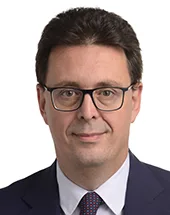






| Rank | Name | Country | Group | Speeches | |
|---|---|---|---|---|---|
| 1 |
|
Lukas Sieper | Germany DEU | Non-attached Members (NI) | 390 |
| 2 |
|
Juan Fernando López Aguilar | Spain ESP | Progressive Alliance of Socialists and Democrats (S&D) | 354 |
| 3 |
|
Sebastian Tynkkynen | Finland FIN | European Conservatives and Reformists (ECR) | 331 |
| 4 |
|
João Oliveira | Portugal PRT | The Left in the European Parliament (GUE/NGL) | 232 |
| 5 |
|
Vytenis Povilas Andriukaitis | Lithuania LTU | Progressive Alliance of Socialists and Democrats (S&D) | 227 |
All Contributions (64)
The Power of the EU – Joint European Action for more affordable, secure and sustainable energy (debate)
Madam President, ladies and gentlemen, Minister and Vice-President of the Commission, I would like to make three brief remarks. The first is that we have an emergency to deal with: the energy costs that threaten to knock out our production system and families and we must prepare for the coming winter. We therefore support the Commission's proposal which includes measures for price interventions at national level, adequate gas storage by next November and joint purchases. The second consideration is that it is clear that the transition must be accelerated as much as possible, but in order to do this we must abandon ideological approaches and thus start, on the one hand, the major processes of infrastructure of renewables and energy efficiency and, on the other, ensure the diversification of the supply of fossil fuels that we still need. Finally, the third consideration: In recent years we have chosen the Green Deal As an environmental goal, that's true. But the Ukrainian crisis shows us that the green transition is also urgent to ensure Europe's strategic autonomy and thus, in fact, our freedom and sovereignty. The path traced is the right one and from here we will continue to support it.
Debriefing of the European Council meeting in Paris on 10 March 2022 - Preparation of the European Council meeting 24-25 March 2022 (debate)
Madam President, ladies and gentlemen, Minister, Mr Vice-President, I believe that we all know the sense of frustration and loss of our citizens after two years of pandemic and the arrival of a war on our borders. But never before is Europe perceived as a home that protects. That is why the results of the next Council must underpin this message. We expect strong signals from the Heads of State and Government in the coming working days. We expect a signal to Ukraine, continuing to support it in its resistance and in its fleeing citizens, guaranteeing their welcome. We expect a signal to our families, to our companies, putting in place common purchases of gas and a cap on energy prices. We expect a signal to the European sectors penalized by sanctions on Russia, approving a support plan, as was done at the time for Brexit. Finally, we expect a signal to the world and in particular to those countries that voted against the resolution to Russia at the UN. Do not hope to be a business partner tomorrow, who today chooses to be on the wrong side of history.
Rising energy prices and market manipulation on the gas market (debate)
Mr President, Commissioner Simson, ladies and gentlemen, a year ago a megawatt-hour of gas cost 17 euros, today it has reached 295. In the delta between 17 and 295 there are the Russian invasion and the crisis in which so many of our companies, which were rising from the pandemic, have plunged, and that of so many families who do not have the money to pay for heating and gasoline. It is therefore a good thing that the Commission published a communication a few hours ago setting out common European action to deal with this situation. Security of supply, economic and environmental sustainability, energy are the main objectives, especially if we want to become autonomous from Russia and launch a clear political message. We need tools to mitigate the price crisis, we need to prepare today to face the coming winter through storage and joint purchases, we need European infrastructure that allows us to share and diversify our supply, just as we need to explain new renewable energy plants and an ambitious energy efficiency programme. Let us move from good intentions to deeds and allocate today the necessary resources to be free tomorrow.
The deterioration of the situation of refugees as a consequence of the Russian aggression against Ukraine (debate)
Mr President, Minister, Commissioner, ladies and gentlemen, the humanitarian catastrophe that the Russian war against Ukraine is triggering a great challenge for Europe: Women and children fleeing war today who risk being the widows and orphans of tomorrow need to be welcomed right away. We were able to see the generosity of Europeans, starting with the citizens of neighbouring countries, Polish, Slovak, Hungarian, Romanian, as well as the immediate reaction of the European institutions in guaranteeing humanitarian legal protection to Ukrainian refugees. We have seen the beautiful face of Europe, a face that has been missed too often in recent years, when other peoples fled the war. We will have to welcome many millions of Ukrainians and the effort will have to be common, from Estonia to Portugal, from Finland to Cyprus. There is only one Europe. But this must also be an opportunity to adopt mechanisms and rules that apply regardless of the European borders of entry; Let us immediately reform the Dublin Treaty and make solidarity and humanity a European rule.
Harmonised EU approach to travel measures (debate)
(IT) Mr President, ladies and gentlemen, Commissioner, the green pass and vaccines are working and thanks to them today we see the end of the pandemic. The Omicron variant has caused many infections, but with little or no consequences for those who have been vaccinated. Returning to normality, therefore, is not only the aspiration of all, but a duty of politics and this passes, first of all, from the re-establishment of full freedom of movement, one of the key principles of our Union. Passenger locator form, additional swabs, quarantine of return from third countries are measures that played an important role in the acute phase of the pandemic, but which today represent only an unnecessary obstacle to economic recovery. The winter tourist season is in full swing, the summer season is just around the corner, and it's time to lift the restrictions and learn how to live with the virus. But let me say it clearly: returning to normality also means distinguishing those who, with a sense of duty, have been vaccinated from those who, on the other hand, still deny the scientific evidence and choose to put their health and that of the community at risk.
One youth, one Europe (topical debate)
Mr President, ladies and gentlemen, Commissioner, these two years of pandemic have profoundly affected our young people. We know the number of deaths and infections from Coronavirus, but not the extent of the damage done to the younger generation. The European Year of Youth 2022 should not be a general tribute to our future, but an opportunity to give our young people back their trust, hope and desire to be protagonists. Concrete measures that give them the opportunity to train as citizens, improve their skills, find a job through a strong investment in education, that leaves no one behind and that is open to Europe. Concrete measures, such as psychological support, to overcome the impact of the pandemic; concrete measures, such as the culture bonus, put in place for the first time in Italy by the Renzi government, to give young eighteen-year-olds the opportunity to nourish their soul with music, theater, cinema and reading. If we succeed in pursuing these goals, we will have invested in our children, the most precious asset for our future.
Preparation of the European Council meeting of 16-17 December 2021 - The EU's response to the global resurgence of Covid-19 and the new emerging Covid variants (debate)
Mr President, Mr Vice-President of the Commission, COVID is not yet beaten, but we must recognise that Europe has shown one of its best sides to this serious health crisis. The common purchase of vaccines, the Green Pass, NextGeneration EU represent three virtuous examples of a reactive Europe that tackles and solves problems. We must continue on this path, stimulating vaccination, working on a legal framework that guarantees the freedom of movement of people, avoiding national choices that can undermine this pivotal principle, finally distinguishing the rights of those who have chosen responsibly to vaccinate themselves and therefore to protect themselves and the community from those who choose not to do so. We expect, Minister, that European governments will give clear answers to this, just as we expect precise commitments to respond to the energy price crisis, on the one hand by continuing the commitments on renewable energy and energy efficiency with the "Fit for 55" package and on the other hand by making joint purchases to increase energy storage and reduce dependence on third countries. Good news and good intentions end here. The issue of migration remains the biggest shame on our shoulders. What are we waiting for? Parliament has made its proposal in recent years. What are the Heads of State and Government waiting for? At the borders of Poland and Belarus, in the camps of Lesbos, on the ships of the Mediterranean, to be saved there are not only human lives, but also the soul of Europe, without that our future will be lost. Merry Christmas and Happy New Year to all.
State of the Energy Union (debate)
(IT) Mr President, ladies and gentlemen, Commissioner, spending on research and innovation in clean energy below 2010 levels, soaring prices, rising net imports, 31 million people in energy poverty: The 2021 State of the Energy Union report still shows us what remains to be done and what priorities need to be put in place. Parliament has a lot of work to do in the coming months, approving the legislative proposals of the Fit for 55 package, combining ambition and pragmatism. It will be important to work to reduce dependence on third countries, by diversifying supply and increasing storage, but above all by increasing the production of energy from renewable sources. Only in this way will we achieve energy autonomy, on which our sovereignty depends. If we are to achieve these objectives, and we must do so, it will be crucial to resolve the issue of authorisation procedures for the deployment of renewables once and for all. Bureaucracy, not resources, is the real obstacle in many parts of Europe.
The rise of right-wing extremism and racism in Europe (in light of recent events in Rome) (debate)
Madam President, Commissioner, ladies and gentlemen, it had been since 1922, that is, a few months before the advent of the fascist regime, that a trade union headquarters in Italy was not attacked by extremist groups. This event, with the symbolic load and the media relevance it brings, marks a step change in the political strategy of far-right groups, bringing its action from small political events to a dimension of national evidence. Faced with this resurgence, we need to give a strong signal of intransigence towards violence and the violation of the rules of civil life, a signal that should unite all the democratic political forces of the right and left without ifs and buts. Unity that, however, we did not find because of the too lenient words of the parties of the Italian right. Years of populist and nationalist propaganda have helped to create a cultural base on which today easily take root forces that recall the dark years of Europe. These neo-fascist movements have shown to have a strong ability to penetrate into spaces of marginalization, exploiting and nurturing, especially through the network, people's fears, building enemies, whether they are represented by immigrants or, as in this case, by vaccines and the Green Pass. But intransigence is not enough, it is necessary to remove fuel from the engine of this extremist right, to face the problems at the root, to carry out a profound cultural operation of memory, especially for the youngest. President, I would like to conclude by recalling that one of the perpetrators of this attack on the headquarters of the CGIL was a Member of this Parliament and that in the past funding for European political parties has also been provided to extremist forces. I hope that, in this Parliament, its bodies will take the necessary steps to prevent this from happening again.
European solutions to the rise of energy prices for businesses and consumers: the role of energy efficiency and renewable energy and the need to tackle energy poverty (debate)
Madam President, ladies and gentlemen, Commissioner, the strong post-COVID economic recovery is excellent news; This is not the case, however, with the surge in energy prices that it has brought with it and which risks falling on businesses and households. Once again, Europe is facing the challenge of maintaining its supply systems and, more generally, its strategic autonomy: In the face of this latest shock, we need to immediately take effective measures to reverse or mitigate any negative impacts on businesses and consumers. It is therefore good that the institutions have placed this issue among the priorities of the European political agenda and that many Member States have already reacted promptly with tax relief measures and direct aid. But I want to say it clearly: We cannot allow anyone to use the current crisis in an instrumental way to challenge the decarbonisation commitments we have set ourselves. On the contrary, from a long-term strategic perspective, we need to recognise that now more than ever we need to invest in energy efficiency, stimulate growth and renewable energy across Europe, and create robust alternatives to fossil fuel use. In short, to make Europe less vulnerable and more independent on this front too. From this point of view, the measures taken by some countries, which penalize renewables, seem paradoxical; This is a very wrong political signal that we hope will be remedied soon. It is now up to us to accompany the transition with decisions that ensure the resilience of the energy supply. That is why we expect the discussions in the Council, on the one hand, and the Commission's proposals, on the other, to rise to the great challenge before us: deploy solutions such as common European storage to be able to react to future energy crises.
Assessing the Union’s measures for the EU tourism sector as the end of the Summer season nears (debate)
Madam President, ladies and gentlemen, Commissioner, the Green Pass, together with vaccines, is one of the success stories of the European Union. Let me proudly claim the decisive role of Parliament, which, from the outset, understood its usefulness and tenaciously overcame the resistance of the Member States. We have created a flexible and interoperable European instrument, which has given us back freedom of movement and allowed the tourism sector to experience an almost normal summer season. But let's not make the mistake of thinking that everything can go back to the way it was before. We cannot let tourism fall into oblivion again without structurally addressing the problems highlighted by COVID. The economic damage has been enormous and the lack of funds to operate the digital transformation is evident, as is the urgent need to invest in sustainability and energy efficiency. The fine words of support during the pandemic must now be matched by concrete actions to genuinely reform and relaunch tourism at European level.
Presentation of the Fit for 55 package after the publication of the IPCC report (debate)
Mr President, Mr Vice-President Timmermans, ladies and gentlemen, European citizens are daily witnesses to global warming and increasingly feel the urgency to act. This legislative package has the merit of adopting an overall approach, from emissions to energy efficiency, to renewables, and commits us to take concrete decisions by turning the challenge of climate change into opportunities. That's why I believe we need vision and not ideological approaches: We cannot afford to lose entire industrial sectors and the jobs associated with them, which risk unfair competition from countries outside Europe. It is necessary to bet on clean energy, but it is also necessary to have costs and mechanisms, such as the adjustment of the carbon price at the borders, to ensure the competitiveness of the industrial system. We will win the bet only with a balanced and concrete transition, which focuses on research, innovation and the development of technologies that make Europe a leader in the global landscape. Governing a transition is complex, doing it quickly, well and without leaving anyone behind is a duty.
Sustained price increase of raw and construction materials in Europe (debate)
(IT) Mr President, ladies and gentlemen, Commissioner, the shortage of raw materials is a global emergency and a direct consequence of the pandemic from which we are gradually emerging. We have gone from a contraction in trade and a collapse in prices in 2020 to a dizzying increase in demand for raw materials and semi-finished products. The climate of recovery in fact has seen a new impetus of the producing and transforming companies, which however has coincided with a greater cost of the global transport of goods and with the accumulation of delays, also following the accident occurred in the Suez Canal. This is putting many European companies in serious difficulty. To this must also be added the decision of some third countries, which are traditionally suppliers, to adopt export duties to reduce domestic inflation. This could be a temporary phase, but it is certain that the European Union must equip itself to deal with this crisis in the short term and, more generally, put in place a strategy of actions necessary to strengthen its strategic autonomy. The real emergency now is to restart and this scenario risks slowing down growth in the coming months and, although I am a staunch supporter of trade defence instruments and fair competition, at this exceptional stage I believe that the Commission should urgently carry out an in-depth analysis of the repercussions that some existing measures may have where European production fails to meet demand. From a long-term perspective, on the other hand, we need to overcome the scarcity of raw materials by combining a circular economy, more research and innovation for substitutability, and an enhanced industrial policy. In addition, we should continue to strengthen our relations with third countries through trade agreements, diversifying value chains and avoiding disruptions to the flows we experienced during COVID.
State of play of the implementation of the EU Digital COVID Certificate regulations (debate)
Mr President, ladies and gentlemen, Commissioner, in a few weeks the EU COVID-19 certificate has been downloaded by 250 million citizens. This is a success for Europe and also for our Parliament, which tenaciously overcame the incomprehensible resistance of the Member States, but we cannot stop. The application of the certificate has highlighted some critical elements that above all have to do with national implementations. That is why we are asking the Commission for a stronger guideline that clarifies the rights of those who have taken a single dose of vaccine or have had a heterologous vaccination or even for the recognition of a vaccination carried out abroad. In just a few months, we have implemented a document that guarantees European citizens once again the freedom of movement recognised in the Treaties. Scientists tell us that for some more time we will have to live with the virus, with its variants or perhaps with new diseases. We therefore call on the Commission to work quickly to adapt the characteristics and uses of the certificate along the way. The suspension of freedom of movement in Europe even in the presence and evolution of the virus must remain only a distant memory.