
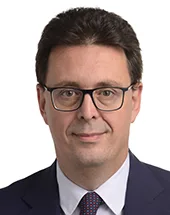

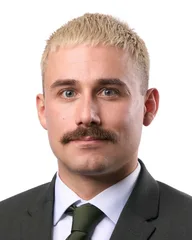
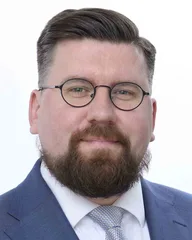
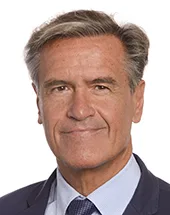
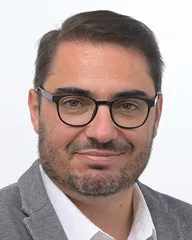
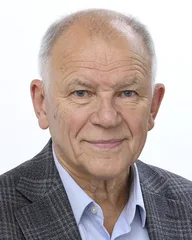
| Rank | Name | Country | Group | Speeches | |
|---|---|---|---|---|---|
| 1 |
|
Lukas Sieper | Germany DEU | Non-attached Members (NI) | 390 |
| 2 |
|
Juan Fernando López Aguilar | Spain ESP | Progressive Alliance of Socialists and Democrats (S&D) | 354 |
| 3 |
|
Sebastian Tynkkynen | Finland FIN | European Conservatives and Reformists (ECR) | 331 |
| 4 |
|
João Oliveira | Portugal PRT | The Left in the European Parliament (GUE/NGL) | 232 |
| 5 |
|
Vytenis Povilas Andriukaitis | Lithuania LTU | Progressive Alliance of Socialists and Democrats (S&D) | 227 |
All Contributions (64)
Adoption of the Cyber package proposals (debate)
Madam President, Mr Vice-President Schinas, Commissioner Breton, EUR 5 500 billion: This is the cost of cybercrime in 2021. Impressive numbers, behind which are often hidden attacks not by loose dogs, but by hackers in the pay of Russia, China, Iran. Autocracies that, through this new form of hybrid warfare, aim to undermine the security of our infrastructure, drown our companies and destabilize our society. A threat that Member States cannot defend themselves against, because Europe's security depends on the security of the weakest link in the chain. In recent years we have understood this and for this reason we have equipped ourselves with an important legislative framework, from the NIS to the European Cybersecurity Act and now the Cyber Resilience Act. A legislative framework that must also see the strengthening of the Community institutions, starting with ENISA, to create a minimum level of security throughout the European Union. We therefore welcome the proposal for a cyber solidarity act, which seems to go in the desired direction, including through the creation of a pan-European cyber shield. But there is a fundamental precondition without which Europe cannot think of facing this challenge, and it is that of skills. We must invest in training, especially among young people, to ensure that competent professionals can meet the ever-increasing need for companies and institutions. We can turn this threat into a great employment and business opportunity. This is why the European Skills Academy is a key element of our digital strategy and will need to be provided with a financial allocation commensurate with the scale of the challenge. Let me conclude with a warning. Be careful to think that it is enough to invest only in high-level skills. It is also necessary to develop a widespread cybersecurity culture in all sections of the population, involving schools, universities, local authorities, training institutes, so that each of us can equip ourselves with the tools necessary to defend ourselves against this hybrid war that some countries have declared to us.
The need for a coherent strategy for EU-China Relations (debate)
Mr President, Mr High Representative, Mr Vice-President, three key words to try to define a strategy for China in one minute. The first: competition. China is an competitor In this sense, strategic autonomy is a first element to avoid our subordination. But to do so, we must start playing our role in the world again, starting with the partnership with Africa and the ratification of the treaty with Mercosur, abandoning the political short-sightedness of these years and strengthening our relations with the South American continent. The second word: collaboration. The large Chinese market represents an extraordinary opportunity for our companies, as we already are for them. The third: rules. Clear rules on intellectual property, security and privacy of users and institutions and protecting European investments in China. Three words, however, which need a precondition, a clear message that we must send from this House: Any hostile acts against Taiwan or direct or indirect support for Putin's regime will not be tolerated and will only have profound economic consequences.
The Rights of children in Rainbow Families and same sex parents in particular in Italy (debate)
Mr President, ladies and gentlemen, Commissioner, there is no doubt that the affirmation of a legal framework of adequate guarantees for same-sex couples in Italy is difficult to establish. Only in 2016, thanks to the Renzi government that placed trust in Parliament, Italy has adopted a law that allows civil unions between people of the same sex. The judgments of the judiciary and the courage of some mayors have gradually encouraged the development of a legal framework that, even in the absence of specific rules, guarantees the rights of LGBT couples and their children. Today it is not a question of expressing opinions on surrogacy or other ethically controversial issues. This is about guaranteeing the rights of children, which are also protected by the UN Convention on the Rights of the Child. No one, neither the Minister of the Interior nor the head of the Italian government, who really inspired the decision of the Prefect of Milan, can afford to harm the freedom of the future citizens of Europe to carry out political battles against homogeneous families. Faced with obvious failures in migration, economic and foreign policy, the Meloni government seeks to agitate the clash on ethically sensitive issues, all on the skin and on children's rights.
Conclusions of the European Council meeting of 23-24 March 2023 (debate)
Madam President, ladies and gentlemen, Mr Vice-President of the Commission, Mr President-in-Office of the Council, seven lines, those are the conclusions that the European Council has dedicated to the issue of immigration, after the rivers of tears poured out after the tragedy on the Italian coasts. Politics is the art of finding compromises and solutions. Rule reality, don't put your head in the sand. There are the responsibilities of many governments, starting with the Italian one that wins the golden palm of inconsistency, as a loyal ally of Poland and Hungary, the enemies of relocation. A government that in recent days, in the LIBE Committee, as other colleagues have pointed out, has voted against the amendment of the Dublin Treaty. Colleagues, it will not be the patrol boats or barbed wires that will stop those fleeing war, hunger and suppressed freedom, entrusting their hopes to a journey, and even less the message that today in Europe there are bad right-wing governments. Of course, there are no easy solutions, able to solve the problem in a short time, we are aware of it, but seven lines, seven lines of postponement to date are certainly not an answer, not worthy of our Europe.
Deaths at sea: a common EU response to save lives and action to ensure safe and legal pathways (debate)
Mr President, Commissioner, Minister, ladies and gentlemen, for the umpteenth time we are in this Chamber with the terrible images of a tragedy like that of Cutro still in our eyes: the broken lives of children, women and men who entrusted Europe with hopes and dreams of freedom. A shipwreck on whose rescue management there are still too many dark sides and not for the responsibility of law enforcement, which for years have been saving lives at sea with courage and professionalism. I look into the eyes of those who have decision-making responsibilities. I look into the eyes of the Italian government, which has not yet been able to give answers. And it is unbearable for a minister to question why a mother and father choose to entrust their children's lives to such a dangerous journey. Why do we know them, as we know the answers to be given by this House, from legal immigration channels to binding redistribution mechanisms? Dear colleagues, let us not just say, once again, what we are waiting for, because otherwise the answer of the next day will always be the same: Let's wait until it's too late!
Conclusions of the Special European Council meeting of 9 February and preparation of the European Council meeting of 23-24 March 2023 (debate)
Madam President, President of the Commission, Vice-President of the Commission, President of the Council, ladies and gentlemen, the agenda of the next Council puts on the table the points on which the future of our Union is at stake: support for Ukraine in the first place, more than a year after the invasion, which still needs to be more solid because alongside Kiev we are defending, at whatever cost, those values that 2000 years of history have given us. And then there is the strategic autonomy that we must be vigilant about in order to avoid protectionist interpretations, but which finally puts a new European industrial renaissance at the centre, in contrast to previous years. A challenge that we will be able to win only by focusing on three essential factors: a very strong investment in human capital, clean and low-cost energy and finally a new commercial strategy that continues to make us protagonists in the world. And I regret, Mr Vice-President, that this last point was not one of the Commission's priorities. Finally, I don't think it's time to put your head in the sand anymore: Either the issue of immigration is seriously addressed or the deaths in the Mediterranean will continue to haunt our consciences and, with them, the future of our Union.
Presentation of the programme of activities of the Swedish Presidency (debate)
Madam President, Prime Minister, ladies and gentlemen, the Swedish Presidency will be decisive in bringing to fruition some of the key dossiers of this legislature, which is entering its final phase. I am thinking above all of the directives on energy efficiency and renewables, which are essential tools for getting rid of Russian gas and lowering energy prices and on which the Presidency will have to maintain a high level of ambition. The renewed attention dedicated to trade is certainly positive, a strategic theme in the light of the historical moment we are going through. Only in this way, in fact, by diversifying the sources of supply and not yielding to the temptations to close oneself to the world, could we combine freedom and sovereignty and face the shortcomings that have put us in difficulty in recent months. But here, let me tell you, the good news ends. What remains, however, is the astonishment of some statements by representatives of the Swedish government who, in perfect sovereignist style, once again distance the search for solutions on the theme of migration, a short-sighted reticence in the face of the facts. A common management of flows is the only solution to a challenge on which the very future of our Union is at stake.
Renewable Energy, Energy Performance of Buildings and Energy Efficiency Directives: amendments (REPowerEU) (continuation of debate)
Madam President, Mr Executive Vice-President, ladies and gentlemen, this year in Italy, faced with requests for 300 gigawatts of renewables, we will be able to connect only three gigawatts to the grid, a real fact that shows how the permit-granting procedures at different levels, be they national, regional or territorial, represent the real obstacle to be overcome. We therefore welcome this measure, which provides concrete tools to identify the so-called acceleration areas for renewable energy, where plants will be able to benefit from faster permit-granting practices. We also welcome the concept of overriding public interest in the permitting and planning of renewable plants, recognising their priority for our economy and society. Due to the war in Ukraine, the deployment of renewable energy and an ever-increasing integration of the energy mixes of different member countries assume not only an environmental value, but also a strategic one, in defense of our sovereignty and our freedom. Without breaking down the great wall of bureaucracy, the challenge of the energy transition will remain a goal only on paper.
Establishing the Digital Decade Policy Programme 2030 (debate)
Madam President, Commissioner, ladies and gentlemen, the digital transformation of our society and economy is one of the great challenges facing the European Union. The Commission has done well to set specific targets to be achieved by 2030, which will allow us to play a global role. As with the Green Deal, it is only if we have measurable and tangible targets that we will be able to monitor our progress in this area. I would like to highlight two elements of this strategy which I consider to be particularly significant. The first: the need to invest to ensure the maximum uptake of digital skills and an adequate number of highly qualified digital professionals, especially among young people, to be competitive also on the labour market. The second element is the need to invest in the digitalisation of businesses, especially small and medium-sized enterprises, in order to make the most of the opportunities that technology offers them. This will certainly also shift from ensuring secure and resilient connectivity and digital infrastructure that reaches everyone.
A truly interconnected Energy Single Market to keep bills down and companies competitive (topical debate)
Madam President, Commissioner Simson, ladies and gentlemen, after months and months of requests, yesterday the Commission finally proposed the mechanism for correcting the gas market, but the extraordinary effort to which the European States were called, as Mario Draghi had often reiterated, does not seem to have been put into practice. That the proposal would come out of time we knew, but that it was so weak, almost to be useless, was a surprise. The mechanism, in fact, if actually adopted, could be applicable in fact only under conditions much worse than those experienced in recent months, and of course we do not hope so. We are now awaiting the discussion of tomorrow's energy ministers, and we hope that the proposal will be substantially amended so that it can really have a deterrent effect on speculative behaviour. When Europe is uncourageous we have to say it and in this case Europe is the Member States; It is to them and to the Commission, perhaps too timid, that we must take account of the lack of answers.
The need for a European solution on asylum and migration including search and rescue (debate)
Mr President, ladies and gentlemen, Commissioner, if we were to draw a balance between the words used to discuss migration in this House since 2015 and the results obtained, we could only certify the failure of Europe or rather the failure of the nation states, which have chosen electoral interests and ideology and not European rationality and values. And yet, Mr President, we all know the solutions: legal migration channels are needed to remove the monopoly of human traffickers in the Mediterranean; there is a need to strengthen the coordination of search and rescue operations, as well as procedures for the management of asylum applications; We need a real policy of return and cooperation with the North African states, now more than ever given the food crisis caused by Russia, and above all we need a binding and solidarity-based mechanism for the relocation of migrants. The roadmap for the adoption of the European Pact on Migration and the voluntary solidarity mechanism are tiring small steps forward, but they risk being undermined by the sovereignist populism to which the Italian government seems to respond. The Salvini line passes, in short, of those who scream and bang their fists on the table, abandoning politics and choosing demagogy, without obtaining any result. A path that we cannot afford to take, dear colleagues. Closing our eyes, blinded by propaganda, means losing the ability to manage a structural phenomenon inherent in our nature and with it also losing our humanity.
Conclusions of the European Council meeting of 20-21 October 2022 (debate)
We are well aware that consumer bills have not yet fallen and so have business bills. Of course, we must invest in two important factors: energy saving and investment in renewable energy and currently diversification of gas supply sources. That's what I think we're doing. We also need to stop speculation. As I said in the speech, the speculation on gas prices is very high and only a united Europe can ensure that this speculation is stopped.
Conclusions of the European Council meeting of 20-21 October 2022 (debate)
Mr President, ladies and gentlemen, Mr President-in-Office of the Council, Mr Vice-President of the Commission, the effects of the last European Council are already visible. We are seeing a drop in the price of gas. This shows two things: the first, that the speculative component is there and is very relevant; the second, that the political response that Europe is providing is the right one and that this was the answer to be given from the beginning. The package of proposals dismissed by the European Council is the result of months and months of tiring work: Gas price corridors, electricity price decoupling, joint purchasing and electricity market reform. All requests that Mario Draghi had put on the table for a long time with determination. Every country in this period has tried to study its own recipes for dealing with the crisis, but it is clear that individual initiatives are not enough and that true European solidarity must be put at the centre, both in gas sharing and in terms of prices, all within a framework of strengthening our energy independence. In this sense, we expect the energy ministers to finally translate into concrete measures the policy line decided by European leaders. There's no going back on that. Finally, we hope that the new Italian government will put aside the electoral slogans and maintain the necessary authority so that Italy can continue to have a central role, helping to create answers for businesses and citizens, thus supporting the Ukrainian cause. (The speaker agreed to respond to a "blue card" speech)
Preparation of the European Council meeting of 20-21 October 2022 (debate)
Madam President, Mr Vice-President of the Commission, Minister, ladies and gentlemen, solutions to deal effectively with the urgent challenges of the present have been on the table for several months. We have been talking for some time about the gas price cap, decoupling prices, reforming the electricity market, but with difficulty the Commission and the Council are succeeding in adopting them. We have the recipes, we have the tools, we lack the spirit, the spirit that animated the fight against Covid, that political will that, only two years ago, pushed Europe to take the path of solidarity. It is not the resources that are lacking, but a policy that knows how to look to tomorrow and give concrete answers. Faced with families in difficulty in paying their energy bills, in front of companies, forced to stop production, in front of mayors, who have to face the new poverty, good intentions are not enough, we need the unity that made us win the pandemic and that tomorrow will allow us to overcome the selfishness that, in spite of ourselves, risk being more dangerous than war.
Sustainable maritime fuels (FuelEU Maritime Initiative) - Deployment of alternative fuels infrastructure (debate)
Mr President, Commissioner, ladies and gentlemen, the road to decarbonising the maritime sector is still long and uncertain. The Navigation Fuels Regulation sets out a realistic and gradual emissions reduction trajectory and provides an impetus for investment in research and development, while respecting the principle of technological neutrality. Some bet on hydrogen, others on ammonia and methanol, or even on biofuels or batteries, without forgetting the role that liquefied natural gas can have in a transition phase, ensuring a first and immediate reduction of CO2. Precisely because on the horizon there is not a single winning choice over the others, all the players in the sector will have to make their own contribution, from operators, to whom stringent obligations apply, to ports, which will have to install infrastructure for on-shore power, to suppliers of sustainable fuels, passing through shipbuilding, which requires creativity and innovation. The compromise we are about to vote on represents, in my opinion, a good balance between the opposite extremisms, between those who do not consider costs and social impacts and those who seem to neglect the climate crisis. Finally, ladies and gentlemen, let us not forget that this is a challenge that we will only be able to overcome if we are also able to act in international fora. This is an essential element to avoid unfair competition from third-country operators and ports while ensuring the decarbonisation of the maritime sector globally.
State of the SME Union (debate)
Madam President, Commissioner, ladies and gentlemen, for years now we have been filling our mouths with the need to protect and preserve European SMEs, which are the essential assets for our economy: small and medium-sized enterprises for which today's energy crisis, inflation risk being lethal, especially after the backlash caused by the pandemic. We must, therefore, act on two elements: firstly, to provide urgent answers on energy prices and, in this sense, we welcome the recent proposals on emergency measures to be put in place in the coming months; secondly, to work towards an increasingly favourable regulatory framework that reduces administrative burdens and simplifies bureaucratic procedures. Yesterday we heard the words of President Von der Leyen on the upcoming proposals for SMEs: Well, but let's do it soon! We must attract companies, not push them to relocate, and ensure that compliance with high labour and environmental standards becomes an added value and not a threat to their survival.
Renewable Energy Directive (debate)
Mr President, ladies and gentlemen, the contribution of renewable energy is now crucial not only from the climate point of view, but above all from the point of view of our energy security; Increasing the share of renewables to 45% by 2030 is therefore a target that cannot remain on paper, as has happened too often in the past due to bureaucracy. That is why we hope that we will now proceed swiftly with the adoption of the directive on permit-granting procedures, which will simplify and reduce the time required for the construction of renewable energy plants. In addition, such an ambitious target can only be achieved if we know how to enhance all the energy available, from geothermal to wind, from photovoltaic to hydroelectric, as well as bioenergy, also thanks to the role of energy and rural communities. For this reason, it is necessary to strike the right balance between environmental sustainability, on the one hand, and the availability of renewable energy at competitive prices, on the other. It is precisely thanks to this balance that we will be able to guide our transition, eliminate fossil fuels from our economy and achieve a real... (The President withdrew the floor from the speaker)
Energy efficiency (recast) (debate)
Mr President, Commissioner, ladies and gentlemen, it is difficult to summarise in a minute the result of months and months of work. The text that we will approve in the coming days gives us ambition and concreteness, without giving in to ideologies and political manifestos. Managing the transition means choosing achievable goals. So we decided to increase the target reducing our energy consumption to 40% by 2030 compared to 2007; pushed for binding national contributions, while leaving flexibility to Member States for more electrification and hydrogen production; ensuring that the public sector effectively plays an exemplary role in the efficiency of its building stock, while protecting the cultural heritage of cities; It also called on energy-intensive companies to invest in improving production processes through appropriate accompanying measures. The current situation requires us to speed up knowing that the least expensive energy that protects the environment and makes us less dependent on third parties is the one we do not consume.
The relations of the Russian government and diplomatic network with parties of extremist, populist, anti-European and certain other European political parties in the context of the war (debate)
Madam President, Madam Vice-President, ladies and gentlemen, disinformation in recent years has had a major impact on the political choices of individual European states. Russian interference in the Brexit referendum is now well established, as are incontrovertible historical facts about the outcome of the Italian constitutional referendum in 2016. Unfortunately, this was possible because so many, too many political parties, the mass media and the media have become complicit. In Italy, relations between the Five Star Movement and the League with Putin's United Russia party have emerged clearly over time. And it is no coincidence that today among the ranks of these parties we see useful but late repentances. Awareness of this problem with the facts has allowed Europe to adopt more appropriate and stringent rules in many fields, starting with digital and in particular platforms and their use; The DSA and the Code against Disinformation are concrete examples of this. President, Russian interference has had a great and unique goal in recent years: weaken the European project. Then it is up to us to keep our guard high in order to preserve our democracy.
Conclusions of the European Council meeting of 23-24 June 2022 (continuation of debate)
Mr President, Mr Vice-President of the Commission, ladies and gentlemen, as is often the case, the Council's conclusions do not leave us entirely satisfied. The recognition of the status of candidate country for Ukraine and Moldova is certainly an important message of unity and closeness, but the same cannot be said for two countries that have been candidates for some time, such as Albania and North Macedonia, which once again see their rightful ambitions disregarded. Never before in this historic moment is it necessary for the European Union to represent reliability, security and stability. This applies not only to these countries, but also to our citizens. We must therefore tackle the issue of energy prices, which are destabilising our economy, with exceptional and urgent measures. The stubborn opposition of some Member States to the proposal put forward by Italy and other countries to set a cap on the price of gas does not meet the expectations of European households and businesses. We need a turning point to deal with speculation, so let's continue on the path traced by REPowerEU and create the conditions to make ourselves truly autonomous from Russia's fossil fuels.
The call for a Convention for the revision of the Treaties (debate)
Mr President, ladies and gentlemen, Madam Vice-President, Minister, the reform of the Treaties is no longer procrastinable. The pandemic told us so and the war tells us so today. The results of the Conference on the Future of Europe have given us a range of proposals in this regard. Convening a convention to revise the treaties, therefore, is no longer an option but a duty. More efficient institutions, able to decide by abolishing the unanimous vote, a stronger Parliament, new areas of cooperation and common action are essential elements to guarantee our values and our development. In a world where we now represent much less than 10% of the population and where the centre of gravity of development is likely to be shifted to the East, the European Union is our minimum unit of action. Do we think we can face the challenges of the world with small homelands and small national interests? Alcide De Gasperi said: A politician looks to the next election, a statesman to the next generation. We have the choice whether to be one or the other.
The REPowerEU Plan: European solidarity and energy security in face of Russia's invasion of Ukraine, including the recent cuts of gas supply to Poland and Bulgaria (debate)
Mr President, Commissioner, ladies and gentlemen, as the interruption of supplies to Poland and Bulgaria shows, we are faced with the need to substantially reduce our dependence on fossil fuel imports from Russia. The new REPowerEU package is no longer just an environmental choice, but spells out strategies and measures that must lead Europe to regain its energy sovereignty. Time only allows me to mention two points that I think are very important. The first: if in recent years the deployment of renewable energy has not been adequate, it depends above all on complex and sometimes insuperable permit-granting barriers. The proposed new target of 45% will only be achievable if we can recover and overcome obstacles by genuinely cutting red tape on future projects, as the Commission has proposed. The second point concerns energy efficiency. We are very pleased that the Commission has proposed a higher target for reducing energy consumption. 13% is the proposal that Renew has carried out in recent months: This is an ambitious but at the same time very feasible objective, which will allow us to proceed swiftly with the adoption of this fundamental directive.
Impact of Russian illegal war of aggression against Ukraine on the EU transport and tourism sectors (debate)
(IT) Mr President, ladies and gentlemen, Commissioner, the Russian invasion of Ukraine has devastated the lives of millions of people to whom our support and deep solidarity go, but the consequences of this war are also being felt in Europe, particularly in sectors such as transport and tourism, which have already been marked significantly by two years of pandemic. We are approaching the summer season with an indiscriminate increase in fuel prices, expensive energy and inflation that reduce the economic availability of European citizens. Travelling and going on vacation this year will be difficult for many families. That is why it will be important to adopt the instruments highlighted in this resolution, starting with the European crisis management mechanism and short-term financial support. Europe must be there for its citizens, for the micro and small enterprises that populate the tourism sector and for those territories that, due to proximity to the theater of war or the historical prevalence of Russian and Ukrainian tourists, will be most penalized.
Data Governance Act (debate)
Madam President, Commissioner, ladies and gentlemen, every second billions of data are generated by devices of all kinds. They represent a very important asset that, if put to good use, can make life easier for citizens, improve services or help research. A heritage that we must above all preserve from distorted or illegal uses. That of the governance Data is therefore one of the major challenges facing politics in the digital age. We have worked in recent months, as Parliament before - and I want to thank my colleague Niebler, who is the rapporteur for this measure - together with the Council then - and thanks to the important mediation of the Commission and Commissioner Breton - we have worked, I said, to equip Europe with a legal instrument that allows us to regulate data sharing, anticipating our partners and guiding the game in this field. Data that underpins the development of artificial intelligence and the economy of tomorrow. The goal is to create a sort of "data Schengen", as someone calls it, for the benefit of individuals and businesses and especially small and medium-sized enterprises, which will have greater control over the sharing and management of the latter. We are talking about a tool that will allow operators of all sizes, especially the smallest ones, to access a market for intermediation services based on transparency and neutrality, a tool that aims to regulate the re-use of data held by the public sector, which are too often unused. Finally, with this regulation, an Innovation Committee is created which will have several tasks, first of all to contribute to increasing the interoperability of data in the European Union and to establish guidelines for the creation of common European data spaces. In short, thanks to this important tool, we aim to have more and more data available, with more and more protections, being careful to balance, on the one hand, rules and principles and, on the other, not to hinder an economy that is all emerging and evolving.
Outcome of the EU-China Summit (1 April 2022) (debate)
Madam President, Mr High Representative, ladies and gentlemen, we are unfortunately not surprised by China's position on the aggression against Ukraine. But I want to say it clearly: This war represents a watershed in history and the choices that our partners will make today will weigh in defining what our political and trade relations of tomorrow will be. If China wants to continue the agreement with Putin, Europe will not be able to stand by, but this is not the scenario we want. Instead, we expect China to exert its influence adequately and to play, from now on, an active role in bringing the aggressor back to the ceasefire and the peace table. In spite of the current situation, relations between the European Union and China are very complex both in terms of values and in terms of economic, environmental and commercial aspects. A clear example of this complexity are, on the one hand, Chinese sanctions against MEPs, the humanitarian situation of minorities and the potential escalation against Taiwan and, on the other hand, unfair practices, dumping, intellectual property infringement. Much remains to be done about competition, level playing field, climate objectives, as well as digital and cybersecurity. But we must also have the courage to re-discuss the investment deal hastily signed at the end of 2020. In short, the time has come for Europe to take matters into its own hands and to clearly establish a relationship without giving in to an increasingly hegemonic China.