
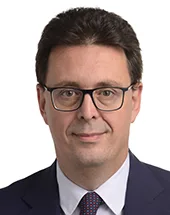

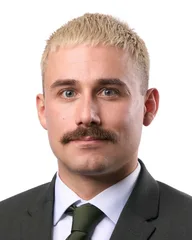
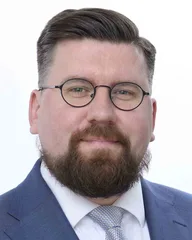
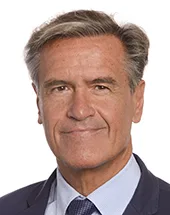
| Rank | Name | Country | Group | Speeches | |
|---|---|---|---|---|---|
| 1 |
|
Lukas Sieper | Germany DEU | Non-attached Members (NI) | 390 |
| 2 |
|
Juan Fernando López Aguilar | Spain ESP | Progressive Alliance of Socialists and Democrats (S&D) | 354 |
| 3 |
|
Sebastian Tynkkynen | Finland FIN | European Conservatives and Reformists (ECR) | 331 |
| 4 |
|
João Oliveira | Portugal PRT | The Left in the European Parliament (GUE/NGL) | 232 |
| 5 |
|
Vytenis Povilas Andriukaitis | Lithuania LTU | Progressive Alliance of Socialists and Democrats (S&D) | 227 |
All Contributions (64)
European Disability Card and European Parking Card for persons with disabilities - European Disability Card and European Parking Card for persons with disabilities for third country nationals legally residing in a Member State (joint debate - Disability cards)
Mr President, Commissioner, ladies and gentlemen, the European Disability Card will soon be a reality and this is good news for a Europe without obstacles. Priority access for public transport, free entry or reduced rates for cultural activities, sports, personal assistance and many other rights that from now on will have no borders. With this directive disabled people will have access to the same special conditions and preferential treatment as residents of the country where they are travelling. In addition, with a single European parking card, the right to use reserved parking spaces and access to LTZs will also be guaranteed in every State. This is an important battle on which we have made our voices heard in the transport committee. We would have liked an even more ambitious measure, so as to make automatic the recognition of disability cards, to extend also to those who move for study and work purposes. But this is undoubtedly the first piece of a great norm of civilization, a step forward for the equality and freedom of disabled people throughout the European Union. This is the Europe we need.
Conclusions of the recent European Council meetings, in particular on a new European Competitiveness deal and the EU strategic agenda 2024-2029 (debate)
Madam President, Mr Vice-President of the Commission, ladies and gentlemen, we are about to conclude an unprecedented legislature, marked by sadly historic events, but also by a profound legislative intervention on our economy. Today, however, the time has come to outline the way forward for the European Union in the next parliamentary term. Road that must be the one traced by Mario Draghi in recent days, of a new deal for the competitiveness of our continent. We need a real industrial policy that allows us to free ourselves from dependencies; a single energy market that cuts costs for businesses and bills for citizens; a capital union that allows us to use private savings to generate investment in our companies. And we need to continue on the green and digital transition, but focusing on the economic support and pragmatism that have been lacking in recent years. To do all this will require courage and ambition. The courage to put aside national vetoes and small differences from the backyard and the ambition to return to count in a world that runs faster and faster.
Energy performance of buildings (recast) (debate)
Mr President, Commissioner Simson, ladies and gentlemen, the agreement reached between Parliament and the Council is an important step towards more efficient housing, energy savings, greater comfort and lower emissions for European citizens. The Italian political debate in recent months has been marred by a mix of fake news, misleading data and unjustified alarmism that the right has used for the sole purpose of discrediting Europe. The text we are about to approve, with a pragmatic approach, lays the foundations for a major renovation plan that, in addition to delivering us cheaper bills, will give the building sector a long period of growth. Of course, there is a need for serious long-term planning, involving tax deductions, non-repayable contributions and bureaucratic simplification, paying particular attention to the weakest sections of the population, who otherwise risk remaining marginal in this great process. In short, it serves the opposite of the 110 % super bonus wanted by the Five Star Movement, which has created a chasm in the Italian public accounts in favor only of the wealthiest classes, who have rebuilt their homes with taxpayers' money.
Horizontal cybersecurity requirements for products with digital elements and amending Regulation (EU) 2019/1020 (debate)
Mr President, I thank the Commissioner and all the Members who have spoken in this debate and for their attention to this important regulation. I believe that the speeches I have heard clearly show that cybersecurity is one of the real challenges that awaits us in the future, but that already significantly characterizes our present. A challenge that also has a geopolitical dimension, as the Commissioner and other speakers have pointed out, because there is no point in hiding: the digital world is increasingly prey to hacker attacks sponsored by Russia and China, as well as other hostile countries that exploit this fertile ground for a new form of hybrid warfare, to which we must be able to respond. To defend ourselves then we certainly need adequate legislation and the Cyber Resilience Act, but also the NIS 2 Directive and the forthcoming European Cyber Solidarity Act; Europe has put in place all the necessary instruments. But there is another piece that we urgently need to tackle in order for legislative efforts to produce the results we hope for, which is that of skills - as Mrs Covassi pointed out during the debate - skills that concern primarily the training of professionals with a very high level of specialisation, on which we must invest by guaranteeing them adequate opportunities and remuneration. All too often our young experts study in Europe, but then seek their fortune elsewhere. But today we also need to create a widespread cybersecurity culture, which equips each of us with the basic knowledge to minimize cyber risks, know how to recognize threats and attack attempts and have the tools to respond to emergencies, reducing their exposure. In short, we must put cybersecurity at the centre, both in the workplace and in our private lives. Ladies and gentlemen, I would like to conclude by thanking you and thanking the Commissioner and all of you once again for the work that has been done and for the considerations of this debate. With tomorrow's vote Europe will have done its duty, now it is up to each of us to do our part to defend ourselves against this new hybrid war.
Horizontal cybersecurity requirements for products with digital elements and amending Regulation (EU) 2019/1020 (debate)
Mr President, Commissioner Breton, ladies and gentlemen, which we are about to approve is one of the most important legislative initiatives on cybersecurity carried out by the European Union. Perhaps too little has been said about it, but the impact this law will have on citizens and businesses will be truly significant. Establishing minimum requirements for all connected products, along the entire value chain, is in fact a fundamental step to counter what is, every day more, a real emergency. Microchips, motherboards, laptops, smart appliances, industrial machinery and above all - and this, let me tell you, is a small revolution - the software and apps on which our lives now depend... thanks to the Cyber Resilience Act, every product will have to be designed and developed putting cybersecurity first. With this regulation we ask manufacturers and developers to ensure an adequate level of data security and protection from unauthorized access, as well as mechanisms to respond to attempted attacks and above all that the products do not contain vulnerabilities already known. But experience teaches us that cybersecurity must be guaranteed not only when the product is sold, but also and above all during its life cycle. It is precisely when a product has been around for a few years – and therefore lacks the latest safety updates – that the risk is greatest. For this reason, we are going to introduce vulnerability management obligations that companies will have to comply with. We ask for example to establish a vulnerability disclosure policy, to carry out periodic and recurrent tests on their products, but above all to respond to threats with security updates quickly and effectively. A revolution that, as mentioned, will touch all connected products and that, in the medium and long term, will make European industry more competitive compared to international competitors. But we realize that all this will have, in a first phase, important costs for the productive fabric. This is why we call for companies to be accompanied in the implementation of the regulation through strong investments that put the support of our small and medium-sized enterprises at the centre through European programmes such as Digital Europe. Investments that will certainly have an economic return much higher than the damage caused today by cybercrime, which in 2021 reached a record figure of 5 500 billion euros. Ladies and gentlemen, I now come to two other important issues that have characterised the debate with the Council and the Commission. The first is the European approach to vulnerability management, which this Parliament has strongly defended. Cyber threats, in fact, know no borders: We cannot think of going back to a national logic, since the network is global and the danger of one is the danger of all. For this reason, ENISA, the European Cybersecurity Agency, will have a central role in the implementation of this regulation, ensuring the security of the whole of Europe. The second is the inclusion of open source software. I believe that we have found a balanced solution that protects the driving force that the world of open source has for the digital ecosystem but that, at the same time, regulates its commercial declinations, going to favor the development of a cybersecurity culture also in this community. There are also many other issues that, mainly thanks to the work of this Parliament, find space in the Cyber Resilience Act, such as non-technical risk factors to respond to Chinese threats or the inclusion of important products such as children's toys and voice assistants. In conclusion, I would like to thank Commissioner Breton, who has put cybersecurity at the heart of his work, the Spanish Presidency of the Council of the European Union, who has negotiated with loyalty and competence, and above all my fellow rapporteurs in Parliament, who have accompanied me on this journey, each with their own priorities but united in defending Parliament's mandate.
Preventing work-related deaths following the Florence tragedy (debate)
Mr President, Commissioner, ladies and gentlemen, the tragic events of the accident at the Florence shipyard have opened a wound in the hearts of the Florentines, but they have also torn a veil over realities that we cannot afford to ignore. What has happened in my city requires us to reflect on the issues of safety, prevention and undeclared work, with the humility of recognizing that we have not yet done enough. European and Italian data on job deaths speak of a real massacre. If we add to these figures those of accidents, which often have permanent effects on the lives of some people, the picture becomes even darker. Of course, in no human activity is the zero risk guaranteed, but it is clear that we must do more, especially in the construction sites where, unfortunately, these dramas are recurring. Procurement and subcontracting rules, staff training and control in the workplace must be the priorities that we as the European Parliament also have a duty to pursue. We cannot allow the events in Florence to be just another addition to a long list of tragedies.
Conclusions of the European Council meetings, in particular the special European Council meeting of 1 February 2024 (debate)
Madam President, ladies and gentlemen, President Michel, the European Council, has finally cornered Orbán. But we have to learn the lesson. Anyone who thinks of blackmailing Europe must not go along with it, but must be isolated and fought, to the point of using, if necessary, Article 7 of the Treaties to deprive Hungary of the right to vote and suspend it from Community funding. Thanks to this strategy, we can continue to help our Ukrainian brothers, who are fighting for everyone's freedom, by providing them with vital financial assistance. Good news is also coming about the STEP platform for strategic technologies, which sees the allocation of more resources. But, let me tell you, ladies and gentlemen, if we want to be serious about the green transition and strategic autonomy, a reshaping of a few billion cannot suffice. To ensure the Union’s sovereignty in strategic areas, a genuine European Investment Plan is needed to support industries in the transition and reduce dependencies, without relying solely on market-distorting State aid. Only by truly betting on our industrial fabric, with vision and courage, will we be able to face the challenges of the future.
Situation of prisoners in Hungarian jails, including the case of Ilaria Salis (debate)
Madam President, ladies and gentlemen, there is a problem that affects many European countries, starting with mine: respect for the rights of detainees. An issue on which the European institutions must become increasingly aware, avoiding taking refuge in easy "no comment" for the fact that this is a matter of national competence. Because, to paraphrase a phrase attributed to Voltaire, it is from prisons that the civilization of our Union is measured. We could then talk about the conditions of imprisonment, never denied by any Belgian authority, reserved for our colleague Kaili, or those present in many Italian prisons, where overcrowding and the lack of essential services degrade the lives of prisoners, sometimes leading them to suicide, when instead the main duty that belongs to the State, with detention, is that of re-education and social reintegration. Or we could talk about the case of Filippo Mosca, detained in Romania, who was denied basic rights during the trial, and who, above all, is imprisoned in a Romanian prison in inhumane conditions. And we could finally talk about the case of Ilaria Salis. Long before the shocking images of the courtroom, I and other colleagues had asked for attention to be paid to Ilaria's detention and trial situation. It is not for us to say and judge if and for what he is guilty, but it is for us to verify whether the judiciary, in a country where the judiciary is totally subservient to the political power, does its duty impartially. It is up to us to verify that human rights are respected during the detention of the accused and it is up to us to raise our voices loudly when we find ourselves in front of the images of a young woman, chained hands and feet and on a leash in front of the cameras, which damage human dignity. We would also have liked to have heard the voice of our head of government, Giorgia Meloni, and instead we have only heard a reticent silence, to avoid disturbing our friend Orbán, who is preparing to welcome him to his European political group. Dear colleagues, a head of government who is unable to defend the dignity of his own citizen will never be able to defend his own country.
Geothermal energy (debate)
Madam President, Commissioner, ladies and gentlemen, more than 15% of electricity consumption by 2040: This is the potential that geothermal energy has for our continent. Exploiting the heat of the earth is therefore a fundamental step to achieve climate neutrality through a source of supply that, unlike photovoltaics and wind, does not require raw materials from third countries and does not suffer from intermittent problems. Yet, despite the great potential, there are few areas that make geothermal energy an excellence. Among these is certainly my region, Tuscany, which since 1905 has effectively exploited terrestrial heat with peaks in electricity production, more than 30% of its regional needs. More needs to be done to seize the opportunities that geothermal energy offers. We need a European strategy that focuses on the development of technological expertise, European investments in research and development, the simplification of rules and authorisations and, finally, common methods of collecting and sharing data on the subsoil. Dear colleagues, by promoting the development of geothermal energy, we will strengthen our energy independence and make our Union cleaner and safer.
Conclusions of the European Council meeting of 14-15 December 2023 and preparation of the Special European Council meeting of 1 February 2024 - Situation in Hungary and frozen EU funds (joint debate - European Council meetings)
Mr President, ladies and gentlemen, we welcome the Belgian Presidency of the Council. The presidencies change but the problems remain, and above all the Orbán problem remains: Putin's Trojan horse in community institutions. The possibility that in the next six months he will be able to add the office of President-in-Office to that of President of the European Council is appalled, but it is appalled by his blackmail with which he holds Europe in check and his support for Ukraine. Just as Trump's ghost reappears in the United States and the continent's public opinion now seems accustomed to war, Europe must prove that it is there. We need to continue to support the Ukrainian people, strongly re-launching the message that at their side we defend our freedom. If Ukraine falls, other European democracies will follow. And if Orbán is not there again, we cannot buy his support with a few billion. There is only one solution: isolate it for the good of Ukraine, Europe and the whole continent.
Fight against the resurgence of neo-fascism in Europe, also based on the parade that took place in Rome on 7 January (debate)
Mr President, Commissioner, ladies and gentlemen, the images we have seen these days in Italy have brought back sad memories of the last century; sad as the silence of Giorgia Meloni about it. As in other countries, even in Italy there has always been a small minority of nostalgics of fascism; Unlike other opposition political forces, in Italy we have never used the alarm of return to fascism to counter the premier. To worry instead the inability to govern, as shown by the last budget law and irresponsible choices such as that on the ESM. Yet, in the face of the events of Acca Larentia, we would have expected a word from the head of government, some member of his party or family – which often coincide. Instead, we only heard a deafening silence and bland justifications. Dear colleagues, it is clear: the thread that links Giorgia Meloni and Fratelli d'Italia to the neo-fascist world has not yet been severed and the tricolor flame in its electoral symbol is proof of this. This is a problem for Italy, for Europe and for those who, in this Parliament, think they can build majorities with these political forces.
Framework for ensuring a secure and sustainable supply of critical raw materials (debate)
Mr President, Commissioner, ladies and gentlemen, after the pandemic and the war in Ukraine, the green transition today presents us with new strategic vulnerabilities, those on key raw materials for the production of solar panels, wind turbines, batteries and much more. This is why today's vote is a fundamental step to create a new extraction and refining capacity in Europe, to ensure higher recycling rates and to strengthen our strategic autonomy. But to be freer we also need a new global protagonism; It is necessary to bet on diversification and trade agreements with other continents, abandoning the mercantile logic and instead setting up long-term partnerships with the South of the world, offering a perspective of cooperation to Africa and South America. Dear colleagues, in the face of climate change and the challenges that await us, we cannot do as sovereignists do, denying problems and denying solutions, because the greatest vulnerability we have is that which comes from those who think that each small State can face the challenges of the future, without understanding instead that multilateralism and global cooperation are an essential element to address the problems of our time.
A true geopolitical Europe now (topical debate)
Madam President, ladies and gentlemen, the sudden withdrawal of the United States from Afghanistan, the Russian aggression against Ukraine, Beijing's pressure on Taiwan and, finally, the Hamas attack on Israel are tragic events that give us a clear reality: The bipolar world is gone and the United States can no longer play the role of guarantor of international order. The role of China has been affirmed, India, Brazil, Saudi Arabia and South Africa have appeared on the scene, who want to carve out more and more their own space. Those who have stood still are Europe, a Europe that does not exist from a military point of view, where each of the 27 countries plays the game on its own, and there is no Europe from a political point of view, with the High Representative speaking only on behalf of himself. And we certainly do not gain credibility when small leaders, like Orbán yesterday, take pictures with Putin in the total silence of the community institutions. Dear colleagues, the path of economic integration has given us a prosperous continent, but today's challenges will not be met with economic and trade power. There are three things to do if we don't want to miss out on history. The first is a reform of the Treaties, with the abolition of unanimity voting, which can no longer wait. The second is the creation of a European army, without which our words are a dead letter. The third, a foreign policy truly delegated to the High Representative, to make Europe's voice heard. This is the challenge facing those who believe or do not believe in the future and prosperity of our continent.
Preparation of the European Council meeting of 26-27 October 2023 (debate)
Mr President, Minister, Vice-President, ladies and gentlemen, the facts and events facing us in the world change the priorities of the European Council every day. A few days ago it was migration, yesterday Hamas' attack on Israel, today terrorism in our cities and we cannot forget that on European soil a brutal war is still being fought against the Ukrainian people, attacked by Putin. It changes the agenda, but the Council's preferred solution is almost always the same: Take some time and smooth out the internal divisions. Instead, we need courage. The courage to recognize once and for all that no nation state and no sovereignist policy can face these challenges alone. The courage to take the problems we face head on without flaunting easy solutions, but looking for the compromises necessary to improve things. The courage to show the world that we do not have 27 heads of state divided among them, but a team that speaks with one voice and acts as such. Mr President, perhaps we need only one item on the agenda of the next Council: Win together or lose alone.
Decent Housing for All (topical debate)
Madam President, ladies and gentlemen, Commissioner, the terms 'Green Deal', 'Digital Decade', 'strategy' and 'ambition' are often used in this House, and we fully agree with them, but be careful: whereas we are thinking about 2030, there are European citizens who now, not in ten years' time, lack decent housing. The consequences of the housing emergency are dramatic: the increase in the number of homeless people, almost one million people in Europe, the phenomenon of abusive occupations, with hundreds of thousands of families forced to live in dilapidated and unhealthy buildings, without water, electricity and gas, and also the increase in interest rates on mortgages put families in crisis who have difficulty in accessing the mortgage for the first home or pay an increasingly high variable rate installment. Effective and coordinated policies, including European ones, are needed to support mayors in this emergency. We reset the gap investment of €57 billion in housing through better use of existing Community funds. We propose the district approach in the renovation of affordable housing through the Energy Performance of Buildings Directive. We stimulate through the new Bauhaus the co-design for residents, the co-housing intergenerational and energy communities, in order to create liveable neighborhoods and lower bills. Finally, we urge the banking system to provide calmed interest rates for young people and families who ask to buy their first home. We owe it to the students who sleep in tents in the main university cities, to the millions of homeless people and to the many families who now have to decide whether to pay the bill or do the shopping.
Corrupt large-scale sale of Schengen visas (debate)
Mr President, ladies and gentlemen, we were impressed, but not surprised, by the investigation that would have highlighted the sale of visas by the Polish authorities. Please clarify this matter as soon as possible. If confirmed, sovereignist rhetoric would be swept away by a handful of money that the moralizing government and servant of Polish identity would pocket. For years we have heard the Polish Government say that pushbacks, walls, barbed wires and lookouts in the seas are necessary to defend the alleged invasion of terrorists, but we were not told that EUR 5 000 was enough to overcome all these barriers. Some 250 000 visas have been sold: This is huge considering that 105 000 migrants disembarked in Italy in 2022, less than half of them. Urgent is the need for truth about the number of visas sold and, above all, about the type of buyers. Because it is not difficult to think that, when it comes to paying, it is easier for those who represent criminal organizations than for poor wretched people who die of hunger.
The 10-year commemoration since the tragedy in Lampedusa(statement by the President)
Madam President, ladies and gentlemen, today we are recalling a mourning event that was nothing more than the first in a long series that is still ongoing. Ten years after the tragic shipwreck, what has changed? Maybe the strip of sea or the beach where we collect the corpses, as only a few months ago in Cutro. But events do not change, and European immigration policy has not changed, still blind to this pain. Yet in recent years we have seen images that have made us cry, such as that of the body of little Alan Kurdi, with his red t-shirt, lying on the beach of Bodrum. But this succession of deaths at sea has not made our consciences more indignant or our public opinions more sensitive. As history shows, one can get used to evil, one can lose indignation, one can weaken humanity. That is the risk we are taking, ladies and gentlemen. We should feel in this House the weight of 2 500 years of civilization, of history, of humanity. This is the responsibility we have today, and instead we reduce ourselves to small political controversies between European states on the role of NGOs in the Mediterranean. Ten years from Lampedusa, eight from the Sicilian canal, a few months from Cutro and the shipwreck of the Peloponnese, we are continuing to betray our values and our civilization.
State of the Union (debate)
Madam President, ladies and gentlemen, Madam President of the Commission, in recent years our Union has faced challenges that only four years ago seemed unimaginable and to which we have given adequate answers: from COVID-19 and the Recovery Plan to assistance to Ukraine. But all this cannot make us calm about the enormous challenges that lie ahead. I will mention three of them quickly. The first: Europe risks being marginal in the world, it struggles in digital competition, it has a demographic problem, it finds itself managing an important migration flow. Of course, we are still a great trading power, but we suffer from globalisation without multilateral rules. And the President has done well to prioritise action against Chinese dumping. The second: Enlargement of our Union. A bigger Europe will only be good if it is able to decide. Today's rules do not guarantee this and I expected more from your intervention than from the reform of the Treaties. The third point: Strategic dependencies in defence, energy and critical raw materials have led us to launch a reindustrialisation programme, but more needs to be done. In front of this picture, there is only one answer and this answer is us: Europe. A Europe with new rules of operation, more prominent in the world and more supportive. Only by taking problems head-on, as we did during COVID, will we be able to challenge the future.
EU-Tunisia Agreement - aspects related to external migration policy (debate)
(IT) Mr President, ladies and gentlemen, this summer's severe migration crisis is yet another proof that the far right on this issue is good at taking votes in the election campaign but very bad when it has to deal with such a complex problem. The disaster signed by Giorgia Meloni, which is the agreement with Tunisia, is under everyone's eyes: No results, arrivals more than doubled, Europe now under blackmail from the dictator on duty. Dear colleagues, if we hope to stop a few miles from our shores the millions of people who aspire to decent living conditions, doing the dirty work of more or less authoritarian regimes through short-term agreements, we will not get the desired result. Indeed, we will alienate our reputation as the cradle of civilization and rights, handing this continent over to the illusions of China and Russia. So enough slogans, enough fake solutions, good only to chase the electoral consensus. We need a long look, investment, development cooperation, trade and the defence of democracy. Only in this way can we give a perspective to the African continent and, at the same time, control the migration phenomenon.
The need for EU action on search and rescue in the Mediterranean (debate)
Madam President, Mr Secretary of State, Commissioner, ladies and gentlemen, certain principles are enshrined in international treaties and are the basis of our civilisation. Saving lives at sea is one of them and this principle stands above any other assessment of migration policies or any alleged national interest. Certainly we must invest in cooperation with the countries of origin, certainly we must strengthen the fight against traffickers who profit from the legitimate aspirations of those who leave, but only legal and safe immigration channels can represent a valid alternative to the boats on which many people risk their lives. Madam President, I would also like to highlight how contradictory are the assessments of many European leaders, including the Italian Prime Minister, who see the defence of external borders as a panacea. When there is no land but the sea, protecting borders risks turning into the abandonment of women, men and children off our coasts. And from this to the omission of rescue, even in violation of the laws of navigation, the step is short. A step that risks nullifying the entire path of our civilization.
Industrial Emissions Directive - Industrial Emissions Portal - Deployment of alternative fuels infrastructure - Sustainable maritime fuels (FuelEU Maritime Initiative) - Energy efficiency (recast) (joint debate - Fit for 55 and Industrial Emissions)
Madam President, Commissioner, ladies and gentlemen, talking about the green transition means knowing how to combine ambition and concreteness, without giving in to ideologies or political manifestos. In some cases we did not succeed and I am thinking of the Nature Restoration Act and Wednesday's vote; in others, however, we have understood that managing the transition means choosing challenging but achievable objectives. This is the case with the Energy Efficiency Directive, which sets a binding energy consumption reduction target of 11.7% by 2030, as well as energy savings targets for each Member State. A fundamental legislation that makes achievable the adage that the best energy, the cleanest, is the one we do not consume, which does not mean unhappy degrowth or stop industrial production, but investments in energy consumption management systems, efficiency of the public building stock, incentives to bet on more efficient appliances and products. Measures that, we have seen in this year of crazy energy prices, are increasingly urgent to lower our bills and to make us less dependent on third countries.
Make Europe the place to invest (debate)
Madam President, ladies and gentlemen, Madam Minister, Commissioner, can Europe today be an attractive continent for investment and once again be a driver of growth and prosperity? I think so. After the first globalization, during which the focus was on deregulation, lowering labor costs, absence of social and environmental rules, today the global competition will be played on human capital, innovation and research, on standards of sustainable development. But to make ourselves attractive, we need to do more. We need a simple and global Europe, setting ambitious but clear rules, investing in innovative sectors and low-emission technologies, focusing on education and skills. But above all we need to return to betting on a middle class, which finds the desire to look to the future with confidence and ambition and without which we would be condemned to a long winter. A winter also demographic, which risks breaking the dreams of our Europe, in the face of an increasingly older population, fewer and fewer young people who believe in a better tomorrow.
Preparation of the European Council meeting of 29-30 June 2023, in particular in the light of recent steps towards concluding the Migration Pact (debate)
Mr President, ladies and gentlemen, Madam Minister, Mr Vice-President, the next European Council will be a milestone in the challenges facing Europe. Ukraine, climate, China, economic governance reform are some of the key issues on our agenda. On the issue of migration, after the last Home Affairs Council, we finally see an agreement materialising which recognises the need to find European convergence, but which still leaves too many issues unresolved. Once again, the debate so important for Italy and for the Mediterranean countries has clashed against the wall of the opposition and governments politically similar to the Italian one. An important piece is missing, which is the provision of legal immigration channels on which further effort is needed, remembering that problems are better managed than suffered. That is why, in opening negotiations with Parliament, we expect a clearer message from the Council, just as we hope that relations with the African continent will be dealt with in a more systematic way. The visits of some heads of government can help to postpone emergencies, but they do not serve to address the problems in a comprehensive way with the cooperation strategy that knows how to look at the long term.
Social and economic costs of climate change in light of the floods in Emilia Romagna, Marche and Toscana and the urgent need for European solidarity (debate)
Madam President, Commissioner, ladies and gentlemen, the fury of the waters, the landslides, the destruction of the fields, the flooded factories: These are some of the images of an unparalleled catastrophe. And as we mourn the dead and shrug off the mud from the houses, we admire the determination of mayors, volunteers, townspeople and townspeople and municipalities who face difficulties head on and with courage. We thank Europe for the prompt response of its institutions, starting with the presence of President von der Leyen and the rapid activation of the Solidarity Fund. But now we are given a double task: on the one hand, to continue to address the challenge of climate change, on the other hand, to put in place all the measures needed to prevent or at least limit the impact of extreme weather phenomena. Knowing that floods, fires and storms are now a constant within our continent, for this we need maintenance and land management plans, investments to counter the risks of hydrogeological instability and strengthen prevention and we need a more effective European civil protection system, which allows Member States to share the necessary tools and interventions to rescue and restore living conditions. Madam President, I want to pay tribute, in conclusion, to the communities affected. People who have been able to make their land one of the most innovative in Europe in the fields of agriculture, industry and tourism and who today do not expect alms from us, but a hand outstretched to get up with their legs.
Order of business
Madam President, in the meantime I would like to express my gratitude for the solidarity you expressed at the opening of the sitting with the populations so affected in the Italian regions of Emilia-Romagna, Marche and even Tuscany. We would have an alternative proposal to the one proposed by the Socialist Group and the Group of the Greens, which has the following title: "Commission statements on the economic and social costs of climate change in light of the floods in Italy and the urgent need for European solidarity".