
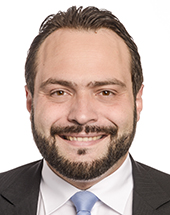


| Rank | Name | Country | Group | Speeches | |
|---|---|---|---|---|---|
| 1 |

|
Lukas Sieper | Germany DE | Renew Europe (Renew) | 487 |
| 2 |

|
Juan Fernando López Aguilar | Spain ES | Progressive Alliance of Socialists and Democrats (S&D) | 454 |
| 3 |

|
Sebastian Tynkkynen | Finland FI | European Conservatives and Reformists (ECR) | 451 |
| 4 |

|
João Oliveira | Portugal PT | The Left in the European Parliament (GUE/NGL) | 284 |
| 5 |

|
Vytenis Povilas Andriukaitis | Lithuania LT | Progressive Alliance of Socialists and Democrats (S&D) | 273 |
All Speeches (171)
Question Time with Commissioners – EU-China trade relations
Date:
03.10.2023 16:03
| Language: EN
Speeches
Commissioner, thank you for being here today with us for discussing a matter of pivotal importance such as the future of our trade relationship with China, a country that we see as a partner in the fight against global challenges, an economic competitor and also a systemic rival. Last week you spoke at Tsinghua University and you rightfully insisted on the concept of reciprocity. Also, in light of the fact that our trade relations with China are becoming more and more unbalanced, how can we reverse this trend? Is there any action plan for reducing this trade gap? What about critical technologies and rare earths? These are two fields in China has a remarkable advantage at the global level. Furthermore, as stated by the President Ursula von der Leyen during the State of the Union, the Commission will launch an investigation over Chinese state subsidies in the production of electric vehicles. I believe that the result of the investigation will be pretty clear and straightforward. Therefore, I would like to ask you whether you are already working on a plan to counter these distortions of the market.
The case of Dr Gubad Ibadoghlu, imprisoned in Azerbaijan
Date:
13.09.2023 20:44
| Language: EN
Speeches
Madam President, dear Commissioner, dear colleagues, the illegal detention of Dr Ibadoghlu is yet another example of the continuous crackdown on the rule of law and the violation of human rights perpetrated by the authorities in Baku, both domestically and at the regional level. Inside the country no dissident is allowed. According to Human Rights Watch, in 2022 more than 30 people remained wrongfully imprisoned. NGOs are prevented from working independently and systemic torture and ill treatment in custody, as well as restrictions on media freedoms, are the alarming normality. What is happening at the regional level is in front of our eyes. The hateful blockade of the Lachin corridor seriously jeopardised the lives of 120 000 ethnic Armenians, and the recent self-proclaimed willingness to reopen the corridor is nothing more than another attempt to absorb the region completely with the risk of a full-scale ethnic cleansing. Dear colleagues, I have recently prepared a written question on the case of Dr Ibadoghlu and a letter on the deteriorating humanitarian situation in Nagorno-Karabakh. We have to show that the brutal behaviour of the Baku regime will not be tolerated. We have to show that this Parliament must stand firmly in support of the Azeri civil society and in asking for the release of all the political prisoners. The smell of gas and oil shall not cover the scent of freedom.
Madam President, I would like to express my heartfelt thanks to you for your clarity and courage today. You are right: history is calling for a geopolitical union to diligently protect our companies and workers from deceptive trade practices, subsidies and dumping employed by China. None of our Member States has the size, the strength nor the authority to safeguard our technological and industrial sovereignty in isolation. What has happened in recent years demonstrated this conclusively. Selling to public opinion the opposite at this juncture is much more than recklessly naive. Similarly, failing to publicly and unequivocally condemn the intolerable crimes against humanity perpetrated by Russia against the Ukrainian people is an act of profound hypocrisy. No pursuit of fleeting, easy electoral consensus can justify immoral silences and ambiguities. Our duty extends far beyond the next election. It encompasses the well-being of future generations of Europeans – a commitment I will continue to uphold no matter the risks. Yes, we must combine enlargement with political deepening. Yes, we must create an adequate budget financed by permanent common debt to protect our European common good. And yes, we must implement the necessary Treaty changes and launch a real European bottom up ... (The President cut off the speaker)
New Agenda for Latin America and the Caribbean in the aftermath of the EU-CELAC Summit (debate)
Date:
12.09.2023 18:11
| Language: IT
Speeches
Mr President, dear High Representative, ladies and gentlemen, few partnerships are really as strategic as the EU-CELAC one, a report on which I have always supported significant resources, both political and financial, must be invested. Today, about two months after summit, the first after an eight-year hiatus, it is time to draw the first conclusions. The final declaration was remarkable, not so much for what it contains, but for what is lacking. On everything, a clear condemnation of the Russian aggression in Ukraine. A lack that underscores how perceptions and priorities can diverge even on fundamental issues. But we don't give up. After this long period, we have relaunched a political dialogue that will have to focus on aspects of greater convergence, such as climate change. Because only together can we make a difference. I would also like to stress the importance of judicial cooperation, including investigative and penitentiary cooperation, which is a key pillar in addressing the challenges of organised crime and terrorism. And I am thinking of relaunching the idea that the idea of a legally binding treaty and international convention can and should be the right pillar for closer cooperation between our continents. Our relations with Latin America can and should be the mirror of our geopolitical ambition: to us to reflect a transparent and truly courageous image.
Iran: one year after the murder of Jina Mahsa Amini (debate)
Date:
12.09.2023 17:02
| Language: IT
Speeches
Mr President, dear High Representative, ladies and gentlemen, one year after the atrocious assassination of Mahsa Amini, something has changed in Iran but certainly not for the better. The Iranian leadership has put in place ultra-repressive and brutal measures to strengthen its control over the population: Surveillance cameras have been installed on the streets and thousands of people are still being unjustly detained, without any respect for their fundamental rights. In addition, we have recently learned that the Swedish citizen, an official of the European Union, Johan Floderus, was arrested more than 500 days ago without formal charges and is still awaiting trial. The silent diplomacy It wasn't enough. It is time to bring this case to light, to firmly, openly, publicly demand the release of Floderus. We cannot tolerate the repugnant repression of the Iranian government and must use all means at our disposal to bring Johan home. Despite this authoritarian behavior, women and men are still fighting for their freedom, because there are no rocks, colleagues, regardless of their size, that can stem the sea: We must be close to them in their legitimate aspiration for a free society, in which everyone can decide for himself. I invite you to raise our voice together: democracy, justice and freedom for the Iranian people.
EU-Tunisia Agreement - aspects related to external migration policy (debate)
Date:
12.09.2023 11:02
| Language: IT
Speeches
Mr President, Commissioner, ladies and gentlemen, despite the numerous condemnations of this House on the authoritarian drift of President Saied, last June the Memorandum of Understanding between our Union and Tunisia, celebrated as a milestone in the consolidation of this partnership, was ratified. While Tunisian democracy is being eroded more and more every day, in front of us there is the duty to ask ourselves who are the allies we want by our side and what are the red lines to draw, especially when we talk about human lives. But before we even look into other people's homes, we should come to terms with what is happening within our union. We cannot, in fact, allow the will of some governments, including unfortunately that of my country, Italy, to approach the phenomenon of migration in an instrumental, wicked and completely disrespectful of human rights and to dictate, finally, the European agenda. A few days after the signing of the agreement, the current Italian government convened a conference on migration, defining the memorandum of understanding as the beginning of a different relationship. If by different we mean an approach based on the absence of conditionality, on massive forced pushbacks of migrants sent back to the desert without water or food, as happens frequently in Tunisia, thus repeating the mistakes and horrors of the Berlusconi-Gaddafi agreement, we can no longer afford to talk about the future but only about a return to the darkest pages of our history.
European Defence Industry Reinforcement through common Procurement Act (EDIRPA) (debate)
Date:
11.09.2023 18:03
| Language: IT
Speeches
Madam President, ladies and gentlemen, Commissioner, what we are discussing today is an essential tool to remedy the long-standing fragmentations that grip the European defence market, fragmentations that, according to the most recent data, cause an unacceptable waste of resources and inefficiencies estimated at between EUR 26 and 130 billion on an annual basis. EDIRPA is a response to what many in this Parliament have often referred to as the missing pillar in the process of European defence integration, namely the procurement joint defense equipment. EDIRPA is the further piece within a mosaic of instruments in synergy with each other. From a medium-term perspective, it will be necessary to bring all the various initiatives within a single framework. framework holistic and all-encompassing, EDIP. Only then can we move towards a true Europeanisation of the defence and security sector: two common goods that cannot be separated from the financing of the necessary actions through the issuance of common debt. Dear colleagues, in these uncertain and threatening times, history puts us at a crossroads: either we continue along the path of integration or we will find ourselves powerless in the face of the work of other international actors. We have to decide, if we don't want events to decide for us. Time is essential. That is why we must vote yes to EDIRPA and vote yes to defence Europe.
Madam President, Commissioner, dear colleagues, in 2022, after regrettable delays, we finally have reached a significant milestone with the official start of the accession talks and acknowledgment of the remarkable progress Albania has made in advancing the EU reform agenda. Tirana has consistently demonstrated unwavering commitment to EU integration, both in the political and the public domain. I commend the report for acknowledging this dedication, while also highlighting areas that require further attention and efforts, particularly the fight against corruption and media freedom. Dear colleagues, recent events, especially the criminal aggression in Ukraine, have emphasised once again an obvious truth – strength lies in unity. Now more than ever, the completion of the EU enlargement in the Western Balkans has become a strategic priority for the future of our Union. It is not by chance that the candidate countries, including Albania, have been particularly targeted by Russian disinformation and hybrid attacks. We have demonstrated in practice, and not just in words, our resolute commitment to enlargement, avoiding further factious delays that undermine our credibility and frustrate our partners. Although significant work remains to be done, Albania is undoubtedly on the right track. I urge them to keep delivering on the necessary reforms foreseen and our Union, especially the Member States, to recognise and reward their efforts in the critical years of negotiation ahead.
Madam President, Commissioner, dear colleagues, it is often said that the decision to speed up the concession of the candidate status to Bosnia and Herzegovina is rooted in the changed geopolitical environment, especially the Russian war against Ukraine. This, in my opinion, is a sad reality. We cannot continue to treat the Western Balkans as a geopolitical problem that requires our reaction to external inputs. The potential increase of influence from third actors is certainly a growing danger that we should take into account, but we need also to take a lead and that cannot be our sole guiding light. It is also necessary to start to be coherent with our values. We have to sanction, finally, the secessionist actions of Dodik that is freezing and jeopardising the functioning of the state and is also undermining all chances of constitutional major reforms in the country. We must adopt, therefore, a proactive approach, leaving apart the tactical manoeuvres that in the past certain Member States have used so far to slow down the enlargement and to not take measures. Let us defend the perspective towards the European future for the Bosnians, let us realise that the Western Balkans are future members of our Union and not simple partners that we should convince to stay on our side. Otherwise we will simply continue to react to threats and at a certain point it will be simply too late.
Madam President, Madam Commissioner, I would like to thank our rapporteur, Evin Incir, for the excellent recommendation that correctly reaffirms our commitment to a two-state solution, calls for an immediate cessation of violence, and stresses the importance of organising free and fair elections in Palestine. Countless Palestinian and Israeli lives are lost every day. While recognising the legitimate security concerns of Israel about terrorism, we cannot ignore that the expansion of illegal settlements, as well as the destructions and the civilian victims provoked by the Israeli government’s military operations, not only pose a significant obstacle to the realisation of a two-state solution, but also tragically contribute to a growing rejection from the Palestinian people of a moderate leadership. Therefore we must support and facilitate effective cooperation with the Palestinian Authority to build up democratic institutions. But we must also foster our cooperation with that part of the Israeli civil society that is clearly standing against all abuses and calling for the rejection of the hardliners’ long-term plan: building a state for the settlers in place of the Palestinian State, as the UN’s permanent observer said. Dear colleagues, we must not lose sight of our shared goals: a future where Israelis and Palestinians can live side by side in peace, security and mutual respect. Therefore I call on each of you to support this recommendation, sending them a message of hope and determination.
Dear Commissioner, thank you for the all the details. I would like to ask you something related to the domain in this case of peace and security. When we presented the European Peace Facility, we stated that this would have increased our readiness to support efforts from our partners, as well as the predictability of our actions. Now that the EPF funds have been completely devoted to the much-needed support to Ukraine, how can we support our African counterparts? And is there any plan to devote specific funding to this end?
Madam Commissioner, thank you for being here today with us. As rightfully stated in the final declaration of the EU—African Union summit of February 2022, we do share with our African counterparts a series of common challenges that need to be addressed in a cooperative way. Further than that, in the EP recommendation for the Strategic Partnership with the Horn of Africa, for which I served as the rapporteur, we have stressed the need to reinforce this cooperation, leaving apart the obsolete donor recipient mentality and unleashing all its potential, basing our relation on timely, effective talks aimed at finding common ground. One area in which it seems to be difficult to keep the same speed and agree on certain commitments is the one of energy transition. Therefore I would like to ask you to elaborate on key messages and expectations conveyed by our African counterparts in terms of their perspectives on transition paths. For example, what is the pace of it, and the means of financing it? Where do they expect us to contribute the most? Thank you very much, and I will be eager to listen to your reply.
Lessons learnt from the Pandora Papers and other revelations (debate)
Date:
14.06.2023 17:49
| Language: IT
Speeches
Madam President, ladies and gentlemen, Commissioner, two years after the shocking revelations of the International Consortium of Investigative Journalists, involving politicians, businessmen and public figures, sincerely too little has been done. But we must not stop fighting so that scandals of this magnitude do not happen again. This is particularly true of the resilience of our democracy, given the constant erosion of citizens' trust in the rule of law, and of our economic system. Tomorrow we will vote in favour of the report, because the rapporteur has done a very good job and I thank him. However, alas, without more binding commitments for our Member States, we risk that these good intentions simply become words in the wind. The defence of journalists' whistleblowers is a vital issue, which would also be helped through the establishment of a fund for investigative journalism, as suggested in the report itself. Tax evasion and avoidance, including the practice of preferential regimes put in place by some Member States, which we can therefore define as accomplices, which do nothing but take away the necessary resources from other States, are instead pathologies to be eradicated at any cost. We owe it to our citizens, we owe it to the honest taxpayers, we owe it to the last who punctually become the first when it comes to making sacrifices, especially economic ones.
Question Time (VPC/HR) - Relations between Armenia and Azerbaijan and the situation in Nagorno-Karabakh and at the Lachin Corridor
Date:
13.06.2023 16:00
| Language: EN
Speeches
Yes, thank you, Chair. Our representative, following on from your suggestion, I wanted to ask you one of the key issues that I think could be very important for the peace process, the mining, the demilitarised zones. If a mutually acceptable internationally guaranteed peace agreement is to be reached, we must make sure that all the areas affected by hostilities are made safe for the civilians. Our Union and the Member States have a consistent experience with mining and, thus, I was wondering if we already have offered our full support to this end and if this can be done through a proper CSDP mission really focused on de-mining or agreed bilaterally on an ad hoc basis?
Question Time (VPC/HR) - Relations between Armenia and Azerbaijan and the situation in Nagorno-Karabakh and at the Lachin Corridor
Date:
13.06.2023 15:56
| Language: EN
Speeches
Mr President, dear High-Representative Borrell, first of all, I would like to thank you for being here today with us for discussing once again the relationship between Armenia and Azerbaijan. Despite the fact that the situation in Nagorno-Karabakh and especially in the Lachin corridor continue to cause concern due to the volatility of the security environment, I strongly believe that it is now time to devote all our attention to the relationship between the two capitals. Indeed, we are now seeing a window of opportunity for a comprehensive peace agreement, and I do believe that it is essential that our Union plays a major role in this phase, not only by brokering the negotiations, but also in what concerns the guarantees that the Armenian side rightfully demands. Talking about the negotiations, what role we can play in ensuring that the potential peace deal is truly acceptable by both sides, thus avoiding a recrudescence of hostilities in the future? What we can do to facilitate the return of the war prisoners held by Baku, actually isolated from their families? And on the practical side, what can be our contribution to the international mechanism for guaranteeing the security of the Armenian population residing in Nagorno-Karabakh? Do you see any involvement and subsequent reinforcement of our CSDP mission on the ground?
EU Day for the victims of the global climate crisis (debate)
Date:
12.06.2023 18:48
| Language: IT
Speeches
(IT) Mr President, ladies and gentlemen, Madam Commissioner, many people were, and still are, dealing with the problem of climate change with an attitude that is too often passive, and in some cases even cowardly, especially those who are going to entrench themselves behind the illusion that the extreme events related to it are isolated or in any case inevitable cases. In our eyes there are still the devastating images of the floods in Belgium and Germany and, more recently, those that occurred in my country, in Italy, hit the heart twice in rapid succession, first in the Marche and then in Emilia-Romagna. A short-sighted policy interested only in immediate electoral gain continues to play with people's lives. Our governments, starting with those of the countries most at risk, including mine, where the funds dedicated to combating failure and the energy transition suffer the greatest delays, must place the securing of our territory at the center of their agenda, without absurd and wicked excuses to deny reality. To truly honor all the victims, to truly honor all the children who died in these emergencies, we cannot be content with heartfelt appeals and general strategies. We need courageous actions. We have to pass the Nature Restoration Regulation. We must exclude from the Stability Pact all expenditure on emergency staff. If not now, when?
Roadmap on a Social Europe: two years after Porto (debate)
Date:
10.05.2023 18:00
| Language: IT
Speeches
Mr President, Commissioner, ladies and gentlemen, 73 years after the Schuman declaration, we can look back and be aware of the progress we have made. But if we really want to preserve and improve even more what we have achieved with difficulty, with so many and countless challenges, a real social Europe for us is the next step to take, necessary and essential. In our resolution of last March, we reiterated once again the need to have a directive on adequate minimum income, a directive to further improve the accessibility, adequacy and effectiveness of these instruments. Social safety nets contribute to reducing social inequalities and disparities, enhancing upward social convergence while promoting integration into the labour market. However, while we are trying to push in this direction, some countries, including unfortunately mine, Italy, are actually reducing their support for the most fragile citizens and increasingly diverging from the rest of the Union, speculating blindly with their propaganda on the skin of the weakest. The Europe to which we aspire, the one we want and must leave to our children, is a social and inclusive Europe, in solidarity, which leaves no one behind. We must and we all want to move in the same direction and those governments that go back must be sanctioned, not tolerated or, even worse, praised for their misdeeds.
Madam President, dear Commissioner, dear colleagues, we must be explicit. To move forward on their European path, it is essential for both Kosovo and Serbia to abandon provocative language and hostile actions, leaving space for concrete efforts to reach mutually acceptable and negotiated solutions. The road towards EU integration will require difficult decisions and compromises, and it is crucial for both Belgrade and Pristina to start thinking in the long term and focus on the larger goal of a European future. Our contribution to these efforts is clear. We must be firm in our commitments and continue to do our best to prove the clear benefits of EU membership. To do so, I believe it is essential to reinforce and to find synergies of action between the EU initiatives for the region and the other bi or multilateral fora. And I would like to thank the colleagues and the rapporteur that supported my amendment in both reports in the committee. Therefore, colleagues, I urge you to support the excellent job of the rapporteur in this report to recognise the progress made and to encourage both Pristina and Belgrade to continue their efforts towards finding solutions that will ensure a stable, prosperous European future for their citizens because they are the future members of our European family.
Madam President, dear Commissioner, dear colleagues, once again, we are witnessing what could turn out to be another humanitarian catastrophe, and it is paramount to use all our means to prevent it. However, we cannot limit ourselves to the provisions of immediate humanitarian aid. This time, it is imperative to accompany our actions with a thorough reflection on our approach to foreign policy. In my recommendation on a strategic partnership with the Horn of Africa and Eastern Africa, approved last October, this House pointed out the absolute need to establish a thorough engagement with our counterparts based on the preventive and substantial dialogue aiming at understanding the needs and working together towards the solutions. I have the feeling that this has not happened in Sudan as the long-lasting problems that persist since the coup that overthrown al-Bashir are at the core of the current disaster. We welcome the talks for a democratic transition, full of wishful thinking, as it should be, but we must understand that hoping for the best is not sufficient. If we do not engage constructively and in a timely, effective manner, we will always need to run for cover when it is already too late and this is something that cannot be accepted anymore.
The need for a coherent strategy for EU-China Relations (debate)
Date:
18.04.2023 10:06
| Language: EN
Speeches
Mr President, Madam President, High Representative, dear colleagues, it is certainly true that we are obliged to pursue a selective engagement with Beijing on those dossiers that are multilateral by nature, most notably the fight against climate change. But we cannot overlook those unacceptable behaviours that the Chinese Government refuses to leave apart. Several colleagues in this room are still under sanctions. And last Friday, we have seen the unbelievable arrests of human rights activists that were going to a meeting with our delegation in Beijing. Furthermore, the so-called military exercises near Taiwan are dangerously similar to a fully-fledged invasion. And China’s neutrality regarding the Russian invasion of Ukraine is – quoting our High Representative – simply just not credible. In diplomacy and in geopolitics, it takes two to tango. Nothing more than a mere selective engagement on certain issues can be accepted before we see real and effective actions from our Chinese counterparts in those fields that are not only essential to us, but universal by definition, such as human rights. Let’s keep the channel for dialogue open, but without being naive, therefore protecting our strategic infrastructure and our European technological sovereignty. And let’s always speak with one single voice to defend our red lines for real.
The Rights of children in Rainbow Families and same sex parents in particular in Italy (continuation of debate)
Date:
29.03.2023 20:33
| Language: IT
Speeches
Mr President, ladies and gentlemen, I am relieved that this issue is finally on the agenda today, but also deeply saddened. Yes, because violence and discrimination against rainbow families and LGBTI people are becoming more and more dramatic every day in Europe and in my country, in Italy. Over the years, Italian homogenitorial families have waged a courageous and complex battle with judges and in municipal administrations, carving out small spaces to ensure a minimum form of recognition and protection. What we are witnessing are the latest in a series of actions by the Italian government to further erode their rights, those of rainbow families and those of Italian girls and boys. Justice Commissioner Reynders was peremptory and unequivocal on this issue. Member States must recognise children of same-sex parents for the purpose of exercising rights under EU law. As European citizens, we have a duty to resolve this issue without ideological exploitation and unite in solidarity with the many rainbow families and activists who have taken to the streets in recent weeks, urging the European Union to use all the mechanisms at its disposal to ensure that Italy complies with its obligations under European law. We cannot allow European values of equality and inclusion to be compressed, threatened and ultimately erased in silence. Taking the rights of Italian children hostage is not only politically absurd, but also morally unacceptable. Colleagues, friends, let us not leave them alone, because love is love, always and in any case.
Failure of the Silicon Valley Bank and the implications for financial stability in Europe (debate)
Date:
15.03.2023 15:17
| Language: IT
Speeches
Madam President, Commissioner, ladies and gentlemen, we have followed with great apprehension the collapse of Silicon Valley Bank (SVB) last Friday, especially given the potential reverberation it had on the British branch and the possible contagion in our continent. In the face of the disturbing signs that come from the Credit Suisse, let's see a pattern This is similar to what happened 15 years ago. On the one hand, we are reassured by the positive signals from our supervisory authorities on the excellent levels of capitalisation and liquidity of European banks, but on the other hand, we hope, indeed we strongly ask, in the light of this crisis and the related concerns, that the ECB will listen to the voice of reason and prudence, committing itself to prevent further increases in interest rates that would increase the financing costs beyond what is due, already unsustainable for businesses and households. In addition, we have also seen that, despite the fact that the SVB was considered one of the best banks in the United States until a few days before its collapse, and despite the complex regulatory framework that we have already adopted for 15 years, crises can still happen. A black swan is never impossible. We therefore have a duty to guarantee the deposits of our savers, which must always be kept safe. The Commission and the Council must swiftly resume negotiations on EDIS. Without the third leg of the Banking Union, the table will never be stable.
More Europe, more jobs: we are building the competitive economy of tomorrow for the benefit of all (topical debate)
Date:
15.03.2023 14:18
| Language: IT
Speeches
Mr President, dear Commissioner, ladies and gentlemen, in recent years we have seen an exponential increase in the demand for digital skills in many professions. Europe is in the midst of a real industrial revolution, with promising developments but also challenges that we must not underestimate. A revolution that can drastically change our economy and our society. We know how important digital transformation is: The cost of non-Europe in this sector is estimated to grow over time to EUR 1.3 trillion in 2033. However, these transitions must be governed, we must not be overwhelmed by them. And it is good that 2023 is called the European Year of Skills, because there is still much to be done on the subject. skilling and theupskilling. In fact, outstanding studies show that the impact of digitalisation on the labour market depends mainly on the skills required and the degree of routineness of the tasks. 24% of the low-skilled population in our Union is at risk of poverty, a percentage that is reduced as the level of education increases. This is the challenge before us and we should be particularly careful not to really leave anyone behind, otherwise we will obviously be prey to a very dangerous social anger.
Deterioration of democracy in Israel and consequences on the occupied territories (debate)
Date:
14.03.2023 18:19
| Language: EN
Speeches
Mr President, the recent developments have shown a global alarming trend towards the normalisation of far—right and ultra—nationalist ideologies, with the potential to further erode the democratic principles on which the EU and the EU partnership are founded. Israel makes no exception. As it is well known, the Pegasus spyware developed and distributed by an Israeli company is being widely used to target human rights defenders, journalists and political opponents across the world, including in our Union. This is an aspect that should be firmly taken into account in all our cooperation, especially when they are set up, and as it happened with the Israeli police force, including on cybercrimes, to ensure adequate controls and conditionalities, because the use of such spyware to silence dissidents and stifle free speech is a threat to democracy and must be firmly condemned. As representatives of the European Union we must use our voice to call for greater accountability and transparency in the sale and the use of such technology. We must stand in solidarity with those who fight for human rights and democratic values, because only by working together can we ensure a future where all people can live in freedom, dignity and justice.
Madam President, ladies and gentlemen, in the land of lies, truth is a disease, said Mr Collodi. An aphorism that is always valid in mine, where the directive on the energy performance of buildings is often presented as an attack on citizens' real estate assets. In fact, the text has extensive derogations and exemptions. There are no automatic sanctions, sales restrictions and there is also a recalculation of energy classes. In short, we are in the midst of an energy crisis: buildings are responsible for 40% of consumption and 36% of greenhouse gas emissions and the directive helps us to separate ourselves from Russia and other authoritarian regimes in terms of energy supply. So we support her. But I want to be very clear on one point: the conditio sine qua not for us it is the establishment of a European retraining fund financed by the common debt, as provided for in Article 9(6). It is crucial that we make this effort to renovate the building stock together, because if this were not the case, given the different tax areas, we would risk not achieving the objectives and creating distortions and inequalities. No to the immobility of real estate, yes to an intervention with certain resources to build together a greener, fairer and more sustainable future.