
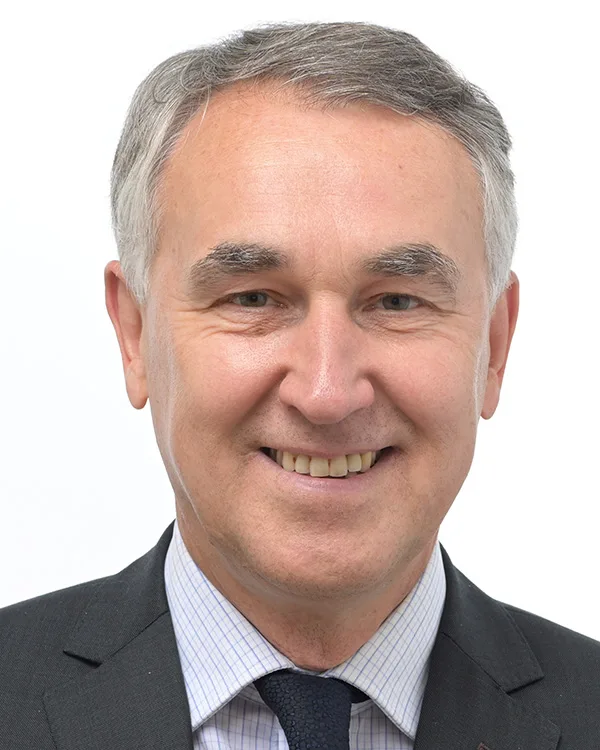

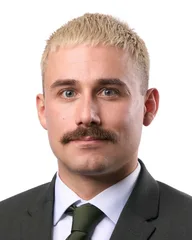
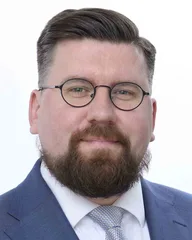
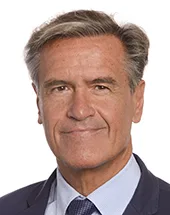
| Rank | Name | Country | Group | Speeches | |
|---|---|---|---|---|---|
| 1 |
|
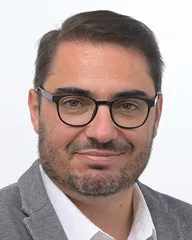
Lukas Sieper | Germany DEU | Non-attached Members (NI) | 390 |
| 2 |
|
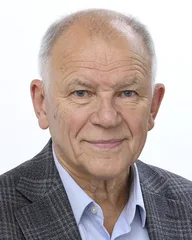
Juan Fernando López Aguilar | Spain ESP | Progressive Alliance of Socialists and Democrats (S&D) | 354 |
| 3 |
|
Sebastian Tynkkynen | Finland FIN | European Conservatives and Reformists (ECR) | 331 |
| 4 |
|
João Oliveira | Portugal PRT | The Left in the European Parliament (GUE/NGL) | 232 |
| 5 |
|
Vytenis Povilas Andriukaitis | Lithuania LTU | Progressive Alliance of Socialists and Democrats (S&D) | 227 |
All Contributions (201)
The continuous crackdown of political opposition in Cambodia
Madam President, a year ago, I stood at this very same spot and noted with regret that a strong European Union response to the political prosecution and human rights violations in Cambodia was long overdue. I called for an immediate review of our relations with Cambodia. If you don’t trust me, ask the Cambodian opposition representatives seated in this hall and observing our discussion. Ask those who feel with their own lives the real business line of the Cambodian regime. Can representatives of the Council, the Commission and the EU Delegation to Cambodia present the results of their work to this Parliament? To what extent have the recommendations made in our previous resolutions been implemented? I do not see any improvement in the human rights situation in Cambodia. Let’s be clear: the opposition parties will not participate on an equal footing in the communal elections in June, the number of political prisoners will only increase, and the voice of the Cambodian people will not be taken into account. The EU must use all its tools at its disposal, such as preferential trade agreements and the EU Magnitsky Act, to send a clear message to the ruling Cambodian so—called People’s Party. Our solidarity and support is for the Cambodian people and should be directed accordingly.
EU preparedness against cyber-attacks following Russia invasion on Ukraine (debate)
Mr President, Russia’s military and hybrid aggression against Ukraine only confirms the global nature and importance of cybersecurity. Russia’s direct and indirect attacks against Ukraine have also increased the impact of the ongoing ‘Cold hybrid war’ on the West. Deterring cyber threats emanating from Russia and its allies, such as Belarus – don’t forget that – requires immediate attention to strengthening the EU’s cyber resilience. We need to reassess existing threats and take the necessary decisions to protect our critical infrastructure and, more importantly, our people. We need to understand that cyber threats are here to stay and can have serious consequences if not properly addressed. We must pay particular attention to protecting our information space and our people from Russian trolls and attempts to interfere in our democratic processes by manipulating public opinion. With Russia waging a brutal war against democracy and freedom in Ukraine, we no longer have the luxury of talking about action. Now it’s time to act and ensure the EU’s and our partners’ cybersecurity.
Increasing repression in Russia, including the case of Alexey Navalny (RC-B9-0181/2022, B9-0181/2022, B9-0185/2022, B9-0186/2022, B9-0188/2022, B9-0192/2022, B9-0214/2022) (vote)
Mr President, Russian Orthodox Patriarch Kirill, responding to a request that he intervenes with Russia’s leaders, with whom he is in a very close partnership, to end the war in Ukraine, accused the West of disregarding Russia’s security concerns and stoking tensions between the two countries in a bid to weaken Russia. He blessed the Russian troops fighting in Ukraine later. Any religion can serve and become a tool in a war of propaganda and disinformation. That’s why, dear colleagues, I prepare and ask your support for the following oral amendment, I quote: ‘Condemns the role of Patriarch Kirill of Moscow, Head of the Russian Orthodox Church, for providing theological cover for Russia’s war of aggression against Ukraine. Praises the courage of 300 priests of the Russian Orthodox Church who have signed a letter condemning the aggression, grieving over the ordeal of the Ukrainian people and asking to stop the war.’
Conclusions of the European Council meeting of 24-25 March 2022: including the latest developments of the war against Ukraine and the EU sanctions against Russia and their implementation (debate)
Madam President, High Representative, Commissioner, dear colleagues, after his failed attempt to turn Ukraine away from Europe, Putin finds himself haunted by a question: What must Russia do with Ukraine? And his answer? I quote: ‘We do not need a Nazi, Banderite Ukraine which is an enemy of Russia and a tool of the West used to destroy Russia’. These lines are taken from an article by Ria Novosti, an official mouthpiece of the Russian state, in response to the Western sanctions to the massacre of civilians in Bucha. Does anyone in this Chamber who is in their right mind, question the existence of Russian fascism and chauvinism? The Russian regime is an enemy of the West – all of us. Dear colleagues, Western support for Ukraine must be based on the binary principle that either we are with Ukraine or we are against freedom, democracy and all the values that we cherish in the European Union. We must not even think about our discomfort or the disruption of our daily lives. We must do everything that is necessary to support the existential fight of Ukraine. I regret that the fifth EU sanctions package does not cover all fossil fuels. It really is a shame on us. We are not convincing Ukrainians that the European Union is doing all it can and must. Finally, High Representative, I call on the European Union to appoint a special representative for Ukraine in order to properly coordinate the delivery of all kinds of aid and the eventual reconstruction process. Let us get ready for this. We have to realise that the Conference on the Future of Europe, without the people of Ukraine, will never fulfil its main purpose. Let’s invite Ukrainians.
Situation in Afghanistan, in particular the situation of women’s rights (debate)
Madam President, while we’re sitting here women and girls in Afghanistan are being erased from all parts of society. Women and girls are effectively no longer able to receive an education, participate in public life, or no longer have full access to their bodies, their voice and their future. It is difficult to comprehend. Seemingly overnight, the Taliban has undone over 20 years of progress in the sphere of human rights and female empowerment. And today, women are once again second class citizens in Afghanistan. I stand in solidarity with the Afghan women who, in the face of state violence and arrest, protest and stand up to the de facto Taliban authorities and continue to actively demand the freedom, democracy and equal representation that they rightly deserve. The Taliban regime, which has forcibly taken control of Afghanistan, must adhere to the five benchmarks set out by the Council in order for future new engagement. And the West must present a united front and continue to push the de facto government into respecting the rule of law, human rights and, in particular, women’s rights. Otherwise, we cannot trust them to act responsibly with the human aid that we provide. We have to continue to express our support for Afghan women and girls. We have to give them the hope and we have to fight for their future. This is why, together with my colleagues, we put forward a proposal for the 2023 EU budget to provide funding to the Afghan online university. We believe it is important that Afghans in Afghanistan and abroad in refugee camps continue with their education despite poverty and oppression.
EU Protection of children and young people fleeing the war against Ukraine (debate)
Mr President, the war of aggression launched by the Putin regime against Ukraine is primarily directed towards Ukrainian civilians, especially women and children. The brutal and criminal acts of Putin’s war amount to ethnic cleansing and genocide. Putin is seeking to expel Ukrainians from their homeland, to seize their land and property. Atrocious war crimes committed by Russian soldiers increasingly threaten the security and livelihoods of Ukrainian people. The Russian aggressors seek to impede the evacuation of civilians, oftentimes by taking advantage of humanitarian corridors in order to force the resettlements of Ukrainians to Russia. The UN Refugee Agency must facilitate the safe return of all Ukrainian refugees. I sincerely do not understand and strongly question the agreements made by the head of the Red Cross, Peter Maurer, during his visit to Moscow, to open refugee camps in Russia. Can we allow this de facto human trafficking? Ukrainian refugees, especially children and young adults, should not become a lost generation, deprived of a happy childhood and the chance of an education. We must do everything we can to ensure the future of peaceful Ukrainians caught up in Putin’s war. It is also important that Ukrainian children receive an education without losing their cultural identity and language. Ukrainians are in need of safe refuge. We must now behave as Europeans and welcome all of them into our family, into our Union.
Debate with the Prime Minister of Estonia, Kaja Kallas - The EU's role in a changing world and the security situation of Europe following the Russian aggression and invasion of Ukraine (debate)
Madam President, Putin’s plan to steadily expand aggressive Russkiy Mir has turned into a brutal war against Ukraine, a human tragedy and become a litmus test for the EU and the West in general. Let us recognise that Ukraine is a welcome candidate to our family. Let us help repel the aggressor and let us give them all the support they need. Let us provide a safe haven for Ukrainian women, children and elderly people who are forced to flee. We have no right to let Srebrenica happen again. We must do everything possible to return the sky over Ukraine to a peaceful blue and to make the evacuation of civilians safe. Let us create an EU civilian force that can ensure the safety of evacuation at short notice. Colleagues, no-fly zone, no Europe zone. The European Union’s response to the aggression against Ukraine must be based on a principle, collective victory or collective failure, and I believe only the latter is not a choice. Long live European Ukraine!
The deterioration of the situation of refugees as a consequence of the Russian aggression against Ukraine (debate)
Madam President, Putin’s war against Ukraine is first and foremost a war against civilians, against women, against children, against all the Ukrainian people. The barbaric actions of the Russian military, which qualify as war crimes, are destroying Ukrainian towns and villages, killing and injuring Ukrainians. There is no safe place in Ukraine today and no guarantee of security for the future to anyone. Ukrainian refugee flows are already exceeding 100 000 people a day. This number will continue to grow and will cover wider and wider areas of Ukraine. By the end of this week, the refugee influx will exceed the 2015-2016 scale, at least by twice. Just a few days ago, together with my colleagues, Members of the European Parliament, I visited the Polish, Ukrainian border crossings and the refugee reception centres. I commend the Polish side for the well—organised reception of refugees and the provision of assistance. However, I would like the Ukrainian refugees to feel EU solidarity, support, assistance and protection as well. We need to ensure the EU presence in every single border crossing and refugee reception centre. Our solidarity must be translated into real aid action in real time. Slava Ukraini!
Foreign interference in all democratic processes in the EU (debate)
Madam President, authoritarian regimes and dictatorships are based on lies and deceit. They have mastered these weapons and have now turned them against us. Expertly crafted misleading news undermines civic engagement and creates a parallel reality. For example, the Kremlin has launched a full—scale war against Ukraine and has succeeded in convincing the Russian public that this is just a ‘special operation’. China imprisoned and exploited more than a million Uyghurs in forced labour camps, but continues to cover up its crimes with vocational education and training centres. We cannot allow our European society to be manipulated in this way any longer. Let us remove these sputniks from our information orbit. Let us prevent the propagandists of authoritarian regimes and dictatorships from being accredited. Let us protect and support the work of independent media. Only then will the minds and hearts of Europeans be protected. This is our common goal.
Russian aggression against Ukraine (debate)
Mr President, Madam President, High Commissioner, dear colleagues, dear Ukrainians, today we are back to 28 in the European Union again. Ukraine has emerged as a great member of the European family. Ukraine is bravely fighting for European values and freedom for Europeans. Let us give Ukraine its due: providing a candidate status now and then accepting it in the European Union. Every day that passes makes things worse for Ukraine and we cannot allow it. Today, the future and the fate of Europe is at stake in Ukraine. Russia’s traitorous operation only confirms the Putin regime’s choice to draw new red lines on the face of Europe. By ordering the attack on Ukraine, the Russian leader, Putin, has become a war criminal and has brought the Belarusian dictator Lukashenko with him. They are already in the dustbin of history. Their actions are already condemned and soon due to be convicted. Let us give Ukraine a weapon with which it can defend itself against the aggressor. It’s our duty. And let us provide humanitarian aid to its people who are suffering from the crimes of its aggressor. This support must be such that the West can look Ukraine in the eye. Let us isolate Russia. The full political, economic and cultural blockade. Keep Russia down, Kremlin cronies out and the Russian people close. Ukraine’s victory is our victory. Slava Ukraini!
EU-Russia relations, European security and Russia’s military threat against Ukraine (debate)
Mr President, may this be clear to all: Ukraine is part of the European family, as is Belarus. Ukraine’s security is Europe’s security, and it’s of concern to all of us. The military threat posed by Russia to Ukraine only confirms the hopelessness and aggressiveness of the Kremlin. I very much hope that the West has seized the opportunity to learn the lesson of unity, solidarity and common response. We will need this lesson in the future, because Putin seems to have neither the will nor the interest to change. By giving Ukraine the opportunity to reform on the basis of European experience and partnership, we are supporting and investing in the future of a democratic and prosperous Ukraine. We are enabling the country and its people to follow the path they embarked on back in 2014 with the Revolution of Dignity. Ukrainians decide their own future, and I am strongly convinced that the future of Ukraine is not Finlandisation, but Europeanisation.
Corruption and human rights (continuation of debate)
Mr President, corruption is the economic, political and psychological aspect of human rights violations. It distorts socio—economic realities, hinders access to public goods and quality services, and creates artificial hierarchies that impose additional costs on citizens and entire societies. The EU needs real Magnitsky sanctions that include corruption as a sanctionable offence. Our democratic allies – the United States, Canada, United Kingdom and Australia – all include corruption under their Magnitsky legislations. The absence of corruption at the EU level is not only restrictive but also means that we lag behind our global partners. By avoiding to punish high—level corruption, thus we become accomplices to human rights crimes. We fail the same people – human rights defenders and democracy activists – who we unconditionally support. Corrupt autocrats repress peaceful protests, illegally imprison people demanding basic freedoms and rights, and despite all of this, are free to use their ill—gotten wealth to maintain their power and enjoy a life of luxury, including real estate, holidays and education of their children in the West. Together with colleagues, we have repeatedly called on the European External Action Service and the Council to put an end to such abuses, and to update the European Union Magnitsky Act to include corruption. We will insist until this done.
Situation in Kazakhstan
Mr President, I would like to congratulate you on your debut in this position and I wish you all the best. Commissioner, dear colleagues, for decades, the ruling elites in Kazakhstan have been used to winning elections for with nearly 100% of the votes, but never felt safe facing people’s anger. Political instruments like Leader of the Nation gave them access to unlimited personal wealth and the influence of privileged groups, but were largely based on the fierce persecution and intimidation of political opponents. The unsustainable political system alone was unresolved and deepening social economic problems typical of the Soviet legacy is an optimal scenario for the influence and intervention of Russia, a kind of gendarmerie of the continent. Independent investigation, access to impartial legal defence and deep political reforms, not foreign intervention forces, is a genuine way forward for Kazakhstan. The European Union must review and strengthen its political conditionality vis-à-vis Kazakhstan.
Violations of fundamental freedoms in Hong Kong
Mr President, in recent years, the situation in Hong Kong went from complete neglect of the Joint Declaration as an international agreement to systematic dismantling of the well—functioning democratic system. Strong dominance of the Communist Party of China led to growing political persecution of opponents and systematic disablement of the democratic structures. China’s policy of unilaterally imposing, unscrupulously enforcing, and doctrinising the so—called ‘main principle’ is really disturbing. In this regard, the European Union must take immediate and firm actions to prevent ongoing China’s coercive policy against Lithuania and international companies. It’s time for the European Union to react and act in witness of the unprecedented coercive policies of communist China.
Continuous crackdown on civil society and human rights defenders in Russia: the case of human rights organisation Memorial
Madam President, when the development of civil society and a democratic state with the rule of law becomes a state-prosecuted crime, organisations such as International Memorial are liquidated. It’s a well-known and a very sad fact. The plain truth is that Putin’s regime perceives the dissolution of the former USSR as a tragedy and the collapse of historical Russia. It’s all about the empire of evil, which through the Red Terror, great purges, mass arrests and executions, deportation and imposed famine, has killed between 9 and 15 million people. My country, Lithuania, also paid a very high price with massive deportations and the killing of innocent people. The Kremlin tries to silence the victims of Bolshevik and Communist repressions, who speak with one voice and demand historical justice and acknowledgement, and not to repeat it ever again. Memorial International stands for historical truth and the prevention of a return to totalitarianism. Putin’s policy, which is built on the glorification of Stalinism and the Soviet terror policy, must be condemned in the strongest terms as non-compatible with today’s legal norms and European way of life. Let me wish Memorial International a very Happy New Year and I hope to see their activities continued.
The proposed Council decision on provisional emergency measures for the external border with Belarus based on article 78(3) TFEU (continuation of debate)
Mr President, the state-sponsored instrumentalisation of migrants against the EU Member States and its partners has some history, as Russia used it some years against Finland and Norway, and recently, Lukashenko’s Belarus against Lithuania, Latvia and Poland. Weaponisation of desperate migrants and organising human trafficking becomes a political tool of non-democratic countries to influence democracies through increasing domestic political tensions, heating public debate and imposing additional financial burdens. The EU response in practical measures definitely must be proportional, timely and effective. Above all, it must be adequate to the state of emergency activated by some of these Member States. Again, Commissioner, I am absolutely convinced that instrumentalisation of migrants is a crime which qualifies to be punished under the Magnitsky human rights sanctions regime. I call on the European Commission to come up with the needed proposal with no delay.
Situation at the Ukrainian border and in Russian-occupied territories of Ukraine (debate)
Mr President, the Russian bear angrily roaring on the European borders, tries to scare and impose on us the rules of the jungle. On the other hand, the Russian-speaking bear keeps the permanent member seat at the Security Council of the United Nations, the global forum of international cooperation. Compatible? Shocking? Acceptable? Continuous Russian Federation actions by the threatening and destabilising situation in Ukraine must be regarded as a threat to overall European stability and security. By violating international laws and bilateral treaties, Russia proves itself to be unpredictable and an untrustworthy member of the international community. Instead of following rules based on good neighbourly relations, it tries to force others with red lines and ultimatum rhetoric. Russia’s military build-up on Ukraine’s borders comes at a time of unsettled, assertive and globally growing authoritarianism, which disregards sovereignty and the democratic choices of others. Creeping hybrid strategy, intimidation and military pressure used by Russia, presents a real threat to Ukraine’s sovereignty. Today, as never before, Ukraine needs not only the EU’s understanding and solidarity, but a joint and resolute deterrence and support action. I call on the European Union to come up with a timely decision on the Common Security and Defence Policy mission to Ukraine. We have to use to a full extent the Civilian CSDP Compact tools to translate our partnership into something more tangible everybody understands.
Human rights violations by private military and security companies, particularly the Wagner Group
Madam President, Commissioner, dear colleagues, the Russian private, military and security companies constitute a major means of strategic deception which they call Maskirovka. Using legal loopholes, information denial and multilevel state apparatus support, those companies – in particular Wagner – became an important factor in hybrid warfare of the present Russian Federation. Russian PMSEs, well-tested during the occupation of Crimea and Donbas, further spread their activities and mercenary activities in Middle East and Africa. A major rise and further expansion of Wagner-type PMCs is guaranteed by well-controlled vertical political power and a ring of trusted friends in the Kremlin. At this crucial point, colleagues, we have to break down the anonymity of Wagner activities and disclose undercover their operations.
Situation in Belarus and at its border with the EU and the security and humanitarian consequences (debate)
Dear President, Commissioner, dear colleagues, 15 months after the falsified elections. It seems that it should have become clear to everyone that the dictator Lukashenko, who has illegally seized power, is in illegitimate power and can only be stopped by united, strong and timely action by the European Union. This is what civil society in Belarus expects and expects. Today we can summarize something. Again, the European Union does not speak with one voice. The price of Merkel's call to Lukashenko is the latter's accusation that Germany failed to fulfil its promise to receive the 2,000 migrants brought to Belarus by his government. In the ten months of this year, compared to the corresponding period of the 20th year, Belarusian exports to Germany increased by one hundred and five percent (double), to Italy by 70 percent, to Poland by 74 percent and to Lithuania by 41 percent. And this is already happening with the adoption of four packages of sanctions. Now there is still a shortage of those who question the sanctions against the Belarusian state airline involved in migrant smuggling. Why? The migration crisis created by the Belarusian regime is a direct way of threatening and influencing the internal and foreign policies of the European Union. This is a real and ever-growing multifaceted threat to all of us under the shadow of Russia, including the Astravyets nuclear power plant. Let us not betray the faith of the people of Belarus in a different future for the country. Let us not be afraid of our efforts to fight for European values, because only this proves Europe's strength and credibility.
The escalating humanitarian crisis on the EU-Belarusian border, in particular in Poland (debate)
Lukashenko, who is illegal, violates international law and cynically lies, has set up a state system of trafficking in migrants. Pre-deceived third-country nationals are offered a very expensive ticket to the European Union – to the future, to a better freedom. The international criminal scheme, led by the state institutions of Belarus, is an example of the exploitation of people of the 21st century. This action aims to create a hybrid system of pressure from neighbouring countries and to initiate a multifaceted internal crisis in those countries. The European Union's standard sanctions to stop the criminal actions of the Lukashenka regime are no longer sufficient, although they are operational. It is necessary to disconnect the Lukashenka regime from the Western banking system. It must become a red line that will stop Lukashenko's crime machine. Thank you for your attention.
Pushbacks at the EU's external border (debate)
The Chair, Honourable Commissioner, dear colleagues. The Belarusian authorities are organising the criminal and systematic export of seduced and deceived third-country nationals to the European Union. If you want to hear from me, this is twenty-first-century slavery, in the true sense of the word. The policy of pushing migrants is used by Lukashenka. His regime exploits migrants and cynically accuses Lithuania or Poland. An undeclared war is taking place on the Lithuanian border. Every night we hear gunshots on the side of Belarus. Fraudulent migrants are forced into regime tools. In the face of a hybrid attack, Lithuania is doing its utmost to fulfil its obligations. We already know and respect, but it has the right to defend itself against malicious actions, malicious actions of the Lukashenka regime and to protect its sovereign territory. Lukashenko’s crimes against humanity and the exploitation of third-country nationals must be assessed by an international court. And I hope we all get that day.
EU-Taiwan political relations and cooperation (debate)
Mr President, the political ambitions and growing global assertiveness of communist China pose an increasing challenge and strategic threat to Taiwan’s democratic future and wellbeing of Taiwanese. A notion of peaceful coexistence has been replaced by political intimidation, military pressure and hybrid provocations. We rightly commend Taiwan as a trusted partner in promoting human rights and freedoms, as a shining regional example and appreciate its cooperation in tackling global challenges such as the COVID-19 pandemic. Our mutual membership in the world community of democracies requires further common actions in extending EU and Taiwan relations in various fields. I call on and encourage the EU institutions to make a timely decision to rename the EU representation in Taiwan as the European Union Office in Taiwan. Let us use this chance and expand our support to the island of democracy.
The situation in Belarus after one year of protests and their violent repression (debate)
Mr President, Madam Commissioner, dear colleagues, there is no single article in the Universal Declaration of Human Rights that the Lukashenko regime has not broken. And, again, my appreciation and solidarity go to the Belarusian people, civil society and the democratic opposition, who have endured and continue the heroic struggle for a future democratic Belarus. The Lukashenko regime is in full denial and self-solation, but courted by a neighbour in the east. After refusing cooperation with the European Union, Lukashenko is on his way to fulfil the following threats: to flood the European Union with migrants, drugs and even nuclear waste. For several months now Lithuania, Latvia and Poland have been under massive hybrid attack, as the Lukashenko regime instrumentalises irregular migrants in revenge for the EU sanctions. Dear colleagues, Lukashenko sees no boundaries. His rule and act on behalf of the Belarusian people have no legitimacy. Lukashenko is a former president of Belarus. He has no right to bargain with the sovereignty of Belarus. In addition to the brutal repression against the people of Belarus, Lukashenko commits acts of state terrorism, all of which fall within the definition of universal jurisdiction and require prompt decisions from the international community and the European Union in particular. I call on the European Union to come up with next, effective and regime’s behaviour—changing sanctions to stop Lukashenko’s crackdown on Belarusian people and its hybrid attacks on neighbouring EU Member States. Zhyve Belarus!
Situation in Afghanistan (debate)
Madam President, Mr High Representative, dear colleagues, after 20 years of fighting international and domestic terrorist groups in Afghanistan, the immense efforts to build a state with education and healthcare to everyone were left with prevailing uncertainty and a lasting hope to sustain the achievements so cherished by the Afghan people. Complete withdrawal of NATO and partner countries’ forces, followed by the collapse of Afghan national forces, widespread demoralisation and paralysis of public institutions, left us observing a departing train. We are experiencing the worst-case scenario, which we strongly rejected just two months ago. A high price still to be paid, firstly, by the Afghan people and their vanished prospects of a better future. Despite all this, multiple voices advocating for a different future for Afghanistan remain. They speak as women, courageously protesting in different cities around the country, journalists continuing work despite arrests and violence, resistance fighters in the Panjshir Valley determined to sacrifice their lives. We have to admit that the peace talks only led towards institutionalisation and strengthening of the Taliban. It did not bring long-awaited stability and security for the Afghan people at large. Today, our strategy for Afghanistan is to protect Afghans and our joint achievements. We have to secure lives of Afghan change-makers and civil activists, and to save millions facing poverty and famine. We must demand that the Taliban ensure the basic rights, in particular of women and girls, and we need to build solidarity among the Member States to welcome the Afghan asylum seekers. Just like you, I am convinced that Afghanistan should not be led by radical mullahs but by educated, open-minded Afghans, who are oriented towards a common good.
Hong Kong, notably the case of Apple Daily
Mr President, Madam Commissioner, colleagues, the city of Hong Kong, which once was the most free and admired economic centre in Asia, attracting professionals and investments from the European Union, is being turned into yet another authoritarian dominion of the Chinese Communist Party. A year ago, we warned for good reason, the Chinese Government against the national security law, which violates the autonomy of Hong Kong. Hong Kongers are losing their long-enjoyed civil and political rights. They are deprived of freedom of speech and assembly, and with the closure of Apple Daily, they no longer have any independent and reliable media. The Communist Party’s control over free elections and independent judiciary is also growing. The European Union must support pro-democracy activism in Hong Kong as we believe in human rights and democracy.