
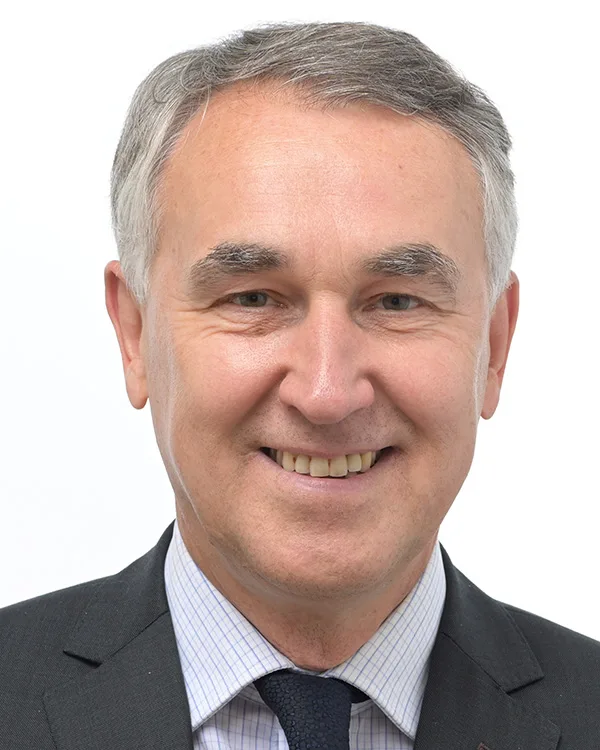






| Rank | Name | Country | Group | Speeches | |
|---|---|---|---|---|---|
| 1 |
|
Lukas Sieper | Germany DEU | Non-attached Members (NI) | 390 |
| 2 |
|
Juan Fernando López Aguilar | Spain ESP | Progressive Alliance of Socialists and Democrats (S&D) | 354 |
| 3 |
|
Sebastian Tynkkynen | Finland FIN | European Conservatives and Reformists (ECR) | 331 |
| 4 |
|
João Oliveira | Portugal PRT | The Left in the European Parliament (GUE/NGL) | 232 |
| 5 |
|
Vytenis Povilas Andriukaitis | Lithuania LTU | Progressive Alliance of Socialists and Democrats (S&D) | 227 |
All Contributions (201)
Stepping up funding for Ukraine’s reconstruction and defence: the use of Russian frozen assets (debate)
Madam President, Commissioner, colleagues, Europe must finally move beyond the frozen stage of consideration regarding the use of Russia's state assets in the West. For four years, we have been going around in circles on this issue, neglecting our legal, political and moral obligation to support Ukraine. Europe, just do it! Having crossed the Rubicon of international law and humanity, Russia must compensate Ukraine and Ukrainians for their losses. In this regard, the decision made by the European Court of Human Rights in July this year should be welcomed, as it provides a legal basis for compensating Ukrainians for the damage and consequences caused by the aggressor. The idea of a reparation loan for Ukraine, which is currently under consideration, will ensure the country's financial stability amid unprecedented military pressure in general. It is crucial to hold Russia accountable and ensure that it pays a high price for its bloody aggression. I have to admit, I am deeply disappointed by the Trump administration's announced decision to abstain from participating in the Ukrainian reparation loan, thereby weakening Western unity and decreasing pressure on Russia. Dear colleagues, Ukraine is not for sale. Ukraine's future is to be decided by its people. And again, Russia must pay, compensate and accept legitimate terms.
Institutional consequences of the EU enlargement negotiations (debate)
Mr President, Commissioner, colleagues, significant geopolitical shifts and security threats in Europe and around the world must be harnessed to unify Europe, strengthen the European project and bolster the European Union's standing as a geopolitical actor. Our shared vision for Europe encompasses political unity, securing of the continent, economic growth and a competitive single market. This requires a willingness and readiness to enlarge, and the determination to implement internal EU reforms. Europe can no longer afford to delay making the necessary decisions. We must identify the optimal time to implement needed internal reforms, so that, by integrating new members, we can collectively become stronger and more effective. This year must see the start of accession negotiations with Ukraine and the Republic of Moldova, turning our promises into action. This will practically illustrate our response to building a secure and united Europe.
United response to recent Russian violations of the EU Member States’ airspace and critical infrastructure (RC-B10-0419/2025, B10-0419/2025, B10-0421/2025, B10-0422/2025, B10-0423/2025, B10-0424/2025, B10-0437/2025) (vote)
Madam President, colleagues, on behalf of Renew Europe, I would like to propose an oral amendment to paragraph one. The aim is to include two Member States, namely Lithuania and Latvia, among the countries to which we express full solidarity. This is to correct a technical mistake, not a political one. I read the text of paragraph one with the amendment. I quote: 'Expresses its full solidarity with Moldova as well as with Denmark, Sweden, Poland, Lithuania, Latvia, Finland, Romania, Estonia and all other Member States exposed to Russia’s direct threats, military provocations and acts of hybrid warfare; considers that the deliberate disruption, by Russian agents, of the EU’s air traffic, targeting Europe’s military critical services and infrastructure, and of the functioning of the political institutions of the EU and the Member States using UAVs is escalatory, risks miscalculation, endangers lives, constitutes a serious violation of applicable international norms and poses a serious threat to EU citizens and to peace and security in Europe'.
EU strategy with regard to Iran’s nuclear threat and the implementation of EU sanctions resulting from the snapback mechanism (debate)
Madam President, Commissioner, Minister, colleagues, the Tehran regime has deceived the West, including the European Union, by misleading and pretending to be a partner in negotiations regarding its nuclear program. Last month, Khamenei acknowledged that the uranium enrichment activities began 30 years ago. We must remember that without the initial revelations of the MEK and NCRI, the regime would likely have continued with the nuclear weapons programme and have had those weapons by now. The Iranian people are tired of the mullahs' regime, which has become an agent of religious fanaticism, the suppression of women, the persecution and killing of opponents, and international terrorism. We must increase political and economic pressure on Tehran. We must cut the regime from the modern technologies and innovations that are used for oppression. Let's agree that only regime change can bring stability to Iran and the region. Let us support the constructive opposition in Iran and their tireless efforts to fight the oppressive regime.
United response to recent Russian violations of the EU Member States’ airspace and critical infrastructure (debate)
Madam President, Commissioner, Minister, colleagues, Europe cannot allow itself to become a testing ground for Russian hybrid attacks, drones and provocations that undermine our security and economy and spread fear and terror among our population. We must not surrender our democratic space to those who encroach upon it. We must act decisively and in unity. Let's recognise that we are lagging far behind in developing reliable defences against drones. We must make the most of Ukraine's experience and establish an anti-drone system through joint coordinated action now. We should not concern ourselves with questions about whose drones are disrupting European airspace and endangering aviation. If these drones are not ours, we must treat them as hostile and immediately destroy them. In order to effectively integrate drones and anti-drone technology into European security and defence, I call on European institutions to establish a regulatory framework that defines safety standards for civil aviation and critical infrastructure in the context of these new technologies.
2023 and 2024 reports on Ukraine (A10-0154/2025 - Michael Gahler) (vote)
Madam President, dear colleagues, let me move the following oral amendment based on factual events and happenings: 'Welcomes the European Court of Human Rights judgment of 9 July 2025 in the case of Ukraine and the Netherlands v. Russia, which held Russia responsible for widespread and flagrant human rights abuses in Ukraine – including the downing of MH17, torture, the use of rape as a weapon of war, summary executions, unlawful and arbitrary detentions, and the organised removal and adoption of children in Russia.'
Ukraine (joint debate)
Madam President, dear Kaja, dear Marta, dear colleagues, Russia's unprovoked and illegal aggression against Ukraine, which has been ongoing for 42 months, has undermined the foundations of European security. To stop Russia, we must create a security and defence mechanism which is stronger than its militaristic ambitions. To deter the aggressor, Europe has no choice but to extend the European security system to Ukrainian territory and strengthen its defence forces. Applying Newton's principle of physics – energy cannot be created or destroyed – security guarantees will be effective if they are genuine and sufficient. A secure sky over Ukraine, the deployment of EU Member States' military forces on its territory, and further military assistance to Ukraine are only part of the security guarantees that can truly deliver. Russia must pay military reparations to Ukraine. I warmly welcome the 9 July decision of the European Court of Human Rights in the case of Ukraine and the Netherlands v. Russia, which found Russia guilty of systematic violations in Ukraine, including the downing of MH17. This court decision provides the legal basis for using Russia's frozen assets to compensate the Ukrainian people for immense damages and losses. Security and justice are integral parts of European life. Let us extend them to the people of Ukraine now.
Case of Ryan Cornelius in Dubai
Mr President, Commissioner, dear colleagues, Ryan Cornelius, a British national, was convicted of alleged financial crimes in 2008 and is set to remain in captivity in the United Arab Emirates until 2038. In total he will serve 30 years. Given his dire and unattended health situation, it is unlikely that he will live that long. In 2022, the United Nations Working Group on Arbitrary Detention concluded that Mr Cornelius' detention is unlawful, contravening multiple articles of the Universal Declaration of Human Rights, and recommended his immediate release, along with compensation and other reparations. By keeping Mr Cornelius and his seized assets in captivity, the UAE is confirming that its courts have rightly been accused of bias and of breaching legal procedures and international laws. Imprisoning Mr Cornelius and causing hardship for his family seriously damages the UAE's international image and sets a negative precedent for negotiations on the strategic agreement with the European Union. Free Ryan Cornelius!
Institutional and political implications of the EU enlargement process and global challenges (debate)
Mr President, Commissioner, dear colleagues, history has shown us the value of European unification and the importance of preparing EU institutions to address emerging challenges. Although managing a union of 30 or more members may seem challenging, these are the same concerns we had 20 years ago, prior to the big bang enlargement. However, improving the EU's institutional functioning and political processes cannot be postponed or made dependent on enlargement, budgeting or other issues. Colleagues, I find today's debate, with the extreme focus on enlargement only, a bit misleading. It's too narrow. Let's look broader, face all the challenges we have. We must look into a long, be ready to face any future challenges to the security and prosperity of our citizens in the long term, when our bold actions will bear fruit, and seize the opportunity to improve the efficiency of EU decision-making and policy implementation. So let's look at the broader picture.
Upcoming NATO summit on 24-26 June 2025 (debate)
Madam President, dear Kaja – I wish you a happy birthday, and I wish you strength, dear colleagues, clearly the forthcoming NATO summit in The Hague will not be a mere celebratory meeting. It must address issues of collective security of the utmost importance. We must ensure the safety and unconditional security of our societies and population. Security comes at a price, but peace is priceless. Although NATO's decision in 2014 to increase defence spending to 2 % is not yet fully implemented by a third of members, it is insufficient today. A new benchmark of 5 % for defence spending is urgently needed in order to bolster allies' defence capabilities. NATO is a defence and security alliance that poses no threat to peaceful neighbours. But we cannot submit to Russia's provocations, such as calls for NATO forces to withdraw from the Baltic states or demands regarding Ukraine's surrender. Russia and its allies and enablers are creating security chaos and challenges. That's why we are far from all the provocations we might see. And NATO's response must be proportionate and pre‑emptive. Clearly, NATO members in Europe must make a significant defence commitment and do so immediately. All EU Member States must be creators of security, but not only consumers. My main anticipation and call for the NATO summit in The Hague is that it will demonstrate our unity and set ambitious actions to ensure our security and deter any further provocations by Russia or its followers.
The human cost of Russia’s war against Ukraine and the urgent need to end Russian aggression: the situation of illegally detained civilians and prisoners of war, and the continued bombing of civilians (debate)
Mr President, Minister, Madam Commissioner, autocratic Russia is waging an aggressive war to destroy Ukraine's sovereignty and the whole Ukrainian nation. As well as committing unspeakable war crimes and ecocide, Russia is illegally detaining and deporting Ukrainian civilians, including children. The appearance of those who have been returned from Russian captivity best reflects what Ukrainians are experiencing. They look as if they have been through hell, reliving the horrors of the Holodomor, Nazi and Soviet concentration camps altogether at the same time. The whereabouts of less than 2 000 Ukrainian civilians in Russian captivity have been identified. I am a guardian of one of them, Dmytro Khyliuk, a civilian journalist who was captured in his own garden near Kyiv in March 2022. He remains a Russian hostage to this day, imprisoned in Correctional Colony No. 7 near Moscow, today's Russian capital, without any contact with the outside world. His father, Vasyl, has recently been diagnosed with stage four cancer and his only wish is to hear his son's voice once again. Russia must be held accountable to the war crimes it has committed and continues to commit. To bring Russia to the negotiation table, dear colleagues, we need all possible means, including international pressure, additional sanctions and unambiguous political signals. Slava Ukraini!
Return of Ukrainian children forcibly transferred and deported by Russia
Madam President, Commissioner, dear colleagues, there are many aspects to Russia's open aggression against Ukraine and Ukrainians. Unfortunately, one of them is the theft and forced deportation of Ukrainian children to the aggressor country or temporarily occupied territory. Russia is trying to inflict as much damage as possible on Ukraine, its people and all future generations. Kidnapping children is a way of influencing their identity, Russifying them and subordinating them to another Russian mission. There are many examples of Ukrainian youth receiving military training in Russia, preparing them to be used in a war against their own country, which only confirms Russia's aggressive policy of preparing for future wars. The abduction, indoctrination and forced adoption of children is a continuation of Russian war crimes, which must be punished accordingly.
EU support for a just, sustainable and comprehensive peace in Ukraine (debate)
Mr President, Madam President, Minister, dear colleagues, Russia's illegal, unprovoked, unjustified war of aggression against Ukraine is an existential threat to the whole of Europe. Solidarity with the candidate country, Ukraine, and ensuring our own security requires systematic action by us. The main aim is to preserve our and Ukraine's sovereignty, to end the war and to create a stable post‑war situation on our continent. Europe must stick to its plan for Ukraine's victory and peace, which is based on conditions set by the Ukrainian side and not on the ambitions of Russia, China or any other country. The unity of the West is very important factor here. We must ensure Ukraine's position by providing security guarantees and membership of Western political and defence organisations, and by strengthening Ukraine. By guaranteeing Ukraine's territorial integrity and sovereignty we will ensure the integrity of Europe's borders. Together, we must develop Ukraine's economic potential, rebuild better what has been destroyed and integrate Ukraine into the EU's internal market. Dear colleagues, any post‑war transition must remain linked to the maintenance of essential political and economic sanctions against Russia. This has to be the last war Russia wages against its neighbours. Peace is impossible without justice, which is why the investigation of war crimes and prosecution of those responsible, and the return of all abducted Ukrainian children, imprisoned civilians and prisoners of war, must be fully implemented. Knowing all this, history sometimes repeats itself, and I find no better time to quote the first phrase of the Schuman Declaration: 'World peace cannot be safeguarded without the making of creative efforts proportionate to the dangers which threaten it'.
Execution spree in Iran and the confirmation of the death sentences of activists Behrouz Ehsani and Mehdi Hassani (debate)
Mr President, Madam Commissioner, dear colleagues, the Iranian mullahs' regime continues to carry out executions to maintain its close grip on power and stifle dissent. In fact, the number of executions in Iran has doubled in the past year. In the climate of fear and severe repression, attempts are being made to silence the opposition, the rights of women and minorities continue to be trampled on, and hostage diplomacy is being carried out using EU citizens. Members of the No Death Penalty Tuesdays abolitionist campaign, Behrouz Ehsani and Mehdi Hassani, have been sentenced to death without due process and on false charges. We have missed an opportunity to take appropriate action against the Iranian regime, as a result of which the Iranian Revolutionary Guard continues to operate as a terrorist organisation and UN Human Rights Council representatives are unable to carry out the necessary investigations. I call on the European External Action Service to take all the appropriate actions to stop the brutalities carried out in Iran.
CFSP and CSDP (Article 36 TUE) (joint debate)
Madam President, Madam High Representative, dear colleagues, more than ever before, Europeans have clearly and highly rightly made the EU's foreign and security policy an existential priority, making it a central theme in the last European Parliament elections. We must respect this and respond without undue delay. Let us not forget that those who have challenged our way of life have not changed and intend to continue their destructive actions. Above all, the European Union must strengthen its foreign policy, security and defence instruments and its financial capacity to implement them. It is clear that the sanctions imposed must be implemented at the level of the Union and have real leverage on third countries that violate United Nations or EU values. Ensuring the security of our citizens cannot be subject to any reservations and therefore Member States must agree on how to coordinate national military planning and procurement in a realistic and more coordinated way, optimising the total cost of defence.
Russia’s war crimes in Ukraine: standing with Ukraine and upholding justice (debate)
Madam President, Madam High Representative, dear colleagues, the open war against sovereign Ukraine and Ukrainians, conceived and declared by the Russian leadership and waged by the Russian military, is lasting 1133 days. During this long nightmare, the crime of aggression and war crimes have taken the most brutal forms, from the deportation of civilians and theft of children, to the torture and rape of civilians, the execution of prisoners of war, the destruction of Ukraine's civil infrastructure, and other incomprehensible crimes. Bucha itself became a symbol of infinite cruelty. We must say firmly that Russia will not escape a new Nuremberg Tribunal. This applies equally to the Russian political leadership, which makes the decisions, and to the militaries, which carry out the criminal acts. The special tribunal must take place regardless of any ceasefire or other negotiations. Impunity must be a thing of the past. I hope the European Union will take a strong stance and will follow the principle that we have to name and punish the perpetrators, protect the interests of victims and ensure a victory for humanity.
Frozen Russian assets (debate)
Mr President, Commissioner, dear colleagues, the freezing and use of the Russian assets is as inevitable as a paradigm of Fyodor Dostoevsky’s novel Crime and Punishment. Russia's illegal, unprovoked and unjustified war of aggression against Ukraine, and the losses and damage caused to Ukraine and its people, are among the necessary reparations of the Russian side. International law supports this obligation. Humanity demands it. The state assets of Russia located abroad must be used directly for the needs of Ukraine to restore its urban and civil infrastructure, environment and property lost by the people. The use of interest from frozen Russian assets is good, but it's not enough to compensate for the losses suffered by Ukraine. Russian assets must be frozen and used either to directly compensate for the needs of Ukraine and reconstruction, or to become a guarantee when issuing state bonds or taking out the necessary loans. I call upon the Member States to find and agree on a comprehensive legal approach.
White paper on the future of European defence (debate)
Mr President, thank you, it is indeed a special day. Commissioner Kubilius, Minister, dear colleagues, I must repeat myself, what I have written in my speech, sorry for certain repetitions. Exactly 35 years ago on this day, Lithuania declared the restoration of its independence. We knew about the evil Soviet Empire from our own painful experience, but we had no illusions about the better future of Russia. Now, we must not only change our thinking and policies, but also defend Europe and our fellow Europeans. We must ensure European security, which is measured by the weakest link in its defence. Therefore, we must act together, not selectively. We must act now, not tomorrow. Standardisation of weapons and military equipment, mobilisation of financial resources for their innovation, and speedy production and further development of military mobility and capabilities – these are the most important things now. For the European defence community should involve our partners from the very beginning, especially candidate countries like Ukraine. Close cooperation in this area will undoubtedly benefit all participant countries and, most importantly, our citizens.
Need for targeted support to EU regions bordering Russia, Belarus and Ukraine (debate)
Mr President, Commissioner, Minister. Some countries in the European Union are confronted with natural fatalities, while others are confronted with the fatalities of Russia. And this is sometimes a much more terrible and destructive force, and it must be acknowledged. Russia’s open military aggression against Ukraine has not only changed the geopolitical situation in Europe, but has also led to economic challenges for the regions of the European Union bordering and adjacent to autocratic and war-seeking states. The countries of the European Union bordering Russia and Belarus are facing critical challenges, not only for security reasons. Sometimes we make good decisions in this area. I will mention as an example the energy synchronisation between the Baltic States and Europe that took place this weekend. This is indeed an example of how and in which direction we can go, but it is necessary to respond in a timely and appropriate manner to economic challenges, to promote regional infrastructure projects and other investments. Here too, the European Commission can take the floor.
Continuing the unwavering EU support for Ukraine, after three years of Russia’s war of aggression (debate)
Mr President, Madam Commissioner, Minister, dear colleagues, Ukraine, hand in hand with its Western partners, has withstood three years of bloody and devastating aggression by Russia and its proxies. Respecting the immense price paid by defenders of Ukraine and the defenders of our European values, the European Union efforts must now focus on the following. First, the EU, from the very beginning and fully, must participate in the forthcoming ceasefire or peace talks. The outcome of these negotiations will determine the long‑term future security of Europe. Second, we must continue our military assistance to Ukraine and provide it with maximum security guarantees. Russia has no intention of changing, and we must be ready. Third, we must continue to work hand in hand to help Ukraine reform and integrate into the European Union. I really hope that the three years of Russian aggression and the horrors it has inflicted on the Ukrainian people have revealed the true face of Russian imperialism and international terrorism, and that we have learned a lesson for the future that we must not forget, for the victory of Ukraine and ours.
Signature of acts adopted in accordance with the ordinary legislative procedure (Rule 81)
Madam President, dear colleagues, taking the floor under Rule 164, and while appreciating our Wednesday debate on the need for targeted support to EU regions bordering Russia, Belarus and Ukraine, let me draw your attention to the great action which happened last weekend once the Lithuanian, Latvian and Estonian energy was finally synchronised with the European continental energy ring. And this is the way we have to go and streamline, cutting down our decades‑long dependencies with eastern countries and synchronising into the single market, whatever it takes, economic, energy or whatever. So, our talk on Wednesday will be about this, about achievements and what we can do together.
Systematic repression of human rights in Iran, notably the cases of Pakhshan Azizi and Wrisha Moradi, and the taking of EU citizens as hostages
Madam President, Commissioner, dear colleagues, the mullah's regime in Iran survives at the cost of endless repression. Iran's courts have become a place for handling down long prison and death sentences. The confessions of prisoners and detainees are extracted through psychological and physical pressure and torture. Last year was bloody in Iran, with over 900 executions. We continue to call for a halt of the executions of Pakhshan Azizi, Wrisha Moradi, Behrouz Ehsani, Mehdi Hassani and at least 54 other political prisoners on death row. We also call for the release of dozens EU citizens being held hostage in Iran. The EU policy towards Iran must be proportionate to the crimes committed by the Iranian regime. I urge the European Union to designate the IRGC as a terrorist organisation. I urge the EEAS to exert the necessary influence on the Iranian regime to stop the mass executions and to bring our citizens home.
Need to detect and to counter sabotage by the Russian shadow fleet, damaging critical undersea infrastructure in the Baltic Sea (debate)
Mr President, honourable Commissioner, honourable Minister, honourable colleagues, Russia's intensifying war against the West, our critical infrastructure, our democratic system and our economy, which has not been officially declared but has been going on for years, is a reality today. Damaged telecommunications and power supply cables in the Baltic Sea are not accidental. This is hybrid warfare. A strong joint response from the European Union and NATO is essential. We need to step up regional cooperation and take concrete action. The Baltic Sea Police mission is essential to ensure our social and economic security. In addition, we must anticipate a programme for the development of cables passing by the sea. The experience of telecommunications and cable protection gained in the Baltic Sea region will be useful in other seas around the European Union.
Continued repression of civil society and independent media in Azerbaijan and the cases of Dr Gubad Ibadoghlu, Anar Mammadli, Kamran Mammadli, Rufat Safarov and Meydan TV
Mr President, Commissioner, more fossil fuels, fewer political rights and a growing number of political prisoners – this is the reality of Azerbaijan today. The EU-Azerbaijan energy cooperation is not worth the price we and the people of Azerbaijan are paying for it, especially as our goodwill in asking the Azeri authorities to allow Sakharov Prize finalist Dr Gubad Ibadoghlu to attend the award ceremony have been so bluntly ignored. Furthermore, an online exchange with Mr Ibadoghlu, which was due to take place yesterday, was openly prevented by cutting communication lines and preventing and intimidating his relatives. When Mr Ibadoghlu and Václav Havel Human Rights Awardee Anar Mammadli are martyred without medical care, and independent media are forced into the 'online ghetto', we cannot delay any longer the application of the EU's Magnitsky Act sanctions against the Azeri officials responsible, in particular Fuad Alasgarov, Vilayat Eyvazov and Ali Naghiyev.
11th year of the occupation of the Autonomous Republic of Crimea and the city of Sevastopol by the Russian Federation and the deteriorating human rights situation in occupied Crimea, notably the cases of Iryna Danylovych, Tofik Abdulhaziiev and Amet Suleymanov
Mr President, Madam Commissioner, dear colleagues, Russia's occupation and violation of Ukraine's sovereignty have sunk the Crimean Peninsula into a decade of darkness and oppression. The fierce persecution of Crimean Tatars and ethnic Ukrainians, civil society activists and journalists is being carried out in the style of the Soviet NKVD. The cases of the imprisonment of the human rights defender and civil journalist Iryna Danylovych, for seven years, and the imprisonment of the Crimean Tatar activist Tofik Abdulhaziiev and Amet Suleymanov, for 12 years, each show the true face of the Russian occupiers. This is the real Putin, to whom Viktor Orbán still keeps calling. I urge the European Union to further increase the pressure on Moscow by including all 7 000 and more on the list of Navalny's Anti-Corruption Foundation to those responsible for the Russian aggression against Ukraine. I call for joint action to help the detained and imprisoned Crimean activists to regain their freedom and their homeland as soon as possible.