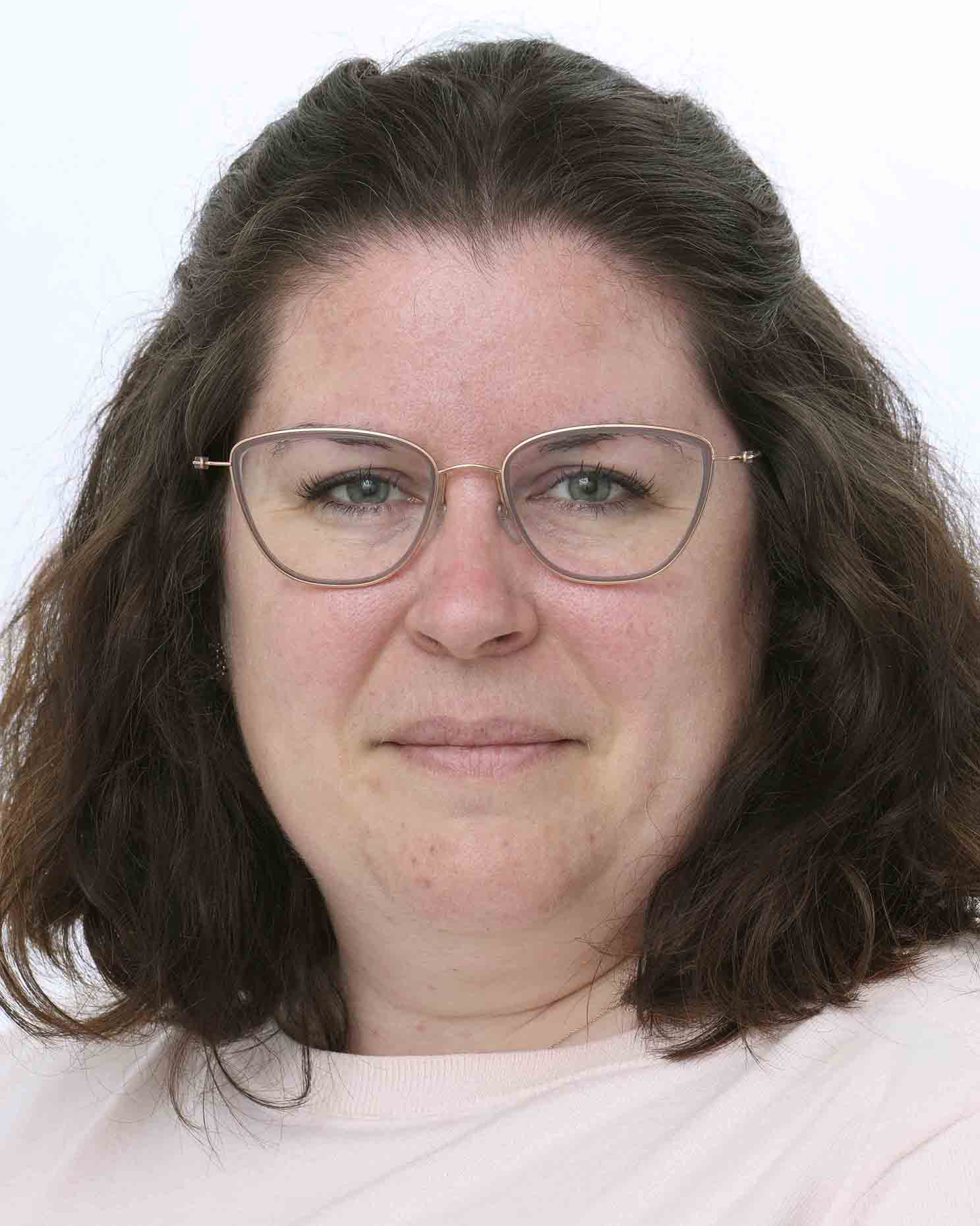






| Rank | Name | Country | Group | Speeches | |
|---|---|---|---|---|---|
| 1 |
|
Lukas Sieper | Germany DEU | Non-attached Members (NI) | 390 |
| 2 |
|
Juan Fernando López Aguilar | Spain ESP | Progressive Alliance of Socialists and Democrats (S&D) | 354 |
| 3 |
|
Sebastian Tynkkynen | Finland FIN | European Conservatives and Reformists (ECR) | 331 |
| 4 |
|
João Oliveira | Portugal PRT | The Left in the European Parliament (GUE/NGL) | 232 |
| 5 |
|
Vytenis Povilas Andriukaitis | Lithuania LTU | Progressive Alliance of Socialists and Democrats (S&D) | 227 |
All Contributions (82)
Legal migration policy and law (debate)
Madam President, Commissioner! Digitalisation, sustainable economy, solid growth: The coming years will be challenging for the European Union – for our economy. On the other hand, one in five people in the EU is already over 65 and the proportion of workers in the population will continue to decline in the future. Europe needs an answer to that. With the report today, we are setting another mosaic stone. After all, well-managed legal migration can be a key component of our economy if and because it responds to labour market needs and skills shortages. Three things are essential for us: The Member State shall decide on the type and extent of immigration. The labour market defines the criteria and the needs. In addition to highly qualified professionals and entrepreneurs, this may also include other criteria and other qualifications. In some areas, we lack not only doctors and engineers, but also workers in agriculture, construction and healthcare. Crucial for this: Supply and demand need to be better reconciled. The talent pool, the talent partnerships, which have also been mentioned today, can play a very important role here. And thirdly: Legal migration can and must be an integral part of cooperation with third countries, both positively and, where appropriate, negatively. The talent pool and the talent partnerships on the one hand, the full set of instruments of the Visa Code on the other. If we want to maintain our prosperity and innovative strength, we must not lose touch with global competition, and this is exactly the case at the moment. The United States, Canada and Australia are a big step ahead of us in promoting the brightest and the most talented. With this report today, we are working together to make the European Union fitter for the future. I would like to thank the rapporteur and the shadow rapporteurs for their great work.
Situation in Belarus and at its border with the EU and the security and humanitarian consequences (debate)
Madam President, The use of migration as a means of pressure is unfortunately not new – not worldwide and not even in Europe. We all have the Turkish interpretation of last year in mind. What has a new quality: the dictator's ruthlessness, the cynicism of instrumentalization, the perfidious combination of artificial migration routes with tangible economic benefits for the authoritarian regime. So far, all attempts to blackmail the European Union have failed. This is not self-sufficient; It took a lot of work on our part. I would particularly like to thank Margaritis Schinas, who has been on the road intensively over the last few weeks and has worked excellently and tirelessly – especially with countries of origin and airlines. What counts now: Europe's unity must be maintained with regard to sanctions, border management, the involvement of international aid organisations in Belarus, and consistent repatriation. The message is very clear: Europe cannot be blackmailed. At the same time, we need to better equip ourselves for such challenges: with the asylum and migration package, with the revision of the Schengen Borders Code, with geopolitical guidelines and full backing for our agencies. We are the ones in charge of Europe's external borders, not dictators who threaten the stability of the Union.
Pushbacks at the EU's external border (debate)
Madam President, to begin with the obvious, the European Union, each Member State, everyone acting on their behalf need to comply with fundamental rights obligation. At the same time, they are also by national, European and international law obliged to protect borders and to fight criminal networks, smuggling and exploiting the most vulnerable ones. Even more so when these networks are state sponsored – an instrument like migratory flows – like done by Erdogan or Lukashenko. In this sense, this obligation is even more crucial when we speak about European borders, because then Schengen and our four freedoms rely on that. No doubt it is a sensitive balance, and we witnessed just yesterday in plenary a government that does not live up to our expectations. But there are other Member States working together smoothly with European support, answering hybrid attacks together, cooperating with the Commission on alleged cases. And because it is a sensitive balance, we need to make a few things clear. Let’s not expect from our officers, European or national, land or sea border, to first open up a legal review of complex questions when acting on our behalf. The principle of non—refoulement is, of course, to be respected, but neither does it mean that access to a procedure can be practically applied at every inch of the border, nor does it mean that everyone asking for protection is eligible for that. And see, and this is the key. It is on us finding the right balance politically, legally and enforceable under difficult circumstances. Half-way to that is a pact screening border procedure, the crisis mechanism which prepares us better. The second part is the upcoming revision of the Schengen Border Code. But the need for better coordination – measures to prevent manipulated crossings – instruments to trigger in critical situations. We are the ones that need to be in the driving seat of any orderly management, not dictators threatening the stability of the Union.
European Union Agency for Asylum (continuation of debate)
Mr President, ladies and gentlemen. As a rule, you will reach the age of 18, get new rights, but also new duties and responsibilities. Now an agency cannot reach the age of majority, and yet it is time for the Support Office to grow up ten years after its foundation. That is exactly what we can welcome today. With almost three years of discussion, a success in the field of asylum and migration and thus in itself a memorable moment. The Asylum Support Office has become one of our main instruments in the field of asylum and migration in recent years. More than 400 experts working for us, helping frontline Member States, providing practical assistance on asylum applications, training and coordination in building a European common asylum system. With the agreement on the new mandate, with the development of EASO to the EAS, not only a support office will finally become a full-fledged agency. It is also a crucial step towards a functioning and resilient asylum system. We are thus drawing lessons from the challenges of recent years and putting European solidarity on firm feet. Experts can now go into action even faster, providing their important operational and technical support. The pool is a crucial step forward. Its role as an early warning system in refugee movements and trends in asylum applications, the important contribution to country reporting for the national authorities, can be expanded. Coordination with other European agencies and Member States is finally being improved. However, the signal effect of the agreement goes far beyond the Agency. It's more than a growing up of our agencies. It is – and must be – the necessary impetus for the work on the overall package. It shows that we can agree when the will to compromise is there, when pragmatic solutions are sought. This is what we owe our citizens: a Europe that protects and supports each other in challenging situations – as seen most recently in Lithuania, but also in Greece, Cyprus, Italy and other countries. Let us continue right there and finally move forward with the common asylum and migration package.
The situation in Belarus after one year of protests and their violent repression (continuation of debate)
Mr President, ladies and gentlemen. It is not the first time that we are dealing with a neighbour who does not shy away from state human smuggling, who cynically exploits human suffering, instrumentalizes it for his own power interests. It is the approach that Erdoğan has already tried on the Greek border. It is the copy-paste moment of autocratic and dictatorial brains, united in the desire to destabilize the Union. Our response is the same as before: A hybrid attack against a member of the Union is an attack on all of us. But the process also has an internal dimension. That we are susceptible to blackmail attempts is unnecessary and superfluous. The proposals for the Pact are on the table. They may not taste good to everyone, but that's exactly what negotiations are for. All Member States that have so far taken a less ambitious approach to the work should urgently reconsider their positions. There is a European response to this challenge, with practical and financial support from the Union, using our agencies and in the spirit of European values. Otherwise, we risk continuing to face hybrid attacks – perhaps not a good idea given the sensitive international shift in power.
Situation in Afghanistan (debate)
Madam President, the situation in Afghanistan is serious and the repercussions go far beyond a single regime change. The progress made, especially on women’s and girls’ rights, their participation in society and political life, and their access to education and health care vanished in a shockingly short time. Already now we see women and girls disappearing from public life, forced to fully cover themselves when entering universities, and threatened when standing up for their rights. That’s why we need to be vocal on their behalf. Respecting and protecting their rights has to be at the heart of our humanitarian aid and prerequisite to development policies within that country. This is what we owe to them. But Afghanistan is not solely a European issue. Our support will only have an impact when embedded in a broader global approach. An increased European budget is good, but international actors have to fulfil their pledges as well. The same applies to the support for neighbouring countries hosting the largest amount of migrants and refugees. We will step up our financial help, but also our support in asylum capacity building and the fight against criminal networks exploiting the most vulnerable. This is only one reason why we need to have a full picture of those arriving in Europe. Reinforced border protection, sound registration and security checks on those being evacuated from the region are of the utmost importance for our internal security. Our agencies like Europol and Frontex stand ready to support, and security will be served best when combined with an increased information exchange between the national level European agencies and international partners. This is what we owe to our citizens and to those fleeing war and persecution: that they are not threatened anew by criminal networks and terrorists.
Asylum, Migration and Integration Fund 2021-2027 - Integrated Border Management Fund: Instrument for Financial Support for Border Management and Visa Policy 2021-2027 (debate)
Madam President, at the beginning of this term we made a promise, a Europe that protects, and while we saw new challenges emerging we also prepared ourselves better. An important part of that other funds we’re debating right now is an increased budget supporting not only border protection and migration management, but also measures of solidarity and integration. But where funds are crucial and closer cooperation is well received we also need to be aware of the broader dimension. Last week, the last year, unfortunately proved that the European Union is, and probably will be again, faced with neighbours like Erdoğan, Lukashenko or others, neighbours that are not only questioning our way of life but that are trying to attack and destabilise the European Union as a whole, instrumentalising both the current stalemate on the pact and people already in a vulnerable situation. Our answer to that needs to be firm. Protecting our Member States under pressure, solving the stalemate, and backing the European agencies providing their support on our behalf, for a Europe that protects.