





| Rank | Name | Country | Group | Speeches | |
|---|---|---|---|---|---|
| 1 |
|
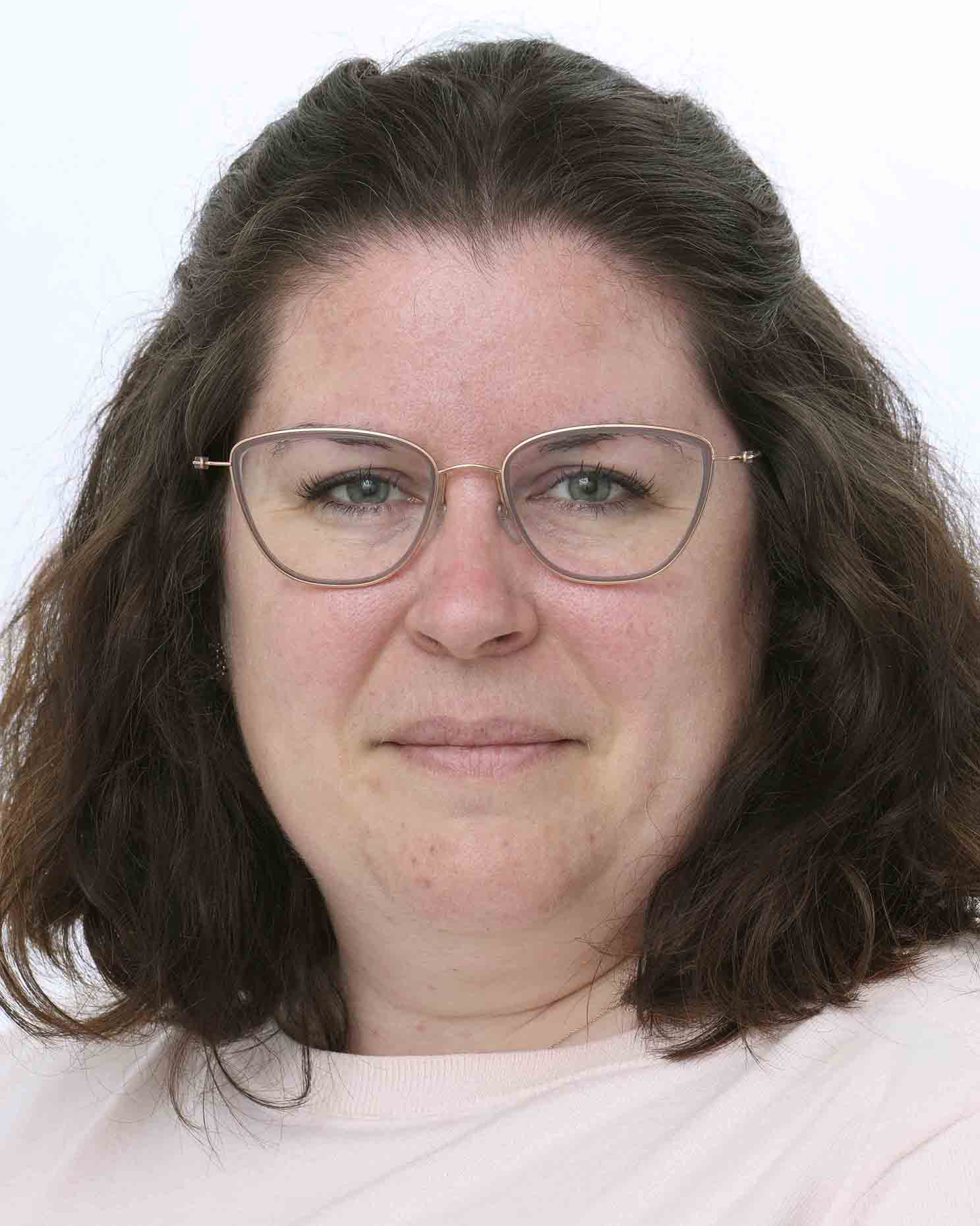
Lukas Sieper | Germany DEU | Non-attached Members (NI) | 390 |
| 2 |
|
Juan Fernando López Aguilar | Spain ESP | Progressive Alliance of Socialists and Democrats (S&D) | 354 |
| 3 |
|
Sebastian Tynkkynen | Finland FIN | European Conservatives and Reformists (ECR) | 331 |
| 4 |
|
João Oliveira | Portugal PRT | The Left in the European Parliament (GUE/NGL) | 232 |
| 5 |
|
Vytenis Povilas Andriukaitis | Lithuania LTU | Progressive Alliance of Socialists and Democrats (S&D) | 227 |
All Contributions (82)
EU Preparedness Union in light of the upcoming wildfire and droughts season (debate)
Madam President, Madam Commissioner, Madam Minister, the Union Civil Protection Mechanism is a European success story. Since its creation, numerous emergency responses have been carried out. Equipment for firefighters and first responders have been financed and delivered. Firefighters are pre-positioned throughout Europe to help faster than before. This is – like you just said, Madam Commissioner – European solidarity on the ground. As we speak, 22 firefighting planes and four helicopters stand ready to support in the current wildfire season; 650 firefighters from 14 countries are pre-positioned in high-risk areas; more ground firefighting teams are ready to be mobilised. And that solidarity is needed. If you compare this year's wildfire season to the previous, threats and dangers are multiplying. Colleagues from Portugal, from Spain, from Greece, from France will soon tell us about the devastating effects on the ground. As the threats are emerging – man-made and natural – we also need to adapt as well. We need to be better prepared for larger incidents, for simultaneous and escalating incidents. And that means we need to scale up the pool of experts and the deployments; the investments in equipment and material, in resilience and readiness; the common risk assessment, the forecast and the situational picture. And, Madam Commissioner, we need to scale down on administrative hurdles – a common task for all of us here. In the end, it is our task to support those on the ground who are bravely fighting wildfires today and floods tomorrow. We owe it to them. May they all return safe and sound from their deployments!
Safeguarding the rule of law in Spain, ensuring an independent and autonomous prosecutor's office to fight crime and corruption (debate)
Mr President, dear colleagues, the rule of law is based, among other things, on the integrity of democratic processes, on the fight against corruption, on proper checks and balances and accountability in decision-making processes. So where are we? We have 154 so-called 'royal decrees' being pushed through the parliament. We have reports about warning signs of a growing irrelevance of the parliament. We have smear campaigns against Guardia Civil officers investigating corruption, which means they do not only have the backing of the government for that important job. In fact, they are targeted because they are doing their job, further undermining the fight against corruption by not only not being on the forefront of investigation and prosecution, but being in the midst of numerous scandals involving the highest level of allegations themselves. Selling amnesty as a political tool, putting independent judges and prosecutors under pressure, undermining checks and balances further by draft laws on the judiciary, sparking not only protests by judges and prosecutors associations, but treating their rightful criticism in a way that actually five out of seven associations call now for a strike. Above all, instead of being at the forefront of accountability, the government now faces thousands on the streets demanding exactly that accountability, while the government decides to attack opposition leaders. This is not only a worrying trend here, it is a call to action by all of us here in the House, in Spain and in the Commission.
Freedom of assembly in Hungary and the need for the Commission to act (debate)
Mr President, dear colleagues, the rule of law in itself is neutral. It is a collection of procedural rules to guarantee that a political system is fair, is free, is democratic, that encourages engagement and debates, that fosters cooperation instead of sowing divisions, so that societies can thrive, that businesses can grow, that a country can prosper. Today, as usual, we hear colleagues saying they are fighting for their citizens. They are fighting against the Brussels elites. They are fighting for sovereignty. But let's remind everyone: the Hungarian Government is not in the midst of that debate because they want to protect children. The Hungarian Government is in the midst of the debate because for years now they have been undermining the integrity of the political system, undermining the independence of the judiciary, clamping down on citizens' rights, threatening journalists and opposition leaders. They are caught in the midst of various corruption scandals at the highest level. So why frame the debate like today? Why focus on underwear and lacquered leather? Because it is meant to hide the blatant lack of respect for the rule of law, for the government's incapability to solve real problems on the ground, for not being able to deliver on behalf of their citizens. The economy is weak; inflation is still high; businesses experience numerous obstacles. And in the need for money, the Hungarian Government reaches out to China and Russia. How on earth shall that help delivering for your citizens, shall that constitute a sovereignty act? The reality is that the government is responsible for their action and their inaction, which is the most fundamental principle of the rule of law: accountability to your citizens.
EU Preparedness Union Strategy (debate)
Mr President! Commissioner, you just got it. Once-in-a-generation moment called. If we look at the history of the development of the European Union, we have emerged from the lessons of the Second World War. At that time, we created security primarily in front of each other. We have become economically successful, we have shaped the internal market, we have become a very strong economic player in this regard. We are now in a situation where we need to restore competitiveness and we are in a situation where we need to create security for each other. Peace, freedom and stability – as has become clear in recent weeks, months and years – are not self-evident. This Defence white paper, the Internal security strategy, the Preparedness strategy are an expression of this, and I would like to thank you very much, Commissioner, for your contribution to the strategy or your strategy in this case. I want three building blocks To highlight, so to speak, those which are of course just as important alongside all the others, but which are part of the basic condition of a successful resilience strategy, so to speak. One is the situational picture and the exchange of information. We need to quickly reach all relevant actors, including those from the inside of our agencies in the field of Justice and Home Affairs involve, so that we can establish a common perception of risk at European level in order to derive political action from it. We also need this common perception of risk among the population. We need to make a very significant difference through schools – as the proposal foresees – to alert about public debates without being alarming. Because the goal is to empower the population to deal with crises, to be more resilient than we are now. You also mentioned Erasmus and the Solidarity Corps. Why not bring together and support Erasmus for Civil Protection, for example? And last but not least: Civil-military cooperation works when we allow them to practice, practice, practice, play through processes, define and test tasks. And I want to close with three requests. Once to the Member States: Your own security, to take European security seriously, to be ambitious. It's a time that takes courage, but also rewards. To the Commission the request to take Parliament along, not only in the development of the strategy in the common perception of risk, but also as communicators in the constituency, as those who can also carry the strategy forward, and the request to take all actors and agencies from the interior with them. And to all of us: whole-of-government, whole-of-society, All-hazards approach bind us all. And that's why it's not less time for Europe, but more. On with courage and determination.
Presentation of the New European Internal Security Strategy (debate)
Mr President, Commissioner, when we look at the area of freedom, security and justice from 1999, we've come a long way. We have overcome hurdles administratively, but most importantly, sometimes mentally. We increased cross-border cooperation. We built the agencies. We beefed them up on mandates, on staff and resources, on the tasks. We aligned important policies in order to have full leverage on the to the outside world. But somehow during the process, we but more prominently the Member States, lost ambition, while criminals, like threats, like malicious actors, did not. Cynically enough, time has come to once again step up on security. So the strategy of today is more than a strategy. It's a promise to keep Europe safe. It's an illustration of a security governance that is fit for purpose and time, including information and intelligence gathering and sharing, feeding into a clear situational picture, innovative and thriving capabilities and businesses, agencies that are strong and well coordinated, from border protection to critical infrastructure, to cyber, to law enforcement and to the judiciary side, the fight against organised crime, radicalisation and terroristic threats. The tasks are numerous. So to the Member States, let's be ambitious. That requires strength, that requires courage, and it needs to match the stakes. The most important promise that we can give to our citizens is their safety. To the Parliament, we need to adapt and arrive into the new security landscape, on content and on procedures. And altogether, let's do what is needed to serve the European Union, our citizens, our way of life. This is no time to shy away. This is no time to close our eyes, on with courage and determination.
100 days of the new Commission – Delivering on defence, competitiveness, simplification and migration as our priorities (topical debate)
Mr President, Madam Vice-President, just yesterday, Commissioner Brunner presented the new proposal on returns. It is not only a welcome proposal, it is a missing piece to the pact and it's signalling to our citizens that we do hear and see their concerns. But it also proves that the Commission is delivering on key aspects, in time. Mutual recognition, harmonised procedures, new balances of rights and obligations for third-country nationals, tools and means to address security cases and suspected criminals, stronger measures to prevent absconding, and a way forward for enhanced third-country cooperation: these elements will not only strengthen our ability to increase the number of returns, it will put the common asylum and migration system back on its feet. Still, the proposal is only the start and the EPP stands ready, of course, to work constructively and in a good spirit in the upcoming negotiations. Looking ahead, we also welcome the Commission's announcement to follow up swiftly with the safe third country concept – another crucial part of the pact. But yet again, the world does not stop changing. We will need to further follow developments on the eastern border of the Union, not only as regards instrumentalisation, but also in the broader security context. So, looking ahead, there is an urgent need for a broad understanding of security, ranging from defence, to internal security and preparedness. So citing the Niinistö report, our security landscape requires a whole-of-government, whole-of-society, all-scenario approach. And in that sense, I am looking forward to another quick delivery on the closely linked defence white paper, the internal security strategy and the preparedness strategy.
Presentation of the proposal on a new common approach on returns (debate)
Madam President, Commissioner, those who don't have a right to stay in the EU should not be in the EU: A simple, self-explanatory sentence. Yet only one in five third-country nationals where the return order takes is effectively returned. This stretches Member States' capacity. It undermines the promise of international protection for those who are in real need of protection. It can have devastating security consequences. Long procedures, shifting responsibilities between authorities, lack of coordination between Member States, lack of cooperation by the returnees and lack of cooperation with third countries are the core weaknesses. Yet an effective returns policy is an integral part of a fully functioning common asylum and migration system. This is why I very much welcome today's proposal as finally closing the gap, as presenting the missing piece to the pact. It clearly paves the way forward. Mutual recognition and possibilities for common enforcement, obligation to cooperate for returnees and consequences for non-compliance, rules to prevent absconding, stricter rules on security cases, enhanced third-country cooperation: that will equip the Member States with a real tool to coordinate, cooperate and to increase the numbers of effective and sustainable returns. With that, we will not only react to our citizens' expectations, we will restore trust in a Union that can uphold the values, and act symptom and effectively, if needed. Colleagues, challenges at this scale need to be met by the democratic forces. We as the EPP stand ready. And one last sentence: I am pleased that my previous speaker has just made it clear that you will not be part of the discussions.
Threats to EU sovereignty through strategic dependencies in communication infrastructure (debate)
Mr President! Commissioner! Communication is not just a deeply human need with social impact. Communication skills in times of crisis are essential for maintaining state and social order. This requires reliable structures and resources. This applies in the context of national security as well as in the European context. Being able to ensure information and communication flows, to produce situational pictures and to provide leadership skills has a decisive influence on the course of different scenarios and on our ability to cope with them. The Niinistö report on Preparedness Union Not without reason writes us many things in the logbook, including the accelerated roll-out of a secure, autonomous, interoperable system for communication and information exchange; accelerating and expanding the European Critical Communication System on the civilian and military side; avoid dependencies in supply chains; research, development and production of safety-related products in Europe; To make components and services so attractive that we can use them. Preparedness, dear colleagues, needs a comprehensive approach that also goes a little way out of the usual silos. That is why ITRE, SEDE, LIBE, IMCO, TRAN, INTA, SANT – we will all have to contribute. And that is why I may conclude with Niinistö's most important demand, in addition to prioritising budgetary resources: Security reservations and impact review in all legislative procedures that we have here in the House.
Commission Work Programme 2025 (debate)
Madam President, Commissioner, yesterday, the Munich Security Conference published their annual security index. Compared to the previous years, there are remarkable, although not surprising, changes. Migration as a result of climate change and war still ranks first, followed by rising concerns about Russia, followed by fear of terrorist attacks, worries about cyberattacks and threats by international organised crime. Amongst other worries, perceptions of disinformation campaigns, worries about trade wars have seen a stark increase. This is, of course, a snapshot, but it is not the first one and it's one that requires a clear, bold and united answer. Security is a collective effort – it requires a whole of government, a whole of society approach, both at European and at national level, in terms of defence, in terms of internal security and in terms of preparedness. Thankfully, these three policies are a crucial part of the Work Programme, and they need to be connected in the best way possible. There's a lot at stake, but this House, this Union has always risen to the challenge and I ask us to do that again. We have the tools and we have the means to do things better, but we need to be bold and we need to be ambitious. It is a testing time, but we have it in our hands to work for a Europe that is strong, that is prosperous and that is safe.
Escalation of gang violence in Sweden and strengthening the fight against organised crime (debate)
Madam President, Commissioner. More than 70% of criminal networks operate across borders. They engage in trafficking in human beings, drug trafficking, money laundering – increasingly violent and brutal. Seven of the ten most dangerous networks in Europe – 55 in total – include several nationalities. Eight out of ten work under the guise of legal companies. Organized crime has always been and still is an immense threat to our order, our rule of law, our economy, our society. Just as these networks take advantage of every loophole, every possibility, so must we. Unsere Antwort muss koordiniert, unmissverständlich und vor allen Dingen unnachgiebig sein. Let us finally deprive them of the financial basis through the work of AMLA with the reversal of the burden of proof and the confiscation of assets. Our security authorities need to have all available tools for efficient data analysis and linkage at their fingertips. customs, police, services, justice, our Joint investigation teams need access to all relevant information and databases. They are not only an integral part of a security union, they are also at the forefront of protecting our lives and our property. We need to protect them in return. But that alone will not be enough. With the Internal security strategy, with the Preparedness strategy, the Whitepaper on Defence We will have to take the next steps to secure this, our European Union, against threats and hybrid attacks from inside and outside. A resilient democracy does not wait for attacks. She anticipates them, adapts and responds resolutely. We have to do that and not less. One last comment to my previous speaker: On February 23, every vote for the AfD in Germany will be a lost vote. There will be no coalition.
Major interpellations (debate)
Mr President, Commissioner, I'd like to address the topic of today on two levels: on a procedural one and on a content one. On the procedure, as a representative of this House, of course, I also need to underline the request towards the Commission to respect the timelines and, of course, to adhere to the timelines. There's a reason why we set timelines for the answering of the questions, and I think that we can do more actually also to work together to come closer again in that sense. On content, as it is mainly about instrumentalism – where, by the way, the ECR had the rapporteurship in the previous term – I think the question here at stake does not necessarily reflect the dynamic in the policy field. The Commission, the Commission President, they are in close debate with the Member States concerned. There are proposals on the table, both with financial support and additional money, but also in the adaptation of the policy response. As a general remark, Europe is the strongest when we act together and we, as the EPP, will make sure to do so further down the road. And while I say that some here in the House need to accept that there is a thing such instrumentalism – that it is part of hybrid attacks, and it needs to be seen in the geopolitical context – other parts here in the House also need to accept that as well, because the very same reason why we are speaking about this cynical, state-sponsored and state-accepted smuggling business is Moscow and Minsk attacking – trying to pressure – the European Union. So at least actors, some here in the House, want to align closer with. I would call that cognitive dissonance, but solve that out on your own. Rest assured that we, as the EPP, will go forward working on a common solution as a European Union that is strong and proud of its roots and values.
Links between organised crime and smuggling of migrants in light of the recent UN reports (debate)
Madam President, dear Commissioner, the reports on the sophisticated links between migrant smuggling and other illicit activities are numerous, be it our SOCTA report or reports by UNHCR, by IOM, by the UN Office of Drugs and Crime. 80 % of criminal networks are, inter alia, involved in drugs trafficking and migrant smuggling; for the latter, with profits ranging from 20 million on one route to 90 million on another. There are organisers, there are advertisers, there are transport providers of smuggling and trafficking people. They exploit people on the move by involving them in drug smuggling and other crimes. They have become ever more aggressive and violent. That means by fighting organised crime and the smuggling business, we do not only protect the European Union, we protect people. Logically, we need to step up the fight against organised crime with the right tools and techniques for law enforcement, by equipping and staffing our agencies like Frontex and Europol sufficiently, by making their mandates fit for purpose, by destroying the business model of organised crime via effective rules of confiscation and the reverse burden of proof, by making full use of AMLA. Lastly – and this is again also a reaction to comments that just have been made – by fully implementing the pact, because via the pact we break the business model of the smugglers by putting in place effective return rules and by stepping up third-country cooperation. This is the way forward here, and I'm looking forward to work together with the Commission on a security union that delivers.
Critical infrastructure vulnerabilities and hybrid threats in the Baltic Sea (debate)
Madam President, Commissioner, disinformation, deception, disruption, destabilisation, destruction – the playbook by now is well known. It is clearly visible in broad daylight. We see GPS jamming, we see cyber attacks, we see disinformation campaigns, attacks on logistical chains and service providers, critical infrastructure on land and sea being under attack, and there are worrying links to organised crime. We see the shadow fleet sailing alongside critical infrastructure and sensitive areas and, from time to time, even filled with highly explosive ammonium nitrate. The recent events are just an ample example and proof of that. In the midst of the playbook, we – the European Union, our allies and friends –because what our adversaries share is the refusal of our values, our democracy and our freedom. It can't be said too often: we are already in it, we are under attack and we need to live up to the challenge. This morning, Ursula von der Leyen has set the tone for the next College. The stakes are high, and freedom will not come for free. We need to be bold and ambitious. The instruments are on the table. We have an initial report on the preparedness. We will have the internal security strategy. We will have the white paper on defence, with the aim to overcome the fragmentation between the EU and the Member States, within the Member States, EU and NATO, between civilian and military actors based on a common threat assessment and risk perception, increasing the information-sharing so that we can build reliable, capable and resilient structures of response guided by the principles of deterrence by denial and deterrence by punishment. We have all the tools at hand, and the answer is more Europe, not less.
Full accession of Bulgaria and Romania to the Schengen Area: the urgent need to lift controls at internal land borders (debate)
Mr President, Commissioner, soon we will see three days in one. One will be a day to celebrate. Finally, after long years of negotiations, after fulfilling the criteria since 2011, after going through the gradual approach, finally Romania and Bulgaria will be members of the Schengen Area – hopefully as of next year. By saying so, we leave no space for the Council. The decision needs to be approved, and we will not and cannot accept any other outcome. It will not only mean a significant boost for business and travel, for trade and free movement; most importantly, for Romanians and Bulgarians it means 'welcome to the family of Schengen countries'. Second, it is a day to take stock. Critically, it's safe to say Schengen has been in better shape. By now, nine Member States have introduced, or will introduce, internal border checks for various reasons. But Schengen is not under threat because of the decision of the Member States, because of the reasons to take that decision. The rise of migrant smuggling, organised crime groups exploiting the Schengen Area, terrorist threats we are facing, the challenging geopolitical landscape and the security picture: it is a call to action. And this leads me to the third day. It is a day to restart and to continue the work of strengthening Schengen: by working and delivering on a true European strategy for internal security; by implementing and further developing the Asylum and Migration Pact in all its facets; by taking up the fight against organised crime; by boosting the capacities and the competences of our security agencies, both at national and European level; by allowing them and finally trusting them to do their work, especially in these times; by finally understanding customs as part of our security architecture; and by preparing ourselves for a dynamic and rapidly changing security landscape. That will require strength. It will require capabilities and flexibility. But it's time that we deliver on a European Union internal security strategy that is worth its name. So we celebrate, but we also roll up our sleeves. It's time for more Europe, not less.
Enhancing Europe’s civilian and defence preparedness and readiness (debate)
Madam President, dear Mr Niinistö, disruption of critical services of supply chains, by pandemic, by sabotage, by hybrid threats, cyberattacks or natural disasters. The reasons to be prepared are multifaceted, and I specifically thank Mr Niinistö for the timely report, his reflection and his ideas. I said it before and I will say it as often as it is needed: the security landscape in Europe has worsened and we need to step up preparedness. So the report focuses, rightly so, on the whole of government, the whole of society, all hazards approach. And I would even add we need a whole of European Union approach and all European approach. So because defence and civil defence are just two sides of one medal: what does it mean? In the short term, we need to come to a common risk perception and understanding. We need to bridge the geographical differences between natural disasters and manmade crisis, enhancing the coordination between the Member States and the EU, between EU and NATO, between the civilian side and the military side, between society and politics. We need to further develop stockpiling alongside the risk perception, and we need to bring together people, material and structures of crisis response. We can build up upon the experience we are already having, and we need to be ready to exercise, exercise, exercise. We need to prepare our citizens via communication, via education, by raising awareness, because, in the mid-term, we need to eliminate bureaucratic and administrative hurdles, we need to prepare the institutions to be capable of delivering, especially in times of crisis, we need to enhance the information exchange wherever necessary and possible, we need to develop emergency protocols. We need to step up and modernise the equipment and the materials for those who will bear a huge responsibility in times of crisis, because in the end, in the long term, it's imperative that we come to a better prepared European Union, that we preserve European solidarity and that we stand strong with those with a comprehensive approach to military and civilian sides. Most importantly, we need to be thankful and supportive for those who really bear a huge responsibility when crisis arrives: to the defenders, the first responders, the rescuers, policemen, firemen and the volunteers, we owe it to them.
Foreign interference and hybrid attacks: the need to strengthen EU resilience and internal security (debate)
Mr President, Commissioner! For three years, Ukrainians have been fighting for their lives, their country, their sovereignty. Thanks to their struggle, Russia has not yet made progress with its goals and is responding with increasingly violent attacks on civilian facilities. Because they are not making progress, they are also resorting to hybrid attacks in the EU – hybrid attacks against all those who support Ukraine, against all those who represent liberal values, against all those who want to take the democratic European path, inside and outside the EU, with allies of other regimes who share their rejection of freedom and democracy. How does that manifest itself? In GPS jamming, which endangers civilian air traffic, overnight shifted border buoys, just to test the reactions, doppelganger campaigns as part of the information war; we see this so cynical and sophisticated instrumentalisation of migration, the use of organised crime structures either as proxies or for services; we see attacks on logistics service providers, railway infrastructure, drinking water supply, cyber attacks on critical infrastructure, businesses and administration; We see disinformation campaigns targeting the heart of our society: cohesion and democratic processes. All this goes almost textbook along the criteria of disinformation, deception, disruption, destabilization and destruction. So let's face it, folks: We are already in the middle of it, we are also under attack. We need to stand up and defend ourselves. How? By finally consistently supporting Ukraine; By consistently following our words in action; by enabling our security authorities at national and European level to ensure security legally and with sufficient resources; by protecting our infrastructure; by streamlining, developing and better integrating civil-military cooperation; by supporting, protecting and equipping all those responsible for disaster, civil and civil protection; by protecting ourselves as a society, as individuals and increasing our resilience. Because in the end it says: Better safe than sorry.
Managing migration in an effective and holistic way through fostering returns (debate)
If you had been part of the negotiating team of the pact, you would have well known that we found a solution for the question of relocation, for the question of solidarity and for the question of solidarity that Member States need to contribute, which is the answer to your question.
Managing migration in an effective and holistic way through fostering returns (debate)
Madam President, colleagues, let us, for a second, remind ourselves what the starting point last term was. Member States were not able to finalise the previous pact. The House had been kept in numerous discussions about the pact and was also not able to conclude. It took us long negotiations for a complex package and finally last year we arrived with a solution. Is it a silver bullet? How can it be? It was always clear that it's a baseline system for the inner dimension of the European Union. We always made clear that we cannot leave it there, that we need to improve and that we need to step up. And thanks to the EPP, the external dimension was already part of that. Therefore, and we heard the numbers, only 20 % of those who have no right to stay in the European Union are actually returned, which means we need to step up returns by various means. We need effective and meaningful third country cooperation with a European approach. We need to use the full leverage of the Visa Code, which has been at the hands of the Member States for quite some time, we need to fight trafficking and smuggling networks by all means, and we need to allow to take Frontex to take a greater role in assisting Member States in returns and in third country cooperation. And of course, we need to address instrumentalisation as a hybrid threat because it's highly sophisticated, highly cynical, but also highly beneficial for the organisers – well, it's nothing else than state-sponsored criminal networks here. The EPP will always be the constructive force, and we will always be the ones who drive the asylum and migration policy forward.
Facing fake news, populism and disinformation in the EU - the importance of public broadcasting, media pluralism and independent journalism (debate)
Madam President, Fake news, populism and disinformation are key challenges for democratic societies. This is not only true for the EU, but it must be clear to us that the conflict between autocracies and democracies is taking place here. Current disinformation campaigns aim at central European democratic values, productive debates, democratic exchanges, acceptance of compromises, trust in the state and journalism should and will be undermined. Therefore, they aim at the social cohesion that is so desperately needed right now. The mechanisms are always the same: a friend-enemy-dualism, a top-against-bottom, a we-against-them, a perpetrator-victim reversal, an impermissible shortening – thematically: Whatever floats the boat. The aim of the actors is not ‘believe me’, but the aim of the actors is ‘faith no one’. This goes deep into the foundation of trust, the putty, the social cohesion of these democracies, this European Union. Are we at the mercy of that? God doesn't know. Media diversity, free journalism – a strong fourth force is an essential pillar of free and democratic societies. Journalists, like everyone else in this society, have an enormous responsibility for our democracy. Let us protect them, let us strengthen them where necessary. At the same time, however, we must also be clear: We also have a responsibility. As a society, we practice resilience to disinformation, to populism. Not all criticism is disinformation, not all exaggeration is populism. After all, democracies can only be as good as those who stand up for them.
The reintroduction of internal border controls in a number of Member States and its impact on the Schengen Area (debate)
Madam President, Commissioner! At the beginning of the last legislative period, Schengen was already under enormous pressure. The impact of the pandemic, supply chain bottlenecks, but also since then: irregular migration at an unabated high level. This House has invested enormously, not only in the Asylum and Migration Pact, but also in the reform of the Schengen Borders Code, in numerous initiatives to strengthen the protection of the external borders, in the security of the European Union. With the Pact, however, it was always clear: The impact will be delayed, as Member States will have to implement it. The current crisis shows this more than clearly. We need a new push for Schengen, for security within the European Union. Now it is above all up to the Member States to deliver on the fast – and if necessary faster – legal implementation of the Pact, including, for example, the possibility to move forward with pilot projects on accommodation for the border procedure at the external border. Member States have these possibilities. You just have to use them. What we can do here, what we will do here, is that above all we will push for the implementation of the pact, that we will focus on strengthening Frontex. Thanks to the EPP, we also have a debate on this this week. We must repatriate and fight against smuggling and trafficking move forward urgently. We need a real external dimension of the Pact so that we can create a stronger, more secure European Union. And, ladies and gentlemen, the current crisis also clearly shows one thing: Communication, communication, communication among Member States! It cannot be that the neighbours of Germany learn from the press that the borders are temporarily closed.
The Hungarian “National Card” scheme and its consequences for Schengen and the area of freedom, security and justice (debate)
Well, then, dear colleague, allow me to draft a question back. If it's only about five requests, then why is there a need for a special scheme card here. So all about security checks and making sure that we know who is at the front of the European Union. That's all about.
The Hungarian “National Card” scheme and its consequences for Schengen and the area of freedom, security and justice (debate)
Thank you for not questioning me in this context. But I did point out that opportunities can be created, but then security clearance must be stepped up, as some other Member States of the European Union have also done; In this respect, this is not a contradiction.
The Hungarian “National Card” scheme and its consequences for Schengen and the area of freedom, security and justice (debate)
Madam President, Madam Commissioner, representatives of the Council, colleagues, I think it's reasonable to set the scene for today's debate. Russia launched a brutal war of aggression against a sovereign country, targeting civilians with bombs, attacking critical infrastructure on a day-to-day basis. Both inside and outside the European Union, we see hybrid warfare being displayed, aggressing our very own citizens and resilience. In the last month only, we witnessed numerous incidents of sabotage across Europe, followed the Russian shadow fleet on the way around critical maritime infrastructure, and detected highly sophisticated social media campaigns, fuelling populism and radicalisation. Why is it of importance for today's debate? Because the Hungarian Presidency itself and its programmes have to work on a secure Europe ready to defend itself, which somehow in declaration is a stark contrast to the latest initiative. Because the scheme in question was launched, coincidentally, shortly after the government paid a high-level visit to Russia. Because helping Russian and Belarusian citizens entering the European Union on the basis of a work visa is not exactly what I would understand as a common understanding of security – especially not if you somehow don't ask for enhanced security checks reflecting the geopolitical situation, but only for minimalistic checks upon arrival. Or if you argue that you all of a sudden need a large work force, a large number of workers with very specific qualifications, but don't justify a quota or set specific skill requirements to be fulfilled. So indeed, I would really like not only the Commission to further assess the security risks deriving from that scheme but would also ask the Council to further deploy possibilities to react.
Organised crime, a major threat to the internal security of the European Union and European citizens (topical debate)
Madam President, ladies and gentlemen! The Europol report on serious organised crime has already been mentioned. He alone lists 55 of the most dangerous criminal networks in the European Union. Structures between legal and illegal activities are disappearing and the willingness to use force has increased significantly. In addition, there are alarming links between organised crime structures and radicalised, sometimes even terrorist, forces. The report therefore makes it more than clear: We need to be better than criminal networks. We need a security union that deserves the name. What do we need for this? Above all, the tools and techniques. AI for law enforcement It must not be a unicorn, it must be a standard instrument. We need a legally secure way to access connection and traffic data. We need effective and dissuasive rules on confiscation and the reversal of the burden of proof. We need to strengthen practical police cross-border cooperation. We have such excellent examples as the Franco-German task force, the binome at many internal borders of the European Union, the Joint Investigation Teams. We have the increased involvement and we need the increased involvement of the customs authorities, because the success factor here is always the common language, common exercises, common action days and above all, a connectionable equipment. We need to strengthen our own agencies with staff, with finances, with technical and above all practical possibilities. We have to think from the outset. Going Local is an escape strategy for organised crime, i.e. the local level must also be able to cooperate; We need to support them in this. Last but not least: All this does not help if the judiciary cannot follow suit. This means that we also need more resources here in the capitals, but also at the European level with our agencies, such as Eurojust, EPPO – but also the question of how we actually get the money we need. JITs can continue to develop standing JITs for certain phenomena. As you can see, we have a lot to do. I believe that we owe it to our citizens that we are making good progress here in this legislature.
The devastating floods in Central and Eastern Europe, the loss of lives and the EU’s preparedness to act on such disasters exacerbated by climate change (debate)
Mr President, ladies and gentlemen! We all have the pictures of the last few days in mind: the destructive flood, and at the same time the forest fires in Portugal. Therefore, first of all, of course, the thanks to all helpers and emergency services – they are doing superhuman things right now. We are on the side of those affected, we are even more on the side of those who have to mourn a loss. Today's debate has shown: We have a lot of instruments at our fingertips on the part of the European Union – that is all well and right – but I would like to emphasise once again an aspect that I believe we can further develop, and that is the civil protection mechanism, and that is rescEU. It is not only an expression of European solidarity, of standing together in the face of disasters and crises, but it is also a mechanism through which we have already gained a great deal of experience. In the case of forest fires, it has become almost normal for it to be activated; This can also be the case in the area of flood control. That is why I am advocating that we commit ourselves to an ambitious further development of this mechanism, that we advance the strategic reserve, that we strengthen material, personnel, joint exercises, because the effect is not only European solidarity, but also a strengthening and modernization of our civil defence forces.