
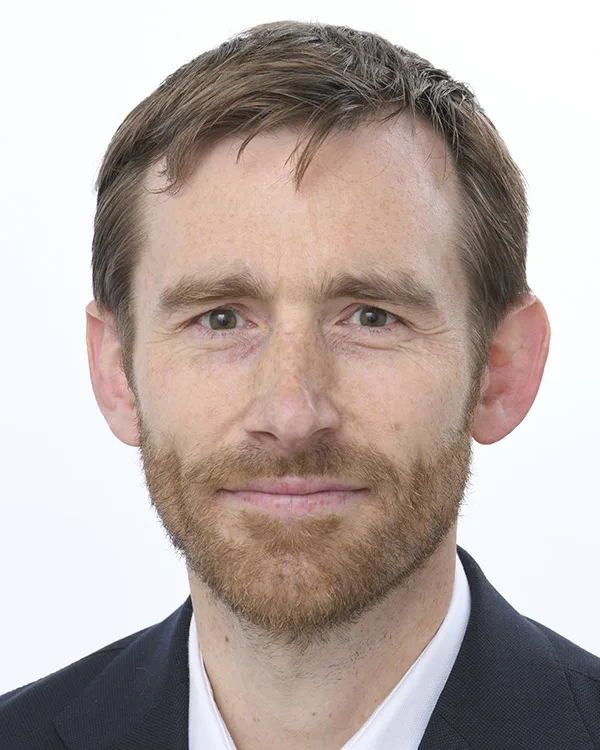

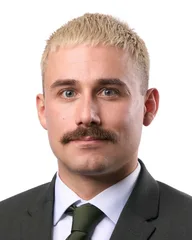
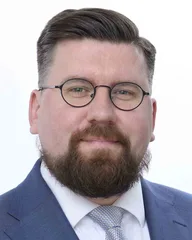
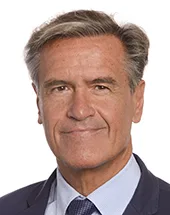
| Rank | Name | Country | Group | Speeches | |
|---|---|---|---|---|---|
| 1 |
|
Lukas Sieper | Germany DEU | Non-attached Members (NI) | 390 |
| 2 |
|
Juan Fernando López Aguilar | Spain ESP | Progressive Alliance of Socialists and Democrats (S&D) | 354 |
| 3 |
|
Sebastian Tynkkynen | Finland FIN | European Conservatives and Reformists (ECR) | 331 |
| 4 |
|
João Oliveira | Portugal PRT | The Left in the European Parliament (GUE/NGL) | 232 |
| 5 |
|
Vytenis Povilas Andriukaitis | Lithuania LTU | Progressive Alliance of Socialists and Democrats (S&D) | 227 |
All Contributions (49)
Housing crisis in the European Union with the aim of proposing solutions for decent, sustainable and affordable housing (debate)
Madam President, yes, it's good. I think the vacancies that you have of especially office space in inner cities is an issue. But this is also something that has to be dealt with on a local level. I think the challenge here is every time, and I have the same feeling around short-term rentals that are we trying to create a European solution for a very local problem that is very specific for a city like Amsterdam. If you compare that to the rest of the cities in the Netherlands, it has very, very specific problems that do not apply to most of the other cities in the countries. The same goes for Berlin or other other cities in in Europe. So I would say, give the mandate to the local and regional authorities, and that's where these kind of problems need to be solved, not in Brussels or in Strasbourg.
Housing crisis in the European Union with the aim of proposing solutions for decent, sustainable and affordable housing (debate)
No text available
Urgent actions to revive EU competitiveness, deepen the EU Single Market and reduce the cost of living - from the Draghi report to reality (debate)
Mr Van Lanschot, I think we have enormous expertise in the different regions of Europe. And we can strengthen it. In one part of Europe it is trade, in another part cyber and somewhere else green technology. We should not think that we should all do the same thing in 27 countries. We don't all need everything. What we need, for example, is that our investors, the start-ups and the scale-ups, have five places in Europe where they can do business very well. I don't think we need that in all 27 countries. That's how I see it.
Urgent actions to revive EU competitiveness, deepen the EU Single Market and reduce the cost of living - from the Draghi report to reality (debate)
Mr. Van Lanschot, I think I just indicated that. I think that, as long as we stick to the idea that all the good of Europe must be fairly distributed among the 27 Member States, we will not take any steps in the economic field. Because the financial markets in some countries are just not the same as they are in other countries. I would see a much more flexible form of collaboration in front of me. I would also like to see much more initiative from the Member States, because very often it is the Member States that are looking to Europe to solve their problems. But I would like to hear much more from the Member States about the laws they are willing to change to make us all stronger.
Urgent actions to revive EU competitiveness, deepen the EU Single Market and reduce the cost of living - from the Draghi report to reality (debate)
There was a call for my resignation, Madam President, which is obviously not up to you, first of all. If you ask me, of course bureaucracy is an issue, but the Omnibuses are not the formula to get our growth machine back on. The Omnibuses are vertical corrections, which we need, but the real stuff we need are horizontal integration ideas about the economy and about creating our wealth. So, yes, we need to clean up the house – a deep regulatory clean up. I like that concept, but I don't think that the suggestions made by the colleague in that sense are working in the same direction.
Urgent actions to revive EU competitiveness, deepen the EU Single Market and reduce the cost of living - from the Draghi report to reality (debate)
Madam President, the Draghi Report is already two years old, and we are here for I don't know how many debates already on the same report – it might have been the fifth or sixth or seventh. I think the key question is that what we do in this House is very much redistribution of a budget and of things that Member States can get back from Europe. But defence and economy don't work like that. The money and the investments will go to the places that are best suited for investments, that have the highest yields, that have the best jurisdictions. For defence, it's the same thing. It's about expertise. It's about research and development. Our governance model of redistribution – and I regret that the Brits are no longer here, because they were much better at that than we are – is actually blocking us now from choosing winners, because it has to be fair. We cannot spread out economic integration over 27 countries in the same level, because the financial markets are not the same, because the infrastructure is not the same. Of course, we aspire to the same levels, but it is not the same. As long as we don't recognise that, I don't see how we can really make progress, which is why enhanced cooperation is an urgency. The second point I really support in the President's approach was that Member States really need to step up – instead of consuming Europe, they should start producing Europe and tell us what laws they are ready to change in order for us to get stronger together.
European Central Bank – annual report 2025 (debate)
Mr President, Commissioner, Mrs Lagarde, the debate on central bank independence is on the rise again, of course because of the open attacks by Trump on the Fed and your colleague Jerome Powell. I think it is very good that you have clearly shown, including in Davos, that things work differently in Europe. It really has to stay that way. The independence of the ECB must be left alone. It is also a little worrying when I hear Mr Bardella. It predicts a French revolution, and that is why the ECB's mandate must be stretched. The Greens are doing the same thing with the climate crisis. Guys, let's stay away from that. That independence, that is the basis on which our stability, also here in Europe, is built. We see that the dollar is going to be worth less. In response, the ECB would like to see a greater role for the euro on the world stage, by parking more euros outside Europe. This, of course, must be within the mandate. But may I also suggest a crazy idea: that we are also going to talk again about reforms in the Member States. Because I haven't heard that at all today. So real reforms: taxes, pensions, labour markets. This is how we make the euro stronger. It doesn't have to be international and geopolitical. We can start here and let's do that. I hear a lot about safe assetsI hear a lot about eurobonds, but I hear very few people about reforms. As far as I am concerned, these eurobonds are also shortcuts for not doing the real work. I do have good hope that Commissioner Dombrovskis will work on the simplification agenda, and perhaps that we should even go a little further. Because our economy has to be pulled out of the doldrums and we need everyone for that.
Implementation of the rule of law conditionality regime (debate)
Madam President, thank you for your efforts to create a bit of a debate here, because in the meantime we have learned that behind the very patriotic language of defending Mr Orbán lies also the readiness to throw their own businesses – French businesses, Dutch businesses, everyone that is actually trying to do something in the internal market – they are ready to throw them under the bus, because they'd rather support Orbán than their own people. They are also ready to give up on your taxpayers' money as well – all of our taxpayers' money – to throw it into the pockets of corruption. Dear colleagues, why is this a problem? Because no country is immune to this. No country is immune to corruption. No country is immune to the decay of democratic institutions and democratic ethos. That is why the work that many of the colleagues here in the front line do is so important. The critical situation we are in now is that actually, while we talk a lot about enlargement, it feels sometimes we are closer to losing countries. Because there are countries now that do not respect anymore the criteria that are needed to get into the EU, and this is something that should set off alarm bells anyways. That is why the urgency is very big for the mechanism to be enlarged to the entire budget, so that we can really send a strong signal to every capital in Europe, being colour-blind – no political affiliations – but in favour of the rule of law.
Implementation of the rule of law conditionality regime (debate)
Mr Sanchez, that was a very fast presentation. You said you liked walking around in Budapest. I think many of us do, but ask business people from outside of Hungary – to do business in Hungary, they need envelopes to get contracts, envelopes with money inside. The services are breaking down for normal citizens. The internal market rules are not respected. So I don't really understand, French businesses are suffering from the absence of the rule of law in Hungary. Are you actually protecting them?
Presentation of the European Affordable Housing Plan (debate)
No text available
Protection of minors online (debate)
Mr President, we live in the midst of the greatest social experiment in modern history and the subjects, those are our children. I'm talking about the influence that algorithms and social media have on their development. Neuroscientists, psychiatrists and developmental psychologists have been ringing the bell for a long time. The mental health of our children is very much under pressure. Many parents also call for help, because these systems are not neutral. They are designed to hold attention and amplify emotions. The digital addiction of our children does not only have mental and social consequences. It has become a revenue model, especially for American and Chinese companies, with which they also collect all their data. You wouldn't allow untested substances to be in our children's food, would you? Why then would we allow untested algorithms to sit in our children's minds? That is why it is so important that we now work towards a minimum age for social media, that we ban addictive features such as Autoplay and Infinite Scroll and that we make the platforms much more liable for the abuses that take place there.
Protecting EU consumers against the practices of certain e-commerce platforms: the case of child-like sex dolls, weapons and other illegal products and material (debate)
Mr President, Vice-President of the Commission, Shein is cheating. Child pornography is completely unacceptable, but unfortunately only the tip of the iceberg. Every day our market is flooded with illegal and downright dangerous products, toxic vapes, make-up and jewelry or combustible batteries and electronics. Consumer associations have recently concluded that 70% of Shein and Temu's products do not meet our standards, and 25% are even dangerous. We only control a fraction of what enters Europe and we hardly stop anything. We have already received more packages than last year in the whole year. Black Friday is just beginning. Mr President, the situation is untenable. Consumers are at risk and unfair competition from China is destroying our businesses and value chains. So we need to intervene as soon as possible. Remove the tax exemption as soon as possible. Introduce a European and not just a national processing levy as soon as possible. And make Chinese platforms and vendors responsible for the mess they bring to the European market.
Allegations of espionage by the Hungarian government within the EU institutions (debate)
Mr President, if Hungary wanted to join the European Union today, it would not be possible. As Orban builds palaces, hospitals, schools and public facilities for ordinary Hungarians are getting worse by the day. That is the dubious honor of the thoroughly corrupt governments of Viktor Orbán. Just when we thought it couldn't get any worse, it turns out that the Hungarian government has deployed a network of spies against us, against the partners who want to share their prosperity and freedom with all Hungarians. So let's not take half-measures: Firstly, Parliament must initiate an investigation. I don't know if we can join the European Commission's investigation? To be honest, I don't expect much from my own committee of inquiry. Secondly, we must refuse the embassy representatives access to this building, at least until we are clear and know who is still involved. The same applies to the Commissioner, who still has access to the most important information in the European Commission and the College. Everybody's in. I think this should stop, at least until the end of the European Commission's investigation.
Allegations of espionage by the Hungarian government within the EU institutions (debate)
Madam President, the colleague just called us all 'traitors'. Yes. And under certain laws, traitors are dealt with in a certain way.
Time to complete a fully integrated Single Market: Europe’s key to growth and future prosperity (debate)
Mr van den Berg, I find it very special that you attribute to me the power and the strength to be the brake to stopping this entire continent. When it comes to economic integration, there is no brake, not even in the NSC election programme. We go through with it, too, and certainly, when it comes to protecting the livelihood of Dutch people on the Dutch market, of Europeans on the European market. We are under a lot of pressure right now because we are not working together enough. You can also strengthen where it is needed and yes, also limit it. Draghi says: “We have to do less.” This is sometimes very difficult for your side of the room, because if we do less, we can also do some things better.
Time to complete a fully integrated Single Market: Europe’s key to growth and future prosperity (debate)
Madam President, what are we talking about? Completing the Single Market as if we are almost finished. It's like saying we have a Customs Union, but in fact we only have an external tariff and the rest is all national. Colleagues, words matter and we should stop fooling ourselves. And I think many others have also mentioned the same point. On the Customs Union, it means giving customs officials the instruments and the data to do their work. We need to scrap the de minimis, and I really hope that that the Danish Presidency will push for this in the next ECOFIN. We need this as an outcome. It is on the table. The Commission has already proposed that we can do this. Now we need to higher the entry barrier to the European market. We also need to start charging for getting onto the EU market with the handling fee. Commission, EUR2, is that it? Is that what the European internal market is about, EUR 2 to get onto the market? I think we can reflect on that. Most importantly, we need to make economic actors that put bad products on our markets liable. Liable. At the moment the consumer is liable for the products that they order online. And that is absolutely crazy because there is a wildfire going on the Single Market. Chinese e-commerce platforms are flooding the market. Last year, 4.6, it will be much more this year because the Americans closed the shop with massive advertising spending, highly aggressive marketing and ridiculous prices. These platforms sell huge amounts of non-compliant goods. They don't pay enough taxes. They don't respect our standards. So, Commissioner, now Shein has opened the shops in Paris. How the hell is this possible? They want to be next to our high-quality shops, to make us think that they are also high quality. It's not like that. So we need the instruments to start protecting the Single Market urgently.
Implementation and streamlining of EU internal market rules to strengthen the single market (debate)
Madam President, colleagues, the internal market is a key driver of financing all around Europe. If we do not have a well-functioning internal market, we can forget about financing, demographic change, energy transition and everything that has to do with defence and also defending Ukraine. It is as simple as that. How difficult it is to defend the internal market we will prove today at 12 o'clock – because we will vote for a position of the Parliament that undermines the integrity of the internal market. It is about the unfair enforcement of unfair trading practices in other countries. So we have gold-plated rules of one Member State that could be enforced in another Member State. It is crazy. It is against Draghi. It is against Letta. But we will be voting for it in any case. So, colleagues, let's practice what we preach. We are talking about Draghi and Letta every single day, and we're not actually practising it.
Financial activities of the European Investment Bank – annual report 2024 (debate)
Mr President, Europe must invest and show courage to remain relevant in the world. However, that is easier said than done, because we are far behind in several areas. The U.S. economy has grown 30% more in recent years than the European one, and the latest technology today comes from China. We stand practically still and are overtaken left and right. This mandate should be about strengthening our competitiveness and our economy. The good news is that the EIB is playing a positive role in this by investing in industry, modernisation, the deployment of clean technology, microchips and artificial intelligence. We all know what to do, and it's about actually doing it. Big steps are needed when it comes to our energy network and to get our energy independence down. The skyrocketing energy prices are pushing our industry as well as the incomes of our households like a concrete block. We need to strengthen our defence industry and invest in it. Because if we do not make the drones ourselves, they are made somewhere else and we are dependent on an external party. It is clear: We need huge investments. The EIB has the space to do so. At the same time, I also share the view of colleagues that a larger mandate should include more money, but also more control and a stronger role of this Parliament, to also monitor what is happening in the EIB.
Safeguarding the rule of law in Spain, ensuring an independent and autonomous prosecutor's office to fight crime and corruption (debate)
Mr President, colleagues, Spain's democratic decay has been ignored by the EU for too long. For the first time in EU history, a sitting general prosecutor is being sent to trial for leaking confidential information to damage the opposition and to protect the Prime Minister's narrative. After ignoring the Constitution to stay in power, we see now that Sanchez is also ready to undermine the foundation of our liberal democracies, namely the separation of powers. This is alarming because this is not just a judicial error, but a deliberate political strategy to undermine the independence of the judiciary. The reality is that the Spanish Prime Minister embodies a new type of threat to the rule of law, Commissioner, one that is pro-European, progressive and liberal, but against the rule of law. Instead of confrontation, we see smiles and selfies with the EU. But behind the cover of Spanish domestic politics, we see democratic decay. The European Commission should not be fooled by this pro-European façade, and treat this with the same seriousness as other rule of law breaches. Dear Commissioner, no double standards.
Implementation report on the Recovery and Resilience Facility (debate)
Mr President, come back with me to the year 2020, a year in which a battle was fought over taking out joint loans, or eurobonds. Some Member States, such as the Netherlands, were concerned about this. We had concerns about building a very large debt mountain, but also about whether the reforms would actually deliver results. We're five years away now, and we can settle the bill. Honestly, it doesn't look good. The European Court of Auditors was destructive. It is unclear what taxpayers will get back for their money. We do not know where it ends up, what the results are or what the added value is for Europe. What European citizens do get in return is a very large mountain of debt. The Netherlands, for example, can receive up to 5 billion euros from the fund. Until 2058, the Netherlands will pay more than 35 billion euros. This debt mountain will therefore continue to weigh on European and national budgets for a long time to come. The fair story is that this will also have to be at the expense of European spending and that this cannot be met with new European income. The Coronavirus Recovery Fund and its poor implementation undermine trust in Europe, as this is not how you deal with citizens’ taxpayers’ money. As far as Eurobonds are concerned, I would like to say: Once, but never again.
Competition policy – annual report 2024 (debate)
Mr President, Europe must become more competitive. We want our businesses to grow and invest here. They are the basis of our livelihood. But this sticks to words if we don't overcome two gigantic challenges. Because why is it easier for a start-up to move from Amsterdam to San Diego instead of, for example, from Amsterdam to Milan? There's a huge problem there. Businesses cannot grow here unless we deepen the internal market. We need more than the omnibus packages to power Europe's growth engine. Because differences in rules are equivalent to an internal rate of 45% on goods and up to 110% on services. So we can do something about that ourselves. A second challenge is to stop unfair competition and abuse of power in our market. Large companies use their size and our personal data to shape the market. The European fines take them up for sale. The adjustments we enforce are relatively small and that is exactly their business model. I wholeheartedly support the Commission in addressing these companies, but the situation now is that unfair competition has become almost normal on the market, both for services and for goods. We enforce rules for our entrepreneurs and our companies, but if you come from outside Europe, you're almost free to play. And that's a huge problem that we have to work much harder on. So, Commissioner, tackle unfair competition and deepen the internal market as if it were 1986.
Discharge 2023 (joint debate)
Mr President, first of all let me thank especially my colleagues working on the agencies discharge in the Budgetary Control Committee. It was I think a very collegial process and I think we worked a lot on content, and we were very patient to hear all the agencies and to look into their issues. For me, there are two points that I would like to raise, and I am happy that we could also pick them up in the report going forward. One is dependency on external consultancies: the feedback from the agencies is actually quite shocking that many of them could not perform their core functions and responsibilities without the help of external parties. In a world of cyber dependencies and threats, I think we should look into that with a bit more of a systematic approach to see how we can protect these agencies and make them a bit more autonomous. Secondly, there is the issue of the possibility of looking at overlaps of mandates and of functions. We have many agencies, we have many different structures that often work on the same kind of topics. I think we can do better and I think we can be more focused. We already mentioned, of course, the anti-fraud architecture this morning, but there are other areas that merit a critical review as well. Lastly, of course, the discharge we will not grant for the agency on Malta due to a very serious OLAF report. I'm happy that we could table an amendment together with the Greens, The Left, the ECR and Renew. Unfortunately, the colleagues of the S&D are not on the amendment, which I regret, because I think that when very serious allegations are on the table – and which they are regarding this agency – it doesn't matter which party is in government in the Member State, it is a matter of controlling and of holding them to account.
A revamped long-term budget for the Union in a changing world (debate)
Mr President, I am here on behalf of the Committee on Budgetary Control, and this is exceptionally a committee that does not cost so much money, but has to make money. I think this is a special situation. However, there is still some work to be done and every MFF offers opportunities for improvement in spending in the Member States and how we can strengthen this Parliament to control spending. We have often talked about transparency and access to certain expenditure information on other topics. I think there is still room for improvement. We cannot repeat the mistakes we made in the corona recovery fund. You know how important end-users are to the Committee on Budgetary Control and this Parliament. Finally, we are now reviewing the anti-fraud structure. I think we can also take important steps towards greater efficiency and lower costs there.
European Semester (joint debate)
Mr President, I am very concerned. Low economic growth, an escalating trade conflict. The economic outlook is bleak. A real test for the new rules. And now we in the EU are mainly talking about more spending on defence and how we are going to pay for it. And believe me, I am the first to say that Europe must pay for its own security. That will be a task of decades, not years. At the same time, we have a number of countries with a shockingly high public debt and a lot of pressure on the financeability of that debt. It does not matter to these countries if expenditure is excluded. Financial markets look at real risks, not the paper reality of a Stability and Growth Pact. This requires, above all, responsibility on the part of the Member States and strong supervision on the part of the European Commission. That's what I'm really calling for. If we continue to increase debt and deficits, we will soon run into a wall. Then the ReArm plan threatens to become a financial kamikaze plan. A new debt crisis is not unthinkable. Each euro should be spent effectively with a clear added value. That means more cooperation on defence, making plans together, but not immediately making debts together. I therefore call on the Commission to be strict about this. Work on debt and sustainability, avoid a deeper crisis and do not burden our children with unaffordable debt, which is the only way to ensure lasting and stable livelihoods.
Cutting red tape and simplifying business in the EU: the first Omnibus proposals (debate)
Mr President, we are at a turning point in Europe. Old friends are turning their backs on us and old enemies are getting stronger. Especially if Europe takes the lead in the field of climate, for example, other continents no longer follow us. We're not "market makers" anymore. Especially to the colleagues of the S&D I would like to say that the world has really changed. We're not in charge anymore. The strength of our economy and the competitiveness of our businesses are now essential to protect us and stay relevant in the world. And that's not going well. The past mandate this House was a mass producer of more laws and regulations, with more complexity: Taxonomy, CSRD and CSDDD are very good examples of this. It is significant that legislation is now being amended that has not even entered into force. If we do not spare our companies and especially SMEs, they can forget their position on the world market. This has already happened with the steel, chemical and cement sectors. We need to simplify in order to remain competitive. But let's also start by simply trusting our companies and expecting them to do their job well. Research shows that regulatory complexity is one of the main reasons for entrepreneurs to stop their activities. That is why this first Omnibus is a step in the right direction. I'm hoping for a whole series of Omnibuses. Our opposition to regulatory complexity must be long-lasting and persistent, at all levels. This is necessary for our livelihood and to restore the confidence of entrepreneurs in the European project.