
| Rank | Name | Country | Group | Speeches | |
|---|---|---|---|---|---|
| 1 |
|
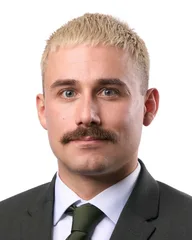
Lukas Sieper | Germany DEU | Non-attached Members (NI) | 390 |
| 2 |
|
Juan Fernando López Aguilar | Spain ESP | Progressive Alliance of Socialists and Democrats (S&D) | 354 |
| 3 |
|
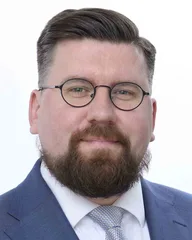
Sebastian Tynkkynen | Finland FIN | European Conservatives and Reformists (ECR) | 331 |
| 4 |
|
João Oliveira | Portugal PRT | The Left in the European Parliament (GUE/NGL) | 232 |
| 5 |
|
Vytenis Povilas Andriukaitis | Lithuania LTU | Progressive Alliance of Socialists and Democrats (S&D) | 227 |
All Contributions (13)
State of the Union (continuation of debate)
The epidemic has had tremendous and unpredictable consequences on our lives: social, economic, cultural ... It has deepened inequalities in society in almost all areas. In the Socialists and Democrats Group, we are working well with the Commission and we are pleased that many of our advanced proposals and policies, such as the proposal to enforce a European minimum wage and more ambitious climate targets, have been incorporated into our programme and are being implemented. However, our support for the European Commission has never been a blank bill of exchange. We therefore expect today that the situation in the EU will not only be dealt with virtually, but that we will insist on a profound transformation of our society and economy. We always want to put sustainable development and prosperity at the forefront, including ecological, health and social progress. We need to tackle gender inequality, which has again been exacerbated by the health crisis. We also need to make sure that the EU becomes a leading partner of third countries in the international arena. In her speech, the President touched upon all key areas. But we have seen in the past that many ideas have not been realized. Also due to wrong priorities in some Member States. So did President Von der Leynova manage to seize the moment to convince her of her mandate and the way forward?
The situation in Bosnia Herzegovina (continuation of debate)
Thank you very much. The war in Ukraine is dangerously escalating the security situation in Bosnia and Herzegovina. There is a strong fear that Russian President Putin’s close allies in the Republic of Serbia’s Russian aggression against Ukraine would exploit and provoke incidents or even war in Bosnia and Herzegovina. The rise of nationalist and separatist tendencies has long threatened the peace, stability and territorial sovereignty of the country. I call for a reassurance policy. We need messengers of peace, not messengers of war. In the European Parliament, we called on the Union to impose sanctions on Milorado Dodik for corruption and threatening the stability of the country. There will be no political consensus, as allies such as Hungarian Prime Minister Orban strongly oppose the sanctions. We must provide Bosnia and Herzegovina with a European perspective. People deserve peace, fair elections and a better life. Let's support them!
The deterioration of the situation of refugees as a consequence of the Russian aggression against Ukraine (debate)
Dear Sir/Madam, Every donation can save a life! The people in Ukraine and those fleeing the war need our help, shelter, medicines. Putin's brutal Russian aggression against Ukraine is forcing millions of people to flee. We follow the suffering of mothers, children, the elderly. Scenes break hearts. It is unacceptable that humanitarian workers cannot save lives. The refugee wave is the largest since World War II. But the reception is warm. Anyone fleeing the war must be welcome in the European Union. We need to welcome people, give them shelter, education, a doctor, a job. Today we are talking to the Ukrainians. We want peace. Europe has awakened to a different world. The war and the humanitarian catastrophe are a great test for us. We can be proud that the countries that traditionally closed the door were able to open it today. Slovenia as well. All refugees are people, regardless of gender, colour, race, religion. On International Women's Day, our thoughts are with Ukrainian women, mothers, girls. We demand peace on our behalf.
Russian aggression against Ukraine (continuation of debate)
Madam President! I never imagined that I would ever call on this stage to stop the war in Ukraine. The messengers of war, the oppressors of freedom, the rule of law, democracy and human rights must be stopped. Nationalist autocrats, even in Europe, will demolish democracies until we stop them. Russia's actions threaten the post-war order and security of Europe as a whole. Exploitation in Ukraine for political or profit-making purposes is also a disgrace. Only the unity and rapid reaction of Western democracies is hope. Slovenians still have a very alive and painful memory of the bloody Balkan wars. We want peace. Today there will be a great gathering for peace in Slovenia. We must help those affected by the war and thank all those who unselfishly gather and offer help to refugees, people in need, not only today, always. Every war ends at the negotiating table. It is absurd that this is the reason why there is so much violence, destruction and suffering. Let us do our utmost to bring to peace the power of international law and the word, not the argument of force. Thank you very much.
Strengthening Europe in the fight against cancer(debate)
Dear President. Thank you to the European Parliament's Special Committee on Beating Cancer for its outstanding work and for the final report on which we are voting today. The ZA vote represents a vote for a common European fight against the disease, which diagnoses three million Europeans per year at European Union level. The voice ZA is a voice closer to the European Health Union and the voice ZA is a voice for more social justice and equality in health care, for fewer differences in cancer survival rates – the percentage of which is still above 25. I am well aware of how crucial timely diagnosis is and how invaluable timely and quality cancer treatment is. This saved my life years ago, and that is why I support and advocate, in all areas of activity, the timeliness of disease screening and detection, equal access for all Europeans to the highest quality cancer care and to equally fast-access and affordable high-quality medicines. A vote for resolution is a vote for life.
A European Action Plan Against Rare Diseases (debate)
Madam President! Today, around 30 million Europeans are diagnosed with one of the rare diseases. We have 30 million reasons why we need a coordinated and holistic approach to address the problems we face on a daily basis. Tonight's debate as an ambassador for rare diseases fills me with optimism. Why? Last week, the UN General Assembly Committee adopted a resolution on addressing the challenges of people living with a rare disease and their families. This is a big step for the community of patients who are too often stigmatised and marginalised. The Union-funded Rare 2030 study also concludes that the current strategy needs an update. We also need to encourage innovation. Slovenians are recording a remarkable achievement in the field of newborn screening, which detects as many as 40 rare diseases in a child and ensures timely action. We must ensure that the European Action Plan against Rare Diseases is also one of the priorities of the next Trio Presidency of the Council of the Union.
Fundamental rights and the rule of law in Slovenia, in particular the delayed nomination of EPPO prosecutors (debate)
–Mr President, Honourable plenum, Commissioner, Minister! Today, for the second time in this building, I am talking about a crumbling democracy in Slovenia. In March, we talked about political interference in the free media. The fact that we are talking about Slovenia for the second time confirms that there is something seriously wrong in the country and I regret it. I do not want these debates to resonate as a critique of Slovenia, its people. The reason for these debates is the criticism of the Slovenian government under the leadership of Janez Janša. European politics has repeatedly been upset by the Prime Minister's provocations. Finally, when he rejected the European Parliamentary Delegation and later went into a vocabulary fight on Twitter with some of them. The responses were outraged, the European responses to the unacceptable financial depletion of the Slovenian Press Agency and the delay in the appointment of two European Delegated Prosecutors were outraged. I welcome the fact that the European institutions have consistently asked the Slovenian Government to comply with its legal obligations. Today we have delegated prosecutors from Slovenia, I want them to be able to deal with the cases without accusations of bias and without the attempts of the Slovenian government, which seems to be on the table today, to discredit them or even recall them, which is impossible. The Slovenian government did not agree with their appointment for a year. Such breaches of European legislation in Slovenia, including in the case of the Slovenian Press Agency, will unfortunately leave a bad mark on the otherwise solid part of the Slovenian administration during Slovenia's Presidency of the Council of the Union. Monitoring countries where the state of democracy is worrying is crucial to protect our common values, human dignity, freedom, democracy, equality, the rule of law, human rights. And it is up to us, colleagues, to remain faithful to our common values and always act if they are violated, as this protects people.
Situation in Bosnia-Herzegovina (debate)
Madam President, honourable plenum, Commissioner, Minister! It's boiling in Bosnia and Herzegovina. After the end of the war in 1995, this was one of the worst or worst political crises. My colleagues in the European Parliament and I have been warning for a very long time about the rising tensions in the country. The country needs to reform its constitutional and electoral legislation, especially in the light of the upcoming elections next year. They must be fair and free, and everyone, regardless of their ethical background, must have the same rights. Any unilateral actions that threaten territorial sovereignty, the integrity of the country must be put to an immediate end. Also, the rhetoric of responsible politicians, Milorad Dodik, who divide the country. The Union is the largest donor of aid to the country, but European taxpayers will not forever support policies that actively destroy territorial integrity. The Union must use all the instruments at its disposal, including sanctions, to preserve the country’s territorial integrity, unity and peace. And it is only through swift and concrete action that we will restore credibility, trust and stop the mass departure of the young generation from the country.
The outcome of the Western Balkans summit (continuation of debate)
Mr President. Dear Sir/Madam, I welcome the fact that the European Union supports the European perspective of the countries of the Western Balkans, but unfortunately there is no guarantee as to the speed at which enlargement will continue. Substantial investment in the development of the region cannot replace unfulfilled promises made by European governments. By the end of the year, under the Slovenian Presidency, we need results. The Union needs to open accession negotiations with North Macedonia and Albania as soon as possible, later this year. There is no excuse. The credibility of the enlargement process is at stake. Kosovo has been waiting for years for visa waivers for citizens, the country has met the conditions, young people are losing hope, a brain drain is taking place in the region. The problems of corruption, organised crime, political interference in the judiciary and the media are everywhere. Hard work must continue, but without restoring confidence in the enlargement process, progress will remain limited. Recent developments in Montenegro, on the border between Kosovo and Serbia and in the highest institutions of Bosnia and Herzegovina are alarming. In Serbia, where I mediate in the cross-party dialogue, I call on the government to comply with the agreement of September and to do everything possible to ensure balanced media coverage and conditions for democratic and fair elections next year. There is an urgent need to improve the political climate in the country and to continue reforms if accession negotiations are to be resumed as soon as possible. We need to rebuild trust. I therefore call on the governments of the Union to move the enlargement process up a gear.
Preparation of the European Council meeting of 21-22 October 2021 (debate)
Madam President-in-Office, Europe is on the brink of an energy crisis. Electricity, fuel, fuel oil, natural gas are irritated. Urgent action is needed to help the poorest in the heating season. The rise in energy prices is also due to past speculation. Industry and households have not caused the situation, and the pandemic situation has drastically reduced or even stopped many incomes. It is unacceptable that consumers are financially affected by the pursuit of distributors' capital gains. Increased energy prices will push many to the brink of survival. In Slovenia, around 40,000 households are at risk of poverty due to rising energy prices. People should not be forced to choose between heating or food. I call on the leaders of the Union to act together, as happened in the COVID case. Governments have the power and responsibility to help their people and countries. We need a European energy Marshall Plan and we must not allow anyone to be left behind by moving to a green and carbon-free society.
Annual Report on the functioning of the Schengen area (debate)
Madam President-in-Office, once again, honourable plenum. I want to start the discussion with optimism. Schengen is one of the greatest achievements of the European Union. Until recently, the borders of iron and blood have disappeared again with the enlargement of the Union and Schengen. Schengen has become a symbol of freedom, it is crucial for the internal market and for the exercise of the fundamental rights of free movement of goods and services, work, knowledge, ideas and, of course, movement. Today we also have generations of adolescents in my country of Slovenia who no longer remember the borders in Europe. Unlimited freedom within Europe is self-evident for them, but unfortunately, many crises in recent years have put Schengen in a deep crisis. The coronavirus epidemic has further paralysed freedom of movement. Schengen has become the custodian of all the problems of the Union and the hostage of the national, partial interests of the Member States or even their authorities. Mutual trust, the foundation of mutual cooperation, has been replaced by mistrust. In the six years since 2015, member states have introduced internal border controls as many as 275 times. In the past nine years, it has only been 35 times. Although Schengen should have been in its best Olympic years at the time of its good twenty-five years, it is severely paralysed and already in intensive care. Existing rules are no longer up to the situation. But for reform, we urgently need to gather the necessary political courage. We must be bold, ambitious, visionary. The question is whether we can do that. The report therefore addresses the challenges Schengen has faced in recent years and proposes solutions. The COVID-19 pandemic has revealed shortcomings in addressing a common challenge – the cross-border health crisis. The lack of clearer rules in such cases has led to great chaos at borders and an uncoordinated response by Member States. The experience itself calls for an appropriate solution. Internal border controls in six Member States have been illegal and without a legal basis for almost five years. Status quo It is unacceptable, but it is clearly beneficial to some. The attempt to overhaul the 2017 rules failed. I therefore expect and urge the Commission to find a way out of the impasse. Parliament will always be your ally. In the absence of an effective common migration and asylum policy, or because of it, we still face many challenges at the external borders. The Mediterranean is already a tragic burial place for unfortunate people. This is why we urgently need a mechanism to also protect fundamental human rights at borders and zero tolerance for violations. The reform of the Schengen verification mechanism presented by the Commission earlier this year is a step in the right direction. Many of Parliament's demands have been met. I regret only the chosen legal basis, which, however, does not allow Parliament to play an equal role this time. I therefore call on the Slovenian Presidency-in-Office of the Council of the Union to involve the European Parliament in the debate as an equal partner, as was done in 2013 with the adoption of the first Schengen mechanism. The future of a European area without internal borders depends on our ability to adapt to crises and challenges. Right now, we seem to be stepping in place. We have governments that openly put their own interests before national and European ones. The reform must fundamentally overhaul the common rules on internal borders. We must also eliminate all the causes of mistrust between Member States, in particular as regards the protection of the external border, and prevent events that undermine this confidence. Refer those countries that break the rules to court. We also urgently need to complete the construction of the Schengen area, because a fragmented one has no future. Bulgaria and Romania have been unjustifiably in the waiting room for almost a decade. Croatia is on track, but the final decision for all three is in the hands of the Member States. In Parliament, we do not agree to a two-speed Europe and to the division of women into different interests. Finally, I would like to add that Schengen is too important to be treated as a stepmother. No country, not even the European Union, can afford its disintegration. The political and economic cost would simply be exceptional. And if we put the future of the Schengen area at risk, we will put at risk the future of the European Union itself and, I believe, nobody wants it. I would like to say to the honourable Commissioner, who knows how difficult it is to put on the table, that he has an ally in the European Parliament, even when it comes to such a demanding reform and reconstruction of the Schengen area.
Asylum, Migration and Integration Fund 2021-2027 - Integrated Border Management Fund: Instrument for Financial Support for Border Management and Visa Policy 2021-2027 (debate)
Thank you very much, thank you very much, dear President-in-Office, honourable Commissioner, honourable plenum. Today is an important day for Europe, for a Europe with humane but secure borders and for a Europe that puts solidarity and fair burden-sharing back at the heart of its migration and asylum policy. With the new funds, the Union will now have the means to deliver on its ambitious goals and not turn a blind eye to key challenges. We have yet to take a final step on a long and difficult path of negotiation, of compromise for the common good, not only for Europe, but for society as a whole and for European citizens. I would like to begin by thanking my colleagues, the rapporteurs, for their persistent support and the negotiators, the European Commission and the Presidents, Germany and Portugal, for their constructive approach and the agreement reached. In total, the European Union will allocate €16 billion over the next seven years in key areas of border management and migration, almost three times as much as in the previous period. In order to safeguard the free movement of movement within the Schengen area, we need to manage migration effectively. In order to ensure a space without internal border controls, we also need to manage our borders effectively and safely, but also humanely, while respecting fundamental human rights. The European Union will now have sufficient resources to put this into practice. It will no longer be possible to hide and pretend. With the new financial instruments, with the new funds, we are also laying down much clearer rules for spending European money on one of the most sensitive, even the most controversial, but at the same time the most important policies in the European Union in recent years. We are talking about a policy on migration, which has greatly increased mistrust between European governments and mistrust among our citizens. The key point is that, in the end, we have reached a fragile but balanced compromise. After the last migration crisis in 2015, Europe still, unfortunately, has not found effective solutions and a common answer on how to proceed. We are still fighting and working towards a common migration and asylum policy. Although we have already reached a great deal in this very building, the ball is still on the side of European governments. And the victims of these disagreements within the European Union first became innocent people, many who also lose their lives. Member States in the Mediterranean are still largely on their own. Unfortunately, the hostage has also become Schengen, a Schengen area that today does not function effectively as we knew it. Because today many countries still carry out, and have for many years carried out, unjustified, illegal internal border controls. The new financial instruments we are discussing tonight, the new funds, address precisely these key issues, based on solidarity and fair burden-sharing, especially for the frontline Member States, the Union will allocate more money for resettlement and relocation of refugees. More money will be allocated to asylum procedures and the integration of people into society, where local communities, crucial for the success of integration, will gain a greater role through direct funding. On the other hand, the Fund will also support the return of people to countries of origin that are not eligible for international protection in the Union. The second set of measures concerns our borders. The agreement significantly strengthens Europe's ability to manage its borders more effectively and thus enhances common security. But borders must remain humane, modern, digitalised and fluid, as must the future European visa policy. This is why we need to learn from the coronavirus pandemic, and we want a Europe without borders again. And despite all efforts, Europe's borders, especially its maritime borders, are still very deadly. We must not allow people to die at the gates of Europe. We must also ensure that human rights are respected at all times, including at the border and in border procedures. We must also ensure that human rights are always respected also at the border and we must not allow illegal and chain returns to become a disguised way of border management. In doing so, they not only undermine the common migration policy, but also allow people smugglers to continue to make massive profits at the expense of human tragedies. Thanks to the European Parliament, my colleagues who have accompanied me along this path, more money will now go to search and rescue operations at sea, but at the same time we will also spend more money on the protection, modernisation and digitalisation of borders. The message of the European Parliament tonight to the Member States, as well as to our citizens, is clear. The Union is serious, we are serious about 16 billion euro reasons for European leaders to finally overcome the blockage of key reforms. There are no more excuses. We now have sufficient resources to implement the common policy effectively.
Presentation of the programme of activities of the Slovenian Presidency (debate)
Honourable plenum, Honourable President of the Parliament, President of the Commission, Honourable Prime Minister of Slovenia. In the European Union and in this building, Slovenia has been writing successful stories for the last 17 years. Members of the European Parliament from Slovenia promoted exemplary Slovenian projects and penetrating Slovenian people. With pride. I would like to feel the same pride in this room today. There is more and more criticism of my country every day. Slovenia's reputation has unfortunately shaken during the current government, and many of you are wondering about our values and European attitude. Dear colleagues, I would like to inform you that the actions and words of our President or individual ministers are not the actions and positions of all our people. Opinion polls are clear: The vast majority of Slovenians today do not support the direction our country is heading in. They do not support often disrespectful rhetoric, arrogance, cynicism. They do not support imitation of the Hungarian or Polish prime minister, pressure on the media, prosecutor's office, independent institutions. They do not support self-determination, arbitrary decision-making bypassing laws and constitutions, or sometimes colluding with the far right. They will not allow the character of Slovenian society to change in this way. That's why it's boiling in Slovenia today. The demonstrations before Parliament today were also a reflection of this sad political climate. People do not allow themselves to be silenced and demand a change. They want the opportunity to prove that Slovenians are a responsible, mature and self-confident nation. I hope that the Presidency will be an opportunity to restore this reputation and pride to the country, to the people, to all those who are fighting for respect for European values and norms in the coming months. At the end of the Presidency, Slovenia will receive international attention in the style of our exceptional Pogačar and basketball players with Dončič at the forefront, who are delighting the world with top sporting feats these days. Therefore, I urge you, dear Prime Minister, to return Slovenia to the path of good, modern, open, friendly and decent countries for the sake of the growth of democracy, for the sake of each individual and the well-being of the whole society. It is at the heart of a healthy Europe where we belong. Among the critical, diligent and free-thinking people, because that is what we Slovenians are.