

| Rank | Name | Country | Group | Speeches | |
|---|---|---|---|---|---|
| 1 |
|
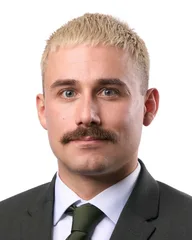
Lukas Sieper | Germany DE | Renew Europe (Renew) | 487 |
| 2 |
|
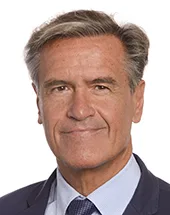
Juan Fernando López Aguilar | Spain ES | Progressive Alliance of Socialists and Democrats (S&D) | 454 |
| 3 |
|
Sebastian Tynkkynen | Finland FI | European Conservatives and Reformists (ECR) | 451 |
| 4 |
|
João Oliveira | Portugal PT | The Left in the European Parliament (GUE/NGL) | 284 |
| 5 |
|
Vytenis Povilas Andriukaitis | Lithuania LT | Progressive Alliance of Socialists and Democrats (S&D) | 273 |
All Speeches (55)
The impact of organised crime on own resources of the EU and on the misuse of EU funds (short presentation)
Date:
13.12.2021 20:29
| Language: DE
Speeches
Madam President, Commissioner, ladies and gentlemen! Today, on behalf of Tomáš Zdechovský, I can, so to speak, introduce an important own-initiative report on how EU funds, particularly in the area of shared management, are used and used by organised crime. Because wherever there is money, there are of course also interests of organized crime. One does not want to think at all in which areas organized crime is active. The Committee on Budgetary Control has been able to identify a wide range of activities in this regard and to discuss them with the relevant authorities. It starts with the Agricultural Funds, goes on through the Cohesion Funds and concerns grants of various kinds. It concerns in particular tenders in which in some cases only one tenderer or no tenderer is to be found and, nevertheless, corresponding awards are made. It partly relates to links in policy areas. Then, Commissioner, you know this very well, both in the sale of fake vaccines and in the sale of fake protective material, there have been many billions of attempts to exploit the plight of both medical and human beings in the various Member States. In this respect, it is regrettable that organised crime has become a permanent part of the work of the Committee on Budgetary Control, because there is, of course, a corresponding interest wherever money is potentially awarded. For this reason, the Committee on Budgetary Control attaches great importance to several measures. Firstly: The European Public Prosecutor’s Office must be supported by the Member States in such a way that it can effectively operate across borders in order to detect, prosecute or investigate and effectively carry out the cross-border activities of organised crime. Effective implementation of the PIF Directive by Member States is needed in order to prevent fraud and/or exploitation by organised crime at an early stage. We finally need a digital system for tracing European funds all the way to the beneficial owner, so that we know where the money flows, who receives the money and which people are actually behind organisations or companies. These are mostly normal companies, but there are also camouflage companies. Only recently we have again identified a camouflage company that has worked for terrorist purposes, i.e. also for organised crime and has accordingly obtained European funds or has made use of European funds. We also have a so-called Risk scoring tool, the Arachne system, an IT platform that all Member States could use. And it should become mandatory that all data can be entered accordingly or accessed automatically by this platform in the Member States, so that auditors and inspectors know immediately and immediately where European Union funds have gone and that audits can be carried out much faster and more efficiently than has been the case so far. The Anti-Fraud Office OLAF is an excellent institution. She does an excellent job. It must be better and faster supported by the Member States and the evidence must be usable in court. Furthermore, there is a need for cross-checking with, for example, so-called anti-mafialists, and for much better coordination and cooperation between offices in order to identify more quickly and precisely when criminals try to make use of government or European funds. With this report, Tomáš Zdechovský, together with the Committee on Budgetary Control, is trying to present a report that will take us forward in this work, in the fight against organised crime that commits fraud against European funds.
Presentation of the Court of Auditors' annual report 2020 (debate)
Date:
24.11.2021 21:54
| Language: DE
Speeches
Madam President, Dear President of the European Court of Auditors, dear Klaus-Heiner Lehne, but also ECA member Tony Murphy, both of whom joined us tonight, Commissioner, ladies and gentlemen! We often discuss here all the error rates and error rates. First of all, I would like to express my heartfelt thanks to the Court of Auditors for once again formulating very clearly what the core problems we have in our budget are. When I look at the first area of the so-called shared management As you can see, we are repeatedly confronted with the problem that national authorities in some areas and parts of our Member States are simply not reliable and that we cannot rely on them. We repeat this almost every year. That is why I urgently ask the Commission to finally create a sustainable model here. Short-term task forces or short-term consulting firms simply do not help, because the problems occur again and again. And if, as for example in the Danube Delta or in Bulgaria, in the guest houses or in a few other areas, error rates of not just 4%, but up to 80%, 90%, then I simply get bad. And if the whole thing still takes place perpetuated, then I get even worse. Other areas, on the other hand, work wonderfully and work well, and this must also be pointed out explicitly. What worries me is the area of small and medium-sized enterprises in the area of competitiveness, some of which are overwhelmed by the complex rules and need strong support. Especially start-ups usually cannot afford complicated legal firms to penetrate all the constructions they have to fill out and get the money accordingly. And last point: I would like to make a recommendation to the well-functioning Member States as to whether: gold-plating There is still a real trend today, or whether the accessibility for the corresponding companies or also for universities and the like is designed in such a way that not everyone is frightened by European rules.
Fundamental rights and the rule of law in Slovenia, in particular the delayed nomination of EPPO prosecutors (debate)
Date:
24.11.2021 19:43
| Language: DE
Speeches
Mr President, Commissioner, Mr Minister, ladies and gentlemen! I'm not trying to slander and complain, I'm just trying to convince the European Public Prosecutor's Office. It has only been operational for five months, Commissioner, and it has already opened 400 investigations and the cases amount to €5 billion in damage. Slovenia has joined the Public Prosecutor's Office, other countries are not. The naming process may not have been happy, nor was it correct. I hope that the prosecutors who are now appointed are indeed the permanent partners and that the question is resolved. But what still annoys me is that there are some who do not participate, including countries such as Sweden that are not. We must be careful not to delay the discussion too much: countries like Hungary, as well as countries like Poland, which simply exercise their option – but I do not think it is wise. Because if I look at the fact that in five months alone we can make cross-border investigations to 5 billion euros in damage, I call on all countries to join the EPPO. I urge everyone to quickly name their prosecutors. I call on national prosecutors to cooperate closely. After all, what the EPPO has already tackled in a short period of time means that in the end, the EPPO actually tackles much more than it ever costs or than we can get in with national prosecutors' offices. That's what it's all about. We must work together to advance the European Public Prosecutor’s Office. Slovenia is doing it now. As I said, the process was extremely unfortunate. But I hope we are on the right track now. And now it has to be a matter of everyone else taking part who is not currently doing so.
The revision of the Financial Regulation in view of the entry into force of the 2021-2027 multiannual financial framework (debate)
Date:
22.11.2021 19:21
| Language: DE
Speeches
Mr President, Commissioner, ladies and gentlemen! At the very beginning, I would like to express my heartfelt thanks to my co-rapporteur – to you, dear Nils – for the excellent cooperation and very, very good cooperation, but also to all the shadow rapporteurs who are also here today. I am pleased that we have worked out a very good text together and have tried to agree on important priorities. The revision of the Financial Regulation provides an opportunity to modernise our rules of the game for the establishment, spending and control of the EU budget and to adapt them to new challenges and lessons learnt. Against the backdrop of 750 billion additional funding from both the Corona Recovery Funds and NextGenerationEU, the requirements for transparency and verifiability of expenditure have risen sharply, particularly as the sector is characterised by a kind of Budget support acting within the European Union. That is, the money goes into the budgets of the Member States and the immediate insight into what is happening with the funds – that is now the challenge that lies ahead. We must remember that the European Parliament is not always involved in decision-making, as evidenced by the emergence of the Corona Reconstruction Funds or NGEU. It must be clear: Once the EU budget has been adopted, Parliament must have the full right to review expenditure, but it should also have a right to design how the money is spent, as we recently discussed with the Committee on Budgets. The revised Financial Regulation must reflect this. We therefore call for the full legal integration of external assigned revenue into the Financial Regulation, which now massively increases the EU budget in the form of NGEU. A crucial point from the point of view of budgetary control is the issue of digitalisation and better traceability of EU funds. Dear Commissioner, I know you – or you – behind us on this issue. But the Member States, astonishingly, who are constantly talking about digitalisation, suddenly have concerns if we want to look: Where did all the money go? Indeed, it is currently not possible to easily and quickly see which final beneficiary receives how much from the Fund in total – on the one hand, because the rules currently do not require that the final beneficiaries and their beneficial owners – and here I mean the natural persons behind companies and conglomerates who benefit from their promotion – be covered uniformly. We want to be able to see whether someone is behind 20 companies or whether a small SME actually receives the help it really needs. On the other hand, it is not possible to aggregate individual amounts of different kinds attributable to the same or to a relative of a beneficial owner into a total amount – for example, if individual persons or companies receive funds from different funds, or if several individual payments to companies belonging to the same conglomerate or to the same beneficial owner must then be tracked accordingly. We urgently need to improve on this. We therefore call on the Commission to come forward with a proposal for an interoperable IT system that will do just that: to show at the touch of a button which final beneficiaries and their beneficial owners actually receive how much money from the EU budget. Because then it is also possible for us as legislators to review new directives, new laws: How successful we were, where there were problems, where there were difficulties, what was particularly successful, and then to make the appropriate political decisions. The main data, such as lists of the largest recipients in each Member State, should also be made available to the public. Of course, we respect the full jurisprudence and the protection of data protection in accordance with what the ECJ or the legislation requires of us. However, this would also allow journalists, NGOs and interested citizens to track what their tax money is spent on and make maladministration easier and clearer to see. A strong concentration of EU funding in the hands of a few oligarchs in some Member States and/or nepotistic benefits, conflicts of interest of high-level decision-makers and/or even members of the government are the things we need to avoid as a matter of urgency and where we need to ensure transparency at an early stage. However, this is not just a question of transparency; We owe it to those who pay the taxes. These are not necessarily just rich people who pay taxes, but ordinary citizens who have to earn their money carefully every month and then have to pay corresponding taxes. They don't like to read it when millions of euros go to individual beneficiaries. I believe that we have an important task ahead of us with the Financial Regulation: ensure that the funds are spent properly and are spent sensibly.
Pandora Papers: implications on the efforts to combat money laundering, tax evasion and avoidance (debate)
Date:
06.10.2021 15:27
| Language: DE
Speeches
Madam President, Commissioner, ladies and gentlemen! Two weeks ago, the Commission published fresh figures for 2020, in the so-called PIF report. The VAT gap, namely the difference between expected VAT revenues and actual VAT collected, has a significant impact on the financial interests of the European Union. It stands at a whopping 130 billion for 2019. Europol estimates annual losses from cross-border VAT fraud alone to be between €40 billion and €60 billion. We are discussing here for the tenth time. We have income tax fraud, we have corporate tax fraud, we are struggling to get enough staff in the relevant agencies. We then rake in 20 digits, 30 digits, 40 digits, while the big ones, so to speak, get away with tens of billions. I didn't know why a Czech prime minister would need an offshore company for a French house or a house in France. It doesn't seem to be the usual style. The Lord has often struck us in the way in which he uses European resources. Commissioner, what if, first of all, we finally get sufficient equipment for the European Public Prosecutor's Office, Europol and Eurojust so that they can better fulfil their tasks in this sector as well? What if, at last, the Member States, if their Financial Investigation Units do not fulfil their tasks, are also held accountable by the Commission with extreme urgency? There must finally be consequences, because otherwise people think: The little ones are hung up, the big ones are let go.