

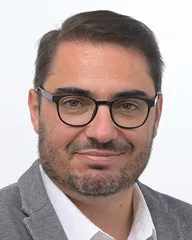
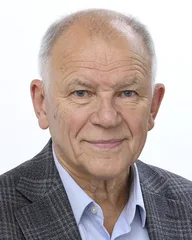
| Rank | Name | Country | Group | Speeches | |
|---|---|---|---|---|---|
| 1 |
|
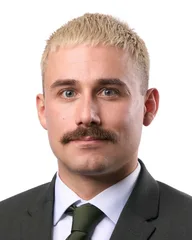
Lukas Sieper | Germany DE | Renew Europe (Renew) | 494 |
| 2 |
|
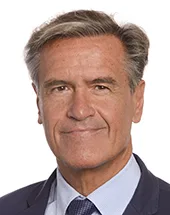
Juan Fernando López Aguilar | Spain ES | Progressive Alliance of Socialists and Democrats (S&D) | 463 |
| 3 |
|
Sebastian Tynkkynen | Finland FI | European Conservatives and Reformists (ECR) | 460 |
| 4 |
|
João Oliveira | Portugal PT | The Left in the European Parliament (GUE/NGL) | 288 |
| 5 |
|
Vytenis Povilas Andriukaitis | Lithuania LT | Progressive Alliance of Socialists and Democrats (S&D) | 276 |
All Speeches (55)
Allegations of corruption and misuse of EU funds in Spain during the pandemic (topical debate)
Date:
13.03.2024 12:56
| Language: DE
Speeches
Mr President, Commissioner, dear President-in-Office of the Council, ladies and gentlemen! It is already worrying what you get from Spain in the Koldo case. It is probably about orders of magnitude that affect European funds of up to almost 18 million – and that is already a lot of money. And I now have three very concrete demands. First of all: The Spanish government should work much more closely and better with the European Public Prosecutor’s Office. It cannot be that the European Public Prosecutor’s Office does not get it from the Spanish Public Prosecutor’s Office, but through journalists and whistleblowers – this is unacceptable. We have the European Public Prosecutor’s Office to protect the financial interests of the European Union, and there is a legal obligation to pass on such cases to the EPPO. I expect the Spanish government to do that. The second question that arises for me comes from the delegation with which we travelled to Spain: We want to know the final recipients. And we don't want to read from the Spanish government or from other governments that the Ministry of Transport gets so many millions for mobility. Or that in relation to an agency that has already been noticed by corruption, you only get the information: It receives 957 million or 954 million – no project, no company, no final recipient. I expect that we will finally get to read the final recipients and not the intermediate stations that redistribute. And last point: Infidelity should not be worth it. Legislation must punish infidelity and fraud instead of making it amnesty.
Conclusions of the European Council meeting of 14-15 December 2023 and preparation of the Special European Council meeting of 1 February 2024 - Situation in Hungary and frozen EU funds (joint debate - European Council meetings)
Date:
17.01.2024 10:58
| Language: DE
Speeches
Mr President, Commissioner Šefčovič, ladies and gentlemen! First of all: The rule of law, democracy and the economy are going down the drain in Hungary and thus also the social security of many people. Instead of finding solutions together with the EU's partners, Viktor Orbán plays a double game. He wants billions of European funds on the one hand completely conditionless and at the same time denigrates the EU, its institutions and their president. With regard to the 10.2 billion money now released, I look to Commissioners Reynders, Schmit and Ferreira, who have been in charge here, to bring about this decision. I tell Mr Körner that, exceptionally, this was not Ursula von der Leyen – all three Social Democrats, nor are they under suspicion. But I do not understand how the Commission could come to the decision that the independence of the judiciary was restored, so that the funds could be released in cohesion. If there is no possibility of a fair trial and the government can reverse judicial decisions because it simply makes new legislation overnight that turns every judicial judgment upside down, then such decisions are simply eyewitnesses and they help Orbán to continue his autocratism and oligarchism. Then I would also like to know from the Commission whether it is indeed true what is reported in the media that as the first act out of REPowerEU and the funds made available to them potentially goes as the first money to a Chinese e-car manufacturer, whom the Commission just recently accused of excessive Chinese state subsidies. I would ask the Commission to clarify this matter. That's intolerable.
Transparency and accountability of non-governmental organisations funded from the EU budget (debate)
Date:
16.01.2024 13:33
| Language: DE
Speeches
Mr President, Commissioner, ladies and gentlemen! First of all, I should like to say to the previous colleague: In our report, we first express our appreciation for non-governmental organisations. I myself belong to tens of non-governmental organizations on a voluntary basis and am involved in various social, cultural areas. So it's not about the question of appreciation, it's about the question: In principle, how do we deal with transparency rules and what problems have arisen? I have a little doubt, Commissioner, that you really identify all of them or identify most of them. Every year, when I see money flowing to Islamist organisations, terrorist organisations and their sub-NGOs, for example, because they hide under beautiful titles that give the impression that they stand for rights and for European values, it is simply necessary to introduce better controls. Secondly, I doubt that the European Commission always distributes the funds fairly. In the Member States, they are often smaller organisations or diverse. For the European Commission itself, it is often organisations that it builds up itself, supports itself and even provides lobbying services – I just read through such a contract again. I find this rather difficult if, for example, it is expressly stated that:Lobbying of policy makers“ for some political objective, where even the Commission decides against it. I think this is a rather problematic matter when it comes to direct political decision-making. In this sense, I simply ask that we take the issue of transparency seriously, that we also want to know who finances certain NGOs. And thirdly, that we actually apply it to the EDES system. There is no one on the EDES list. There's zero on it so far. I would also like to know definitively, Commissioner, how much money the NGO No Peace without Justice actually spent on. That's 4.6 million. I still haven't gotten an answer as to where the money went.
Planned dissolution of key anti-corruption structures in Slovakia and its implications on the Rule of Law (continuation of debate)
Date:
13.12.2023 18:46
| Language: DE
Speeches
Madam President, Commissioner, ladies and gentlemen! Developments in Slovakia are worrying. Together with his new Social Democratic government – these are not right-wingers who come from Social Democracy – Prime Minister Fico has decided, first of all, to significantly reduce penalties for corruption, to make limitation periods so short that convictions are ultimately no longer possible – especially of his special nepotismists – or that they will get back to freedom. These weakening of the rule of law, decided by Fico and his government, represent, in my view, a fundamental break with the efforts of recent years in which, following the murder of journalist Ján Kuciak and his wife, strenuous initial progress has been made against the mafia structures in Slovakia. Fico himself, along with some of his combatants, was suspected of having favoured this nepotism. I would like to make it very clear that the RRF – in terms of disbursement of the corresponding funds – is in the so-called milestone 15.5 ‘Fight against corruption and strengthen the integrity and independence of the judiciary’ and in milestone 16.1 ‘Reforms to effectively fight corruption and money laundering’. Fico did the opposite. For this reason, I urge the Commission to reverse the allocation of these funds accordingly, because I cannot understand why EUR 662 million will be released at this stage if exactly the opposite of what is in the milestones is done. They cannot be considered fulfilled. I ask the Commission to act.
Presentation of the Court of Auditors' annual report 2022 (debate)
Date:
18.10.2023 15:31
| Language: DE
Speeches
Mr President, Commissioner, dear President Tony Murphy, dear Jan Gregor, a cordial greeting to the whole team of the European Court of Auditors. I would like to begin by expressing my sincere thanks for the fact that the Court of Auditors has once again provided us with a very valid and very good basis for our work in the Committee on Budgets. The report, of course, already presents us with a few challenges. In fact, we will have to deal more intensively with these issues of calls for tenders in the field of cohesion. Secondly, it is amazing to me that in the field of agriculture, despite all the satellite systems, there is still the possibility that you have a lemon farm that does not exist at all, where not a single lemon tree grows. This can be seen by satellite everywhere, is easily verifiable. The fact that this is still happening is extremely astonishing to me. Which for me is always amazing: we have been complaining for years that the issue of eligible personnel costs in the field of Horizon – in particular for small and medium-sized structures – clearly raises major problems, but is still not solved. I hope that this can now finally be solved within the framework of lump sums or the like, so that this does not happen any more. But the biggest concern for me is the ARF. Firstly, we have difficulties with the fact that the European Court of Auditors does not even have full access to Phoenix, which I do not think is acceptable. Second, that at least five per cent of the milestones – not even the milestones – have been met. Thirdly, for the first time, double funding is emerging between cohesion and the RRF. That recurring national tasks are partly financed, as happened in Spain. That there are also problems with us meeting milestones, but ultimately not measuring performance. Last point: It is actually a crisis instrument and the crisis instrument will not be fully implemented by 2026. That's what's bothering me. It is not a crisis instrument.
General budget of the European Union for the financial year 2024 - all sections (debate)
Date:
17.10.2023 14:20
| Language: DE
Speeches
Mr President, Commissioner! The 2024 budget is under considerable pressure and difficult circumstances. And because the colleague complained earlier that the EPP was allegedly against humanitarian payments: The statement is simply wrong – but frankly, I don’t expect anything else from the left either. What we demand, and what I also demand in my motion, is that we acknowledge or condemn the most serious crimes committed against babies, against children, against families, against the elderly and against disabled people. That's too hard for you, and that's why you want to put a key vote on it. I am curious and I wish you a lot of joy with this, because this also makes it very clear to the public how you deal with terrorism. Secondly, our request that the payments be reviewed – as the Commission itself has proposed – is that they cannot in fact go to Hamas under any circumstances. This is necessary and important, and we strongly support humanitarian aid, but in the form that there is in fact no way to abuse it, but that it really benefits the civilian population in hospitals, in old people's homes and the people who really need it.
Breaches of the Rule of law and fundamental rights in Hungary and frozen EU funds (debate)
Date:
31.05.2023 18:32
| Language: DE
Speeches
Mr President, Commissioners, dear Ministers, dear Presidency of the Council, dear colleagues! Let me start by saying: We all want the money to be made available to Hungarians as soon as possible and help them to build up and develop economically. To this end, however, it must be possible for everyone to have the same access so that all non-governmental organisations, all companies, all have the opportunity to actually benefit from the funds. And to make one thing clear: The Hungarian tradition does not include the fact that most or many of the money falls into kleptocratic hands. It is not part of the Hungarian tradition that arbitrary ordinances are issued overnight, that court rulings are repealed by ordinances, that sectoral companies are subject to punitive tariffs, to discriminatory measures, and that those who do not act according to the will, up to visits by the secret police, must be subject to all kinds of discriminatory measures. This is not part of the Hungarian tradition. And I would like to say very clearly, Commissioners, that it is essential for me: If Hungary is prepared to normalise the judiciary and establish the rule of law in the form of an integrity authority and the National Council of Judges and similar measures, it is necessary, however, that the same laws cannot be repealed by way of a state of emergency, which have been previously confirmed to us as soon as the money has arrived.
Madam President, Commissioner, dear Mr President, dear Minister! Now I have all sides, because I did not mention the Minister in a brazen way earlier. Thank you very much for being there, because it is not always customary for ministers to be there with us. Dear colleagues! First of all, I would like to make two or three comments on the Corona Reconstruction Fund. Firstly: Dear Commissioner, we will also discuss the issue of future financial instruments, similar to those planned by the Commission. time gap must address. We will have to make it clear that it cannot be possible to get money for any reform and then temporarily leave it in the Member State's budget for five years before, perhaps five years later, making an investment at some point. This was not the case, especially if we have to make debts for it, because we then have to pay the interest in the budget. In the second place: However, if emergency instruments are made, Member States will also have to spend these funds consistently. Unfortunately, our experience in Spain shows that out of the 41 billion that have arrived there in the meantime, just maybe 4-5 billion at the maximum have actually arrived at all at the companies, at the regions concerned. This is something that makes the time delay clear. At the same time, we now have such large delays in the Cohesion Fund that we have never had before. That is why we will have to come to an intensive agreement on this once again. Sometimes, with these milestones and targets and targets, I also get the impression that they are more like wandering sand dunes than they are actually fixed stations. A very personal word about what the colleague friend here simply did to the colleagues. Simply calling Mrs Le Pen and Mr Farage is simply not justified. We will respect the law and not populism in the so-called pension fund, which applies to the years in which there has been no pension entitlement for members of parliament. This means that the Presidium must act in accordance with the law and not in accordance with the way in which we are best able to move forward in a populist way. I think the whole thing should be handled as objectively as well.
Madam President, Commissioner, ladies and gentlemen! First of all, I should like to thank Mr Jeroen Lenaers, who will speak after me, but, Madam President, having just announced it at the vote, we cannot know that we will start beforehand. I would also like to express my sincere thanks to my shadow rapporteurs, whom we have had a very good cooperation. Many thanks to the European Court of Auditors and its members, dear Tony Murphy and Jan Gregor, both of whom are present here. A heartfelt thank you for the annual report and the special report and the excellent cooperation. Commissioner, thank you very much to the Commission. At first it was a bit bumpy for a few DGs in cooperation, but I would like to thank DG BUDG for their support in promoting cooperation. The greatest successes we have achieved in terms of discharge are, I believe, in four areas. First of all: We want a digitalisation offensive, and the Commission has pledged its support here. We urgently need to improve interoperability, not only because of transparency and traceability, but also to drive red tape reduction, speed up processes and get information faster than has been the case so far. That is why we need Arachne, not only because it is so far a huge instrument, but with not too much added value; We need real interoperable systems. Secondly: The methodology for partial payments was one of the key requirements in the RRF. At first there was none, then there was one, and then there is now also a quantification. Thank you for the speed of the work. I would also like to thank you for the fact that there is now an interactive platform with information on projects that are already being or have already been implemented and are in the process of being implemented, as well as information on the final recipients, which will obviously also be available to everyone here. We now receive information on the 100 largest recipients not only in one sub-area, but for the entire RRF per Member State and we will also receive this information published accordingly. These were indeed wonderful successes for us. But there are still some problems left. Firstly: We still have no information on how much money has actually reached the real economy. I asked again in Spain. I have been promised that we will receive the data; I still haven't got one yet. In other words, we still have no information about: How much money have the project developers or those who do projects actually received, and how much money has actually arrived at the people? Secondly: We have to note that the RRF is starting rather slowly. Originally it was intended as a quick emergency tool, in reality the implementation is delayed. To date, only a few sums have actually arrived in the real economy, and that is one of the points that, I believe, need to be pushed forward the most. If we really want to drive the economy, drive jobs, drive recovery, it means: Projects must be implemented and they must also have real added value and function. Thirdly: We are currently seeing that cohesion originally pushed projects into the RRF, i.e. into the Corona Recovery Fund. Now, projects are being pushed back into cohesion by the Corona Recovery Fund. That is, we have a lively moving station of different projects. This means that the speed of implementation of the RRF also depends, firstly, on whether Member States have adequate structures to implement, and secondly, on whether, as we have seen in Spain, there is serious cooperation with the regions, so that they can benefit really quickly from what is currently not working so well, but only slowly, step by step. I have the impression that overall in the implementation, perhaps the ambition and the statements to the outside were greater for some than the actual reality reflects. So there's a lot to do. Nevertheless, a thank you to all involved for the good cooperation.
Guidelines for the 2024 budget - Section III (debate)
Date:
18.04.2023 19:15
| Language: DE
Speeches
Mr President, Commissioner, ladies and gentlemen! With regard to the 2024 budget, of course, there is a whole lot of concern, but I would like to choose three priorities. First priority: Funding under normal programmes outside the RRF – i.e. all cohesion programmes, agricultural programmes, programmes from all non-RRF sectors – is currently significantly delayed in the area of investment, especially in the area of cohesion. At the same time, we note that the RRF is exchanging projects for the Cohesion Programme, and the Cohesion Programme is now exchanging projects back into the RRF programmes. We would need much more clarity and efficiency about which project actually belongs where and why it is actually spent under which program. Because this is a lively moving station. In the second place: What I mean by that is that we are hindering ourselves in spending: The bureaucracy with regard to the guidelines on so-called conflicts of interest is now so complicated and so legally unclear that programmes in the Member States are literally vacant because of the uninterrupted lack of clarity regarding the implementation on this issue. Thirdly, I would like to mention the issue of interest rates. We urgently need a precise overview of how much interest will actually accrue for the RRF and what that looks like, especially in 2024. I remember well that in the last Conciliation interest rates went up and down very quickly – for negotiation tactical reasons, I had the impression. But let's talk about it.
Need for immediate reform of the internal rules of the Commission to ensure transparency and accountability in light of alleged conflicts of interests (debate)
Date:
15.03.2023 18:02
| Language: DE
Speeches
I have only one short question for the speaker, Madam President. We're always talking about an ethics committee. That doesn't make any sense here. We must simply ban this practice. It also makes no sense if it is ethically controlled. We must prohibit the practice of officials travelling to these third countries to negotiate at the expense of third countries. This is simply forbidden. It doesn't even need to be ethically negotiated.
Need for immediate reform of the internal rules of the Commission to ensure transparency and accountability in light of alleged conflicts of interests (debate)
Date:
15.03.2023 17:48
| Language: DE
Speeches
Madam President, Commissioner! Thank you very much for your statement. At first, I must honestly say, I was a bit stunned by the good thing, because I thought that the European Union's budget should actually be sufficient to enable directors-general, directors or officials of the European Union to travel to congresses or conferences that bring substantial added value – in negotiations, in diplomatic relations, in whatever official function – then the European Union's budget should be available for that. No third-party invitations should be made, which may ultimately lead to suspicions that this could potentially compromise the impartiality, neutrality and objectivity of the responsible Director-General or staff of the European Commission. I think it is imperative, Commissioner, that there is a very clear regulation in this regard. Incidentally, the same applies to me even if, for example, there are checks within the Member States. It cannot be the case that the Member States invite, but rather that the budget of the European Union must be adequately equipped to ensure that travel by officials for official reasons is covered by this budget in order simply to eliminate any doubt. You also have to be honest when you travel to a country that has special interests in terms of visa liberalisation, in terms of special flight and landing rights, where there are also protests against that country within the European Union, that there is unfair competition, that there are unfair conditions in terms of the competitive situation. If I look at Qatar Airways, if I look at discussions with airlines that offer kerosene at significantly discounted prices, and much more, then it must be true that the strictest every trip that is made has a real service connection and, secondly, it is done for the sake of the service and is paid for from the European budget. Anything else would put us in a wrong situation, in which the confidence of the population would also be seriously disturbed.
Following up on measures requested by Parliament to strengthen the integrity of European institutions (debate)
Date:
13.02.2023 21:44
| Language: DE
Speeches
Madam President, Commissioner, ladies and gentlemen, Madame Aubry! I am from the EPP and I am still there; In this respect, there is no emptiness in the EPP. Colleague Olbrycht was also there, but now he has to have another conversation. In this respect, you must now prefer with me, even if it does not suit you. On the measures to be taken – there is always the proposal of an ethics body. First of all, I would like to repeat what was said very clearly earlier: There were criminal energies on the way here, also with a social democratic colleague and also with some other people who have received funds and used them illegally or not lawfully. In this respect, it is not that we can solve the problem with an ethics body. What an ethics body can do, on the other hand, is what it already does in a number of other countries: Give advice, make recommendations. What it cannot do, however, as some of the Greens have suggested, is to abolish the separation of powers. We want a clear separation of powers. This means that we do not want a disciplinary body or anything that includes prosecutorial rights, judicial rights and perhaps even those of Parliament and the Commission at the same time. We have a separation of powers here. An ethics committee can only make recommendations. Secondly, there must be a blacklist by organisations that have attracted attention through certain activities such as hate speech, incitement to terrorism, religious fundamentalism or extremism, have been criminally convicted and have misused and embezzled EU funds. In many cases, these organizations are no longer known after some time and neither are the people. It would be helpful for anyone to have such a blacklist There would be. Then it would also be easier for us to use the Transparency Register to find out who we are taking in and who we are not taking in.
EU funding allocated to NGOs incriminated in the recent corruption revelations and the protection of EU financial interests (debate)
Date:
13.02.2023 20:40
| Language: DE
Speeches
Madam President, Commissioner, ladies and gentlemen. First of all: Non-governmental organisations are a very important part of our society and, as the Commissioner has made it very clear, they take on essential and important tasks. I myself am involved in several organisations and am therefore very aware and know first-hand how valuable the work of NGOs and foundations is. Therefore, it is all the worse that some black sheep now threaten to discredit the work and reputation of reputable organizations. The corruption scandal surrounding former Vice President Kaili has shown that NGOs can be abused far too easily and unobserved by third countries or criminal structures as vehicles for their interests and criminal activities. Therefore, we need clear rules regarding the transparency, funding and activities of NGOs. We need a European equivalent of US Foreign Agents Registration Act (FARA). It must not happen that third countries and criminals use NGOs as covert organisations to influence political decision-making processes in a disguised way, to pay bribes and to tap EU funds. It has also happened on several occasions, Commissioner, in spite of all the alleged scrutini, that even organisations monitored by the Office for the Protection of the Constitution have still received funding. We need to be much more vigilant here. The financial and non-financial inflows of NGOs must be disclosed accordingly. I must honestly say that with the organisations I represent, it is not a problem at all to do so. This does not mean that they are disclosed in a public list, but that they are presented for review by the auditors and the necessary organisations. In the second place, however, expenditure must ultimately be checked to see whether it also flows to where it is actually supposed to flow. Then, in the third place: Adherence to democratic accountability and respect for European values is for me sine qua non. I would like to say that NGOs must respect the fundamental values of the EU and reflect this in their organisational structure. And that is what we expect the Commission to systematically review.
Madam President, dear colleagues, in line with Rule 158 of the Rules of Procedure, I would like to ask for a debate to be added to the agenda with the title ‘Transparency in the funding of NGOs and the protection of EU financial interests’. The debate is meant as a reaction to the revelations newly appearing every day about the misconduct of certain NGOs like ‘Fight against Impunity’ and ‘No Peace without Justice’, which have been directly involved in the latest scandal shaking the European Parliament. Every day there appear new articles about new NGOs, as they have received EU funding for projects, and that means taxpayers’ money. It is our responsibility to look into whether the funds are spent in line with EU rules. The public expects us to address this urgent matter now.
Protection of the EU’s financial interests - combating fraud - annual report 2021 (debate)
Date:
18.01.2023 15:58
| Language: DE
Speeches
Madam President, Commissioner, ladies and gentlemen! First of all, I would like to congratulate the rapporteur, Sabrina Pignedoli, on her excellent report. Although I do not want to list all the content that it has prepared very carefully and prepared in terms of content, the report is really excellent. I would like to address three points: First of all, on the issue that concerns us in the area of Qatargate, this is the role of NGOs that is being addressed. I am someone who is very different. We have NGOs that work excellently and that are important for our social order. Unfortunately, however, we also have some derailments, dear Commission, there is in fact no proper definition of the difference between NGOs. We have small regional corporations, we have large corporations striving for power, money and political influence. We have camouflage organizations, and we even have aid organizations like the Red Cross, which also fall under the title of NGO, and universities also fall under it. This covers pretty much everything. That is why I am not one who speaks generally of NGOs, but who says that we need transparency of money flows in non-governmental organisations and, which you ultimately support to a certain extent, we need transparency in these processes in order to avoid that camouflage organisations exert undue influence of a political or even criminal nature in the context of corruption or other activities. Second point: the RRF. In the area of the RRF, I see the difficulty that control is not adequate in this form for the European Parliament, but even for the audit authorities. If the Commission's internal auditors do not have access to the RRF and cannot exercise controls, if the Court of Auditors has limited opportunities to gain insight, and if Parliament does not have traceability, then the whole action becomes quite difficult. The RRF must not become such an action, because if a lot of money – almost 600 and almost 700 billion euros respectively – is spent, then it must be properly accounted for in terms of efficiency, accuracy and success. Last sentence, if I may say it, Madam President: If an ethics authority is required, it must take place in compliance with the rule of law. The separation of powers is a fundamental value in the European legal order. So an ethics authority cannot identify, sanction and also make jurisdiction at the same time. This is outside our legal system. Therefore, ladies and gentlemen, please remain in the legal order, if we are already Rule of law Speaking.
Control of the financial activities of the European Investment Bank - annual report 2021 (debate)
Date:
18.01.2023 14:45
| Language: DE
Speeches
Madam President, Commissioner, dear EIB - let me just say this on the whole - dear EIB team! Dear Vice-President, I am very pleased that you are with us. And I am very happy that we can have this discussion again today. At the outset, I would like to expressly join the Commissioner and send my warmest condolences to Ukraine, because this is already a dramatic process, and we see every day how people suffer from bombing and horrific circumstances. Therefore, also from the point of view of the EPP, the warmest condolences to Ukraine and our sympathy. Back to the EIB: The EIB did not have the easiest starting point in 2021 and had to deal with the impact of the pandemic, and the crises have not diminished since then. Every day a new crisis, I almost said, every day a new requirement and every day a new problem. This is, of course, not an easy situation for a bank like the EIB, put together as a multilateral construct. I would like to thank the EIB for being a strong partner in the field of health, in particular for signing €5.4 billion in loans for health projects in 2021. It is very important that we significantly boost Europe's location in terms of health, competitiveness, non-dependence on third countries and the ability to provide for ourselves, and the EIB plays a special role in this regard. I would also like to thank you for providing funding, in particular, for medical infrastructure in the field of research, vaccines and treatments. BioNTech/Pfizer was also one of the projects that contributed to this. And the EIB was the first multilateral bank to invest in it. Therefore, a heartfelt thank you for this farsightedness. From the point of view of budgetary control, they have also entered into a partnership with EPPO, which I think is very important. From the point of view of the Committee on Budgetary Control, this is not a criticism of the EIB, but an urgent request to the Commission: We have a large number of small and medium-sized enterprises in the field of space research in particular, and there has already been criticism in calls for tenders that the Commission repeatedly cooperates only with large companies. The EIB needs guarantees to provide financing to innovative small and medium-sized enterprises. I therefore urge the Commission to make up for this. Because not only the big ones are our salvation, but, as you have seen in BioNTech, you also need the small ones.
Defending the European Union against the abuse of national vetoes (debate)
Date:
14.12.2022 14:58
| Language: DE
Speeches
Madam President, dear Commissioner, dear Minister, dear colleagues! I have been here in this European Parliament since 2009, and over the years I have noticed – dear Mr Verhofstadt, you are here even longer than I am – that there are always national vetoes on certain precarious files and that there are always long, long, long delays because a Member State crosses paths. In terms of foreign policy, this is extremely precarious when I look at the fact that we have now had the case of Hungary, which, in order to adequately override the conditionality mechanism for itself in the country and to be able to undermine the standards that the Commission rightly demands, is trying to blackmail the Council that it will only get its aid to Ukraine if the Hungarians have to apply, as it were, less rule of law standards. I have to say: I cannot express enough my outrage that a Member State of the European Union and Viktor Orbán are trying to do this at all, because help for Ukraine is simply absolutely necessary and internal domestic questions and questions about the rule of law must have nothing to do with the ability to act in foreign policy. Congratulations to the Czech Presidency that you managed to use the conditionality mechanism for the first time ever in a difficult tightrope act and still find a solution. We will have many more questions to answer. In terms of foreign policy, we finally need to be able to act without the need for unanimity.
Presentation of the Court of Auditors' annual report 2021 (debate)
Date:
19.10.2022 15:02
| Language: DE
Speeches
Mr President, Mr President of the Court of Auditors, Commissioner, ladies and gentlemen! Before I officially start speaking, on behalf of the Committee on Budgetary Control, I would like to warmly congratulate Tony Murphy for having been elected President and wish him good luck and success for the difficult tasks that lie ahead of him and his entire team of the Court of Auditors. We look forward to further cooperation, as this annual report is again an important basis for the discharge. I am pleased that Jan Gregor has come along as the main contributor to this report and can now limit myself to the focus that I have as rapporteur, because then the second part of the Commission budget will be taken over by Mr Jeroen Lenaers as rapporteur and, of course, by the corresponding shadow rapporteurs. On the subject of RRF: The Commissioner knows my questions, which have now been raised very clearly for the Committee on Budgetary Control, and I am grateful that at least DG BUDG is showing some movement in relation to what the Committee on Budgetary Control is concerned about. The first concern is: We have so-called Milestones and Targets. However, they are formulated in such a general way that you have far-reaching leeway in their satisfactory fulfilment. What is satisfactory or not satisfactory is de facto not verifiable for us. What is the standard for satisfactory? There is also no methodology if anyone – any state – now has five Milestones not fulfilled. How important or not important are they? What percentage will be deducted from the payout? So far, nothing is deducted, but everything is paid out, and the methodology does not yet exist. We would like to call for this very clearly as a Committee on Budgetary Control. In the second place: There is a problem that there is no clear correlation between the amount of payment instalments and the amount to be fulfilled. Milestones and Targets. Then there is also the big problem that the Member States should actually submit lists for projects and measures, but these lists for projects and measures are not available to Parliament and also not available to the Court of Auditors in this form, which may be able to take a look individually, but the lists are not available. This means that there is no possibility for Parliament, both for specialised committees and for the Committee on Budgetary Control, to check whether the projects are successful, whether they are right, where the money has gone. It can't be that we're content to say we're spending the money, but we don't really know where it's going.
Illegal detention of the opposition leader in Bulgaria (topical debate)
Date:
14.09.2022 17:44
| Language: DE
Speeches
Mr President! Today is a somewhat amazing day for me. Normally, the left and green sides of this House are very quick to write resolutions. But when it comes to an opposition leader coming from the conservative side, it's suddenly all harmless, all uncomplicated. Then suddenly what is the principle of a rule of law, Commissioner, namely that one must have arrest warrants, that one must also involve public prosecutors, that one must involve judges, that not simply police can arbitrarily arrest opposition leaders on the orders of the Prime Minister and the Minister of the Interior, becomes obsolete. This is usually known from communist states, from fascist states, but please not from democratic states. We also do not want to introduce this standard, and please apply it to every government. I did not hear anything about that today, Commissioner. I've heard abstract things that I'd like everyone to endorse and that I'd like to take a closer look at. But what I don't think is okay is: No matter how one stands with Boyko Borisov, no matter how one stands with a previous government, no matter how one stands politically, no matter what is not possible: I notice that a prime minister, including his interior minister, had also personally announced to me that they wanted to make even more competences for the police with similar arrests in other areas. Normally, the political left calls it a police state. We don't want police states. If it is announced that perhaps all Bulgarian parties agree with each other, they could carry out a judicial reform together, for which, incidentally, a two-thirds majority is needed in Bulgaria. That is, Borisov alone could not have changed anything. You need a two-thirds majority, so the parties must agree with each other, and reforms must be decided and implemented together. But this one-sidedness of action! Commissioner, it cannot be said that the Commission was so behind. The position of the competent policy coordinator Not even occupied in rule of law matters for more than two years. That is, the attention was not given.
Mr President, Commissioner, ladies and gentlemen! I can speak today on behalf of Petri Sarvamaa, who unfortunately cannot be here and who wanted to address two special aspects. First of all, thank you very much for this year's report on the rule of law. We are glad that it has become a bit more precise this year, which is very important for us. From the point of view of the Committee on Budgetary Control, we now know that the conditionality mechanism has been triggered for the first time. However, it would be very important for us to see that the future Rule of Law Report also includes an assessment of the fulfilment of the various conditions laid down by law in the Conditionality Mechanism and that we can analyse them in it, as well as an assessment of the measures taken by the Member States to solve the problems addressed by the Commission. Furthermore, it would be important to make a clear distinction between individual problems and systemic problems – I still lack the very clear distinction. It may be that at some point in a Member State a mistake or a specific tradition is not necessarily great, but it is not a fundamental problem, while for others there are real systemic problems that run across the whole administration and across the funding and across the state. Then you have to make the differences clear.
Madam President, Mr President, dear Commissioner, ladies and gentlemen! First of all, a heartfelt thank you to Olivier Chastel and to the shadow rapporteurs for the really very fair and very good way of working together in the context of the Commission's discharge. The point I am most concerned about in the Commission's discharge – I want to choose a different focus this year – is the issue of public procurement, single bidder, manipulation of public procurement and the reliability of Member State authorities. There are significant deficits in certain countries. And I would like to draw the Commission's attention to the fact that Mr Eickhout has just raised the issue. Rule of law In Hungary, it is even related to Rule of law a very significant role – that this manipulation of procurement procedures then leads to oligarchisation, exploitation by organised criminals and the like. I would also like to express my sincere thanks to all the Members of the Court of Auditors, Mr President, and dear Tony Murphy, you are also present. I would like to thank you very much for the excellent cooperation and also for answering us on sometimes very hard questions with great patience and very broad. The budget relief is based on a legal basis. We follow the laws. This means that budget relief does not go according to personal opinion or activism. That's essential to me. I would like to thank you for your work and look forward to further cooperation.
MFF 2021-2027: fight against oligarch structures, protection of EU funds from fraud and conflict of interest (A9-0039/2022 - Petri Sarvamaa) (vote)
Date:
24.03.2022 12:10
| Language: DE
Speeches
I can read a text very briefly. An error has crept into paragraph 28; for this reason, it was decided that the original text of the PIF report would be inserted and not an interpretation. The original text is: ‘Points out that according to Annex I of the Annual Reports for the Protection of the EU’s Financial Interests (PIF reports) for 2008 and 2019, Romania has, by active anti-fraud investigation, been able to discover and report by far most fraudulently recorded among EU Member States for the respective years;’
MFF 2021-2027: fight against oligarch structures, protection of EU funds from fraud and conflict of interest (debate)
Date:
23.03.2022 23:17
| Language: DE
Speeches
Madam President, Commissioner! Ladies and gentlemen, you are still late! Thank you very much for this. Oligarchic structures are a structural problem. This cannot be clarified by any public accusations only against individuals, but one must change the structures. Oligarchic structures are prevented by creating more transparency in certain areas. The transparency in observing where the European Union's funds go is unfortunately still not complete to this day, simply because of national resistance and resistance from the Member States. We often have to rely on national authorities, and if the national authorities do not function properly or perhaps historically corrupt conditions also prevail, then we are currently not in a position to look through these structures early and quickly enough and to prevent, for example, excessive concentration and favouritism, interruptions, for example in tenders – that the same structures appear again and again, which can then enrich themselves accordingly, that tender procedures are undermined, that there is, for example, systemic fraud. We really need to position ourselves better. But I would also like to say to the address of those who have just spoken from the left here that it would also contribute to telling the truth. One must say soberly: The arrest of Boyko Borisov was not constitutional. It was done without judges, it was done without prosecutors – and then imagine Boyko Borisov simply had the socialist opposition leader arrested by the police during his time. But there would have been something going on, they would have stood up and scolded. If you want to preserve the rule of law and fight corruption, you have to stick to rules and laws yourself – point. And no matter who you accuse, the citizen and the head of government are the same: We need the evidence, we need investigations, we need the support of the European Public Prosecutor's Office to do its work. And these arrests, to be clear, were not related to the 120 cases. This has now been acknowledged by the Ministry of the Interior, which is definitely wrong. But let the European prosecutor do her job. We need her, she needs staff, she needs support. And thank you, Commissioner, for finally getting it.
MFF 2021-2027: fight against oligarch structures, protection of EU funds from fraud and conflict of interest (debate)
Date:
23.03.2022 22:40
| Language: DE
Speeches
Madam President, ladies and gentlemen, Commissioner! I welcome all those who have stayed here so late and I am pleased that we are discussing this very important own-initiative report with each other, albeit at a later stage. We find increasingly oligarchic structures within the European Union, and even outside the European Union, at our borders, very dangerous oligarchic structures exist. We are not sufficiently equipped for this. Maybe it's because most of the time we think we're working with goodwill. Perhaps also because we are more concerned with the positive things, the promotion and the support, and because we also have confidence in the national authorities – and because sometimes we overlook factors that are quite dangerous. By oligarchy I mean or are commonly understood the criminal combination of businessmen with high-ranking politicians for mutual illegitimate enrichment – and also to exercise power together in illegitimate form. It overrides internal market rules, criminally crowding out competitors and using criminal methods to force them out of the market. There is a systemic fraud in tenders. There is a remarkable concentration of funding among certain individuals. And we do not even have the opportunity to be able to trace back relatively quickly digitally to which beneficial owners have received money or subsidies, which beneficial owners are behind corresponding subsidies. Regrettably, in some of our funds, especially in the agricultural sector, we still have some possibilities that there are no ceilings for the subsidies, not even for the permanent subsidies. This is something where the Committee on Budgetary Control has vehemently campaigned for us to set such ceilings. Because the money should go to the breadth and for the benefit of the breadth of the population. The taxpayer must know who the money goes to, what the money goes to someone for, which projects are funded, and this must be completely traceable. So we finally need what we have discussed with each other. The Commission is approaching gradually, but all steps have so far been voluntary. There is no obligatory interoperable database where you can simply – I say now, at the push of a button – trace who got how much for what? Who is behind a company? How do companies get together? There are still non-transparent company constructs that are hardly traceable. There are straw men and straw women who accordingly try to make use of European money or, as a whole, of money from European taxpayers. And that is why, dear Commissioner, it is also important that, when we discover such structures, we apply the conditionality mechanism accordingly - and apply it consistently. That where we see oligarchs and politicians also doing things together with organised crime, we intervene most consistently and severely and equip the European Public Prosecutor's Office accordingly. But that we finally have the possibility to trace back digitally with great consequence, who gets why how much money? That's not really what you're asking for. If we want to be digitally at the forefront of the world, then it must at least be possible to trace our funding back to the beneficial owners. This should not fail in national bodies, and we also need to know whether national bodies are legitimate and properly equipped at all, let alone want to work properly. I would like to thank Petri Sarvamaa for the excellent report and the President for not stopping me immediately.