




| Rank | Name | Country | Group | Speeches | |
|---|---|---|---|---|---|
| 1 |
|
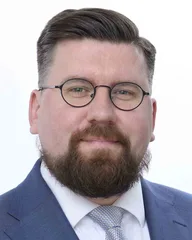
Lukas Sieper | Germany DEU | Non-attached Members (NI) | 390 |
| 2 |
|
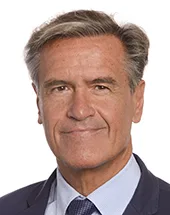
Juan Fernando López Aguilar | Spain ESP | Progressive Alliance of Socialists and Democrats (S&D) | 354 |
| 3 |
|
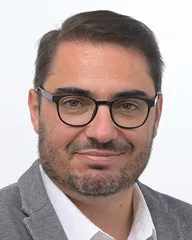
Sebastian Tynkkynen | Finland FIN | European Conservatives and Reformists (ECR) | 331 |
| 4 |
|
João Oliveira | Portugal PRT | The Left in the European Parliament (GUE/NGL) | 232 |
| 5 |
|
Vytenis Povilas Andriukaitis | Lithuania LTU | Progressive Alliance of Socialists and Democrats (S&D) | 227 |
All Contributions (18)
Accession of Montenegro to the Convention of 2 July 2019 on the Recognition and Enforcement of Foreign Judgments in Civil or Commercial Matters - Accession of the Republic of Albania to the Convention of 2 July 2019 on the Recognition and Enforcement of Foreign Judgments in Civil or Commercial Matters (joint debate)
Mr President, Commissioner, ladies and gentlemen! To anticipate this, we explicitly support the accession of Albania and Montenegro to the Convention on the Recognition and Enforcement of Foreign Judgments in Civil and Commercial Matters. The accessions certainly strengthen legal certainty, judicial cooperation and also our broader engagement with reliable partners. But once again - and the rapporteur had already mentioned it - this debate is no longer just about the accession of the countries, it is also about clearly assigning the role of Parliament in these treaties. Despite repeated resolutions by this House, despite clear messages from the JURI Committee, the European Commission has unfortunately not decided to apply this Rule 218(6) there as well. And so it actually pushes the European Parliament to the brink of a decision if primary law actually requires consent. The Convention was based on a mechanism of non-application, and therefore, I believe, this too must be a democratically legitimate decision. It is therefore also a question of institutional equilibrium; respect for the Treaties; It is about Parliament's prerogative. These are not mere procedural details. But it is also a question of attitude, of self-image, of how to deal with Parliament in a decision that is not really urgent. Do we really want to provoke a "no" somehow because of such a question? This is not necessary! The damage would be there. And I'd just ask you to: Avoid such an approach, it does not get us all further on such a question. We are completely on your side in terms of content – but please also with the right procedure.
The 28th Regime: a new legal framework for innovative companies (debate)
No text available
Promoting EU digital rules: protecting European sovereignty (debate)
Mr President, Vice-President of the European Commission, ladies and gentlemen! We have to ask American companies whether they still have an interest in following our rules. At the moment, that doesn't seem to be the case anymore. Instead of cooperation, we are witnessing an increasingly open questioning – and in fact disregarding – of a European legal framework. Then we must also ask ourselves whether this should not also have consequences for their activities in our internal market. And Europe is not a control room at will, but we have something to show, we also have something to offer, and we are the ones who also want to combine values with technology accordingly. That is why we should seriously consider introducing sometimes harsher consequences if this attitude continues accordingly, for example through a review or, if necessary, an end to the transatlantic exchange of data. That's a threat, I don't think, that goes unheard. That's why we have to think about such things. We have something to offer than Europe, but that has to happen according to our rules. We therefore need the European strategy, new European speeds, the possibility of scaling up, new intensities, new investments, also venture capital. Then we have something to oppose them.
Governance of the internet – renewal of the mandate of the Internet Governance Forum (debate)
Mr President, Madam Vice-President! The Internet has long since ceased to be a technical – or merely a technical – infrastructure; It is a common public space in which we work, communicate and also live democracy. Therefore, no one – no power – is allowed to control, fragment or abuse it. That is why the Internet Governance Forum is actually indispensable, because it brings together governments, legislators, civil society, academia, and these impulses should also arise there, which actually flow into laws and rules worldwide accordingly. This year, as we have all learned, the focus was on protecting young people, especially with regard to social media. Here, I think, one could also clearly see that it is necessary to exchange views accordingly, but that it is also necessary for a Commission or even the EU to think about it strategically with the EU. soft power to advance on an equal footing with other states, so to speak, in order to also have their own negotiating power vis-à-vis the Big tech Strengthen accordingly. This is why the IGF is necessary when we use it, but we also need to use it strategically! We are clear and united in Europe, defending fundamental rights – no to mass surveillance, no to a digital world that only serves a few – and that is why we know: Freedom on the internet is only possible if everyone has access to it, and affordable and secure connectivity is not a luxury issue, but a question of participation, development, education, democracy and even strengthening a negotiating position when we join forces with the others.
The United Kingdom accession to the Convention of 2 July 2019 on the Recognition and Enforcement of Foreign Judgments in Civil or Commercial Matters (debate)
Mr President! It is a great pleasure for me to be able to speak here today under your supervision. Commissioner, ladies and gentlemen, let me make one thing clear: This is not just a question of the United Kingdom’s willingness to accede to the Convention on Choice of Court Agreements; I think we all agree that the UK is capable of doing this. The real question is how the Commission handles the accession of third countries and whether it respects the role of Parliament accordingly. The written assessment we received does not follow the procedure set out in Article 218(6) TFEU. There is no proposal to the Council, no request for Parliament's consent, just an information note. This may be in line with current practice, but it is not really applicable law. The Court has already made it clear: Even a so-called non-objection is an international agreement. So, Parliament needs to be involved, and this is not a voluntary decision. The Committee on Legal Affairs therefore tabled an oral question with the resolution to ask the Commission to confirm its legal approach and to remind it that Parliament's legislative powers in this area should not be circumvented either. We support the accession of the United Kingdom, of course, but this support must not come at the expense of due process.
The United Kingdom accession to the Convention of 2 July 2019 on the Recognition and Enforcement of Foreign Judgments in Civil or Commercial Matters (debate)
Mr President! It is a great pleasure for me to be able to speak here today under your supervision. Commissioner, ladies and gentlemen, let me make one thing clear: This is not just a question of the United Kingdom’s willingness to accede to the Convention on Choice of Court Agreements; I think we all agree that the UK is capable of doing this. The real question is how the Commission handles the accession of third countries and whether it respects the role of Parliament accordingly. The written assessment we received does not follow the procedure set out in Article 218(6) TFEU. There is no proposal to the Council, no request for Parliament's consent, just an information note. This may be in line with current practice, but it is not really applicable law. The Court has already made it clear: Even a so-called non-objection is an international agreement. So, Parliament needs to be involved, and this is not a voluntary decision. The Committee on Legal Affairs therefore tabled an oral question with the resolution to ask the Commission to confirm its legal approach and to remind it that Parliament's legislative powers in this area should not be circumvented either. We support the accession of the United Kingdom, of course, but this support must not come at the expense of due process.
Need to enforce the Digital Services Act to protect democracy on social media platforms including against foreign interference and biased algorithms (debate)
Madam President, Madam Vice-President! It is undeniable that social media influences our society, our opinions and our behaviour. We can remember: Arab Spring 2010, 2011, where we all thought social media brought transparency and democracy to the world. 14, 15 years later, we stand with our backs to the wall and have to defend democracy. The influence on elections is quite obvious: U.S. election, Romania, maybe even German election. We can regret all this, but we also have to do something and take a differentiated approach, because the platforms do not always have the same intention. First of all, I think we must also recognize that the right to freedom of expression is not a super-fundamental right. It is an important right, but it does not exist without limits, and in Germany it is called the practical concordance, namely the compensation for other fundamental rights. Other values and rights must be reconciled with this. Conscious politically oriented disinformation and false information are not part of it, criminal acts are not part of it. Secondly, we need: the DSA – which is not legally sufficient – here we need to strengthen; Thirdly: the enforcement of the DSA is quite robust, which we need to do; Fourthly: a Factchecking with methods of labelling or demarcation to abuse; Fifth: Disclosure of algorithms, perhaps an evaluation. And sixthly: Why don't we build our own medium?
Misinformation and disinformation on social media platforms, such as TikTok, and related risks to the integrity of elections in Europe (debate)
Madam President, Madam Vice-President, ladies and gentlemen! Social media practices today have simply become a real security risk to our democracy: Whether the X is for election interference, whether the Telegram is for security, or whether the TikTok is in some sort of state mandate, it has become a kind of hybrid warfare. We saw this during the US elections. We saw that in the European elections. We saw it in Romania. We must try to stop all this. And it can't be that owners of certain platforms can send something to every user, even though you don't follow them, as happened with X in the US election. In this case, the younger generations in particular are of course also exposed to a mass of misinformation and disinformation, where it is always more difficult to penetrate accordingly due to AI. In addition, some of these contents are also harmful to health. The question is, how can we act accordingly? And we should actually ask ourselves this question much more often. Is it design of the algorithms? Is it the recommendation systems? Is it the evaluation of contributions? Is it the monetization that plays a role there? Should you be fined accordingly or this was rooms Introduce? Or should we just say: Are there posts for followers only? This would then basically be democracy, where the individual can choose for himself what information he receives accordingly.
Closing the EU skills gap: supporting people in the digital and green transitions to ensure inclusive growth and competitiveness in line with the Draghi report (debate)
Mr President, Commissioner, ladies and gentlemen! We cannot really be shocked by the findings of the Draghi report. We've been hearing the lawsuit for years, and we don't really take it seriously. When do we have to wake up, I think? The digital agenda belongs at the top of our whole agenda, and that really has to be at the top to take the people here with us. When it comes to digital competition, we need: firstly, a guarantee for high-speed connections, for a robust digital infrastructure; Secondly, a clear strategy for digital skills, which also pools resources accordingly; Thirdly, an EU visa programme also for digital talent in the world; fourthly, an open and unified database for individuals and businesses to find retraining opportunities and training programmes; and fifthly, we should also offer online courses for free in order to develop digital skills. In any case, we should really take these developments seriously, and we cannot seriously complain today that someone outside the European Commission or outside Parliament is telling us what we need to do; It should come from ourselves. That is why I hope that we will finally follow this path.
Artificial Intelligence Act (debate)
Mr President, Commissioner, ladies and gentlemen! The legislation we have on the table here is complex, it is complicated legislation and, in my opinion, actually for a leading AI nation, what would be right – but we are not. That is why the mood outside the EUbubble Not very good either. We protect everything and everyone, but we miss out on a bit of added value through innovation. We should also be careful that we, as the European Union, do not somehow become the global nobility of the world. That is why we at the EPP are convinced that the Artificial Intelligence Act is basically only reasonable if further points and measures are taken or points are added and the whole thing can then also lead to success. In addition to the technical harmonized standards, we also need a flexible handling of all these problems that can occur. Nor should we believe – and the rapporteur has already said so – that our work now ends suddenly with this law. No, I think it's just beginning. Unlike other laws, we need to find quick answers and adjustments to problems and developments. We should urgently clarify legal uncertainties also due to this unclear wording in the text by the AI authority. We need them guidelines as soon as possible. We also need to find out the overlaps with other laws, we need to minimize and clarify. We need the interpretation of the rules for the whole of the European Union, i.e. a uniform interpretation. We also need a concept for the sandboxes, so that we can provide industry- and sector-specific sandboxes can allow accordingly. We need access to quality data for training, including personal data, and in particular we need to adapt to the General Data Protection Regulation. We need extreme help for small and medium-sized enterprises here, especially to cope with the preconditions. In any case, when filling the AI authority, I wish that they get the right talent there, because that is also necessary.
Policy implications of the development of virtual worlds – civil, company, commercial and intellectual property law issues (A9-0442/2023 - Axel Voss, Ibán García Del Blanco) (vote)
– Mr President, ladies and gentlemen! We are now dealing here in this report with the so-called global-virtual space, which we also refer to in some way as a metaverse. And we should not neglect, as with social media, to raise a regulation or even the questions, but rather deal here with what questions will come to us tomorrow. Of course, we have more questions than solutions in this report, but that is the starting point for dealing with them in the first place. We are actually all sure that the rules we decide today should actually also apply in the virtual world. Only they will not fit all and that's why we come to certain questions: Who will actually be our contractual partner in the metaverse? Do we need identification management? Which court will still have jurisdiction? Which law is applicable at all? Do the avatars running around need legal personality? And all these questions we want to answer here.
Global Convergence on Generative AI (debate)
Mr President, Madam Vice-President, ladies and gentlemen! Generative AI is a new quality that we have to deal with, even within artificial intelligence itself. That is why it is also important to set a good framework here for achieving this – and that also more globally than regionally. That would be good, of course. We have global recognition for road signs everywhere. Actually, we would have to do that with data, we would have to do that with AI now, but global interests are still too far apart. In this respect, however, it is a good idea to talk about what comes from the Commission through a code of conduct or AI Pact or an labelling scheme We should also think, not so much that we have all confused in the end, but that we are also setting clear signs here. In my view, this certainly has an added value for the whole development and especially for the still to be completed AI Act. But we will only be perceived if we are also digitally strong. If we just go somewhere, we're not going to be leaders. That is why, as you said, the whole thing should go hand in hand with the current negotiations. It should not influence the negotiations too much, but should reflect the result. I am convinced that we, as the European Parliament, also need the opportunity to participate here. It must also be ensured that we do not have different treatment and application of this law, as in the case of the General Data Protection Regulation, because that does not bring us any further with these ideas. There is also a need to work on a strategy to ensure our digital survival in Europe, including on these AI issues. However, we do not achieve this mainly through fear-driven regulation, but we need more training here. We have the people who can do it. But they usually don't work for European companies. We should then also lead and become leaders in the development of standards – which I think is very important – and their anchoring also in the international standardisation organisations. Only in this way will we be able to develop what is here as an idea as a standard of values. We should use the TTC much more, intensifying on a kind of either Western level or a global level. China is and will remain a challenge, and we will not be good because we are developing purely regulatory ideas, but we will only be good if we are also very practical and simply leading or able to play a part in the applications.
Artificial Intelligence Act (debate)
Mr President, Madam Vice-President, Commissioner! Ladies and gentlemen, I would also like to thank you very much for all the cooperation that has brought us to a compromise. The importance of AI needs to be re-emphasized, I think. This is the basis of all the developments that we will have in the digital world in the future. That's why the balance is right here: It has to be balanced and it has to be practical. While the 2020 AI White Paper was still talking about an ecosystem of excellence and an ecosystem of trust, here in the proposal we actually only have the ecosystem of trust, in addition to the often fear-driven proposals. In my opinion, this makes the whole project too unbalanced. How do we ultimately want to catch up with the world's AI leaders? I believe that what we have on the table today and what we will vote on tomorrow needs additional measures to make it a success story for our industry in the end. The Commission and standardisation organisations now need to take the essential guidance and provide technical standards in a timely manner. In the trilogue negotiations, I believe that we should consistently identify and remedy the overlaps and contradictions with many other digital laws and sectoral regulations. In my view, it must also be ensured that the same rules actually apply within the European Union. So we should not repeat the mistakes of the GDPR here. We should talk about promoting innovation - by better training of data sets, it must also be significantly improved. And, in my opinion, one last point: For SMEs and start-ups, this expensive compliance with digital laws must somehow be somewhat facilitated. We need to create more exceptions there and perhaps also intervene in the AI value chains in a supportive way, so that we also have the chance to move forward as a continent as a whole.
Corporate Sustainability Due Diligence (debate)
Mr President, Commissioner, ladies and gentlemen, especially from the JURI working group! I would like to thank you very much for the very trusting and respectful cooperation. Although we always differed extremely in terms of content, in the end we managed to reach at least compromises here. It is a very political issue, including within the EPP, and that is why it is not easy for us. We have also come to a point where we have to say: We have to stop the bureaucratic effort, especially for the companies, and of course also for the small and medium-sized enterprises. And we also need to take into account the realities in which we are moving at the moment – whether this is COVID, whether this is the Russian war of aggression or whether this is the expansion of China. That is why it is a difficult environment, and that is why I would also say that I originally expected the Commission to come up with an even better proposal in which this is more balanced. What we attach great importance to is basically full harmonisation. Businesses need a single market in which they can work, and not that we leave it to the Member States. I would have liked more courage, more research – although, of course, the legal situation is difficult, but I think that would have been adequate. The industry initiatives that we have now agreed on are something that I hope will give us a little more harmonisation, at least here. For us, the risk-based approach is also particularly important, with which we focus on the places or the supply chains where there are really risks, and we do not just do something like that in the blue. Of course, what is always extremely important for us is to keep the bureaucratic effort here as low as possible. I still believe if we embraced the companies even more and asked them and told them: "Do this!" – and they feel committed to the goals, then we would achieve better results than if we just committed them now. But I think the compromises are there. We have a good foundation to work with. Not everything that's in there likes me or us. But I hope that we will also get one or the other improvement in the trilogue – also in the sense of the companies and also in the sense of less bureaucracy.
Artificial intelligence in a digital age (debate)
Madam President, Madam Vice-President Vestager! Basically, I think we all notice one thing: We don't want to die in beauty here. Values are important, but they need to be balanced with the innovations of a technology, and that's what matters. We really only want to see regulations for the digital sector, here proposed by the Commission. We need better access to data, and by that I mean personal data, because not all artificial intelligence will do without personal data. We need the single market – a lot of homework that we give you. We need stronger, robust digital infrastructure, as you mentioned, the ecosystem of excellence, the ecosystem of trust, an AI industrial strategy with sustainable investments, but also clear rules for AI in the area of security and stronger cooperation, including cybersecurity, etc. Of course, we also need the unconditional will to survive digitally as Europe, as the European Union and thus also to become a leader. We need a strategy, a plan, conception and its implementation. We need a lot of money, talents, cybersecurity, the pooling of our forces in Europe, so that we also reach a size, European projects and, of course, legal certainty in the end. A series of legal acts that are right on their own, but that does not, in my view, make a plan, nor a strategy for the future, for the competitive situation to which we are exposed. We need the spirit of optimism in our society, and for this we need political leadership that also rests on your shoulders. But we also need Member States that finally assume their overall responsibility. In any case: Once again, I would like to thank all those involved who have made this possible, and I hope that afterwards the vote will also signal accordingly what we want and what we give to you, so to speak, for implementation.
Artificial intelligence in a digital age (debate)
Mr President! I also thank you for being able to explain all this so well here again, and I think it's good that you're here. But I would also like to thank you, Madam Vice-President, very much for coming, and my fellow Members, very much for what we have achieved here now, and of course also the secretariat and our assistants. We have achieved a lot, but we could have been even more courageous or revolutionary, because artificial intelligence is a key technology. It is the key technology, basically a kind of booster of digitization, and has high strategic relevance for us. Every area of our lives will be affected by this technological change, and the consequences for our competitiveness, for our prosperity, for our security cannot be underestimated. And I think we actually have to ask ourselves the question here in this fast-paced development: How do we as the EU, as Europe, want to survive in a digital and data-driven world? How do we want to keep up with other regions in the world that are moving forward with far more consistent and targeted research and development, investing, training talents who can take a lot of money into their hands and react much more flexibly to new developments? As Europe, we also have something to offer the world by combining our values with technology. This is not the case in these other regions. But in our very complex structure, this has to happen at a speed that we are the first to come out with new ideas, that we can already anticipate developments in the future. Insisting on what was once created is the wrong way. We have to sit down every night and think about how we can be better tomorrow. This should not scare us all, but should give us courage, because this change has huge opportunities for us for the benefit of society as a whole, whether this is the health sector, whether this is sustainability – these should be just a few examples. All these opportunities need to be exploited. We have listed these in this report, and with our human-centered, trustworthy approach to AI, which is also based on fundamental rights and European values, we can also address all those risks that challenge our freedom and security. Social scoring, disinformation, automated weapons or less drastic examples: Of course, that's what we don't want. With this European approach, however, we have the opportunity to set global standards. We need to be more active. And we would miss this opportunity if we were not world leaders in global competition. Otherwise, our standards fall back, and instead, as a kind of digital colony, we end up with the very forces that don't share our values. The European Union is currently falling behind in competition, and we lack market power, research and competence. This is where the report comes in: What more needs to be done to possibly make better progress? What steps must be taken in the next few years to help shape AI and not to watch it passively? Artificial intelligence is the turning point in this digital revolution in Europe, and this report is also intended to be the turning point. Unfortunately, my time has already expired. I would have liked to have said something about the content, but you can maybe catch up later. Once again, however, I would like to thank everyone very warmly in order to give due consideration to this result.