


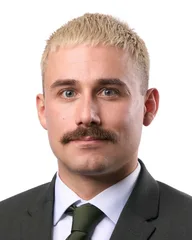
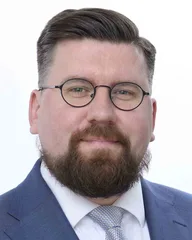
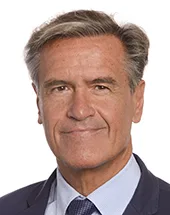
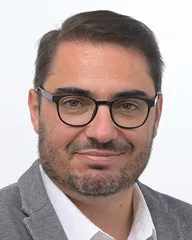
| Rank | Name | Country | Group | Speeches | |
|---|---|---|---|---|---|
| 1 |
|
Lukas Sieper | Germany DEU | Non-attached Members (NI) | 390 |
| 2 |
|
Juan Fernando López Aguilar | Spain ESP | Progressive Alliance of Socialists and Democrats (S&D) | 354 |
| 3 |
|
Sebastian Tynkkynen | Finland FIN | European Conservatives and Reformists (ECR) | 331 |
| 4 |
|
João Oliveira | Portugal PRT | The Left in the European Parliament (GUE/NGL) | 232 |
| 5 |
|
Vytenis Povilas Andriukaitis | Lithuania LTU | Progressive Alliance of Socialists and Democrats (S&D) | 227 |
All Contributions (96)
Sustainable aviation fuels (ReFuelEU Aviation Initiative) (debate)
Mr President, I think history repeats itself. When we were discussing biofuels, we made the mistake of creating too much space for the first generation with the idea that maybe later on, the second generation will come. What happened? The first generation has become so dominant that it has become an obstacle for the development of the newer biofuels, the more advanced biofuels. We need to prevent that from happening here. And that’s why opening up and broadening the definition of sustainable aviation fuels is such a wrong thing to do. We wanted the development of the sustainable aviation fuels, but we wanted the development of the more advanced and not the ones that could be palm oil, that could be intermediate crops, that can be food crops. That is the wrong direction. We need to correct this because that will make sure we are developing the real sustainable aviation fuels. And let’s be honest, I’m a bit nervous, but even a company like Lufthansa is coming up with the same arguments as I am. I think that should make you think.
Financial activities of the European Investment Bank – annual report 2021 - Control of the financial activities of the European Investment Bank – annual report 2020 (debate)
Madam President, Commissioner, President Hoyer – good to see you again – first of all, I really would like to thank the EIB for its immediate readiness to provide support to Ukraine in this very difficult time. I think the immediate response of the EIB to Ukraine was really very important and very good. So thanks for that. For the rest, we are, of course, always very thankful for the transformation that you have put into the EIB from an investment bank into Europe’s climate bank. I think the current energy crisis also very clearly shows the errors of the past that we are suffering from at this moment, because our failure to get rid of fossil dependency is something that we are paying for now on a daily basis still. Energy independence is the answer to a strong geopolitical union. Meanwhile, climate change is still having very much effect on our daily life. I think these two together – energy independence and climate change – should be addressed together, and I think the EIB is on its way to that. Still, though, you know very well that quite some Member States are pushing also the EIB to replace Russian gas with new long—term fossil investments, and that the EIB should help with that. You said: ‘we will not backtrack’. But I just would like to hear very clearly from you that when you are having your mid—term evaluation of the Bank’s energy lending policies, and the climate roadmap, that you will not put into question the end of fossil subsidies for gas, and stand up to those Member States pushing for new openings for EIB support for fossil fuel investments. Thank you very much, and we keep on fighting and supporting you in the fight against climate change as the climate bank.
Objection pursuant to Rule 111(3): Amending the Taxonomy Climate Delegated Act and the Taxonomy Disclosures Delegated Act (debate)
Mr President, it is good to kick off this discussion. Maybe just to start off with, where is the taxonomy for? The taxonomy is very clearly to harmonise claims by investor, what is a green and a sustainable investment. We’re not talking about banning any investment. We are talking about what is a green investment, nothing more, nothing less than that. Unfortunately, in the proposal, and we are having that discussion for a longer while already, you are green or you are not green. I know some are saying that there are different categories, but in the end – and that is now also very clear from any ongoing and follow up on any legislation, think for example of the green bonds – the moment you comply with the taxonomy and there is taxonomy alignment, then there is a green label and you are having a green bond. So there is no ‘amber’ category at all or whatsoever. Secondly, on the process – and here the Parliament has been very clear – the Parliament has been sidelined in this process. When we had the first delegated acts, there was a very clear public consultation for weeks, and then it took months before that delegated act was being published. On this second complementary delegated act, there was no public consultation. The Member States were being asked to reply too, the Parliament was only unofficially invited, but there was no formal consultation and the Parliament can only say something now. On the contents, on nuclear first of all, it’s very controversial. Will any investor really step in because of a green label? Absolutely not, because an investor will need security from the government. This green label will not work and will not help. This is a pure political game by France. The criteria are written by France, for France. Even the Netherlands has said that the criteria they cannot comply with. This clearly shows that this is a political game by France only. Then, on gas, first of all, we are making a separate category here for gas and having a higher emission threshold over other energy. Everyone who is claiming we need to be technology—neutral, why are we then having a separate category for gas and for the others you still have a threshold of over 100, whereas for gas it can be 270. This is not technology—neutral. And on top of that, we now have the war in Ukraine. How can we label gas green, and LNG terminals will not comply, but gas from Russia can? That is the opposite direction and we have to stop this idea. This is the moment to stop this delegated act.
Voting time
Madam President, ladies and gentlemen, calm down, calm down. I think the French elections are over last time I checked. Thank you very much. Every time I hear colleagues talking about ‘reality’ and ‘a realistic approach’, I want to remind you of one thing, and that is the reality outside. The reality outside is that temperature records are being broken on a daily basis almost. Look at the temperatures in Spain and France last week. Look at the flooding in Bangladesh and India. We now have forest fires in Alaska. That is the reality that we have to look at. That is also why we as a Parliament, already two years ago, called for a climate emergency – because of that reality out there. And that’s also why we have said from the start, yes, this package is ‘Fit for 55’, but this package is not fit for 1.5 degrees – and that we should all acknowledge. That doesn’t mean that we will not support this package. We as the Green Group will support this package because we know that for now, 55 is where this House wants to be. But let’s see, and let’s also use this as a stepping stone to do more for the climate, because we have to – not only for the climate, also for the new generation, also for the businesses. Everyone is talking about business, but the only way to give certainty to the business is to address climate change wholeheartedly. And then the last point, and this is why we are happy with the current deal – finally, we have a social climate fund on the table as well, because really the hardest hit by climate are the poorest in our society. There is no climate justice without social justice and that all together brings the Greens on board in this package. But it’s a start. It’s a start to addressing the climate emergency that we declared together. So let’s act on it together.
Revision of the EU Emissions Trading System - Social Climate Fund - Carbon border adjustment mechanism - Revision of the EU Emissions Trading System for aviation - Notification under the Carbon Offsetting and Reduction Scheme for International Aviation (CORSIA) (joint debate – Fit for 55 (part 1))
Madam President, when we came home from Glasgow last year, the message was that we have saved the 1.5-degree target, that we are still on track. But since then, science has told us that there is a 50% chance in the coming five years that we will overshoot the 1.5 degrees. Climate change is happening and maybe sometimes it is having less attention because of all of the other developments but climate change is not taking a break. It's not pausing. It is continuing on a day-by-day basis. And we are on our way to overshoot the 1.5 degrees if we do not act vigorously and that is at stake. We have complicated files. We have complicated amendments. But what is at stake is whether we are willing to keep the 1.5-degree target alive, that is at stake today, and that's behind the very complicated and technical amendments. And then every time when I hear colleagues talk about a balanced approach, we need to do a balanced approach – for what exactly? For our industry, our industry needs clarity. Our industry asks for clarity. They want to know where we are going. And that's what we are going to deliver here. We need to deliver clarity to our industry. When we are talking about a balanced approach, is that for the innovative ones? Is the innovative industry being supported? Free allowances is a fossil subsidy, it's a fossil subsidy for the laggards, and it's playing against our innovative industry that we want to keep within Europe. That's at stake. Someone who is taking a jump to go for green steel now sees that its competitor, its fossil competitor, is still getting subsidies. And when we are discussing the end of free allowances, we're not discussing that because there's no alternative. There is an alternative in place, which is called the Carbon Border Adjustment Mechanism, and we are discussing the ending of free allowances way beyond that date. So no one is saying, let's stop that before we have an alternative. It's not at stake. And when we are talking about a balanced approach for social, for employees, what is the balanced approach? Because climate change will hit the poorest the most. The only way to achieve social justice is by achieving climate justice. And that is at stake. So, dear colleagues, when at the beginning of our term, we declared the state of climate emergency, how serious were we? We need to deliver now. We need to deliver on clarity for the markets. We need to deliver on support for our innovative companies and not the laggards. We need to deliver on social justice. That's at stake today. A balanced approach – let's keep our climate in balance.
Discharge 2020 (debate)
Madam President, I will conclude here what appears to be a Dutch round, so I’m the last of the four. We had a lot of discussion on the discharge on the agencies. Of course, a lot of discussion went on Frontex. Well, we’ve seen, of course, some of the developments and Director Leggeri stepping down, but that doesn’t mean that the problems in Frontex are being solved. I really think that also even the way he stepped down shows that still within Frontex there is no clear perception that they are supposed also to take into full consideration human rights. That’s not because we want a human rights agency; we want to be sure that our borders are being protected in full alignment with the human rights. I think that really deserves a cultural change, and I think there our report is also very clear why we postponed the discharge and on what criteria we’re doing it. I just want to use the last 10 minutes to really look to the Commission. For the Greens, discharge on the Commission will be linked to what you do on the rule of law. Really, Commissioner Hahn, you need to step up and have a broad interpretation of the conditionality mechanism, not the narrow legalistic one.
Medicinal products made available in the UK with respect to Northern Ireland, Cyprus, Ireland and Malta (C9-0475/2021 - Pascal Canfin) (Rule 163) (vote)
– Mr President, this is an important proposal that is for the accession of medicines to our countries in Ireland, Malta and Cyprus. And for that reason, indeed, it is important that we are voting in favour of that. However, we do have problems that the Commission is again, on such a very important measure, which is having an impact on our internal market, going for an urgency procedure. We are willing to take that this time, but we really want to make sure that the Commissioner next time allows Parliament proper scrutiny on these kinds of measures, and on this one also to keep Parliament up to date for the implementation, to make sure that the integrity of our internal market is maintained and that this is only a temporary derogation.
Sixth Assessment Report of the United Nations Intergovernmental Panel on Climate Change (IPCC) (debate)
Madam President, we are discussing here now the Working Group III contribution to the Sixth Intergovernmental Panel on Climate Change (IPCC) Assessment Report. And let’s be honest, their messages have been the same now for quite some years. Yes, the climate is changing. Yes, it’s because of human beings. The impacts are severe, and it makes sense to stay below 1.5 °C instead of below 2 °C. And the solutions are there. And that’s what Working Group III is showing time and time and again. But if we then look on where we are, despite all the rhetoric, also this report is very clear: we are on track in overshooting the 1.5°C. And if you then see on measures, they make it very clear: leaving fossil fuels in the ground is one of the most important measures we have to take. And they make it very clear, no expansion of coal or oil and gas should be done. And that’s not what we’re doing. And this is really a call to the Council. Now, from a climate perspective, but also geopolitically, it’s more clear than ever that we should stop our expansion on fossils. But for the time being, we are expanding as a reaction to the war in Ukraine, because we are expanding liquefied natural gas (LNG), and until now we are refusing to debate an import ban on fossils from Russia. So we are increasing our fossil dependency as we speak, and that really has to stop for many reasons. The last point is to the Commission. You really said, like, we ‘may have to’ consider an increase of our targets, but you have to. I am not talking about the reduction target. I’m talking about renewables and energy efficiency. Here we really, if we want to accelerate and shorten the transition, then we need to step up on renewables and efficiency. Please, Commission, come forward in May with proposals for that.
Debriefing of the European Council meeting in Paris on 10 March 2022 - Preparation of the European Council meeting 24-25 March 2022 (debate)
Madam President, we’ve seen until now a very coordinated and united European response, and that has been very good and very important. However, the hard work still needs to be done, and one part of the hard work is our energy future. We have made a lot of mistakes in our past, but what are we going to do in the future? I thank the Commission for coming up with proposals today for more jointly working on energy. However, this also needs to be done in the future, and this question is really for the Council. Will you now finally move on an Energy Union where we take decisions together, because Russia is profiting every day from 27 Member States who are competing with each other instead of working together on our energy future? That’s one of the answers that we need to give, not only in the short term, but also in the long term. To the Commission, I really want bolder proposals on energy efficiency. You talk about it, Ursula von der Leyen talked about it, it’s very good language, but we haven’t seen concrete proposals. We have not seen new targets on the table that will accelerate energy efficiency, because that’s the key – energy we do not use is energy we do not have to import.
General Union Environment Action Programme to 2030 (debate)
Madam President, firstly I would like to thank the rapporteur, Grace O’Sullivan, for delivering a great job on this file on the 8th environment action programme. I had the pleasure of chairing the last negotiation rounds and you really did a very good job, which has led to the result that, for the first time in a legislative package, we really are calling for a clear deadline to phase out fossil fuel subsidies and also to work on a methodology to phase out environmentally harmful subsidies. I think, to be very honest, Parliament would have loved to go further. That’s no surprise. That was also very transparent from our position. But it was quite shocking to see the attitude of the Council, to be very honest. Every time we hear the Council at the G7 or G20 and all the statements at the OECD, it’s always ‘we want to get rid of fossil fuel subsidies’. In Glasgow, Europe was at the forefront fighting to stop fossil fuel subsidies. Then, a month later, we go into negotiations on a European law and the Member States say, ‘No, but we don’t want that in a law’. Apparently, we want to keep that for nice speeches. If we look at the current situation, at what’s happening right now in Ukraine, we see what our fossil dependency is doing. What more evidence do we need? We need to do something about that, to reduce our dependency. One step we need to take to do that is, of course, stopping fossil fuel subsidies, which are subsidising, with public money, our fossil dependency on regimes like Putin’s. So now I expect the Commission to go full steam ahead in coming up with dates for stopping our fossil fuel subsidies and speeding up the methodology for stopping our environmentally harmful subsidies. If now is not the moment, I do not know when the moment is. So really, dear Commissioner, it was great to do the negotiations, but now the homework of this 8th environment action programme is there and it’s urgent.
Preparation of the European Council meeting of 16-17 December 2021 - The EU's response to the global resurgence of Covid-19 and the new emerging Covid variants (debate)
Mr President, July 2021: at the G7, Germany, France, Italy and the Commission agreed to commit to achieve an overwhelmingly decarbonised power system in the 2030s. November 2021: the entire world in Glasgow agrees to phase out inefficient fossil fuel subsidies, and the Commission is saying: ‘well, we would have liked to go further than that’. So big words, big statements. And then we are in December 2021. Is the Commission now going to call investments in fossils ‘green’? Are you going to facilitate investments in fossils with state aid guidelines? That is what is on the table and what you’re considering. This is why people get cynical: big words and statements. But then when it comes to the policy-making, you’re not doing what the statements are predicting. This is the loss of credibility, but this is also about the credibility and the legacy of this Commission on the Green Deal. Make it count.
Outcome of the COP26 in Glasgow (debate)
Mr President, I think it’s quite obvious in this discussion that it matters very much on your angle as to whether you call Glasgow a success or not. I think, from an international negotiations perspective, Glasgow was certainly a step forward, but I think we all acknowledge that not enough has been done yet to reach and avoid the climate crisis. For that, the coming year will be a crucial year again, and there I very much subscribe to what Executive Vice-President Timmermans said on the coalition with the African Union, which is going to be crucial. But I want to point out one success that was in the Accord as well, and that’s on fossil subsidies, and the ending of fossil subsidies. In the Paris Agreement, there are three clear targets in Article 2.1. It’s on mitigation, it’s on adaptation and it’s on making the financial flows consistent with our climate targets. That’s the third pillar of Article 2.1 on the targets of the Paris Agreement, and that’s why it’s so important we are talking about fossil fuel subsidies. But let’s be honest. Here, Europe still has some homework to do. Looking at the European countries, for example in the G7 in Cornwall, Germany, Italy and France, part of the G7, commit to achieving an overwhelmingly decarbonised power system in the 2030s. We’ve seen quite a few countries stopping fossil fuel subsidies abroad, also including Slovenia, and maybe this afternoon we will also see the German coalition putting an end to gas, because gas is the next fossil frontier that we need to address. And here really one big call to the European Commission: if we are looking at the end of fossil fuel subsidies, you can never call gas a green investment in the taxonomy.
Common agricultural policy - support for strategic plans to be drawn up by Member States and financed by the EAGF and by the EAFRD - Common agricultural policy: financing, management and monitoring - Common agricultural policy – amendment of the CMO and other regulations (debate)
Mr President, I think it’s very clear now that we, as Greens, will vote against this CAP deal, and I think one of the big reasons is that there is no alignment with the new priorities of this Commission on the Green Deal, Farm to fork and Biodiversity strategy. But I think, you hear so many different opinions about it. I think the Commission now really needs to make clear, how is the Commission going to align the National plans with the Green Deal? Because some of us are claiming it is a big success, that we have a recital referring to it. Others in the house are saying, ‘Well, thank God, Green Deal is not mentioned’. The Commission in June had a very enthusiastic press release, stating that these CAP plans will from now on deliver on the Green Deal. But we hear that right now, in the negotiations on an implementing act, you are scrapping it. We want to know, how are you going to make sure that the National plans will deliver on the Green Deal and which countries are fighting against it? Because transparency on this matter is crucial, so please no further vague language, but clarity on this matter.
2019 Discharge: European Border and Coast Guard Agency (debate)
Madam President, thank you Commissioner. It’s a pity that the rapporteur already left, after his speech, because sometimes I’m not quite sure he has read his own report entirely, to be very honest. And the point here is, here we stand again discussing Frontex, and this is not a political issue. This is about the proper functioning of an important European agency. And there are reports indeed by the Frontex scrutiny group, but also the Ombudsman, the Court of Auditors, and we’re still waiting on an OLAF investigation on an ongoing investigation into the functioning of Frontex. And every time the conclusion is that there are significant shortcomings in the governance, there are problems with the implementation of the new mandate. And these are serious conclusions that have not been resolved yet. We can go into all the reports, but sometimes it’s also good just to go to Frontex’s website. And sometimes it’s very telling. Because if you read the mandate, the official mandate in the regulation of Frontex, it states that Frontex should be managing borders efficiently, in full compliance with fundamental rights. If you then go to the website of Frontex itself, where it states our mission, it states that we will take care to ensure safe and well-functioning external borders. Full stop. They forget to mention full compliance with fundamental rights, even on their own website. And that is telling, and that is something that should be a concern for everyone. Maybe not on the fringes, but for everyone that should be a concern and certainly also for Renew, which is unfortunately changing its position on granting discharge now. I, like my colleague Sippel, also want to make a very clear point on what is another telling example of the problems with Frontex, namely access to documents in cases where Frontex continues to claim recovery of legal costs from associations that are striving for access to public documents. In addition, it’s the only European agency that is frustrating the fight for transparency in this way. And again, there is a telling example which has also been condemned by several committees, like the Meijers committee. So therefore, we cannot grant discharge. We do support the resolution, but we are putting a couple of issues in reserve with conditions. However, looking at all these reports, all these conclusions, for the Greens it’s still a very clear conclusion. We cannot grant discharge this time because of these serious concerns of non-compliance with fundamental rights, especially since this is an essential part of Frontex’s mandate. And therefore we will stick to what the Committee on Civil Liberties, Justice and Home Affairs (LIBE) has also advised us. We will not grant discharge to Frontex, and I want to thank our colleagues from the LIBE Committee for pushing that line. And I just want to express my regret that the Renew colleagues did that in LIBE, but unfortunately not in the Budgetary Control Committee (CONT) anymore.
UN Climate Change Conference in Glasgow, the UK (COP26) (debate)
Madam President, we now turn to a very important discussion on climate change and the climate conference that we’re going to have in Glasgow in two weeks’ time, which is very clearly going to be one of the most important climate conferences we’ve seen in the last couple of years, where member states of the world need to be stepping up their climate ambition. If you look at climate science and the latest IPCC report that was launched in August this summer, it is becoming more and more clear that the climate impacts are more severe and there are clearer reasons to limit global warming well below two degrees, as we said in the Paris Agreement. We have now very clearly said that we want to keep it below 1.5 degrees. If you look at the current pledges on the table, we are not on track. What’s even worse is that, at this stage, if we look at all the national pledges around the world, emissions are still expected to rise by 2030. However, the IPCC and climate science is making very clear that by 2030, in order to keep 1.5 degrees within reach, we need a reduction of 45% by 2030 globally. Yet we are not on track if we look at the current pledges. This is also why the Glasgow moment is so important for raising the ambition of all the different countries in the world. We are very much aware – and this is also described in the resolution – of the achievements and the changes that we have seen in the United States. However, we are, of course, also concerned about the developments in the United States in translating their promises into legislation, and there we see some issues as well, which are sure to be debated in Glasgow. But we are also very concerned about the other big player: China. Their pledges to reach carbon neutrality by 2060 and the peak of emissions by 2030 are insufficient if we look at what needs to happen. We will make that message also very clear. We also expect stronger commitments from some of our partner countries. A country like Australia is certainly worth mentioning, because they have not yet come forward with climate neutrality targets despite all the other developed countries doing so. Looking at Europe – and this is clearly in the resolution – we comment on the ‘Fit for 55’ and the package that is there upfront. However, we do realise that steps need to be taken within Europe to translate that into law. The proposals have been made by the Commission, but we as a House, and also the Member States, need to develop on that. Very importantly – and this is probably also an assignment for the European Commission – there is still a lack of mainstreaming of the Green Deal and climate policies into all the areas and fields. I would certainly also like to mention climate finance here. In this regard, maybe it would sometimes be good to refer to the Paris Agreement, because quite often people talk about the Paris Agreement, but you sometimes wonder whether people have really read the Paris Agreement. Article 2, the backbone of the Paris Agreement, makes very clear that things need to happen on mitigation and adaptation, but the third element of Article 2 very clearly also obliges all the signatories of the Paris Agreement to make their financial flows consistent with a pathway towards low greenhouse gas emissions and climate-resilient development. So the third pillar of the Paris Agreement, besides mitigation, adaptation, is making the financial flows consistent with our low carbon pathways. Here is another assignment for Europe where action is still to be taken. Looking at all the issues that are on the table, at the rulebook, we are happy that Europe is finally taking steps on the common five years’ timeframe. Indeed, it was probably about time to take steps there. But we also just want to stress once again that action need to be expected from aviation and maritime. Here too, it is very important to state that aviation and maritime do fall under the Paris Agreement. There was a decision that maybe two other UN bodies could handle this, but maritime and aviation do fall under the Paris commitments. Sometimes some people say that they’re not part of the Paris commitments. I think we need to make that point very clear. For the rest of the resolution, I think it’s very clear on innovation, on competitiveness. It also very much welcomes the carbon border adjustment mechanism (CBAM) as part of the ‘Fit for 55’ package, so that this entire package makes very clear that Europe can deliver on the promises it makes, so that we will ensure that in Glasgow we have a leading role. That’s probably our final point. Let this leading role also be seen on some of the sectoral agreements on coal phase-out, the end of the combustion engine. These are the kinds of discussions that are being done in Glasgow as well, and we expect Europe to be at the forefront of that debate.
Farm to Fork Strategy (debate)
Madam President, I have to say I always find a debate on agriculture and our food system quite astonishing. I think we all agree that there are a couple of developments in our sector that are concerning all of us. We see less and less farmers. They have less and less profits. We see that our rural areas are under threat. On top of that, we see the impact of climate change affecting our farmers. We see the loss of biodiversity. This current model is not sustainable. Something needs to change. And every time when I hear people complaining about the eventual exodus of rural areas – it is already happening. And that is because the current system is not functioning. Something needs to change. Everyone only referring to Copa-Cogeca – they are for business as usual. You are defending business as usual. It is about time for change. This report is an attempt at it. It is a compromise, but I do compliment both rapporteurs for that attempt. But I would like to know from the Commission: how do all the ‘farm to fork ‘ambitions relate to the cap reform that we will vote in a month’s time? In May last year, you already concluded that there is a lot that is not synchronised and I see that threat even more, so I would expect a reply from the Commission on that.
Pandora Papers: implications on the efforts to combat money laundering, tax evasion and avoidance (debate)
Madam President, I would like to thank everyone for, again, another scandal on this matter. I think we all share our frustration about the lack of progress, but we also need to be a bit more precise now on what we are going to do. To the Commission and the Council, I think you need to be better in explaining a couple of decisions that have been made. Therefore, first of all to the Commission, this is also about enforcement. We do have common reporting standards from the OECD into the Directive on Administrative Cooperation (DAC) but, if we see, for example, on anti-money laundering that Malta is there on a grey list, if you look to the Financial Action Task Force, can you then see that Malta did not correctly implement the Anti—Money Laundering Directive? What is the Commission going to do about that? We need to be more precise. And the same for the Council, and this is really about this blacklist. Why is Turkey again prolonged? Why is the United States, which is not cooperative, again not mentioned, whereas in the Pandora Papers, it is very clear that the United States is becoming a bigger and bigger problem? The Council needs to reply to the citizens’ questions on this.
European solutions to the rise of energy prices for businesses and consumers: the role of energy efficiency and renewable energy and the need to tackle energy poverty (debate)
Madam President, this is a very important issue on the energy prices, and more than 80% of our citizens are concerned by the energy price, and I think that is really a concern for all of us. But then let’s stick to the facts. First of all, there are some colleagues, of course, every time trying to link it with climate change policies. But the analysis clearly show that it’s around 80 to 85% because of the gas price and only 10 to 15% because of the carbon price. So are we going to talk about the 10% or the more than 80%? I think we should discuss the latter. And there is a question when we are talking about gas, this is a question to the Commission. Also here if you look at the Gazprom numbers, for example, the delivery to the EU through Belarus went down 70% last week. So are we being played by Gazprom and Russia? And this is an analysis that the Commission should do, and should make very clear to all of us because if there is this political, geopolitical play, we need to act on it and maybe the dependence to Nord Stream 2 to Germany was not a very wise idea. But what does this mean in the short-term – compensation for the vulnerable households? There are possibilities in the current EU framework. Dear Commission make that known to the Member States. But also in the medium and the long-term, do more on an energy union where we have joint contracts, gas contracts, with also long-term price deals and, of course, make ourselves less dependent on gas – meaning Green Deal, more energy efficiency, more renewables. That’s the logical approach. Let’s stick to the facts but also let’s work.
State of the Union (debate)
Madam President, I would like to thank President von der Leyen for her State of the Union, which had quite a lot of good proposals. But of course, in one minute, I will have to focus on the criticism. President von der Leyen, you will understand that. First of all, on the Green Deal, you probably still have to explain to your own group that the Green Deal is the jobs deal – they still don’t get that. So there is work to be done there as well. But also, in your own college, I have the feeling that some of your colleagues are feeling a bit like, ‘after Fit for 55, our work is done’. The work is only beginning. For example, on state aid, we do expect the Commission to deliver here as well. I’m also looking at Ms Vestager for that. On corona vaccination, it was a bit too self-congratulatory, because global vaccination is our key challenge now, and here COVAX is not enough. Mentioning a State of the Union without using the word ‘patent’ is a bit of a problem. And the last point, on the rule of law. You absolutely had good words on that, but now you have to apply the instruments that you have had since 1 January, because the rule of law is really our basis of a European Union with the soul that you want.
Presentation of the Fit for 55 package after the publication of the IPCC report (debate)
Mr President, first of all, I would like to thank the Commission for the package that they released on 14 July. We would of course have loved to see a fit for 65 package, but let’s start with the Fit for 55 package. It’s also great to hear that in this Parliament there’s a lot of support for climate action. So let’s see how much is left of that when we really get into the details of the negotiations because usually the Parliament is good at speeches, but then doesn’t deliver on the ground. We need to step up. We need to step up again on renewables. We need to step up on energy efficiency, and be assured that we will fight for that. But also, when we are talking about a fair transition, it cannot be that the industry keeps on having free allowances and, at the same time, we are expanding the EU Emissions Trading System (ETS) to sectors where the citizens will have to pay, and, also there, if you look at the revenues of that system, we just give 50% back to the Member States without any demands. I think that we will ensure that it will be strengthened, just like on taxation where the kerosene tax really should be implemented much faster than is now in the proposal. We will all do that, but what is also important is that there are still plans ahead of us – and this is also my plea to the European Commission. By the end of this year, you will also look at State aid guidelines, and this is going to be crucial. A green deal will not deliver only through regulation. We will have to put the money there where it should be, and that means we really should stop financing fossil fuels. The State aid guidelines are the place to really make a start on that, and I hope the Commission will deliver there as well. The work is only just beginning.
Financial activities of the European Investment Bank - annual report 2020 - Control of the financial activities of the European Investment Bank - annual report 2019 (debate)
Mr President, I should like to thank President Hoyer for being here. It’s kind of a yearly tradition, isn’t it ? And also, Vice-President Dombrovskis. I think if you read the reports, both in the Committee on Economic and Monetary Affairs, where I was shadow, but also, of course, the Committee on Budgetary Control report, you do see that for the Parliament the EIB, the European Investment Bank, is a very important bank and it’s the largest multinational investment bank that we have. And we very much also welcome the role that, for example, the EIB played in the famous Juncker investment plan. 2019, it always feels a bit awkward to be very honest, to do a budget control of 2019 when we are already halfway to 2021. But that was an important year because that was also the year where the EIB announced to become the Climate Bank of Europe, and being a Green at the same time, I can only welcome that, of course. But as we also see with the Green Deal, ambition is one thing, but now we have to put it into practice and put it into action. And there are, of course, still some critical questions to be asked. For example if you look at the absolute emissions that are linked to the projects that the EIB is financing, the emissions rose from 2019 compared to 2018, and there was still a finance of EUR 685 million into gas projects. We know that the energy lending policies have been changed, but still, we would like to hear also from President Hoyer on how are you going to make sure that this phase-out of gas projects is going to be put forward. Also, given the concerns we are still having if you look into projects like Trans-Anatolia or Trans-Adriatic, these big gas pipeline projects. And also there I would be very much interested to hear from President Hoyer how the EIB is going to look at the issues of a fossil lock-in, because if we want to go into a future of decarbonisation, then a lock-in into any other fossil fuel is not what we want to do. And I’m sure we agree on that, but I would like to see some vision on the part of the EIB to work on that. The same is also on the lack of transparency about emissions that are being financed via intermediaries. So you have the direct parties, of course, but you also have the intermediaries that are financed through EIB and are causing emissions. And we would like to see more transparency of that as well, so that we are having a full footprint analysis of the EIB and not only through direct. Looking at what the EIB has been doing, we very much compliment what you have been doing on the revision of the energy-lending policies, the climate roadmap, the upcoming transport policies, reform where – at least if we are not mistaken – the EIB will announce also to stop airport expansion, but it would be good to reiterate that of course once more. But also here, I think it is very important that we also look at the counterpart framework of the EIB again to make sure that there are decarbonisation targets for the EIB clients and intermediaries again. So I would be interested to hear from President Hoyer on that as well. Not only is the EIB a climate bank, it also portrays itself as a development bank, so a role outside the EU. But there we really still would like to see the point that there is a concern of violation of human rights and really effective complaint mechanisms, and what is the EIB going to do about that in order to make sure that that is being improved? This is also probably a question towards the Commission. Also within the EIB, we have, of course, a discussion on grants versus loans towards developing countries. And you will not be surprised that for some developing countries, it’s not the loans that work, it should be grants, and there I think also the Commission should have a say if we look at what the EIB is doing. I think where we are most critical is on the governance issues, staff issues governance. So I think we do have to address that also here in this plenary, and we really would like to hear a good reply of President Hoyer on that. There are on a couple of issues. First of all, on the conflicts of interest, I think the Parliament has reiterated a couple of times that we are concerned that vice-presidents sometimes are being in charge of their own home country. And we sincerely think that here there should be – I’m talking about vice-presidents in the management committee, right – so that they are responsible for their home country. What is the EIB going to do to make sure that there is not a conflict of interest, are there ideas of cooling-off periods, etc.? Here, really, we need a better approach of the EIB, and I’m sure that that colleagues of mine will raise that issue as well. I see some already nodding. And then, of course, the staff issues. There have been some serious cases of harassment and I have to be honest here to say that the initial reply of the EIB could have been better. And I know that some of my colleagues will mention that as well, but any harassment case is serious and any harassment case should be prevented. And how is the EIB going to deal with that? Because I do think that any proportionate action needs to be taken and only written warnings is not sufficient. So really here we would like to hear a reply of President Hoyer how to address that, also because of the importance of the EIB. And this is a good development that the EIB is playing a more and more important role, but that also means that the scrutiny is more serious, and I think there also the EIB has to adhere to. Last point is towards the Commission. You thought you could lay back there, but there is of course still the role of the Commission that is not very accountable towards the Parliament, and this is especially through Article 19 opinions, where we do not know necessarily what position the Commission is taking when the EIB is deciding. And the position of the Commission can be very important there. So we want more transparency on the position that the EIB is taking in management decisions by the EIB. I would be very much to looking forward to your reply on that. I think those are some of the important points.