

| Rank | Name | Country | Group | Speeches | |
|---|---|---|---|---|---|
| 1 |
|
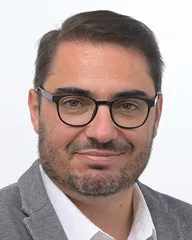
Lukas Sieper | Germany DEU | Non-attached Members (NI) | 390 |
| 2 |
|
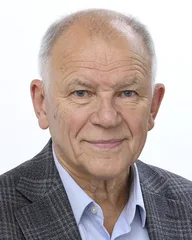
Juan Fernando López Aguilar | Spain ESP | Progressive Alliance of Socialists and Democrats (S&D) | 354 |
| 3 |
|
Sebastian Tynkkynen | Finland FIN | European Conservatives and Reformists (ECR) | 331 |
| 4 |
|
João Oliveira | Portugal PRT | The Left in the European Parliament (GUE/NGL) | 232 |
| 5 |
|
Vytenis Povilas Andriukaitis | Lithuania LTU | Progressive Alliance of Socialists and Democrats (S&D) | 227 |
All Contributions (96)
Nature restoration (debate)
Mr President, ‘making nature healthy again is key [...] and an ally in the fight against climate change and disease outbreaks. It is at the heart of our [...] European Green Deal’. I’m quoting Ursula von der Leyen. The EU Nature Restoration Law is a generation’s opportunity to take concrete and effective action. More than 100 companies made that statement last week, making clear how important this Nature Restoration Law is. Were there concerns? Did we do negotiations? Yes, there were concerns. Some cities had their concerns. But now Eurocities – representing a huge bunch of cities in Europe – is tweeting, ‘we need the Nature Restoration Law’. Is this against farmers? No, the caring farmers are making it very clear that we need the Nature Restoration Law. So, EPP, what happened? You walk away from the negotiation table; you tweet about Santa Claus. It’s all very funny, but let’s get back to reality, let’s take this vote. It is finally time that you support nature restoration and this law.
Industrial Emissions Directive - Industrial Emissions Portal - Deployment of alternative fuels infrastructure - Sustainable maritime fuels (FuelEU Maritime Initiative) - Energy efficiency (recast) (joint debate - Fit for 55 and Industrial Emissions)
Madam President, I am not sure my colleague was really speaking as ENVI rapporteur. I didn’t get that feeling. I will speak here as ENVI rapporteur on the energy efficiency file. First, I really would like to thank the rapporteur and all the shadows for the great work on energy efficiency. I think it is very important. We are always talking about energy efficiency first, but still energy efficiency has been one of the three targets that has never been binding. So we have targets on emission reductions, on renewables, and then we had efficiency targets not being binding. And guess what? Those targets until 2020 were the most difficult to meet. I think something has changed finally, both in the Commission as also with the Member States, now with the war in Ukraine. That energy that we are not using, we don’t need to import, we don’t need to replace it by expensive alternatives. We just don’t need the energy. We don’t need the wasting of this energy. That is now also being put forward, and I think that is a very great result. Last point quickly on the Industrial Emission Directive will be the tightest vote. Please, colleagues, remember when we are talking about cattle and some targets, we are talking about the big farms. The ENVI compromise is encompassing 3 % of the farms but more than 20 % of the emissions. We are talking about big farms, industrial farms. And think of that when you vote.
EU Day for the victims of the global climate crisis (debate)
Mr President, thank you first of all, Madam Commissioner, for the words that, unfortunately, we have to speak out, because indeed, I think we are getting used to almost on a yearly basis now listening to new climate disasters causing climate victims. And that is all over the world. And that’s also what you said it is most of the time, the most vulnerable people that are suffering the most. I mean, I come from the Netherlands and maybe we can build a dike a bit higher, we’re used to that. But not everyone has that luxury and we can’t do that eternally either. No one is safe from the climate disasters and that we have seen indeed on 15 July 2021, when also Germany and Belgium were hit by this flooding with more than 200 casualties. But a year later, we saw the flooding in Pakistan with more than 1700 victims and millions of people affected. And we see now forest fires already early in the year. We see drought in the south of Spain. We see all these effects that are causing victims that, unfortunately, we have to pay tribute to on a monthly basis. And maybe the last thing that I would like to say to my colleagues who are now all, of course, rightfully so, asking for all the attention for the victims, please be aware that the fight to preserve our nature goes hand in hand with the fight against climate change, because a resilient nature will help in also making sure that the climate damage is less and lower. And that is also something to take into account when you are voting on a nature restoration law.
European Citizens' Initiative "Stop Finning – Stop the trade" (debate)
Mr President, good morning to you and to everyone on this lovely Thursday morning. First of all, I really would like to congratulate the people that took the initiative on the ‘Stop Finning – Stop the Trade’ European Citizens’ Initiative. Within two years, having more than 1.1 million signatures from all the 27 Member States is, to us, really a key example of a very successful European Citizens’ Initiative, which then also should be taken seriously and should get a follow—up and that’s, of course, the point of the discussion also today. Just on the matter, we know already that it is forbidden to remove fins on board ships and also to trade them. So we need to bring them on land in an entire form. But we also know that still the EU remains a huge hub for shark fins, and that it’s a major export and transit centre for Asia. Relatively speaking, the role of Europe is getting bigger because global trade is going down and the European role remains comparable and with that, relatively speaking, our role becomes bigger, and that is undeniable. I know sometimes the industry tries to deny the facts, which you cannot do. This also, of course, relates very much back to the discussion we had yesterday on restoration law. When we are talking about restoring nature and restoring our ecosystem, sharks are crucial for our marine ecosystems, so we do want to see action from the Commission. Sharks are protected under CITES and also, last year in Panama, more shark species were added to CITES Appendix II, showing that now more or less 90% of the traded sharks and ray species are falling under CITES, which shows that we have serious concerns with sharks. So it’s an endangered species. The practices are cruel, so let’s act on it. That’s also the very clear demand from the citizens, and this is also then the very clear question to the Commission. You will probably say nice words about the initiative, but we want to hear concretely what is the Commission going to do with this demand from our citizens.
The role of farmers as enablers of the green transition and a resilient agricultural sector (continuation of debate)
Mr President, maybe let’s establish some facts first. Over the last 15 years, more than 5.3 million farms were lost. Food crisis during the COVID-19 pandemic, the profit for supermarkets raised with more than 100 %. And CAP money? Still, 80 % of all the CAP money is going to the 20 % biggest farmers. Then look at what’s happening in our climate system. Droughts are hitting Europe. Look at Spain at this moment. Even the EU is now giving money to Spain to compensate for the droughts. Our nature is in a bad state and without nature, no food. So something needs to change. We can’t afford a status quo. This has happened under the watch of the EPP for 15 years. Something needs to change. For example, the Commission is doing some very careful proposals to reduce dependency on pesticides, which are also affecting the health of our farmers. We want to restore our nature, to increase resilience of our agriculture ecosystem. Saying ‘no’ to these changes is just sticking your head in the sand that’s getting drier every year.
Discharge 2021 (continuation of debate)
Madam President, I’m here to discuss the discharge of our agencies, and I have to say that most of our agencies are delivering a terribly good job – also quite often with a very low number of staff working for those agencies. And every time we’re piling up more priorities and more issues and more tasks to our agencies, but without giving them more staff, and this is probably still something for the Council to debate and certainly the Swedish presidency, by the way. However, there are two agencies that that we still have issues with. One that has been mentioned a couple of times already is Frontex, and indeed a lot has happened and a lot has improved. We have a new Executive Director, which is a good thing and to be very honest, it’s always funny to hear the EPP ‘let’s not play’, but that’s what they also said with the former Executive Director, of course, and now he’s gone, they say ‘ah, good, we solved the issues because he’s gone’. Well, you were not in favour of that either, so there is never any idea for action there, but we are happy that we acted on it. But this is important towards the Commission as well. Structural problems remain and need to be investigated on participation in pushbacks and all that, and that is something that we need to be very vigilant on, and for that we cannot grant discharge still. The same goes for the EU Agency for Asylum: as long as an OLAF investigation is ongoing, we cannot grant discharge. For all the other agencies, we will grant discharge.
IPCC report on Climate Change: a call for urgent additional action (debate)
Mr President, we are discussing here the sixth assessment report by the IPCC, putting in all our knowledge of climate science together. And I think what is most interesting is, of course, the progress that you see in science, because the messages of climate science have become clearer, harder and more urgent every time you see such a report. Just a couple of points that they have been making very clear. At this moment, we already see a warming up to the level of 1.1 degrees. We are reaching the limit of 1.5 already very soon. We see that climate impacts are regarded as being more severe than the previous assessment report. So the impacts of climate change have been underestimated before. But what we also see is that the current climate plans of the world are likely exceeding the 1.5 degrees, so the world is not on track and not doing enough. And also very important is that 80% of our budget has already been emitted by the world in order to have a 50% chance to stay below 1.5 degrees. That’s the urgency and that’s the very clear message by science. But what is very important as well, and that’s what quite often we forget in this House: what can we do about it? Because then, when we get concrete, suddenly everyone is kind of, ‘OK, now we have to slow down because we need a balanced approach’. I think that’s in the kind of Bible of the Commission, the balanced approach. But also here the IPCC is very clear: you need deep, rapid and sustained mitigation actions in this decade to reduce projected loss and damages, and delayed action would raise the risk of stranded assets and cost escalation. So please, people, also the Commission, step up. Rapid action is needed and also delivers the cost benefits for our health and society.
Dieselgate: suspected widespread use of defeat devices in cars to reduce effectiveness of pollution control systems (debate)
Madam President, indeed, it’s a bit like Groundhog Day when we are discussing Dieselgate again. And also when I hear the EPP say we should not start a witch hunt, this is exactly the first reaction after Dieselgate in 2015. Not much changed in those 10 years, you would say. We’re not here on a witch hunt. We are here trying to establish the facts. And Commissioner, you were a bit unclear, but you said basically yes, on this ICCT study, yes, we have a legacy problem. You call that a legacy problem? I call that a problem for the citizens’ health, for our citizens who are driving in cars that are illegal, having illegal devices in itself. So yes, I think it’s a legacy problem, but it’s a problem that we should take seriously. And for the rest you said there’s nothing new coming out of this study, so with that I conclude that you concur that 16 million cars on the European roads are still driving with cheating devices in it. That’s what you’re saying. So you are acknowledging that 16 million cars on the European roads are having illegal defeat devices in it, because that is important, meanwhile – things have changed, Mr Gieseke. Also, many court cases have made clear that all the arguments of the car industry, ‘we need that software’, they have been dismissed. It is illegal. And all the arguments the car industry used to say why it was needed have been dismissed. Defeat devices are illegal and the court cases have been very clear that even software updates that have been done, for example, by Volkswagen have been declared illegal and insufficient. So then we do turn to the Commission. Yes, I know very well – I was there on all the changes that you did. But what are you going to do with those 16 million cars on the European roads that are having illegal defeat devices in it? What are you going to do to the car industry? Are you going to make sure that they are required to do something about that so that our citizens are not suffering from that? And most importantly, are you going to require and are you going to assess what all the different recalls, which are just nationally diverse, what they have achieved until now? What is the effect of those recalls and those fixes? That’s the information that we want, and for the rest, we want a Commission that is really tougher on maintaining European law – something the EPP also always finds very important, last time I checked.
Keeping people healthy, water drinkable and soil liveable: getting rid of forever pollutants and strengthening EU chemical legislation now (topical debate)
Madam President, when we signed up to the Green Deal as a European Parliament, we signed up to climate neutrality, a fully circular economy and a zero-pollution economy. And that has also been said by you, Madam Commissioner. We want a toxic-free environment and that is also a key part of the Green Deal that Europe needs to deliver on. And that’s exactly what’s at stake here. A lot of my colleagues talked about PFAS and forever chemicals and the problems that we are seeing, and the contaminated sites all over Europe being a forever chemical. And I want to thank the Swedish Government, not as a presidency, but the government for their action, together with others, on making sure that there will be a group restriction. However, if there is a group restriction, it will take 3 to 15 years from now. So it takes time and it shows we need a revision of our policies. We need a revision of REACH. And for that we need also an urgent proposal on the table. Dear Madam Commissioner, you said ‘as soon as it’s ready, at the latest the fourth quarter’, but the impact assessment passed the scrutiny boards. The Chemicals Strategy for Sustainability is very clear. You know what to do. And even if the environment is not compelling enough for you, the industry now is also asking to move fast: if you come beyond June, then there will be a very long, insecure period for industry because then it will not be dealt by this Parliament. It will go to the next term and it will just be delays and uncertainty for companies. And that should be a concern for other DGs than maybe only the DGs that also are working on the environment, although that should be our concern as well.
Revision of the EU Emissions Trading System - Monitoring, reporting and verification of greenhouse gas emissions from maritime transport - Carbon border adjustment mechanism - Social Climate Fund - Revision of the EU Emissions Trading System for aviation (debate)
Mr President, we’re doing it in the wrong order this week. This Thursday, we will discuss IPCC science. I am quite sure a lot of my colleagues will talk about the urgency and say ‘we need to act, it’s dramatic what’s going on’. But today we are discussing what we can do about it and what we should do about it! That’s why it’s so historic what we’re discussing here. Historic because we are, as Europe, increasing our ambitions – not enough to stay below the 1.5 degrees, but we are increasing our ambitions. The industry is getting a very clear signal not only for 2030, but even more important for 2040, where emission reduction will be reaching zero. But that means this is only the beginning of our work. This means we really need a green industrial policy in order to make sure that our industry can get there. Then, on social, it still remains too much an afterthought. The social climate fund is insufficient for that – and we all know that. This is a responsibility for the Member States. They really need to step up their game because this green transition can only succeed if it’s also a social transition.
Fluorinated Gases Regulation (A9-0048/2023 - Bas Eickhout) (vote)
Madam President, colleagues, I will not do a very long speech now. I’m just asking, pursuant to Rule 59(4), for immediate referral back to the committee so that we can start interinstitutional negotiations.
Fluorinated Gases Regulation - Ozone-depleting substances (debate)
Mr President, first of all, I really would like to thank all my colleagues who have been part of the negotiations. Here I want to stress that, during those negotiations, we have been talking to many European industries: from Poland, from Czech Republic, from Italy, from Greece. Exactly those companies in those countries who are saying, ‘We are ready.’ When you are saying this is a green ideology, you are defending American and Japanese companies who like to sell some of these chemicals and are only interested in innovation in the chemicals themselves, which in the end even deliver PFAS in heat pumps. That’s what you’re aiming for, and that’s not what we are aiming for. We are aiming here for European innovation, and it is not only Germany. This is exactly indeed what Vice-President Mr Timmermans is also rightfully saying. This is not the kind of old argument to say, ‘Ah, this is promoting German industry.’ This is an industry that is all over Europe, and it’s all over Europe investing in innovation and in new jobs. And that’s exactly what we’re supporting here. It’s the American and the Japanese companies that are not going into that innovation. It’s the European ones. So, this time it is very clear-cut and we have sufficient time. We have talked to a lot of industry who said we can do it already next year, but we even allow them more time; we even have safeguards; we even have asked the Commission to make sure that they are keeping it on track for the implementation of REPowerEU. All that is in place, and then now still delaying things because some of the American and Japanese lobby is asking you to do so? I think this is time to choose for European industry and European innovation, and that’s what we’re going to do tomorrow.
Fluorinated Gases Regulation - Ozone-depleting substances (debate)
Madam President, colleagues, Vice-President, welcome, have a seat. We are here discussing, in the end, the phase-out of fluorinated gases. Fluorinated gases are very highly potent greenhouse gases. So one molecule of one of F-gases can even warm up the climate to the level of 24 000 times more than CO2. And that is exactly what we’re trying to do here: what we’re going to do here is making an end to these F-gases and making sure that natural alternatives are being used so that this part of our economy will reach climate neutrality as promised also by 2050. This goes back to when we were initially looking at CFCs that were causing, of course, a hole in the ozone layer and we replaced them with F-gases along the years but, of course, these, as I said, were very potent greenhouse gases. So there is an idea of some of the companies to say let’s every time then move away from these F-gases to other F-gases that have a lower impact, but still have an impact on our climate system and even to the level of going to PFAs, so damaging chemicals, whereas in many of these sectors natural alternatives are available, are existing and should be put at the front. And that is exactly what we are doing here and proposing here in the report. So maybe just some highlights of the report. First of all, as I said, we are accelerating the transition to climate neutrality, meaning that in total quota F-gases will go to zero by 2050, ensuring climate neutrality in this low-hanging fruit. Secondly, we limit the risk of a lock-in to intermediate solutions like PFAs, so those sectors that can make the switch should make the switch to natural alternatives and skip the phase of PFAs that are damaging chemicals, and we would like to skip that and prevent that lock-in in intermediate solutions. Thirdly, we are providing certainty for consumers and investors. Those sectors that can move should move faster, and the bands that we are proposing in the report are very clear, are also thought of on making sure that they can deliver in time so that also the investors know what the direction of innovation in Europe should be. We also take international responsibility by adding an export ban, which means that if we are going to clean up our own suppliers and we are going to clean up our own products, we are also making sure that we are not going to export steel products with F-gases to other countries outside the EU and this export ban is also part of the deal. We are also there to prevent illegal trade and we want to accelerate training and employment in order to make sure that people, of course, also are being helped in making sure that they can do the new instalment. There was, of course, a lot of discussion on heat pumps specifically, and we have paid a lot of specific attention also in our negotiations on the heat pumps, so there will be extra space in the quota system until 2030 and there is also a very clear check for the Commission to make sure that indeed we are still reaching the targets of REPowerEU. And if there are issues with quotas, then the Commission will also make sure that they will intervene and create more quotas where necessary. Also with switchgear, we have been looking at specific needs there and, for example, for the high voltage, we will make sure that if there is a move towards an end of F-gases, that there will always be at least two bidders so that we are not creating any monopoly. So all this together is very much clearly putting up European innovation for European SMEs central and, yes, you get a lot of lobby mills, but be aware most of those lobby mills are from American and Japanese companies who still would like to invest in these chemicals, which also have patents. Well, we here go for the natural alternatives which a lot of European SMEs are already innovating on, so a vote for what we have achieved in the ENVI Committee is a vote for European SMEs, is a vote for European innovation. And with that, I would like to thank my colleagues, and I’m looking forward to a fruitful and nice lively debate.
European Citizens’ Initiative "Save bees and farmers! Towards a bee-friendly agriculture for a healthy environment" (debate)
Madam President, and good morning to you all, we are discussing today a European citizens’ initiative that got more than 1 million verified signatures. And the title of that initiative is ‘Save the Bees’, where everyone is of course very much concerned about, but I think also very important: save the farmers. And for very sure, I know that we will have a discussion again about our farming model. But what the citizens are aiming for here also is, by changing our agricultural model, we can save the bees and the farmers at the same time. And for me that is always a pretty strange part of the discussion that I have here in this House. When we are discussing agriculture, I don’t meet anyone who is happy with the developments in our agriculture system. We see that young farmers are more and more reluctant to get into this business. We see that less and less farmers are there and that they’re getting bigger and bigger, but that the profits are shrinking. So no one is really happy with the current agriculture model. Doesn’t that mean we need a substantial change, a substantial change that benefits the farmer but also benefits our natural system, which our agriculture system is built upon? And that is exactly what this initiative is trying to put forward. And that’s also a call to the Commission to do now something about the change of our agriculture system. And of course, the Commission launched its Farm to Fork initiative, which, by the way, was very well supported by this House as well. But now the question is, what are we going to do with the Farm to Fork ambition? Yes, there is one file out, that is the sustainable use of pesticides. And you see already and probably some colleagues will mention that again, there is not full support for that proposal and some even want to get rid of it. That would mean there is nothing of the Farm to Fork strategy then on the table. Then what’s your plan? You will stick to business as usual with the model you’re not happy about. So something needs to change. And this is really a question to the Commission. What are you going to propose to change? Not strategies, not initiatives, not nice reports, but laws to change to make us less dependent on pesticides, fertilisers, antibiotics, because that’s the model that needs to change for the bees and the farmers.
Binding annual greenhouse gas emission reductions by Member States (Effort Sharing Regulation) - Land use, land use change and forestry (LULUCF) - Revision of the Market Stability Reserve for the EU Emissions Trading System (debate)
Mr President, tomorrow we will adopt a very important pillar of the Fit for 55 package. It encompasses 60% of the EU’s greenhouse gas emissions, and this shows how important that package is. First of all, I would like to thank very much Jessica Polfjärd, who has been fighting to establish the Effort Sharing Regulation, which is, of course, setting national targets for all those sectors in countries that do not fall under the emissions trading system (ETS). It was a big fight in limiting the flexibilities where most of the Member States want to delay action every time. I very much thank you for making sure that not too many flexibilities were granted to the Member States. Talking about delaying action, we can’t do that and we can’t afford that in our land use system. In the land use system, we desperately need to change our source into a sink. I really would like to thank Ville Niinistö for his efforts in the LULUCF Regulation to make sure that here also the flexibilities were limited. All this together will bring us as Europe now to -57%, as you rightly said, which then hopefully can be translated also into an increased NDC so that we can go to the next COP with an even stronger story as Europe.
Energy performance of buildings (recast) (debate)
Well, first of all, we have indeed a need for an investment programme – as I said, an investment programme that will deliver jobs. If you look at the MFF, the European Multiannual Financial Framework – and indeed I know in Poland you have some issues in getting that money, but that’s your problem –EUR 110 billion is being dedicated, which you can use for investments. So in that sense, we have also asked in the report that, for the next MFF, the Commission will need to come with proposals. As part of REPowerEU there is money made available, so there is a lot of European money that is available and that will deliver on climate, lower energy bills, jobs and less dependency on Russia. You should be in favour of that. That you can’t access European money is your problem and you need to solve it first.
Energy performance of buildings (recast) (debate)
Madam President, I’m a bit surprised by the discussion from some of my colleagues. We’ve been talking in this House about the climate emergency, and something needs to happen. We’ve been talking about energy poverty, people paying high energy bills every day because of their houses being totally inefficient and leaking. We have been talking about the war in Ukraine, where we are dependent of fossil regimes like Putin’s. Now we have a proposal on the table that is addressing climate change, that is lowering our dependence on fossils, that is lowering the energy bill for our consumers. And now some are complaining that this should be too forceful, we should not force it. Well, the issue is we have here short—term investments needed for long—term gains, so we need to overcome this market failure. And are we obliging people? We are obliging governments. We are obliging governments to invest in this, to deliver jobs and to make sure that our people are not wasting money on their energy bill. That’s why this regulation is so important and should be supported by all of us. (The speaker agreed to respond to a blue-card speech)
A Green Deal Industrial Plan for the Net-Zero Age (debate)
Madam President, Commissioner, my thanks to the Commission for their Green Deal industrial plan that they have launched. And it brings of course the discussion right where it should be. It is about Europeans’ competitiveness. But some people in this room are defining competitiveness purely as productivity that needs to go down, productivity costs that need to go down. This is a race to the bottom. This is a race to the bottom undermining our workforce and the quality of our life. That’s also what you’re undermining: you are undermining that European way of life. And this is also why we should be more proud of Europe. The world competitive ranking has at number one, Denmark. So apparently something is going right in Europe. And when you read the reasoning, it’s because Denmark has been very at the forefront of a sustainability policy, a predictable policy that is showing the way for our industry, where we should be going. And that’s exactly what we need in Europe. We are not having a problem with bureaucracy, we are having a problem with a divided, fragmented Europe and a Europe that is not clear and predictable, and that needs to be fixed. And this is also why the Green Deal industrial plan is a good start, but we need more from the Commission to make sure where our industry can go to, not only with public funding, there we need public funding, but we also need more clarity on private funding – I’ll just mention a green finance agenda that seems to be lost. But on the last point, people, we need more a European vision on where we want to go because 27 fragmented national visions on our industry, that’s killing our industry. We need a European answer, and we need that together also in a European Parliament that is united on that vision.
CO2 emission standards for cars and vans (debate)
Madam Chair, first of all, I really would like to congratulate the rapporteur, Jan Huitema, for his great work on this file. Of course, it started with a proposal by the Commission, and I do know that it was a big fight in the Commission to get it out. But I think after that the institutions worked in a very clear manner to deliver on this file. And this file is crucial; it’s crucial to reach climate neutrality. And I just want to remind my colleagues who are now complaining: in 2020 they all signed up to Climate Emergency, in 2021 they all signed up to a climate law where climate neutrality is enshrined in our law now. And this is the first law, the first law that we are working on a sector, a sector that is innovative, a sector that is moving, a sector that is shifting towards electric cars. And we can put in a law that is helping them. Giving clarity, giving clarity to the market, giving clarity to the supply chain that this is the way to go, and this is where Europe will lead instead of lagging behind. Because, colleagues, also in California they are going to zero-emission vehicles by 2030, 100%. In China, they are moving there. If we want to maintain leadership on our car manufacturing, then we have to give clarity and a very strong signal to our markets. And those who claim to talk for industry are leaving industry behind, because this kind of talking about not even going to 100% is only undermining the innovation that we want to attract within Europe. And that’s at stake for today. And that is also why we as Greens, who always have shown that competitiveness, innovation and climate action go hand in hand. This is why we are so much in support of this proposal. I just have to, however, have a little complaint because this is also a fight that we need for the trucks. Also, the trucks should go to zero emissions if we want to take the climate neutrality serious, because trucks are still the easier to abate sector if you look at airplanes and ships. And, therefore, I hope the leaks are wrong that the Commission is not going to propose a 100% reduction by 2040, but that they are going to produce that 100% reduction by 2040 and not the 90%. Because this file on the cars shows we can deliver. So please, Commission, step up your game on trucks so that we can really deliver on climate neutrality and innovation on this very important sector within Europe.
EU response to the US Inflation Reduction Act (debate)
Madam President, and also thank you very much Commissioner for your very clear outline on the response of Europe to the American Inflation Reduction Act. And I very much agree with your point that we need a decarbonised, low energy price continent, that that is the aim, and also very much how much there also investments are needed for that, we have to look at state aid. But this also means homework for all of us. Homework certainly also for the Council. Tomorrow you are meeting together with the heads of state, so you have now finally to discuss a European fund because this is one of the responses that we need and this should be high on the agenda now of the European leaders. But also, more close to home, this also means that, for example, the Council should move towards a much bigger innovation fund when we are talking about revenues coming from the ETS. We will have a final trilogue maybe on Friday, Saturday, maybe Sunday. What is the Council going to do? Is it going to lower the innovation fund again? That’s going against the will of more investments. But there is also homework for the Commission. If you are afraid that we in the end do not have enough public money, then you also need to come up with more proposals on ending fossil subsidies. You have to come forward with proposals on the taxonomy, also looking at the non-sustainable investments and not only green investments. And if you are afraid that the money will go from households to shareholders, do come up with a reform of the corporate governance moving away from shareholder capitalism. That’s homework for the Commission as well.
Outcome of COP27 (debate)
Madam President, thank you to the Commissioner for the introduction and indeed pointing out that probably the biggest success of Sharm el—Sheikh was indeed the loss and damage fund. And I do indeed have to commend that; Europe took the turn there, which was crucial for having a good outcome there. But I think we all are very well aware and you mentioned it as well that for the rest Sharm el—Sheikh was a disappointment, especially on ambition and the gap that is still there to staying below the 1.5 degrees. We did not succeed and unfortunately the world did not succeed. And, basically, compared to Glasgow, we lost a year, which you also said after that COP. I don’t want to go looking back now; I think what’s now most important is how are we going to prepare for COP28. What are the steps to be taken, and what lessons can be learned? And there I have a couple of questions. First of all, the very simple one, when will Europe increase its NDC? Because that’s what we are calling parties for to increase their NDC. We did it when we came out of Glasgow. Now we do it again when we come out of Sharm el—Sheikh. So when will Europe take that step? I think it would be very helpful to hear from you on when you’re going to push for that. Secondly, on fossil subsidies, we are always saying that we want to finish fossil subsidies, but tomorrow we will probably have the last negotiations on RePowerEU, where there will be fossil subsidies. There will be. But I think then mostly important is how to make sure we limit them and how to make sure that at least it’s not going to oil, which is also on the table and hopefully can still be defeated. So, I here also really call upon the Commission to take a strong stance and to really support some of the proposals from Parliament. The clock was not really on 2 minutes. I have no idea where it was, but I’ll be brief, but I am sure not at 2 minutes yet, Madam Chair. So that’s going to be important as well. But I think the last most important part is how are we going to build alliances with third world countries, former third world countries, to indeed to overcome this north versus south divide. And I think that’s also very crucial. And we did not succeed enough last year or this year. So how can we improve that for next year? Last point – which also my colleague Burkhardt mentioned – it’s on what the UN needs to do for the room and the space for the civil society. It was really concerning to see that there was hardly any space for civil society; at a COP there needs to be space for civil society, so I would also like to hear from the Commission what kind of actions towards the United Nations we’re going to take to ensure that civil society can play its role when it’s needed.
Human rights situation in Egypt (debate)
Mr President, we are indeed back from Sharm el—Sheikh, from the COP27, where I was last week as a delegation leader of the European Parliament’s delegation to COP27. I have to be very honest, if I then hear the Commission say that they are very happy with the room for civil society that was there, then sorry but you were not there. There is a shrinking space for civil society there in Sharm el—Sheikh. People were intimidated, harassed. There is even a complaint by the German Government; they don’t do that for nothing. We, with this badge, were harassed at the entrance, where we were only making the claim that political prisoners should be freed. We were harassed for that. I expect the Commission to speak out on that, and not say that it’s all fine, and that indeed we see, as my colleague from Renew said, that some prisoners were freed, because at the same time we know that since then at least 1 953 Egyptians were imprisoned. That should be the focus of our story, that should be the focus of this discussion. We have left Sharm el—Sheikh. We can go freely back to Europe, but the civil society of Egypt stays in Egypt, and are now under close scrutiny after COP27. That should be our concern and prime focus. I’m sincerely disappointed by the speech by the European Commission. Because we do know what the political prisoners are ongoing, and that civil society is getting less and less room in Egypt. We have a standing rapporteur, Mr Mounir Satouri, who will keep on following this situation, but that is the message we should give to the civil society in Egypt: that maybe COP27 moved on, but we will keep on keeping this issue very close. That’s also the message that this resolution is giving, and also the message to the UN, that for the next time, the next COPs, there should be room for freedom of expression and for civil society to make their voices heard in any UN conference that is being organised – and that I also expect to hear from the Commission.
A post-2020 Global biodiversity framework and the UN Convention on Biological Diversity COP15 (debate)
Mr President, thank you to all my colleagues, to the Commissioner and to the Minister for all these warm words about the importance of biodiversity and protection of our biodiversity. But people, colleagues, we are not here only in words, we really need to act on it. There it quite often goes wrong, to be very honest. For example, we need to make sure we have our House in order on the protection of biodiversity and to halt the loss of biodiversity, which we promised for 2010, which we promised for 2020, and which we are probably now promising for 2030. We are still losing biodiversity on a daily basis. That’s what is at stake at this COP. We should also learn then from what happened in Sharm El Sheikh. You said that you were there, so you also know that the only way for success if it’s Europe not only pushing for ambition, but also reaching out to the hand of developing countries, because they are suffering the most, most of the time from Western companies encroaching on their biodiversity. We need to make sure that we are not only helping them financially, but that we are also making sure that there is a fair mechanism for the sharing of the benefits of digital sequence information. These are the things that need to be tackled, and I maybe also look at the Council. The good words are there, but really, if I look at the mandate of the Council, it needs to be improved. Don’t do it on the last day, as you did in Sharm El Sheikh.
REPowerEU chapters in recovery and resilience plans (debate)
Mr President, this war in Ukraine clearly shows our vulnerability as Europe: geopolitically, being dependent of a fossil regime in Russia; economically, inflation being fossil-flation; and environmentally, exactly what we are trying to discuss at this moment in Egypt, trying to get rid of our fossil dependency. That is at stake and that’s why it’s also so important to have a credible European investment plan that can bring us out of this current energy system into a new system. And that’s also why we commend the Commission proposal, because indeed, this enables us to invest in new energy infrastructure cross-border. However, Commission, don’t make the same mistakes. Don’t make the mistakes that we are creating another fossil dependency. Now it’s called LNG. But just a very simple number: LNG imports from Russia are increasing this year with 46%. And this is why we need to limit the investment in fossil in time and in size in order to make sure that this investment plan is really into a new economy.
UN Climate Change Conference 2022 in Sharm-el-Sheikh, Egypt (COP27) (debate)
Mr President, when we came from Glasgow, we all said we have saved the 1.5 degrees. But did we? Because we also said after Glasgow, then this year should be a crucial year to raise our ambition. What has happened? Australia hasn’t done it, but not so much have we seen of a raised ambition. But even maybe more problematic is that also the consistency in our policies is at stake. And here I really would like to call upon the European Commission, if we are going to do a boost of REPower EU, can we make sure this is not again another financing of fossils, because we see now Europe running for a lot of LNG at the cost of the LNG price for the rest of the world. So we really need to take stock and really make sure that the next REPower EU is a renewable-only REPower EU. But what we’ve also seen is that the climate impacts are stronger and more intense than ever before. Look only at Pakistan and this means loss and damage will be a key point on the agenda. And here too, the Council has left. Please stop on this bureaucratic language saying we support a dialogue. We need more than support on a dialogue. We need a system to really address loss and damage. We need more than a dialogue. We need action.