
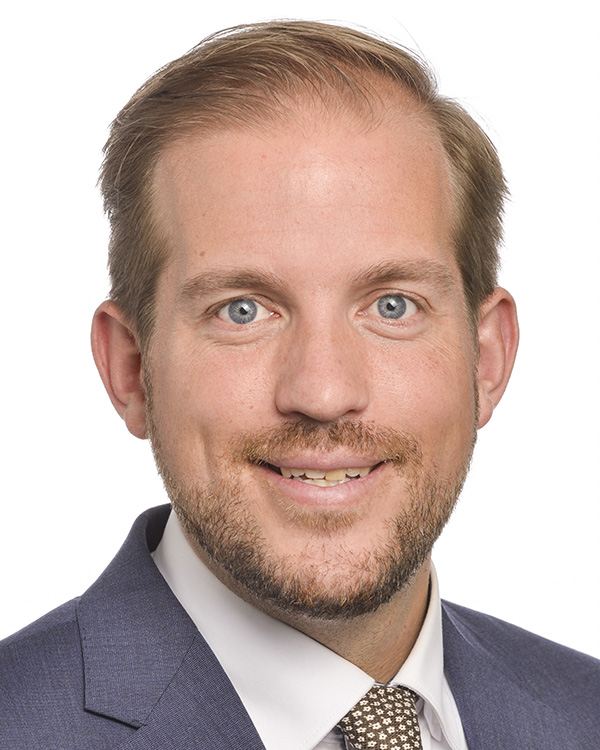


| Rank | Name | Country | Group | Speeches | |
|---|---|---|---|---|---|
| 1 |

|
Lukas Sieper | Germany DE | Renew Europe (Renew) | 487 |
| 2 |

|
Juan Fernando López Aguilar | Spain ES | Progressive Alliance of Socialists and Democrats (S&D) | 454 |
| 3 |

|
Sebastian Tynkkynen | Finland FI | European Conservatives and Reformists (ECR) | 451 |
| 4 |

|
João Oliveira | Portugal PT | The Left in the European Parliament (GUE/NGL) | 284 |
| 5 |

|
Vytenis Povilas Andriukaitis | Lithuania LT | Progressive Alliance of Socialists and Democrats (S&D) | 273 |
All Speeches (134)
Fighting cyberbullying of young people across the EU (debate)
Date:
10.05.2023 18:46
| Language: EN
Speeches
Mr President, dear colleagues, this is a very important debate today, and I’m not asking you to listen to me, but indeed to Jackie Fox, who is with us today and for which we are very grateful that you’re here and for everything you have done. Jackie Fox, the mother of Nicole ‘Coco’ Fox, who was the victim of relentless bullying – both off and online. She was bullied up to a point where she saw no way out anymore, ultimately resulting in her taking her own life. And there are simply no words to describe this tragedy. But Coco’s story is unfortunately not an isolated case. All over Europe, children are victims of cyberbullying, often with terrible consequences. In Europe, every month, one out of ten children becomes a victim of online bullying. And the terrible thing is, in many Member States, cyberbullying is not even a crime. Imagine how Jackie felt when the police informed her that there was nothing they could do against the bullies responsible for her daughter’s suicide. I cannot imagine it, and I can only hope I will never have to experience it. It only further increases my admiration for your strength, your bravery and your determination, dear Jackie, that you have turned this tragedy into a mission – a mission to make sure that children in Ireland are protected against bullying in a way that Coco was tragically not. And Coco’s law is now in force in Ireland, which makes cyber bullying a crime. But the mission is not over yet. We need to take Coco’s law to the European level, and I can only express my hope, regardless of our political differences, that we can come together in this Parliament and make sure that all children in Europe are effectively protected against such despicable behaviour. Let’s do it together and let’s do it in honour of Coco and all other victims.
Externalising asylum applications and making funding to third countries conditional on the implementation of return agreements (topical debate)
Date:
10.05.2023 13:42
| Language: EN
Speeches
Madam President, before I start my intervention, can I just express my surprise a little bit? Because this morning we had a debate on agriculture and the Commission was represented by the financial services Commissioner. Now we have a debate on migration and the agricultural Commissioner is here. And I really don’t see the logic in sending Commissioners to debates on topics that they have no relevance to, and I would really hope that you could also express our discontent about that to the European Commission as a whole. Now I’ll start my intervention. You can start the clock again, if you don’t mind. We recently had several debates here in this House about migration, and rightfully so, because we see irregular arrivals to Europe at crisis levels and further increasing as we speak, and we see more and more Member States reaching the limits of what can be reasonably expected from them in terms of reception, capacity and procedures. And these debates have also clearly shown that there is no silver bullet when it comes to tackling this challenge. As much as some of the colleagues here would like to believe it is, we will not be able to address the migration challenge only with dumbed-down Twitter-proof slogans. We cannot just switch migration off and we can also not fully shift the responsibility off to other countries. We need a European and a holistic approach. We must, yes indeed, better protect our borders. We must fight human smugglers. We must prevent dangerous departures. And we need to ensure effective returns. And we need much more intensive cooperation with third countries to do that along the migratory routes. And I acknowledge and I am glad that the Council also sees this – that action is necessary to ensure effective partnerships on all these priorities, using all EU instruments at our disposal is necessary. We need renewed focus on the external dimension of our migration policy. But that doesn’t mean that we should ignore the internal aspects. We need a true European migration and asylum policy that is fit for purpose and answer the needs of our times. The Pact on Migration contains all these ingredients, and Mr Garraud, I would really advise you to read it, because everything you said about the pact has been nonsense so far. This House has adopted its position. I would really invite the Council to do the same. I appreciate the work of the Swedish Presidency to get these negotiations going, to get an agreement, and to get this back from ideas to reality.
Madam President, thank you to all the colleagues for a very long but very interesting debate. Listening to everybody, I can only draw one conclusion really, and that is that we all share a very shared commitment: a commitment to the EU budget, to making sure that the European budget is spent in an appropriate way and making sure that we have the best added value with European funding. I think also the discharge of the Commission that we will vote on tomorrow needs to be read in that light. There are many suggestions, many recommendations; it is our job to scrutinise what the Commission is doing in order to make sure that we end up in that shared commitment to protect the European budget. And I welcome Commissioner Hahn’s commitment to also, as he expressed today, everything the Commission is doing to bring down the error rate, to simplify rules in order to avoid risks. We, as a European Parliament, will continue to support you in that procedure and to make sure that we can make improvements together. When it comes to the future, there is one thing that I would like to highlight as well, and I would mention the recast of the financial regulation and the negotiating position adopted in this House. And I hope and I count on the Council to also negotiate with us in a constructive spirit to better protect the EU budget, particularly through increased transparency. It really needs to happen now. Now the discharge will be voted tomorrow and then it will be concluded. But the process of scrutiny, of course, continues also far beyond that. And I would like to thank once again also President Murphy and everybody at the European Court of Auditors for their very important role and the support to our work here in the European Parliament. It has been much appreciated. I would just like to echo the words that, President Murphy, you concluded your last intervention with, and that is that it is all about improving accountability, transparency and financial management – this is the commitment of everybody I have heard speaking here today and let’s put that into practice also for the upcoming years.
Madam President, I always believe in ladies first, so I gave Monika the opportunity to speak before me. Now, thank you very much, and I think, really, this discharge procedure is one of the most important procedures we do in the House because in order to maintain citizens trust in the work we do, we need to make sure that the budget is spent correctly. This House has a great responsibility to scrutinise that spending. I would really like to thank the co-rapporteur, the shadow rapporteurs, the Secretariat and all colleagues who took part in this work; we had an excellent cooperation. I would also like to express my gratitude to the work of the European Court of Auditors, which is an indispensable partner in the work that we do. This discharge focuses on the year 2021, and we have observed a concerning increase in the error rate for expenditure, which now stands at 3 %, as reported by the Court of Auditors. This is well above the acceptable limit of 2 %. In fact, for the majority of reimbursement-based expenditures, the error rate reaches an alarming 4.7 % and we must take immediate action to prevent this rate from growing even further in the upcoming years. And we are urging the Commission to launch additional initiatives to address this. The different methodologies used by the Commission and the Court of Auditors when calculating the risk at payment or the error rate also complicates the comparability, it makes it difficult to compare the two numbers. This further adds confusion because the Commission, whenever the Court of Auditors presents an error rate which is positive, we use this in our communications, we accept it, whenever there is an error rate presented which is unfavourable to the Commission, the methodology is disputed. This is an approach which is not fair and we should also change that in order to make it all a bit more logical. Even more alarming in that sense is the lack of responsibility and the failure to fully recognise shortcomings in the methodology with regards to climate spending. The Court calculated that spending on climate action has been overstated by EUR 72 billion for the 2014–2020 period, and the Commission refuses to fully acknowledge it – Commissioner Timmermans came to a CONT meeting and concluded by saying that we should agree to disagree on this. Sorry, but no, we cannot agree to disagree on overstating EUR 72 billion of climate spending. We need to accept the conclusions of the Court on this and work to address this issue. Another concern that we are addressing involves the slow absorption of funds and the rate of commitment to implementation, which could lead to increased risk towards the end of the budgetary period and to resolve these issues, we need to continue to bolster the administrative capacity of the Member States and the European Commission. Now, we have in this discharge, really emphasised the significance of the Union budget’s performance, which includes utilising appropriate indicators, simplifying rules and procedures and implementing better-targeted controls. Transparency is a key element of a resolution and we emphasise the importance of transparent operations across the board, including for NGO and intermediaries in terms of their funding and ownership. And we also request that the Commission establish an effective mechanism to ensure that NGO activities align with EU values. We have also underscored the importance of incorporating new technologies like EDES and Arachne and developing a unified information and monitoring system provided by the Commission to allow for the electronic recording and storage of data of Union funding recipients, including their beneficial ownerships, in order to help us prevent any misuse of the budget. We also recognise the benefits and lessons learned through the use of new technologies, such as satellite controls and agricultural spending, for instance. We are convinced that these advancements will play a crucial role in better safeguarding our budget. Now, to wrap up on a very serious note, we remain deeply concerned – and this is also reflected in the resolution – about the rule of law situation in several Member States, which not only undermines democracy but also results in substantial risks for the Union budget. We expect all Member States to adhere to democracy and the rule of law in order to receive European funds. And we particularly highlight the concerning situation in Hungary, where corruption and an opaque public procurement system must be addressed through reforms within the context of the conditionality mechanism. I am grateful for the level of unity we achieved during our work in the committee, and I look forward to listening to all the contributions of our colleagues.
The need for European solidarity in saving lives in the Mediterranean, in particular in Italy (debate)
Date:
18.04.2023 19:40
| Language: EN
Speeches
Mr President, in the first months of this year, more than 30 000 migrants have arrived in Italy – it’s about four times the number compared to the same period last year. In the central Mediterranean route as a whole, there has been an increase in arrivals of over 300%. Now we, as the EPP, have been warning for a long time that we are sleepwalking into a new migration crisis and these numbers prove once again that our warnings were and are justified. The only difference is we are no longer sleepwalking into a crisis; we seem to have arrived in the middle of one, and it’s time to wake up. Declaring a state of emergency, like in Italy, is not only to speed up procedures and to take the immense pressure off the system. It is also a cry for help – a call for solidarity, for European solidarity, for a European challenge, and not the empty promise of solidarity that we have seen from Member States like France or Germany, but real, tangible help. In this context, I am happy that in this House, under the leadership of our rapporteur, Tomas Tobé, we have agreed on a position on the new regulation that will ensure fair responsibility-sharing. It is a crucial piece of the architecture under the new pact, and even though I am happy that some negotiations have started, it is absolutely crucial that we start negotiations on this crucial piece as soon as possible as well. But we also have to be realistic in our expectations. If arrivals continue to increase at the current rate, Member States will never be able to cope, regardless of European rules on solidarity and regardless of the successful adoption of the pact. If we want to be really able to manage migration, we will also need to bring the number of irregular arrivals down. The external dimension of our migration policy is key in that regard. Cooperation with countries of origin and transit, on border management, on returns and readmission and on the fight against criminal smuggling gangs must be urgently and significantly intensified. And especially Tunisia, which the Commissioner already mentioned, which now has taken over from Libya as the most frequently used point of departure to the EU, must be our first and foremost priority. And it’s good that this is on the radar of both the Council and the Commission, but I would really ask you to act on this and to act on this more strongly.
Madam President, I do apologise for taking so much of your time but in Malta, an author, Mr Mark Camilleri, published documents showing WhatsApp messages between an MP from the ruling governing party and Yorgen Fenech, who is the alleged mastermind behind the murder of Daphne Caruana Galizia. Now these messages exposed abuse of power, bribery and trading and influence, and this information was known to the police for already three years, and nothing has happened. The only thing that has happened is that the author has been criminalised for publishing the documents, even forcing him to leave the country. It’s a disgrace, and it’s further proof of how the rule of law is being systematically undermined by this government in Malta. And, as such, it also warrants a debate with a resolution adopted in April.
Madam President, well, we can vote as you like. On Malta I think there is even more reason maybe to have a debate.
Madam President, as we very much indicated, we believe this is a House to have European debates, but we have been inspired. So, if we are going to have a joint debate about rule of law with the Rule of Law report and rule of law in Greece, we believe there are some other issues that could be dealt with in this same debate. The first one is the rule of law in Spain, because the behaviour of this Spanish Government is moving further and further away from respect of the rule of law. When they don’t like the Council on the Judiciary, they simply adopt a law to prevent it from functioning. When they need an independent attorney general, they appoint their dear, loyal party colleague, the former Minister of Justice. When they don’t like democracy, when they find it too complicated, they rule by decree. Remember, the S&D stood here on other countries saying ruling by decree is ruling like a dictator. So either you are ruling like a dictator, or this is something we need to discuss in the European Parliament tomorrow. So our request is a debate on the rule of law in Spain, with a resolution to be adopted in April.
Madam President, we are not against a debate about the rights of children in rainbow families, because these are important topics to discuss, but we cannot pretend that they are restricted to only one particular Member State. Pretending that they are restricted to only one particular Member State – even though it might be politically convenient for some people here – doesn’t do anything to support rainbow families across the EU. We have to decide what kind of parliament we want to be. Are we a European, credible parliament where we discuss common European challenges? Or are we nothing but a theatre where national opposition parties can attack national governments because they are too weak to make an impact at home? Let’s leave national politics to national parliaments. I listened very carefully some time ago when Stéphane Séjourné said in Strasbourg, ‘We will systematically vote against any change of the agenda that targets national issues’. And I also heard Iratxe García Pérez say we need to respect the European debates in the European Parliament. Let us show today that those principles are there not only when they suit us. So we propose the following debate title: ‘The rights of children in rainbow families’.
Lack of actions taken by the Commission in the context of the duty of sincere and loyal cooperation (debate)
Date:
16.03.2023 11:12
| Language: EN
Speeches
Mr President, Madam Commissioner, it’s an honour and mostly a pleasure to chair the Committee of Inquiry to investigate the use of Pegasus and equivalent surveillance spyware, set up a year ago with the important task to investigate one of the biggest threats to free democracies all over the world: the abuse of highly invasive spyware like Pegasus by governments, including in the European Union. From the first moments, we knew it would not be an easy task. It is a relatively new phenomenon. It operates in an extremely complicated international ecosystem and it has a highly technical and constantly evolving nature. But luckily, from day one, we could count on great support in conducting our investigation through information exchanges, during and outside our hearings, with a variety of stakeholders – from technical experts to the research community, from industry to journalists and civil society. We engaged with more than 180 interlocutors over the course of the last 12 months. I am frustrated, however, about the reason why I am standing here today representing the PEGA committee here in Strasbourg. Because, ever since the establishment of our committee, there have been two key stakeholders that have not fulfilled the duty of sincere and loyal cooperation, or that have refused to take decisive action in the face of a serious threat: the Member States and the Commission. As part of our fact-finding mission, the PEGA committee sent a questionnaire to the Member States on 14 July 2022, eight months ago. It contained questions about the use of spyware, the legislation governing such use and the establishment of ex-ante authorisation and ex-post supervision. A similar questionnaire was also sent to the Commission. A simple set of questions. We are not asking to divulge State secrets or for full openness on matters of national security. Simple, straightforward, factual questions that any government should be able to answer without any problem. On 12 October, we received a joint answer by the Czech presidency, which did not contain any of the information requested, but contained an assurance that the Member States would fulfil their obligations of sincere and loyal cooperation. So far, we have received answers from only 10 Member States’ governments out of 27. Thanks to parliamentary bodies, we have some more information about other Member States, but from Member States like the Netherlands, the Czech Republic, Denmark, Italy or Malta, we have no information, no response whatsoever and it is absolutely unacceptable. Hundreds of millions of Europeans that we represent as a European Parliament deserve answers to our questions, and answers are very difficult to give if governments who purchase and use this software refuse to answer even the most basic of those questions. It goes further than not just answering questions. In Hungary and Poland, governments were so afraid of checks and balances, so afraid of democratic dialogue and scrutiny that they flat out refused to meet with us. Also this is a scandal. But I also believe the European Commission should have a close look in the mirror. I know, Madam Commissioner, that you are not the responsible Commissioner here, but as a representative of the Commission, I do have to express my great disappointment and my frustration. From the very start of the Pegasus scandal, the European Commission has failed to take this threat seriously, has failed to fulfil its duties as guardian of the Treaty. The first response was ‘We will not investigate. We will not investigate because this is really something for the national authorities. The Commission cannot touch national security issues and people should instead seek justice at their respective national courts’. So the Commission, the same Commission that is taking the Polish Government to the European Court of Justice for depriving individuals of the full guarantees of effective judicial protection and for turning the highest court into a political body, that same Commission tells Polish victims of Pegasus to turn to the same judicial system to get justice. It does not make sense. This is not simply about national security. It is a rule of law issue, and the Commission should act because the Treaty is very clear: ‘Pursuant to the principle of sincere cooperation, the Union and the Member States shall, in full mutual respect, assist each other in carrying out tasks which flow from the Treaties.’ Now this Parliament is carrying out its tasks, but without any assistance from the Member States or the Commission. The principle is unfulfilled. What we see in practice is not sincere and it is not even cooperation. Therefore, the Parliament, which considers the duty of sincere and loyal cooperation to be unfulfilled, asks the following questions: What action has the Commission taken or will it take in response to this breach of the duty of sincere and loyal cooperation by the Member States? Has it initiated procedures to address this violation? If not, when will it do so? Can it explain what steps it has taken to fulfil its own duty of sincere and loyal cooperation with the PEGA committee?
Madam President, organised crime is a major threat to the internal security of the European Union and to the safety of our citizens, and it requires a common European response. More than 70% of criminal networks are active in more than three European countries and they are becoming increasingly more violent. According to Europol, organised crime within the EU has never posed such a major threat to citizens and our societies as it does today. We need to disrupt the business models of criminal networks and ensure that crime never pays: follow the money in order to freeze and confiscate assets and target criminal leadership. For the EPP, the security of European citizens and the fight against organised crime is an absolute priority. Europe needs to show that we can deliver in real terms, and this is why last year we proposed 50 concrete measures to tackle crime and we will continue to put this high on Europe’s agenda. And we are happy to find in the Swedish Presidency a like—minded and a constructive partner in our mission to keep Europe safe. And we look forward to cooperate on our shared priorities: strengthening the role of agencies like Europol and Eurojust; better coordination of criminal investigations and prosecutions; implementation of the interoperability framework; further improving existing crucial legislation like the Prüm Framework; advanced passenger information; making e—evidence work in practice. We have to make use of all available instruments in order to fight crime, and we cannot expect law enforcement authorities to do this alone. Local authorities, tax authorities, labour inspectorates, can all play a major role in addressing certain challenges, but they face huge obstacles in cross—border cooperation. We have worked very hard to remove those cross—border obstacles for police and judicial cooperation. We need to do the same for the administrative approach to organised crime by denying criminals the use of the legal administrative infrastructure. More intense monitoring, better screening and proper cross—border exchange of administrative information to complement police cooperation and strengthen the law enforcement system should also be a European priority. Borders often still create obstacles for authorities, while criminals use them to their advantage. This needs to end right now.
Deaths at sea: a common EU response to save lives and action to ensure safe and legal pathways (debate)
Date:
15.03.2023 16:17
| Language: EN
Speeches
Mr President, every death at sea is an unspeakable tragedy. Men, women and children losing their lives in the Mediterranean is truly heartbreaking. And yes, we need, as this debate title suggests, a common EU response. And it starts by breaking the lucrative business model that smugglers have built at the expense of vulnerable people. We need to fight against these ruthless criminals who put hundreds of people on far too small, unseaworthy vessels in the most difficult of conditions at sea. Thank God, luckily, most people are saved like the 1300 people last weekend. But for some, like the more than 70 people that perished off the coast of Calabria, help tragically came too late. We need a fundamental change of policy. No matter how many search and rescue operations are deployed at sea, if hundreds of thousands of people continue to embark on this dangerous journey, help will never be able to reach all of them on time. Arrivals by sea in Italy have increased three times compared to last year. It means the risk of accidents has also tripled. So we need a common but also a holistic approach. No oversimplification of complex challenges by focusing on one solution only. Most asylum seekers arriving in Europe are not in need of international protection and they will most likely continue to risk their lives to come here irregularly, regardless of the legal pathways we put in place for those who need it. At least until we change the automatism that paying a smuggler equals entry to the territory of the European Union. Changing that needs to be the core of the policy Europe finally adopts because there is no silver bullet: fighting smugglers, creating pathways, code of conduct for search and rescue, strengthening external borders, discouraging illegal migration, improving cooperation with third countries, increasing returns – these are all intertwined. They’re all part of the same puzzle. And we need to complete this whole puzzle. We need to adopt the migration pact in full if we want to make debates like the one today a thing of the past.
EUCO conclusions: the need for the speedy finalisation of the Road Map (debate)
Date:
15.02.2023 17:26
| Language: EN
Speeches
Madam President, it was about time that the European Council put migration on its agenda. 70 % of Europeans are concerned about migration, and the EPP has been warning for months now that we are sleepwalking into a new crisis, with the numbers being the highest since 2016, so it’s good that everybody seems to have finally woken up. Let me welcome the unity that the European Council showed. Political leaders from our party, from the Liberals, from the Socialists, from the Conservatives all agreed that this is a European challenge that needs to be addressed at the European level, and that more efforts are needed to adopt the pact, to properly protect our external borders and to pay full attention to the external dimension of migration. All 27 leaders agreed on this, so I hope we can also mirror that same spirit here today. I want to make two concrete points. First, our external borders need to be strengthened. This was our main EP call for months, and we welcome the Council’s call on the Commission to immediately mobilise substantial EU funding to support Member States in reinforcing border protection capabilities and infrastructure. I also welcome the immediate follow—up on this call by the Commission, and I look forward to seeing the concrete results on the ground as soon as possible. We need to have control of our external borders, and since these are our common European borders, their protection must also be a common European effort. I am glad that all leaders, from north to south and from left to right, have put their support behind this. Secondly, the pact on migration needs to be adopted. Progress is being made, but both the Council and Parliament need to step it up a notch. In this House, we truly need to work in a spirit of compromise between all the constructive parties on all the files. I want to be very clear on this – we either have a real compromise on everything, including screening, for instance, or on nothing at all.
The erosion of the rule of law in Greece: the wiretapping scandal and media freedom (topical debate)
Date:
15.02.2023 16:40
| Language: EN
Speeches
Madam President, this is not the first time we are having this debate and, to be quite frank, I was not convinced about its added value. Unfortunately, so far nothing I’ve seen has changed my mind. This Parliament has a dedicated committee with a specific assignment to look into the abuse of spyware in the whole of the European Union, because this is not an issue of one individual Member State, but it is a European issue, and the bigger committee is doing its job. We already spoke to almost 200 people, including a lot about Greece, and we should also let it get on with its job. And as much as I understand the political appeal of bringing specific countries to this podium, especially with elections approaching, I really think the focus should be on our common work in the committee. Now, we travelled to Greece and we had many fruitful exchanges with government representatives, journalists, civil societies. We received a lot of useful information. What we did not find was evidence of corruption or the kind of authoritarian practices we witnessed in Poland. But, of course, more can and should always be done to ensure transparency, and any allegations of abuse, of surveillance, have to be thoroughly investigated and necessary safeguards must be in place. I would like to point out, though, that unlike some other countries, the Greek Government actually makes an effort to actively cooperate with our committee. They received us. They share their proposals for reforms to improve transparency and judicial oversight. And I look forward to seeing the results of those reforms in practice. We need to investigate before we draw conclusions. There is plenty of work still to do, and we must continue that work in a thorough but also an objective manner.
Madam President, we are very happy to support a debate on last week’s Council conclusions. In fact, we’ve already wanted to propose this last week, but then the socialists were still against it. So better late than never, I guess. Happy to support the debate not under this title, because the level of hypocrisy is simply a bit too high. Have you ever seen the border fences in Spain? Have you ever seen the plans that the Finnish Government is doing to build a border wall? It is socialist governments rightfully using fences to manage migration. And yet, here you stand arguing that Europe should never help any other Member State to do the same. As always with the socialists it’s ‘do as I say, not do as I do’. So yes, we would like to have a debate on the Council conclusions under the words that the Council itself chose with the support of socialist prime ministers. And this is follow-up on the European Council conclusions: mobilising EU funds, reinforcing border protection capabilities.
Preparation of the Special European Council meeting of February, in particular the need to develop sustainable solutions in the area of asylum and migration (debate)
Date:
01.02.2023 16:17
| Language: EN
Speeches
Mr President, 70% of Europeans are concerned about migration, and rightly so: 330 000 people illegally crossed our borders last year. This is the highest number since 2016 and we are sleepwalking into a new crisis – literally, because our Dutch Prime Minister, Mark Rutte, admitted last week that he dozed off on migration. It’s unacceptable. Colleague Azmani, on behalf of the Liberals, referred to Cinderella, while the Dutch Prime Minister really was more like Sleeping Beauty. European citizens deserve leaders that are awake and that take their concerns seriously. And the upcoming summit is the opportunity to actually show this, to show the commitment, the commitment we need for real solutions. And we do not have the luxury to dismiss practical solutions just like that. And that is my question also to the European Commission. President von der Leyen today here underlined the importance to strengthen our external borders and she mentioned the Turkish-Bulgarian border as a priority, but when Bulgaria then asks the European Union for help to protect that border, to have permanent infrastructure on that border, they hear from Commissioner Johansson that they cannot expect a single euro cent from the European budget. Is that solidarity? Is that the European response that the Commission is talking about? I think the Bulgarians and all European citizens deserve an answer to that question.
Madam President, you already introduced our request quite well, I would say. We have this very important debate this afternoon. Ideally, we would like to wind it up with a resolution this week, so we can also very clearly express our expectations to the European leaders about what we expect them [inaudible]. I am given to understand that this is not possible in a short Brussels plenary session. So then we would like to request a resolution to wind up the debate in the next plenary session in Strasbourg, so we can assess what the European leaders have done in this summit and to also give our opinion on that. This is a crucial European Council meeting. 70 % of Europeans are concerned about migration, and I think they would very much like to know where this House stands.
Criminalisation of humanitarian assistance, including search and rescue (debate)
Date:
18.01.2023 19:07
| Language: EN
Speeches
Mr President, should humanitarian assistance be criminalised? That’s the question of this debate. No, of course, not. There are many people around the world making sacrifices in order to help people in need, and their work should be applauded. So no, we should not criminalise humanitarian assistance. But should we criminalise crimes? Yes we should. And it really is as simple as that. When crimes are committed, they should be investigated, they should be prosecuted, and they should be brought before an impartial judge, regardless of who has committed them. In the eyes of the law, everyone is equal. Nobody, not me, not NGOs, not humanitarian workers should receive preferential treatment. Yet that is what some colleagues sometimes here seem to argue, that somehow some people should be above the law, and that when suspicions of criminal activities arise, they should be ignored or covered up for specific groups of people. I don’t think that’s fair. Let me remind you, we are in the midst of a corruption scandal. It centres around an NGO. Should we not prosecute this NGO because we would be at risk of criminalising humanitarian work? Should the people working at this NGO not be investigated because we would be risking criminalising humanitarian workers? No, I should hope not. Crimes are crimes regardless of the perpetrator, and in a rule of law, they need to be proven in a court of law with independent judicial institutions to ensure due process. In Greece, people arrested under the Syriza government have been acquitted of their charges last week even. Is it a crime to save lives? No, of course not. Saving lives is a legal duty, but first and foremost a moral obligation. And every death at sea is an unspeakable tragedy. So, saving lives, of course, is not a crime, but forging license plates or documents is. Unauthorised entry into military zones is. Cooperating directly with smuggling gangs that have turned human vulnerability into a multibillion—dollar business model is a crime. And so is illegally intercepting communications from authorities or Frontex. And when such crimes are committed, Member States have every right to investigate and prosecute them with full respect of the right to a free trial within a reasonable time. And we should support them in doing so.
Protecting the Rule of Law against impunity in Spain (topical debate)
Date:
18.01.2023 13:36
| Language: EN
Speeches
Madam President, last week we had the Spanish Minister of Justice in the LIBE Committee to discuss the rule of law in Spain. It was very interesting. She said many fascinating things about vaccination strategies, about green hydrogen energy, about organ transplants. She didn’t say much about justice, which you could think is strange for a Minister of Justice. But looking back, it actually makes sense because there is not much about justice and the rule of law that a Minister can proudly share in Spain, and the interests of this Spanish Government are certainly not with justice, the separation of powers or checks and balances. When they do not like the composition of the Council of the Judiciary, they just adopt a law to prevent it from functioning. When they need to appoint an independent attorney—general, they just pick a loyal party colleague – the former Minister of Justice. When they need judges in the constitutional court, they pick another lawyer and former Minister of Justice and a director—general. No wonder the Minister of Justice last week shockingly called the Constitutional Court a political body! When they adopt new legislation against and ignoring all those advisory reports and the consequences are that sentences are reduced and sexual offenders and rapists are released early, what do they do? They blame the judges for misinterpreting the law. When they find parliamentary democracy too difficult, they just rule by decree. This is truly bizarre, because two and a half years ago Iratxe Garcia stood here and she blamed Viktor Orbán for ruling by decree. She said it was like trying to rule like a proper dictator. I agreed with her then and I still agree with her today, but where is the criticism of Prime Minister Sanchez then? He who is breaking the ‘ruling by decree’ records at home? Truly, he is the ‘king of decrees’. Is that democracy, dear colleagues of the S&D, or is that trying to rule like a dictator? You cannot have it both ways. Packing courts and independent bodies with your political friends, politicising the judiciary, ruling by decree, blaming judges for your own mess. This is page—by—page out of the populist and autocrat playbook. It is beneath Spain, it is beneath Europe, and it needs to stop!
Madam President, Tineke Strik mentioned Greece and Italy, we all seen the court cases in Greece. The accused have been acquitted. The courts have been closed. So, if the Greens want to compliment Greece on the independence of the judiciary there, they can do so in a press release, but not through a debate. We could even do a press release together if you would like. But the EPP is always ready to debate migration, because there are plenty of reasons to do so: 330 000 illegal border crossings in 2022, more than 136% increase in the Western Balkans, with over 100 000 asylum applications per month, the highest numbers since 2016. We should debate these alarming numbers, but that is, unfortunately, not the focus of this debate. And we cannot ever only debate NGOs, humanitarian aspects and search and rescues and ignore all the rest. So, this Parliament wants a holistic approach to migration. Let us also debate holistically. The search and rescue contact group will be reconvened this month. Next month we will have the special EU summit on migration. So instead of this rushed debate this week, let us have a deeper, a wider and more comprehensive debate next month in our plenary on migration.
The Commission’s reports on the situation of journalists and the implications of the rule of law (debate)
Date:
14.12.2022 17:51
| Language: NL
Speeches
Mr President, independent and free media are crucial pillars of a functioning democracy. Journalists are watchdogs of our rule of law. We have to cherish and protect them. However, in practice – including in Europe – journalists are finding it increasingly difficult. I see it in my own country. Journalists are threatened, intimidated, cars are pushed off the road, incendiary bombs are thrown through the mailbox and we even see reporters having to cover their logo for fear of violence. There are journalists in Europe who have had to pay for their work with their lives: Daphne Caruana Galizia, Ján Kuciak, Peter R. de Vries. Let us remember these names and keep their legacy alive. Because the threat is a multi-headed monster that doesn't just consist of criminals. Increasingly, it is politicians who portray the media as the great enemy. Right-wing populists and Trumpwannabes across Europe have turned it into a sport to turn their backers against journalists, with all the risks that this entails. In addition, we see in Europe that governments use invasive espionage software such as Pegasus to eavesdrop on journalists, while we should be grateful, because without good investigative journalism, we would still be completely in the dark in that area too. The many victims we spoke to each had deeply impressive stories about the devastating effect that such invasive privacy violations have on the exercise of their profession. That is why it is good that we are working together here to improve the protection of journalists. We welcome the proposals on the Media Act and the Anti-SLAPP Directive, and we need to make them much stronger where possible. If we want to protect our rule of law and our democracy, it starts with protecting our journalists.
Suspicions of corruption from Qatar and the broader need for transparency and accountability in the European institutions (debate) (debate)
Date:
13.12.2022 16:18
| Language: EN
Speeches
Mr President, dear colleagues, it’s really hard to express how sad and angry I am here today because the greed of some individuals in this House has cast a dark shadow over all of us. I have to fully agree with the Commissioners: shame on them. The news over the past days looked like a bad Netflix film. Bags of cash raided offices and searched houses. But it’s not the film. It’s the ugly truth of high-level corruption at the heart of the European democracy. Of course, investigations are ongoing and we need to wait for all the facts but already I want to thank the Belgian authorities, and I would also like to thank our President, Roberta Metsola, for her leadership on this issue and echo her words. There will be no impunity, none. Those responsible must be brought to justice. And we fully support the internal investigation that the president announced. We must do better; increased transparency and accountability of all activities related to third countries, whether through NGOs or other actors, and strengthened defensive tools and anti-corruption measures to combat foreign interference in our work. All these steps are necessary to start regaining the trust of our citizens. Because make no mistakes, the action of those who would rather take home bags of cash than bags of work undermine the credibility of all of us. And it is up to us together to repair the damage. We can already see the Orbáns of this world gloating about these developments, apparently under the impression that corruption elsewhere makes corruption at home less disgusting. Nonsense. And let me emphasise one crucial difference: in stark contrast to the impunity in Orbán’s Hungary, in a rule of law, corrupt individuals are arrested, prosecuted, and stripped of their responsibilities. And we say very clearly here today, no tolerance for corruption, no tolerance for impunity.
The need for a European solution on asylum and migration including search and rescue (debate)
Date:
23.11.2022 09:59
| Language: NL
Speeches
Mr President, we have been warning for months that we are sleepwalking towards a new migration crisis. Almost 300 000 people have already crossed our external borders illegally this year. This is the highest number since 2016, the crisis year. But the worst thing is that our European asylum policy is still in 2016, despite all the good proposals from the European Commission. But it still doesn't work. That is why these numbers must be a wake-up call, especially for the migration ministers who meet on Friday for crisis deliberation. Only by effectively tackling irregular migration will we maintain space and support to accommodate genuine refugees. This is a European issue, because migration has long since ceased to be a national issue. It's tough geopolitics. In Ukraine, driving refugee flows to Europe is part of Putin's strategy. Migrants are also being actively pushed across the border from Belarus and Turkey. If we do not want to be a toy of authoritarian rulers, we must be able to decide for ourselves who gets access to our territory. Then we in Europe must be serious about protecting our external borders, including financing physical infrastructure at those borders. Then we really need to equip Frontex to do its job, finally put Eurodac in order and finally finalise the European Pact on Migration, including screening at the external borders. Unambiguous and effective European asylum policy is needed, because it cannot be the case that in a country such as the Netherlands the acceptance rate of asylum applications is inexplicably much higher than in other countries. Grip on migration requires decisiveness and it is high time to finally show it.
Assessment of Hungary's compliance with the rule of law conditions under the Conditionality Regulation and state of play of the Hungarian RRP (debate)
Date:
21.11.2022 17:53
| Language: EN
Speeches
Madam President, I never quite understand the position of our Hungarian Fidesz colleagues, because for years they have been telling us that there is nothing wrong in Hungary on the rule of law, on democracy, on anti—corruption, that all is good and that everybody who criticises it is part of an ideological jihad against Hungary, etc. and we are all part of the extreme left here. Now there is EUR 7.5 billion at stake, and all of a sudden there are so many things wrong in Hungary that they felt the need to do 17 very urgent reforms, and we are expected now to believe that these reforms will actually make a difference in practice. The Hungarian Government so far has never shown any willingness to make meaningful reforms. But we are expected to believe now that a quick push of some legislation is making a lasting difference on the ground. This for us, as the EPP, is the key bottom line: only significant, tangible and lasting reform can enable the release of EU taxpayers’ money. Nothing less will do. But this is not only about the Hungarian Government and its reforms, it’s about Europe. It’s about the kind of European Union we want to be, and there is a clear choice. We can be a European Union of shared fundamental values like democracy and the rule of law, a Union that is willing to fight for those values, also when it’s difficult, or particularly when it’s difficult. Or the other choice, we can be a Union that falls at the first bit of pressure and bows to blackmail. These are our options, and only one of them will have a viable future for the European Union. So, Commissioner, please take that into consideration when you assess these Hungarian reforms. This is about the future of our Union, so please act wisely.
Presentation of the Court of Auditors' annual report 2021 (debate)
Date:
19.10.2022 15:17
| Language: EN
Speeches
Madam President, let me first thank President Murphy for the presentation today, but mainly for the work that the Court of Auditors does in general. It’s crucial work, also in the context of our work here in this House on the discharge procedures. Now, on the annual report, I want to make three brief points. Firstly, it is concerning that the Court reports an error rate of 3% for expenditure, which is well above the 2% materiality threshold, particularly because this error rate has been increasing for the last couple of years, leading to an adverse opinion again. It is also significantly higher than the Commission’s own calculated risk at payment, which now even falls below the range of error calculated by the Court. Secondly, and this is connected to this, we should really work towards solving the confusion with different error frameworks used by both institutions. We need to know beyond reasonable doubt what the error rate is, and there needs to be an agreement on that figure. The same also goes for the assessments of the levels of risk of expenditure. Uniform methods for sampling risk assessment and corrections of error and recovery would be very helpful for us to do our work. Thirdly, the type of errors identified over time remain relatively similar: ineligible costs of beneficiaries, lack of supporting documents, infringement of rules and breach of public procurement rules. Simplification of these rules would really help here to make sure money gets to the beneficiaries without mistakes. We need to work on that without delay. Public support for EU expenditures relies on our joint ability to spend European taxpayers’ money in accordance with rules and regulations. This report once again underlines that we still have some work to do.