
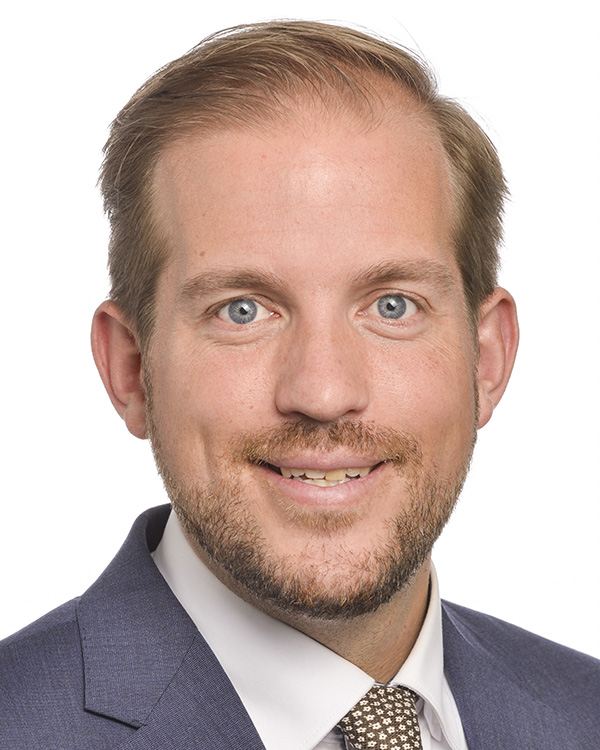






| Rank | Name | Country | Group | Speeches | |
|---|---|---|---|---|---|
| 1 |
|
Lukas Sieper | Germany DEU | Non-attached Members (NI) | 390 |
| 2 |
|
Juan Fernando López Aguilar | Spain ESP | Progressive Alliance of Socialists and Democrats (S&D) | 354 |
| 3 |
|
Sebastian Tynkkynen | Finland FIN | European Conservatives and Reformists (ECR) | 331 |
| 4 |
|
João Oliveira | Portugal PRT | The Left in the European Parliament (GUE/NGL) | 232 |
| 5 |
|
Vytenis Povilas Andriukaitis | Lithuania LTU | Progressive Alliance of Socialists and Democrats (S&D) | 227 |
All Contributions (144)
EU Protection of children and young people fleeing the war against Ukraine (debate)
Mr President, millions of people have fled Ukraine, fleeing from Putin's bombs and war crimes. We have seen in recent days – in Bucha – where these people have fled and what the terrible fate is for those who have been left behind. Those images will remain burned on our retinas forever. 90% of refugees are women and children, children who must first and foremost be able to be children, who must be able to play freely and go to school, and who must be able to carry out mischief free from worries about war and violence. We've said it here before: It is heartwarming to see how organisations, volunteers and communities across Europe are ready for these refugees, how young children share their hugs and toys with Ukrainian peers, how empty prams are ready at stations for fleeing mothers with small children and how schools are doing everything they can to provide a warm environment for fleeing children. I am proud of the solidarity and mercy that Europe shows unitedly these days. But action is needed to hold on to that, because the challenge is big and will only get bigger. We must ensure that responsibility for the reception of refugees is taken up throughout Europe, that the released budgets are quickly and efficiently put in the right place, that children have access to healthcare, psychosocial assistance and education. We must protect vulnerable refugees from abuse and exploitation by criminal traffickers, who are always lurking to cynically benefit from the misery of others. Safe and protected places at the border where initial reception and information is possible, where extra attention is paid to the most vulnerable refugees and a good registration of refugees, so that no one is lost. While we bring our children warm and well dressed and well fed to school, Ukrainian mothers write emergency information on the backs of their children in case the parents would not survive. It simply cannot be described with words, so let's do everything in our power to ensure that these children can be just children again.
The deterioration of the situation of refugees as a consequence of the Russian aggression against Ukraine (debate)
Madam President, this is a debate I never imagined having in my lifetime. A horrific war is ongoing on our continent, and thanks to the courageous work of many journalists we can see what is happening and the images are heart-breaking. We see death, destruction, families ripped apart, children running away from missiles and tanks instead of running behind a football, grandparents fleeing, in some cases again with whatever belongings they could take. Unimaginable suffering and already over two million refugees have crossed into neighbouring countries, and more will follow. This is more than the total population of some of our Member States. Two million individual stories of separation, loss and pain. And when talking about refugees, we often speak about reception and protection in the region. Well, this is our region. This is our continent and it’s our duty to step up. And Europe is stepping up, and it’s heart-warming to see the warm welcome provided all over Europe. The outpouring of solidarity in support of refugees, so many volunteers becoming active, so many donations being made, so many accommodation offers, and particularly in countries bordering Ukraine, like Poland, Slovakia, Hungary, Romania, Moldova, it is really impressive to see all the efforts by citizens and communities to take care of refugees, and we must help them not only in the short term, but structurally. We need to be prepared for any scenario. We called on the activation of the Temporary Protection Directive, and it’s a strong signal that the Commission and the Council acted so quickly. It’s a strong signal that Europe is united and that we stand with all Ukrainians, because it’s an extraordinary moment and it calls for extraordinary measures, and our agencies should be deployed in the border to help in any way they can. And indeed, we should find the flexibility in our funding to help these Member States take care of so many refugees. And you can count on the EPP to do whatever is necessary. In the face of Putin’s brutality, Europe must continue to show humanity.
Citizenship and residence by investment schemes (debate)
Mr President, for many, many years, we have been warning the Commission and the Member States about the risks and dangers of golden passports. We’ve been sharing our concerns about security, money laundering, tax evasion, corruption and organised crime in connection with these schemes, even arguing why EU citizenship should never be for sale, as it goes against the very values of the European Union and even has the potential to undermine those values. But for many, many years, our warnings have fallen on deaf ears. And now, with Russia invading Ukraine and starting a horrific war on our continent, it seems that Member States – apart from Malta obviously – have finally woken up and realised that it might not be the best idea to offer a backdoor into Europe for each and every individual with loaded pockets, and God knows what intentions, especially given the fact that 50% of these passports end up in Russian hands. Both Commissioners today said it’s time to act. I say, better late than never, because those words need to be put into action now and not only temporarily or for the short term, we need a long-term solution. In that regard, the call of Roberta Metsola, our President, directly on the leaders of Europe to close these loopholes and end the dangerous phenomenon of golden passports was very important. We must ban the sale of EU passports and stop the flow of dirty Russian money into the European Union. As we are facing Putin’s aggression, we must take decisive action at the European level. The legislative initiative we’re discussing today is the best long-term possibility to eradicate golden passports and to ensure that any residence for money scheme in the EU goes hand-in-hand with watertight security checks and thorough vetting of high risk individuals. Let us be absolutely clear: the so-called Russian elite with links to the Kremlin and dubious self-serving investments cannot be welcome in the EU.
The Rule of Law and the consequences of the ECJ ruling (debate)
Madam President, today’s court ruling is a victory for all Europeans that care about the rule of law, and I am grateful that the ECJ explicitly mentioned solidarity and the rule of law as values that define the very identity of the European Union. If you don’t comply with these values, you cannot expect to simply continue to enjoy all the rights and benefits that come with EU membership. The EU must be able to defend those values, but being able to defend them is only the start. If you are not going to use the instruments at your disposal, the ability itself is useless. So our call to the Commission is very clear today: use the regulation, defend the rule of law and do it without delay. At the same time, let’s not forget what the purpose of this regulation is: not to initiate interinstitutional quarrels between Parliament and the Commission, but to join forces in the defence of our fundamental European values. Today showed again how important that is. Let’s take the Hungarian response by Minister Varga accusing the court of political decision-making and using the rule of law as a façade just because she didn’t like the result. Straight from the autocrat’s playbook: you yourself bring a very poorly argued case before the court, if the court rules in your favour, you shout victory; if they rule against you, you question immediately the legitimacy of the court that you found legitimate enough in the first place to bring a case. And this constant undermining of the rule of law and of the independence and impartiality of the judiciary, both in words and actions, requires an effective response. Theodore Roosevelt once said: ‘In any moment of decision, the best thing you can do is the right thing, the next best thing is the wrong thing, and the worst thing you can do is nothing’. So I am glad President von der Leyen today announced that the Commission will act with determination. We expect to see that determination without delay.
The surveillance of politicians, prosecutors, lawyers and journalists, and other persons and entities in EU Member States using cyber surveillance software(debate)
Madam President, if anything became clear in these past weeks, it is that we have yet to discover the full depths of this Pegasus spyware scandal, so it’s very good and important that we have this debate here today. There are three points that I would like to make. First, that we cannot overemphasise the severity of this scandal. I think it’s important for all of us to put ourselves in the place of the victim, to try and imagine that every message you send to your loved ones is being read by the government, that every video you watch on your phone is being watched with you, that people who do not have your best interests at heart know your exact whereabouts at any given moment. This should already immensely scare you. It does scare me, but my fear is nothing compared with the fear of journalists scrutinising not-so-democratic governments, of opposition politicians, activists, NGOs, lawyers, all those who are considered an inconvenience by the powers that be in their countries. That is why it is important that this European Parliament will always stand behind and fight alongside the victims of these attacks, and that we do so with strength and vigour. Because the effects of such attacks are wider than the direct victims. It has a chilling effect on anybody that wants to speak out, scrutinise governments and defend democracy and rule of law and that once enjoyed the democratic freedom of fighting an election in a free and fair manner. It directly undermines democracy and the rule of law, and it cannot go unchallenged. And this is why the inquiry committee that will be set up in this House is a very timely and important step. Second point that I’d like to make is that this is not about national security; it is about rule of law. It is not about whether countries are allowed or not to use technology to fight organised crime and terrorism – because technological innovation can and must play an important role in keeping us all safe. We already see that criminals and terrorists deploy increasingly advanced technology, and law enforcement needs to be able to fight them at least on a level playing field. But that, once again, is not what this is about. This is about the abuse of technology for political gain and about the complete absence of proper checks and balances. Thirdly, this is not only a Polish or a Hungarian issue, it is a European issue and in fact, it’s a global issue. And we had a very interesting hearing from the EPP Group last week with experts and victims of the Pegasus scandal. What struck me most was a comment by a Polish lawyer, Roman Giertych, himself a victim of the Polish government’s abuse of Pegasus, and he said that this was not about the victims. The victims, in his words, are the canary in the coalmine. They are the first symptom. They are the warning of a much wider problem. They are an alarm that rings loudly for everyone to hear, and the EU must now show that we have heard this alarm. We must act upon the warning we have received and defend democracy and the rule of law whenever and wherever necessary.
The proposed Council decision on provisional emergency measures for the external border with Belarus based on article 78(3) TFEU (continuation of debate)
Madam President, in recent months, the EU has been confronted with an unprecedented situation at our external border, confronted with a hybrid attack from a wicked dictator instrumentalising migrants in an attempt to blackmail our European Union. Even though his actions are directed against the whole of the European Union, the consequences are most severely felt in our Member States at the eastern border. They have been confronted with an exceptionally high influx of migrants, with enormous pressure on their border management organisation and a heavy burden on the capacity of their asylum systems. Yes, this is an emergency situation, and it is important that those countries do not stand alone in the face of this emergency. Europe needs to show solidarity, and we have. Emergency, financial and operational support has been delivered swiftly and effectively, thanks to the diplomatic Team Europe efforts of Vice-President Schinas with countries of departure, we managed to prevent more migrants from falling victim to Lukashenko, and we showed the Belarusian regime that attempts to divide and destabilise Europe will fail, that we will not be blackmailed into recognising an illegal regime and that, in contrast, the only thing he can expect from Europe is tough and new sanctions until he stops repressing his own people. Our response has been timely and effective, but more is needed. The unprecedented nature of this hybrid attack calls for extraordinary measures, and our legislation was simply not designed to deal with situations where our integrity and our security is under attack as a result of the instrumentalisation of migrants. And while the proposals on the Pact and the Schengen Borders Code offer the opportunity to legislate for emergency situations in the future, we cannot wait for their adoption to respond to a crisis that is happening now. So, yes, let us use Article 78(3) of the Treaty. Let us use this article that was put in the Treaty for this very specific purpose. It is there to allow us to help Member States when they need help and if the project of Europe is about one thing, it is about helping each other when it is needed. So let us put that into practice right now.
Fundamental rights and the rule of law in Slovenia, in particular the delayed nomination of EPPO prosecutors (debate)
Mr President, to be honest I wasn’t sure about the necessity of this debate on the late nomination of the EPPO prosecutors today, but I have to admit, the colleagues who insisted on it do have impeccable timing, because this morning the two Slovenian prosecutors were indeed appointed by the College of the EPPO and the EPPO is now finally fully operational. So this debate comes at the right moment to send our congratulations to these prosecutors, to the EPPO, and to the Slovenian Government for doing the necessary, for doing exactly what this House has always called for. Just like this Parliament has always called on the Slovenian Government to ensure the proper functioning of the Slovenian press agency, which in the meantime has also signed a new contract securing normal funding, and we count on all parties to solve any outstanding issues for the future. These two issues have featured prominently in our debates on Slovenia and I’m happy today that we can at least establish that both issues are addressed. That leaves us with the wider debate on the rule of law. This is a crucial debate because without rule of law, ultimately, democracy ceases to exist and it is up to all of us, whether at the European or the national level, to wherever and whenever it is under attack, defend the rule of law in a fair, objective and indiscriminate way. Because when we stop being objective about the rule of law and we start using it for political purposes, we ourselves contribute to the erosion of it. Looking at the recent developments also in this House, there is also reason for concern. Reports were leaked to the Slovenian press before shared with Members. The Office of the Slovenian Opposition Leader edits reports of missions that she didn’t participate in. Is that really the way we want to work on the rule of law? Sometimes a good look in the mirror is necessary so what we ask of the Slovenian Government in order to further improve the rule of law situation in the country based on the recommendations also by the Commission, is what we should ask of ourselves as well.
Situation in Belarus and at its border with the EU and the security and humanitarian consequences (debate)
Mr President, what’s happening at our eastern borders is not just a migration crisis, it is hybrid warfare from a wicked dictator in Minsk, and it demands a determined European response. And we’ve seen that determination in the past weeks, with Vice-President Schinas building partnerships with third countries to make sure their airports are no longer exploited by smugglers colluding with the Belarusian regime. And these partnerships are crucial to stop the weaponization of human suffering by Lukashenko. And we’d like to congratulate you, Vice-President, on the impressive results so far, because thanks to these efforts, ultimately less migrants will end up in the cold, the mud and the despair of the Belarusian border. Less people will fall victim to the abuse of Lukashenko, and less people will die. This is an important result, but we can’t stop there. We need to keep showing Lukashenko that his attempts to divide and to destabilise Europe will fail, that we will not be blackmailed into recognising his illegal regime, and that in contrast, the only thing he can expect from Europe is new and tough sanctions until he stops repressing his own people.
Introduction of a European social security pass for improving the digital enforcement of social security rights and fair mobility (debate)
Mr President, thank you Commissioner. Next month we will be celebrating the fifth anniversary of the Commission’s proposal for the revision of social security coordination. It is not exactly a reason to pop the champagne, however, because after five years we still haven’t found an agreement on the topic. So luckily, the work on this oral question and the resolution went a lot faster, which shows, I think, the great unity, at least, there is in this House to work on the issue of social security coordination and to see also the added value of digital tools and solutions in the field of that coordination, because it simply makes a lot of sense. Digitalised procedures will improve enforcement, combat abuse and fraud and make cross-border operations easier and less burdensome for workers and employers. We want to facilitate free movement in a fair European labour market, and in that light I welcome the Commission’s pilot project on an ESSP. It’s an innovative idea that needs to be looked at carefully and has great potential, but especially for those colleagues in this House who already want to be more ambitious compared to the Commission, it’s something that we really need to look at carefully. The technical feasibility and the costs are one aspect, but we also need to look at the wider data protection implications, the principle of non-discrimination, proportionality and the legal EU framework for all this. So the pilot project, together with the targeted impact assessment on the ESSN that the Commission finally made public today, is very important, and I really echo what the Commissioner said: we really need more Member States to join the pilot project. The more Member States join, the more representative it becomes, the better it will help us to feed this into a well-designed legislative proposal, which is really necessary.
The escalating humanitarian crisis on the EU-Belarusian border, in particular in Poland (debate)
Madam President, what we are witnessing at the eastern borders of the European Union is not only a humanitarian or a migration crisis; it is hybrid warfare, unleashed by a cynical dictator because the EU will rightfully not recognise his unelected regime. We can never give in to this kind of blackmail. We need to make it very clear to Lukashenko that he will never be the one to decide who enters the European Union. We managed to show this to Mr Erdoğan before. We must now do the same. We must listen to the needs of the Member States at the border. This is an unprecedented crisis and it requires extraordinary measures, and all options must be on the table. The political choice of the European Commission to categorically refuse to consider financing physical border infrastructure is naive. It is does not reflect the gravity of the situation and it should be reconsidered. But that alone will not do. We need to talk to the countries of departure of these migrants. We need to talk to the airlines transporting them, and we need to talk to the social media platforms advertising and recruiting for Lukashenko’s travel agency. We must use all instruments at our disposal to make them take their responsibility. Last but certainly not least, we have to make sure that those vulnerable people stuck at the border receive the help that they need. These are also victims, and with the winter conditions worsening, human tragedies should be avoided at all costs. We need as the EU to defend our borders, but we also need to defend our values.
The Rule of law crisis in Poland and the primacy of EU law (debate)
Mr President, there once was a man in Poland who wrote a book about EU law, and he explained very convincingly the principle of primacy of European law. That man later turned to politics, became prime minister and joins us here today. And to my surprise, claims exactly the opposite of what he wrote before. Now, Prime Minister, the law hasn’t really changed since you wrote your book. The only thing that has changed is your idea about the political convenience of the law. But the rule of law can never bend to political convenience. Not in Poland, not anywhere. And that must be clear. Two further points. Let’s not fall into the trap of pretending that this is a legitimate ruling from a legitimate court because it’s not. It’s a politically motivated statement from a politically controlled court taking orders from the ruling party. And, as one legal commentator described, it is a political hit job dressed up like a court case, and we should not make the mistake of giving it more credit than it’s due. And secondly, a message to the Polish citizens. We have seen you, hundreds of thousands of you on the streets in Warsaw and other cities, protesting against the increasingly autocratic and anti—European behaviour of your government, protesting against a domestic dismantling of the rule of law. We hear you and we stand with you, and we also say to you, don’t fall for the Prime Minister’s attempt here today to shift the blame and responsibility for the situation to the European Union. Nobody is blackmailing Poland. Nobody wants to punish Poland, but actions have consequences, and these consequences are the responsibility of the Polish government and the Polish government alone.
European Union Agency for Asylum (debate)
Mr President, let me start by congratulating the rapporteur and the shadows for this excellent result. And there are two reasons mainly why I’m very happy with this agreement. First of all, because 10 years after its creation, the European Asylum Support Office (EASO) will now finally become the full-fledged EU agency for asylum that it needs to be. And I think the migration crisis was a watershed moment for the Agency. It had to step up and prove its added value to the Member States through expert support on the ground, through training, through information provision, through its presence in the hotspots. It did excellent work with limited means, and now the Agency will enter a new chapter. More competences to support the Member States with asylum procedures, an improved ability to set and guard high quality standards, improved monitoring and reporting capabilities and, very important, the creation of the pool of specialists that will be directly deployable. Because with this pool of 500 experts, the EU can now act decisively when a Member State is in need, instead of offering a haphazard response. And this is very important, especially in situations like the one we see unfolding at our eastern borders. Already now, with the years of experience EASO has gained, they were able to conclude an operational plan with Lithuania to support them, with procedures, reception conditions and registration, and the new Agency will be even better equipped to deal with such crisis situations. The second reason I’m pleased with this result, however, is because we finally see some momentum in our discussions on the future of European asylum and migration policy, not in the least thanks to a number of Member States that showed a great sense of responsibility and willingness to compromise. And it shows that we can find European solutions if we try hard enough, and the Commissioner also said this. So let’s try harder, let’s look at what other individual files of our asylum package we can move forward on to keep this momentum going, instead of forcing ourselves to move at the pace of the slowest and most difficult negotiations. It’s a great result, but there’s a lot still to do. So let’s get to it.
The situation in Belarus after one year of protests and their violent repression (debate)
Mr President, Commissioner, ladies and gentlemen, it is important to continue to express our horror at the Lukashenko regime. The people of Belarus long for freedom, democracy and justice, but are left with torture, censorship and dictatorship. They deserve our help. It is therefore crucial that we as Europe continue to support all democratic forces in Belarus to secure free and fair elections. It is good that the various sanctions packages have been activated, but it is not enough. Every individual guilty of repression must be dealt with, and Lukashenko and his accomplices must also be held accountable internationally for their crimes against humanity. In addition, we must have a strong response to Lukashenko’s hybrid warfare against the EU by using vulnerable migrants as political pawns in state-organised human smuggling. Unseen and unacceptable, with deadly consequences. And we must act against that, because if we do not, in the long run more people will only be put at risk. We must defend our borders and our values.
Artificial intelligence in criminal law and its use by the police and judicial authorities in criminal matters (debate)
Mr President, Commissioner, dear colleagues, new technologies often bring enormous opportunities and benefits. But at the same time, we also see often that they provide new avenues for organised crime. It was true for the internet, it is certainly also true for artificial intelligence and machine learning. And at the same time, these technologies can also help us to have huge potential in helping the 1.5 million police officers in the EU to effectively fight crime. They can help in identifying criminals on the run. They can help forecasting criminal activity, and they can help us in finding counterfeit goods and currencies. And we need to look at that potential with an open mind and avoid a situation where criminals profit from AI but law enforcement cannot use it to fight them. Yes, there are risks involved, and good safeguards absolutely need to be in place. AI needs to be transparent and trustworthy, and we need to make sure that using AI in the field of law enforcement will never compromise our values. But let’s also not be naive. Let’s not make the mistake to only focus on the risks and ignore completely the potential. Several colleagues have said it already: AI is here to stay, and its use will only grow in the coming years. And we only have to look at some countries outside the European Union to see what we should not be doing. We need a balanced approach. We need a European approach, because innovation is in our European DNA, as is our ability to create artificial intelligence in a trustworthy, human-centred and valued-based way. Let that be our European trademark in the world, also for law enforcement applications.
Media freedom and further deterioration of the Rule of law in Poland (debate)
Madam President, free and independent media and an independent judiciary are key foundations of any democracy. It is always strictly demanded from candidate countries before they can join the EU, and it’s the absolute minimum that we should expect of our Member States. Sadly, it’s this absolute minimum that the Polish Government consistently fails to meet. And this new draft bill, the so-called Lex TVN, is nothing more than an expression of desperation from a government that wants to have total control over its citizens, a government so desperate that it even had to resort to a second, illegal vote to push this law through the lower house of the parliament. It’s a sign of weakness because a government that is afraid of a free and critical press is, in essence, a government that is afraid of its citizens, afraid of real scrutiny by the people on the merits of its policies and achievements. This is not just an internal Polish issue. An attack on Polish media is an attack on European media. It’s an attack on our shared European values, and it’s encouraging to see the protests in Poland in defence of free media, in defence of our European values, just as it is encouraging to see the senate in Poland rejecting this draft bill, as it shows that there is still strong opposition in Polish society against the attacks on the rule of law from this government. These Polish voices on the street also look to Europe and we should hear that call. We fully support last week’s decision to bring Poland again before the European Court of Justice (ECJ) and demand penalties, and it’s exactly this kind of decisive action that we need to defend the rule of law in Europe, and we want to see that same decisiveness, Commissioner Reynders, also when it comes to a proper follow-up on the implementation of the rule of law conditionality.
The Pegasus spyware scandal (debate)
Mr President, technological and digital developments can be extremely important under strict conditions to tackle crime and protect our society from criminals. But then it is crucial that such technology is not used unlawfully or arbitrarily. That's exactly what we're talking about here today. We have been able to read a lot about Pegasus and we can be grateful for the work of, among others, The Citizen Lab and all the journalists who investigated and brought out this case. Because the idea that a government can just give itself access to our phone, our cameras, our conversations and our personal messages is more than shocking. But for some people, it's much more than that. For journalists, human rights activists, lawyers and politicians in some countries, it's not only shocking, but outright life-threatening. Plasters are now being pasted. Apple yesterday presented an update to close the leak, but the wound under those plasters still stinks. More effort and, above all, more information is absolutely necessary. President von der Leyen was quite right when she said that this use of spyware in this way is absolutely unacceptable. We need to get more answers on how and whether European Member States – and in particular Hungary – used this technology and how Europeans ended up being victims of this spyware. What are we actually going to do from Europe to protect our citizens from this kind of technology? And above all, how are we going to ensure that we do not fall into the wrong hands outside our borders?
State of play of the implementation of the EU Digital COVID Certificate regulations (debate)
Mr President, it’s not often as a Member of the European Parliament that you can very concretely and personally scrutinise the fruits of our labour. But with this COVID certificate, we actually can because I got my second vaccination last Monday, I already did a test on Monday in order to travel to Strasbourg, and on Tuesday morning both were very nicely uploaded to the app on my phone. So I am happy to be able to confirm myself personally that it actually works, which is very good news. And just like Commissioner already said, let’s not forget that the proposal was only launched four months ago, less than four months ago. And today more than 200 million certificates have been issued by the Member States, 200 million small steps towards a return to normality, towards regaining our freedom of movement. This is a great result. And it also shows that Europe is delivering on its promise. However, it’s also not all good news. And I’m disappointed that quite a few Member States decided to use the option of phasing in the scheme for six weeks, and that also in some countries, not all three certificates are actually available to be issued. I think that all Europeans should have the right to receive their certificate and I really call on those Member States to make sure that those Europeans will have the same rights as soon as possible. In this Parliament, we have strongly insisted on coordination and on the importance of clear, comprehensive and timely information to citizens. And we welcome the work that has been done there. But it’s not enough. We still hear many stories from our citizens, from travellers, that they’re not sure what exactly is expected of them. And these questions are mainly not about technicalities but they are about the patchwork of national rules that is still present today. And we need to get rid of this patchwork if we want to allow our citizens to cross borders in a predictable way. And, of course, the Delta variant is there. And yes, Member States have the opportunity to impose restrictions because to or in order to protect their national health. But let us do that in a non-discriminatory and in a proportionate way, and unfortunately, that is not what we’re seeing today. So our call on the Member States – please cooperate, please coordinate, please make sure the rules are predictable and easy to understand for our citizens, and don’t do it for us but do it specifically for those citizens.
Breaches of EU law and of the rights of LGBTIQ citizens in Hungary as a result of the adopted legal changes in the Hungarian Parliament - The outcome of 22 June hearings under Article 7(1) of the TEU regarding Poland and Hungary (debate)
Mr President, I would like to start this debate on the rule of law with the shocking event that took place last night in the Netherlands. Journalist Peter R. de Vries was shot during a cowardly attack yesterday and is currently fighting for his life. This is not only a shocking attack on him, but also on our rule of law in a broad sense. Our thoughts go out to Peter R. de Vries and his loved ones and we pray for his recovery. I also thank Commission President von der Leyen and all others today for their words of sympathy and solidarity. This is not the first attack against a journalist in Europe, but let’s make sure it is the last one, because when journalists are not safe, our democracy is in danger, our rule of law is in danger, and ultimately our society is in danger. Just like we need, to come back to today’s debate, a society where you are free to be who you want to be instead of being told by a government who you ought to be. A society where you can love whoever you want to love. Because what kind of message are we sending as a government to young people by insisting that even the mere portrayal of homosexuality in itself is already so abnormal or so dangerous that young people should be shielded from it? What message does it send to a boy or a girl who falls in love for the first time with another boy or another girl that their feelings aren’t normal, that they have something to be ignored about, that there is something wrong with them? Of course there is not. The only one who has anything to be ignored of is a parliament who sends such a message. It was good to see the strong response by the European Commission. It was good to see all those heads of state and government who send a strong message standing up for equality and non-discrimination, standing up for our fundamental values. We call on them not to let this be a one-off event. Don’t travel back to your capitals feeling very good about your statement and leave it at that. The rule of law in Europe is in need of some long overdue maintenance and the Member States have all the tools necessary to make the difference. And it's time now to put your money where your mouth is and finally act.
Asylum, Migration and Integration Fund 2021-2027 - Integrated Border Management Fund: Instrument for Financial Support for Border Management and Visa Policy 2021-2027 (debate)
Madam President, dear Commissioner, year after year, survey after survey, we know that migration is one of the topics that is most important to our citizens, a topic that Europeans expect the European Union to take seriously and to address at European level. This new fund for asylum, migration and integration is a very important first step to show that we have received that message. We tripled the size of the budget to almost 10 billion to also really reflect the magnitude of the challenges that we are facing. These challenges are diverse. Member States need our assistance to fight illegal migration, to make solidarity a reality, to ensure good reception conditions, to effectively integrate refugees and to make sure that those who cannot stay are also returned to their country of origin. And yes, this is in essence an internal EU fund, but we must not make the mistake of ignoring the external factors of migration. We need to work with countries of origin and transit to fight smuggling networks together, to support reintegration projects and to offer perspectives in the region. I am happy that the majority of this Parliament ultimately agreed with the EPP to allow this fund to have the flexibility to do so, because if there’s anything we’ve learned in the past seven years, it is that the future is not always predictable, so we need this flexibility also to be able to respond swiftly to the challenges of the future. And all we need is political willingness in the Member States not only to spend the money under this fund, which is fairly easy to do, but to finally take political responsibility to break the deadlock in the Council and to agree on a common European asylum system.