
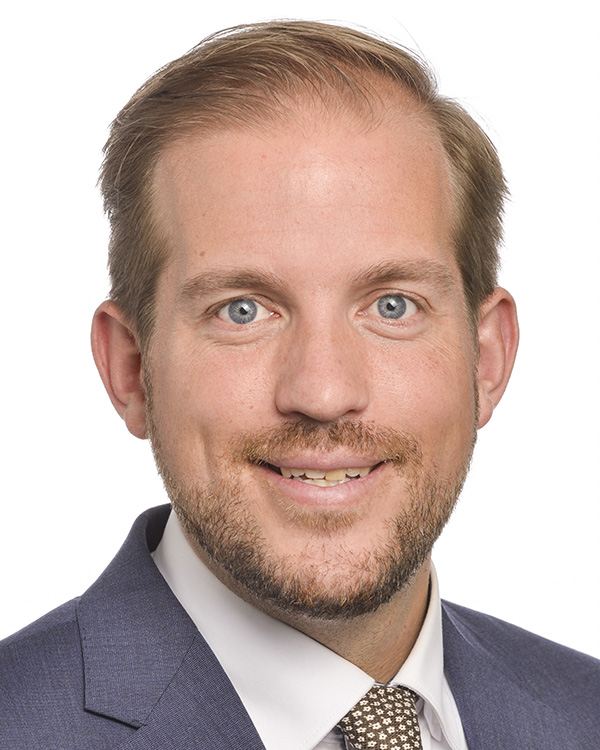


| Rank | Name | Country | Group | Speeches | |
|---|---|---|---|---|---|
| 1 |

|
Lukas Sieper | Germany DE | Renew Europe (Renew) | 487 |
| 2 |

|
Juan Fernando López Aguilar | Spain ES | Progressive Alliance of Socialists and Democrats (S&D) | 454 |
| 3 |

|
Sebastian Tynkkynen | Finland FI | European Conservatives and Reformists (ECR) | 451 |
| 4 |

|
João Oliveira | Portugal PT | The Left in the European Parliament (GUE/NGL) | 284 |
| 5 |

|
Vytenis Povilas Andriukaitis | Lithuania LT | Progressive Alliance of Socialists and Democrats (S&D) | 273 |
All Speeches (134)
The case of Bülent Mumay in Türkiye (RC-B10-0095/2024, B10-0095/2024, B10-0096/2024, B10-0097/2024, B10-0098/2024, B10-0099/2024, B10-0100/2024) (vote)
Date:
10.10.2024 12:21
| Language: EN
Speeches
Madam President, just to underline that we fully agree with the substance of this amendment, but due to the fact that our colleague stood up, it is now actually factually incorrect because it mentions the wrong university. So in this case, even though we fully support the issue that is raised, we cannot vote in favour because it's simply factually incorrect. And it's disappointing that colleagues will not allow us to vote on a factually correct text.
Presentation of the programme of activities of the Hungarian Presidency (debate)
Date:
09.10.2024 11:48
| Language: EN
Speeches
Madam President, dear Mr Orbán, I actually read the programme of your presidency, but, given this debate, I wonder if you actually read it yourself? Your first priority is strengthening European competitiveness, but at home you give the keys to your economy to China. You plead for stemming immigration, but you open the back door to Russians and you release people traffickers early from jail. You talk about protecting democracy and rule of law in Europe, but you abolish them both at home. You want to combat child sexual abuse, but your government protects the child abusers from prosecution. You talk about cybercrime as a major threat, but you spy on your own citizens with Pegasus. You call for sincere cooperation, but in Europe only resort to blackmail and obstruction, and abuse of vetoes. You mentioned the sovereignty of Ukraine in your programme, while travelling to Moscow to embrace the aggressor. Many Dutch citizens ask me, why does the EU keep funding such a Member State? Why do we keep funding someone who criticises and obstructs the EU six days a week to, only on the seventh day, hold out his hand for some more cash? The answer is that Hungary is so much more than this government: the Hungarian people already suffer from frozen funds due to the actions of Mr Orbán and they deserve better and they demand better. We will stand shoulder‑to‑shoulder with the Hungarian people on their way to a sovereign, modern, democratic and European Hungary, free from the propaganda factories of Mr Orbán and free from the control of his gang of oligarchs. Change is coming to Hungary and even Mr Orbán will not be able to stop it.
The reintroduction of internal border controls in a number of Member States and its impact on the Schengen Area (debate)
Date:
07.10.2024 19:28
| Language: EN
Speeches
Mr President, I have a very simple message. If you want to protect Schengen, you need to control migration. Because it's quite ironic that this German Government introduces checks at our internal borders against illegal migration, when it was the same German Government that a year ago was harshly criticising the EU's agreement with Tunisia, which is actually bringing arrivals down; the same government that significantly increased funding to NGOs operating in the Mediterranean; and the same government that, until the very end in our negotiations, tried to weaken the EU's migration pact. Those actions a year ago lead to closed borders today, and I don't want closed borders in Europe. They have a huge negative impact on people's lives, particularly in border regions like my own. And there's a reason citizens regard freedom of movement as the most positive result of the EU. But if we want open internal borders, we must protect our external borders. We must reinforce Frontex as a true border and coast guard. We must make sure that less people arrive in Europe illegally, and when they do, they do not get to travel freely on our continent. We need a new return directive, and we need to intensify our cooperation with third countries, and to do all that, the cynical politics of certain governments must end because they show one thing very clearly: closing your eyes for migration ultimately leads to closing your borders for all citizens.
The Hungarian “National Card” scheme and its consequences for Schengen and the area of freedom, security and justice (debate)
Date:
18.09.2024 15:29
| Language: EN
Speeches
Madam President, now let's recap. Prime Minister Orbán visits Putin on 5 July, which was in itself already a blatant violation of the EU's Treaties and our common foreign policy. In more or less the same week, all of a sudden, Orbán makes it a lot easier for Russian citizens to come to Hungary and, by extension, the EU and our Schengen zone. Less stringent security checks, more favourable conditions. What a coincidence. And at a time when, as the Commission rightly said, we see more and more reports of Russian sabotage and espionage coming from our Member States when we have a collective effort to reduce the number of Russian visas by 90 %, we have one Member State that opens the back door. What a coincidence. And of course, the Hungarian Government claims that these decisions were made on the basis of labour market and competitiveness considerations, but they fail to give any kind of justification for this. Even in the answers of the Minister they now claim that it's not such an attractive scheme, not many applicants will actually be there. So which one is it? It is a good attempt to defend the indefensible, because when you look through the Hungarian fog, you can see it very clearly. This is a gift from Orbán to Putin and a middle finger to the rest of the EU. And it's putting the EU's policy against Russia since the start of Putin's war of aggression at risk, and it is a direct sabotage to all the work we do, while putting the security and the integrity of the whole Schengen area at risk. We cannot accept this. The Commission cannot accept this. We must act and we must act now.
Need to prevent security threats like the Solingen attack through addressing illegal migration and effective return (debate)
Date:
16.09.2024 19:58
| Language: NL
Speeches
Mr President, we are expected to get a grip on migration. Major steps have already been taken in this area: The New Pact on Migration is a historic step and will bring about change. The Pact should be implemented by the Member States as soon as possible, as the consequences of the lack of effective European policies can be seen: Countries are retreating behind their own borders to make themselves feel in control. However, the EU as a whole is not making much progress on this. The swift implementation of the Pact is only a first step. If it had been up to the left, we would not have made any agreements with Tunisia. However, the results of these agreements speak for themselves: The number of illegal arrivals has decreased significantly this year. More agreements of this kind need to be made. In addition, as early as 2018, European leaders called for plans to accommodate people rescued at sea in other countries. Since then, however, it has been quiet due to political unwillingness. This is no longer tenable. The issue needs to be put back on the agenda soon. Finally, no asylum system is sustainable without effective return arrangements. This is a big challenge. A proposal for a new Return Directive was prepared in 2018. Negotiations on this, however, remain stalled, because the left-wing groups, led by the Greens, are constantly trying to strip this law as much as possible. We need to withdraw this proposal and come up with a new, ambitious proposal and an effective return law.
Election of the President of the Commission (request to adjourn the vote)
Date:
18.07.2024 13:03
| Language: EN
Speeches
Madam President, let’s not misuse the court for political purposes. There was a court ruling yesterday in a case that was brought against the Commission as an institution, not against any individual, and the court ruling actually followed the logic of the Commission in many of the claims. So, do not pretend this is a legal issue. This is purely a political motion, and it makes sense because we have a political decision to make today and it is our right to vote today. It is even our responsibility to vote today and I am convinced that the majority of this House would like to take that responsibility right now. So let’s get to it.
Statement by the candidate for President of the Commission (debate)
Date:
18.07.2024 10:34
| Language: EN
Speeches
Madam President, Madam von der Leyen, my message here today is fairly simple: in a world in turmoil, Europe needs to be strong, united and independent. We need to wake up and we need to grow up urgently. Strategic autonomy is not a theoretical exercise. It is a precondition for delivering on our citizens’ expectations, because they have sent us a clear message at these elections and we must answer. That means, first and foremost, investing in our security, keeping all of us safe, but also keeping life for Europeans affordable, when it comes to issues like housing, food and energy, without depending on dictators abroad. Strengthening Europe’s competitiveness, protecting our values and fighting for democracy and rule of law. Managed migration and protecting our borders. Continuing our work towards climate neutrality in a smart and inclusive way. But also, very importantly, in a specific area like medicine. Millions of Europeans depend on important medications and this dependence is simply unsustainable. We must be able to produce the medicines we need within our own borders. We can no longer afford to be dependent on other powers in any strategic sector. Dependency only brings vulnerability. So the task ahead is clear. It’s not an easy task, but at least it’s clear. The strategy is there. What we now need is stability and strong leadership. And leadership and stability that you, President von der Leyen, have shown over the past five years. So we put our trust today in you to lead Europe on this path to maturity. And you can count on our support along the way.
Advance passenger information: enhancing and facilitating external border controls - Advance passenger information: prevention, detection, investigation and prosecution of terrorist offences and serious crime (joint debate - Advance passenger information)
Date:
24.04.2024 21:41
| Language: EN
Speeches
Mr President, this is the last late night debate of this mandate of the European Parliament. So it’s rather fitting that it is dedicated to such an important topic. And I would like to congratulate the co-rapporteurs Assita Kanko and Jan-Christoph Oetjen, for really bringing this important file to a very good and satisfying conclusion. Now, every year, over a billion passengers travel to, from or within the EU. And of course, this is good news because it means that Europe is and remains a very attractive place to be. But it obviously also comes with certain security implications. And we have a duty, all of us together, to make sure that Europe is as safe and secure as possible. We owe this to our citizens. And passenger information, especially when it’s combined with passenger name records, can really be useful to improve border controls, to reduce irregular migration, and to enhance our fight against serious crime and terrorism. And the existing API Directive has already really proven its value in this regard. But there were some elements that needed fixing. The uneven implementation in the Member States, and the fact that there was no mandatory collection of such data, meant that only 65% of incoming flights were actually checked in this way, making it fairly easy for those who wanted to avoid these checks to actually do so. This will no longer be possible. Everybody travelling to the EU will be subject to the same checks, and this is very important, just as it is important that we now can also use API data on intra-EU flights where this is relevant, in order to help our law enforcement authorities to do their job and keep us safe, and fully in line with the way we use PNR for the same data and in line with the Court of Justice ruling. Now, this is really an important element of the EU’s security strategy. It will close the loopholes that we see today and it will have a direct impact on the safety of us all. So I really look forward to its rapid implementation. And once again, thanks to the co-rapporteurs, to the Commission for the excellent proposal, which I agree, we actually managed to strengthen and improve in our negotiations and to all those involved, thank you very much.
Mr President, today we are voting on a fundamental review of European asylum policy. Nine years after the crisis in 2015, there is finally a plan on the table that will put an end to the chaos and suffering at our external borders. That plan includes strict screening and reception at those external borders, distinguishing between genuine refugees and migrants from safe countries, with mandatory border procedures and return for the latter group and increased solidarity within Europe. In other words: With this migration pact, we finally get a grip on migration. At last, it is no longer the smugglers who decide who gets access to the EU, but the Member States. Of course, a compromise like this is rarely perfect. Not all challenges will be solved like magic. But it's a very important first step that we need to build on. Let's not fool each other. A vote against this pact is not a vote for a better policy. No, a vote against is a vote in favour of maintaining the current situation, for years to come a high influx of illegal migration, for overcrowded reception centres and a lack of control at the external borders, for the business model of smugglers and their life-threatening routes. A vote against today is a vote against the status quo. That is what the extreme left – and I count the Greens – and the extreme right are trying to find each other in today. Horseshoe politics in optima forma. A dark coalition between Frans Timmermans and Geert Wilders, while people across Europe have been worried about migration for years and rightly expect the European Union to act. That is a huge responsibility for all of us here in this room today. Let us not shy away from this responsibility.
Madam President, true democracy cannot exist without strong, diverse and, above all, free media. It requires scrutiny, and media play a key role in those checks and balances. We must always stand side by side with those performing that essential function. And we must do this in a fact-based way. It’s far too important to be politicised. Also, in this House, we must have the courage to be critical towards our friends, but also treat our political opponents in a fair way. And I hope we can do this in this debate today as well. Not everything can always be portrayed as either black or white. I speak here on behalf of the EPP Group, and it’s no secret that the government of Greece belongs to my political family. Yet you won’t hear me say today that everything in Greece is perfect. Like in many Member States, there is always room for improvement. Like everyone here and in Greece, I was shocked about the 2021 murder of journalist Giorgos Karaivaz. We welcome the two arrests in April last year, and I hope that we can soon see justice truly and fully done. More is also needed to guarantee the working conditions and physical safety of journalists. The Commission recognises the progress made and the taskforce is welcomed as an essential step by all stakeholders. So now is also the time to further build on these initiatives and equip this taskforce with the necessary means and make sure it works, as the Commissioner said, with concrete and targeted plans, in particular with regards to SLAPPS and the safety of journalists. On spyware, tomorrow we will vote on the Fundamental Rights Report, where we call again on Greece, Spain, Poland, Hungary and Cyprus to follow up on the recommendations of the PEGA Committee. And I think it’s important to also reiterate that call here today. Concluding, we see work ahead, but we also recognise the steps taken by the Greek Government. The Rule of Law Report highlights a number of key positive points, such as the new law on transparency of media ownership, the new Ethics Committee and the fact that a controversial provision of the Criminal Code was amended. Progress is being made and we are confident that Greece will continue its work to further improve upon the implementation of these important recommendations.
Revision of the European Labour Authority mandate (debate)
Date:
15.01.2024 20:20
| Language: NL
Speeches
Mr President, Commissioner, ladies and gentlemen, about five years ago I stood here as a proud rapporteur for the creation of the European Labour Authority (ELA). A historic step for the European Union to ensure that our common, single market is not only free, but also fair. To ensure that free movement of persons is not only free, but also fair. In the European Union, there should be no room for bogus self-employment, social dumping or unfair competition on the labour market. There should be no room for exploitation of people through outrageous working or living conditions, no Race to the Bottom when it comes to working conditions. No room, in short, for inhuman situations. Unfortunately, we still see too much of that. Five years ago, we in the European Parliament joined forces from left to right to try to make the powers of the European Labour Authority as strong as possible, against the protests of some Member States. Now that ELA has developed so well in recent years and also shows in practice the potential of this, it is absolutely time to look to the future and expand the powers of ELA as quickly as possible. The most important thing, and I would like to stress this very much here, is that ELA is given more powers to carry out its tasks, including with regard to workers from outside Europe. We are seeing more and more false self-employed people from third countries who are active in the European labour market and this is leading to major problems. It is a cross-border challenge that should also be tackled cross-border via ELA. A stronger authority is absolutely necessary to really tackle these and other abuses in the European labour market. Anyone who believes in the importance of a genuinely fair European labour market must make a firm commitment to this in this Parliament's new mandate.
The lack of legislative follow-up by the Commission to the PEGA resolution (debate)
Date:
22.11.2023 20:35
| Language: EN
Speeches
Mr President, I have to say it’s genuinely sad that it has to come to this – the point where we once again need a plenary debate and even a plenary resolution in order to try and get a sign of life from this Commission, because this Parliament, with a great majority, adopted an important set of recommendations to prevent abuse of spyware and to protect our citizens’ fundamental rights. And we did so more than five months ago, and the Commission had three months to answer. In the meantime, the LIBE Committee sent a letter, but no action was taken. We had a plenary debate in October where also Commissioner Jourová said that it would soon be formally transmitted, and up to today I have not seen anything yet. I trust the words of the Commissioner that it has now finally been sent. We organised an exchange of views in LIBE last month, where again, the European Commission was conspicuous by its absence. Until today, as I said, we haven’t seen any official reply, but we are told, and this is surely in reply as well, that the Commission is – wait for it – ‘exploring the possibility of a non-legislative initiative’. I mean, that’s brilliant! The Parliament has investigated spyware for a year. We spoke to well over 200 people, organised fact-finding missions, requested meaningful studies, research, a very thorough exercise in order to come up with a comprehensive report with those concrete recommendations. What on earth has the Commission been doing in the past year and a half? It is disrespectful to the principle of loyal cooperation with Parliament, and it’s a slap in the face of the victims of spyware. The only people that I have seen who are happy with the approach of the Commission are the ones that are normally sitting right there, colleagues of the Polish Law and Justice Party who ironically find a great partner in the Commission in their attempts to sabotage our recommendations. For obvious reasons they tabled a resolution to ask you to be cautious with our recommendations. And they’re so comfortable that they don’t even bother to show up today because they’re confident that you are dancing to their tune. So it’s time to change the music. We are urging you to show respect and ambition, and you have to ask yourself which side you want to be on: the side of the rule of law destroyers, or the rule of law defenders.
Threat to rule of law as a consequence of the governmental agreement in Spain (debate)
Date:
22.11.2023 17:42
| Language: EN
Speeches
Mr President, separation of powers is an essential pillar of the rule of law. Judges should not make policy and politicians should not take the seat of judges. And it is extremely concerning to see that, in Spain, this concept is completely turned around. Prime Minister Sánchez no longer protects the separation of powers. Instead, he embraces the power of separation. A slippery politician who will do anything to cling on to power, and who cares more about his own position than about the unity of his country or the opinion of his citizens. Exactly the type of behaviour that has no place in a democratic system, that has no place in Europe, and it only serves the interests of those opposing democracy in the first place. Let us not forget Putin was willing to spend billions in support of the Catalan independence movement in order to undermine the stability of Spain and, through Spain, the stability of Europe. He can now sit back and relax because the Spanish Socialists are doing his job for him and free of charge. Not so long ago, Prime Minister Sánchez vowed he would never support amnesty. He justified spying on Catalans because of the graveness of their crimes. Here in this House, not so long ago, with the full support of the S&D Group, we criticised Russia’s deep interference with the Catalan movement and demanded a real investigation. Today you defend an amnesty for all those involved. If this was about any other European country, you would have been screaming for the European Commission to intervene, and rightfully so. Today you are telling Commissioner Reynders to mind his own business. It is pure hypocrisy. Spain deserves better. Europe deserves better.
Continuing threat to the rule of law, the independence of justice and the non-fulfilment of conditionality for EU funding in Hungary (debate)
Date:
21.11.2023 20:19
| Language: EN
Speeches
Madam President, I was very concerned after reading reports last month about how the Commission was preparing to release funding to Hungary in exchange for Orbán’s support for assistance to Ukraine. I was shocked, frankly, because the rule of law principles are not for sale. They are non-negotiable and they cannot serve as a bargaining chip. Everyone here should be crystal clear about that. Abusing a veto for blackmail is a cynical and a shameful practice that should be abolished, not rewarded. Ukraine needs our help and Ukraine must get our help, and the EU must find ways to get that aid to Ukraine without rewarding the dismantling of the rule of law, and Hungary. Because it would be cynical if, in trying to help Ukrainians fighting for freedom and democracy and the rule of law, the European Union would actually turn a blind eye to the attack on those very same values at home. It’s clear that Hungary has not made effective or sufficient progress towards fulfilling the conditions on judicial independence. In fact, the Hungarian Government seems to be putting more efforts into sabotaging and derailing the reforms than into implementing them. This is pretty much true for all announced reforms and milestones. It’s a very sad situation, because we want this money to reach the Hungarian people – the sooner, the better. I also want to make it very clear to the Hungarian citizens that there’s only one person responsible for these funds being blocked, and that is Viktor Orbán himself. So, we welcome the commitment of Commissioner Hahn, in his letter, and confirmed by both Commissioners today, that the European Commission cannot reimburse expenditure as long as the horizontal enabling conditions are not fulfilled; that further action is needed before measures under the rule of law conditionality regulation can be lifted; and that no payment under the RRF is possible until Hungary has implemented all milestones. For the EPP, and this is our key message to both the Commission and to Viktor Orbán today, only significant, tangible and lasting reform can enable the release of taxpayers’ money. Nothing less will do.
Rule of Law in Malta: 6 years after the assassination of Daphne Caruana Galizia and the need to protect journalists (debate)
Date:
18.10.2023 17:31
| Language: EN
Speeches
Madam President, Madam Vice-President, last weekend I read the very moving story of Daphne Caruana Galizia’s son Paul in The Guardian. It was an extract of his book about his mother’s life and legacy, and he writes how, as young children, they had grown used to politicians suing and slandering her, having their house set on fire, seeing her check her car for bombs before taking the kids to school. All of this in retaliation for her work in exposing corruption at the highest levels of the Maltese Government. It is terrifying that the public inquiry concluded that Daphne’s death was both predictable and preventable, due to the total collapse of the rule of law in Malta. Every October we commemorate her life and work and, in the past six years, frustration has only increased with the continued culture of impunity in Malta because there is still no full justice for her murder, there is still no real progress in implementing the inquiry’s recommendations to protect journalists. There is still a total failure to address the corruption exposed, evidenced also by the most recent vote-buying and driving licence scandals. It just doesn’t stop. Daphne’s husband and sons expressed their anger in a letter received by many of us, rightly asking the EU to take action to restore the rule of law, because the State’s failures that made their wife and mother’s murder possible have not been reversed, exposing others to the very same danger. Daphne’s family was never interested in justice without change. Six years later, they are still sadly waiting for both. It is a disgrace, a disgrace for Malta and a disgrace for the whole European Union.
Urgent need for a coordinated European response and legislative framework on intrusive spyware, based on the PEGA inquiry committee recommendations (debate)
Date:
17.10.2023 19:21
| Language: EN
Speeches
Mr President, luckily we are so restricted in our time that we have to bring less pages, Madam Commissioner. Four months ago, our inquiry committee came to an end, after a year of intensive negotiations. And we said already back then, this might be the end of the PEGA Committee. It is not the end of our work because we need results. The Commission must urgently propose measures to regulate the use of spyware, and Member States must investigate and resolve all cases of alleged abuse of spyware and prove that their spyware framework is in line with rule of law standards. This is what should happen, but it is not. We have not yet received an official response from the Commission, and Member States are not exactly active either. In the meantime, the situation has further developed. A Russian Kremlin-critical journalist has been targeted with spyware while residing in the EU. There have been reports of European-origin spyware being sold to countries like Vietnam and being used to target EU officials, including President Metsola. Spyware developers like Intellexa and Cytrox have been blacklisted by the US. The Spanish magisterial inquiry was closed due to lack of cooperation by the Israeli authorities, and the Polish Senate concluded its investigation on the use of Pegasus in Poland. And we count on the new government in Poland to follow up on the recommendations and on all cases of spyware abuse. But the clock is ticking, because I would not be surprised if Minister Ziobro’s shredder is already working overtime at the moment. So a lot of developments in recent months. The only thing that does not seem to be developing any further is the interest of the European Commission. After two years of scandals and abuses, the Commission still seems to be quite satisfied with the way things are organised, and still seems to believe that victims should put their faith in the very authorities that perpetrated the crimes in the first place. After two years and after all our investigations, now the Commission is, and I am quoting, I think, ‘exploring the possibility of a non-legislative initiative’. I mean, that is simply not enough, Madam Commissioner. And if the Commission is not willing to step up its game, and I say this in the friendliest way possible, we will have to find ways to force you to do so.
Question Time with Commissioners - European measures to prevent and to fight the rise of organised crime
Date:
17.10.2023 17:22
| Language: EN
Speeches
Mr President, Commissioner, I wasn’t going to ask this originally, but given the sense that you raise this point yourself now with the Return Directive, I share your need for having a Return Directive, an upgraded Return Directive. But how do you feel about the direction that this Return Directive is heading in in the Parliament? Do you see a need for a Return Directive if there is actually nothing in there of the original proposal by the European Commission, if the mandatory forced return of people with security background is actually deleted, if the possibility for detention is diminished, if the possibility for determining risk of absconding is less flexible than it should be? How do you feel about a Return Directive that goes into that direction? Secondly, my original question: crime is cross-border. Crime is by definition cross-border and it needs a European answer. We see that the police is doing great work and the possibilities are there to cooperate. What we also see is that local authorities – and you mentioned local communities – are trying to play their part, but are hampered in their cross-border cooperation because of the lack of a legal base. Do you agree that we should help local authorities’ cross-border cooperation and can you do anything from your side to facilitate that?
Need for a speedy adoption of the asylum and migration package (debate)
Date:
04.10.2023 09:43
| Language: EN
Speeches
Mr President, dear colleagues, in 2016 the Juncker Commission presented its proposals for a better EU asylum and migration policy, learning the lessons of the 2015 refugee crisis. Ever since that moment, we have been waiting – waiting for the day that Member States would finally find an agreement so we can do what our voters expect from us: managing migration in a better way. We request at this debate this morning to put the pressure on. The Member States’ ambassadors meeting this morning have to urgently find an agreement on the last remaining part of the pact, the crisis regulation. They must deliver today, because only then will we have a window of opportunity to really make an impact, and even that window will not be open forever. We cannot afford to lose any more time. We have to conclude this now, whatever it takes, because we need this pact. We need it to rebuild trust among our Member States, to move from ad-hoc individual responses to an EU-wide permanent solution based on solidarity. And we need it because fair sharing of responsibility will only happen when we have our European house in order. We need to strengthen our external borders, fight people smugglers and the instrumentalisation of migration and we need more effective returns. We need this this pact mostly also to regain the trust of our citizens and to show them that we are capable of managing migration in a responsible way by finding solutions in the centre, instead of leaving the narrative to the open-border shouters on the extreme left or the zero-migration shouters on the extreme right. I would like to thank Vice-President Schinas for his relentless efforts in trying to break the deadlock and find a reasonable landing zone for almost all Member States. His pact will prove to be a historic breakthrough in one of the most sensitive policy areas in the EU. But we first need to make it happen, and the EPP is committed to constructively playing its role and getting this done. You can count on us.
Mr President, free travel within the Schengen area is one of the most important freedoms that European citizens enjoy. It’s a right and a privilege. It is not a product for sale to the highest bidder. And it’s the Member States’ responsibility to enforce our common rules and protect the integrity of the Schengen area so that our borders are secure and free movement is guaranteed. It is indeed crystal clear that the Polish Government has spectacularly failed to fulfil this responsibility. Illegally issuing Schengen visas and allowing persons into the EU that would not be eligible for visas in normal circumstances has put serious pressure on the reputation and the security of the European Union. It’s hypocrisy at its finest – publicly constantly criticising the EU for being too weak on illegal migration, but simultaneously, through the backdoor, allowing so many people to come to Europe while filling your own pockets. How can we credibly intensify the fight against people smugglers when the Polish government turns out to be the biggest smuggler of them all? It is a scandal. The whole EU suffers because people, including from countries with high terrorist threat levels, obtained visas in exchange for bribes, bypassing necessary security checks. The Polish Government has put the safety of all Europeans at risk. As a result, people crossing the Polish-German border may now be subject to border checks because the Polish Government has jeopardised the functioning of the Schengen zone at the expense of its own citizens. We must indeed get to the bottom of this. We expect the Polish Government to thoroughly and urgently investigate this scandal and share the results in full before the European Union. We call on the Commission to effectively scrutinise all actions of the Polish Government in this regard because, colleagues, this latest scandal is not a standalone issue. It is symptomatic of a wider dismantling of rule of law in Poland, where the system of checks and balances has been replaced by arbitrary rule of government loyalists with nothing but contempt for Polish and EU law and, clearly, the security of the Schengen zone and our common borders.
EU-Tunisia Agreement - aspects related to external migration policy (debate)
Date:
12.09.2023 10:21
| Language: EN
Speeches
Mr President, dear colleagues, it is September, and already the number of arrivals to Europe through the Central Mediterranean route is at the same level as the whole of the last year. Arrivals to Italy have more than doubled and we have repeatedly warned here in this House about sleepwalking into a new migration crisis. And we have highlighted the need for action – action within the European Union, where more progress on the pact is needed, but also action on the external dimension. We need to cooperate much more intensively with countries of origin and transit of migrants to avoid the loss of life in the Mediterranean, to break down the business model of smugglers, to ensure humane reception conditions and to prevent illegal migration so that we can focus our help on those who really need it the most. Now, the memorandum of understanding with Tunisia is a very important step. Tens of thousands of migrants, often not in need of international protection, use Tunisia as a point of departure for Europe – many tragically not surviving the journey. It is a common challenge for the EU and Tunisia and it is crucial that we strengthen our cooperation. And of course, we all know the situation in Tunisia is challenging and that is why it is important that this memorandum of understanding is not only about migration, it is a comprehensive package and the start of a strategic partnership. Now, with regard to the migration aspects, we welcome the holistic and common approach to migration that is based on the respect of human rights and it is important that we can recognise and scrutinise that commitment in the implementation of the agreement. But up until now, and we are two months after the signing ceremony, we do not see much implementation. Arrivals continue to increase, and on the ground in Tunisia, we see little development. I know this partnership is important in the long term, but it also needs to yield short-term results. The sense of urgency with which this partnership was agreed was an important signal that Europe takes the migration crisis seriously. We now need to see that same sense of urgency in its implementation.
Investigation of the use of Pegasus and equivalent surveillance spyware - Investigation of the use of Pegasus and equivalent surveillance spyware (draft recommendation) (debate)
Date:
14.06.2023 14:07
| Language: EN
Speeches
Mr President, as Chair of the Committee, I’m standing here with mixed feelings today. On the one hand, I’m proud of the work that we have done: all these meetings, all these missions, speaking to over 200 interlocutors. It really has been a thorough investigation. I also congratulate the rapporteur and all the shadows on the excellent result. On the other hand, the findings of our committee, the facts that we’ve uncovered, paint a very troubling picture about the abuse of spyware in our European Union. And this spyware is a very invasive, very problematic piece of technology that can be a powerful tool to fight criminals, to fight terrorists. But if it’s used in the wrong way by governments with different intentions, it is a huge risk for rule of law and democracy, both at the national and the European level. And this is why we need to address this and regulate this urgently. And some of the recommendations in the report I would like to highlight. First, spyware should always be subject to an effective judicial authorisation and independent supervision. Instead of banning spyware, we should really make sure that Member States adhere to certain requirements in using it, like investigating and resolving all cases where alleged abuse of spyware is relevant; prove that the spyware framework, the regulatory framework, is in line with the standards of the Venice Commission and the case law of the European Court of Justice; cooperate with Europol during these investigations and repeal all export licences that breached the dual-use regulation. In addition, when invoking national security grounds, as you also mentioned, Commissioner, there must be a justification. Member States should demonstrate compliance with EU law, including the principles of proportionality, necessity, legality and legitimacy. Now, Commissioner, dear empty chair of the Council, I am convinced that we have done our job and we look to you now to take this further and we will be closely watching you while you do so. One last point, President, if you allow me a personal note. I was informed that last weekend I featured prominently on Polish state television, and it is even insinuated that I had direct links with Putin. Now, this is outrageous. And it shows two things: the Polish Government will stop at nothing to divert attention from its attempt to abolish rule of law in Poland, and it means that our work has effect, our measures that we propose are so scary for the Polish Government that they resort to these kind of poisonous tactics. So let us make sure this only emboldens us to keep our work of scrutiny even stronger in the future.
The electoral law, the investigative committee and the rule of law in Poland (debate)
Date:
14.06.2023 10:54
| Language: EN
Speeches
Mr President, last Sunday, over half a million people took to the streets in Warsaw in the biggest political gathering since communism. They were waving Polish and European flags because they passionately love Poland. They are committed to its European future. And they look at the European Union for help, for help to stop the current ruling party completely destroying what’s left of democracy and rule of law in Poland and jeopardising Poland’s place in the European Union along the way, because that is what is happening here. We see a regime in Poland that is so afraid of the opposition, so afraid of elections, so afraid of checks and balances that they need to resort to more and more extreme measures in an attempt to cling on to power at all costs. These are classic autocratic tactics. We have seen and discussed many of those here in the past. But the latest and most extreme example is the so-called Lex Tusk, clearly designed to remove the opposition from the playing field altogether. It’s the culmination of eight years of authoritarian system developed in Poland for those eight years, and it may officially be called a committee on Russian influence, but it should be called a committee on Russian inspiration. Because trying to remove, trying to make your political opponents disappear, that is exactly what Putin does in Russia. And if we want to prevent European Navalnys in the future, we need to act now. And I thank the Commission, Commissioner Reynders, for acting swiftly and determinedly, because we must stand shoulder to shoulder with those in Poland that are fighting for democracy and rule of law, often at great personal expense. And we fully support the infringement procedure that the Commission initiated. And we welcome the sense of urgency with which you have done so, because we cannot overstate the urgency of this issue. Whatever smokescreen is being put up in Warsaw, the law is signed and enforced. And if we don’t act strong enough, if we don’t act quick enough, the damage will be done and it will be too late for repairs. We must do everything in our power to prevent that from happening, and we call on the Commission, therefore, to also strongly consider to take interim measures in parallel to the infringement procedures because there is simply no time to lose.
Mr President, this AI act we’re discussing today is a very important piece of legislation, and I really thank the rapporteurs and all the shadows, everybody who worked on this, for their diligent work, because we need a European approach and we need a human-centred approach. And I don’t think anybody also today in the debate, nobody has denied the benefits and the potential of artificial intelligence to make our societies more prosperous and our economies more efficient. And in order to reach that potential, we need to make sure that AI is safe, reliable and trustworthy. It needs to be developed and used in an ethically and morally correct way, and the fundamental rights of our citizens must be protected. But we should not only discuss how to protect our citizens from AI, we also need to make sure we can use AI to protect our citizens. When a child goes missing, every second counts. Seventy-six per cent of abducted children that tragically do not survive the abduction die within the first three hours of their disappearance. Every second counts. And we need to make use of all the instruments at our disposal to prevent such tragedies from happening. I think that we need a very realistic approach to this. I think the Commission proposal was very balanced on having targeted exceptions to a ban on this kind of technology. And this is also reflected in our amendment that we have tabled as the EPP to allow the use of technology in very targeted situations to find missing children, to prevent terrorist attacks and to fight heavy criminals. And I really count on the support of all the colleagues for such a balanced and targeted proposal.
Madam President, I think indeed it is more important to have this debate than to have the exact wording of a certain group in the title. So we have looked at a possible compromise and we have come up with ‘Council and Commission statements, preparation of the European Council meeting of 29 and 30 June 2023, in particular in the light of recent steps towards concluding the migration pact’, and I believe there should be a majority supporting this debate.
Madam President, on Monday the President of Poland signed a law creating a commission to investigate Russian interference in Polish politics. At least that’s what he would like us to believe, but the real objective is clear for us all to see, and this is to intimidate political rivals and to interfere in the upcoming elections. This is not a surprise. The ruling party in Poland has consistently undermined the rule of law and democracy in its efforts to cling on to power. It is always tilting the playing field in its own favour. But this is no longer about tilting the playing field. This is about removing the opposition from the playing field altogether. These are classic autocratic tactics. If you are afraid of elections, if you’re afraid of opposition, if you’re afraid of checks and balances that define any normal democracy, this is what you do. It’s a disgrace for Poland. It’s a disgrace for the EU, and this House must urgently address it here. This is why the EPP, S&D, Renew and Green Groups have requested adding the debate for which you read the title to the agenda today as a matter of urgency.