

| Rank | Name | Country | Group | Speeches | |
|---|---|---|---|---|---|
| 1 |

|
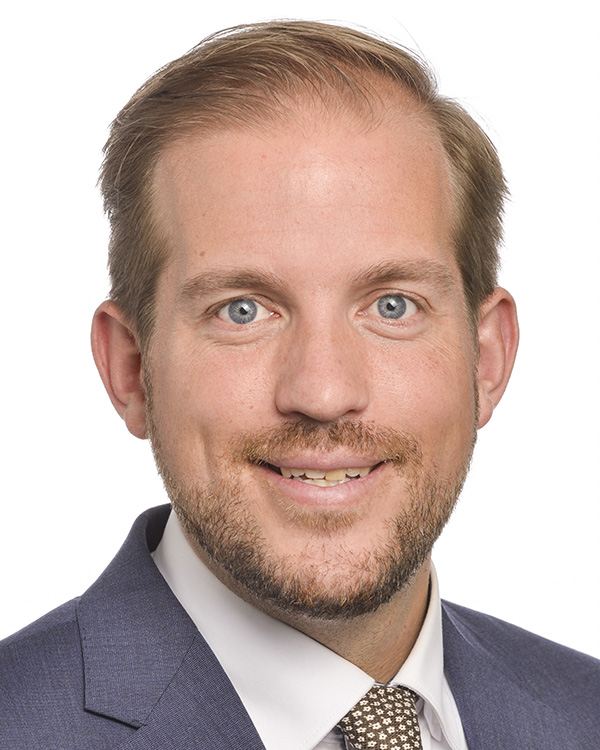
Lukas Sieper | Germany DE | Renew Europe (Renew) | 494 |
| 2 |

|
Juan Fernando López Aguilar | Spain ES | Progressive Alliance of Socialists and Democrats (S&D) | 463 |
| 3 |

|
Sebastian Tynkkynen | Finland FI | European Conservatives and Reformists (ECR) | 460 |
| 4 |

|
João Oliveira | Portugal PT | The Left in the European Parliament (GUE/NGL) | 288 |
| 5 |

|
Vytenis Povilas Andriukaitis | Lithuania LT | Progressive Alliance of Socialists and Democrats (S&D) | 276 |
All Speeches (134)
The need to combat antisemitism and protect Jewish life in Europe, following the recent attacks against the Jewish community in the Netherlands and Belgium (debate)
Date:
29.04.2026 16:54
| Language: NL
Speeches
Mr President, when I was preparing for this debate, it was indeed announced that two Jewish men were stabbed in London. Terrible news. After the attacks on synagogues and Jewish schools in the Netherlands and Belgium, this attack again shows that these are not incidents, but a pattern, and that the threat is serious and acute. Anti-Semitism must be fought resolutely and visibly, everywhere and always. Edith Eger died yesterday. Edith survived Auschwitz and spent the rest of her life helping others. She was one of many who kept reminding us of the horrors of the Holocaust and of our common mission to never forget. But the generation that survived Auschwitz is getting smaller. This means that there is now a great responsibility on our part. We must not forget, we must not look away and we must continue to speak out against anti-Semitism. If Jews no longer feel safe walking down the street or if Jewish children are afraid to go to school, then that is not only a problem for the Jewish community, but for the whole of society and for all of us. Of course, we have to look at what further security measures can still be taken. But the solution is not just more security or higher walls. As courageous as you have to be to walk down the street as a Jew, so cowardly are we as a society to remain silent when the Jewish community is under pressure or intimidated. Right now, courage is needed. The whole of society must have the courage to stand up for and stand up for the Jewish community. It is up to us to say this, to stand up, to make sure that the past never repeats itself. "Never again" is not a slogan, but an assignment. That assignment is with us today.
The need for targeted criminal provisions and platforms’ responsibility to effectively address cyberbullying and online harassment (debate)
Date:
29.04.2026 15:42
| Language: EN
Speeches
Madam President, last month we sat in this Chamber and we listened to Jackie Fox as she shared the story of her daughter Coco and how online bullied ultimately and tragically pushed her to suicide. A very powerful speech and we rightfully gave her a standing ovation. Last week I met another mother whose son took his own life after intimate messages of him were circulated online. Her grief is unimaginable, but what haunts her still today is this, no one can tell her with certainty that those images of her son are no longer circulating somewhere on the web today. And what if there would have been a simple button for her son to push to delete these images permanently? Perhaps Glenn would still be alive today. And this is the reality behind our legislative gaps. We rightfully celebrate here in this Parliament when we are successful in getting nudification apps banned. But what good does it do if we fail to stop the harm they produce, if we can't even detect the material they produce? We cannot protect victims by tying the hands of those who could prevent abuse from spreading. Yes, the creators of such content are responsible. Those who share it are responsible. Those who enjoy it are responsible. But we must also be honest. If we fail to equip our systems to stop it, if we hesitate to close known legislative gaps, we to carry a share of that responsibility. We need proportionate voluntary detection of child sexual abuse material so that platforms and authorities can act before harm and abuse multiplies. We owe victims and their families more than standing ovations. We owe them action.
Situation of the rule of law in Greece, following the Court decision on Predator spyware (debate)
Date:
11.03.2026 19:42
| Language: EN
Speeches
Madam President, I had the honour of chairing this Parliament's Committee of Inquiry on the abuse of spyware like Pegasus and Predator. The conclusion was clear: while there is a use for such technology in fighting serious organised crime, we must also recognise the serious challenges it poses for fundamental rights. Illegal spying on journalists, politicians or activists is absolutely unacceptable and a clear attack on the rule of law. We need a strong legal framework that safeguards fundamental rights and ensures accountability, effective democratic and judicial oversight, as well as accessible remedies for citizens whose rights are violated. Regarding Greece, we called for the strengthening of legal safeguards, including improved scrutiny and independent oversight mechanisms, alongside ensuring the independence of the national transparency authorities' leadership. The legal framework in Greece at that time was not capable of addressing the growing capabilities of intrusive surveillance software. However, I also want to say that in Greece at the time we were met with a very constructive government. They met us and welcomed our delegation with transparency and cooperation. That's something we can certainly not say of all Member States we visited. Since then, decisive legislative reforms have strengthened the regulatory framework, reinforced independent authorities protecting privacy and tightened rules for lawful interceptions. Oversight mechanisms have been enhanced to prevent future abuses, and we should welcome this. Crucially also, judicial proceedings have also delivered results. Investigations have led to the convictions of four individuals responsible. It was welcomed by organisations like Human Rights Watch as a powerful message and an important step in the rule of law. Let us also protect the rule of law. Judicial proceedings should not be turned into a political battlefield. When political actors attempt to delegitimise court decisions simply because they disagree with them, they undermine the rule of law that they pretend to care about.
Child sexual abuse online: protect children, not perpetrators (topical debate)
Date:
11.03.2026 13:25
| Language: EN
Speeches
Mr President, Europe is facing a rapidly escalating child sexual abuse crisis. Reports of online grooming are soaring, and we are seeing an explosion of AI-generated child sexual abuse material. Behind every image, every video, every report is a real victim, a real child being abused. For years, voluntary detection and reporting by providers has helped identify abuse material and support investigations that protect victims and stops ongoing abuse. We should use all available instruments to take down all of these types of abuse material, and it is certainly not the time to switch off these tools because that would simply mean more abuse material circulating online, fewer reports, fewer interventions and, in the end, more children left in abusive situations. Yes, we are very clear about this: privacy is fundamental, it protects our freedoms, it protects our daily lives in the digital world, but privacy can never become a shield behind which child abusers can hide. Of course, all safeguards must remain in place: end-to-end encryption, clear prohibition of general monitoring. But weakening the current system would not protect privacy; it would protect abuse. That would send the worst possible signal, namely, that in Europe, the privacy of abusers weighs more than the safety of our children, and we choose the opposite signal. We must protect the children, not the perpetrators.
Madam President, dear Commission President, dear Deputy Minister, Iran's crisis did not begin on 28 February. It began much earlier, when this cruel and oppressive regime chose to wage war on its own people. When young protesters were shot in the streets, where women demanding freedom were beaten. So yes, we stand with the Iranian people. For years, the international community hoped that diplomacy would do the trick, and Europe tried diplomacy. We signed the nuclear deal, yet the regime continued building missile capabilities for reaching Athens, Bucharest and Sofia. We imposed sanctions, but Iran continued sponsoring terrorism, destabilising the Middle East. The nuclear threat remains and Iran delivers the weapons that Russia uses to attack Ukraine. So let's be honest, and I repeat this: the world is better off without this regime. And for the first time in decades, there might be a real possibility for change. But it's also risky. Military intervention without clear objectives or an exit strategy has the danger of instability, humanitarian suffering and regional escalation. And it is of paramount importance that this conflict does not turn into a fully blown regional war. We call on all parties to exercise maximum restraint, to protect civilians and to fully respect international law. But this crisis also tells us something about Europe: Iranian drones reached Cyprus. That means this conflict, as the Deputy Minister said, is no longer distant. It has already touched on European soil. And when Europe's security is at stake, Europe must act together. This time Cyprus did not invoke Article 42(7). But imagine if a Member State does: solidarity cannot be improvised in the middle of a crisis. If a Member State is attacked, Europe needs to know how it responds. We have the nuclear umbrella that France provides and that strengthens our European deterrence. But we must also build common capabilities – drones, a cyber brigade, a missile shield and ultimately a true European defence union. But strength also does not come only from capabilities. Security also means speaking with one voice. Europe was not consulted on Ukraine's peace talks. We were not there on Venezuela and not on Iran. Why? Because a Europe with 27 different voices is not taken seriously. When Prime Minister Sánchez weakens NATO, or when Viktor Orbán breaks our common line on Ukraine, we show Washington and Beijing a simple message: when Europe is divided, Europe can be ignored. The next European Council must begin building real European security, starting with the EUR 90 billion we promised for Ukraine's defence. Europe's security cannot become a tool in someone's domestic election campaign. Viktor Orbán is failing Hungarian citizens on healthcare, on education, on the economy, and now he is trying to distract from those failures with a disinformation campaign that undermines Europe's unity and our security. Enough is enough. Dear colleagues, strength also means economic strength in a world in turmoil. Only a competitive Europe can secure our prosperity. That is what the EPP campaigned on and that is what we are delivering. We are simplifying rules, cutting red tape, strengthening trade partnerships and deepening the single market. This has already saved European companies billions of euros, but the work is not finished. We must go further and we must go faster. The consequences of the war in Iran are already visible in our Member States. Energy prices are rising again, putting pressure on households and businesses across the European Union, and if geopolitical tensions drive up energy costs for Europeans, the European Council cannot stay silent. We expect clear discussions and concrete action. Our citizens expect leadership. They will not accept politics that merely describe the chaos. They want us to fix it. As De Gasperi once said, 'Politics is about making things happen, whether in good weather or bad'. Today we are facing difficult weather, and when some in European politics choose procedural nitpicking and institutional turf wars, we choose leadership – not hesitation, not excuses, but leadership to build a Europe that protects its people and protects our prosperity. Let's deliver.
Spain’s large-scale regularisation policy and its impact on the Schengen Area and EU migration policy (debate)
Date:
10.02.2026 20:04
| Language: EN
Speeches
Madam President, dear Commissioner, it was a historic moment in 2023 when we concluded the Migration and Asylum Pact under the Spanish Presidency, after years of difficult negotiations. That agreement embodied the hard-won commitment to shared responsibility and European solidarity. We were going to do it together. This is why it's really troubling to see what the Spanish Government is doing – acting unilaterally now. Mass regularising hundreds of thousands of irregular migrants risks undermining both the spirit and the trust upon which that common approach was built. Migration policy is not a national matter. Spain is part of Schengen. Spain is part of a common migration and asylum policy. This is why Member States have agreed for a long time already to protect the Schengen Area and to control irregular migration and that mass regularisation should not take place in Europe. Spain's announced policy sends the exact opposite message. When one Member State takes a decision of this magnitude without coordinating with others, it affects the entire Union. It affects secondary movements and it affects trust. We can only guess the reasons, because this is not serious migration governance. It is a unilateral political gesture from a government weakened by corruption scandals, mismanagement and a pattern of governing by decree rather than consensus and democracy. It sends the message that illegal journeys will ultimately be rewarded with the right to stay in Europe. With this move, Prime Minister Sánchez puts himself on the side of the visa violators and the smugglers, not on the side of Spanish or European citizens.
Presentation of the action plan against cyberbullying (debate)
Date:
10.02.2026 17:13
| Language: EN
Speeches
Mr President, Commissioner, 'hang yourself', 'slit your wrists', 'everyone hates you': these are just some of the horrific messages that Nicole 'Coco' Fox endured until it became too much and she tragically took her own life. There are no words to describe tragedies like that. But Coco's story is not an isolated case: all over Europe, children are victims of cyberbullying, often with terrible consequences. And the sad thing is that in many Member States, it is not even a crime. Imagine how Coco's mother felt when the police informed her that they could do nothing against the bullies who were responsible for her daughter's suicide. I cannot imagine it, and I can only hope that I will never have to. Online bullying is just as devastating as the abuse that happens on the street, and it must be treated with the same seriousness. It must be criminalised across the EU, because all our children deserve to be better protected. In the negotiations on the Child Sexual Abuse Directive, we already agreed with the Council to criminalise this extortion of children. An EU-wide definition of cyberbullying will be key to also criminalise other forms of online harassment. So this action plan is a good starting point. But when it's about our children, we can never raise the bar high enough, especially as we are living in the age of AI and deepfakes. Technology like 'nudifying' apps must be illegal across the EU, because they serve no legitimate purpose, and only facilitate child abuse and extortion. So let's stand up to this together. Let's stand up to bullying together and do everything we can to protect our children.
Presentation of the programme of activities of the Cyprus Presidency (continuation of debate)
Date:
20.01.2026 11:48
| Language: EN
Speeches
Madam President, dear Commissioners, dear President Christodoulides, thank you for being here today and for setting the right tone for the months ahead. Yes, the world feels more unstable, more fragmented and more unpredictable than before, but this is not a moment for despair. It is a moment for confidence – if we stand together as Europeans, we can emerge stronger. And that means investing where it truly matters: in our security, in our economic resilience, in our competitiveness and in managing migration. Too often we hear voices here, of the extremes in this House, offering the same destructive answer: to tear down our common umbrella in the middle of a global storm and then complain about getting wet. That is not leadership. When the storm grows stronger, Europe does not throw away its umbrella – we build a bigger, a stronger, a more resilient one together. Cyprus speaks of 'an autonomous Union', and the EPP fully agrees. This is a historic moment and an existential test, and Europe must rise to the occasion. But autonomy does not mean isolation, and the second half of your slogan, 'open to the world', is just as vital. Global trade is under pressure. Europe must diversify through ambitious trade agreements with partners like Mercosur, India and beyond. You cannot complain about Europe's competitiveness while closing every door to the outside world. This presidency understands that strength and openness go hand in hand. And that is exactly what we need in Europe right now.
Tackling AI deepfakes and sexual exploitation on social media by making full use of the EU’s digital rules (debate)
Date:
20.01.2026 09:18
| Language: EN
Speeches
Madam President, dear Commissioner, dear Cyprus Presidency, apps that undress or sexualise images are not innovation, they're exploitation, abuse overwhelmingly directed against women and children and they should never be legal. And the testimonies of victims are heartbreaking. Take the case of Olivia, abused as a child and rescued years ago. Yet in 2024, new images of her appeared, photorealistic AI creations trained on her original abuse material. For victims like Olivia, the abuse does not end when the crime ends. And Olivia is not an isolated case. This year alone, the Internet Watch Foundation identified almost 3 500 AI videos like that with child sexual abuse, compared with just 13 the year before. Each number represents a child whose suffering is being reproduced and normalised. It's a small but inadequate step for platforms like Grok to restrict sexualised images of real people, while still allowing fabricated abuse. AI-generated abuse is never harmless. It normalises violence and increases real-world risks. This Parliament has already called for stronger child online safety – now we need action. An EU-wide ban on AI-generated child sexual abuse material, and the systems that produce it. Platforms must put responsibility before profit, safety must be built in by design, because taking material down after the abuse has taken place is simply not enough. Europe must lead. We cannot allow technology, or those who profit from it, to decide if and how our children are protected.
Madam President, Commissioner, a motion of censure is one of the strongest tools of democratic scrutiny this Parliament has. It exists to hold the executive to account when it is truly necessary – not to serve as a campaign prop in national political theatre. Yet that is exactly what we are witnessing today. 110 Members from the far right signed this motion. But looking at this room, apparently it was not important enough to actually change some dinner plans and to be at the debate. This motion is not about accountability; it is about headlines. We are in the midst of a global storm and this is not the moment for political sabotage. Too often the extremes in this House try to block common European solutions, ensure problems remain unsolved and then weaponise those issues for political gain. That is not opposition, it is a strategy of self-destruction. And it is certainly not leadership. When the geopolitical storm grows stronger, Europe does not throw away its common umbrella. We make a bigger, stronger, more resilient one – together. Under President von der Leyen, this Commission has shown leadership, reducing regulatory burden for businesses, bringing migration back under control and standing firmly with Ukraine not by slogans, but with action. On all these issues – migration, economic recovery, security – the far right has only fear to offer, but never solutions. Where are the self-declared friends of Mr Trump today? Where is Orbán? Now, a US President openly threatens sovereign nations. Where are Ms Weidel and Mr Wilders? Now, American blackmail puts at risk the livelihoods and jobs of Dutch and German workers. They are silent because they don't fight for European citizens, workers or farmers, they fight for the agenda of Trump and Putin. After last weekend, it must be clear: Europe must diversify its trading partners. And this is what this Commission is doing – saving European jobs. And that is exactly what the authors of this motion try to sabotage. They oppose trade agreements like Mercosur and then complain about job losses in Europe. It's hypocrisy. And Europe does not need theatrics; we need leadership. Let us not turn this Parliament into a parody. Reject this motion, defend real scrutiny and show Europeans that when it truly matters, we choose leadership over spectacle.
Madam President, I rise on point of order, pursuant to Rule 163, and I would like to draw the attention of the Parliament to a grave new development in Slovakia affecting the fundamental rights of EU citizens and the rule of law as a whole. Last month, in December 2025, the Slovak Government enforced a new Criminal Code amendment that effectively criminalises freedom of expression. Citizens are now threatened with six months of prison for questioning the Venice Decrees. These historical laws are being used today in 2026 to confiscate the land and forest of ethnic Hungarians. This is not an historical act. It's a live and ongoing breach of the rule of law. We call on, first of all, the Commission to take a strong stance on this. Commissioner McGrath is with us today, but we also call on the LIBE Committee in this House to follow up on this, to urgently look at it and to revert back to this issue in one of the upcoming plenary sessions.
Enhancing police cooperation in relation to the prevention, detection and investigation of migrant smuggling and trafficking in human beings; enhancing Europol’s support to preventing and combating such crimes (debate)
Date:
24.11.2025 20:21
| Language: EN
Speeches
Madam President, Commissioner, thanks to all the colleagues who have contributed to today's debate, and thank you for the broad support for the regulation, for the approach we will adopt tomorrow. Also, thanks to those who didn't agree with this. I heard one colleague warning about the fact that this regulation will have an impact. – well, this is exactly what it should do. It must have an impact. It must have an impact to increase our fight against migrant smuggling gangs, against criminal gangs who abuse the vulnerability of very vulnerable people and often put them in very dangerous positions. We need to work better as a European Union. This is a cross-border challenge, which we need to address in a cross-border manner. Increasing the capabilities of Europol in that regard, increasing the capabilities, increasing the information-sharing between Member States and Europol, increasing the human resources and the competences of Europol to do exactly that is a very important step that we will have big support for in this Parliament tomorrow. So thank you all very much and let's see you at the vote tomorrow.
Enhancing police cooperation in relation to the prevention, detection and investigation of migrant smuggling and trafficking in human beings; enhancing Europol’s support to preventing and combating such crimes (debate)
Date:
24.11.2025 19:10
| Language: EN
Speeches
Madam President, dear Commissioner Šuica, dear colleagues, at the end of this legislative procedure, let me first of all thank all the colleagues who have worked with us on this file. I think the cooperation was excellent. I would also like to thank the team of the Commission, Commissioner Brunner – your colleague, Ms Šuica – for his excellent work, the team from the Council presidency, our budget rapporteur and all the colleagues who have worked on this. Today, over 90 % of migrants who come illegally to the European Union rely on smugglers – criminal gangs who exploit very vulnerable people and treats them simply as a business opportunity. Often, these people are exposed to dangerous journeys and subjected to violence and abuse. These criminal networks adapt rapidly, shifting routes, exploiting new technologies and changing their modus operandi with extraordinary speed, generating up to EUR 6 billion a year. These are exactly the reasons why it is so important to conclude this revision. It is also part of a much broader European effort to reinforce and safeguard the Schengen area, to strengthen the protection of Europe's external borders, and to enhance the internal security for all EU Member States and citizens. This package represents a decisive step and sends a strong message: smugglers and human traffickers will no longer operate with impunity within the European Union. Rather than creating an entirely new regulation, as originally proposed by the Commission, we agreed with the Council to introduce targeted amendments into the existing Europol Regulation, and this approach ensures continuity, legal clarity and a swift reinforcement of Europol operational capabilities. Let me highlight some of the concrete progress we achieved. First, we are strengthening Europol's institutional framework by formally establishing the European Centre Against Migrant Smuggling within Europol. For the first time, this centre is codified in the regulation. It will coordinate data sharing, reinforce operational support, and bolster cooperation between Europol and other relevant agencies as well as the national actors in EMPACT. Secondly, Europol will now receive enhanced operational and data handling capabilities. The regulation reinforces information exchanges between Member States and Europol, including access to valuable intelligence from immigration liaison officers deployed in third countries. Third, Europol's mandate now also covers the digital dimension of migrant smuggling and human trafficking, including activities conducted on social media platforms. This is essential because much of the work of these criminal networks these days takes place online. To implement all of these new responsibilities, Europol will receive substantial additional human and financial resources: an extra budget of EUR 50 million and 50 new posts. These reinforcements will ensure that Europol can truly deliver on its mandate. Now, beyond these sectoral improvements, we have also taken some first horizontal steps towards a more effective Europol. This includes strengthening Europol's capacity to process biometric data under strict safeguards and this is an increasingly indispensable tool in the fight against organised crime. We also acknowledge the important role of deployments and operational task forces, enabling Europol to better support Member States through analytical, operational, technical and forensic expertise. Its mandate is also extended to criminal offences linked to breaches, for instance, of EU restrictive measures. These broader horizontal improvements form the first building block for a much-needed future reform of Europol that we expect very soon. Colleagues, this revision is an important and necessary reinforcement of Europol. At a time when criminal networks are increasingly aggressive, sophisticated and transnational, it equips Europol with new tools, new resources and a clearer mandate while laying the groundwork for a more ambitious overhaul in next year's revision.
Framework for achieving climate neutrality (A10-0223/2025 - Ondřej Knotek) (vote)
Date:
13.11.2025 10:55
| Language: EN
Speeches
Thank you very much – it is not technically a point of order, because the Rules of Procedure are very clear on these secret ballots and, therefore, if 144 people ask for it, it shall be a secret ballot. But at the same time, we also believe that the transparency and accountability of this House is crucial and that citizens have a right to know how their elected representatives vote. We very strongly believe in this from the EPP perspective and would ask you, Madam President, for the next Conference of Presidents to address this, to put this on the table so we can have an exchange with each other on how to deal with these kind of requests in the future. Thank you.
Conclusions of the European Council meeting of 23 October 2025 (debate)
Date:
13.11.2025 08:46
| Language: EN
Speeches
Madam President, President Von der Leyen, dear colleagues, the October European Council reminded us of how much is at stake in Europe at the moment: the security of our borders, the competitiveness of our economy and the trust of our citizens. We cannot afford hesitation, but we must act with ambition, decisiveness and responsibility. In that sense we welcome the Council conclusions, although it is also very clear that more needs to be done. On Ukraine – we welcome the Council's firm commitment to stand with the Ukrainian people for as long as it takes. This is not just about solidarity, it is about our security, our credibility and the defence of international law. It is deeply regrettable that only 26 of our Member States could endorse that commitment. With regards to the frozen Russian assets, we understand the sensitivity and we count on Member States to find solutions swiftly on those assets and to make sure that we can use them for Ukraine's reconstruction. A clear signal must be sent: those who destroy must pay for the damage they caused. I very much connected to this on defence. The urgency could not be greater – in recent weeks we have seen drones, unidentified balloons violating EU Member States' airspace. A deliberate testing of Europe's resolve. These are not isolated incidents, but these are warnings and these are warnings that we should take very seriously. We must work across the board to accelerate our work on European Defence – Readiness 2030. We cannot wait for 2030 for capabilities that we need today. Competitiveness must be at the core of everything we do because without strong economies we cannot finance our social model, our green transition or our defence. We welcome the Council's strong language on simplification, its commitment to drastically reduce administrative burdens for our companies and SMEs, and to make simplicity by design the new rule of law-making. This Parliament will have the opportunity today to mirror that commitment in the vote on the omnibus. The EPP has proposed several amendments to achieve just that, and we call on all colleagues to support them. If 27 heads of states and governments from different political colours can do it, so should we. Finally, on migration, we need to finally take back control of migration in Europe. The pact will be implemented next year, but the first report under the pact by the European Commission already shows that progress is possible when Member States cooperate. We are seeing faster border procedures, more effective returns, and a decrease in arrivals. But more needs to be done – we need a strong and ambitious return regulation, we need more cooperation with third countries, and the EPP is ready to lead the work in Parliament on this. Colleagues, our citizens are not asking for big words or political drama – they are asking for results. They want to see safe borders, fair rules for businesses and support for those who are defending our freedom. That is the task before us and that is what the EPP will continue to deliver on.
Madam President, Madam Commission President, Commissioner, dear colleagues, the EPP welcomes the Commission's 2026 work programme as an important blueprint for a stronger, more independent and more united European Union, and the emphasis on unity, speed and ambition must guide us in addressing today's challenges. For us, the key priorities remain Europe's competitiveness, security and migration, although I admit that on migration, the proposals are on the table and it is up to us in this House to finally deliver. On the other two, though, we expect the Commission to be more courageous, determined and ambitious than ever. Competitiveness must come first and let me point out three points. One, our companies, especially our SMEs, need breathing space in order to innovate and grow. Simplification, reducing bureaucracy is crucial and must go hand-in-hand with investments and a positive competitiveness agenda. We need to indeed unleash the full potential of the single market and the 'Draghi plus' sounds very welcoming. We like steps like the 28th regime, GDPR simplification, the savings and investments union next to supporting our industrial sectors, bringing down energy costs and strengthening the position of our farmers. Secondly, we must learn from the past. Much of this mandate has been spent in improving or correcting already existing legislation. This is necessary, but when it comes to new legislation, we must get it right from the start. We also must not be afraid to withdraw existing proposals or legislation. The third point – new legislation must be carefully considered. Simplifying with one hand while piling on new rules with the other makes no sense. We will also scrutinise the 2026 programme through this lens, and there is work to do. Next, competitiveness security remains a top priority both internally and externally, and I am very happy that now the Commission work programme explicitly also mentions the Drone Defence Initiative. I missed it in earlier leaks and this is why it's always good to prepare also with the newest proposals, but it is very important. For the EPP, flagship projects like an EU drone wall must be fully and rapidly developed. The clock is ticking and is not running in our favour. When it comes to internal security, we also fully support strengthening Europol and Frontex with better resources, improved data access and enhanced operational capabilities. We must stand shoulder to shoulder with those who protect us everyday – police officers, they deserve our support and our protection so that they can perform their duties in keeping all of us safe. Above all, and you already mentioned this Commission President, we must fiercely protect our most vulnerable – our children. The online world can be a dangerous place, filled with threats like cyberbullying and exploitation. This is why our EPP initiatives to combat cyberbullying and to keep children safe online are not just policies, they are a solemn promise to create a safe digital environment where every child can grow, learn and thrive without fear. The EPP stands ready to work closely with the Commission and with all colleagues in this House to keep Europe competitive, secure and united. Together, we must build an independent EU fit for today's challenges and for tomorrow's opportunities.
Changing security landscape and the role of police at the heart of the EU’s internal security strategy (debate)
Date:
21.10.2025 11:39
| Language: NL
Speeches
Mr President, a secure European Union requires more than just strong borders or military readiness. It also requires robust police capacity and real cooperation. Cross-border crime, cyber threats and hybrid attacks affect our freedom on a daily basis and therefore internal and external security needs to be better integrated. No more separate domains, but collaboration to close gaps and respond faster. Coordination is not a luxury, but a bitter necessity. We need to invest in more police capacity so that corps can act effectively, including in border regions where drug trafficking is flourishing. At the same time, we are strengthening European cooperation. Those two go hand in hand. Sturdy on the streets and connected in Europe. The strengthening of Europol is crucial in this respect. More resources, more human resources to effectively support police colleagues in the Member States. But more is needed. In many Member States, the police are under pressure: too little influx, high workload, increasing violence, limited career prospects, young talent dropping out, especially when it is so badly needed, agents being spit on, harassed and attacked during their work, which undermines our rule of law. Whoever guarantees our safety must be safe. This is also a task for Europe. I call once again on the Commission to do so: develop a European approach to systematically map violence against the police with comparable data, targeted policies and better protection of our enforcers. What we don't measure, we can't solve, and we have to solve this.
After 10 years, time to end mass migration now - protect our women and children (topical debate)
Date:
10.09.2025 14:01
| Language: NL
Speeches
Mr President, on 19 August in the Netherlands, Lisa, 17 years old, was brutally murdered. A suspect was arrested at an asylum seekers' centre. A young life snatched away, a family broken. This is more than a personal tragedy. This affects our sense of security and the foundations of our society. But it is precisely in such moments of great sadness and deep emotion that we must beware of overly political reflexes. From the far right, a framing sounds that sows fear and reduces migration to a threat to our women and children. And with that, you play people against each other without offering real solutions. At the same time, on the left-hand side, migration is too often perceived as a mere act of solidarity. As if there should be no limits to reception, housing or integration. As if the capacity of our society is unlimited. It too easily overrides the concerns of many citizens. We take safety and carrying capacity seriously, but at the same time remain true to that human dignity. We want fast and fair procedures and an integration policy that really works. Those who seek security in Europe must also respect that security. And those who cause insecurity must immediately bear the consequences. Yes, we have a mission to better protect our women and children. If women don't feel safe on our streets, we as a society lose the core of our freedom. We cannot reduce migration to fear alone, nor can we look away from where security is at stake.
... a strong and competitive Europe and we extend an open hand to all pro-European forces to do it together, but we need more than nice words, we need actions to deliver for our citizens.
I lost at least 20 seconds because of the booing, Madam President. The EPP chooses ... (The President cut off the speaker)
Well, I was interrupted, Madam President. Do you choose a Europe that properly manages migration, protects our border, or do you keep dragging your feet on the proposals that have already been put on the table by this Commission?
Madam President, President von der Leyen, thank you for setting out your clear vision today and also for reminding us that also in this House, sometimes, we are so busy with debating the small print that the world is writing a new chapter without us, and Europe simply cannot afford this. At a time of war on our continent, of increased global competition, we need to respond with unity and with responsibility. And yes, only the pro-European democratic forces in this House can achieve this together. But for all the attacks from the Socialists, the Liberals and the Greens today on this issue, we are still waiting for a real commitment on delivering in this agenda, and for us, this is the autumn of truth. Do you choose a competitive Europe, cutting red tape and driving innovation, or do you choose a Europe drowning in bureaucracy and trade war, putting at risk the livelihoods of millions of people? Do you choose a Europe ... (The President cut off the speaker)
No, I will use a little bit less, Madam President. The EPP Group will not support this urgent procedure. I would also say – listening to some of the colleagues – let's also keep it a little bit realistic. We're not voting today on the climate law. We're voting on which procedure we are going to use. I think it's interesting to hear from colleague Wölken about, indeed, the use of urgent procedures, because it was the S&D Group that was complaining about this, describing it as bypassing the normal democratic processes of this House, and we can only do it when we have proper justification. For us, this justification is not here today. The Commission proposal by Commissioner Hoekstra from the EPP has been on the table for one week. We will work on it, we will assess it, we will try to improve it. The Council is working on it at the same time and we want to work alongside the Council in a parallel process. We don't want undue delays, we don't want blockages; we just want to work on this proposal with the normal proceedings of this House.
Three minutes? Okay.
Three minutes? Okay.