

| Rank | Name | Country | Group | Speeches | |
|---|---|---|---|---|---|
| 1 |
|
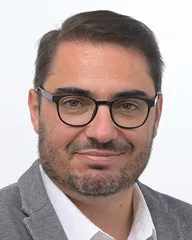
Lukas Sieper | Germany DEU | Non-attached Members (NI) | 390 |
| 2 |
|
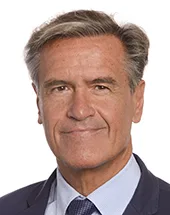
Juan Fernando López Aguilar | Spain ESP | Progressive Alliance of Socialists and Democrats (S&D) | 354 |
| 3 |
|
Sebastian Tynkkynen | Finland FIN | European Conservatives and Reformists (ECR) | 331 |
| 4 |
|
João Oliveira | Portugal PRT | The Left in the European Parliament (GUE/NGL) | 232 |
| 5 |
|
Vytenis Povilas Andriukaitis | Lithuania LTU | Progressive Alliance of Socialists and Democrats (S&D) | 227 |
All Contributions (43)
European Union regulatory fitness and subsidiarity and proportionality – report on Better Law-Making covering 2023 and 2024 (debate)
Madam President, for the avoidance of doubt, I'll be voting in favour of this report. I may not agree with every paragraph, but that is the nature of democratic compromise. In particular, I welcome the acknowledgement that better regulation does not mean no regulation, which was not a given, but that legislating smarter, better and simpler is a good thing. But there is an elephant in the room: this report covers 2024, and since then, cheered on by the EPP, the Commission has thrown better regulation out of the window. The result has been maladministration, in the words of the European Ombudsman, abuse of urgency, powers to skip consultations and assessment. And what did we see instead? Well, in Omnibus I, highly inappropriate lobbying from the American fossil fuel industry and an end result so extreme that it needed the far right for support. I don't want any more PR spiel from the European Commission. I hear you talk about transparency and consultation, but there was none. The Commission's failures led to this, and I would like to see acknowledgement of that and the Commission placing consultation and evidence back at the heart of its work.
The 28th Regime: a new legal framework for innovative companies (debate)
Madam President, in today's world, Europe is strongest when it acts together, and we must ensure companies can harness the power of European integration. Removing internal barriers, creating a reliable regulatory environment and enabling skill is what the EU should be doing at this time, but let us be clear: a 28th Regime is not inherently good or bad. Its value depends entirely on how it is designed and what political choices we make. Crucially, the choice must be made to protect workers and ensure that this new forum does not open loopholes. I very much welcome the attention paid to this by my colleague René Repasi and expect the European Commission to do the same. I also welcome the report's innovative approach, from allowing easier and digital incorporation to safeguards against killer acquisitions and room for innovative ownership and governance models, including stewardship. The message to the European Commission is clear: take this report both as inspiration and warning. Only a well-designed proposal, ambitious in its approach but cautious in its execution, will be a win‑win.
One-minute speeches on matters of political importance
Madam President, ExxonMobil is bullying Europe into submission. A new investigation shows the enormous lengths that ExxonMobil has gone to, to kill our new rules on corporate responsibility. Now, this is not surprising. We know that for ExxonMobil, profit counts and not the environment or human rights, but what is surprising is that almost all of its wishes were granted by the European Commission. Now, I teach my children that it's a bad idea to give in to bullies because they will come back for more, but here we've got the head of the European Commission kissing the ring of the bully. There was no time, supposedly, to consult on any of this with the NGOs or with the trade unions, but there was time to listen to Exxon, to listen to other corporations about what European rules they want to see go through the shredder next. This is insanity. Europe's laws should serve the public interest. Our future is not determined by ExxonMobil and it shocks me that I even need to be making that point here.
Competition policy – annual report 2024 (debate)
Madam President, Commissioner, as we conclude this debate, it's clear that in the face of global economic turbulence, we can't be passive. We need to commit to robust enforcement of our competition laws and stand firm against attempts to undermine them. Over the past months, the Trump administration has fundamentally disrupted the global order, and Europe must now respond with conviction. Tariffs were imposed on long-time allies, even on uninhabited islands. Tax agreements were undermined and harmful tax competition stimulated. Threats have been sent our way on enforcing laws that aim to protect our citizens online. Colleagues have said it today: Europe must stand firm and it must stand united. Concretely, that means that the Digital Markets Act must be enforced fully and without compromise. The DMA is not a bargaining chip, neither is it conditional, and I commend Ms Ribera for acting accordingly. We must also remain resolute in supporting the OECD international tax agreements on Pillar Two, and we can't allow harmful international tax competition to make its comeback. While we must assert those ideas on the global stage, we need to also look inward. We need to invest in areas like housing, affordable homes and the revision of state aid rules accordingly. We need to ensure that the Clean Industrial State Aid Framework enables Europe to lead in clean technology and ensure that no one is left behind. Lastly, we must deepen market integration, address internal barriers and create a Europe that is stronger together – flexible where necessary and firm where it matters most. Let us continue to work, united in our commitment to fairness, sustainability, the rule of law and innovation.
Competition policy – annual report 2024 (debate)
Mr President, Executive Vice-President Ribera, dear colleagues, in a world that's changing at breakneck speed, this is a time of protecting Europe – through European defence, for one, but in the day to day, also through rules that protect the things that Europe holds dear. Competition rules are key in doing that: to shield citizens from price hikes and exploitative abuses; to defend the interests of workers when mergers take place; to protect farmers from concentrations in the food industry; to defend our small, innovative businesses from killer acquisitions; to protect the single market from distortive state aid, for instance, where it benefits companies that contribute to tax avoidance or environmental degradation. Now, of course, we should not be naive. The international economic order is under pressure, and competition policy enforcement does not take place in a void. The global context matters. That's why we welcome the report by Mario Draghi, which looks for ways to stimulate innovation and competitiveness, also when it comes to enforcing or changing competition policy. We must adapt our economy to be more dynamic, to foster jobs and well-being, and to keep support for the twin transitions of digitalisation and sustainability. We must adapt our market also. A recent IMF report estimates that barriers in our internal market act as a substantial, self-imposed tariff on goods and services. Some argue that we should therefore slash European rules in a Trump-like manner, or that more mergers are necessary. I think our focus should rather be on deepening market integration, getting our enforcement priorities straight, and adapting to new forms of harmful conduct that are emerging. Lastly, just as we must stand united in the face of global competition, we must stand united in investing in our common European future, rather than entering into a subsidy race that would benefit some Member States and their citizens over others. All in all, we need to be flexible where we can and rigid where we must; flexible in responding to global challenges, but rigid when it comes to enforcement and achieving the goals of our competition policy – defending our consumers, our markets and ultimately our values.
Estimates of revenue and expenditure for the financial year 2026 – Section I – European Parliament (A10-0048/2025 - Matjaž Nemec) (vote)
There's a number of voting machines here that aren't working at the moment, so we need to get this checked.
Cutting red tape and simplifying business in the EU: the first Omnibus proposals (debate)
Mr Tobé, you say that you're ready to work with us and yet you didn't appoint people from the EPP for a long time to talk to us. Then, after we talked together, you made statements in Politico that made it clear that you would only work with us if it suited you. So, that's a difficult basis to start from. But when it comes to what we could actually do to simplify, there's many things that we could be discussing reasonably, but there hasn't been time for that because of a PR stunt from the European Commission that insists on proposing things within the first 100 days. I don't think there's any necessity to rush things like that and, therefore, we're now faced with proposals that are misguided. I think it's a little bit like saying that if you're driving on the motorway, cars will be able to drive faster without speed limits. That's certainly true, but you're also going to have collisions.
Cutting red tape and simplifying business in the EU: the first Omnibus proposals (debate)
Mr President, the European Commission promised us a simplification of EU rules for companies without compromising on the landmark green ambitions of the last mandate. What's not to like, you would think? After all, with the current economic backdrop, efforts to simplify, digitise, streamline, those are to be welcomed and we as a Group could certainly see room for doing that. But I will tell you what's not to like and that this is not the simplification of EU rules. This is the simplification of a debate. It's an oversimplification of a debate and it's a harmful one. What we're presented here with is removing liability from a law that says to check and address things like child labour and deforestation. Now, clearly that's not simplification, that's obstructing justice. That's purposefully making things harder for the victims of wrongdoing and NGOs. That's making a mockery of EU law, essentially. Liability is not just there for the sake of it. It's there to guarantee fairness and a level playing field between cowboy companies and companies that give a damn. Also, asking companies to only check their direct suppliers, that's pointless box-ticking for companies. You're asking them to look at places where there's no issues and no risks, and you're giving them a blank cheque to ignore risks that are further down their supply chain. Another example: banning companies from requesting information from companies of less than 1 000 employees. That will just mean that their reporting is going to be inaccurate, incomplete and very difficult to comply. And now we talk about red tape. Make no mistake, this is regulatory schizophrenia that's going to end up increasing compliance costs. Companies have already invested in sustainability and now the Commission is pulling the rug from underneath their feet. I think this is the kind of nonsense that can only be come up with when people go on what must be an ideological crusade, and that at breakneck speed, refusing to consider real evidence or with a public consultation. Truly, the European Commission should be ashamed of this proposal. It claims that this is the middle ground, that it's a sensible proposal that is sorely needed, but it is an extreme proposal, let's be clear on that. It radically slashes human rights and environmental standards, and it actually makes things more complicated. And what's more, this is a dishonest reading of what the Draghi report has called for. No company is leaving the EU because of sustainability reporting. Could things be improved? Yes, of course, let's have a sensible conversation about that. But there's no company that risks bankruptcy unless we tell them that it's okay to have children make their products. This House now has a responsibility to get things back on track, to deliver actual simplification. Unfortunately, the EPP has already been mind-blowingly open about their willingness to work here with the extreme right, and that's not even plan B for the EPP, it seems that's plan A. The Commission has been absolutely fine to present its proposal under these circumstances. They knew that this couldn't gain a pro-European majority in this form, but it went ahead anyway. It's time to call this out for what it is. It's an extreme proposal. It's blatantly misguided and it's backed by the fossil fuel industry and the far right.
Competitiveness Compass (debate)
Madam President, Europe has a duty of care, and that is to provide its citizens now and in the future with the things that we value: freedom, prosperity, inclusion and a healthy environment. To achieve that, we need huge investments, more decisive industrial policies and new ways of pooling European money. But these things require political vision, and it would seem there is no appetite for that in this Commission anymore. What we get instead is a panicked bonfire of red tape. Never mind that in the long run, the EU sustainability laws lead to more resilience, operational effectiveness, access to capital and reduced dependencies. Never mind that wild regulatory flip-flopping is not helpful for business. No. Because what's trending now in Brussels and in Washington is the short term. Europe should be the continent that takes the long view. A place with sound companies and quality products. That's our competitive advantage. The green culture war that has come to Europe must be seen for what it really is, and that is self-sabotage.
U-turn on EU bureaucracy: the need to axe unnecessary burdens and reporting to unleash competitiveness and innovation (topical debate)
Mr President, some colleagues here talk about competitiveness when what they want is deregulation. They say they want Europe to catch up with other blocs, and to do that, we must axe unnecessary burdens. Now, axing anything is not the answer. I think if we're lagging behind, it's because of decades of low investment and a failure to go all in on sustainability, like others have done, primarily by centre-right governments. And instead of some accountability here, those same political groups are saying that the real problem here is EU bureaucracy, that rules on sustainability have gone too far, as if competitiveness and sustainability can't go hand in hand. The vast majority of our companies know that to survive in tomorrow's economy, they must become sustainable. What they need is a level playing field, quality data to base their decisions on, and legal certainty. And how are we helping them now? Well, we're not. This debate organised by the centre right, co-sponsored by the far right, creates uncertainty. What does a company do if we make a law here and then months later, we place a question mark over it, does it start to prepare or does it wait? I hear many here talking about compliance costs, and I urge them to think of the compliance costs of political flip-flopping as well.
Taxing the super-rich to end poverty and reduce inequalities: EU support to the G20 Presidency’s proposal (topical debate)
Mr President, it is much easier to make money with money than with just honest work. And right-wing and populist governments are fine with that. Everywhere in the world we see politicians who claim to stand behind ordinary working people, and then cut back on healthcare, education and public transport, or hand out tax cuts to the rich and shareholders as a kind of reverse Robin Hood. It has to stop. Growing inequality is gnawing at our societies, at solidarity. Prosperity and well-being must reach everyone. That's how a society thrives. You would think that a global tax on the very rich is a matter of common sense, of honesty. The reality is that countries compete with each other at the lowest tax rate for the wealthiest. That is why I am now so pleased with this initiative of the G20, which, of course, Europe must support. All major changes start with one first step and this initiative is that first step.
Corporate Sustainability Due Diligence (A9-0184/2023 - Lara Wolters) (vote)
Mr President, ladies and gentlemen, today marks 11 years since Rana Plaza collapsed. And if we immediately press the red or green button, we make a fundamental choice. Do we accept that people on the other side of the world make our T-shirts under unsafe conditions and for a few euros a day? Do we accept that big oil companies are taking people off their land and destroying nature reserves? Make no mistake, that's what we're talking about today. Do we choose for people and the environment and for a sustainable economy or do we let mega-companies look away from the injustice that they profit from financially? It is time to put a stop to cowboy companies and as a Parliament we have the power to do so together here. Over the years, I have come to call this the anti-look-away law and I hope that now, when it comes down to it, you do not look away. Let our decision today be a tribute to all the people who are being exploited and to the victims of Rana Plaza.
State of play of the corporate sustainability due diligence directive (debate)
I'm still laughing a little bit at Mr. Hoogeveen from just now, who said I had to google my own law. I don't think he understood that I wrote that law five years ago. You, too, have been harassing me on Twitter for years with misinformation about this law. I also think that you have not fully understood what this is all about. I actually wanted to ask: Do you want a difficult or an easy question? Let's do an easy one. You said: “This law has no convincing advantages.” May I ask you: Do you consider that the right of victims of abuse to go to court does not benefit from this law?
State of play of the corporate sustainability due diligence directive (debate)
Yes, I find this interesting, because you and a number of colleagues with you have never understood what due diligence is. You never understood the difference between this December agreement and the Corporate Sustainability Reporting Directive. So I had the question for you: What are the suffocating rules? I don't think you've ever read this, but let me help you: Would you like to tell me where the reporting obligations are in the agreement and how accountants are going to make money in this?
State of play of the corporate sustainability due diligence directive (debate)
Madam President, today should have been a happy day, a historic day even, on which we celebrated the adoption of groundbreaking legislation that would oblige European businesses to treat people and planet with respect. But here we are. We had an agreement, but we have no vote and no law, all because Member States said ‘yes’ and then ‘no’ and then ‘maybe’. It’s a little bit like a wedding after an engagement of several years. The bride is there at the altar waiting for a groom who doesn’t show up, but who sends a message that he won’t come unless the flowers are taken away. So the flowers are removed and the bride waits. But then there’s a more hostile message, and that message is that the groom also doesn’t like the bride’s dress, and she must change it or else he definitely won’t come. So, if this were a fairy tale, the bride would walk away from the altar now, because of gross violations of trust and of respect. But this is not a fairy tale. We are still waiting, and worse, new demands are still being made – and if we haven’t walked away, it’s because this project is too important to let go of. This is a law that was negotiated at length, with every word subject to intense scrutiny – a law with major implications around the world to stop businesses looking away from very real human misery and destruction. I have always called this project too big to fail, because this is about more than responsible business conduct. This is about values, about leadership, and perhaps most of all, humanity. The story that I told you is the harsh reality of European politics at the moment, played out over the heads of the most vulnerable. I’m grateful for the Belgian Presidency’s attendance today. I welcome the Minister. But the institution that you represent has disgraced itself. It has disrespected us and it has undermined European democracy in the process. I won’t ask for excuses today, but what I do want is clarity, accountability and answers on how you expect for us to move on from here. Time is almost up. The bride is still waiting at the altar. Let us hope that somehow, in the coming days, the groom can redeem himself.
Regaining our competitive edge - a prosperous EU in a fragmented global economy (topical debate)
Mr President, so, European companies have the right to exploit children, they have the right to destroy forests and, most of all, European companies have the right not to ask any questions or right any wrongs. To be very clear, this is not what I think. This is what Emmanuel Macron, Giorgia Meloni and Christian Lindner have fought for together over the past weeks. And if I sound angry now, it’s because I am. We had a deal, but business lobbies would not give up and here we are. These leaders have now become convinced that accountability is a burden and human rights are a nice-to-have. For them, fair competition is speaking big words about European norms and values, and then encouraging a cut-throat race to the bottom. The European way of life, well apparently, that’s the European right to wealth at the expense of others. The cynicism of today’s developments, the shamelessness, the outrageous injustice of big business lobbies who tell their political leaders what to do instead of the other way round. And as always, the victims of corporates’ wrongdoing are ignored. Time is running out. I urge Member States to stop their political games and approve the due diligence law.
One-minute speeches on matters of political importance
Mr President, I would like to talk about Beyoncé. True story: For the same Beyoncé concert with the same pitch, one fan pays 200 euros and the other 700. Absurd. Companies like Ticketmaster and Live Nation call this with an expensive word dynamic pricing. I call it an ordinary way to make a lot of money. Because what's happening? Ticket companies deliberately withhold tickets in order to be able to sell them for a much higher amount shortly before the concert. European consumer law must do something about this. That is why this week I call on the Commission to examine: one, or dynamic pricing In fact, it is allowed under European rules for consumer protection and competition. And two, to come up with measures against exorbitant ticket prices, for example through more transparency, through price caps or even by banning the practices that cause a Bruce Springsteen ticket to cost $5 000. Music is for everyone and I want a Europe where concerts are not a privilege for the rich or for the elderly.
One-minute speeches on matters of political importance
Mr President, two years ago I stood here and I said: “I do not think it has occurred to our European forefathers that a Member of Parliament could be a young woman, or a young man who wants to be with a newborn child.” It's now two years later. I am expecting my second child and the European Parliament still does not have parental leave. We have at least ten letters, resolutions and speeches left. All members seem to agree, but nothing happens. There are now four women pregnant at the same time. They're all here in the room, and now I'm done with it. No maternity leave is a problem for two reasons. As a Member of Parliament, you cannot delegate your right to vote. People who gave a voice to someone who is temporarily out are therefore not represented. Secondly, this is a very bad signal. The European elections are coming and this Parliament still radiates that it is not a place for young women. And let me just say that we all travel to Strasbourg one week a month. That's something only a man could have thought of. It's time for a change. It is time for us to drag the European Parliament into the 21st century.
Corporate Sustainability Due Diligence (A9-0184/2023 - Lara Wolters) (vote)
Madam President, I assume you gave me the floor. I couldn’t hear in all the commotion of all those very happy colleagues here in the room, and I just want to take one moment to really warmly thank all of those who have worked so hard with me and with us on this, including those colleagues in EPP and in Renew who voted in favour today. So thank you so much to them. And now, under Rule 59(4), I would like to ask the chair for a referral back to the JURI Committee for interinstitutional negotiations due to start next week.
Corporate Sustainability Due Diligence (A9-0184/2023 - Lara Wolters) (vote)
Madam President, I think that we had asked for a short technical break at this point, so if you will allow us that, we’ll just take one minute to convene and then vote.
Breaches of the Rule of law and fundamental rights in Hungary and frozen EU funds (debate)
Mr President, it is and remains a worrying child and a headache dossier. Two weeks ago I was with a committee of inquiry of the European Parliament in Hungary and again our concerns about democracy and systematic corruption were confirmed there. Journalists, NGOs and the opposition told us how they are knowingly opposed by Viktor Orbán's government. Companies are being pressured to buy out, and Mr. Orbán is still handing out lucrative contracts to his friends. In addition, he declared a state of emergency more than a year ago, so that he can rule with decrees. It is therefore fair to say that, under pressure from the European Parliament, the European money tap has been shut down. And the Hungarian government is now claiming to be implementing anti-corruption reforms. There is no real indication of this, and even if reforms are introduced, the Hungarian government will be able to roll back new rules. Parliament's message may be clear today. We do not let ourselves be steered in the reed with a clod. Europe does not negotiate with dictators. And to the Council and to the Commission: Do not settle for empty promises or half work, keep your hand on the cut until there is real progress.
Corporate Sustainability Due Diligence (debate)
Mr President, I should like to thank colleagues for this debate. Thank you to all those who participated. It’s great to see the support expressed by so many colleagues here today. I hope that this backing will transform into a substantial majority tomorrow. At the same time, let me address some of the criticism expressed here today. I hear that due diligence will affect Europe’s competitiveness, but the very core of this law is a level playing field between EU and non EU companies. I have heard also that this would be a disproportionate burden for companies, but that overlooks the reality of what we’re proposing here. We don’t ask companies to go and fight every problem on this planet. We allow them to prioritise actions that are relevant to them and to the risks that they face. We’re aware of the importance of industry collaboration in different sectors, and we’re preventing heavy contractual obligations for SMEs. Meneer Manders, die kan ik ook geruststellen. Zolang de lokale harmonie, de lokale voetbalclub of de carnavalsvereniging niet geregistreerd staan als bedrijf, geen 250 medewerkers hebben en 40 miljoen omzet, zullen zij niet onder deze wet vallen. Let me also be clear about the world in 2023: not only are companies able to rise to the challenge of due diligence in the future, they are already doing it: Aldi, Ikea, Unilever, ASOS, Mars, Ericsson – those are just some of the companies calling for human rights and environmental standards that give more clarity on what we mean by responsible business. They are joined by prominent trade associations in the financial, pharmaceutical and technology sectors, to name a few. Those who are now seeking to frustrate this law are siding with a minority of political and commercial interests, and they are electioneering. To my colleagues who need to vote tomorrow I want to say, if you’re on the side of millions of citizens who want to see change, as well as the businesses and civil society that are pleading for that, if you’re on the side of responsibility and a Europe fit to lead on the big questions of our time, then show that tomorrow: reject the amendments, back this compromise and let us go to trilogues. And last but definitely not least, I want a very warmly thank the Commissioner for his leadership in this, all of my colleagues who have worked so constructively with me on this and who have been so involved, and my own team, Matthew Hogarth and Hélène Beaghe, whose very last working day in the European Parliament is tomorrow, and without whose help this would not have been possible. So thank you so much to you all.
Corporate Sustainability Due Diligence (debate)
Mr President, we have just commemorated the horrors of Rana Plaza, the hundreds of victims, many of whom had not wanted to go into the building but were threatened and made to pay with their lives, in a disaster that tragically could have been avoided. Rana Plaza is not the only disaster linked to corporate greed or the only disaster linked to companies misbehaving and turning a blind eye. Saeeda Khatoon died last December and in her lifetime never had justice for her son, who died in a burning clothing factory in Bangladesh. Fire escapes were blocked, the factory in question made jeans for a known German brand. Or Rosita, Tikwari, Veronica and Manimbu, who are still fighting for justice after their homes were destroyed by a palm oil company in West Papua, financed with European money. Injustice, impunity that makes your stomach turn! These are examples that show the need for rules on responsible business, because we are talking about daily occurrences of injuries, pollution, corruption on the other side of the world, as well as in Europe. Tragically, nobody is ever to blame. Everybody points to someone else. Companies say it wasn’t them, it was their supplier. They didn’t know. Low prices are very welcome, responsibility is not. But we’re not talking about all companies. Let’s be very clear about that. Many companies and sectors have taken action voluntarily, especially after Rana Plaza, and yet it hasn’t been enough for true change. Action has been too patchy and there’s often too little justice for victims. So for victims, the case for this law is very, very clear. For businesses, this law is of vital importance also. Why? Because they need certainty about what to do, as well as the certainty that their competitors are doing the same. As for consumers, they in themselves cannot change the world. Even if it were possible for people to check every company and every label, that won’t make enough of a difference. That’s why we’re making a law on what responsible business means. What we have before us is a political agreement that I am very proud of. It was painstakingly negotiated over three years, and it tries to take into account every difficulty that was raised by everyone who will be affected by this law – workers and companies alike. It has always been my aim to negotiate a position with cross—party support in this House which is proportionate and workable for business and effective and accessible for victims. Why? Because this legislation is too important for us not to deliver. This is about what kind of Europe you want to live in and what we as Europeans value. It’s about what kind of trade we want in the future, how we see globalisation, and about defining our relationship with China. It is about serious action on sustainability and climate. If we don’t take a firm stand in Europe, then who will? Our task in a united Parliament is to set global standards as we have done in the past. “Een betere wereld begint bij jezelf.” Ik vond die reclames heel mooi als kind, maar ze hebben hun glans verloren. Het is namelijk niet waar. Jij en ik, wij kunnen de wereld niet in ons eentje veranderen. De sterkste schouders, die moeten de zwaarste lasten dragen. En een betere wereld begint bij bedrijven. Dat is beter voor iedereen die in de winkel staat en zich afvraagt waar een trui gemaakt is, maar ook beter voor bedrijven zelf, want bedrijven die hun plicht naar mens en milieu serieus nemen, daar zijn er een boel van. Die bedrijven geven we met een antiwegkijkwet een steuntje in de rug. Maar grote cowboybedrijven die regels aan hun laars lappen, die moeten we de pas afsnijden, zodat we niet meer hoeven te lezen over duizenden arbeiders die in Qatar stierven tijdens de bouw van voetbalstadions, Oeigoeren die in China onder dwang onze kleding maken, zodat het klaar is met voetbalvelden aan gekapt regenwoud in Zuid—Amerika, natuurgebieden waar oliemaatschappijen pijplijnen doorheen bouwen, uitgebuite gastarbeiders die tomaten plukken in Spanje. Voor verantwoord ondernemen is Europese wetgeving nodig. En veel bedrijven vragen zelf om duidelijke regels die in heel Europa gelden. Op rechts is dat op dit moment aan dovemansoren gericht. Rechtse partijen in dit Parlement schermen met spookverhalen over het vestigingsklimaat en over regeldruk voor bedrijven. Klagende multinationals wordt de hand boven het hoofd gehouden. Het is klaar – wat mij betreft – met politieke spelletjes. Laten wij morgen verantwoordelijkheid nemen als Europa, als Europees Parlement, en laten we morgen een serieuze stap zetten richting een duurzamere en eerlijke wereld.
Update of the anti-corruption legislative framework (debate)
Corruption is a disease. As Mrs Jourová said, it falls under the skin of democracy, weakens trust, spreads and infects society, including here in Europe. So thank you for this good proposal to step up the fight against corruption. And yet. And yet, integrity cannot be confined to laws alone. Member States should address each other on the importance of trustworthy public authorities, of transparency and openness, of investing in good education and in sound public administration. I say that to the Member States that are not represented here, and that really needs to be stepped up. Secondly, of course, we already have a number of anti-corruption instruments, but they must be used. Look at Hungary: Continued corruption at the highest level. Viktor Orbán is now shielding himself with some reforms and immediately we hear rumours that the Commission may be planning to reopen the European money tap. And to stick to that metaphor: That is, of course, mopping with the tap open. So I thank you for your proposal, but if we want to take the fight against corruption seriously, enforcement is needed and then we will have to be more decisive in terms of European money. The next few weeks will be crucial.
Discharge 2021 (continuation of debate)
Madam President, thank you to the Commission and to the ECA for being here. I’ve got one minute and a half; there’s too much to talk about, but we do absolutely need to talk about Parliament’s own voluntary pension scheme. Closed now, but financed from allowances that were meant for office supplies and reportedly investing in the arms, tobacco, mining and fossil fuel industries. ‘What’s not to like?’, you could say. Why do we need to talk about that right now? Well, because it’s situation is dramatic financially. We’re talking about a EUR 310 million gap. So, for the translators, yes, I said 310 million. And because the leadership of this Parliament is set to take a decision on the scheme’s future soon, the Parliament’s Budgetary Control Committee has repeatedly called on Parliament's bureau to find a feasible, legal and fair solution to the problem that we have here. Now, the study on this that I commissioned concluded that while Parliament can’t completely get rid of the fund from one day to the next, what it can do is take steps that prioritise taxpayers over scheme members. And that’s what the Bureau needs to do now: stand up to the scheme members, some of them extremely active and vocal behind the scenes. Some of them, ironically, called Nigel Farage and Marine Le Pen. Now, at the end of the day, we’re talking here about a supplementary extra pension scheme for all of its beneficiaries. Let’s be honest, it’s 2023, and most people in Europe don’t even dare to dream of a steady income when they retire, let alone at the levels that this fund currently guarantees.