





| Rank | Name | Country | Group | Speeches | |
|---|---|---|---|---|---|
| 1 |
|
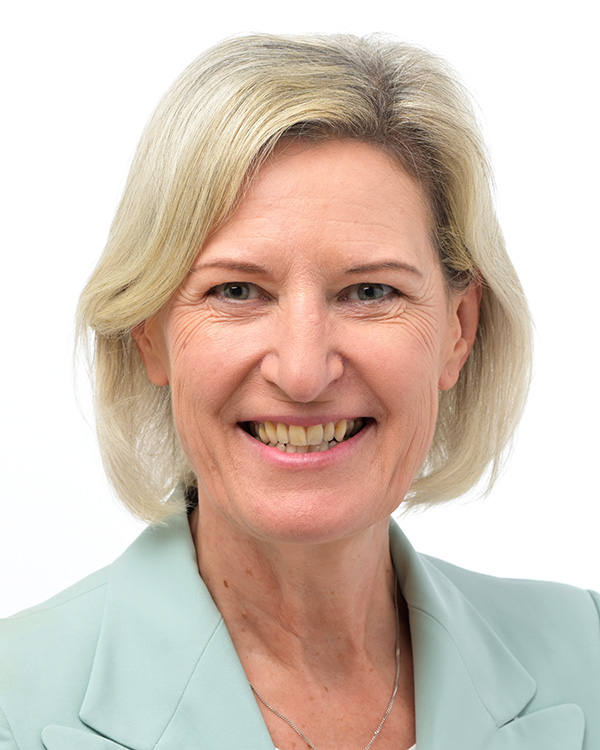
Lukas Sieper | Germany DEU | Non-attached Members (NI) | 390 |
| 2 |
|
Juan Fernando López Aguilar | Spain ESP | Progressive Alliance of Socialists and Democrats (S&D) | 354 |
| 3 |
|
Sebastian Tynkkynen | Finland FIN | European Conservatives and Reformists (ECR) | 331 |
| 4 |
|
João Oliveira | Portugal PRT | The Left in the European Parliament (GUE/NGL) | 232 |
| 5 |
|
Vytenis Povilas Andriukaitis | Lithuania LTU | Progressive Alliance of Socialists and Democrats (S&D) | 227 |
All Contributions (92)
Europe’s automotive future – reversing the ban on the sale of combustion cars in the EU (topical debate)
Mr President, Commissioner, ladies and gentlemen. The ban on new cars from 2035 is a dead end – a dead end linked to massive job cuts, the flooding of the market with Chinese vehicles and the death of an entire industry. In Germany alone, in my home country, we lost 50,000 jobs in the automotive industry last year. If you believe the forecasts of what I am doing, then the situation will be that by 2040, 300,000 jobs will be lost here. The ban on incinerators is simply too short. We need to be open to technology, because this is the only way we can remain competitive and react flexibly to future developments. Our industry needs framework conditions that promote research and development of all propulsion technologies, whether it is the combustion engine, electric vehicles, hybrid vehicles, e-fuels or hydrogen. I really ask everyone, ladies and gentlemen, to finally recognise the seriousness of the situation. I recognise that the revision of emission standards should now take place in a timely manner, Commissioner, and that an automobile bus is also planned. That's all good and right. But at the same time, the initiative to green corporate fleets is still in place. I think that would be a burner ban through the back door. We must not expect this from industry or the jobs that are currently attached to the automotive industry. That's why I really ask: Wake up and make the necessary corrections. The end for the burner has to go!
New Strategic EU-India Agenda (debate)
Madam President, Commissioner, ladies and gentlemen, ladies and gentlemen! India is not only a fascinating country, but also a very, very important strategic partner for us Europeans in the future. 1.4 billion people, the fourth largest economy in the world, a democratic system: All this speaks to the fact that we are intensifying our relations with India. That is why I welcome the new strategic agenda. I very much hope and wish the Commission very, very good luck that the free trade agreement can be signed by the end of the year. And I believe, ladies and gentlemen, that we must also intensify cooperation in other areas: technology and progress, security and defence, aviation. All of this is planned, and that's a good thing. And let me also say: Strategic partners, friends can also find open words with each other, can also address difficult topics. Colleagues have already taken it up: India’s relationship with Russia, with Belarus, the issue of human rights – these are all issues that, of course, we must also address, especially in the European Parliament. But nevertheless: The most important thing is to establish a close strategic cooperation. And then we can also have an open, intensive exchange and discourse, especially on the topics that are particularly important to us.
Presentation of the programme of activities of the Danish Presidency (debate)
Madam President, Vice-President, Commissioner, Prime Minister, ladies and gentlemen! What's the point now? Europe must ensure the security of its citizens. We need to ensure our defense capabilities. We must continue to defend Ukraine. We need to tackle illegal migration, and our businesses need to be relieved. We need to cut red tape, strengthen our European location, create a good framework for jobs to stay with us here in the European Union. Of course, climate protection and competitiveness must go hand in hand. The Danish Presidency intends to take care of all this in the next six months. Madam Prime Minister, I wish you and your whole team good luck, I wish you a happy hand in your Presidency and, like my colleagues from the Group, I can only offer good cooperation with the EPP. I would like to address again a topic that you also want to address as a priority, that is the issue of relief, reducing bureaucracy. I very much hope that the first omnibus, the first major discharge package, will be able to come under your presidency. We need a massive relief for our medium-sized companies. The first omnibus on sustainability was largely discussed under the Polish Presidency of the Council. So good luck, and I really hope you succeed in doing that. This is the signal that our companies in particular need that we are serious about cutting red tape.
Upcoming NATO summit on 24-26 June 2025 (debate)
Madam President, Madam Vice-President, ladies and gentlemen! NATO is and remains the central pillar of our defence here in Europe and beyond. The NATO summit in The Hague must send a signal of strength and cohesion. Security does not exist at a zero rate. We need to strengthen our defense capabilities and continue to massively expand our capabilities. We need to invest in armaments, infrastructure, civil protection, cybersecurity and ramp up our own production here in Europe. In recent months, the European Union has put a lot of pressure on this. The SAFE program, joint production and procurement, financing of flagship projects such as its own air defense shield have been initiated. We also need a European arms and defence equipment market; The market is still totally fragmented today, which ultimately endangers the lives of our soldiers and costs billions. The proposals for this are also on the table. I very much hope that this signal of strength and cohesion will be sent out in The Hague.
Choose Europe for Science (debate)
Madam President, Commissioner, ladies and gentlemen, ladies and gentlemen! Europe is an excellent location for scientists from all over the world. The freedom of teaching, research and science is a very important asset for us in Europe. Promoting and incentivising talent to come to Europe is just the thing. I welcome the new funding programme for cutting-edge research, top researchers and international talent. I welcome this super-financial assistance to the European Research Council. I welcome the better funding for Marie Curie scholarships. All of these, my dear colleagues, are excellent initiatives, and they also help to make our location even more attractive. What we really still have to work on is that we are also facilitating the framework conditions for the talents who come to Europe. I hear from the scientific community that there are still huge problems in the Member States when issuing visas, that it is difficult to get started – even in this new environment. This is not the Commission's primary task now, but perhaps we can also make sure that the talents who want to come to us in Europe feel really welcome here. And that starts with the fact that we are making it easier to issue visas.
A unified EU response to unjustified US trade measures and global trade opportunities for the EU (debate)
Mr President, Mr Vice-President, Mr Minister, ladies and gentlemen! U.S. tariffs hit our companies to the mark. The United States is our most important trading partner, and many jobs here in the European Union depend on exports. If the US administration unilaterally imposes unwarranted tariffs and ultimately declares customs war on us, we must act decisively and, above all, together. I think that the Commission has reacted correctly – prudently: You did not immediately impose counter tariffs, you were always ready for dialogue, open to negotiations, negotiated hard. But the Commission has also prepared to impose countermeasures, to react immediately if tariffs are sharpened. I think it's important to find new strategic partners as well. I must also compliment the Commission on this. You are traveling all over the world: Mercosur agreements have been concluded, negotiations are underway with India, with ASEAN countries, with African countries. I welcome all these initiatives – this is exactly the right way to go – and I thank you and hope that you can continue in this way and successfully conclude further trade agreements.
Action Plan for the Automotive Industry (debate)
Madam President, Commissioner, ladies and gentlemen, ladies and gentlemen, Europe is an autocontinent. The European automotive and supply industry is one of our core industries in the economy. More than 13 million people work in the automotive industry, in my home country, in Germany, alone over 600,000. I want it to stay that way. I want these jobs to be preserved, and that is why I welcome the Commission's action plan. It is a right and important signal for our companies and our employees in this important industry. I think it is right that the car manufacturers should be given more time, the CO2–To reach limit values and thus to avoid the penalty payments here. The situation is very challenging economically. That is a correct suggestion. However, what I lack from the Commission in the Action Plan is a clear commitment that all alternative propulsion technologies will continue to be fully approved in the future. The end for the incinerator for the year 2035 must go away. I very much hope that we will get approval for this here in this Parliament as well.
Collaboration between conservatives and far right as a threat for competitiveness in the EU (topical debate)
Mr President! Mr Executive Vice-President! Ladies and Gentlemen! Dear colleagues! What kind of sham debate are we having here in this House? The left half of this House is trying to persuade the Conservatives to cooperate with the extreme right here. Talking about it. I can only say: There has never been cooperation, there is no cooperation, and there will be no cooperation with the extreme right. What we are not forbidding from the left side of the House is to formulate our positions, our beliefs here in this House. That is what you do, dear Greens, dear Leftists, dear Social Democrats. My colleague Daniel Caspary has shown who has already been supported here with whom. When I look at the final decisions: I have just discussed with my colleague Monika Hohlmeier about the Budget guidelines. Who voted with whom? All of them, the Left, the Social Democrats and the Greens, voted with the AfD, with the ESN. I could give other examples. Look at your own voting behavior before pointing the raised index finger at other people here. I can only say: Those who ignore the problems and hardships of the people in our country and do not take them seriously, promote the election of the far-right and far-left. And if you look at what the traffic light government has done in the last three years: We have over 50,000 corporate insolvencies, half of them in the last year alone. We have rising unemployment, 400,000 more than at the beginning of the traffic light government. And we have 100 billion euros of capital going out. These are problems that we have to solve and address, not sham debates that we have in the European Parliament.
Commission Work Programme 2025 (debate)
Madam President, Commissioner! Ladies and gentlemen, ladies and gentlemen! Making Europe more attractive again as a business location, strengthening industry and companies, creating freedom and, above all, attracting investment to Europe - this is what the next few years will be all about. In my view, the Commission's work programme sounds very promising. Everything is focused on competitiveness. The U-turn is coming, and Commissioner, you say yes: not business as usual. I can only support that. The reduction of bureaucracy should now be tackled in a very concrete way. It is to be invested in infrastructures, in new future technologies, and also the energy costs are to go down. That all sounds good. I think that courageous proposals must be made now. I think it's important that we finally get serious about cutting red tape. Away with all the paperwork that only burdens companies, away with rules that nobody needs, that have no added value at all! Just have the courage to abolish rules - I think that's good. I have read with pleasure that there is no proposal on AI liability rules now. I don't think we need that. I also think that everything that has gone on in terms of sustainability reporting is totally out of control. Here we must counteract; I look forward to the proposals. We must invest in our future, ladies and gentlemen, that is to say, we must also build data centres; America is fooling us. The proposal to promote artificial intelligence, to build gigafactories so that our European programmers can also train their models here. I think it's a good idea, I think it's the right way to go. Invest where necessary, including in European Sky Shield. I think that's what matters now: show that Europe is strong, able to act and can focus on the essentials.
Presentation by the President-elect of the Commission of the College of Commissioners and its programme (debate)
Madam President, Madam President of the Commission, ladies and gentlemen! We need an effective Commission. The challenges we face here in Europe are enormous and have already been addressed many times: For over 1,000 days of war in Ukraine, the Trump administration will take office on January 20, many regions are shutting themselves off, raising tariffs, our economy is badly off, companies are cutting thousands of jobs across Europe. That is why I can only ask all my fellow Members once again to support the Commission today, to confirm the Commission today and thus to make a clear commitment to a strong common Europe. Dear colleagues, dear colleagues! As a follow-up to the Commission's confirmation today, we can take a critical look at every single Commissioner, if I may say so. It is not yet over with the confirmation, but today I ask you to really go into yourself again, all those who still have doubts, with regard to what lies ahead in the world and how we are perceived in the world. Today, with your vote, please give the Commission the confirmation we need. After that, we will continue to do our job, critically question, admonish. If the political priorities we want in the new Commission do not come, then we will certainly do our job. But today a signal of unity and strong support for a strong Commission and a strong Europe must come from this Parliament, and that is what I ask all my fellow Members to do.
U-turn on EU bureaucracy: the need to axe unnecessary burdens and reporting to unleash competitiveness and innovation (topical debate)
Mr President, Commissioner, ladies and gentlemen, ladies and gentlemen! If the bureaucracy prevails, progress falls by the wayside. This statement by Franz Josef Strauss has not lost its relevance – on the contrary. Our companies are innovative, capable of making progress if we let them; But that's just what's missing. Our companies are drowning in bureaucratic requirements, reporting obligations, documentation obligations, taxonomy, sustainability reporting, supply chain law, ecodesign regulation, deforestation regulation, circular economy rules, rules on packaging, to name but a few. Then there are the so-called implementing provisions in the delegated acts, further detailed specifications, hundreds of pages of specifications that our companies have to implement. This is a regulatory overkill. I think we need to radically change direction. We need a turnaround, we need to put our entire set of rules to the test. And, ladies and gentlemen, we must also have the courage to simply abolish unnecessary regulations.
Urgent need to revise the Medical Devices Regulation (debate)
Madam President, Commissioner, ladies and gentlemen, ladies and gentlemen! There is no longer any doubt that the Medical Devices Regulation was well-intentioned but badly done. It has to be changed and it has to happen very, very quickly. We've lost a lot, a lot of valuable time. We here in the European Parliament have been beating for almost three years – almost three years! – Alarm. The first changes to the Medical Devices Regulation were good. But they are not enough. The situation, as many colleagues have mentioned, is still dramatic. The European medical device manufacturers leave our European Union, the applications are now made to the FDA in the USA and no longer to us in Europe. This is actually a big scandal. I also say that when you go to hospitals, when you listen to the medical profession, when you ask the certified bodies, they all say: It doesn't go on like this. I really ask the new Commission to present a proposal immediately, not to evaluate it first. We've lost three years now. We need an accelerated approval process for innovative medical devices. The recertification of low-risk products for every five years must be abolished. We also need to abolish the certification of niche products.
The crisis facing the EU’s automotive industry, potential plant closures and the need to enhance competitiveness and maintain jobs in Europe (debate)
Mr President, Mr Vice-President of the European Commission, ladies and gentlemen! More than 13 million people work in the automotive industry. In Germany, in my home country, there are over 780,000. Europe is an autocontinent. The European automotive and supplier industry is one of the core industries of our economy. I want it to stay that way. I want jobs in the automotive and supplier industries to be maintained in Europe. I also want the industry to focus on climate neutrality, which means that the transformation will come. Global competition has intensified dramatically, it is also played with unfair methods. Therefore, the question must be: What benefits our companies, what benefits our companies and thus secures the jobs here on site, and what harms? That must be our benchmark. Penalties, ladies and gentlemen, are of no use. After all, the automotive industry – at least in my home region – has been on its way to becoming sustainable for a long time. We need to review the regulation on CO2‐Prefer emission limit values to 2025. We need to check the fleet limits. We need a Lifecycle‐Analysis and we need technology neutrality. We have to correct the end for the combustion engine and also promote alternative fuels, because this is the only way to get a better CO for the existing fleet – that is more than 40 million cars driving on the road for me in Germany –2Footprint. We need fair competition globally. I think it is true that the Commission initiated the threat of countervailing duties. I very much hope that through negotiations we will be able to refrain from punitive tariffs or countervailing tariffs due to the pressure that has been built up. That must be the last resort.
State of play of the corporate sustainability due diligence directive (debate)
Madam President, Commissioner, ladies and gentlemen, ladies and gentlemen, We all agree that human rights and the environment need to be better protected worldwide. So the question is not whether, but only how we achieve this goal. I'm honest: I have considerable doubts – as I have said in many debates – that this draft law will succeed. From the outset, I warned that the European Supply Chain Act will lead to great bureaucratic burdens for our small and medium-sized businesses, without any concrete improvements on the ground. On the contrary, there is a risk that European companies will also withdraw from developing countries on the basis of the new templates, and this is not only a risk that I see so theoretically. We have also had our experience in Germany with the German Supply Chain Act – it is happening right now. If companies from other countries, such as China, fill these gaps, no one would be helped in the end – neither the local people nor the environment. In addition, through this bureaucratic law, we would also be sawing at the branch on which we are sitting. Our prosperity is based on the many small thousands of medium-sized companies in Europe. We must strengthen the competitiveness of these companies in particular, our healthy medium-sized businesses, and not undermine them by increasing bureaucracy and bureaucracy, as is also the case in this law. Commissioner, I would like to invite you to say that small and medium-sized enterprises are not affected: So, then come on, why don't you go to these factories, why don't you go into the craft shops? We now have experience in the German Supply Chain Act and see that up to the smallest primary producer, questionnaires - 80, 90 pages - are sent here and the companies really no longer know how to get a grip on the rage of bureaucratic queries here. It's just not true. Of course, the scope of application in terms of compliance structures is concentrated on the larger companies, but at the end of the day every small entrepreneur is affected by it, and you just have to take note of what such a law looks like in practice. So I really ask you: Let's finally pull the plug on this European supply chain law! We talk about de-bureaucratization every day, and every five minutes we pass a new law that puts even more strain on our businesses. You can't go on like this.
Energy performance of buildings (recast) (debate)
Mr President, Commissioner, ladies and gentlemen! Of course, the building sector must also contribute to achieving our European climate protection targets, as the building sector alone accounts for 36% of all CO2 emissions in the European Union – these are the Commission’s estimates at any rate. So the question is not whether we are decarbonising the building stock, but how we are doing it. And I think there are different opinions here. Social Democrats and Greens want a clean-up obligation – I reject that. I don't think of coercion, nor do I think of prohibitions. On the contrary: I think we need to take action on climate change. The refurbishment obligation for residential buildings is now off the table – at least according to the version we are voting on tomorrow. But according to the proposal to decide on tomorrow, there is still a de facto refurbishment obligation for non-residential and public buildings, and there are also the most detailed specifications for bicycle parking spaces and for pre-cabling for charging stations and the like. And I keep asking myself: Is this really the task of the European Union? Isn't that a question that needs to be decided in the local communities? And let me also ask you the question: Do we even need these detailed requirements, this regulation? A few years ago, we extended emissions trading to the building sector across Europe – and I think that's a good thing, I think that's right. Fossil energy in the building sector is becoming more expensive. This is the right way, namely that we try to control the price of CO2 emissions and not through this detailed micro-regulation, as it is now re-established in this proposal. So, as I said: I support the goal. I think it's good that we're actually doing something in the building sector. But the way that is now again described, that we go back into this small-small micro-detail regulation, I think it is wrong.
Next steps towards greater patient safety by swiftly ensuring the availability of medical devices through a targeted transitional period (debate)
Mr President, Commissioner, ladies and gentlemen. It's not five to twelve, it's five to twelve. We are putting the safety of our patients at risk and we are driving our medium-sized industry, our medium-sized companies manufacturing medical devices, out of Europe if we do not revise the Medical Devices Regulation as soon as possible. A silent death is already taking place at the manufacturers. Heart valves, endoscopes, hip implants, catheters – these life-saving products have unfortunately already become a shortage in Europe. In the clinics, there are no products to operate on children with congenital heart defects, or the products are now delivered from China. So it's really high time to react. I acknowledge that, in response to our pressure, the Commission has already taken the first steps for two years, namely by extending the re-certification deadlines and now also by expanding the database on medical devices more quickly. But, ladies and gentlemen, that is far from enough. We need a fundamental overhaul, and many others, Mr Liese and others, have mentioned it. It is necessary to introduce an accelerated authorisation procedure for breakthrough medical devices. All rules that do not bring security, but only bureaucratic effort, must be deleted. And finally, that's what colleague Andreas Glück has already mentioned: It makes no sense at all to maintain a five-year recertification of low-risk products. That's gotta go, too. We have a great responsibility to guarantee more patient safety in Europe. Let's address this quickly in the next Legislature.
Transparency and targeting of political advertising (debate)
– Mr President, Commissioner, ladies and gentlemen! Online opinion-forming, manipulative messages, fake news and social bots – the use of artificial intelligence can indeed influence elections and votes. We have seen this happen in the case of Cambridge Analytica. The regulation on transparency and targeting of political advertising aims to prevent such election manipulations in the future - good thing! But I think the rules should be equipped so that in the future we can also promote our opinion as political parties that election campaigns can take place. Here, I think, we went a little beyond the target, especially on one point: The rules apply not only to the European elections, to the federal elections, to the state elections, but also to the local elections. Local elections, for example in a small municipality with a few hundred citizens, will in future be equated, for example, with the European elections, in which 440 million people participate. I think that's just going too far. I think that we should not be subject to these strict rules at our local level, where we have a large number of volunteers. With regard to transparency, advertising does not only apply to social media, but also to all forms of offline advertising. Here, too, I think we've gone a little beyond the mark. Why do I have to comply with a wealth of transparency regulations for every future ballpoint pen I distribute? I think that's just going a little too far, and that's why I have my problems with the part of the proposal.
Empowering farmers and rural communities - a dialogue towards sustainable and fairly rewarded EU agriculture (debate)
Madam President, Mr Vice-President, Mrs Council representative, my dear colleagues! Farmers have been taking to the streets for weeks now, and rightly so: Too much is just too much. Our line in agricultural policy has always been that we make policy with farmers and not against them. We have enforced that the Pesticide Ordinance does not come. We have enforced that there are no more set-asides. And we have also enforced that residual wood can continue to be used as renewable energy. We need healthy food. We need farmers who enjoy taking care of our landscape. We have farmers who live sustainability every day. Farmers always pass on their land well-ordered from generation to generation. Our farmers deserve appreciation and no prohibitions, no regulations, no restrictions.
Presentation of the programme of activities of the Belgian Presidency (debate)
Madam President, Mr Vice-President, Mr Prime Minister, ladies and gentlemen! First of all, have a good new year for all of you. And you, Mr Prime Minister, have a happy hand in your Presidency. As we have heard, the Belgian Presidency has undertaken a great deal. I think that's good. I think it's important to set the right priorities. And for me, two things are elementary: One is the fight against irregular migration. I believe the most important thing is that the migration pact, which was discussed in December last year, is concluded. And so I ask you to do everything you can to ensure that this package can really come into force and, in parallel, to do everything you can to conclude agreements with third countries that even rejected migrants who are not entitled to remain can be returned. The second important issue is to support and strengthen competitiveness in the European Union. You said that we are actually well positioned in Europe, we have the single market, we have the euro, we have our own currency, we have healthy, medium-sized companies with a high level of innovation. But, ladies and gentlemen, you know that everyone suffers from bureaucracy and excessive regulation. And this is the most important thing for me: Better to do less in this area, not to introduce new templates, requirements, reporting obligations. Less is more. We need to ease the burden on our medium-sized businesses. Incidentally, this also applies to agriculture, which also suffers from the high requirements and burdens. That, I think, is also the most important thing for the coming months. All the best again. Good luck!
European Health Data Space (debate)
Madam President, Commissioner, ladies and gentlemen! I think it's wonderful that I, like all of you, will have all my health data available on my smartphone in the future. Medical reports, X-rays, medications, medication plans – everything should be available on smartphones or other digital devices in the future. That's a great thing, isn't it? If you do not want to have this, you must of course also have the opportunity to object and not have to access your data digitally. But the opportunity to have the chance to do that, I think, is great. I also think it is great that this new regulation allows us to share our data in the future, that research institutions have the opportunity to access the data, and that we also have the opportunity to build a European Health Data Space in Europe. We also want to succeed in this digital world, we want to create our data spaces in Europe, and for this we simply need data that is easily available, that can be used, that is anonymised, that is pseudonymised. There is a lot of good in the proposal to ensure that data protection is actually respected. But it is crucial that we also play a role in this data world in Europe. And I believe that with this piece of legislation, which we hope to pass tomorrow, we have made a great deal of progress. And I ask all of you, ladies and gentlemen, to carry this out to the outside world. It is a great opportunity for every consumer, every patient, to have everything digitally available here in the future, and all over Europe. I hope that tomorrow we will send the right signal here and support the proposal with a very broad vote.
Packaging and packaging waste (debate)
Mr President, Commissioner, ladies and gentlemen. In Europe, the mountains of rubbish are getting bigger and bigger. This is also due to packaging waste. Packaging alone accounts for 40% of plastics used in the European Union and 50% of paper. We must do something about it, and that is precisely the purpose of the new proposal on the Packaging Regulation. I think this proposal is good, firstly, that all packaging must be recyclable by 2030. I am pleased with this proposal, secondly, that return and deposit systems are being set up in all European Member States. And thirdly, I think it is good that the recycled content in plastic packaging must also be increased successively. What does not fit are the many bans on individual packaging formats. It has been said of the sugar bag, of the coffee cream capsules and the like. It also makes no sense to specify empty space quotas for beer crates or labelling requirements for beer bottles; This has been corrected. But I think it is important above all that the systems that are established in some Member States and that serve the circular economy, especially in the field of recycling, can remain in place. For many years and decades, circular systems have been built there, and this work must not be counteracted.
Commission Work Programme 2024 (debate)
Madam President, Mr Vice-President, ladies and gentlemen. The reduction of bureaucracy, of the excessive regulatory burden on our businesses, our companies, must be a central concern of the Commission until the end of its mandate. I welcome the fact that concrete proposals are now on the table. When implementing the Sustainability Reporting Directive, the rules for each sector will now only come two years later. That's good. Finally, digitalisation is also being used to facilitate the posting of workers to other Member States. Maybe we'll finally get rid of this awkward A1 certificate. I think that is also a good suggestion. But, my dear colleagues, much, much more needs to happen. The Commission has only now scrutinised the 2023 legislation and the upcoming proposals for 2024 with a view to de-bureaucratisation. But what about all the legislation and regulation that was built up the years before? In the years 2020 to 2022 alone, 129 projects were launched by the Commission. This also results in many requirements, many documentation and registration obligations for companies. You have to fight there, too. Small and medium-sized enterprises suffer from high energy prices and inflation and the shortage of skilled workers and urgently need to be relieved. If the ESG standards were to be harmonised once, this would be a huge step forward, a huge simplification. Taxonomy, sustainability reporting, deforestation regulation. Supply Chain Due Diligence Act, Circular Economy Rules, Ecodesign Ordinance, and, and. Even the entrepreneur who wants to fulfill everything has little chance of getting through this thicket of regulation. I really urge you to relieve our businesses.
State of the Union (debate)
Madam President, Madam President of the Commission! You said today, we have to deliver today and prepare for tomorrow. In particular, we also need to strengthen our competitiveness. I can only agree with you, and I would also like to thank you for your appreciation and appreciation of our farmers today. There is, of course, a need for reform in the European Union. The figures in the economy are clear, the economy is weakening. Investment is being held back and households also have less and less room for manoeuvre. We must do everything we can to strengthen our position and, above all, ensure that value creation takes place here in Europe, in the Member States. We need deregulation, as many colleagues have mentioned. Discharge is the order of the day. We need to get out of the regulatory frenzy. And I'm really waiting for the concrete proposals that are coming in October. And one last thing: We also need to take care of our own safety. We need a common European vision for areas such as space, maritime, critical infrastructure and cyber. This is the lesson we must learn from the terrible war in Ukraine.
Revision of the EU Emissions Trading System - Monitoring, reporting and verification of greenhouse gas emissions from maritime transport - Carbon border adjustment mechanism - Social Climate Fund - Revision of the EU Emissions Trading System for aviation (debate)
Mr President, Commissioner, ladies and gentlemen, ladies and gentlemen, I'm talking about the emissions trading system. The European Emissions Trading System is rightly at the heart of the Fit for 55 package. Every CO2 tonne emitted is priced. This creates the incentives we need to invest more in climate protection. I think this is the most important tool we have to achieve the climate goals. It makes sense not to ban, not to regulate, but to incentivise investment in new technologies. With the compromise we have found, we show that we want to shape the fight against climate change with people and with companies, not against them. And how do we do that? The revised emissions trading scheme is ambitious, but I believe it also leaves enough room for breathing, especially for industry. We still have many energy-intensive industries with us in Europe: Steel, aluminum, chemistry, paper, glass. All of these energy-intensive industries have an enormous electricity demand and are now bearing the double burden – on the one hand higher electricity prices and on the other hand additional costs due to CO2 pricing. I think it is right that this compromise now foresees that indirect electricity price compensation is still possible. Equally important to me is that the free allocations for companies only expire once the border adjustment mechanism has proven that it actually works. I think we owe that to our industrial base in Europe.
Conclusions of the Special European Council meeting of 9 February and preparation of the European Council meeting of 23-24 March 2023 (debate)
Madam President, Vice-President of the Commission, President-in-Office of the Council, ladies and gentlemen! Finally, finally, the competitiveness of our companies in the European Union is a priority for the Commission and also for the Member States. We, the European People's Party, have been calling for this for years. We can only achieve our ambitious climate protection goals if we make technological progress. We need to incentivise investment in new, clean technologies. Prohibitions do not take us further, only lead to relocations of companies, to relocations of production abroad. That is what we are already seeing today, and that is why the proposals which have now been put forward by the Commission to support the competitiveness of our businesses are a good thing. We need to reduce bureaucracy, we need to reduce regulation, we need to speed up and simplify processes. And again: I think the proposals are good, but we must also put the existing rules to the test. Taxonomy, for example, ladies and gentlemen, is omitted. Medical Devices Regulation – there has been some modification; We also have homework to do in this regard. We in this House too, I believe, are called upon to act on legislative proposals – I only call the Supply Chain Due Diligence Act , that we take a reasonable approach here. Lastly: We need to think in value chains. The law on critical raw materials is good, but here in Europe, for example, we also need the chemical industry. We also need the pharmaceutical industry, we need strong craft businesses. Especially when we expel the chemical industry, dear colleagues, from the country, then we simply cannot implement everything we do in terms of climate protection. For top layers of wind turbines, for rotor blades, for chips, for everything we want, we need chemical industry. That's why I'm advocating to finally take a look at the chemical industry and not just clean technology.