


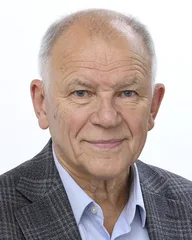
| Rank | Name | Country | Group | Speeches | |
|---|---|---|---|---|---|
| 1 |
|
Lukas Sieper | Germany DEU | Non-attached Members (NI) | 390 |
| 2 |
|
Juan Fernando López Aguilar | Spain ESP | Progressive Alliance of Socialists and Democrats (S&D) | 354 |
| 3 |
|
Sebastian Tynkkynen | Finland FIN | European Conservatives and Reformists (ECR) | 331 |
| 4 |
|
João Oliveira | Portugal PRT | The Left in the European Parliament (GUE/NGL) | 232 |
| 5 |
|
Vytenis Povilas Andriukaitis | Lithuania LTU | Progressive Alliance of Socialists and Democrats (S&D) | 227 |
All Contributions (54)
Withdrawal of the Union from the Energy Charter Treaty (debate)
Madam President, dear colleagues, dear Commissioner, as chair of the Committee on Industry, Research and Energy, I have had many discussions on the Energy Charter Treaty, and we had debates inside the committee, and a couple of months ago, together with my coordinators, we came to the decision that it is time to withdraw from the Energy Charter Treaty. In our discussions, two major reasons appear always: the current climate mitigation will demand an acceleration of the phase-out of fossil fuels and a rapid transition to renewable energy, and the fact that the number of investor-state dispute settlement cases is rising each year. We have cooperated fruitfully with the other EU institutions to adopt legislation aimed to ensure the transition of our energy systems and achieve the strategic goals of energy security, energy efficiency and decarbonisation. Moreover, as long as the European Union is still a member of the ECT, even the EU Member States that have already left the ECT can still be sued for pursuing EU policies. Last but not least, the Charter needs to be modernised and aligned with the Paris Agreement, the EU Climate Law and our climate objectives. It is clear that we need to have a balanced transition. We will still need gas for our transition, but we need to support strongly renewables and clean technologies for a more competitive and better future of the European Union.
Effective coordination of economic policies and multilateral budgetary surveillance - Speeding up and clarifying the implementation of the excessive deficit procedure – amending Regulation - Requirements for budgetary frameworks of the Member States – amending Directive (joint debate – Economic governance)
Mr President, in today's debate on economic governance in the last plenary of this legislature, we are focusing once again on the importance of fiscal policies, monetary strategies and financial regulations aimed at ensuring stability and growth in the euro area. But I am pleased that these discussions also involve budgetary discipline, structural reforms and measures to address economic disparities between Member States. We need to strengthen the internal market, we need capital, we need competitiveness, we need an industrial pact, and I say it also as Chair of the ITRE Committee, and we need to strengthen our economic actors of all sizes and, yes, of all regions of the Union. We need clear rules, clear implementation and a reasonable balance between reducing excessive debt and allowing investment. This was the compass of the EPP Group in shaping the new fiscal rules for the Member States of the European Union, and this must continue to be the compass of the new Parliament. Sound finances and sustainable debt levels remain essential, especially in view of the recent increase in the cost of public borrowing. The new framework constitutes a solid basis for the Economic and Monetary Union of the European Union and I believe that these rules will make the future more predictable. Sound financing remains a priority and, here, the involvement of institutions such as the European Central Bank and the European Commission is necessary and important in order to reduce the burden on Member States and actually strengthen fiscal policy.
Conclusions of the recent European Council meetings, in particular on a new European Competitiveness deal and the EU strategic agenda 2024-2029 (debate)
Madam President, we need a European industrial agreement that makes us competitive and that is at least as important as the European Green Deal. European industry is struggling with the consequences of the pandemic, high energy prices, financing problems, qualified human resources, dependence on critical materials. We need to strengthen the internal market, to unite capital, to focus more on innovation, investment and productivity, leading to sustainable growth and job creation. We can be inspired by some measures taken by our strategic partner, the United States of America. We can strengthen the economic partnership and create even more synergies. The biggest challenge is financing this transformation of European industry. The most appropriate solutions must be found as a matter of urgency to financially support the renaissance of the European economy.
Internal markets for renewable gas, natural gas and hydrogen (recast) - Common rules for the internal markets for renewable gas, natural gas and hydrogen (recast) - Union’s electricity market design: Regulation - Union’s electricity market design: Directive (joint debate – Reform of the energy and electricity markets)
Mr President, dear Commissioner, dear colleagues, we are here today after long months and years of hard work and perseverance, and for the agreements reached, I would like to congratulate my colleagues, the rapporteurs: President Buzek, Mr Geier and Mr González Casares. Following the rise in energy prices in the light of the post-COVID recovery, in the midst of Green Deal transformation and Russia’s war of aggression in Ukraine, the European Union has found itself struggling with extremely high energy prices and energy supply issues. With these packages of legislation – the EMD, gas and hydrogen – we have shown that we can react to the needs of our citizens and to the rapid changes in the market and our economies. We have shown that we can deliver to our people. The new directive aims to decarbonise the EU’s energy sector by ramping up the production of renewable gases and hydrogen, and facilitating their integration into EU energy networks. It will also help secure energy supply in order to address both climate change and disruption of gas flows. It puts in place for Member States ways to prevent disconnections, and clear and fair pricing for renewables. With the regulation, we will enable the uptake of renewable and low-carbon gases by facilitating connection and access to the existing gas grid, and this will reinforce energy security. Parliament has fought for the potential that we saw in gas and hydrogen for the transitional period and for a clean economy. Therefore, this regulation secures also the benefit of integrating the three European networks for hydrogen, electricity and gas.
EU climate risk assessment, taking urgent action to improve security and resilience in Europe (debate)
Madam President, dear Commissioner Hoekstra, dear colleagues, indeed, the European Climate Risk Assessment identifies policy priorities for climate change adaptation and for climate-sensitive sectors. It shows also that societal preparedness is insufficient as policy implementation, and is lagging behind the rapid increase in climate risk levels versus adaptation policy development. We have all witnessed in this mandate the shift towards addressing climate change. We have elaborated the Green Deal Fit for 55 package. You saw a strong commitment of the European Parliament to do our part. We have the 2030 target and our common objective to reach climate neutrality. We even today voted the last part of Fit for 55. But sometimes we are too euphoric and sometimes too dogmatic. We need to understand that to reach these targets and maintain support from citizens, we need to work, and we need adaptation policies – ones that take into account the reality of the Union, that take into account the underdeveloped regions that are still reliant on some energy sources, to take into account that we need to be resilient in the face of health crises or financial crises. We need to talk about adaptation policies that protect people and increase our competitiveness. This is the moment that we need to start to discuss how to turn Green Deal closer to people, in the benefit of people, for a prosperous and resilient Union. And here competitiveness is key. That’s why I believe that we need an industrial deal that will complement the Green Deal. I am happy to see Commissioner Hoekstra being not only determined to fight climate change, reach our strategic targets, but also understand the challenges that we face and the need to build a real Green Deal as a deal for our citizens, but also for industrial sectors, for our autonomy and for our security.
Energy performance of buildings (recast) (debate)
Mr President, dear Commissioner, dear colleagues, the review of the Energy Performance of Buildings Directive is an essential element of the renovation wave and also a crucial part of the Fit for 55 package. I would like to congratulate, first, the European Commission, but also the European Parliament team, for concluding this file before the end of the mandate and for achieving what I will call a good result. I really believe that the result is taking into account local circumstances, and also that the diversity of buildings and building stocks in each Member State. Of course, the cost will be significant. This will raise concerns in many Member States, including my country, Romania. But I am afraid we do not have another option if we want to reach our targets. And the final compromise is also more balanced than the initial proposal of the European Commission. Clearly we with this legislation we have changes to the definitions of energy performance standards, revisions to national building renovation plans. But this will give also Member States the flexibility they need to use the minimum energy performance standards, voluntary to reach their own national targets. Though the new building standards will be more stringent and the energy efficiency demand will be higher, it is important that they will not be set to common thresholds at European level, but at national level according to Member States cost optimally calculations. Renovation of buildings means also decarbonisation of heating and cooling, including the district heating and cooling networks. With this legislation, we need to phase out fossil fuels in heating and cooling with a view to a complete phase out of fossil-fuel boilers by 2040, but also this could bring opportunities for some European industries. Romania, my country, is one Member State that still has large regions dependent on fossil fuels and district heating, and I hope that we will manage to find the necessary funds for the investments and use all EU opportunities.
Horizontal cybersecurity requirements for products with digital elements and amending Regulation (EU) 2019/1020 (debate)
Mr President, félicitations, monsieur Danti, félicitations, monsieur Breton! I would like to congratulate Mr Danti, Commissioner Breton and the European Commission on this important initiative. In recent years, the European Parliament has done a lot, together with the other European institutions, to establish clearer rules and to have more effective institutions in the fight against cybercrime. In particular, this legislation is and will be an important pillar to ensure a higher degree of cybersecurity within the European Union. I also welcome that following the negotiations, the purpose of the legislative act has become clearer, the list of critical products has been updated not to have excessive bureaucracy and also the period of support for cybersecurity It has been adapted to the needs of society. In addition, we have obligations to report much clearer and much more effective. Congratulations to all of you! Félicitations!
Multiannual financial framework for the years 2021 to 2027 - Establishing the Ukraine Facility - Establishing the Strategic Technologies for Europe Platform (‘STEP’) (joint debate - multiannual financial framework revision)
Madam President, dear colleagues, it was a very interesting and constructive debate. Competition for global technological dominance is raging, especially for control over the fundamental technologies of the 21st century, such as artificial intelligence, 5G, semiconductors, green technologies and biotechnologies. Many of the major economies have put specific schemes in place to support their net-zero and digital industries, and we are very much incentivised and inspired by the Inflation Reduction Act, the instrument of our strategic ally, the United States of America. So this was an example that we should act as soon as possible. Therefore, our European industrial policy requires common European funding – and STEP and the Net Zero Industry Act is the right step in this direction. Of course, due to the necessary cuts in the MFF revision, some of the discussion turned into a discussion around structural funds. We need to find solutions also for the EU4Health programme and others. But do not forget that STEP is a platform that combines existing and new financial instruments to channel funding towards the development or manufacturing of strategic technologies. Parliament once again was very successful in getting the complete alignment between NZIA and STEP, covering all technologies and all supply chains, prioritising those strategic projects that will strengthen the competitiveness. And competitiveness and new industrial deal will be extremely important and topical for the near future and for the coming years. The keywords for STEP are innovative and cutting-edge technologies to power innovative technology solutions and give European Union companies the support they really need to unleash their potential while transforming the Union.
Multiannual financial framework for the years 2021 to 2027 - Establishing the Ukraine Facility - Establishing the Strategic Technologies for Europe Platform (‘STEP’) (joint debate - multiannual financial framework revision)
Mr President, dear Commissioner, dear colleagues, this week we will finalise and adopt the revision of the MFF package, out of which STEP is a part, and we follow the very tight timetable – I would say a record one for an ordinary legislative file. This was a very challenging journey, and it required a lot of cooperation and hard work. As the Chair of Industry, Research and Energy Committee, I would like to give thanks to all colleagues that contributed to this, and especially to the rapporteur of the ITRE Committee, whom I replace now, Mr Christian Ehler. It was paramount to simultaneously negotiate and conclude the MFF package STEP with the Net Zero Industry Act. With linking STEP and NZIA, we demonstrate to our industries and financial markets that they receive full political support and a legislative framework to invest and become more competitive while transforming the European Union. STEP aims to reinforce, leverage and steer all EU funds, existing and new, towards – we hope – investments in digital and deep innovation technologies, clean and resource-efficient technologies and biotechnologies within the EU, and in the individuals capable of integrating these technologies into the economy. The EU will be now able to fund, more specifically, the construction of a factory of certain technologies in Europe to increase strategic independence and competitiveness for European industry. The final agreement adds additional funds to the budget of the European Defence Fund, but largely relies on providing additional flexibility to existing funds and cumulative funding. Additional flexibility should be mobilised for STEP projects under the regional and cohesion funds ERDF, ESF+; through the NGO funds, mainly RRF, InvestEU and Just Transition Fund; cumulative funding under EU instruments for individual projects, including for strategic projects under Net Zero Industry Act and Critical Raw Materials Act. STEP touches upon a variety of existing programmes and funds. It provides for synergies and complementarities between the Innovation Fund, Horizon, RRF, InvestEU and Cohesion Fund. Dear colleagues, the Parliament was very successful in obtaining a complete alignment between Net Zero Industry Act and STEP. All technologies are covered, all supply chains covered. Strategic projects get prioritised access to the individual funds under STEP, including the Innovation Fund. We have clarified some provisions of the European Innovation Council under Horizon, and we made the whole process clearer with a better governance structure. The governance of the STEP was improved by adding a new article on the implementation of the Platform, as insisted the Parliament. Parliament’s call for additional visibility for cohesion projects was accepted by displaying examples of cohesion projects dedicated to STEP’s objectives on the Sovereignty Portal. A two-stage reporting system was created, including an interim and final report. The role of the interim report was strengthened, and its main purpose will be to evaluate the contribution of the Platform to its objectives in time to feed into the decision making of MFF post-2027. So, we managed to deliver for Ukraine, to give a strong and not only political signal but concrete support for Ukraine. But also we managed to give the right signal to our industries, to our economies, to our financial markets, to invest smart in the future, to support the new technologies, the clean technologies, to invest in digitalisation and biotechnologies, and make Europe more resilient and more competitive worldwide.
Amending Decision (EU) 2017/1324: continuation of the Union’s participation in PRIMA under Horizon Europe (short presentation)
Mr President, dear colleagues, cher Commissaire, as Chair of the ITRE Committee, I would like to congratulate Mr Borchia and all colleagues working on this file and concluding the agreement on PRIMA. With the heightened relevance due to climate change, the COVID-19 pandemic and geopolitical challenges, the partnership indeed is a very good instrument for fostering science diplomacy. It is important that PRIMA will follow the existing framework, but it is also important that the modifications ask for more efficiency by simplifying the complexity caused by different national funding schemes, streamlining national administrative procedures, reducing time to grant and enhancing accessibility. It is also important that we call for more complementarity between the partnership and other research and innovation projects carried out under Horizon Europe and other Union instruments, and look forward to extended links to climate- and energy-related research and innovation.
European Health Data Space (debate)
Madam President, dear Commissioner, dear colleagues, I would like to thank and congratulate the rapporteurs. As opinion rapporteur for the ITRE Committee, I supported many important proposals of the European Health Data Space Initiative, especially the provisions aimed at providing better health outcomes. The idea of initiative on EHDS and asking for a European health record was introduced in the EU4Health programme – I was the rapporteur – and was one of my priorities. As ITRE rapporteur and EMA contact person I emphasised that the prudent implementation of the GDPR is necessary to avoid unnecessary restrictions for health research and data sharing, key to apply artificial intelligence and machine-learning tools to research, and to enabling the digital transformation of healthcare to tackle disparities in prevention, diagnosis and treatment around Europe. I echo the agreement reached by my colleagues and am happy to see that ITRE definition and approach of opt-out was finally endorsed. Once again, congratulations colleagues, and I hope that the negotiations will go smoothly and we have a very good legislation on digital healthcare in Europe.
Framework for ensuring a secure and sustainable supply of critical raw materials (debate)
Mr President, dear colleagues, dear Commissioner, cher Thierry, I want to congratulate and to thank Commissioner Breton and also our rapporteur and the negotiating team for the quick, constructive and successful negotiation. Several legislative proposals were high on the agenda this autumn in the remit of industry, but the proposal related to the Critical Raw Materials Act is one of the most important, and I am glad to see its final adoption. The Act will ensure the supply of critical raw materials for strategic industry sectors and thereby contribute to the Union’s strategic goals, Green Deal digitalisation, but also industrial independence, by mitigating the risks for supply chains, and ultimately enhance the Union’s economic resilience. One of the most efficient ways to strengthen European industrial resilience and reduce dependencies is to diversify supply chain and invest into research. I echo that further support measures should be put in place to support research and innovation for material substitutions, including sustainable supplies in trade agreements and two strategic partnerships for raw materials. I believe it is important that the Critical Raw Material Act will establish lists of strategic raw materials and critical raw materials based on their economic importance and supply risk, and will implement faster permitting. As regulators, it is our privilege and duty to improve the resilience of the Union and the field of industry is one that we should further improve, as it is at the core of the economy and should be prosperous to support our European way of life.
State of the Energy Union (debate)
Madam President, thank you Commissioner Kadri Simson for representing the State of the Energy Union report, which every year marks an opportunity for this House to take stock of the progress and also debate what else we should do. The past year has been one of the decisive actions by the Union in the field of energy policy. The ongoing war of aggression in Ukraine and the overall geopolitical instability has only underlined how important it is for the Union and its Member States to reduce to a minimum our toxic dependencies on unreliable partners and to increase our strategic autonomy. Energy lies at the heart of our economies. It makes our industries function, it heats our homes, it fuels our transport, it keeps our food, it switches on our computers. The more we control that essential input to our way of life, the less vulnerable we will be to external shocks. Our Green Deal and REPowerEU objectives to have that energy mostly coming from clean indigenous sources therefore makes total sense. We should congratulate ourselves for all the actions taken to tackle the consequences of the war in Ukraine. We should be proud of having reduced our dependence on Russian fossil fuels, to tighten the rules of gas storage, to have increased the renewable generation in record quantities. We have been and are fully committed to bringing the EU legislative framework up to date to be able to face these challenging times with all the tools Member States need to ensure we reach net zero objectives. We have delivered on RED, on energy efficiency, we delivered on gas storage and we will deliver on methane, on energy performance of buildings, on the gas and hydrogen package, on REMIT, electricity market design and the Net Zero Industry Act. Commissioner Simson spoke about needing to step up our efforts to achieve our goals. As Chair of the ITRE Committee and a Member of the EPP Group, I expect the Commission to take full advantage of this end of the term and all the analysis presented today, to carry out all the necessary impact assessments that will allow the next Commission and co-legislators to take action when needed. Thank you so much and congratulations.
Commission Work Programme 2024 (debate)
Madam President, dear colleagues, the ITRE Committee that I chair ranks high in terms of legislative activity in the field of energy, industry, digital or research. Our goal is that, until the elections, we will proactively show our continued support to Ukraine in the war against Russia, will make all efforts to decarbonise Europe’s industry while ensuring it remains competitive and boosting economic recovery after the pandemics. I very much welcome, dear Vice-President, the proposals in the area of digitalisation, the access of start-ups in the artificial intelligence field to our supercomputers, existing 10, 12 soon, the EU Space Law and space economy and the wind power package. Therefore, dear Vice-President, while I support that the Commission will prioritise to ongoing legislative work, I also see the need to further provide an enabling system for the required growth of the manufacturing capacities for technologies which Europe needs to achieve its climate ambitions defined by Green Deal Industrial Plan. We expect that maybe the Commission will present a financial envelope that will fit this challenge. We are also looking forward to rapidly scaling up the development and deployment of hydrogen. Yes, we are looking forward to the creation of the new European Hydrogen Bank, and we very much hope that we will be able to find the proper mechanism for it in this legislature. Thank you so much and a lot of success.
Effectiveness of the EU sanctions on Russia (debate)
Madam President, dear colleagues, dear Commissioner, we have reacted against the atrocity of Russia and have shown solidarity for Ukraine. We have had financial measures, sanctions, bans on importing energy products and with REPowerEU will be totally independent in the energy sector from Russia. But we need to accept that some of our sanctions have had limited impact and take action now and further strengthen the measures. We also need new measures in the energy sector. We need to remain firmly dedicated to upholding Ukraine’s independence, territorial in terms of energy unity. We need to further support the provision of military, financial and humanitarian aid to Ukraine, including the energy equipment that would help to resist and stop the ongoing attacks and aggression. We need to strengthen the alignment of efforts across coalition countries, as well as mechanisms and measures to enhance the transparency of transactions not involving EU shipping service providers, develop additional administrative capacities and restrictions on Russian LNG and LPG.
Medicine shortages and strategic healthcare autonomy in the EU (debate)
Mr President, issues related to availability, accessibility and affordability of medicines, as well as manufacturing dependency on third countries outside of the EU and disruptions or other situations along the whole supply chains, are routes for the shortages of medicines, and these circumstances is weakening our healthcare systems and hindering sustainable access to medicines for patients. In this context, I would like to congratulate Commissioner Kyriakides and I welcome the European Commission proposal to review the pharmaceutical legislation and also to address in this revision a few of the main concerns as regards shortages. But we need to do more than that. We need to be aware that we need to implement all the proposals in the pharma strategy. Therefore, we need financial instruments and to build on Europe's success of unlocking medicines for vulnerable patients. I think we need to strengthen global supply chains and keep them open, reduce import dependencies by diversifying sources of supply, creating incentives for R&D and production in the Union, and last but not least, bringing back the production in our Union. There are many Member States that could make a change in this regard, and I would like to mention my country, Romania, where there is great potential to deploy production and manufacturing for medicines. We have seats, we have regions that could benefit economically, and we have also the necessary human resource in order to do that. So, dear Commissioner, it is very important to find also the appropriate financial instruments at EU level and national level in order to fight efficiently against shortages.
Act in Support of Ammunition Production (C9-0161/2023) (vote)
Madam President, very briefly, I would like to thank the negotiating team. In less than one month after receiving the mandate from you, from the plenary, we finalised last week the negotiations with the Council with very good support from the European Commission, delivering for the Ukrainian people and the European defence industry. We secured a EUR 500 million budget. We eliminated the reference to the Cohesion Fund. We introduced a bonus for SMEs. We deleted the reference to the possibility of making use of flexibilities in the Working Time Directive. In the context of the Vilnius Summit, today’s vote – I hope positive – marks another step forward for Europe’s security and defence and another very concrete brick from our continuous support of Ukraine in the face of ongoing Russian aggression. Thank you so much.
Fees and charges payable to the European Medicines Agency (A9-0224/2023 - Cristian-Silviu Buşoi) (vote)
Madam President, dear colleagues, this will modernise a lot the structure of the fees paid to the European Medicines Agency, and I ask you to agree to refer back to the committee.
Accession to the Schengen area (short presentation)
Mr President, I congratulate the initiators of the petition, Razvan Nicolescu and the Association for Clean Energy and the colleagues in the PETI Committee for supporting and adopting this petition. Austria's negative vote against Romania is a vote against fundamental rights and the rule of law in the European Union, a serious violation of the basic principles of the EU Treaty. The negative vote was not given on the basis of the Schengen criteria, but on a vague motivation related to the migration issue, given that Romania has never been an important route for migration. It is very important to ask on behalf of the European Parliament that this unjust decision be rectified as soon as possible. Romania and Bulgaria deserve to be in Schengen. Romania has secured its borders, modernized the legislation, demonstrated in all these years, since 2007, that it is a dedicated partner and involved in strengthening and improving the functioning of the European Union.
Industrial Emissions Directive - Industrial Emissions Portal - Deployment of alternative fuels infrastructure - Sustainable maritime fuels (FuelEU Maritime Initiative) - Energy efficiency (recast) (joint debate - Fit for 55 and Industrial Emissions)
I welcome the initiative package and in particular the Energy Efficiency Directive. I thank colleague Niels Fuglsang. I also had the honour of leading some of the negotiating trilogues with the Council, thank you to the European Commission and the Council. It is clearly a step towards achieving the strategic targets: Fit for 55 in 2030, Green Deal in 2050, but also towards energy independence and, above all, better costs for citizens and the economy. We must never forget, however, that we need an industry that must remain competitive. We must not exaggerate with too ambitious or unrealistic goals. We need to find the necessary balance to be less dogmatic and much more practical and pragmatic. Therefore, I ask you, dear colleagues, that tomorrow you support the ITRE amendments and that we find the necessary balance that will allow European industry to remain competitive.
Act in Support of Ammunition Production (C9-0161/2023) (vote)
Madam President, as Chair of the Committee on Industry, Research and Energy (ITRE), according to Rule 59(4) fourth subparagraph of the Rules of Procedure, I would like to request to refer the file back to the ITRE Committee for interinstitutional negotiations that we will try to conclude ASAP.
Establishing the Act in Support of Ammunition Production (C9-0161/2023) (vote)
Madam President, it will be much shorter than this. So the ITRE Committee supports the request made by the EPP and Renew Groups to apply the urgent procedure laid down in Rule 163 for the Commission proposal for a regulation on ASAP. This proposal is about reinforcing Union industry in the defence area and it is clearly important to adopt this proposal as quickly as possible, given the current state of play in the industry, and urgently ramp up its production capacity. Mr Ehler also made many other arguments that are extremely relevant. What I should add is that we should also encourage the Council to work very quickly so that an agreement between the two co-legislators can be endorsed at the July plenary. ITRE – as the committee responsible – stands ready to support this procedure fully. Earlier this morning, the coordinators decided that each group will appoint a member to a negotiating team in order to immediately start assessing the proposal. And then, after our first vote in plenary and the referral back, ITRE will stand ready to immediately start negotiations with the Council.
Establishing the Act in support of ammunition production (debate)
Mr President, I welcome the proposal for this regulation and I congratulate Thierry Breton. This will be an efficient instrument to financially support the reinforcement of the Union’s industrial production capacities, a mechanism to anticipate the existence of bottlenecks in the supply chains and to address the ammunition supply shortage. It is also a very concrete way of supporting Ukrainian people, as we need to increase the support and strengthen our solidarity towards Ukraine. As the production capacities within the Union defence industry sector have been tailored for peacetime, we need to build new programmes and concrete support and incentives for our European defence industry in order to be more prepared, more competitive. Together with this initiative, with EDIRPA and others, all of them should be part of a more ambitious plan. As chair of the committee, and also as a member of the EPP Group, I fully support that the European Parliament should adopt all the necessary measures in use Rule 163 to facilitate the entry into force of this regulation as soon as possible.
Energy storage (debate)
Madam President, in the current context, we are still working on making the Union less dependent on Russian oil and gas and reaching our climate goals, our Green Deal agenda. We have already put measures in place, like REPowerEU, but we need measures in the long term as well. That is why we in the ITRE Committee and the European Parliament outlined the need for a new waste energy storage strategy back in 2022. Therefore, I welcome the Commission recommendations on how to exploit the potential of energy storage and the Commission’s proposal to review the electricity market design, which recognises also the crucial role of energy storage in enabling the deployment of renewable energy. The ITRE Committee is very committed to working towards facilitating renewable energy deployment and I am very proud of my colleagues that just agreed an agreement on renewable energy deployment just a couple of weeks ago. Asking Member States to consider storage options when planning their infrastructure is, in my opinion, a very unambitious approach. The TEN-E Regulation also needs to be revised with regard to the eligibility criteria. Also, we clearly need all sources of flexibility, including grid reinforcements, demand—side response, grid—scale batteries and pump storage hydropower. Finally, the storage potential of hydrogen is particularly beneficial for power grids as it allows for renewable energy to be kept not only in large quantities, but also for long periods of time.
Question Time (Commission) - How to ensure energy security in the EU in 2023
Commissioner, you mentioned renewables and you also mentioned the debate last week in ITRE. Thank you for that, and for the very good cooperation with the ITRE Committee, which I chair. You remember that we discussed a lot, and maybe the main obstacle is not the lack of investment, not the lack of interest, but the permitting and the bureaucracy in many of the EU Member States. Besides what we are doing in terms of updating the legislation, do you intend also to put political pressure on Member States to move a little bit faster with permitting for renewables?