

| Rank | Name | Country | Group | Speeches | |
|---|---|---|---|---|---|
| 1 |
|
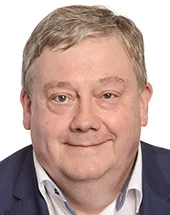
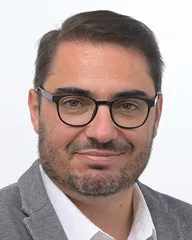
Lukas Sieper | Germany DEU | Non-attached Members (NI) | 390 |
| 2 |
|
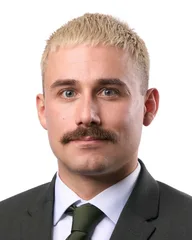
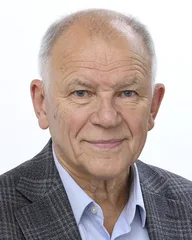
Juan Fernando López Aguilar | Spain ESP | Progressive Alliance of Socialists and Democrats (S&D) | 354 |
| 3 |
|
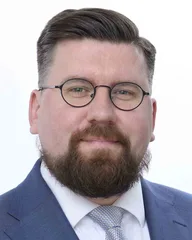
Sebastian Tynkkynen | Finland FIN | European Conservatives and Reformists (ECR) | 331 |
| 4 |
|
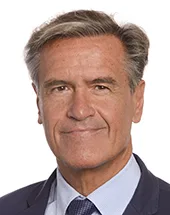
João Oliveira | Portugal PRT | The Left in the European Parliament (GUE/NGL) | 232 |
| 5 |
|
Vytenis Povilas Andriukaitis | Lithuania LTU | Progressive Alliance of Socialists and Democrats (S&D) | 227 |
All Contributions (39)
Promised revision of the EU animal welfare legislation and the animal welfare-related European citizens’ initiatives (debate)
Madam President, in February 2022, the European Parliament calls on the European Commission to clarify and improve EU animal welfare legislation. In 2022 and 2023, two European citizens’ initiatives related to animal welfare collected more than 1.5 million signatures. October 2023: In the Eurobarometer, 84% of European citizens – yes, of course, 84% of citizens – spoke out in favour of improving animal welfare legislation. March 2024: Nothing, absolutely nothing. The European Commission turns a deaf ear, as if the European Parliament’s request did not exist, as if the lives of citizens did not matter, as if animal welfare did not matter much. At the end of the parliamentary term, it is time for the accounts, and we can only regret this lack of proactivity of Commissioner Kyriakides in this matter.
European Media Freedom Act (debate)
Mr President, Commissioner, journalists are sentinels of our democracy. Information vectors, pedagogues sometimes, whistleblowers from time to time, they are necessary for the proper functioning of our society. But, for this, they must be able to exercise their profession freely. If we were to retain three important elements of this text – which I wholeheartedly hope will be voted on tomorrow – I would summarise them as follows: 1) we absolutely want to keep sources secret, and using intrusive surveillance software against journalists must be banned or even punished; 2) it is also essential that the media be transparent about their owners so that everyone can judge whether they are independent or not; 3) Member States must ensure the editorial and functional independence of public media. National authorities will therefore not have the right to interfere with editorial decisions. The European Parliament's text will be a step in the right direction: a free, independent press that is better protected against attacks from all sides. This is a good signal from the European Parliament.
Next steps towards greater patient safety by swiftly ensuring the availability of medical devices through a targeted transitional period (debate)
Mr President, Commissioner, ladies and gentlemen, medical devices play an essential health role in providing innovative solutions for the diagnosis, prevention and treatment of diseases. There are more than 500,000 types of medical devices on the European market, such as contact lenses, prostheses or implants that occupy an important place in the daily lives of tens of millions of Europeans. Given their importance for health, it is imperative to avoid shortages, given the difficulties encountered by manufacturers and notified bodies, but without neglecting the need to ensure the traceability and quality of devices. In addition, EUDAMED, the database on medical devices placed on the EU market, needs to be deployed more quickly, as it allows citizens to have access to information on marketed devices, to learn about reported incidents and the progress of clinical studies. The availability of safe medical devices for European patients must be a priority. sad.
Unitary supplementary protection certificate for plant protection products - Unitary supplementary certificate for medicinal products - Supplementary protection certificate for plant protection products (recast) - Supplementary protection certificate for medicinal products (recast) - Standard essential patents (joint debate - Patents)
Mr President, access to medicines is a public health issue that involves the principles of equality and social justice. There are two major obstacles to the fair distribution of essential medicines: availability and accessibility of medicines. Medicinal products are often the result of lengthy and costly research, and the time taken to obtain a marketing authorisation for a patented medicinal product is estimated at an average of 12 years. Moreover, each state does in its own way, with the risk of inconsistencies and lower efficiency, which is no longer acceptable. Our proposal at European level will allow for greater availability of innovative medicines and should also make them more affordable, which will have a positive impact on the health of Europeans. I therefore welcome these legislative advances, which will make it easier and cheaper for Europeans to access medicines.
Tackling the inflation in food prices and its social consequences and root causes (debate)
Mr President, food prices continue to rise faster than inflation in almost 80% of the world’s countries. This increase is dramatic for many European households and further weakens those who were already in precarious situations. High food prices are an accelerator of poverty. It is time to sound the alarm! We debate here in plenary and in parliamentary committee every month, but the situation is increasingly worrying. And who benefits from the crime? Not to the citizens, anyway. Nor to farmers, the very basis of any food, but clearly not invited to the banquet of the beneficiaries. It is time, ladies and gentlemen, to determine who is amassing these unfair profits and who is acting in a hidden way. I am mainly targeting speculators, who are not useful actors in the food chain, but parasites of it.
Transparency and targeting of political advertising (debate)
Madam President, it must be noted that political online advertising has increased considerably and that national rules on the subject have not followed and are often inadequate to this new situation. It was therefore time for the European authorities to agree on rules highlighting principles of accountability and transparency and proposing an arsenal of sanctions for political advertising. For example, we can only welcome the fact that citizens, authorities and journalists can finally obtain a lot of information on this type of advertising, such as where it is broadcast or how it is financed. It is also important that only personal data explicitly provided by people can be used by providers to target users and prohibit political advertisements based on profiling using specific categories of personal data. The use of minors’ data is an indisputable choice. In short, it will fill an obvious legislative gap and harmonise rules in states where something already existed. In any case, this is a step forward for both advertisers and voters. Congratulations, rapporteur, Mr Gozi, on this work.
Working conditions of teachers in the EU (debate)
Mr President, today, being a teacher is a struggle. In Europe, this vocation is becoming less and less common, with an ageing teacher population and increasing difficulty in recruiting. Verbal and physical violence is growing. Some teachers pay with their lives for the right to teach – unfortunately, the news has reminded us all too painfully in recent months. The malaise is growing: burnout and other unsustainable psychological pressures have almost become the rule. Infrastructure is sometimes inadequate, classrooms are often overcrowded, and teachers, once symbols of authority, are less and less respected, both by children and also by parents and even by the authorities, who struggle to secure adequate budgets. Investing in education must be the top priority because it means investing in our children, to whom we leave as a legacy an unprecedented environmental crisis, geopolitical, social and economic crises. Investing in education means giving everyone a chance to find solutions to crises they have not deserved.
Empowering farmers and rural communities - a dialogue towards sustainable and fairly rewarded EU agriculture (debate)
Madam President, Belgian and European farmers have expressed their legitimate anger and cried out their despair. My feeling is that they were heard, but not necessarily listened to. And then there's this crazy hypocrisy. When I see the Rassemblement National, with Mr Bardella in mind, tapping on farmers’ shoulders with feigned compassion, saying that ‘it is Europe’s fault’, whereas the Rassemblement National and the whole far right voted overwhelmingly for the European common agricultural policy, that is not the case. Yes, you voted for this CAP, which increases the difference between large producers and small farms and is not fair. Yes, you voted for this CAP, a tool of ultra-liberalism, responsible for the state of economic and social disrepair in which farmers find themselves, and which has too often favoured large farms at the expense of human-sized farms. The way in which agricultural activity is financed needs to be completely rethought, taking into account the economic reality of each sector. We also need to rethink free trade agreements. Importing beef from Mercosur, moreover without mirror clauses, or milk from New Zealand makes no sense. It is madness.
Plants obtained by certain new genomic techniques and their food and feed (debate)
Madam President, ah, the new GMOs! I only have one minute to talk about a text that could have consequences for generations. This is already a challenge in itself. Of the major problems, I will highlight three. One: I do not understand that once again the precautionary principle is sacrificed to the detriment of the health of citizens and biodiversity. The European Commission is stubborn in this direction, while many scientists, in particular, consider the text to be devoid of any scientific basis. Two: this is the logic itself. Even if this text is adopted, a farmer who does not make GMOs has no way of combating the contamination of his land. This is aberrant. Three: it is not provided for in the specific labelling text. Consumers will not be able to know whether they are eating GMOs. He will therefore be forbidden to choose. With these three reasons, you should have enough – at least enough – to reject the current text. I wish you a good day, and do not forget to take responsibility for the vote tomorrow.
EU Action Plan: protecting and restoring marine ecosystems for sustainable and resilient fisheries (debate)
Mr President, the scientific evidence is quite clear: the combined effects of climate change and biodiversity loss due to overexploitation and pollution have left marine ecosystems too degraded to function properly. Our seas can no longer effectively fulfil their role as a source of oxygen, food, livelihood and well-being on which coastal communities and European society as a whole depend. Under no circumstances can this be reversed without an improvement in the way we fish and otherwise organise world trade in fishery products, as should also be the case for trade in agricultural products. That is why we need to be ambitious to ensure an informed, inclusive and fair transition to sustainable, ecosystem-based fisheries management. This requires working with all stakeholders on the basis of the best scientific advice and taking into account all the impacts that changes in the use of fishing gear have on coastal communities, fishermen and the environment.
Implementation of the Common Fisheries Policy and future perspectives (debate)
Mr President, the world’s population is expected to reach 10 billion by 2050 and feeding such a population is one of the main global challenges of that time. The UN Sustainable Development Goals, which include the eradication of hunger, to ensure food security by 2030 – they will surely be extended to 2050 as this goal is missed. To achieve these goals, we need to radically change our patterns of production, consumption and access to food. Sustainable fishing is essential if we are to meet the future food needs of the planet and we must therefore make every effort to ensure the energy transition of the EU fisheries and aquaculture sector, fully applying the ecosystem-based approach. It is also crucial to put more emphasis on the social dimension and on improving working conditions on board ships. The Common Fisheries Policy therefore needs more than ever to be reformed and adapted accordingly, as should the Common Agricultural Policy, and finally be fully in line with the social and environmental imperatives of our time.
Recent ecological catastrophe involving plastic pellet losses and its impact on micro plastic pollution in the maritime and coastal habitats (debate)
Mr President, every year millions of tonnes of plastic are dumped into the oceans and this pollution threatens marine life and destroys ecosystems. According to a UN study, 100,000 marine mammals die each year from plastic ingestion or entanglement in plastic debris. Even worse, by 2050 there could be more plastic than fish in the oceans. But it is also a public health issue as we ingest almost 50 000 microplastic particles per year. It is clear that ultimately the medical consequences for all of us, for our children and for their children, represent a huge danger. The Commission proposal on preventing plastic pellet losses is a good basis for work, but the European Parliament needs to be even more ambitious. It is high time to act to combat this ecological and health catastrophe, which unfortunately is repeating itself.
Presentation of the programme of activities of the Belgian Presidency (debate)
Madam President, Prime Minister, this Belgian presidency will be the 13th in history and Belgium has often made a positive mark on its presidency. I want the previous one as proof, remember – and you will certainly remember it better than anyone, Prime Minister, since it was in 2010 – it was led from start to finish by a government in day-to-day affairs that you helped to put in this situation a little bit. This presidency will be difficult because it is the last of the legislature, and there are still so many important files to concretise, including a Green Deal to save, a deep geopolitical crisis to manage, but also an economic and social situation in a context of inflation that must be fought against. Flatterers will say that there was no better way than Belgium to manage this crisis anyway, and to preside over Europe at this time – because we always end up finding solutions – and the bad languages will say that maybe we should have postponed our presidency because there will be three elections on 9 June next. In any case, as of 16 January, you have exactly 100 days left. 100 days to convince, 100 days to succeed. This will be the date of the last plenary of this Parliament. But for Belgium and for Europe, you need to succeed and I wish you and your entire government success, Prime Minister.
The role of social award criteria in public procurement in strengthening social rights, good working conditions and inclusive labour markets (debate)
Mr President, I had the immense honour, but also the heavy task, of being in charge of the overhaul of public procurement legislation just ten years ago, since they were voted on 15 January 2014. Our aim at the time was clearly to combat social dumping and unfair competition in works contracts, but also to increase the quality and efficiency of services to citizens, facilitate market access for SMEs, ensure that good working conditions and environmental criteria were respected. After a long political struggle, the text made it clear that the criterion for public procurement was based essentially on quality and no longer systematically on the lowest price. This is essential in the fight against social dumping, but of course also in terms of working conditions, while guaranteeing citizens a job well done. But like you, I have read the conclusions of the European Parliament's recent study on the social impact of public procurement and I am very bitter to note that public authorities still face legal obstacles and uncertainties when trying to apply social and environmental award criteria. This is not tolerable and I urge the European Commission to resolve this situation, which is totally contrary to what the legislator wanted and contrary to the general interest.
Parliament’s call for the right to disconnect - three years on (debate)
Mr President, as I recall, the right to disconnect is the fundamental right of employees to disconnect, not to be reachable outside working hours. It is absurd to still hear employers questioning this right in 2023. Bosses, managers, directors, even politicians, believe that this right is an obstacle for their company and an obstacle to their search for profitability. To all those who have still not understood what a fundamental right is, I will quote a number: 300 million. Yes, colleagues, 300 million people around the world today suffer from depression and work-related mental disorders. There is no longer any doubt that constant connectivity for work-related reasons can have serious consequences for the health of our citizens. The right to disconnect is therefore a fundamental right; that it is enshrined in EU law is self-evident. Finally, allow me, Commissioner Schmit, to congratulate you on this commitment on this subject, as in all those you have worn and continue to wear during this parliamentary term.
Framework for ensuring a secure and sustainable supply of critical raw materials (debate)
Mr President, whether it is smartphones or solar panels, critical raw materials are part of our daily lives. Metals such as lithium or cobalt have become the crucial issues on the ground in geopolitical games. All the crises we are going through only increase this trend. It is therefore crucial that the EU reduces its dependence on third countries for raw materials and strengthens its own supply chains. It should be added that these measures, which also concern cooperation with third countries, must absolutely respect fundamental rights, in particular workers’ rights, local communities, but also the environment. Here is therefore a chance to reconnect with a European strategic vision which, in addition, will incorporate the principle of duty of care, which we have strongly supported here.
Packaging and packaging waste (debate)
Mr President, setting up a European Green Deal is an imperative. A priority. Some people stubbornly say that everything is fine, or that everything will eventually work out. That is not the case. Among all the measures we are trying to put in place at EU level to give future generations a chance and tackle this growing source of waste, the new packaging rules have their place. On average, each European generates 188 kg of packaging waste per year. This is huge. This is 11 kilos more than in the previous year. Above all, this shows us that it is essential to legislate on this issue, since many companies do not understand for themselves that the planet’s resources are not inexhaustible, and that they prefer to privilege their own benefit rather than the public interest, there is no choice but to impose strict rules. And to those who say that nobody does it in the world, I will say that we have to start somewhere, and if Europe can be a pioneer in recycling, we should be very proud of it.
Sustainable use of plant protection products (debate)
Madam President, I would like to take this opportunity to address the issue of pesticides, which are banned in Europe but exported to the rest of the world. Because yes, too many pesticides, banned from use in Europe, are still exported from our continent today. This practice is deeply shocking and totally unethical. Indeed, these products are now banned on the European market precisely because their use is harmful to human health, the environment and biodiversity. What is not good here is not good elsewhere, and dumping what we consider toxic at home is deadly. It is deadly, but also completely stupid when we know that the products we import from these countries contain the pesticides we wanted to get rid of. So they end up on our plates. Stupidity is often a boomerang, but the victims, once again, are the citizens. It is therefore necessary to ban the export of these banned pesticides in all Member States and to check that this ban is respected.
Common rules promoting the repair of goods
Madam President, 35 million tonnes of waste, I do not know if one can imagine. This is what the destruction of repairable objects, which are not repaired, means every year. But that is not all. Beyond the 35 million tonnes of objects that are not repaired, there is the environmental cost. This represents no less than 30 million tonnes of wasted resources and an additional 261 million tonnes of greenhouse gas emissions for the European Union alone. Don’t throw any more, the cup is full. And then there are the consequences for the citizen’s portfolio, which, often having to replace because it cannot be repaired, disburses EUR 12 billion annually. This is, of course, unacceptable. It is therefore essential to facilitate the possibility of repairing and enabling citizens to consume more sustainably. Repair rather than replace must be the watchword now. I congratulate the rapporteur, René Repasi, on his commitment to this subject, which is fundamental for consumers and, more broadly, for our society.
System of own resources of the European Union (debate)
Madam President, Europe wants to serve as a bulwark for citizens against economic, social and climate crises and, as we see every day, the budgetary issue in these fights is central. We must fully engage in the profound transformation of our economic model, a model in which Europe can rely on its own resources budget, a model in which a real financial transaction tax, a wealth tax for individuals, an extension of the surplus profit tax to all sectors that have benefited from the global crises, a minimum European tax on capital gains and all the elements that can finally establish more tax justice. It is imperative for Europe to have a more transparent and fair system of financing the budget and to provide the European Union with its own resources. Continuing to depend solely on national allocations makes no sense. Preventing us from collecting revenue directly is an almost insurmountable handicap if we want to pursue bold, courageous, solidarity-based, autonomous policies that are in the public interest.
Generational renewal in the EU farms of the future (debate)
Mr President, one in four farmers in Europe today is over 60 years old. This situation is alarming, but it is not new. What is true is that this is accelerating dangerously, when we remember that, five years ago, only one in five farmers was over 60 years old, and that, ten years ago, it was only one in ten. Moreover, the establishment of young farmers is stagnating and even decreasing in some countries. Income gaps between the primary sector and other economic sectors, the immobility of the land market, the lack of appropriate arrangements to manage farm transfers, but also the extreme difficulty of access to finance for young farmers: all these problems must be urgently solved. It is high time that the European Parliament and, more broadly, all the European institutions made this issue a priority. The disappearance of farmers on human-sized farms would mean an end to the relocation of food production – a threat to the local economy, a threat to the environment and a threat to the very existence of rurality. I don't think anyone here wants to.
European protein strategy (debate)
Madam President, the European Union imports more than two thirds of its vegetable proteins: this alone summarises what is at stake in this text. This is obvious: We need to reduce our protein dependency as much as possible, and this has been said, while promoting the ecological transition. Europe wanted this hyperdependence when it signed the Blair House agreements more than 30 years ago. Today, only 30% of vegetable proteins – legumes or oilseeds –, mainly used for animal feed, are produced in Europe. Soybeans, for example, come more than 90% from Brazil or the United States. It is therefore logical that we demand an ambitious European strategy on plant proteins. I also call on the European Commission to return to reason, as it has difficulty accepting this evidence. I have always advocated a significant coupling of CAP aid to encourage the production of plant proteins at European level. Finally, I would point out that, in addition to food sovereignty, feeding farmed animals with locally produced proteins promotes short supply chains, opens up new opportunities for our farmers and, a fortiori, will be beneficial in the fight against global warming.
The new European strategy for a better internet for kids (BIK+) (debate)
Madam President, although the internet is a great place to learn, exchange, inform and organise, to campaign and to be aware of its power to act, it is also an ambivalent space. Online platforms are not neutral spaces. All the discrimination and oppression that can be seen offline is multiplied tenfold online. There is no question of this finding: Almost one in three children experience cyberbullying at least once in their life in Europe. Every year, many young people are thrown into disarray, distress and even suicide. Harassment at school finds an easy relay in online technologies and thus continues outside of school. It is essential to better equip these schools to prevent and manage cases of harassment, to multiply channels where open communication is possible, to be able to listen to victims, to raise awareness among witnesses, to identify harassers. In short, this approach must be part of a comprehensive anti-harassment policy to prevent the phenomenon that has already shattered too many lives and destinies.
The proposed extension of glyphosate in the EU (debate)
Mr President, I was already talking about it on Monday, because of the random timing of this plenary session, this week we are debating the issue of asbestos and glyphosate. And I was talking about the scary similarity between the asbestos advertising slogan at the time and Monsanto's Roundup. Both ads shamelessly explain that both asbestos and glyphosate are clean, sustainable and in harmony with nature. Another similarity struck me in the conclusion of the asbestos prospectus, and I quote word for word: The problems posed by asbestos are nothing compared to the immense services it provides you every day. This is the same argument that has served us today on glyphosate. It's cold in the back when we know that asbestos still kills 70,000 people a year in Europe. I say it and I repeat it, scientific research and progress, yes, but take Europeans for guinea pigs, no. Asbestos, glyphosate, let's not make the same mistakes.
Protection of workers from asbestos (debate)
Mr President, the coincidence of the calendar means that, in the same week, we are dealing in the European Parliament with the issue of asbestos – today – and that of glyphosate. I looked at the advertisements that touted these two products. ‘A natural product, a mineral fibre present everywhere in nature’: That was the slogan for asbestos. ‘Roundup, a clean and sustainable product, a product close to nature’: This, as you will have understood, was the slogan of glyphosate. This parallel has something to scare us. Since 2005, asbestos has been banned throughout the European Union following a long battle between trade unions and victims’ associations. The belated action of the authorities has resulted in the deaths of hundreds of thousands of people and is likely to result in tens of thousands more. For glyphosate, the Commission proposes to extend this product by 10 years – we will talk about this later. Scientific advances, yes, but once again take citizens for guinea pigs, no.