
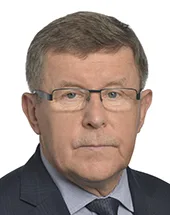






| Rank | Name | Country | Group | Speeches | |
|---|---|---|---|---|---|
| 1 |
|
Lukas Sieper | Germany DEU | Non-attached Members (NI) | 390 |
| 2 |
|
Juan Fernando López Aguilar | Spain ESP | Progressive Alliance of Socialists and Democrats (S&D) | 354 |
| 3 |
|
Sebastian Tynkkynen | Finland FIN | European Conservatives and Reformists (ECR) | 331 |
| 4 |
|
João Oliveira | Portugal PRT | The Left in the European Parliament (GUE/NGL) | 232 |
| 5 |
|
Vytenis Povilas Andriukaitis | Lithuania LTU | Progressive Alliance of Socialists and Democrats (S&D) | 227 |
All Contributions (41)
Corrupt large-scale sale of Schengen visas (debate)
Mr President, thank you very much. Mr. Commissioner, I'm sorry. This number has already fallen here many times: 268 visas for two million issued at that time. One-tenth of a mile. The Polish state reacted quickly, the services caught the culprits. Polish courts will probably convict them. It is a pity that the German state did not react in 2010 when its consulates in Africa and South America massively issued visas for money. Similarly, the French state in 2022, when its consulate in Morocco issued visas to the mafia for money. You did not hold debates on these issues here in Parliament at the time. You are organizing them to support the Platform in the elections in Poland, and you are organizing them to cover the consequences of the disastrous German policy of opening borders. It's the famous German Herzlich willkommen It opened up all the borders. As a result, more than a million people have entered Europe, and we are suffering the consequences so far. The German government has changed nothing in its policy. Now it finances ships that bring illegal immigrants to Ukraine. Do you have a grudge against Poland? This is an unimaginable scandal. Thank Poland for guarding the eastern border, because if it did not, Germany would be attacked by a horde of people organized by Putin and Lukashenko.
Ukrainian grain exports after Russia’s exit from the Black Sea Grain Initiative (debate)
...that such information is covered by trade secrets and any publication of such information would have legal consequences, including damages. As an advocate of the rule of law, you should know this. And secondly, if Minister Sikorski or someone else from the Polish government published this, you would not get together, because it was your companies associated with you politically that led to the destabilization of the Polish market. You should be glad it's not possible. You should be happy!
Ukrainian grain exports after Russia’s exit from the Black Sea Grain Initiative (debate)
...import of cereals into the European market, does not take into account the Russian context, cultivates the Russian narrative. You are a perfect example of this. You are a representative of the Russian narrative. I'll say it again. Thanks to a political decision following Russia’s aggression against Ukraine, Ukraine gained access to the EU market without any restrictions, without any restrictions. Understand this at last. Understand it at last! And what happens is the consequences of that access. We say this to farmers, but don't do the Russian narrative, don't do the Russian narrative!
Ukrainian grain exports after Russia’s exit from the Black Sea Grain Initiative (debate)
Madam President, I'm sorry. Mr. Commissioner, I'm sorry. First of all, I want to emphasize this Russian thread. If in this debate those who speak on this topic do not emphasize, saying that Russia is destabilising food markets in Europe due to Russia's aggression against Ukraine, it means that they are engaged in a Russian narrative. Mr Halicki is a classic example. He was doing a Russian narration here. Mr Belka was able to stand up too much and presented this context. Together with Kołodziejczak, you are engaged in the Russian narrative. Shame on you! Secondly, I would like to thank Commissioner Wojciechowski for coming to the meeting of the Committee on Agriculture two weeks ago and for showing how this matter has been dealt with. Firstly, maintaining the import of cereals to five countries and, at the same time, subsidies for transport for Ukrainian entrepreneurs. I am very grateful to him that, going beyond his competences (because it is the competences of Commissioner Dombrovskis, from your faction, from your faction, learn finally that the common commercial policy is Commissioner Dombrovskis, not Commissioner Wojciechowski), he presented it. Thirdly, thirdly. Shut up! - Shut up! Thirdly, thirdly. Thirdly, I want you to understand what the situation is, e.g. Poland. Imports of corn increased 300-fold, 300-fold to the Polish market. Imports of wheat from Ukraine have increased 600-fold. What country can withstand this? So understand the seriousness of the situation. And last but not least, rise above this policy and support Commissioner Wojciechowski's proposal. Then we'll get out of this with a defensive hand. Have a little patriotism. (The speaker agreed to answer two questions raised by raising a blue card)
Nature restoration (debate)
I'll say it again: we are all in favour of biodiversity, but these proposals are mandatory, administrative and, moreover, do not provide the means to implement it. The Common Agricultural Policy, in particular after 1 January this year, is doing exactly the opposite: encourages and shows additional payments for this purpose. Only then can we achieve success in this area.
Nature restoration (debate)
Madam President, I'm sorry. Mr. Commissioner, I'm sorry. We are all interested in nature restoration, but the proposals contained in the regulation are unacceptable, because they harm agriculture, forest management, as well as investment processes. As far as agriculture is concerned, the protection of the environment and the protection of biodiversity are part of the common agricultural policy. Every seven years, we spend about a third of the CAP, more than €100 billion. What is more, since 1 January this year, we have also included eco-schemes in the common agricultural policy: plant, animal. But farmers participate in their implementation voluntarily. Moreover, they receive additional income for their implementation. This is exactly the opposite of your regulation, where we have compulsoryity, coercion and not a single euro for performing additional duties. It's just unacceptable. Moreover, there are no indicated sources of funding and the Commission acquires competences that are not included in the Treaties. For this reason, the Polish delegation in the ECR will vote against this regulation. (The speaker agreed to answer the question by picking up the blue card).
Ensuring food security and the long-term resilience of EU agriculture (debate)
Madam President, I'm sorry. Mr. Commissioner, I'm sorry. First the COVID-19 pandemic and now the full-scale war in Ukraine have reminded us of the importance of food security and agricultural resilience to various crises. They should be a priority on our political agenda and European food production should be a strategic sector on an equal footing with energy security. Therefore, we cannot afford to be reckless in this area, to act with unforeseen consequences for the profitability, stability and productivity of the agricultural sector. The dramatic development of events in the past year (Russia's aggression against Ukraine, the crisis on the energy market, and consequently also fertilizer) has caused that additional financial resources must be directed to agriculture. I would like to thank the Commissioner for the rapid mobilisation of the crisis reserve and for prioritising requests for public assistance. If we spend more from the EU budget than before to ensure energy security for Europeans, then a much larger budget is also needed to ensure food security. It is good that this statement is included in the report.
Competition policy - annual report 2022 (debate)
Mr President, thank you very much. Commissioner, I'm sorry. I would just like to draw attention to one aspect of this report. This is what the rapporteur has said. It is about a wide stream of public aid and a deep differentiation of this aid in terms of individual Member States. Of course, I am aware that additional public aid was necessary because of the effects of COVID, now because of Russia’s aggression against Ukraine and the effects of this on the economies of EU countries, but this differentiation is really profound. Here I will present such short data from that year. For seven months, from February to October, the Commissioner has accepted more than 100 projects for an astronomical sum of perhaps €435 billion. Of these, 90% belonged to two countries – Germany and France. Moreover, the two countries have announced that they will release further tranches of public aid of €200 billion and €100 billion respectively. So this overwhelming public aid in these two countries will unfortunately continue. Of course, I realize that these are the two largest economies, accounting for 40%. GDP. But, Commissioner, this is ruining the principle of equal competition. And I would ask you to address that.
Ukrainian cereals on the European market (debate)
Madam President, I'm sorry. Mr. Commissioner, I'm sorry. Madam Minister ! There is no doubt that problems with the export of Ukrainian grain and a kind of swing in prices on world grain markets are the consequences of Russia's aggression against Ukraine, as well as the hybrid war that Russia is waging not only with regard to energy resources, but also with regard to agricultural raw materials. A side effect of the creation of the Solidarity Lanes was the excessive import of cereals into frontline countries, including my country Poland, which has destabilised the cereal markets in those countries. I would like to thank the Commissioner, and Commissioner Dombrovskis, for their prompt reaction to the speech of the prime ministers of the five countries and the introduction of an EU ban, which I would like to stress, on the import of four cereals into those five countries. I would also like to thank you for having already activated the crisis reserve twice, which is now going to the farmers of these countries, and on the occasion also to the ministers of the 22 Member States, who have agreed that these five countries should benefit from the crisis reserve. I hope that you will also support the actions of individual governments, which in Mrs Vestager are trying to accept public aid programmes.
Impact on the 2024 EU budget of increasing European Union Recovery Instrument borrowing costs - Own resources: a new start for EU finances, a new start for Europe (debate)
Mr President, thank you very much. Mr. Commissioner, I'm sorry. Despite the fact that the costs of servicing the debt related to Next Generation EU have increased significantly, I believe that they should continue to be financed under the EU budget, primarily the flexibility mechanism. On the other hand, if the mid-term review is to bring something, it should generate funds to service the costs associated with Russia’s aggression against Ukraine. Frontline countries, such as my country Poland, face enormous costs (at the moment it is already 2.5% of GDP), which are in no way reimbursed by the European Union. On the other hand, when it comes to own income, especially when it comes to this category of environmental income, it actually burdens, as I have pointed out many times, the less prosperous countries more than the rich ones. This is contrary to Protocol 28 to the Treaty on the Functioning of the European Union and therefore Member States such as Poland cannot support this solution.
Revision of the EU Emissions Trading System - Monitoring, reporting and verification of greenhouse gas emissions from maritime transport - Carbon border adjustment mechanism - Social Climate Fund - Revision of the EU Emissions Trading System for aviation (debate)
Mr President, thank you very much. Mr. Commissioner, I'm sorry. As rapporteur for the AGRI opinion on CBAM, I will focus only on this regulation. Unfortunately, the compromises do not take into account the interests of the agri-food sector. As agricultural organisations have rightly pointed out, agriculture will be punished twice as a result of this regulation: on the one hand, it will suffer the negative effects of the inclusion of fertilising products in the scope of this Regulation, i.e. an increase in their prices, on the other hand, agricultural products will not benefit from the protection of competitiveness offered by participation in the CBAM system. I am aware that it was far too early to include these products, but no mechanism has been developed to protect farmers from possible increases in fertiliser prices. The second problem with high economic sensitivity, and consequently political, is the withdrawal of free ETS allowances as CBAM certificates are introduced. I have pointed out that it is too early for this, and although I assess the negotiated timetable for their withdrawal better than the ambitious position of Parliament’s Environment Committee, I believe that the withdrawal of free allowances carries the risk of destabilising production in the energy-intensive industry sector and further losing the competitiveness of the European economy. I also criticise the inclusion of indirect emissions in the CBAM mechanism. I called for this to be done after an additional impact assessment. A positive element is that Member States become the owners of the proceeds from the sale of CBAM certificates. But we have already heard here in this Chamber that a large number of Members expect that this will also be the revenue of the European Union budget, and this should not be the case.
European Citizens’ Initiative "Save bees and farmers! Towards a bee-friendly agriculture for a healthy environment" (debate)
Madam President, I'm sorry. Commissioner, I'm sorry. The title of this debate is appropriate to the seriousness of the problem. On the one hand, bees are estimated to account for one third of global food production and are therefore necessary in the agricultural process. On the other hand, we should also remember the fate of farmers, care for their future, because in the last ten years three million farms have disappeared in the European Union. We should approach this problem sensibly. No radicalism is absolutely necessary here. Let us recall that these proposals, which appeared in the committee when it comes to reducing the use of pesticides, are simply unacceptable. Mr Buda has already said this. This cannot be the case if we have several times the differences in the use of pesticides in different countries. The proposal to reduce them by 50% simply does not stand up to criticism. And such a submission appeared in the committee. Support for the beekeepers' environment is needed. Precision farming and common sense are needed.
Binding annual greenhouse gas emission reductions by Member States (Effort Sharing Regulation) - Land use, land use change and forestry (LULUCF) - Revision of the Market Stability Reserve for the EU Emissions Trading System (debate)
Madam President, I'm sorry. Mr. Commissioner, I'm sorry. The main objections I want to make to this package are, first of all, that it is based largely on ideology and, unfortunately, substantive considerations have fallen into the background. We are undermining the competitiveness of the European economy, of European agriculture, and yet the European Union is only responsible for 7% of global CO2 emissions. The other emitters, especially the major emitters, do not care much, they basically mark the policy of reducing CO2 emissions. Moreover, the main beneficiary is the Chinese economy, which has already been invoked here. China is a leading manufacturer of photovoltaics, cars with electric motors. They are the main beneficiaries of the EU's climate policy, and at the same time they are launching coal-fired power plants on a huge scale. This cannot be continued. As far as the LULUCF Regulations are concerned, there are also powerful reservations here. It will hit European livestock, and yet the CAP is responsible for food security. It will hit forest management, which employs 2.5 million workers. This is a road to nowhere, Commissioner.
Availability of fertilisers in the EU (debate)
Mr President, thank you very much. Mr. Commissioner, I'm sorry. Friends and colleagues! It should be recalled at the outset that the crisis on the fertilizer market was caused by Gazprom's conscious policy on the gas market, which was also exacerbated later by Russia's aggression against Ukraine. Despite the sharp, even two or threefold increase in the prices of agricultural and other fertilizers, including production costs, European farmers have once again risen to the task of ensuring food security for us Europeans. But as fertilizer prices remain very high, it is necessary to mobilise further financial support for farmers. The Commissioner has already said that this has happened in some countries, including my own country, Poland. But I think there is a need now, at least in part, for the crisis reserve to be dismantled and for European farmers to be supported. In addition, other actions are needed and should be carried out simultaneously. Firstly, financial incentives for farmers to innovate, optimise fertiliser use, i.e. precision farming, and support alternative solutions in the form of organic fertilisers. On the other hand, there is no doubt that we should support the EU fertilizer industry, because it has such a potential that it can provide fertilizer consumption needs for all farmers. There is therefore a need for protection against dumping – as there is no doubt that the prices of fertilisers imported from certain countries are dumped – and support for this industry, as it has great potential and is able to supply the right amount of artificial fertilisers. Since this resolution has been prepared by President Lins, as well as the shadow rapporteurs, and it basically fulfils all the demands I have been talking about, we, as the ECR Group, will support it.
REPowerEU chapters in recovery and resilience plans (debate)
Madam President, I'm sorry. Mr. Commissioner, I'm sorry. Unfortunately, it was only Russia's aggression against Ukraine that showed how harmful the policy of making EU countries dependent on Russian energy resources was carried out by Germany and, consequently, by the European Commission. It is therefore good that, following Russia’s aggression against Ukraine, the REPowerEU programme was presented and included in the national RRPs. But I would like to inform you that my country, Poland, has been pursuing a policy of independence from Russian energy resources for more than a decade: we built Gazoport in Świnoujście, Baltic Pipe, with which we import gas from Norway, interconnectors with Slovakia and Lithuania. We are already energy independent when it comes to gas supplies. Same with oil. Seven years ago, we were 100% dependent on Russian oil. More than 90% of oil is now imported from third countries. It is high time, Commissioner, that this effort, the gigantic effort of Poland, is finally recognised by the Commission. Finally, two comments on REPowerEU. Firstly, it is precisely the large share of funding from the ETS that hits poor Member States, which, after all, spend this money on climate policy. Secondly, there is no derogation from the principle of do no significant harm, which undermines the possibility of financing technical infrastructure from this programme, which is, after all, the basis for diversifying the supply of energy raw materials.
Protection of the EU’s financial interests - combating fraud - annual report 2021 (debate)
Madam President, I'm sorry. Commissioner, I'm sorry. Despite the fact that Poland has not joined the European Public Prosecutor's Office or prepared an anti-fraud strategy, it turns out that we are the leader in reporting such irregularities to the European institutions. As it was already said, as much as 17% of all applications come from Poland, which means that Polish institutions fighting corruption and bad use of European funds work very well. Moreover, the Commissioner also spoke a lot about VAT fraud. It so happens that the government in Poland for eight years of its activity has led to the fact that budget revenues from VAT have doubled, increased by 100% in seven years. As for the so-called VAT gap, it was reduced in Poland in 2021 from 24% to 4%. It is the European institutions that should follow the example of Poland, because we show how to fight corruption and fraud.
Upscaling the 2021-2027 Multiannual Financial Framework (debate)
Madam President, I'm sorry. Mr. Commissioner, I'm sorry. The current financial framework was set up long before the COVID-19 outbreak and its consequences, long before the war in Ukraine, long before elevated inflation or the destabilisation of energy commodity markets, with all its negative consequences. There is therefore no doubt that they need to be revised under these new conditions. Moreover, the organisation of macro-financial assistance to Ukraine is proof that additional fresh money is needed. But I would like to raise here two fundamental objections to the proposals, which also appear in the report. Those new own resources, particularly those of an environmental nature, are regressive. Less prosperous countries are more burdened than rich ones and the experience with the levy on unprocessed plastic in the case of my country, Poland, clearly shows this. Secondly, there is a serious objection to the intention to introduce a qualified majority rule in the adoption of the financial framework. Commissioner, this is absolutely unacceptable. We agreed that financial matters should be decided unanimously. And what is being proposed will only aggravate the differences between countries.
A long-term vision for the EU's rural areas (debate)
Madam President, I'm sorry. Commissioner, I'm sorry. First of all, I would like to thank the rapporteur and my fellow shadow rapporteurs for their excellent cooperation in the spirit of compromise and similarly understood interests of rural areas and villages. This is why this report has no amendments and will be adopted by a large majority in this House. As a representative of the ECR Group, it was a priority for me to stress in the strategy that the primary role of rural areas is to have an agricultural economy geared towards food production, and that this production must be profitable for farmers and ensure a dignified existence for them and their families. Any strategies will be of no use if working on the land is not economically attractive, especially for the young generation, who today flee from the countryside to the city, looking for a better life there for themselves. Our report, moreover, diagnoses this situation well, pointing out that 3 million farms have disappeared in Europe over the last ten years. Unfortunately, this process is ongoing, although now with less intensity. It is also noteworthy that rural development, and in particular the construction of social and technical infrastructure, should be financed by the Cohesion Fund. That hasn't been the case so far. Indeed, the money for the Common Agricultural Policy, especially from the second pillar, which has been difficult to extract, can be said to have been used very often for infrastructure, and should have been used to support farms, to modernise them, to increase agricultural production. Since both the Commission Communication and the work on the report were largely carried out before the outbreak of the war, it was only this war in Ukraine and Russia’s hybrid warfare that demonstrated the importance of food security. In this regard, I would like to thank Commissioner Wojciechowski for the urgent actions that actually strengthen food security, such as the suspension of set-aside or opposition to the proposal to reduce pesticide consumption by 50% for all Member States, which is, after all, a pointless solution.
System of own resources of the European Union (debate)
Mr President, thank you very much. Mr. Commissioner, I'm sorry. In accordance with Article 311 of the Treaty on the Functioning of the European Union, these new tax burdens should be fairly shared between Member States. This is not the case for these new resources. We have hard data on the fee for unprocessed plastic. In the case of my country, Poland, this is a burden amounting to 8% of the total receipts. While GNI revenue is 3 %, which is three times more than the previous contribution. Similarly, in the case of ETS revenues, two and a half times more, in the case of CBAM twice as much. This is extremely unfair. And a second serious doubt. Well, the new revenues are mainly based on these environmental levies, so they reduce the possibility of financing climate and energy targets for the Member States that have the biggest problem with it. Such as my country, Poland. In this situation, taking these measures hits the Union’s climate targets. It doesn't make any sense.
Borrowing strategy to finance NextGenerationEU (debate)
Madam President, I'm sorry. Mr. Commissioner, I'm sorry. The concept of NextGenerationEU was conceived at a time when we were dealing with cheap money. This era of cheap money is over forever. As a result, service costs are also rising significantly. The Commissioner is probably aware of this. It is good that the Commission has prepared a fundraising strategy, that it uses various instruments, ‘green bonds’, multi-annual bonds, treasury bills. I understand that in this way he tries to reduce the cost of borrowing. But there is no doubt that they will grow, and you need to be aware of this. On this occasion, however, I would like to raise serious concerns. I represent a large European country, Poland. As the Commissioner is well aware, my country has so far not been using RRP funds simply because we have a political blockade on the Polish RRP. We have submitted this plan in accordance with the regulation that governs the functioning of the plans, and yet this blockade has not yet been lifted. I hope that will be the case in the future. And while we are not discussing new sources of funding today, as the debate will take place tomorrow, I would like to draw your attention or raise two objections on this issue. Firstly, these new instruments, unfortunately, are far more unfavourable to less affluent countries than to the affluent. This is especially true after the unprocessed plastic tax. And the second caveat - some of these instruments take away funds for the energy and climate transition from the Member States and will therefore not allow them to achieve these goals.
REPowerEU chapters in recovery and resilience plans (debate)
Mr President, thank you very much. Mr. Commissioner, I'm sorry. I am pleased that we are talking about a programme that is diverting the European Union and its Member States from Russian raw materials. For years, the policy of dependence on Russian raw materials was carried out by Germany, and consequently the European Commission supported it. It is good that this problem has finally been recognised in connection with Russia's aggression against Ukraine. Secondly, this is a funding issue. The Commission is inclined to show measures that have already been divided among Member States. In fact, we are talking about a very small amount of EUR 20 billion in a situation where the Commission itself writes that money is needed ten times more by 2027. And finally, thirdly, in all this we have such an internal contradiction. On the one hand, we aim to increase the share of renewable energy in the energy mix, but on the other hand, we know very well that this renewable energy must be accompanied by some kind of stabilization reserve. What is a stabilization reserve? Rapidly built or fast-created gas reserve? The gas has gone up a dozen times. We also need to resolve this contradiction.
Global food security as follow-up to the G20 Agriculture Ministers meeting (debate)
Mr President, thank you very much. Commissioner, I'm sorry. Mr. Secretary of State! There is no doubt that due to the COVID pandemic, as well as Russia’s aggression against Ukraine, the world is in a state of global food security crisis. If 40% of wheat imports to Africa came from two countries, namely Russia and Ukraine, if 50% of the World Food Programme's grain demand came from Ukraine, then Russia's aggression against Ukraine has caused full destabilisation on the food market. Moreover, Russia has done everything to destabilize the food market, destroying sowings in Ukraine and destroying infrastructure, and finally blocking Black Sea ports. It is a pity, then, that in Bali, during the meeting of G20 agriculture ministers, Russia could not be identified as the main perpetrator of what is happening on the food market. In this context, it is important to highlight the great role of the European Union in building solidarity lanes, those by land, and later also in the negotiations leading to the unblocking of Black Sea ports. The whole effort of the European Union, the European Commission should go in the direction of increasing the production capacity of European agriculture. A good step is to suspend set-aside or the fertiliser strategy announced by Commissioner Wojciechowski. Hopefully, it will meet the expectations of farmers. In the light of this, for example, the proposal for a regulation to reduce the use of pesticides, yet in such an absurd way that 50% in all countries, no matter how much of these pesticides they use, is simply unacceptable.
General budget of the European Union for the financial year 2023 - all sections (debate)
Madam President, I'm sorry. Mr. Commissioner, I'm sorry. Mr. Secretary of State! I want to raise three issues with this budget. The first is, in my opinion, an insufficient level of payment. Well, we are implementing the last year of payments related to the previous financial perspective, and payments in this budget have been designed very conservatively. Moreover, this correction letter reduced this free amount from five and a half billion to just over three. Which narrows the field of action. Insolvency, Commissioner, is not the best publicity for the European project. Of course, I'm talking about potential insolvency, but we had these bad experiences from 2014-2016 and you have to keep them in mind. The second issue is inflation. She's already over 10%. It will probably be a few percentage points higher in the spring of next year. In the project, this applies to all expenses. This is not seen in the draft budget. Last but not least, help for Ukraine. Even after this corrective letter, it is absolutely underestimated, and even the aid to Ukraine's neighbouring countries for the reception of refugees is almost symbolic. I just want to point out that Poland has so far spent almost 9 billion euros on this aid, and we are receiving completely symbolic support. In 2023, this simply cannot be tolerated.
The urgent need for an EU strategy on fertilisers to ensure food security in Europe (debate)
Mr President, thank you very much. Mr. Commissioner, I'm sorry. The market for energy raw materials, in particular gas, was destabilised in the autumn of last year, well before Russia’s invasion of Ukraine. Gas prices have already increased tenfold. Almost immediately, this obviously translated into the prices of artificial fertilizers, because the cost of gas is, depending on the type of fertilizer, 70-80% of the cost of its production. In this situation, around 70% of fertilizer production capacity is already lacking across Europe, including Poland. As the Commissioner is well aware, our country has reacted to this with subsidies for fertiliser prices for farmers – a programme worth almost EUR 0.8 billion. But of course, this can only be a one-off action. EU action is therefore needed to bring down gas prices – and this is possible. 17 EU countries have just proposed to introduce maximum prices for gas imported into the European Union. President von der Leyen is strangely opposed to this solution. I hope, however, that in mid-October such a regulation will be prepared at the request of these seventeen countries, and at least once this will result in a reduction in raw material prices, and thus will have a positive impact on fertiliser prices. Of course, the strategy announced by the Commissioner in this regard is needed, but it will bring positive results probably a little later.
New EU Forest Strategy for 2030 – Sustainable Forest Management in Europe (debate)
Mr President, thank you very much. Mr. Commissioner, I'm sorry. The fundamental objection I wished to make to this strategy (which, moreover, has been raised in this Chamber) is the breach of the principle of subsidiarity, i.e. the preparation of a forestry strategy in a situation where the competence in this area lies with the Member States. Secondly, the strategy, like many other strategies recently announced by the Commission, emphasises this environmental theme and leaves economic and social issues out of its focus. And forests undoubtedly have an impact on this economic and social situation, especially at the local level. This is unfortunately omitted and this is a very serious mistake. In my country, Poland, forests are mainly managed by a state farm. The area of forests is growing year by year. From the post-war period to the present, it has increased by 10%. Forests currently cover 30% of the country. Wood resources in forests are increasing. Annual harvesting is less than growth, so imposing any restrictions on such forest management simply does not make sense. I therefore urge that the development of forest management be left to the competence of the Member States.