





| Rank | Name | Country | Group | Speeches | |
|---|---|---|---|---|---|
| 1 |
|
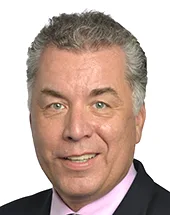
Lukas Sieper | Germany DEU | Non-attached Members (NI) | 390 |
| 2 |
|
Juan Fernando López Aguilar | Spain ESP | Progressive Alliance of Socialists and Democrats (S&D) | 354 |
| 3 |
|
Sebastian Tynkkynen | Finland FIN | European Conservatives and Reformists (ECR) | 331 |
| 4 |
|
João Oliveira | Portugal PRT | The Left in the European Parliament (GUE/NGL) | 232 |
| 5 |
|
Vytenis Povilas Andriukaitis | Lithuania LTU | Progressive Alliance of Socialists and Democrats (S&D) | 227 |
All Contributions (55)
Trans-European energy infrastructure (debate)
Mr President, to make the energy transition work for people and business in Europe, we need more European cooperation. Sustainability, security of supply and affordability are the main criteria, and we, the EPP Group, believe in these three aspects, and they are necessary. I think we should highlight that there is a sharpened focus in this regulation on the needed infrastructure to deploy a robust European backbone for the production and transport of renewable and low—carbon hydrogen, that is actually needed to make the shift, the transition, possible. TEN—E is of utmost importance for creating a hydrogen backbone in Europe. We managed to include electrolysers that have at least 50 MW capacity provided by a single electrolyser or by a set of electrolysers that form a single coordinated project. We don’t sing ideology here, we develop the needed infrastructure for what we want to achieve for the 2030 goals. This project will enable a cumulative pathway to the larger—scale projects that we all aspire to develop and need in order to decarbonise our economies. In this regard, it’s also important to mention that we allow transitional for dedicated hydrogen assets converted from natural gas to be used to transport or to store a pre—defined blend of hydrogen with natural gas or biomethane. That is what industry asked us to do in order to make it possible to achieve the 2030 goals. And at last, it’s rather cynical that you are also always referring to the situation in Malta. I think it’s important that Malta is adopted to the grid and it was very impressive that the Caruana Galizia family called on the EU not to fund this gas pipeline project that will link to a power station part—owned by the man on trial for her killing. But it was EPP and us together then lately, asking the Commission to vote for us, before we vote for a statement that no EU funding from CEF will go to this project as long as it is directly or indirectly linked with criminals. They confirmed, and it’s in the text, so that you should acknowledge.
The need for an ambitious EU Strategy for sustainable textiles (debate)
Madam President, Commissioner, to be honest, I don’t believe a word. We have been announcing that for years. It had been this Parliament strengthening the research programme, doubling the challenge for the creative industries, for innovation. We are facing a transitional phase where clothing is not just about sustainability and new textiles. We are going to a world where fibres will change the consistence of textiles. It will be related to health, to information, to the digital world, to a lot of other things. But we hear announcements. We hear announcements. We hear announcements. There’s still no transition pathway which had been announced by the Commission as part of the 14 ecosystems, where you described the textile industry as one of the 14. There is no transition pathway. There is no strategy. There are just an announcements. And yet another referred that what we share to sustainability. But it is just another administrative nightmare you’re describing. This industry is hit. We have been losing one million jobs before the pandemic, another 500 million within the pandemic, and the Commission is waiting. For two and half years you could have done calls in the research programme. We have EUR 2.3 billion for the creative industry. We have a new powerhouse and you are announcing, and you’re announcing, and you’re announcing. And this sector, yes, has to change. And this sector is up for potential for the future. That’s one of the European USPs. That is what Europe can do where fashion is leading, where a young generation is interested, but instead, announcement, and another administrative nightmare. So go to action, not announce, you would have had two and a half years, tons of money in the research programme to start innovation products. Not a single one.
Rising energy prices and market manipulation on the gas market (debate)
Mr President, in recent months natural gas prices have experienced historical increases to reach 400% between 2020 and 2021 and represent a considerable cost for industry, companies and households. This is caused by many reasons, obviously, but mainly linked to the geopolitical tensions and lower imports from fossil gas from Russia. With the EU gas storage at historical low levels, we witness a growing gas crisis. We need to decrease Europe’s energy dependency on Russia. I would like to thank specifically my colleague, Mr Nikka, who has been inflicting this discussion of today. Let’s not be naive. There is growing evidence that Gazprom, the Russian gas giant, has been involved in deliberately withholding significant volumes of gas for the European market, although there has been more than enough natural gas supplies in Russia. Let’s be realistic. Gazprom had been surprisingly reducing gas supplies to Europe, according to Gazprom’s own data, that supplied 185 billion cubic meters of gas to the so-called far abroad, so to Europe, which is notably lower than the annual export of between 2017 and 2019, and only 3%, or 5.8 billion cubic meters higher than in COVID-struck 2020. It’s obvious. The decline of gas supplies to Europe in the second half of 2021 is supported by day-to- day EU gas supply statistics provided by Gazprom on it’s own website. So you can see that in 2021 alone, from September to December, the gas supply, run by the Ukrainian Gas Transit Network and via Yamal has been running through Belarus and Poland was reduced by 58% to 51%, respectively, during that period, in a time where the markets and the demand was exploding. So it’s clear that this situation underlines the need for a speedy launch of a full scale investigation into Gazprom’s alleged manipulation of the European natural gas market.
State of the Energy Union (debate)
Mr President, the European energy union is based on different pillars, as the Commissioner has been highlighting. But currently, policy agendas are primarily based on climate action and decarbonisation. Rightly so – but what about the other pillars? The report points out that Europe is making good progress towards decarbonisation. However, we all know that more is needed. The other four pillars of the energy union need to be in place for Europe to be successful in 2030. So let’s discuss what needs to happen. One crucial pillar of the energy union is a fully-integrated internal energy market through, among other things, the development of sufficient infrastructure. The market needs to foster the transition as well as being prepared for the decarbonisation future. We need EU instruments and regulation, as well as effective state-aid rules – and the ones we are developing are not effective – to allow for necessary funding to develop our infrastructure. To assure the gradual transformation of our energy system, Member States have to develop a gas project for the fifth list of projects of common interest (PCI) – the next PCI list – which should be compatible also with hydrogen—proof infrastructure for the future. And the second pillar I would like to mention is just on the very fact of investment. I’m deeply worried you have been highlighting the comparative advantage we have now – but we are living in a different world since the new American administration. The Americans are not going to go down the regulatory alley – rightly so or not rightly so. But they challenge us, because they’re going to invest: they will put their money on innovation, and it’s a race. And it’s not a race of state aid, a state—driven capitalist system, like China and India, not caring about their citizens. It’s the western democracies now challenging each other. And innovation, from my point of view, is the driving force for decarbonisation and will be at the core of the decarbonisation of industry. So the bottom line is: innovation cannot be stimulated by regulation only; we have to invest. We have to invest, and the Commission has to come up with an idea of how to do so.
The future of EU-US relations (debate)
Mr President, ladies and gentlemen, what you can count on if you talk about the European-American lessons in this House is the hypocrisy of the populists in this House. The Left is protecting the European defence industry in the Australian issue and fighting any defence budget, any defence industries in Europe. The Right is giving up any kind of solidarity when French companies and France are losing a contract to which they have a right. It is hypocrisy and anti-Americanism, and it serves just two purposes. Let’s turn now a little bit to the substance. Especially in regard to the newly established cooperation, the Trade and Technology Council, we see an opportunity that could yield massive benefits for both the EU as well as the US, and we will remove barriers from trade and investment. However, the positive aspects of TTC affect not only our bilateral relations, the TTC will also allow us to set joint standards. It’s important to understand that, if we don’t join forces with the Americans, Chinese standards will rule. We won’t see a war, but we will see the domination and the will of the Chinese to establish a rule on that, so we should work together. We have the potential to work together, and that’s an ambition we should all share.