





| Rank | Name | Country | Group | Speeches | |
|---|---|---|---|---|---|
| 1 |
|
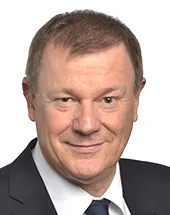
Lukas Sieper | Germany DE | Renew Europe (Renew) | 487 |
| 2 |
|
Juan Fernando López Aguilar | Spain ES | Progressive Alliance of Socialists and Democrats (S&D) | 463 |
| 3 |
|
Sebastian Tynkkynen | Finland FI | European Conservatives and Reformists (ECR) | 451 |
| 4 |
|
João Oliveira | Portugal PT | The Left in the European Parliament (GUE/NGL) | 284 |
| 5 |
|
Vytenis Povilas Andriukaitis | Lithuania LT | Progressive Alliance of Socialists and Democrats (S&D) | 276 |
All Speeches (24)
Transparency and accountability of non-governmental organisations funded from the EU budget (debate)
Date:
16.01.2024 14:21
| Language: DE
Speeches
Mr President! I think the Commissioner can do magic. So, unfortunately, despite the question, we have not received these figures from the Commission, but we will of course check that. Nevertheless, I would like to thank the Commission for its willingness to take the standardisation of procedures seriously. Thank you for your willingness to create a so-called – you called it so. Thank you for your willingness to help define NGOs. I would also like to thank you for creating a central platform, including cooperation with third countries. All this is good news that we like to hear. To those who criticised my report today, I would just like to say one thing: It is precisely a matter of treating all of us equally, of treating LIFE programme recipients and research funds in the same way as we treat structural funds. And if we had the end-beneficiary transparency and the names were published, then all the problems wouldn't exist either. The vast majority of NGOs are absolutely important for civil society, as we have mentioned a hundred times today. But, Mr Freund, it is always so predictable what you are saying, to accuse me now of not talking to NGOs before – have a look at my report on renewable energies and you will see how balanced my work here as a Member is. The Greens have also endorsed this report. It goes without saying that I am not talking to the business side or the NGO side when it comes to NGOs. I have to stay neutral. That's why we hired scientists. We hired scientists – you too. They have a whole series of cases We are studying, and that is basically the filtered result that we are presenting here today. That is why it is so predictable what you are saying to come with the Chambers of Commerce and Industry and the Voluntary Fire Brigade. So, guys: Public bodies, voluntary fire brigades – where do they get European money? They deliberately throw fog candles to put us in a bad light here. I think that's irresponsible what you're doing here. This certainly does not help the policy of NGOs at all. So let's get to the point. Let us really work in the right place where the few black sheep are, and let us really ensure equality of arms here, that the recipients of structural funds are treated in the same way as the recipients of NGOs and, accordingly, the research funds. I want to continue to do so, and I am really very pleased with the response so far, with the progress we have made, and I hope that this holds true in the European Parliament, at least that.
Transparency and accountability of non-governmental organisations funded from the EU budget (debate)
Date:
16.01.2024 13:20
| Language: DE
Speeches
Mr President, Commissioner! First of all, thank you! Thank you to all associations and organizations that volunteer for the functioning of our society, our freedom, our democracy, from fire brigades to town twinnings to animal breeders or nature conservation. You at home, you are the putty of society. Thank you also to those who have made human rights, climate protection, consumer protection a profession, some to appeal. It is often a matter of balancing the interests of overpowering corporations. Many people donate to these organizations. Some NGOs also receive European funding for their work. And only these few NGOs are at stake today. So it's about those who receive money from the European taxpayer. Human rights organizations were also the focus of criticism. Together with the NGO No Peace without Justice, Fight Impunity has received €4.5 million of EU money. Unfortunately, we don't know what happened to that money. We do not know, because NGOs and, unfortunately, research institutions do not have to publish the last recipient of the funding in many programmes, as is the case with the Structural Funds. In other words: We do not know today whether the money ended up in the suitcases of former union leader and S&A MP Panzeri, we do not know whether this money in the suitcase was not the money of European taxpayers. We do not know because the umbrella organisations do not have to specify in concrete terms which projects the money will eventually go to, perhaps also to other Member States or even to third countries. I am therefore very pleased with the compromises in the Committee on Budgetary Control. I stress once again that it is only about the organisations that receive money from the European funds. Specifically: First, we reiterate the call for an NGO definition. European money is only available under certain conditions. Here, too, we need a demarcation from research institutions, for example. Secondly, for programmes outside the Structural Funds, we also want a transparency of the flow of money up to the projects and also a transparency of the donors of the NGOs. This is the only way to avoid abuse. That's the only way we know who we're dealing with. Thirdly, organizations that have violated applicable law should be covered in the future and definitely excluded from further funding. Fourthly, we also want to be more committed, namely the committee secretariats. There must be a transparency officer in each committee secretariat. It is therefore necessary to ensure that dubious institutions do not gain access to the committees. And fifthly, we want an ID number for EU-funded institutions to make it easier for us to identify them across all programmes, across all regions, across all DGs. With these points - and once again thanks to the Committee on Budgetary Control - we are already achieving much more for transparency. But there's still work to be done. Unfortunately, we have not been able to enforce that NGOs also have to publish their meetings with MEPs and Commission officials. Why not? And the last, but most important point: What is the point of a special regulation for NGOs that receive money from taxpayers? We need to separate them from research institutions. Today, we have the curious situation that NGOs can rely on the secrecy of the results of research and environmental programmes when they deliver results, because there are corresponding requirements in the programmes, because they are funded by the same programmes as the research institutions. Once again: We're not talking about the clubs and NGOs at home. Above all, we are talking about those who travel internationally, globally and on a large scale and who receive a lot of European money from the taxpayer. I can hardly say that in conclusion, but not only do we not know whether this money – the taxpayer’s money – has ended up in the suitcase, we also do not know whether the NGOs may even be buying land with it. We also do not know whether certain managing directors of NGOs personally enrich themselves with this money. We just don't know. That is why we need transparency. We need an NGO regulation for European-funded NGOs. Please support our amendment. Once again, thank you for the cooperation so far and I wish the vote to go well tomorrow.
Reducing regulatory burden to unleash entrepreneurship and competitiveness (topical debate)
Date:
22.11.2023 15:36
| Language: DE
Speeches
Madam President, Mr Vice-President. The European economy wants to make its contribution to climate protection. Companies want to invest in secure supplier structures. And the European Union also provides the framework for this. We have many things we need to know about new trade agreements, about the Green Deal, about the Net Zero Industry Act, in the interests of the economy. Nevertheless, the economy complains about bureaucracy. Why? Because we have left an important principle: We now have too little confidence in the market economy and too little confidence in the people. Why do we do CSRD, Taxonomy, ETS and Buildings Directive at the same time? There are environmental and social laws that govern everything. Why reinstate bank financing with taxonomy and CSRD, when we already have emissions trading, which guarantees compliance with the CO2 targets? Why forcibly renovate people's homes at home, when the building industry has just been included in the emissions trading scheme? I don't understand that, companies don't understand that. We believe less and less in the market, at the same time we regulate with suspenders and belts at the same time. The Green Deal makes sense. Yes, supply chain legislation also has a clear justification. But it's all coming at once right now, and the companies are choking into bureaucracy. Let's give them air to breathe! I think your relief package is a great start. I emphasize, beginning. We just need a lot more trust in the market economy, a lot more trust in the companies. This is the best way to cut red tape.
Madam President, Commissioner! Yes, we have heard important points from the Commission today. Above all, the awareness of small and medium-sized enterprises and the reduction of bureaucracy seems to be sharpened. Important are the other building blocks for the European single market, such as the regulation of late payments and the facilitation of cross-border transactions by reducing tax bureaucracy. There is also a lot of bureaucracy. The Commission, but also here the left side in Parliament, has really burdened the economy, put it in a bureaucratic straitjacket: Supply chain, CSRD, building policy, more and more bureaucracy, especially here from colleagues on the left-green side. That is why, here in the European Parliament, too, we have responsibility for some double and triple reporting obligations on the same subject. That's just too much legislation at once. We are now looking forward to the concrete proposal for a discharge instrument. We are even more pleased that medium-sized companies and bureaucracy with the SME Envoy It's really a matter for the head of the cabinet at von der Leyen. We now have – quite concretely – announcements for cutting red tape and making structures more efficient. Actions must finally follow.
Mr President! I listened very carefully now. So on the issue of flexibility in the protection of species, Habitats Directive, we agree. I am particularly pleased that this side has made a move in Parliament. With regard to biomass, I would like to remind you that you agreed in the trilogue, and to that extent you are contributing the result here. And I would like to remind you that we have prescribed a very valuable cascade principle when using wood. In this respect, I think that the environmental aspects have been taken into account. When it comes to biomass, I think it's like this: Whether the wood rots in the forest or is used sensibly energetically is more on the side of the use of the wood in terms of CO2 balance. And so I don't think we have to blame ourselves here. After all, it is also about the stability of supply, it is about basic security. And yes, I agree with those who said: The nets need to grow. Yes, we also need transitions. We won't be able to do it all at once in the next few years. But that is exactly why, ladies and gentlemen, that is why we need this openness to technology. We need all renewable energy. We need biomass, we need wind, we need sun. We also need colored hydrogen. Dear colleagues, listen to this: Colorful hydrogen. If we do not accept this, we will experience an explosion in the energy transition in terms of costs. And we're just not going to get any further. That is why it is really good that we now have the directive as we have it. For us, the benchmark is the Paris climate targets, which wants to ban CO2 targets, and not the green ideology, which wants to exclude any things, wants to make better. In this respect, I believe that we are on the right pragmatic path for a successful energy transition with this technology-open directive.
Madam President, Commissioner, ladies and gentlemen! With a view to increasing independence and reducing CO2 emissions, we have set renewable energy targets higher, from 30% of the Commission's proposal to 42.5%, which alone is a success of the European Parliament. But we're not just saying higher, faster, further. With this directive, we are also saying how to do it. The RED III proves that Brussels can also be unbureaucratic and pragmatic. We give renewable energies the label of outstanding public interest and thus the necessary flexibility for permits. In the designation of new areas, for the approval of new installations, and, I stress, and the related infrastructure, the networks, the transformers, the storage facilities and so on. Ladies and gentlemen, an installation is automatically deemed approved after a deadline if there is no feedback from the administration. Positive silence. That sounds almost romantic, but it's tough on the licensing authorities. Not only do we speed up approval procedures, we are also open to technology. We are increasing the supply of renewable energy, and that is good for energy prices. The focus is on wind power and photovoltaics, but also hydropower, geothermal energy, tidal currents and, ladies and gentlemen, biomass from the forest. It's renewable, and that's a good thing. Increase energy supply through faster approval, through openness to technology and by relying on imports, strongly on energy imports. Member States must clearly state their views on energy imports in their energy plans. Yes, and by the way, Commissioner, we have also put the delegated act on green hydrogen in dry cloths. Not pragmatic enough, but it's going to be a Review catch up soon. Ladies and gentlemen, we have set the course for a rapid energy transition. But please, let's not fool ourselves. Europe has slowed down in the development of renewable energies by global standards, partly because Member States adhere to rigid support instruments such as decades of feed-in tariffs. There is no pressure to innovate in the industry. It is therefore also important that this Directive stipulates that 5% of the expansion capacity should be above the state of the art, including pilot projects for floating solar cells, wind dragons, river power plants, algae houses, solar roads, hydroelectric power plants powered by ocean waves. Nothing is impossible with renewables and almost everything has a future. We now need an EU electricity market design with price signals that also make renewables attractive as spare capacity and give space to decentralised storage solutions. We need cross-border energy networks and more investment in national network infrastructures. And we now need hydrogen immediately for the conversion, so that the green hydrogen can come to the plants later. Ladies and gentlemen, from this side of Parliament, very urgent request: Accept the rainbow also in the colors for hydrogen. You like the rainbow so much. I know that requires compromises again, but the RED has shown that you can agree. Together with the legislation for ETS, energy efficiency and RED, we now have the heart of the Green Deals put on the way. We could also leave a lot of EU legislation to the market and the Member States. We could do without a lot of bureaucracy, but that is again a matter of compromises in the coming months. If we can assemble a large majority behind a proposal in Parliament, then we will also be successful in negotiations with the Council and the Commission. Therefore the thanks, really the heartfelt thanks, to the Shadows for trusting each other, thank you to the committee secretariats and our advisors and assistants, thank you to the Commission for a great coordination, sometimes not always agreed within the Commission, but in the end it was a wonderful result. It was very exhausting, but it was also a great feeling, in the morning at seven, when we finally had an agreement.
Mr President, Commissioner! Hope dies last. We still have the hope that the relief package will deliver the liberation blow for medium-sized companies – an liberation blow, because over 90% of German medium-sized industry wants to make supply chains more transparent. The economy wants the energy transition. The companies want to produce sustainably, also because there is a huge market for green innovations. We are therefore finally calling for the SME representative – and what you have told us is simply not true – to have a SME representative who works horizontally, who coordinates legislation and who brings together the Commissioners' sometimes selfish legislative ways of acting. Where is your partisanship, where is your partisanship for the middle class? We are calling for a single reporting tool that is business-driven and does not require extra reports for each Directorate-General. Sometimes a company has to report twice about the same thing in Brussels. We are calling for a real relief package for companies, a real signal from the Commission: We understood. Ladies and gentlemen, otherwise, acceptance of Europe and the single market will diminish. SMEs are a backbone, a pillar of democracy. We must not turn entrepreneurs into protest voters.
Madam President, Commissioner! The Recovery Fund – Commission relief. For me, the balance sheet of this fund is a disappointment. A disappointment because I can neither judge nor control the balance sheet. We were promised by the Commission that the same standards would be applied as for the Structural Funds regulations, i.e. the publication of the beneficiaries. This has not happened, except for the very big ones. Instead, we rely on the Commission's reporting system, which in turn depends only on information from the Member States. But how should we control the sounding milestones and headlines if we are not allowed to look into the books? And the Court of Auditors is also totally overwhelmed. The EU budget should be doubled with the same capacity. I'm sorry, but there's a risk of arbitrariness and fraud. From the point of view of budgetary control, this can only have one consequence: no continuation of this uncontrollable form of European borrowing, especially since the financing by own resources is more unclear than ever. For the future, this means: first agree on own resources in a legally sound manner, then start financing. This also means involving much more private capital for the tasks of the future and then leveraging them with EU funds. Yes, and the tasks ahead are indeed huge, but they are also attractive – from energy networks and hydrogen projects to the development of new sources of raw materials and even the reconstruction of Ukraine. If we tackle this solidly and with the economy, we can finance the tasks of the future in a sustainable way.
EU funding allocated to NGOs incriminated in the recent corruption revelations and the protection of EU financial interests (debate)
Date:
13.02.2023 21:03
| Language: DE
Speeches
Madam President, Commissioner! The S&D colleague has just lost his way: The supply chain law, that was a slick misinformation. These were the Greens who did this on the subject of biomethane; Written off by an NGO literally, written off literally. The work of non-governmental organizations is otherwise valuable. Volunteering, social, environmental and human rights: I don't think we need to talk about it at all. However, a small proportion of NGOs put their reputation at risk if there is no democracy within the organisation. If you don't know who the funders are, if the state support is not transparent, if NGOs can enter and exit parliaments without being registered. Many of these grievances are obvious. We need to do something now. Four short points: Firstly: the appointment of transparency officers in Parliament, transparency officers in each committee secretariat, in the Research Service. For each directorate, for each major unit, there must be such a person in charge. Secondly, the contracts of the agencies and the Directorates-General with the NGOs must be published. These contracts must be made public. It cannot be that Commission officials use taxpayers' money here at will, perhaps even according to their own political dictum, to achieve certain goals. We want this to be published. Thirdly, we need to know the donors of NGOs. What are the interests behind the organizations? This must be as clear in the case of NGOs as it is in the case of corporate lobbyists. And fourthly: What happens to the NGOs with the European money? We simply do not know, because the project beneficiaries – not like the Structural Funds – do not have to be published. Why not? Because you, ladies and gentlemen on the left side of Parliament, have been preventing this for five years, because you have repeatedly stopped transparency requirements. This is the scandal. No Peace Without Justice has received almost €4 million from the EU budget. Whether this money is also in Kaili's suitcases, we do not even know. Is this final beneficiary transparency? This is really the scandal. Please help me finally with: Support the proposal for an own-initiative report on the transparency of NGOs!
Renewable Energy, Energy Performance of Buildings and Energy Efficiency Directives: amendments (REPowerEU) (A9-0283/2022 - Markus Pieper) (vote)
Date:
14.12.2022 12:51
| Language: DE
Speeches
Madam President, I believe that we have reached a very good agreement today with the faster permitting procedures for renewable energy, and I would ask that we now go back to committee under Rule 59(4) in order to then also open the interinstitutional negotiations.
Renewable Energy, Energy Performance of Buildings and Energy Efficiency Directives: amendments (REPowerEU) (continuation of debate)
Date:
13.12.2022 10:35
| Language: DE
Speeches
Madam President, I am very pleased with the agreement here in the European Parliament on speeding up authorisation procedures. I am also pleased that we will be able to make some compromises on the issue of species protection. Dear S&D, no one wants to eliminate environmental laws here. It's all about: If a population in Europe is secured, then a single individual must not obstruct an onshore wind farm, and that is what it is all about, and not any circumvention of environmental laws. The topic of biomass also fits into this picture. The Commission has made a mistake: To deliberately write that biomass is not part of it – and to write that into it. It is quite clear that this is causing reflexes in the European Parliament. I concede: You can't treat it like solar and wind, I know that. Nevertheless, something must come to our minds. We will probably have a very tight vote here in the European Parliament. It must come to our minds that we can also manage biomass with accelerated permitting procedures. Last remark: We have also made a contribution to accelerating today. Because it has already been a good initiative of the European Parliament to take up the Council Regulation, to take the most important points out of it – the good points – and to combine that with REPowerEU, and this in a debate. And we will settle this in a vote. We have also made a small contribution to speeding up the process. Once again, I would like to thank all the colleagues who have made this possible today. Many thanks also to the employees who have supported fantastically. I look forward to the vote on Wednesday. In the end, this will already work out in the sense of faster approval procedures.
Renewable Energy, Energy Performance of Buildings and Energy Efficiency Directives: amendments (REPowerEU) (debate)
Date:
13.12.2022 09:15
| Language: DE
Speeches
Madam President, Commissioner! It is not a great joy now; to be the first speaker after these bad events to try to get back into the technical debate. But of course we have to put that aside now, because we have to focus on legislative work. People expect from us a consistent fight against corruption, yes, but they also expect from us a consistent expansion of renewable energy. This energy transition must take place quickly, and this requires prerequisites. If we want to move away from fossil energy, if we want to move away from one-sided dependencies, if we want more European energy sovereignty, if we want to diversify energy imports and if the whole thing is to be affordable for people and businesses, then renewable energy is the way to go. It works if we do it right: Because sun, wind, water, renewable raw materials do not send an invoice. They are available indefinitely. They could have been our most important source of energy by now. Why are we only 20% renewable? Well, because we're making it too complicated. Because bureaucracy and ideology stand in the way. Here are five points: If you want renewables, you first have to make green hydrogen possible. As the Commission now does with additionality, it is a No-go for investors. It is an No-go for those countries that want to export green hydrogen to Europe. We need green hydrogen, but not hydrogen with a gold rim. Secondly, those who want renewables must give them an outstanding public interest up to climate neutrality and not only for the next seven years, dear colleagues from the Environment Committee. Thirdly, if you want to expand renewable energy, you have to approve it faster and more pragmatically – that is why the acceleration areas that we have proposed. If administrative procedures there take too long, the construction applications must be approved automatically after a certain period of time. We would like to express our thanks to all our colleagues for Positive silence – beautiful English word –, agreed. Fourthly: If you want the renewables, you must not put a single field mouse in front of the onshore wind farm. If the population of field mice in Europe is not endangered, there must be room for manoeuvre in the Habitats Directive. The proposals of the Council and the Commission are not clear enough. There are threats of lawsuits from NGOs, some of which are against everything anyway. This is why we need a clearer exception to the principle for renewable energy plants. Please support the EPP amendment here. And - Last but not least – Fifth: If you are serious about the energy transition, you also have to take action in certain Natura 2000 areas. go-to areasAllow the acceleration areas. In many regions of Europe, this is not possible otherwise. We have a 50% share of Natura 2000 sites in the federal states alone, and if we want renewable energy, we have to allow certain installations. We are united by the goal of faster approval procedures. For Wednesday in the vote, despite these tactical requests now from all political groups, I hope for sustainable compromises. I am confident, also through the talks today. We are talking about the Renewable Energy Directive, which REDAlways get it done. We work together in a team with confidence. And yes, sun and wind don't send a bill. And if human regulation allows it, renewables can also reach people and businesses cheaply.
Madam President, Commissioner! First of all, I would like to thank the President of the Commission for addressing small businesses in her speech yesterday. Yes, we welcome the financing initiative with the EIB and, of course, we also support the proposal for uniform tax rules. Ladies and gentlemen, that is not the problem at the moment. To call the whole thing then relief package, that is beautiful coloring. The bureaucracy is suffocating the middle class – yes, also with regard to tax legislation. Our problem is the Commission's business-as-usual actionism in a crisis. We were promised the one-in-one-out principle in 2019. In 2021, the Commission adopted 2 207 acts and repealed 1 087. If I guess correctly, this is Two in, one out. Mr Gieseke said: In 2030, we are at Five in, one out. Commissioner, you are crushing the companies with which you want to shape the energy transition. War, energy crisis, pandemic – and you come up with agrarian bureaucracy, supply chain, CSRD, REACH, pay transparency and so on. SMEs do not want more Brussels reporting for everything that sounds good. No, we want solutions in energy prices, we want SME and research programmes, we want to promote hydrogen start-ups and not impose restrictions on them. We are calling for a bureaucracy. We call for an instrument for Single reporting, in which you summarise all the reporting requirements and provide a single point of contact for SMEs, please be located directly with the President of the Commission, as well as the SME-EnvoyIt still doesn't exist after three years. I am sorry, Commissioner, but small and medium-sized enterprises no longer feel represented.
Renewable Energy Directive (A9-0208/2022 - Markus Pieper) (vote)
Date:
14.09.2022 13:24
| Language: DE
Speeches
Mr President, ladies and gentlemen! I think this is a good day for Europe's energy transition. And with this result, I would now like to have the legitimacy for us to go back to committee to start the interinstitutional negotiations.
EU response to the increase in energy prices in Europe (debate)
Date:
13.09.2022 18:11
| Language: DE
Speeches
Madam President, Commissioner! Energy prices down – now! Ladies and gentlemen, the Commission's proposal to limit profits is, first of all, good for the price of electricity if it is implemented uniformly in Europe. But the talks must take place now. People and businesses need falling energy prices immediately and not only after two years of a normal European legislative procedure. An emergency instrument now, but also a fundamental reform of price discovery – not maximum exchange prices may determine the energy price in the future. There must be average prices of different types of energy. There must be a compensation mechanism that anticipates price fluctuations and prevents energy crises. It's all possible. I call on the Commission now to make a proposal for this, for the new pricing. Please do not ask for communications, consultations, leaks, first proposal and all the things then in the parliamentary procedure, but now it must also be about the reform of the energy market design.
Mr President, Commissioner! Despite the kind words, I think it is sometimes quite good to take the booklet of action out of the Commission's hands. We're going to do this on hydrogen. We will strongly question the Commission's delegated act, which is currently in consultation. And we will vote positively on our own ideas for hydrogen production criteria tomorrow, so that this young industry has a chance in Europe at all. I ask for your understanding. In general, the Commission makes far too many delegated acts. I would like to appeal to Parliament to stand by the compromises that we are rallying behind the 45% and the other compromises. Otherwise, the Peter Liese trap, which he experienced in emissions trading, threatens: One does not go far enough, the other goes too far. We may end up with a 50% vote, and the Council is playing cat and mouse with us. So we have gathered the best from all areas, that's why the compromises. And I would like to ask for your support again and would like to thank all my colleagues.
Mr President! Now on to a topic where the European Union really has competences, namely the development of renewable energies as the heart of the European energy transition. This makes it all the more important that we quickly achieve results that make us more independent, affordable – independent, of course, of Russia, of course, of fossil energy. In this spirit, we have negotiated intensively, as I find with good results. We want to use the strengths of the single market. Therefore, firstly, more cross-border green electricity and hydrogen projects. We demand a doubling, for large countries a tripling of efforts. Secondly, we are calling for more innovation. European renewable energy producers must be global leaders in innovation. That is why we want to promote the expansion of a quota of 5% that goes beyond the state of the art. Thirdly, and I see Mrs Bentele here, we want a binding import strategy for hydrogen in the national energy plans. In combination with technology transfer and development aid, we will organise imports of green electricity and hydrogen as win-wins and reduce energy costs in Europe. Fourth, our compromises make us more digital and flexible than the European Commission. I'm sorry, the wrong commissioner is sitting there, but I can still say so. We want a simpler and faster system for the guarantees of origin of green electricity and provide the technical solution. We want easier electrification in transport, yes, but also higher quotas for synthetic fuels. The energy transition needs openness to technology and flexibility. In this sense, we also want to facilitate the achievement of targets for hydrogen and green electricity in industry and buildings. Please support our proposal for hydrogen. Of course, its production must be unbureaucratic. I hear that the Commission intervened a few hours ago, a few hours before the vote. This can also be tactical, which is why we prefer to trust the European Parliament with its legislation. Therefore hydrogen also from old plants, therefore hydrogen also from subsidized plants, hydrogen also with indirect contracts such as with green electricity and hydrogen, so that the electrolysers are allowed to run even when the wind does not blow. What the Commission proposes in its delegated act is gold-rimmed hydrogen. Exactly what we don't need right now. We want to help European start-ups and not crush them with bureaucracy. Last, but not least, the biomass: We have improved the ecological criteria without unnecessary bureaucracy and costs. Therefore, no generally binding delegated act on the cascading principle. The Commission should now negotiate this directly with the Member States and, of course, use the best practices of sustainable forestry as a basis for this. On this basis, wood-based biomass is of course more eligible than renewable energy, contrary to all rumors. High-quality logs go into house construction or furniture anyway. Every forester knows that. Ladies and Gentlemen! We will enter the trilogue with these guidelines. We will then achieve a result that is ecologically better, but at the same time does not create new bureaucracy and means planning certainty. I think that applies to all the compromises we have found. I thank the shadow rapporteurs in ITRE, I thank Nils Torvalds in ENVI with his shadow rapporteurs. Thanks to the staff who worked deep into the nights. Despite sometimes different positions, we have received a really constructive atmosphere. If we do it right tomorrow, it will be a good day for Europe's energy transition.
Madam President, With regard to the 2020 discharge procedure, only one comment: We will have to postpone the discharge of Frontex. Not because we don't appreciate the agency's work. No, there are some accusations of unlawful, negligent action that urgently need to be clarified. But that's not to say that we don't need Frontex anymore than ever. We recognize the improvement of internal communication structures. We welcome the intensive cooperation with the European Parliament. We are aware of the Agency's contribution to effectively protecting Europe's external borders. And we welcome the Agency's flexibility now in the Ukraine conflict, i.e. to support the Member States so that people's flight can be as regulated and humane as possible. Postponing discharge does not mean calling into question the work for effective border management.
The Power of the EU – Joint European Action for more affordable, secure and sustainable energy (debate)
Date:
24.03.2022 08:50
| Language: DE
Speeches
Madam President, I missed both previous speakers: dependence on Russian uranium and fuel elements – but that may still be the case. We're closed. An unprecedented solidarity with a country in our neighbourhood. Economic sanctions against Russia, arms deliveries to Ukraine, that shows effect. The invasion is stalled. Our people and businesses understand – including the higher energy prices. However, I do not understand the Member States that have still not reduced energy taxes. That's the first step. And, of course, to reduce Putin's energy dependence, we are called upon to do so. European purchasing communities strengthen market power. Nuclear power and coal are a bridge through the crisis. The requirements for gas storage facilities contribute to security of supply. This now includes the expansion of infrastructure – first LNG, later hydrogen, everything is running at full speed. Two key points in the medium term: One key is the expansion of renewables – here, too, we are making headway: Accelerate permitting procedures, do not ideologize production of hydrogen and biomass. Second, openness to technology: We will not have enough hydrogen available. That's why we need Low carbonSolutions that make the transitions financially viable. Final remark: Yes, we also need a decoupling of the gas price from the general electricity prices. But to completely abandon competition on the energy markets now would be an impossibly poor preparation for the post-war period. Giving up the market economy is easier than re-allowing competition.
State of play of the RRF (Recovery and Resilience Facility) (debate)
Date:
15.12.2021 17:23
| Language: DE
Speeches
Madam President, Commissioner! Many good messages about the Corona Reconstruction Fund today. Allow me, however, to take a completely different view from the point of view of budgetary control. How can it be that there are such big problems in Italy, Spain, France? I call these countries only because it is currently in the newspaper, and often. Why are there too few projects? Why are many administrations unprepared, so unprepared that the projects do not come until 2022 or later and not today, not in the crisis where the money is urgently needed? So unprepared that there is talk in regional newspapers that the funds could be intercepted through corrupt channels? Many have warned. We also have these problems of lack of absorption capacity in structural policy. Now let's not repeat the mistakes here and allow more and more time and more lax rules. We insist in budgetary control on genuine crisis aid and not on an endless N+X rule with crisis aid when the crisis is over. We insist on the publication of the beneficiaries. We insist on a digital transparency of the project processes. The board today, what was presented, is a start. If the Member States do not provide comprehensively, no further money may be disbursed. We will address this clearly in the Commission's budget discharge.
Mr President, Commissioner! The State-of-the-Energy-Union report contains many good points. Please also show the positive of our European energy balance! In Glasgow, it became clear who was ahead of the country rankings in climate protection. Almost all countries here are European countries. In Glasgow, it became clear who is actually the driver of the Paris climate agreement and who wants to expand the global climate fund financially, who invented emissions trading and who wants to establish global climate clubs. So, as Europeans, we have no reason at all to put our light under the bushel. No, we must continue our path of energy transition consistently. To achieve this, we need higher CO2 targets – yes. But also the honesty that we need much, much more primary energy for electrification than envisaged by the Commission. But we also need a taxonomy that invests not only in scarce champagne, but also in a realistic energy transition, i.e. in technologies that make the energy transition affordable and secure. There must be no discrimination here, neither for hydrogen-affine new gas-fired power plants nor for new generations of nuclear power. This also means regulating the networks in such a way that they can build on the gas infrastructure. Focusing on costs also means exploiting cross-border synergies in the single market, allowing colourful hydrogen for the transitions and massively relying on green energy imports. Thus, the energy transition is in line with the Paris specifications, but please without ideology, safe and affordable.
Climate, Energy and Environmental State aid guidelines (“CEEAG”) (debate)
Date:
19.10.2021 19:36
| Language: DE
Speeches
Mr President! Forgive me, Commissioner, instead of discussing those affected, we should rather talk to the companies. Manufacturer of starch products, galvanizing, specialty chemicals: Let's go to these companies more. There is only one message: Uncertainty. They want to convert production – but to what and when? Instead of coal dust on natural gas – with a later hydrogen option – on electric furnaces, in new pipelines? These companies may not have the export shares that comply with the new European requirements, but they want to be able to finance the energy transition. Of course, they need state support in decarbonisation and in the future use of hydrogen, CO2 difference contracts. Of course, these companies need low energy taxes and fewer levies. That is why we must not reduce the number of eligible sectors by 75%. This is not progress, this is an obstacle to competition. I would recommend a reversal to the Commission. Instead of the Carbon leakageTo reduce the list, we need to expand this list. Otherwise, the European energy transition will take place without European industry.
The state of play on the submitted RRF recovery plans awaiting approval (debate)
Date:
06.10.2021 18:20
| Language: DE
Speeches
Madam President, Commissioner! Corona aid is a recovery aid. The fact that Europe is helping is an expression of European solidarity in the event of a crisis, and it is obvious to combine this support with the future. This is why funding is tied to investments in the energy transition, digitalisation, education and the rule of law. That is why there are also obligations to control the use of this precious taxpayer's money in the same way as the money from the European budget is controlled. But now I have doubts: Why do the national plans last so long, even though the requirements are so clear? Why are there reports that this money is used to plug household holes instead of investing it in the future of our farms and children? The Commission is doing an outstanding job. But what the Member States partially deliver is reminiscent of the chaos in structural policy. 250 billion euros are jammed here because there are too few serious projects. Ladies and gentlemen, Corona aid is an emergency aid. With Coronafonds, we are therefore not repeating the mistakes of regional funding and are giving the countries more and more time to submit meaningful projects. A corona n+1, n+2, n+3 must not exist! If the countries do not use this money reasonably foreseeably, the credit line must be reduced, corresponding bonds must be reduced. No money may be stowed away, which in the end rewards negligence or violations of our obligations. This is where Parliament must intervene now. Now we have to act against the crisis, not in a few years. This applies in Hungary and Poland as well as in all other European countries.
European solutions to the rise of energy prices for businesses and consumers: the role of energy efficiency and renewable energy and the need to tackle energy poverty (debate)
Date:
06.10.2021 09:40
| Language: DE
Speeches
Madam President, Commissioner! The acceptance of the Green Deal depends on energy prices. To only point to Brussels here is, however, too easy at first. If 60% of electricity prices are caused by the state in some countries, Member States have so far made a significant contribution to any increase in energy prices. The first consequence must be: Lowers the electricity tax in the countries, abolishes special levies such as the renewable energy levies. The second consequence must be that we use emissions trading. Dear colleagues, just from this page: Help expand this successful system, not destroy it. Because only then will there be revenue available that we can use for social compensation. The third message to the same address: Makes the energy transition affordable. This can only be achieved if we ourselves massively expand green electricity and hydrogen production in Europe and make it more independent of imports. But to do this, we also need to make better use of our own internal market, to facilitate authorisation procedures, not to complicate them – especially to our dear green colleagues. And - Last but not least – The energy transition in transition is only affordable with colourful hydrogen. Away with the ideological blinders against CCS and Co. and end with the fairy tale, that would be all in Europe itself. We need a European hydrogen import strategy that combines the import of green energy with technology transfer and development aid. Ladies and gentlemen, relying only on green hydrogen from Europe is the direct route to the energy emergency. So help shape these transitions. Our EPP benchmark is the Paris targets and affordability. You can do both if you put the ideology aside.