
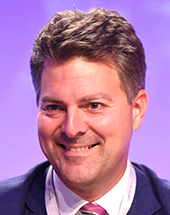

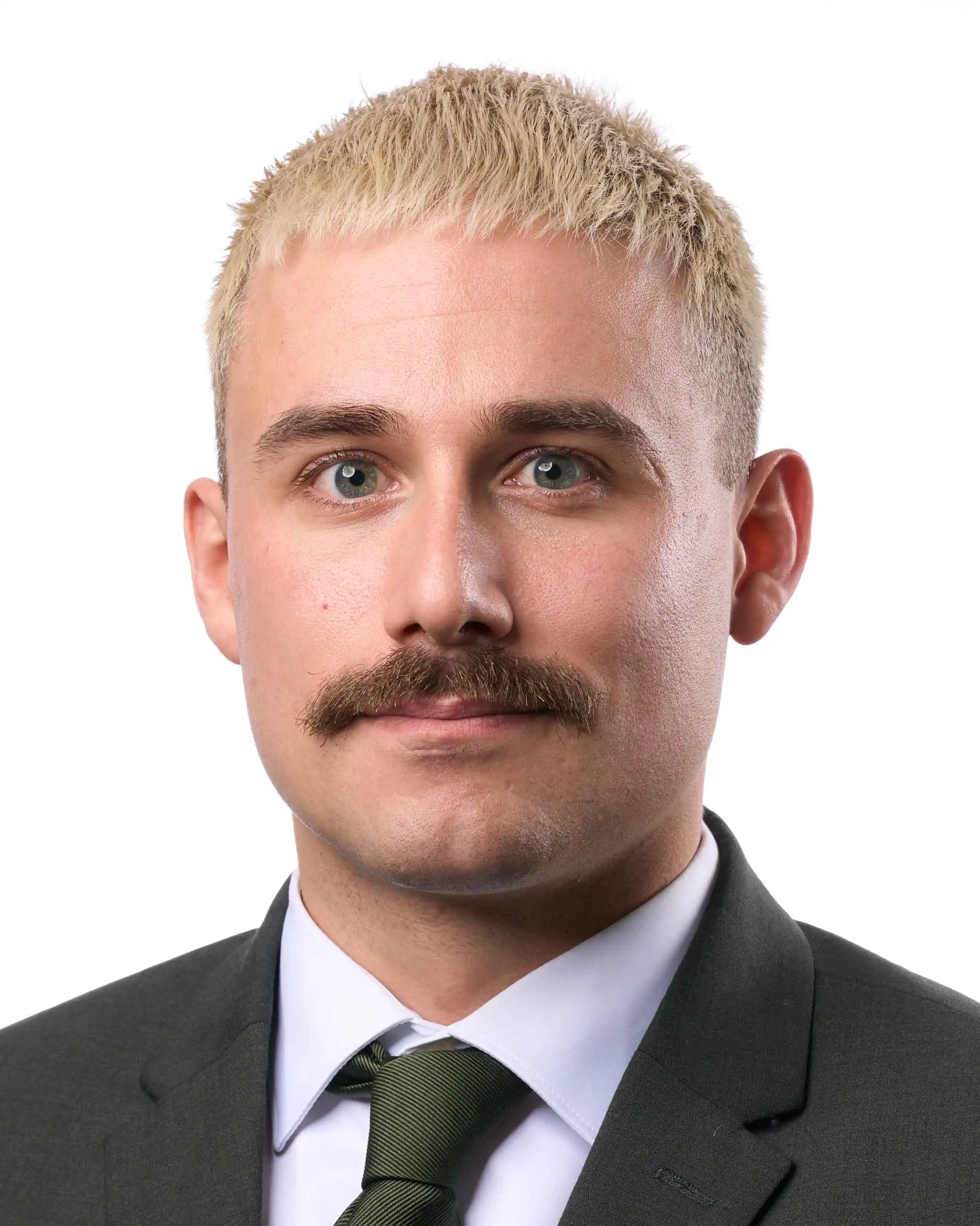
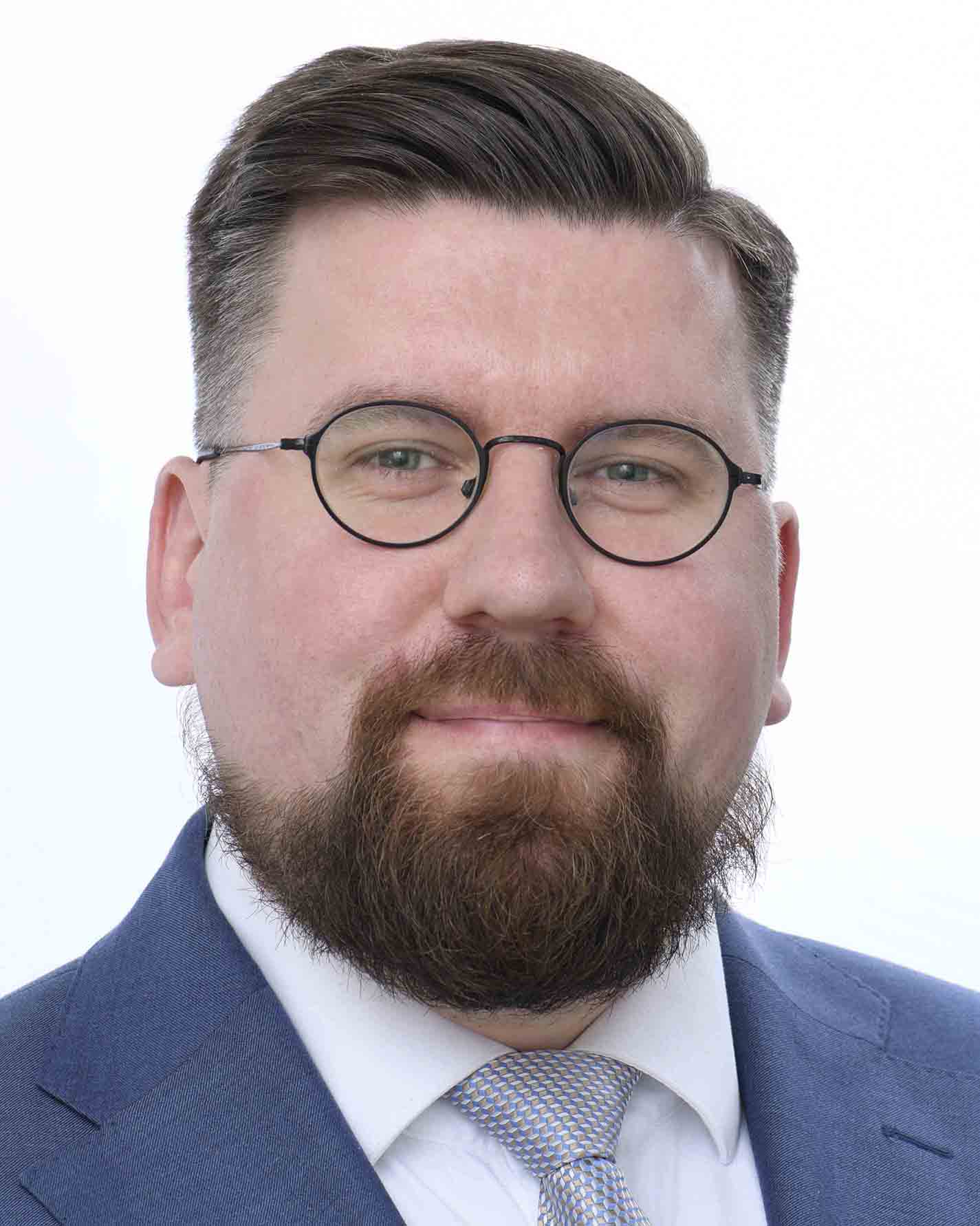
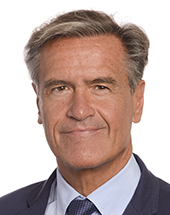
| Rank | Name | Country | Group | Speeches | |
|---|---|---|---|---|---|
| 1 |
|
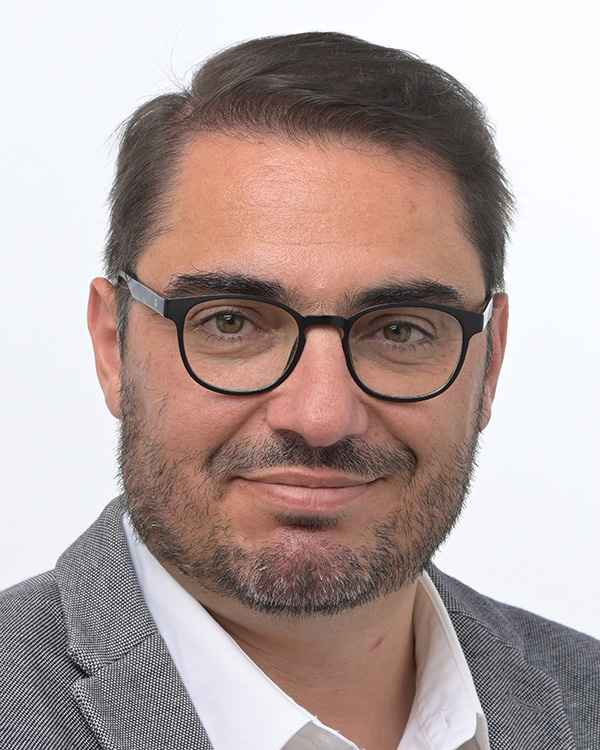
Lukas Sieper | Germany DEU | Non-attached Members (NI) | 390 |
| 2 |
|
Juan Fernando López Aguilar | Spain ESP | Progressive Alliance of Socialists and Democrats (S&D) | 354 |
| 3 |
|
Sebastian Tynkkynen | Finland FIN | European Conservatives and Reformists (ECR) | 331 |
| 4 |
|
João Oliveira | Portugal PRT | The Left in the European Parliament (GUE/NGL) | 232 |
| 5 |
|
Vytenis Povilas Andriukaitis | Lithuania LTU | Progressive Alliance of Socialists and Democrats (S&D) | 227 |
All Contributions (80)
Competition policy – annual report 2024 (debate)
Mr President, Madam Vice-President, ladies and gentlemen! First of all, I would like to thank the rapporteur for the good cooperation on the annual report on competition policy. This annual report is special this year because its geopolitical context makes it special. Globally, jointly developed rules are being challenged, artificial intelligence systems are questioning established certainties, and even in some Western states, unpredictability and uncertainty are becoming a principle. However, we are not afraid of this in Europe, because we are sure: This creates new opportunities for Europe. A reliable competition policy, Madam Vice-President, benefits consumers worldwide, and innovation can emerge where markets are not blocked by dominant players. The nervousness in the markets puts Europe in the role of a net winner, because many talented employees and other investments are coming to Europe these days because they appreciate the strength and stability of our institutions. The Competition Report therefore rightly points out that competition law must also meet the growing complexity of global competition. Improving the competitiveness of the European Union is a policy task at national and European level. Because we want to secure Europe's place in global competition. For this, we need courage and at the same time investment incentives for new technologies. The enforcement of competition law, on the other hand, is the task of the EU Commission as an authority that must continue to enforce robust rules of the game for fair competition, especially in the digital environment. That is why the recent attacks on the DMA, on the Digital Markets Act, are a danger that we must face together with a very convincing and convincing application of our common law.
100 days of the new Commission – Delivering on defence, competitiveness, simplification and migration as our priorities (topical debate)
Mr President, Madam Vice-President, ladies and gentlemen! If we take the facts as a basis, the first 100 days of the new Commission have shown that Ursula von der Leyen and her 26 colleagues are taking responsibility in a world that has become more difficult. We have with the project ReArm Europe showed that we can put European interests at the centre and at the same time be responsible for our own security in the future. With the new migration package, we have shown that we can ensure that decent treatment of refugees who have a right to it remains possible in the future, but at the same time that we avoid overburdening Europe. And for the third time in 100 days, we have also seen a clear message for less bureaucracy and more competition. This, too, is a strong signal based on the Draghi report, which has clearly stated: Europe needs to make better use of its own resources, staff and financial resources if we want to generate economic growth again in the coming years – what we need to do if we want to get through in a global world of the 21st century and if we want to achieve other goals, such as social balance and green climate protection. That is why I believe – even if we leave aside all the rubbish that has already been mentioned in this debate: We are on the right track, and the EPP Group will stand with the European Commission if we continue with courage.
Cutting red tape and simplifying business in the EU: the first Omnibus proposals (debate)
Madam President, ladies and gentlemen, First of all, I would like to congratulate the European Commission, because I believe that by proposing this summary of a whole series of amendments it is heading in the right direction. Because one thing is clear: European companies face global competition, and this global competition is about bringing talent to companies and focusing on innovation and production. This must of course be sustainable, but in the end these are mainly local decisions in the companies that play a role in this, and that is why we must focus on helping the companies to follow this path accordingly. The fact that there is so much criticism here in this Parliament, Commissioner, actually shows that you have found a relatively good middle ground, which in the end can also be able to hold a majority. I believe that in some places we simply need examples that show that what has been put forward here in part by Social Democrats and Greens is somewhat out of place. Because it's not about deregulating in a broad style. It is about leaving the responsibility to the local companies, who all have to declare themselves compliant with the legal situation, but will not have to report on this in detail every year in the future. This is an important step forward, which contributes a lot to simplification, which also contributes a lot to the confidence of companies back in the market. And bureaucracy means nothing more than administrative burden. The law does not mean that non-compliant action will be accepted in the future, but it means that compliance does not need to be additionally reported – other countries in the world are doing the same. That is why we should now continue to follow the path that Mario Draghi has clearly set out in his report consistently and swiftly focus on its implementation. This will allow Europe to become competitive again.
Competitiveness Compass (debate)
Herr Präsident, Herr Kommissar, Ratspräsidentschaftsvertreter, ladies and gentlemen, Commissioner, first of all, I think the most important point for the compass for competitiveness is that France and Germany, their governments, have more or less aligned themselves to work together, to lighten the burden of bureaucracy. Without this cooperation between France and Germany, nothing can be lightened. For this reason, I would like to thank you personally for this. The second point that I want to make, colleagues, is that a compass is a general exercise, so I won't go into the details, but there can be no doubt that this proposal that the European Commission has made gives a clear direction that the European Union wants to have an economy that can compete at global level. And we know that we have to change a lot to achieve this. This does not call into question green policies, but it makes it necessary for us to look, first and foremost, again, at our own competitiveness. This can be done in different ways. First of all by focusing on the laws that we are making and on useful and less useful measures. I'm really grateful to the European Commission for having worked hard on tearing down measures that were definitely not useful. I won't go into the details. I would just like to comment that I think the focus on getting rid of 25% of bureaucracy is a bit small because we don't know what the overall assessment should be. We should fight to get rid of all measures that we don't need in Europe.
Need to enforce the Digital Services Act to protect democracy on social media platforms including against foreign interference and biased algorithms (debate)
Madam President, Commissioner, Mr Representative of the Council! First of all, thank you for making it clear here this morning – both the Council and the Commission – that the Digital Services Act applies, that it applies today, that it applies tomorrow and that it will apply the day after tomorrow and that we will apply it. Secondly, Commissioner, I would like to thank you – also on behalf of the EPP Group – for prioritising the application of the Digital Services Act, in particular its legally secure application, over the speed that we may be asking for at the moment. As an EPP Group, it is important to us that the decisions taken on the basis of the Digital Services Act are ultimately legally secure and can stand trial. As we are trying out a new format of speakers this morning, Madam President, I would just like to briefly recapitulate – if the normal viewer, when the Internal Market Committee prepared the law in 2022, might not have followed all the details – a few key points that have guided the content of the Digital Services Act. The aim was precisely to ensure freedom of expression even in the digital age and at the same time to preserve the protection of the general right to privacy of all citizens in the European Union. Of the problems, both social media platforms as well as television and newspapers are amplifiers in public discourse. They manage to attract attention. While yesterday's newspaper ends up in the trash, the post on the platform remains up-to-date, even if it contains an insult, even if it contains terrorist content. That is why the approach to social media platforms is a bit more complicated for the legislator if we want the democratic discourse to remain fair there as well. That is why, not only since the DSA, but also with the control of the European Commission, platforms have to enforce rules that have been in force in Europe for much longer than digital platforms exist. They have to meet higher requirements than the newspapers had to, possibly because they disappeared in the trash the next day. But this is done to enforce freedom of expression. We regret to note that, unlike traditional media, social media has proven in recent years that they are not as strict in enforcing freedom of expression as they should be under the law. Each country has its own laws. I speak German, so I come across a case of Renate Künast. The European Court of Justice has already ruled in 2019 that in order to enforce personality rights, online platforms must ensure manually that false contributions are not disseminated there. The platforms have refused to implement these measures accordingly. In the end, they also tried in court to really implement this enforcement of the protection of the general right of personality. That is why we want the European Commission to carry out all these procedures, which have just been mentioned, until the end, with the aim of enforcing freedom of expression in Europe in 27 different national publics with 27 different detailed rules that affect the rules there, so that we in Europe can continue to say in the future: Democracy thrives on democrats, and freedom of expression thrives on plurality.
Restoring the EU’s competitive edge – the need for an impact assessment on the Green Deal policies (topical debate)
Mr President! Madam Vice-President! Dear colleagues! The Member States of the European Union have jointly signed the Paris Climate Agreement with the objective of a two percent agreement for 2050 - that is our goal. Along the way, the Draghi report has identified clear weaknesses in our positioning so far. We will have two million fewer workers each year to help achieve these goals. Secondly, we do not have endless resources that we will be able to use. And that's why it's important to finally be honest about how we use the resources we have at our disposal as effectively as possible. And it is not enough just to talk about the future, about the choice of the good. This is about actually weighing up how we can achieve an outcome that enables us to achieve these goals economically, because prosperity in Europe is also important to people. This will not be possible with regulations from Brussels, with bureaucracy from Berlin, certainly not with regulations such as the heating law, which the police should send to the cellars, but it is about motivating people to take over their part – and this will be a difficult task for the European Commission. And that's why I believe that the principle must be: Climate protection needs competitiveness. But we can do that.
Misinformation and disinformation on social media platforms, such as TikTok, and related risks to the integrity of elections in Europe (debate)
Madam President, Commissioners, colleagues, we are observing since a while some sort of interference of foreign social media platforms in the European Union. In the case of Romania, colleagues, the Constitutional Court of Romania has taken a decision that is surely based on facts, and I can only congratulate the court of having taken the decision. This morning, the European Commission has taken the decision to investigate, against TikTok, in which way their algorithms have influenced the behaviour and the displaying of information during the campaign in Romania. I also would like to thank you for this. We don't know yet the result, but we know that there is a risk of algorithms that drive information not in the manner that normal people would allow it to happen, that normal people would expect it to do, but, for the money behind, they drive the algorithms in a very special way. We know in a free market economy you can drive the money, your decisions. That's allowed. But what is not allowed – and it is not news with the DSA – is that the money drives also democracy, or that there is at least a risk that your money can drive democracy. For that reason, we have to be very clear: freedom of speech is a principle in the European Union, but freedom of speech is not what these social media platforms do with the information that triggers content that creates more tension in societies at the detriment of normal content. Therefore, we look forward to the results of your investigation.
The Autumn 2024 Economic Forecast: a gradual rebound in an adverse environment (debate)
No text available
Closing the EU skills gap: supporting people in the digital and green transitions to ensure inclusive growth and competitiveness in line with the Draghi report (debate)
Mr President, Commissioner, ladies and gentlemen! Mario Draghi has written us on almost 400 pages here with his report the weaknesses of the EU legislation in the logbook. But, contrary to what the honourable Member claims, it does not come to the conclusion that what we have done is all wrong, but we have put wrong incentives in the internal market as far as the skills gap is concerned. And for this we did not actually need his report, because it was already obvious during many company visits that we simply exaggerated the reporting obligations. Not every desirable objective requires a reporting obligation. The example is familiar from my constituency: A small and medium-sized company, because it is a supplier to a large company, has to fulfil 1 600 reporting obligations within the framework of the Corporate Social Responsibility (CSR)Directive. Of course, this is about the fact that the three new employees that this company has to look for a long time before they can be hired are not in production, but when filling out the reporting obligations. At the same time, the large audit firm must also recruit two new employees to review these reporting requirements in order to prepare the annual accounts – this is simply a misallocation. We must get to the point – and preferably in the first 100 days of the new Commission – that the entrepreneur takes a blank sheet of paper and writes on it: I have understood and read the rules and stick with my name. The French say this lu et approuvé. This would reduce bureaucracy, simplify matters and make life more pleasant for many entrepreneurs, with the aim of increasing the prosperity of European citizens; And we can do that.
A stronger Europe for safer products to better protect consumers and tackle unfair competition: boosting EU oversight in e-commerce and imports (debate)
Mr President, Commissioner, ladies and gentlemen! Online platforms have fundamentally changed the way consumers shop. Consumers are no longer limited to local suppliers, but can buy goods from international retailers, broadening their choice and often finding better prices. You have just mentioned, Commissioner: This year alone, 4 billion packages show that European consumers are interested in international products and pay attention to the best price. But many third-country platforms are criticised for poor product quality, inadequate controls and thus unfair conditions of competition. That is why it is good, Commissioner, that you have presented the triad of measures that can work. Customs: We still have 27 different customs systems, although uniform European customs legislation has to be applied, and unfortunately it is applied differently. Second, we have the market surveillance authorities, all of which are nationally owned and have varying levels of equipment, and we have the Digital Services Act. And here, Commissioner, I would have expected a little more, because the Digital Services Act is now being applied to Temu for the second time – but always with a request for information and not with decisions. We need to move faster here, because with the Digital Services Act and the Digital Markets Act, the European Parliament here – this House – has taken important steps in recent years to increase citizens’ trust in the security of the internet and to offer fair competition to European businesses. We want to stick to that, and that is why the European Commission is called upon to take steps here.
Empowering the Single Market to deliver a sustainable future and prosperity for all EU citizens (debate)
Madam President, dear Enrico Letta, Commissioner! First of all, on behalf of the EPP Group, a big congratulations for this intensive work and also for the presentation of the results here. It has become clear that the report, and you too, Mr Letta, remind us once again that the internal market is the engine of our European prosperity. I find this remarkable because, of course, it has been forgotten for some time in recent years that economic exchange – whether it is about goods or services, whether it is about cars or tourism – is at the heart of what makes us Europeans rich and many also satisfied. That's why, I think, we have to say again at this point: The single market is best placed to decide what is the right performance. That is why we should also give citizens the opportunity to decide in an open market in Europe which service, which tourist destination, which car they can buy. But the title is perhaps a bit dangerous, because more than one market means, conversely, that we already have a real single market. I think we have to say that there is still a lot of work to be done. There is still work to be done to make it easy for workers to move from one country to another. Even if they are to retain the right to stay where they want to be, they must be able to enjoy the freedom to cross the border, in the revision of Regulation (EC) No 883/2004. That is why, dear friends, ladies and gentlemen, I believe that adapting to a new geopolitical condition, rapid de-bureaucratisation and the Capital Markets Union are certainly key demands of the report, which we all support. I'm glad Enrico Letta went in the same direction as Mario Draghi. That is why, I believe, the European Commission must now deliver: a 28. regime where it is necessary, a new fundamental freedom and a single internal telecommunications market. There's a lot to do.
Ensuring sustainable, decent and affordable housing in Europe - encouraging investment, private property and public housing programmes (debate)
Mr President, ladies and gentlemen! First of all, thank you very much, Mr President, for giving me one minute of speaking time. I would therefore like to make it very brief and first of all thank the Vice-President of the European Commission, Margaritis Schinas, who, five years ago, visited the European Parliament. European Way of Life has pointed out – and one's own four walls, a decent living space that is also accessible to socially inferior layers, is certainly one of them. It will therefore be important for us to make full use of the opportunities available at EU level. This afternoon's debate was a bit brief. There is no doubt that there are ways in which we can intervene, even if there is no European competence for housing itself. We can certainly facilitate lending – as Mr Ferber pointed out. We can – as our Irish colleague has pointed out – Cross border construction services which are currently overlaid with A1 forms and other bureaucracy. We can also scrutinize national construction law. In Germany alone, the rules have grown from 5,000 to 20,000 regulations in the past 20 years. So there's a lot to do. But if we take the Draghi report seriously, it will only succeed at this point if the Member States are fully involved. With state aid law alone, we will not come to a solution.
Global measures towards social media platforms - Strengthening the role of DSA and protecting democracy and freedom in the online sphere (debate)
Madam President, Dear Vice-President of the European Commission, it is good that you mentioned at the end that we in the European Parliament, together with Mrs Schaldemose, have set the right course with the Digital Markets and Digital Services Act. It is good that you are saying that it is now about implementation. But the implementation, ladies and gentlemen, of the laws requires more pressure; We need to get faster. We learned last week at a hearing in the European Parliament in Brussels that the Chinese platform has gained as many customers in Europe within six months as a European platform in the past six years. This makes it very easy to make it clear how fast the development in the digital age is and how slow our reaction to it is. That is why, Commissioner, it is correct: The implementation must now be faster. To this end, there is an urgent need for the new European Commission to also provide more staff and more opportunities to successfully address the threats you have pointed out, in particular in the area of the Digital Services Act, in all areas. I am sure that colleagues will now be calling on a whole range of issues. The protection of young people has already been mentioned; the protection of democracy, which will also play a major role in the creation of the new European Commission, has been mentioned. However, I would like to focus on online marketplaces today, because I believe that the easiest way to do this is to make it clear, in relation to what we have already seen in history, where the shoe is currently pushing in Europe. Take the big platform from China – Temu. Many products sold there come to Europe under privileged customs and postal conditions. They are then in competition with European products produced under different conditions, thus distorting the market situation. That is why, as Mr Draghi wrote in his report, it will be important for national customs administrations and the European Commission to work more closely together to ensure that European law is not only on paper, but also applies.
Conclusions of the recent European Council meetings, in particular on a new European Competitiveness deal and the EU strategic agenda 2024-2029 (debate)
Madam President, Commissioner, ladies and gentlemen! This debate shows: Less is more. It is interesting that the Council has finally come to this conclusion and that its conclusions finally shed light on the end of industrial naivety. We need to focus on more competitiveness in Europe. I therefore expressly welcome what Mr Belka has just said about the Social Democrats: We also need new ideas. I am surprised that the Federal Minister of Economics Robert Habeck suddenly speaks of a risk-based approach. There are ways to boost Europe's competitiveness without jeopardising the goals of the Paris climate agreement and without having to put the single market in trouble. But it is clear – in recent years, Commissioner, it has been somewhat exemplary that we are now discussing the single market again at the end of the legislative term: The single market lacks a bite. Enrico Letta wrote this very clearly in his report. That is why it is our task to think again clearly in the coming legislature and then also to act on how we can strengthen what unites us beyond the interests of some Member States, because together we are stronger, because we can strengthen the resilience of Europe, especially of the economic chains of prosperity, if we set uniform rules. I believe that a European Code on the Law of Enterprises, as proposed by Mr Letta, can be an interesting way of achieving simplification and uniformity. But I can also say, Madam President, Commissioner, that it is not quite clear to me what the state aid structure should look like in Mr Letta's report, which he proposes for these projects of common European interest. Ultimately, we need less aid – as Mrs von der Leyen pointed out – and more market, more innovation, more initiative. This is what the next five years will be all about. That's why I hope we can do it.
Substantiation and communication of explicit environmental claims (Green Claims Directive) (debate)
Mr President, Commissioner, ladies and gentlemen! Consumers should have an easier time making informed decisions in their everyday purchases. All-inclusive claims that products or services are sustainable, climate-neutral or climate-positive must therefore be correct in the future. This is a new procedure for environmental claims, but given the inflationary and often non-transparent use of such claims on all kinds of products, from furniture to toothbrushes and air travel, it is also necessary to keep competition in Europe fair and transparent. Therefore, the following applies: If you absolutely want to promote your products as climate-neutral or climate-positive, you have to check this beforehand. In order to make the administrative burden correspondingly simple, we, as the European People's Party, have enforced an unbureaucratic procedure. Because why, Commissioner, should stricter rules apply to simple advertising statements than to product safety, for example? This would create more bureaucracy that doesn't even help the environment. That is why we have advocated a procedure with a presumption of conformity, following the example of the General Product Safety Regulation; This is also a way to help small and medium-sized businesses. In this respect, I hope that the text will be adopted in this way.
Next steps towards greater patient safety by swiftly ensuring the availability of medical devices through a targeted transitional period (debate)
Mrs Grapini, you have just confirmed that, in the case of medical devices, we have simply delayed the variety of offers to a certain extent by the legislation, by the rapid entry into force of the control by the self-entering third parties or by the certifiers. So, as Mr Sokol has suggested to some extent, would you, together with your group, support the postponement of the entry into force of the Medical Devices Regulation for another few years in order to ensure that all products on the market today will remain on the market in Europe in the future?
Transparency and targeting of political advertising (debate)
Mr President, Madam Vice-President, ladies and gentlemen! Social media is full of advertising for furniture, household appliances and fashion. But there are also political campaigns on the internet, which usually do something other than advertising directly, but which reach the selected readers just as well – political actors as foreign states, who want to influence via influencers or NGOs and are paid for their political agitation. This type of political advertising concerns the present regulation, and the present regulation – and I would also like to thank my colleague Pablo Arias and all those who have participated – is intended to ensure decency in the political debate on the Internet and to create transparency for it. Freedom of speech remains constitutionally protected in Europe. And those who disseminate certain things online for money – and it's not just about advertising, it's about certain things – need to ensure transparency. And these things don't necessarily have to be statements in favor of a candidate or a political party. It can also be about certain topics that are used for manipulation. We want to exclude this manipulation. A good application of the law is now required for this, but also the necessary pragmatism that candidates at the local level are not overwhelmed with bureaucratic difficulties.
The fight against hate speech and disinformation: responsibility of social platforms within the Digital Services Act (topical debate)
Mr President, Commissioner, ladies and gentlemen! Certain forms of social media are a danger to our children, as we heard again last week at a hearing with author Silke Müller. The basic problem is well known, but still the participants of the event were a bit shaken because we heard and saw how easily really brutal and dangerous content is accessible to our children. At the same time, Commissioner, we are witnessing Russian disinformation campaigns on X, where numerous fake accounts are trying to incite German citizens against Ukraine. Hate speech and disinformation have nothing to do with the internet. With the Digital Services Act, we want to do just that. That is why the Commission and the Member States must now also deliver, Madam President-in-Office of the Council! The Commission is always recruiting staff to carry out the new tasks – we hope that this will be fully achieved soon. So far, however, only eight Member States have designated their national coordinating bodies and the coordination and support body for joint investigations is still missing. There is still a lot to do here if we want the European elections on 9 June to be held correctly and correctly.
Empowering consumers for the green transition (debate)
Mr President, ladies and gentlemen. We want a competitive single market. We want a single market where the consumer has the choice between the best products, with the aim that the supplier who makes the best products available is also the winner. We vigorously confirmed this in the Digital Single Market a few months ago. And with the directive adopted here, we also want to make this possible for consumers who refer to advertising claims on certain products. Advertisements are important. It is legitimate to promote one's own products and services in the social market economy, but only with statements that are also verifiable. In this respect, terms such as ‘climate neutral’ or ‘climate positive’ will be subject to review in the future. This is good because we want to ensure that the circular economy actually serves the circularity and not just the promotion of certain products. However, it is also the case that the much-discussed project of planned obsolescence has not yet found any evidence. And here again to confirm that such attempts would also be inadmissible. All in all, it is important that we in Europe not only offer businesses but also consumers the best single market of all time. This is something that needs to be improved over and over again, which is what we are doing today with this proposal for a directive. Many thanks to everyone who worked.
European Health Data Space (debate)
I will gladly look at the text again after your listing on this point. I believe that, of course, national health systems must also weigh this up. On the one hand, there is the right to secrecy of medical consultations or visits, which you have very strongly applied. But on the other hand, of course, there is also the interest of the overall system in not allowing waste by not allowing appointments that have been perceived to appear in the system. A difficult balancing is necessary because, on the one hand, of course, the interest of the patient is to be protected with his or her data, but on the other hand also the interest of the efficiency of the overall system. This must be weighed against each other. Together with our colleagues, we want to bring this into a fair balance so that in the end, either immediately or at a later date, you can also allow such a possibility as you foresee.
European Health Data Space (debate)
Thank you very much, Mr. Colleague! You have asked the question to Mr Mandl before, and I have already listened. I believe that at this point we need to see the cross-border significance of such opt-out rights realistically. The whole thing would be desirable if it could be achieved everywhere in Europe. However, some national health systems already have a different system. And I believe – and we may not agree on this – that the overriding interest in the European Health Data Space lies in the fact that we are finally able to reduce costs across borders in the interest of patients. I believe that with some experience, we can quite manage this opt-out right, which is so important to you. But I do not think it is the central element at the beginning of this project, but I believe that the important way must be that we now take the first step towards finally advancing health data – of course with great protection of the data involved – so that we can help citizens across borders quickly and easily.
European Health Data Space (debate)
Madam President, Commissioner Kyriakides, ladies and gentlemen! The European Health Data Space is a project that needs to strike the right balance between, on the one hand, data protection and, on the other hand, the legitimate interests of patients who want to receive good treatment across borders quickly and easily and efficiently. The example of Mr Arimont shows quite impressively – I could also find similar examples from my family – that an improvement is simply necessary here. I am very grateful to you, Commissioner Kyriakides, that we are now embarking on this difficult balancing of trust and data protection, on the one hand, but also on the finite progress towards a European data space. We must not only argue with fear, we must also have the confidence that we leave the data in a protected space where doctors and patients decide together what happens to this data. Fear will not help us. We also need to take advantage of what digitalization brings us in this space. I believe that the text, as it will be put to the vote tomorrow, is the right way forward. (The speaker agreed to answer a question on the blue card procedure.)
Generational renewal in the EU farms of the future (debate)
Mrs. Colleague! I have listened carefully to you now, and the problems of young farmers are also of considerable importance in my constituency in the Black Forest, because we are seeing a generational change that is no longer as it has been in the past, and we therefore face the danger that we will not find young people or far too few young people who want to take over the work as a farmer with all the bureaucratic burdens and all the difficulties that lie ahead. This is a major challenge for rural regions – and this is where you come from. Therefore, my question to you: What do you think the European Parliament can do to give young farmers the chance to take over farms, even in geographically difficult regions such as the Black Forest, where the infrastructure is not necessarily what we see in big cities?
Fighting disinformation and dissemination of illegal content in the context of the Digital Services Act and in times of conflict (debate)
Mr President, ladies and gentlemen of the Commission, ladies and gentlemen! Social media, social networks have changed the public debate, and not for the good. Most systems of the major online platforms, i.e. the algorithms that suggest content to users to generate advertising revenue, prioritize controversial and polarizing content that is not what you think. Content is distributed unchecked, even if it is manipulated image or video material. Excerpts from computer games intended to show successes of terrorist organisations in war-like situations must not be used for commercial purposes – but this is exactly what has happened since Saturday. That is why, Commissioner, ladies and gentlemen, it is good that we are talking today about the application of the Digital Services Act. The regulation of the digital information space has become a security policy necessity. And this – which is important to explain – is explicitly not about censorship. The Code of Conduct on Disinformation with a first definition of disinformation was a promising start. But the jump from X clearly shows the limits of self-regulation. Soft law open. This is entirely dependent on the will of the platforms. This is why it is all the more important to apply the Digital Services Act now. The European Union is at the forefront of this. But the law must not become a paper tiger. It is clear that X and TikTok do not want to fully implement the requirements that were decided there. That is why today we want to make it clear, including as the European Parliament, that we are calling for effective and uncompromising enforcement of this law. The inquiry launched by the Commission on Thursday is correct – a welcome sign that we will not be intimidated. Because the risk assessment of the platforms should have met exactly these requirements to ensure that what we are seeing now does not happen. That is why the Commission must act.
General budget of the European Union for the financial year 2024 - all sections (debate)
Mr President, ladies and gentlemen. The pandemic, Russia’s war of aggression against Ukraine and inflation, and now the escalation in the Middle East conflict, are putting a heavy burden on the EU budget for the coming year. And that is why, Commissioner Hahn, it is right that the Commission proposes to increase this budget. I am very glad that the Spanish Presidency is also listening here, because, of course, in recent years we have created a whole series of new tasks for the European Union, which the Member States used to take over, but the Member States do not want to transfer any new amounts to the European level. This will not go well in the long run, because the tasks must of course be one, but the financing of these tasks the other. For example, if the European Union takes on new tasks in digital policy, Member States will have to either send their own personnel posts to Brussels or Strasbourg or make correspondingly higher contributions. This is to some extent the basic conviction in the European single market. And that is why, of course, I would like to thank my colleagues for allowing me to deal with this issue. But I would also like to get rid of a sentence on the topic of investment in innovative research and development. We emphasize that we see small and medium-sized enterprises in particular strongly affected by high inflation and high energy prices. Here, too, we must do something, and that is why the increase of 1.375 billion euros is very welcome.