





| Rank | Name | Country | Group | Speeches | |
|---|---|---|---|---|---|
| 1 |
|
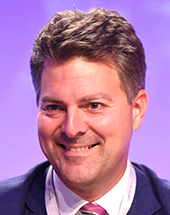
Lukas Sieper | Germany DE | Renew Europe (Renew) | 494 |
| 2 |
|
Juan Fernando López Aguilar | Spain ES | Progressive Alliance of Socialists and Democrats (S&D) | 463 |
| 3 |
|
Sebastian Tynkkynen | Finland FI | European Conservatives and Reformists (ECR) | 460 |
| 4 |
|
João Oliveira | Portugal PT | The Left in the European Parliament (GUE/NGL) | 288 |
| 5 |
|
Vytenis Povilas Andriukaitis | Lithuania LT | Progressive Alliance of Socialists and Democrats (S&D) | 276 |
All Speeches (79)
Madam President, ladies and gentlemen, Vice-President Ribera. Two years after the Digital Markets Act came into force, we must remember once again that what my colleague Cavazzini just said was a principle for all of us. We not only created a set of rules, but we wanted to use the ex-ante principles to bring digital markets as a whole into a new competitive culture that we did not have until then. The European Parliament had already pointed this out in a motion for a resolution in 2014. That is why, Madam Vice-President, I am telling you that, of course, we have been impatient since 2014. We haven't been impatient since 2024 or 2023, but have been impatient for 12 years. Two years have passed since the Digital Markets Act came into force, and today we are at a critical turning point, dear colleagues. The theoretical debates are long behind us. The Digital Markets Act is a living instrument. And we have to state today that it is being put to the test in practice. Some arguments have already been mentioned, including the benefits that have now become tangible for citizens. But we find that some gatekeepers read the letters of the law, but try to circumvent the spirit of the law through creative legal interpretation or legal-technical obstacles. And with that we have to say that we have not yet achieved the goal we wanted to achieve. The Commission, ladies and gentlemen, has the necessary tools, from market investigations to non-compliance procedures. The Commission has the possibility to provide the necessary staff, and we will also check this again in the current budget, because we want important Commission tasks to be sufficiently staffed. But we must note that the cost of non-compliance, including fines, systematically exceeds the cost of compliance in order to achieve a real deterrent effect. Our concern – and this is also clear in the motion for a resolution we are voting on tomorrow – is that we continue to observe self-preferential practices at Google, for example. We see at Apple that the fee structures are not yet adjusted as we would have liked. We see in companies like Meta and TikTok that consent processes are partly based on manipulative designs, and overall there is also a lot to do for the European Commission with new platforms from the Far East. Quite apart from the fact that, of course, we also threaten to slip into a market situation with artificial intelligence, where dependence not only distorts the market, but also personal rights of those who use these services. That is why I would like to say clearly in the end: Madam President, Madam Vice-President, ladies and gentlemen, we are seeing political pressure, not only from third countries, to soften the Digital Markets Act. We give him a clear rejection. Europe defines its own rules, and our digital sovereignty is out of the question.
Well, Raquel, that's a very interesting question. You know that all our Member States have very different systems, and there are some very democratic Member States where there is no ethical body. So the question is not should the institutions behave ethically correctly, the question is how we can achieve that. There is no doubt that my group has some doubts about creating an authority that is state driven to oversee the activities of directly elected MEPs, but it should not mean that ethical values are not key to our action. It should not mean that we don't care about what ethical behaviour is. But we still have some doubts as to whether an ethical body with functionaries and administration behind it will do that job, but we should continue that discussion. Thank you very much.
Mr President, ladies and gentlemen. You can say anything in a democracy and that's why I'm trying to get back to the facts. If citizens entrust us with resources for political priorities, which we decide here in the plenary of the European Parliament together with a majority, then we are assuming the highest responsibility for which we must also justify ourselves. It is therefore our common democratic standard – all political groups here – to ensure that those who manage these funds are accountable. In our report, Commissioner, we make three key messages. Firstly: With regard to the rule of law, we say that monitoring alone is not enough, but the Commission must ensure full suspension or recovery of EU funds where there is corruption or illegal use of funds. Secondly: We have certainly made quite good progress on error rates by declining to 3.6%. But it's not an automatic success, we have to move forward here. With regard to cohesion policy, the error rate of 5.7% is unfortunately still too high. Here, too, we are counting on your ambition, Commissioner. Parliament will not let up here. And thirdly: Transparency of RRF funds must finally be strengthened. We talked about it in committee and we hope to get the data from you soon.
Package travel and linked travel arrangements: make the protection of travellers more effective and simplify and clarify certain aspects (debate)
Date:
11.03.2026 16:35
| Language: DE
Speeches
Madam President, Commissioner, ladies and gentlemen! First of all, I would like to agree with what Mr Oetjen has just said for the Committee on Transport. The Committee on the Internal Market has also played a leading role here. In the end, our rapporteur managed to reach a compromise. We have always emphasised that strong consumer protection must not be carried out or implemented on the backs of small and medium-sized enterprises, in particular on the backs of small travel agencies, which are actually making these package travel ‑ offers, which the families, dear colleague Oetjen, are so happy to accept. That is why we have tabled amendments to that effect. In particular, we have advocated a more precise definition of the package, Mr Oetjen, as you have pointed out. Small travel agencies must continue to be able to provide individual services without any combination being automatically categorised as a package. And secondly, we have also spoken out against blanket penalties of at least 4 percent of the annual turnover. Such sanctions may be intended for large corporations and may also be useful. However, with the many small family-run travel agencies, they would potentially threaten their existence. It is also thanks to the rapporteur that this has been achieved. However, Commissioner, as you have mentioned, the micro‑companies that are at the heart of the reform, I have to tell you that I am not sure that the complaint ‑handling mechanism is really something that they can deal with, because if you have two people in your office, how do you want to make a complaint ‑handling system that is independently supervised? That will be a real challenge, and therefore I hope that we can still work it out in a way that for the small and micro ‑enterprises that you have been referring to, we find a way for the complaint handling to involve as little red tape as possible. I hope that tomorrow we will find a majority and that we will finally get this solution for the small and medium-sized travel agencies.
Single Market: how to move from an incomplete single market to one market for one Europe (debate)
Date:
10.03.2026 11:16
| Language: DE
Speeches
Madam President, dear Vice-President Séjourné, dear Minister Raouna! Without a doubt, the European Single Market is one of the greatest success stories of the European Union and also of European cooperation. It has created prosperity for all citizens for three decades. That is why today we honestly state that there are even more opportunities for this single market – if we are willing to take advantage of the opportunities that are available. But we will only succeed if we really carry out this process of simplification, which you mentioned, in all 27 Member States. I am grateful to you, Minister, for bringing it up, but this is a difficult road, because everyone must join in so that this road can succeed. But this fragmentation of the single market, which we are increasingly seeing at the interface between European and national legislation – social policy, labour market policy, many other areas – leads to the US and China ultimately benefiting from our weakness in Europe. We do not want that, because we want to enjoy the prosperity that European citizens can create themselves, also in Europe. That is why it is in everyone's interest that we succeed today in implementing these common goals together. While our global competitors can operate in large integrated markets, European companies still face different national rules, bureaucratic procedures and legal uncertainty as soon as they want to operate across borders. And that is precisely the advantage of Europe. That is why, dear Vice-President, it is good and right that you have now taken the action and taken further steps with the Member States within the framework of this roadmap, which is intended to bring us to the One Europe, One Market goal. That's good, you have our full support. But, of course, we must now seriously remove the existing obstacles to the internal market, particularly in the services sector and in the freedom of establishment. We need real harmonisation where it is needed. And we must try to make the Member States feel that they are also a very important part of this harmonisation.
Urgent actions to revive EU competitiveness, deepen the EU Single Market and reduce the cost of living - from the Draghi report to reality (debate)
Date:
11.02.2026 10:24
| Language: EN
Answers
Excellent point, dear colleague, thank you so much for asking me. This was the last point that I had to drop. I do agree with you. There is definitely an area – there are sectors – where we are too much exposed to non-European, dangerous technology that can be used against us. For example, the PV inverters. We are at risk there because these tools can be used against our own infrastructure. That cannot be. And we are definitely willing from the EPP's side to work on this, but we would oppose a general 'buy only European' act because we believe that the world is big. We have trade agreements with partners. We have to use the strengths and the innovation of everyone in areas where we can afford it; and where we are at risk, we have to protect ourselves.
Urgent actions to revive EU competitiveness, deepen the EU Single Market and reduce the cost of living - from the Draghi report to reality (debate)
Date:
11.02.2026 10:22
| Language: DE
Answers
So, dear Mr Boeselager, thank you very much for the request, and it would be a misunderstanding. I don't think simplification is the only thing we can do. I simply believe that we need to ensure that any reporting, documentation or information obligation makes sense, including from the point of view of the entrepreneur who creates it, who has to set it up. If we achieve this, there will be much more acceptance of the legislation as a whole. But what I also believe is that we must, of course, make progress on harmonisation. The Commission wants the so-called Digital Networks Act propose. If we were able to harmonise spectrum policy in telecommunications, this would be an important step for the whole of Europe in a sensitive area of the digital sector. I hope that in the end the Council will agree with this and that we will be able to overcome national resistance – an example.
Urgent actions to revive EU competitiveness, deepen the EU Single Market and reduce the cost of living - from the Draghi report to reality (debate)
Date:
11.02.2026 10:19
| Language: DE
Speeches
Madam President, dear Vice-President, ladies and gentlemen! Mario Draghi is very clear in his report: If the European Union does not change course, the gap with the US in terms of gross national product will increase. And we do not want that because good jobs and prosperity are important to the people of Europe, and because as Europeans we can only play a role in the world if we can make our own contribution. Mario Draghi is very clear. It requires four things: investment, innovation, deepening the single market and advancing the security and decarbonisation projects. I just want to focus now on the single market and innovation. In the area of the internal market, we are faced with the problem that there is actually a great deal of unity. Some want to complain about regulation, others talk about bureaucracy. But what the Liberals have just said is a reality: All companies in Europe feel a bit handicapped because the Commission's requirements are often too detailed. That is why I believe, Mr Vice-President, that the first question asked by an official of the European Commission must be: What can I do about documentation obligations, what can I do about information obligations, what can I reduce about reporting obligations without risking the safety of users and consumers? I can give you a whole list. There is a lot that we can simplify; This does not necessarily have to happen with an omnibus, it can be easier. The second is, Minister: The Council has its own task. I am reluctant to say so in this harshness, but the Council does not sufficiently fulfil this task. The example of the e-declaration of posting – Madam President, that is important, I have to say – is interesting. The Council has withdrawn its own common position, which it has prepared for Parliament – after we have come to a conclusion – because there is a lack of unity. I ask you, Madam Minister, to tell officials from the 27 Member States that they must deliver results. It is not enough to just say what is not possible; we need results for the Single Market to move forward.
Mr President! Commissioner! Dear colleagues! The Consumer Agenda is an essential part of European policy, the European single market policy. And that is why, Commissioner, it is good that you have said that this is the beginning of a journey. This journey must lead us where Mario Draghi has described that European consumers play a central role in using our single market, buying the products that are offered and at the same time asking for services – no matter where they come from, whether from Germany, France, Italy or Spain, whether from East or West or North or South. All consumers have the same rights and we have the mandate to enforce these rights in the same way. But in order for them to be able to use these rights in the same way, the single market must offer them even more. There are still barriers that we have not yet abolished. They are all mentioned in the Draghi report. And secondly, many things on paper sound beautiful, but unfortunately a consistent implementation is often still missing. For example, we see all too often that unsafe or non-compliant products reach the borders of the Member States into which Member States enter because market surveillance does not work, because European customs are not yet truly European. That is why, I believe, we need to think about what we can do at European level in order to put market surveillance, in order to really put customs at the service of citizens, so that what they find on platforms also corresponds to what European law says, that products and services must be safe and that consumers can rely on what is written on them to be in them. And for this, the European Consumer Agenda 2030 can provide an important milestone. Digitalisation, European harmonisation and fairness – but these objectives can only be achieved if we create effective enforcement mechanisms. A specialized market surveillance agency could not be a luxury, but a useful way.
I am grateful for your question. I have said that the coherence between the General Data Protection Regulation, which was done more than ten years ago, together with the treatment of data – that are not only the new oil, but like sunshine for the digital economy – is needed. We don't want to break anything down, but we want to achieve full coherence between AI and the digital services sector, but also the GDPR. Maybe it looks to you like something minor, but it can have very deep impact on digital businesses. I think we should look at that to make sure that they can do with one rule all the rules that we have done.
Mr President, Executive Vice-President, I think I am well known in this House for respecting the rules – especially the speaking rules – so I will stay within my time frame. But I would like to say, colleagues, we want to deliver. We want to make sure that European companies can compete at worldwide level. For sure, they have to respect our rules – as all other companies in Europe as well. But our rulebook, unfortunately, because it comes from different times and from different legislatures, is not really streamlined. There should be no misunderstanding: we want our rules to be respected, but we want rules that are coherent. I am very grateful to our colleague Mr Lagodinsky who says that he is here in a spirit of cooperation, because we want to cooperate on serious rules that can be respected by everyone. I have to tell you: on Monday, I was in a very good startup in my constituency in the Black Forest. These people – a doctorate in physics from Heidelberg University – is able to balance AI concerns, fast-track computing with concerns of data protection as well as data privacy. These people are not stupid. They know exactly what we are talking about and they need coherence. I want to thank you as well Executive Vice-President Henna Virkkunen. I think this package should bring coherence. All those that are looking forward to bring coherence to help our companies are welcome in this process of negotiations.
No text available
Protecting EU consumers against the practices of certain e-commerce platforms: the case of child-like sex dolls, weapons and other illegal products and material (debate)
Date:
12.11.2025 21:20
| Language: DE
Speeches
Madam President, Commissioner, ladies and gentlemen! Today we are talking about something that should deeply concern us all – the uncontrolled sale of illegal and dangerous products through large online platforms. These include, as in the case of today's discussion, childish-looking dolls, weapons and other clearly illegal goods and content. These products, ladies and gentlemen, are not only clearly contrary to European law, they are an attack on our values, on the protection of our children and also on the safety of our citizens. That is why it is absolutely right that the European Commission, dear Henna Virkkunen, points out that it has been negotiating with the very large online platform Shein since February 2025 and has asked the platform to provide information on the sale of illegal products. A further investigation followed in May. But all these cases, ladies and gentlemen, all these cases are not isolated cases. We see the same pattern in many platforms. That is why we expect the European Commission not only to negotiate, but to act. The Digital Services Act has created legal bases in a number of articles. Article 74 allows the European Commission to impose fines. Article 9 creates the possibility of the threat that dangerous products must be removed. All these legal possibilities that the legislator has created must now be applied, because it will not be a good thing in the long run that we only explain to the citizens what is not possible. Citizens must feel that Europe is protecting them, that Europe is acting. That's why we need action!
A new legislative framework for products that is fit for the digital and sustainable transition (debate)
Date:
20.10.2025 20:29
| Language: DE
Speeches
Mr President, Commissioner, ladies and gentlemen! Precisely because we want companies from Germany and France or wherever in Europe to be able to supply all cities in Europe with uniform products, we need uniform standards. For Europe to grow digitally and sustainably, we also need to strengthen the technical foundation. Standardisation remains one of the central pillars and it benefits precisely those companies that may be facing difficult economic times because it gives them access to the entire European single market and thus allows them to sell much more products with one production facility than usual. That's why it's just the other way around as just described. The standardization benefits the individual companies because the synergy effects become greater. We see it in other parts of the world: A patchwork of contradictory norms does not use, but harms. This is why Europe, with its unified system, must continue to maintain reliability, clarity and trust in the future. With the CE marking, you can buy a product – whether in Freiburg, Florence or wherever, in Finland – that must deliver all clearly identifiable technical standards and thus create trust – from the consumer, but of course also from the sellers. This is exactly what the single market is all about, and this is one of the great locational advantages that we have in Europe. That is why with the new legal framework for products, so that we can survive in the digital and sustainable age, we need initiatives that strengthen this very European idea of the single market.
The decision to impose a fine on Google: defending press and media freedom in the EU (debate)
Date:
20.10.2025 18:46
| Language: DE
Speeches
Mr President, Vice-President Ribera, ladies and gentlemen! We had to wait four years for the penalty that the Commission has just carried out to be imposed. And during this period, many small and medium-sized publishers in the European Union have faced serious difficulties because they have largely lost the core business they need to publish contributions, articles and opinions, namely the advertising industry. It doesn't take us too far to ask who made what mistake. But one thing is clear, and that is why the decision is right, Madam Vice-President: A dominant position in such an important area is simply unacceptable for European democracy, for the diversity of 27 Member States. That is why, on behalf of the EPP Group, I would like to thank you for the decision and believe that the proposal that structural measures must also be based on it is the right way to push the decision in the right direction. Nevertheless, ladies and gentlemen, it is of course the case that, in connection with the decision on Adtech There are a number of other questions on Google that we also need to address. The first, as you mentioned, is a contribution by the European Union to ensuring media diversity in Europe. Secondly, of course, there is also the question of how we will be able to combat further developments in other areas of dominant positions in the digital sector more quickly in the future, so that we do not have to wait another four years. That is why, at this point, Vice-President Ribera, I would like to point out once again that we urgently need to deal with the newly existing AI bots, the entire issue of artificial intelligence, at an early stage, so that we do not run the same risk in terms of free competition here as we do, for example, in the area of: Adtech have experienced. Europe must act now to secure the future of the digital sector in Europe in an open way.
Promoting EU digital rules: protecting European sovereignty (debate)
Date:
08.10.2025 17:04
| Language: EN
Answers
Thank you so much colleague van Lanschot – a brilliant question, and I am sure that you have been already exchanging with your colleague from the Social Democrats who is sitting next to you who is also in government with us. I think we can rely on the Parliament's position that is very clear and has very clearly said that we do not believe that this proposal is the way forward, because Briefgeheimnis, the secrecy of private writing in the past has been a concept that we have been defending together, and we will also uphold it in the future, in the digital future. However, I also think that we share here all together that the protection of children in digital terms is a real challenge that we have to take very seriously and therefore we have to strike the right balance. The secrecy of personal information has to be kept, but at the same time, authorities have to have the power to investigate seriously.
Promoting EU digital rules: protecting European sovereignty (debate)
Date:
08.10.2025 17:01
| Language: DE
Speeches
Madam President, Madam Vice-President, ladies and gentlemen! The debate on European digital policy shows that sometimes we don't know exactly what we can be proud of and what we need to look at in a self-critical way. I believe that the basic principle of the social market economy, which allows open markets and access to new technologies for many players, is the right way to go – even in the 21st century. And we should have the courage to critically reject studies that are presented with rare arguments in Brussels. I believe that we have tried to find the right balance between the interests of the individual and the interests of the whole, both in the Digital Markets Act and in the Digital Services Act. And, of course, we have included the diversity of Europe between 27 Member States. That's why we can confidently defend our laws at this point. And it has often been said in the debate that many of our colleagues attach great importance to the fact that we also do so in an international environment. But of course, the laws we have adopted always have to go with the times. That is why, Madam Vice-President Virkkunen, I would like to make it very clear: We passed these laws two years ago, but digital development has continued. We need for cloud, we need for artificial intelligence now a designation as core platform service – not next year, but in 2025, because otherwise we will not get the advantage of open markets that we wanted to achieve with these laws. That would be a pity, because Europe is slow in many places. In places where we are fast, we should not lose this advantage. I therefore hope that today's debate has opened our eyes to all of us and that we will move forward with self-confidence over the coming months in this argument.
Time to complete a fully integrated Single Market: Europe’s key to growth and future prosperity (debate)
Date:
07.10.2025 09:12
| Language: EN
Speeches
Madam President, first of all, Minister, let me tell you that I think you did a very good job this morning of reminding us that if we announce that we want to change the law, then we also have to deliver on it. I cannot hide from you that I am myself a bit frustrated that this takes too much time. You're absolutely right. If you don't like it, it's announced. We have to find majorities and we have to go for it. I take this initiative very positively. Thank you so much for this. Now, turning to the point that this discussion this morning is about, I would like to thank Commissioner Séjourné and I would like to point out that on a lot of issues, it is very complicated to show what practically the single market means. I think that this is all the time a bit the problem of our discussion: it's very general and we have to try to make it very precise. So, the example – and I am very grateful, Commissioner, that you have come forward with that proposal – concretely, it means that if you transfer a worker from one country in the European Union to another one, that this can be done easily. We don't want to deregulate, but we want to make it easy. He has to go for an A1 form and, at the same time, his employer has to make an employment declaration on two different forms on two different systems. In 27 Member States, every time a different way. That's not feasible. This takes too much time. It's pure bureaucracy and we should look for a system where we can merge both declarations into one so that this goes much faster. Secondly, we have also been speaking about customs. We know that at the moment we are invaded by millions of packages per day from the Far East and no control is happening. We are discussing about it since months – since years, I would like to say – and also here we have to go for action. Our single market merits a uniform control at its borders to make sure that no country can offer privileged access to specific goods that are dangerous. Finally, I would like to say, colleagues, that the International Monetary Fund may have gone a bit strongly and maybe also a bit in the wrong direction, but that some services have a barrier in the European Union of 110 % means that, in the end, more than double of the price has to be paid just for a service coming from another country. It's a delicate question, but we have to work on it and we are looking forward to your roadmap.
Implementation and streamlining of EU internal market rules to strengthen the single market (debate)
Date:
11.09.2025 10:50
| Language: DE
Speeches
Madam President, Commissioner! First of all, thank you to the rapporteur and our shadow rapporteur Henrik Dahl for an excellent work. I believe that we have come to a relatively unanimous agreement on what the broad lines must be in the context of our committee. This is very positive, thank you for making it possible. But – this is my first point: The Single Market is not only made in the Single Market Committee. Today we are voting on unfair trade practices in the agricultural sector. Our colleagues in the agricultural sector understand things a little differently, perhaps even a little wrongly. And our goal must be to ensure that the internal market is applied cleanly in all areas of law. The colleague Van Lanschot made a good point with his Nike speech: Just do it. I am very grateful to him. We must ensure that we get a majority not only here, but also in the Council of Ministers, so that what has been declared a positive message for years is finally implemented. And we're having a hard time. And that is why I am already saying, Commissioner: I don't really see it as a 28. Regimes of 27 Member States are accepted. I have doubts; I believe that at the end of every country wants to work on the settlement from a sovereignty point of view, and that is why the solution will be that we get the countries to push them to a certain extent to create common rules in the areas currently covered by the 28th European Council. regime is addressed. Secondly, I would like to address Mr Dibrani. It's just a fairy tale that it's all about deregulation. That's not the goal. I have understood this very well, Mr Colleague: They want simplification; We want that too. Let's sit together! Let's talk about the fact that the Omnibus I is finally accepted! There are solutions that are not deregulation, but simplification.
Mr President, Commissioner, ladies and gentlemen! As far as public procurement law is concerned, we are in a situation like 2014 except that we have had a colleague in every sectoral report since 2014 who did not find a compromise and then said: Then we simply introduce an additional provision under public procurement law! This has led in part to conflicting procurement rules. That is why the Commission has to converge a little bit on what this Parliament has done over the last five years. First of all, my request: If we now agree on rules, then these rules should also apply, notwithstanding specific sectoral rules such as the creation of e-mobility. Secondly: What we want to achieve is to make investment as easy as possible, in line with the internal market. I come from a border region. It must therefore be possible for the Lord Mayor of Freiburg to advertise services that can then also be provided from France or, in my case, from Switzerland. This must be the aim of public procurement law – not the last detail of what some might wish to regulate here. Thirdly, I would like to give an example from my region: In the Karlsruhe area, a large administrative building was to be built of wood. There is a similar building in Australia. The Karlsruhers have decided to commission the Austrian company. They wanted to build it, but then they said – and it wasn’t about the lowest price: The building standards in Germany are different, we cannot comply with them. We built this in Austria according to Austrian standards, that's for sure, but that's not how we can transfer it, so we don't make an offer. That is to say, the internal market is sometimes troubled not by price alone, but by various national building codes, and, Commissioner: That is why it is essential that we also tackle these issues if we really want to establish the internal market in public procurement law.
Product safety and regulatory compliance in e-commerce and non-EU imports (debate)
Date:
07.07.2025 19:49
| Language: DE
Speeches
Mr President, Commissioner, ladies and gentlemen! First of all, I would like to congratulate my colleague Salvatore De Meo on this excellent report. I believe that all the important issues relating to e-commerce in the European single market are really being discussed in depth here. This is important because the numbers are: 4.6 billion micro consignments below the duty-free limit of 150 euros were imported into the European Union from all over the world last year. Shockingly, 91% of these shipments come from a single third country, equivalent to 12 million parcels per day. The fact that these deliveries are also privileged by post and thus subject to costs other than European products makes things difficult. That is why I do not want to lament too much about the problems we have in the short speaking time that I have left anyway. The Commissioner has already described it and the report puts it on record. It is about what we can do to adequately protect the European single market, consumers, but also the companies operating here, and to create a new framework. We therefore propose that, in the context of the new European Customs Code, a so-called handling fee – to create a handling fee – which will bring about significant changes, especially for such micro-packages, which, of course, are subject to particular difficulties in the control by customs authorities and market surveillance authorities. I hope that we can achieve a handling fee Introduce a total of 4 euros per package and thus achieve a hedging effect. Better controls for more security!
Electricity grids: the backbone of the EU energy system (debate)
Date:
18.06.2025 18:41
| Language: DE
Speeches
Madam President, Commissioner, ladies and gentlemen! The internal energy market is at the heart of one of the networked elements of the European internal market. That is why we are doing well to ensure, with Mrs Stürgkh's report, that we are investing in this single market in order to achieve greater resilience, as we saw it a few weeks ago in Spain: If a country does not have enough connectors with the other countries of the single market, we risk a blackout. We can avoid this relatively easily by building more connectors, by further stabilising the internal market, in this case the internal electricity market, and by adding more interconnectors. This is an issue that we have been discussing for years; Commissioner Oettinger has already promoted this during his time in the European Parliament. But we have not succeeded in convincing the Member States that it is not only a good idea, but that we must also implement it, that the electrical grids of the Backbone The European energy system – the title of the report – is that it is simply about investment. If we look at how we stand in global competition, then we can show this quite simply: Industrial enterprises in the United States pay between 6 cents and 9 cents per kilowatt hour, in China even less; In Germany and Europe, the average electricity price is over 20 cents. This will not work in the long run. That is why it is good and right that this report should re-examine the point. We need to invest accordingly in the European internal energy market and networks if we are to achieve the resilience and competitiveness of the European economy.
Mr President, Commissioner, congratulations on this strategy. Mr President! Monsieur le Commissaire, félicitations pour cette stratégie. The Single Market Strategy follows directly on from the reports by Mr Draghi and Mr Letta. It shows a new self-confidence of the European single market, the European Union. In other words, if we implement the Single Market Strategy, we can simply create new growth through closer cooperation. This new growth, ladies and gentlemen, is what we need. This is because the remaining barriers may be very easy to overcome if it is possible to achieve the necessary unity in the Council – with the Member States – and here in the House, to create the necessary majorities. The barriers we have in the single market today – as the strategy clearly points out – may be higher than the US tariffs currently in place, which are expected to be 20%. That is, we have it in our own hands to improve things. But for this we need a series of courageous steps to make these so-called Terrible tento overcome the single market strategy. What is the biggest danger? The first danger is that we are all talking about the Draghi report, but no one in the Council is really willing to jump over their own shadow and create common rules instead of blindly defending their own national rules. Another danger is that the Commission may not be initiating enough infringement procedures. We just talked about Hungary. The requirements for retail trade in Hungary are not compatible with the internal market. There would already be something to do, for example, but certainly also in all the other 26 Member States. And thirdly, it is certainly worth mentioning the fact that, of course, in Parliament, too, we now have to create the necessary majorities in the middle in order to achieve the proposals that really reach into all sectors. The EPP Group is ready to do so. We want the European single market to create new growth. We need new growth in Europe if we are to meet the goals of the Paris Agreement on climate change, but also if we are to succeed in global trade. I therefore hope that this strategy will now be taken seriously under the Polish Presidency in Berlin and Paris, but also in Italy and Spain. And we understand that we – the Member States, Parliament and the Commission – can only implement them together.
Old challenges and new commercial practices in the internal market (debate)
Date:
08.05.2025 11:09
| Language: DE
Speeches
Mr President, Commissioner, ladies and gentlemen! Every year there is a new single market strategy, and the new one often contains exactly what was included in the old one. In this respect, Commissioner, I am pleased that you have taken up some refreshing new points of analysis in your analysis of the European Single Market for goods and services. However, the problem remains the same as you described it: A lot of European legislation is lost in its spirit in the Member States. That is why it will be crucial that the Member States, especially the big ones such as Germany and France, live up to their responsibilities. And the second is that we must not make it too easy for ourselves to lament the tariffs imposed by the Americans here in the European Parliament – which may mean 10 per cent more obstacles – but at the same time forget about the 40 per cent that we ourselves have still not cleared away within the European market. This is why it is hard work to use the Single Market Strategy to try to find concrete points of reference for simplification. You have already addressed the posting of workers, which is a major problem, especially in border regions, with a proposal. We must do everything we can to ensure that all Member States are involved, otherwise the proposal will not have the desired effect. We need to reassess European customs policy because, of course, if we want to combat the tsunami of the many small packages from the Far East, we could take much more effective action against Temu and Shein with a single customs organisation. But, Commissioner, together with your colleague in charge of customs, we have been working on this for over 15 years. And the Member States have faced difficulties every time there has been a need for more unification. The third is: Of course, it is popular to make demands in the digital space now. But the core, where we can generate new growth in Europe quite easily, remains the classic single market for goods and services. That's why we have to get there. That's why I hope your strategy shows us new ways.
Mr President, Madam Vice-President, ladies and gentlemen! First of all, I would like to thank the rapporteur for the good cooperation on the annual report on competition policy. This annual report is special this year because its geopolitical context makes it special. Globally, jointly developed rules are being challenged, artificial intelligence systems are questioning established certainties, and even in some Western states, unpredictability and uncertainty are becoming a principle. However, we are not afraid of this in Europe, because we are sure: This creates new opportunities for Europe. A reliable competition policy, Madam Vice-President, benefits consumers worldwide, and innovation can emerge where markets are not blocked by dominant players. The nervousness in the markets puts Europe in the role of a net winner, because many talented employees and other investments are coming to Europe these days because they appreciate the strength and stability of our institutions. The Competition Report therefore rightly points out that competition law must also meet the growing complexity of global competition. Improving the competitiveness of the European Union is a policy task at national and European level. Because we want to secure Europe's place in global competition. For this, we need courage and at the same time investment incentives for new technologies. The enforcement of competition law, on the other hand, is the task of the EU Commission as an authority that must continue to enforce robust rules of the game for fair competition, especially in the digital environment. That is why the recent attacks on the DMA, on the Digital Markets Act, are a danger that we must face together with a very convincing and convincing application of our common law.