
| Rank | Name | Country | Group | Speeches | |
|---|---|---|---|---|---|
| 1 |
|
Lukas Sieper | Germany DEU | Non-attached Members (NI) | 390 |
| 2 |
|
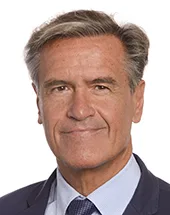
Juan Fernando López Aguilar | Spain ESP | Progressive Alliance of Socialists and Democrats (S&D) | 354 |
| 3 |
|
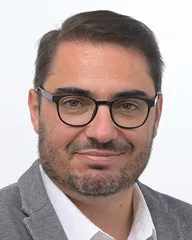
Sebastian Tynkkynen | Finland FIN | European Conservatives and Reformists (ECR) | 331 |
| 4 |
|
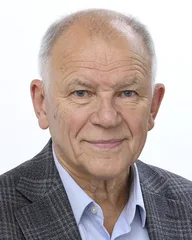
João Oliveira | Portugal PRT | The Left in the European Parliament (GUE/NGL) | 232 |
| 5 |
|
Vytenis Povilas Andriukaitis | Lithuania LTU | Progressive Alliance of Socialists and Democrats (S&D) | 227 |
All Contributions (52)
Housing crisis in the European Union with the aim of proposing solutions for decent, sustainable and affordable housing (debate)
Dear Chair, Commissioner, colleagues. In Europe, real estate accounts for 57% of household net wealth and is the main way of saving for the rich. As many as 25% of property owners in the Union have more properties, while around 30% of Europeans think they will never be able to afford their own roof over their head. In my country, Croatia, the research I conducted showed that the situation is even worse: 70% of young people cannot afford to buy or rent an apartment. And how would you, when the average salary is about 1500 euros, and the average price of a residential square as much as 3600 euros. The problem is the lack of public housing. States do not build, manage or plan long-term, but subsidize private investors. It's escaping responsibility. It is the state that must guarantee a roof over its head and this cannot be left to private capital alone. I will repeat and it is worth repeating: Home is real, not luxury.
One-minute speeches on matters of political importance
The European beekeeping sector faces major challenges and the sustainability of domestic production is questionable. In 2024, we imported as much as 175,000 tonnes of honey. In fact, this makes European beekeepers dependent on cheap global competition and constantly pushes prices. In the country I come from, Croatia, we have about 9,000 beekeepers and more than 440,000 beehives, which speaks enough about the strength and importance of this sector. Imports are growing, the authenticity of imported honey is questionable, climate change is unfortunately threatening the entire sector and we now have the EU-Mercosur agreement, which opens up a quota of 45 000 tonnes of duty-free honey. That is 10% of honey consumption in the European Union and domestic, Croatian beekeepers warn me that this will end them. Therefore, I renew my call to the Commission to stop going headless in the EU-Mercosur agreement, to protect our beekeepers, to protect our farmers and the whole sector.
Gender pay and pension gap in the EU: state of play, challenges and the way forward, and developing guidelines for the better evaluation and fairer remuneration of work in female-dominated sectors (debate)
Colleague Glavak, I don't think you're right. It is true that Croatia is somewhere on average, therefore, of the European Union when we talk about the gender pay gap, and you know well what pensions are in the Republic of Croatia and you know well how much less women receive pensions. We have one of the worst indicators regarding the purchasing power of our pensioners. It's really sad that you even mention it here. This is one big, big failure of the Croatian government if we talk about pensions, especially pensions received by women.
Gender pay and pension gap in the EU: state of play, challenges and the way forward, and developing guidelines for the better evaluation and fairer remuneration of work in female-dominated sectors (debate)
In 2026, women earn on average 13% less than men in Croatia. For pensions, this gap is even larger, at more than 23%. So, women receive less for the same internship, for the same work. This is not new, this is not accidental and this is not insoluble. This is, in a way, the failure of a system that encourages gender stereotypes and often blocks women's progress. It is the responsibility of the institutions, it is the responsibility of the employers, because we all have our responsibility to combat gender discrimination and to advance equality, not to protect privileges. Certainly a major step forward was the adoption of the Pay Transparency Directive and it is good that the new strategy makes it clear that we will not weaken it. However, full implementation is crucial. Without adequate transposition into national legislation, there is no shift towards true gender equality in the labour market, and it is the responsibility of all of us.
Cooperation among enforcement authorities regarding unfair trading practices in the agri-food supply chain (debate)
No text available
Recommendation to the Council on EU priorities for the 70th session of the UN Commission on the Status of Women (debate)
No text available
Developing a new EU anti-poverty strategy (debate)
Dear President, Commissioner, in Croatia, the youngest member of the European Union, as many as 21.7 percent of the population lives at risk of poverty or social exclusion. It's about 800,000 people. It is important to say that poverty does not affect all regions equally, but smaller, rural and less developed regions. They are at the highest risk in the coming period. Why? This is because, in the new proposal for the Multiannual Financial Framework, cohesion and the Common Agricultural Policy face fewer resources and this means fewer funds for rural development, for infrastructure, for social inclusion where it is most needed. I believe that this is unacceptable and that the European fight against poverty must have a strong social component and strong social protection, and resources should be allocated to the cities, to the regions that are indeed the most affected.
International Day of Education, fighting inequalities in access to education (debate)
No text available
Presentation of the action plan against cyberbullying (debate)
Research shows that girls are more likely to be victims. Cyberbullying than boys, with one in three girls estimated to experience some form of online harassment, most often on social media. These data clearly indicate that there is a particular responsibility to address the gender aspect Cyberbullying. The responsibility of social media owners and other online platforms to actively prevent violence, remove harmful content and ensure a safer digital environment for children should also be emphasised. Ignoring this responsibility means consciously allowing digital violence. It is our obligation here to send a clear message that we need to prevent this immediately and that we need to act clearly.
Amending Regulations on agricultural products as regards market rules and sectoral support measures in the wine sector and for aromatised wine products (debate)
No text available
One-minute speeches on matters of political importance
Today, the situation in European agriculture is so alarming that we are once again witnessing the protests of European farmers. If we look at things nationally, they're even worse. In Croatia, we are faced with a decline in agricultural production of as much as EUR 50 million. Our livestock numbers have halved, the sector is facing natural disasters, with diseases that literally destroy everything in front of us. And now, instead of focusing on solving these problems, to boost domestic production, Europe is looking for a solution in trade agreements. Mercosur, in the form proposed, certainly cannot be the solution, but, unfortunately, it is the last nail in the coffin for small European farmers, for our domestic and healthy food producers and who says otherwise does not hear people living from agriculture and working on land.
Presentation of the European Affordable Housing Plan (continuation of debate)
No text available
Amending certain CAP Regulations as regards the conditionality system, types of intervention in the form of direct payment, types of intervention in certain sectors and rural development and annual performance reports, data and interoperability governance, suspensions of payments annual performance clearance and controls and penalties (debate)
Today, the Honourable Chair, the Honourable Colleagues, Commissioner, we are discussing changes to the Common Agricultural Policy framework to make the European agriculture system simpler, fairer, more resilient to the crises that affect our people in the countryside the most. Our farmers, especially small family farms, young people and those in mountain areas ask us for solidarity against the burden that stifles their work. The proposed changes in this compromise relieve them, especially farms up to ten hectares, while clearly promoting the contribution and importance of organic production. In this audit, we preserve the highest environmental standards, while at the same time prioritising people over profit, strengthening the risk management system and disaster funds, as our farmers are often the biggest victims of climate and market shocks. This compromise guarantees transparency, minimum administrative requirements and fairness for villages and clearly ensures that the common agricultural policy is strong, efficient and focused on those for which it was created – for our farmers.
EU strategy for the rights of persons with disabilities post-2024 (debate)
No text available
One-minute speeches on matters of political importance
No text available
Gender Equality Strategy 2025 (debate)
Dear Chairman, thank you. I listened carefully to the whole discussion and I really thank everyone for their support, for the comments. Some discussions I would not comment at all because I think they have said everything through their discussions, and even by choosing words, absolutely inappropriate to such an institution. I will only say that we must not look at equality through one narrow lens, because discrimination is happening today. We haven't eradicated the violence yet. We do not even have sufficient political participation of women in political life, etc., etc. And we could enumerate through many areas of society and life. And now it's an ideology to some of the colleagues here. All right, let them have it, but I'm telling them from here that all of us who normally, that normally, think we're going to support this report because it's our responsibility. It is our responsibility to ensure equality, freedom and to protect women in every aspect of our society and life. Thank you and thank you for your support.
Gender Equality Strategy 2025 (debate)
Today, the Honourable Chair, the Honourable Commissioners, the Honourable Colleagues and the Members of Parliament, we are facing an extremely important debate and document that will determine whether, as the European Parliament, as Members of Parliament, as citizens of Europe, we are ready to clearly and loudly defend our fundamental values and build a European Union of equality and equality. This isn't just an ordinary report, but it's also not a list of nice wishes. This document contains our main demands and priorities in the field of women's rights and gender equality, but it is also an analysis of the defeats so far which have led to the fact that today our fellow citizens across Europe are not safe, free or equal. But he's also a sign of how to make it right. The year is 2025 and we are at a turning point. Not just as a community, but as a world. And although we have won countless battles for equality, many of them fought in this very house, today across Europe we feel an attack of backsliding, questioning the fundamental human rights and freedoms and shouts of those who would bring us back to darkness. This backsliding is no longer a distant threat today; it is there, in our cities, on our streets, online, in schools and in our media, and even within these institutions. We look at how the rights we considered unquestionable are being undermined: the right to liberty, bodily autonomy, the right to work, the right to live without fear, violence and discrimination. Anti-gender movements, misogyny, discrimination and well-organised and funded forces spreading disinformation do only one thing: They try to convince us that gender equality is not a fundamental value, but an ideology. That these are not discussions about, for example, the right to health, to safety from violence or to equal pay for equal work. All this is undermined by expressions such as ‘gender ideology’, ‘woke movement’ and similar fabrications that have no place on the margins, let alone in the political mainstream. That is why the text before you, which we have negotiated for a long time and very difficult, is a resistance to such initiatives. First: violence. One in three women in the European Union has experienced violence. It's an epidemic. We welcome the Anti-Violence Directive adopted in the last mandate, but the paper does not stop the bully - this is the implementation. In this document, we therefore call on all Member States: Stop stalling! Implement the Directive in its entirety, from prevention to victim protection. To prevent this, it is essential to teach young people about consent and to provide a clear legal framework based on an approach: Just YES means YES. Second: Autonomy of the body. We must not be afraid to say: Sexual and reproductive health are human rights. In the 21st century, no woman in Europe should die for being deprived of a fundamental right. The right to decide on one's own body is the foundation of women's freedom. We therefore ask the Commission to stop hiding behind national competence arguments and to ensure universal access to SRHR for every woman and girl in the Union. Initiative My voice, my choice One way to ensure this is to call on the Commission to comply with their request. It is time to protect our fellow citizens from discriminatory national health systems, from misogynistic governments, from the interference of religious dogmas in legislation. Third: we cannot build a strong, competitive Europe if women's work remains invisible, less paid or overburdened. The gap in wages and pensions is not only unfortunate statistics, it is systemic injustice. This is the result of society as a whole valuing women-dominated jobs - such as care, cleanliness, education - as less valuable. This is why we are calling for the European Care Strategy to be transformed into a strong European care legislation. We need to invest in affordable, high-quality childcare and care services for the elderly. This is crucial if we want an equal Europe. Fourth: The digital world has become an extremely dangerous place for women. Under the guise of the free development of technology, we have created a monstrous situation in which it is quite normal to spread lies, disinformation online, to expose women and girls to attacks, harassment, online violence. Algorithms that incite discrimination and hatred, AI tools used to create violent and degrading content, social networks that rage. It is time to stop the big players in the online world and make it clear that profit is not and cannot be ahead of the safety of our fellow citizens. The message for the end - tomorrow, when you vote in this document, you do not just vote on a series of recommendations. You are voting on what Europe will be like in the coming decade. Support this report and be on the right side of history. All the rest is the abandonment of fundamental European values.
Declaration of principles for a gender-equal society (debate)
In March 2025, the Commission published its Plan for Women's Rights, which includes a long-term political vision to advance women's rights. The Roadmap is accompanied by a Declaration of Principles for a Gender-Equal Society. In the Plan, the Commission invites all interested parties, in particular the Parliament and the Council, social partners, civil society actors and other relevant organisations, to support the principles included in the Declaration of Principles for a Gender-Equal Society annexed to the Plan in 2025. Over the past five years, the European Union has made historic progress by adopting a number of very significant pieces of legislation, such as on pay transparency, gender balance on company boards and the fight against violence against women. However, progress towards gender equality remains slow and we are also facing increasing attacks on women’s rights, gender equality and achieved human rights standards. That is why it is important that much more is done today, and the Plan should provide guidance for concrete actions in the new Gender Equality Strategy, of which I am the rapporteur. Parliament welcomes the adoption of the new Strategy and we are preparing our contribution through our own report on the Gender Equality Strategy 2025, which we will vote on next week in the Committee on Women’s Rights and Gender Equality and next month in plenary. When developing the new Gender Equality Strategy post-2025, we call on the Commission to take into account the views of Parliament that will be expressed in our upcoming resolution and to work together to ensure that Europe remains a global leader when it comes to human rights, when it comes to gender equality. To be able to say this, there are a few key things we need to protect and improve. First, women's sexual and reproductive health and rights. This is not a request for full access to these rights, including the right to abortion. We're not going to negotiate and bid here. The Commission must be very clear about this. Right to choose - always. Combating violence against women is an absolute priority. It is time to rectify some of the injustices of the past mandate, especially when it comes to rape and sexual violence, but also to improve legislation on the definition of gender-based violence and femicide. Furthermore, empowering women in the labour market and safe workplaces are not just good wishes. Today, women face harassment and violence in all areas, from public spaces to their workplace. We also need a new legal framework for care. Unregulated working conditions, precarious contracts, the burden predominantly on women, this is not a system that is acceptable. It's not a system we want to build together. At a time when we are increasing resources for defence and security, it is wrong to say that these priorities are at odds with those in the field of women's rights and social security. Increased spending and gender budgeting must become a reality, and it is also time to take a critical look at the allocation of funds so far, because how can it happen that the European Union gives its funds for some projects and programmes that are in conflict with the fundamental values of the European Union? They spread lies and disinformation about, for example, sexual and reproductive rights. This should be followed up and put an end to it immediately. Next, feminist foreign policy is not the kind of bauk some want to portray. It simply means a single political framework that places gender equality and the human rights of all women and marginalized groups at the centre of foreign policy goals, strategies and implementation. And finally, resistance to all those who violate fundamental values and freedoms and women's rights. Unfortunately, we know that such people also sit here in the European Parliament. In addition to all these priorities, in July this year the Committee on Women's Rights and Gender Equality adopted a draft motion for a resolution on the Declaration of Principles for a Society with Gender Equality. In this draft, we welcome the Commission Communication of 7 March 2025 and consider that it is a good basis for the preparation of the upcoming Gender Equality Strategy, which still needs to go much further and provide concrete legislative measures to ensure protection and progress in the area of women’s rights and gender equality. The Committee also endorses the principles included in the Declaration accompanying the Commission Communication. However, all this without concrete measures means little, and Parliament will be presenting its own next week. Be assured that our requirements will be clear, concrete and focused on maximizing the protection and advancement of women's rights. I would therefore like to ask the Commission the following questions. How will the Commission ensure that Parliament’s positions in the area of women’s rights are presented alongside the Gender Equality Strategy post-2025? Parliament has repeatedly specifically called for new legislative proposals in the area of women’s rights and gender equality. What can we expect from the Commission in the upcoming strategy in this regard?
Common agricultural policy (joint debate)
Dear Chairman, simplifying procedures and reducing administrative burdens is essential for our farmers. I hear the same thing on the ground every day: too much paper, too many rules, too little understanding for real life in the countryside. Our people want to work in the field, in the vineyard, in the barn, and not fill out the forms. In Croatia, for example, due to excessive bureaucracy, the use of funds for the wine sector barely exceeds 50 percent. Competitions are changing overnight, without clear instructions, and so we are forcing producers to give up farming, and now with all this the Commission is announcing fewer funds in the agricultural budget. I think it's the wrong and dangerous direction. If we want a strong European agriculture that produces domestic quality food, we need to free farmers from paperwork and give a greater role to those who can help - cooperatives, local action groups, local and regional authorities. The documents that we will vote on tomorrow I think are going in the right direction and I will support them. Our farmers need less paper and more support, understanding and respect.
Summer of heatwaves in the EU: addressing the causes and providing adequate housing and health policies to address record-breaking temperatures (debate)
Dear Chairman, June 2025 was one of the warmest in the history of measurement. Temperatures exceed 40 degrees, and one in five people in Europe do not have the opportunity to cool their home. It's not just a climate issue, it's a matter of social justice and equality. In Croatia, it is particularly dramatic in rural areas that make up 63 percent of the territory and are home to more than 40 percent of our citizens and are faced with depopulation and the departure of young people. People in these rural areas live in old houses without basic energy efficiency standards with high utility costs. That is why my position is clear, the new European Affordable Housing Plan must also have a specific component for rural areas, investments in renovation, energy efficiency and green infrastructure. As a Member of the European Parliament, I will fight for the entire Croatia, our cities and smaller rural areas to receive funding for these projects because the right to housing in decent conditions is a fundamental human right, and combating energy poverty must not come at the expense of citizens, but is the responsibility of politics and our obligation.
China’s unjustified decision to impose duties on imports of pork products from the EU and the need to support European farmers and workers (debate)
Dear Chairman, at a time when trade conflicts are booming around the world, agriculture has been hit hardest, from Mercosur, through a new agreement with the United States, so here's China's imposition of tariffs on pork and pig products. The situation is increasingly alarming for our farmers. The decision coming from China will have serious consequences for the pig sector in the European Union, as China has been one of the key export destinations for European pork in recent years. Surpluses will pile up, prices will fall, and the sector will suffer. And it is important to say that this decision from China is completely unjustified because Union pigmeat producers do not participate in anti-dumping practices and have fully cooperated with the investigations and with all requests of the Chinese authorities. We urgently need measures to counter the negative consequences of these latest tariffs, as well as a trade strategy that puts agricultural production at the centre because without farmers there is no food and without food there is no security, and therefore protecting domestic agricultural production must be our priority.
One-minute speeches on matters of political importance
Dear Chairman, imagine a picture of people in black who would ban cultural manifestations because they are bothered by anti-fascism, then threats at the writer's house because he has an opinion that they do not like, then a call to the lynch of a politician who defends him; In public space, a fascist greeting is shouted, and all who condemn it are called a lack of patriotism. It is a picture of the summer of 2025 in Croatia. What does the government do? She doesn't react, she doesn't condemn, she just incoherently reaches out. In a country that has anti-fascism in its constitution, today we witness the revival of the Ustasha, the Croatian version of fascism. This poses a threat not only to Croatia, but to the entire European Union. And we're not the only ones. Anti-fascism is the property of civilization, the greats used to say. Let us not forget their words and let the dark ideologies of the past become our reality in the future.
Post-2027 Common Agricultural Policy (debate)
The Common Agricultural Policy is a cornerstone and a key pillar when it comes to European food security, the future of production and the sustainability of agriculture. It also plays a key role in preserving rural areas. All this is now under scrutiny if the announcements we hear from the Commission on merging the CAP with other financial instruments materialise. This is not about any simplification, revision or coordination. That's not a technical question. This is a decision that, should it occur, puts our agricultural producers and consumers at risk. This, combined with the EU-Mercosur agreement, in which the agricultural sector is sacrificed to some other sectors, seriously undermines the sustainability of European agricultural production. I renew my appeal to the Commission not to overthrow one of the most successful and important policies for the whole of Europe and to work together to ensure a single, increased and stable agricultural policy budget. Our farmers deserve it.
One-minute speeches on matters of political importance
Honourable chair, rural areas make up most of the territory of the European Union and are one of the most important sources of resources, from agriculture, cultural content to tourism. However, we still face a lack of investment in infrastructure. Public transport, housing, healthcare, as well as digital infrastructure, in particular high-speed internet, are particularly prominent here. In 2025, when most of Europe uses AI every day, some of our fellow citizens in rural communities do not have access to the internet. That is why I am pleased to see the growing calls for rural areas to be digitalised, but such requests must be accompanied by concrete financial resources. I have worked on digitalization and the introduction of high-speed internet for several years, as the mayor of a smaller city, and we are among the first to start such projects together with the Krapina-Zagorje County, which was named the European Entrepreneurial Region for this year. And I am glad that thanks to these activities, access to high-speed internet is soon becoming a reality for a large number of citizens. It's good when national initiatives catch up with local levels and support our projects, no matter how late.
One-minute speeches on matters of political importance
Honourable chair, rural areas make up most of the territory of the European Union and are one of the most important sources of resources, from agriculture, cultural content to tourism. However, we still face a lack of investment in infrastructure. Public transport, housing, healthcare, as well as digital infrastructure, in particular high-speed internet, are particularly prominent here. In 2025, when most of Europe uses AI every day, some of our fellow citizens in rural communities do not have access to the internet. That is why I am pleased to see the growing calls for rural areas to be digitalised, but such requests must be accompanied by concrete financial resources. I have worked on digitalization and the introduction of high-speed internet for several years, as the mayor of a smaller city, and we are among the first to start such projects together with the Krapina-Zagorje County, which was named the European Entrepreneurial Region for this year. And I am glad that thanks to these activities, access to high-speed internet is soon becoming a reality for a large number of citizens. It's good when national initiatives catch up with local levels and support our projects, no matter how late.