

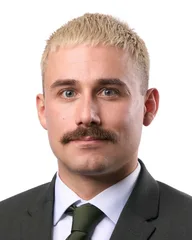
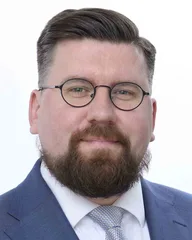
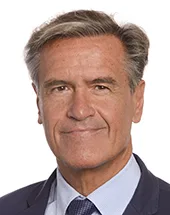
| Rank | Name | Country | Group | Speeches | |
|---|---|---|---|---|---|
| 1 |
|
Lukas Sieper | Germany DEU | Non-attached Members (NI) | 390 |
| 2 |
|
Juan Fernando López Aguilar | Spain ESP | Progressive Alliance of Socialists and Democrats (S&D) | 354 |
| 3 |
|
Sebastian Tynkkynen | Finland FIN | European Conservatives and Reformists (ECR) | 331 |
| 4 |
|
João Oliveira | Portugal PRT | The Left in the European Parliament (GUE/NGL) | 232 |
| 5 |
|
Vytenis Povilas Andriukaitis | Lithuania LTU | Progressive Alliance of Socialists and Democrats (S&D) | 227 |
All Contributions (92)
Ban on the sale of nitrous oxide to the general public (debate)
Thank you, colleague, I think you're 100 % right and I'm so glad that we have all of you here to talk to. I think it's so important. It's an issue that shouldn't have waited until nearly the last debate of the whole week, and I'm delighted to be here to actually raise our concerns, also with Commissioner here, who's going to be hopefully helping us to make it an EU‑wide issue as well.
Ban on the sale of nitrous oxide to the general public (debate)
Mr President, since 2020, more than EUR 8.6 million worth of nitrous oxide – or laughing gas, as it's more commonly known – has been seized entering Ireland. Walk through any park or down any side street, even along our main roads, and you will see the evidence discarded: silver bullets and whippets littering the ground. This is not harmless fun. Across the EU, Member States are reporting rising poisoning and even deaths linked to its misuse. Medical evidence now links the use of laughing gas to spinal cord damage. And yet nitrous oxide can still move freely across the EU single market. That is why I am calling on the Commission to recognise nitrous oxide as an emerging drug of concern. It should be brought into the EU early warning system so we can monitor misuse before more harm is done. We should also accelerate its classification under the CLP Regulation as a toxic substance. The evidence is there. Waiting until 2027 is simply too slow. We must also enforce the Digital Services Act to tackle the online sale of nitrous oxide, where children are clearly being targeted. Europe must move towards a common licensing framework to control supply, protect legitimate uses and prevent abuse. I welcome, Commissioner, what you said: that this is an EU-wide issue and requires an EU-wide approach. Let's make that happen!
Prevention and treatment of obesity (debate)
Madam President, Commissioner, obesity in Europe has been described as an epidemic. In 2022, the WHO reported that obesity had reached alarming levels in Ireland following COVID‑19, with 57 % of adults and 8 % of children under five overweight or obese. Across the EU, over half of adults and nearly one in three children are now affected. Obesity is a disease shaped by many factors. It is not only a major health challenge, it also places huge burden on our healthcare systems and economies. Physical activity remains central to prevention and we know that every euro invested in physical activity can return up to EUR 2 in healthcare savings. So, if we are serious about prevention, we must invest in physical activity. That is why I call for 5 % of the next seven‑year Erasmus+ budget to be ringfenced for sport, to support grassroots sport, school activity and community health because tackling obesity is not just about policy, it is about improving the health and lives of millions of Europeans.
One-minute speeches on matters of political importance
Mr President, in Ireland, fuel prices have passed EUR 2 per litre. Five hundred litres of home heating oil now costs over EUR 800. Across the Midlands–North-West, families and businesses are feeling the pressure. The European Commission must take immediate action to protect consumers. Firstly, the Commission must be ready to activate its crisis protocols. This includes joint purchasing of gas to bring prices down. Secondly, we must act to separate the price of electricity from gas, because when gas prices spike, electricity soon follows. Third, we must invest in home-grown electricity, cheaper energy across the EU. In Europe, we spend 40 million every hour importing energy. We need renewables scaled up. We need to realise the full potential of anaerobic digestion across all Member States. Ireland has the highest potential per capita in Europe for biomethane development, and this should be encouraged to follow countries like Denmark, who can generate close to half of its gas demand from AD plants, insulating itself from shocks. We need big thinking. There is no other way.
Cooperation among enforcement authorities regarding unfair trading practices in the agri-food supply chain (debate)
Madam President, today we are discussing strengthening the role of farmers in the food supply chain and unfair trading practices in Europe. This is the first ever directive to specifically improve the protection and status of farmers and primary producers. And it is to be welcomed. It is a particularly important step as we begin discussions on the common agricultural policy. But if we are trying to strengthen the role of farmers, suppliers and consumers, we also need to take a closer look at our food labelling. We have seen several recent cases where products branded as coming from one country on European supermarket shelves are, in fact, grown elsewhere. Now, don't get me wrong: it is a huge advantage that we can buy and sell our products all over the world, and it keeps businesses going, but we must tighten up on misleading labelling. EU food rules are very clear: food labelling must be accurate and clear. So I would urge the Commission to step up its enforcement of our current food safety labelling laws.
Presentation of the action plan against cyberbullying (debate)
Mr President, Commissioner, this week we mark Safer Internet Day to coincide with the new EU action plan against cyberbullying. But for many families across Ireland and the EU, the internet feels like a minefield: 1 in 6 of our teenagers has been cyberbullied; 1 in 8 admits to taking part in bullying. These numbers are staggering, but the game has changed. We are now seeing the rise of AI deepfakes and the tools that can generate sexualised and nude images. The recent controversy surrounding Grok shows exactly how real this threat is. It is welcome to see the Commission launch an investigation, but we must not delay on following through with tough action. Article 70 of the Digital Services Act allows for platforms to be temporarily suspended when there is a serious risk of EU law being breached. Article 5 of the AI Act also provides us with a clear legal basis to ban AI 'nudifiers'. We have the tools, but we must be willing to use them, because when technology moves at the speed of light, the EU cannot act at a snail's pace. On cyberbullying specifically, we need a clear EU definition to give children the same legal protection across all EU countries. We cannot have a fragmented approach. I look forward, Commissioner, to working with you and continuing this work in Parliament over the months ahead.
One-minute speeches on matters of political importance
Mr President, to paraphrase John Hume, a former Member of this House, the European Union has been an instrument of peace on the island of Ireland, for peace was not built overnight. Since 1995, EU support through PEACEPLUS has strengthened cross-border communities and stability, and the impact is clear: EUR 160 million for cross-border rail between Belfast and Dublin, EUR 20 million invested in the Shannonside sports campus, EUR 18 million for cross-border help projects in Fermanagh, Cavan, Monaghan, Tyrone, Louth, Armagh, Sligo and Leitrim. And over 10 000 people upskilled in Derry and Donegal. But we cannot become complacent, because as it stands, PEACEPLUS still has no dedicated budget line in the next European Regional Development Fund. That is why I have tabled amendments to secure PEACEPLUS a place in the next EU budget, and I urge the Commission to stand behind PEACEPLUS and guarantee its future.
World Cancer Day (debate)
Mr President, Offaly man Pat Smullen was a nine-time champion flat jockey in Ireland and an extraordinary cancer care advocate. Pat sadly died in 2020 after being diagnosed with pancreatic cancer in 2018, but not before he eclipsed even his own phenomenal racing success by raising EUR 2.6 million for cancer research. Pat showed strength and courage throughout his illness, which transcended the sporting world. Today, the Pat Smullen Race Day continues to raise vital funds for cancer research every year. So the question for us here in Europe is: how can we match Pat's ambition? The answer lies in investing in the EU's cancer mission, enhancing prevention, early detection and treatment. As we shape the future of the EU's research programmes, we must be bold – because Pat showed us what courage looks like. The best way to continue to honour his legacy and the legacy of many other extraordinary cancer care advocates, is to match their courage with political will.
Presentation of the Digital Networks Act (debate)
Madam President, Commissioner, more and more cars coming into Europe from China, the United States and elsewhere are being sold without FM radio. I first raised this last November with colleagues from the Committee on Transport and Tourism and I have since written to the Commission. I am raising it again today because car radios are not properly covered in the Digital Networks Act and that matters. In Ireland, 40 % of local radio listening happens in the car. Radio is free, it is reliable and it does not depend on mobile networks or broadband. During Storm Éowyn, over 700 000 people lost power. In moments like that, radio becomes a lifeline. When the power goes out, the radio stays on. At a time when misinformation online is everywhere, trusted radio matters more than ever. So, I am calling on the Commission during negotiations on the Digital Networks Act to accept amendments from myself and colleagues. Every car made or imported into the EU must include a built‑in FM radio.
One-minute speeches on matters of political importance
Mr President, last week, I had the privilege of hosting Armita and Eabha, two TY students from Rathoath College, on work experience in my Brussels office. What they shared at me about nicotine pouches and how normalised they have become among young people their age, was deeply alarming. In 2024, an Irish study showed growing numbers of children and teenagers using nicotine pouches. Also, we have seen this with vaping: sweet-style packaging and fruity flavours deliberately used to attract young people. We are seeing the same playbook again. Many nicotine pouches carry no health warnings and provide little or no information about the manufacturer. As with vapes, nicotine pouches fall outside the current scope of the EU tobacco control legislation. That gap is now being actively exploited. While I welcome the recent steps taken by Ireland's Minister for Health, Jennifer Carroll MacNeill, national action alone is not enough. Tobacco controls fall under the Commission's remit and this requires EU-wide response. If the EU continues to allow or facilitate cross-border sales of nicotine pouches designed to target children the consequences for public health will be severe.
Development of an industry for sustainable aviation and maritime fuel in Europe (debate)
Mr President, sustainable aviation and maritime fuels are one of the most important tools we have to cut transport emissions while keeping Europe moving. Sustainable fuels can reduce emissions by up to 80 %. They will be essential if we are to reach climate neutrality by 2050. But despite the progress we have made, these fuels remain too expensive and too limited in supply. That's why I want to welcome the Commission's sustainable transport investment plan, published earlier this month. It recognises the reality. The policy framework is in place. The targets exist, but the investment gap remains simply enormous. As I see it, we have two missing pieces in the puzzle: incentives and financing. If we want airlines, shipping operators and fuel producers to make major investments, Europe must provide stable long-term conditions. That means reducing the price gap between conventional fuels and ensuring we can build up at scale. In particular, the Commission's commitment to explore a book-and-claim system is welcome. We need to incentivise and reward the early movers. Investment in infrastructure must be sped up. Otherwise, we risk falling further behind our competitors who, let's be realistic, are already far ahead. So while we may be flying high, we are not moving quickly enough.
Fishing opportunities 2026: ensuring the sustainability of fish populations, marine ecosystems and coastal communities
Mr President, Commissioner, Ireland's fishing communities could well face one of the most dramatic quota cuts in living memory off the back of the latest scientific advice. So it will be vitally important that we retain the Hague Preferences that have been used since 1983 for the allocation of quotas under the CFP. Meanwhile, Norway and other third countries continue to unilaterally set inflated quotas and engage in overfishing, while many Irish boats remain tied up onshore. Norway alone has in some years exceeded its mackerel quota by over 50 %. Over the past five years, over one million tonnes have been taken above scientific advice. This is reckless and unsustainable. Commissioner, given the deep cuts we may face in our quotas, what concrete steps will the Commission take to act on Ireland's request to take tough action on Norway's unsustainable catches? And, specifically, will the Commission consider trade or market access measures?
Implementation of the EU-UK Trade and Cooperation Agreement (debate)
Madam President, I just want to thank all the colleagues for your contributions and thank the Commissioner for his remarks as well. I am welcoming the broad agreement that we have heard across political groups today. There is a strong recognition that the TCA is functioning well, and we have an opportunity to build on the foundations, whether that be in agri-food, energy or people-to-people links. Many of you highlighted the importance of the Windsor Framework and indeed the Good Friday Agreement and the role of safeguarding citizen rights, and I couldn't agree with you more. As many colleagues also noted, Russia's war against Ukraine has further strengthened the EU-UK relationship and reminded us of our many shared objectives in an increasingly unpredictable global trading and security environment. I was glad that the Commissioner has mentioned and addressed the question on CBAM, because it is hugely important that we get clarity on this, and I hope that the Commission can deal with that urgently. So, looking ahead, delivery on implementation of the outcomes of the recent summit and the objectives that were agreed in May must be our priority, and the PPA must continue to be an important vehicle for discussion between MEPs and Members of the House of Lords and Commons. So finally, as I said earlier, the European Parliament will play its full role in holding the Commission to account as this work moves forward.
Implementation of the EU-UK Trade and Cooperation Agreement (debate)
Madam President, Commissioner, as the International Trade Committee's standing rapporteur on the EU‑UK relations, firstly, I would like to start off by thanking my colleague Thijs Reuten from the Foreign Affairs Committee for working constructively on this report, and all shadow rapporteurs. It is hard to believe that Brexit is almost 10 years old. In 2016, I was a small business owner trading seamlessly with the UK. Britain's decision to leave the European Union seriously increased costs, disrupted supply chains and increased red tape. While this is still the case for many SMEs, the fact that five years after the end of the transition period we have reset relations and put them on a much better footing is testament to the work of the Commission. I would like to thank Commissioner Šefčovič for the support that you have shown to Ireland during this turbulent time. Colleagues, the first EU‑UK summit to happen since Brexit happened in May this year. It showed that cooperation is not only possible but desired. It builds on the Windsor Framework and marks out a new beginning with ambitious goals. The UK Government and the Commission have made clear pledges on foods standards, energy and people‑to‑people connections. While no reset can fully make up for the UK's membership of the EU, the recent summit outcome marks a watershed moment. However, as our TCA report highlights, ambitious pledges must be matched with equally ambitious follow‑through. The European Parliament will hold the Commission to account on delivering on its word. While the reset is welcome for many small business owners, the paperwork and bureaucracy remain when it comes to dealing with the UK. This is felt in the agrifood sector in particular. The planned SPS agreement will give traders on both sides of the Irish Sea and the English Channel the opportunity to cut checks and reduce costs, particularly for food and drink exporters. This will benefit farmers and consumers. The UK is ready to begin talks and the Council has its mandate. Parliament must now ensure that these negotiations start quickly and deliver a win‑win outcome. The same logic applies to energy. Linking the EU‑UK emissions trading system is vital. Given the all‑island nature of the electricity market in Ireland, alignment here is a priority for both sides and must be delivered on. When it comes to young people, many in the UK and across Europe lost the opportunity to travel, work and study in each other's countries after Brexit. That is why progress on a youth mobility scheme and linking the UK back into Erasmus+ must be fair and balanced. We must also recognise the significant European and Irish diaspora living in the UK. On skills, qualifications and people‑to‑people connections, improving these areas will only serve for the benefit of both sides, deepening ties that have existed for generations. On fisheries, the extension of the reciprocal access to the EU‑UK vessels to fish in each other's waters for another 12 years is welcome. But we must urgently address the issues of overfishing by other third countries and the redistribution of quotas under the next CFP, so that we can allow coastal communities to continue to develop sustainably. On all of these issues, we have commitments to explore solutions with the UK, but now we need to see clear timelines and concrete results. This review of the TCA and the EU‑UK relationship has been an opportunity to take stock of progress and identify where the relationship must move next, for everyone's benefit. I look forward to continue my work and really look forward to listening to the debate.
Protection of minors online (debate)
Madam President, children and teenagers spend an average of 4 to 5 hours per day on social media. Cyberbullying, pornography, self-harm, addictive algorithms, an infinite scroll – all available in just one swipe. And all it takes is for a young person to tick a box saying: 'yes, I am 13,' and they have instant access to adult content. Social media companies have failed to self-regulate. This is where the EU needs to step in. We need to build on the work of the Digital Services Act and make an online age verification mandatory for accessing social media platforms. There are too many loopholes in the current system, and today's report goes a long way in identifying the outstanding issues. But now, let's be clear: our next step must be action. Looking ahead to the digital fairness act, we have a massive opportunity in this mandate to make the internet a safer place for our children. It is time to close the remaining gaps.
One-minute speeches on matters of political importance
Mr President, over the past week, Ireland has confirmed several outbreaks of bird flu, in a serious blow to the sector just weeks before Christmas. We have also seen outbreaks in 15 other EU countries. Farmers and producers are extremely worried, and rightly so. The risk of culling is high, and the losses are very real for farming incomes, which is likely to have a direct knock-on impact on our food supply chains. Solving this issue is bigger than any one country. Farmers and producers are going to great lengths and incurring significant costs to protect their flocks in the middle of an already challenging period. So, with that in mind, I have several questions for the Commission. Firstly, can we get an update on the Commission's latest monitoring and coordination of the outbreaks? Has the Commission considered supporting vaccination trials or is work being done on genetic resistance? Can we explore an EU research budget to find a common answer to this problem? And finally, would the Commission be open to exploring the EU-backed insurance or risk pool supported by agri-food producers and others operating in that space? I would be grateful if you could bring it back to the college for me.
Gender Equality Strategy 2025 (debate)
Madam President, I want to start off by acknowledging that in tomorrow's voting session, we will have the opportunity to adopt a landmark proposal to revise the EU's electoral act to allow MEPs to vote by proxy during pregnancy and maternity. And the enormous work done on this issue by Parliament President Roberta Metsola should be noted. More broadly, however, while our latest gender equality strategy set ambitious goals, progress has been modest at best. Tackling gender-based violence must mean full implementation of the new Directive on combating violence against women and domestic violence. We need real results from the EU action plan on women's health, especially on diseases that affect women disproportionately – on diseases like Alzheimer's, for example. We must monitor and enforce the Pay Transparency Directive, and we cannot ignore care – still a major structural inequality. The next gender equality strategy for 2026 and beyond must be ambitious, it must be measurable and it must be binding.
The new 2028-2034 Multiannual Financial Framework: architecture and governance (debate)
Mr President, Europe's long‑term budget should be a reflection of our EU priorities, and today our farmers and food security must be at the top of that list. Farmers are being asked to deliver on climate action, food production and improving animal welfare conditions. They lead on the green transition, yet face rising costs and the threat of a shrinking budget. Any cut to agricultural funding will be out of touch with our economic, geopolitical and climate reality. I welcome Monday's MFF revisions and the introduction of a rural target, but this is only the beginning. We need stronger commitments, further legal certainty and guarantees that the CAP and cohesion will not be diluted. We need answers from the Commission. Will the minimum 10 % allocation for rural development be ring‑fenced for agriculture? And is the Commission open to further increasing this base? Will the 5 % earmark for Leader funding remain?
Breast cancer: the importance of screening (debate)
Madam President, in Ireland, around 3 500 new breast cancer cases are diagnosed every year. This is much more than just a number – it represents thousands of women, families and communities affected. A recent report evaluating Europe's Beating Cancer plan shows, among other things, that we need more funding for early prevention and detection and a greater investment in staffing and skills. So I have a few questions: a cancer plan was not included in the 2026 work programme released this week, so can you give more detail on how the Commission plans to address the ongoing issues in prevention, detection and screening highlighted in the evaluation report? Can you please provide an updated timeline highlighting which actions remain unachieved? And specifically, what is the Commission doing to assist Member States on reaching their screening targets? Investment in research, people and screening will save lives.
Combating violence against women and girls, including the exploitation of motherhood (debate)
Madam President, women and girls who face violence, either in their home or elsewhere, live with real pain, and often their lives are changed forever. In Ireland, new plans have been announced for the introduction of 'Jennie's Law'. Jennifer Poole was tragically murdered by her ex-partner in 2021. This new law proposes that those who are convicted of domestic violence are publicly named on a new domestic violence register. This is a significant step forward. It will mean that if someone has concerns about their partner's history, they can check against a public database. But passing laws such as this should be only the start. We must increase our support to those services which provide assistance for those facing domestic and sexual-based violence. Across my own constituency, I have been honoured to visit organisations like Teach Tearmainn, in Kildare, and Meath's Women's Refuge and Support Services. And finally, we must ensure that the recently finalised directive on combating domestic violence is implemented in full, across all 27 Member States.
General budget of the European Union for the financial year 2026 – all sections (debate)
Mr President, I want to congratulate Mr Halicki and all the rapporteurs for their hard work on this. Last year, 20 000 Irish students took part in Erasmus+, gaining invaluable experience across Europe. Erasmus+ is more than a programme. It drives competitiveness, employability, innovation and resilience, while connecting young people to Europe. That is why I was deeply disappointed to see the Council propose cuts to the 2026 EU budget for Erasmus+. Young people must not pay the price for repaying NextGenerationEU. We have come together in this Parliament to propose an increase of EUR 5 million for Erasmus+ in next year's budget to make Erasmus+ accessible for all. As we plan the next framework, we must focus more on skills, training and apprenticeships. We need to do more to increase to ensure Erasmus+ reaches beyond universities. We will better prepare the next generation by doing so.
One-minute speeches on matters of political importance
Mr President, it's been over ten years since the EU last updated its rules on tobacco, vaping products and advertising. But in that time, vaping rates, particularly among children, have soared. Today, around 36 % of young people in Ireland aged between 13 to 16 say they vape, despite having never smoked before. Our rules are no longer fit for purpose. We must take steps to ban disposable vapes and restrict features that make them so appealing to children, especially on packaging and flavours. But new rules alone will not be enough. Improved education and implementation will be needed too. In Ireland, we have banned the sale of vapes to under 18s, but too many shops ignored the law. And if we change the rules offline, they must also be applied online too. I am particularly concerned about the sale of vapes to children through social media platforms like Snapchat, so we can't look at this issue in isolation. We must look at how the EU digital rules can close these loopholes too.
Declaration of principles for a gender-equal society (debate)
Mr President, last year, Women's Aid Ireland recorded the highest ever number of domestic violence incidents in the last 50 years. Over 41 000 women reported abuse by a partner or an ex-partner, and more than 5 000 children were affected. This is an alarming situation and it is happening right across Europe. This Parliament has made it clear that women's rights must be central to the strength of our democracy and societies. Last year, the EU directive on combating violence against women was adopted. Now this piece of legislation must be fully implemented. We need to support survivors. We must help them seek access to justice and improve coordination between various authorities. This also means investment. And so I want to welcome this week's Irish budget, which has put an additional EUR 11.5 million towards tackling domestic and gender-based violence. It is a step forward, but we must go further. We must seek to create a zero-tolerance society for violence, where every woman and girl can thrive and live in safety.
One-minute speeches on matters of political importance
Madam President, seven years ago, this Parliament awarded the European Citizens' Prize to Ireland's Men's Shed and since then, women's sheds have also flourished. Today, thousands of members are active across both networks and the movement continues to grow. These sheds are places where people come together, share skills and build community ties. We must now consider how Europe can support them further. The EU skills agenda should be a start. At a time of skills crisis in many sectors, sheds pass on knowledge across generations, from joinery to upholstery, metalwork, gardening and woodwork. This is also why rural development funding and the leader programme must also be safeguarded in the next EU budget, so sheds can apply and look to draw down on this funding on top of national financing. Rent, insurance, heating and access to dedicated premises are vital to sustaining these initiatives. These schemes are at the heart of our rural communities and it's a model that we should see scaled up across Europe.
Intergenerational fairness in Europe on the occasion of the International Day of Older Persons (debate)
Madam President, as we age, more of us will be touched by dementia. In Ireland alone, 64 000 people are currently living with dementia – a number expected to rise to 150 000 by the middle of the century. It is the third leading cause of mortality in Europe and the seventh across the world. The economic cost is staggering: in Europe, in 2019, it amounted to EUR 392 billion, with much of this burden falling on families and carers. Despite these statistics, dementia research is chronically underfunded. Under the current Horizon Europe framework, there are only 191 dementia projects. Last month, Commissioner Serafin provided a commitment to take the call to create a dedicated research mission on dementia under Horizon Europe back to your colleagues. This would build on the success of the research mission on cancer. I urge the Commission to deliver on this. Better research means better care, better support for families, and a better future for all of us.