
| Rank | Name | Country | Group | Speeches | |
|---|---|---|---|---|---|
| 1 |
|
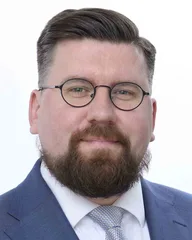
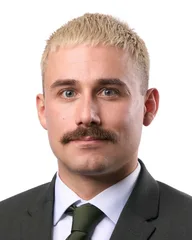
Lukas Sieper | Germany DEU | Non-attached Members (NI) | 390 |
| 2 |
|
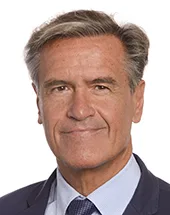
Juan Fernando López Aguilar | Spain ESP | Progressive Alliance of Socialists and Democrats (S&D) | 354 |
| 3 |
|
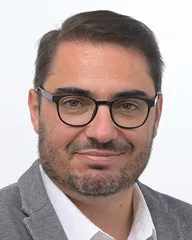
Sebastian Tynkkynen | Finland FIN | European Conservatives and Reformists (ECR) | 331 |
| 4 |
|
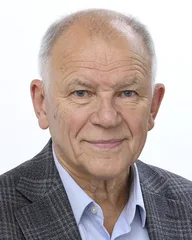
João Oliveira | Portugal PRT | The Left in the European Parliament (GUE/NGL) | 232 |
| 5 |
|
Vytenis Povilas Andriukaitis | Lithuania LTU | Progressive Alliance of Socialists and Democrats (S&D) | 227 |
All Contributions (26)
Cutting red tape to enable a competitive and clean transition – the urgent need to shorten and simplify permitting (debate)
Mr President, ladies and gentlemen, a little while ago in this House we discussed the tragedy of the dear bills. Tomorrow we will have a debate on Iran. Is there anything else to show us how dangerous our dependence on imported fossil fuels is? We need to accelerate decarbonisation, making permitting procedures more efficient and reducing bureaucratic obstacles that slow down the implementation of clean energy projects, networks and strategic infrastructure. We will work on this in the coming months, starting with the European Commission's proposal. But be careful: The real challenge is to streamline procedures, not empty them in terms of environmental assessments. We need more coordination between authorities, clear timeframes for decisions, clear and participatory spatial planning. It is necessary to overcome a purely chronological logic in the management of practices, which often blocks virtuous and mature projects behind old, speculative and unrealizable initiatives. The energy transition needs speed, of course, but – let us remember – its strength depends on its sustainability and the involvement of communities.
Presentation of the Energy Package (debate)
Mr President, ladies and gentlemen, the price of energy does not weigh on citizens once, but at least three times: in the bills, when the cost of living and the shopping cart increase, because inflation is driven precisely by energy, when the same work is put in crisis, because business and industry struggle to sustain such high costs. It is therefore not surprising that energy poverty and poverty continue to grow in Europe: In Italy alone, it affects 6 million people. That is why it is right for the Commission to put citizens at the centre, starting with the most fragile. But if electricity remains so expensive, many solutions that could reduce the cost of bills fail to reach their full potential. Today, there are already more than mature technologies that can reduce costs: heat pumps, electrification of consumption, electric mobility. But with such a high electricity price, driven by gas, geopolitical tensions and even speculation, their economic advantage is reduced. The dependence on gas not only raises the bills but also prevents us from lowering them with the most efficient solutions. This is why decarbonisation is not just a climate policy: is our social deal, is our freedom deal.
Cooperation among enforcement authorities regarding unfair trading practices in the agri-food supply chain (debate)
No text available
2030 Consumer Agenda (debate)
Mr President, ladies and gentlemen, consumption in the Union accounts for more than half of the GDP of the 27 Member States. The 2030 Consumer Agenda goes in the right direction, affirming a sacrosanct principle: Consumer rights do not hold back growth; they are, on the contrary, a lever to make it inclusive and sustainable. Obviously, however, consumers must be able to rely on reliable information and accessible tools, also to protect themselves from real risks: scams and fraud, which proliferate in particular in the digital field, often affecting the most fragile, starting with the elderly; misleading advertising, claiming health benefits or environmental and social sustainability of products. All surveys shall highlight a request for information on the sustainability of products, provided that they are based on verified schemes. Often there is even the willingness to spend more, if you are sure to buy sustainable. Well the focus of the agenda on sustainability and circularity; linking consumer rights to durability, reparability and reuse; it is good to recognize that we must seriously combat greenwashing, well, indeed very well, but, it must be said, this clashes with the deregulation that has prevailed in some of the most important measures of recent months, such as the suspension of Green Claims Directive, which had to give concrete effect to the fight against greenwashing, such as the dismantling of the directives on corporate social and environmental responsibility. Competitiveness without sustainability is a dangerous mirage fuelled by disinformation and – I conclude – consumer confidence is built only with simple and clear, credible and enforceable rules, capable of unlocking the potential of each of us and helping to shape the world we want with our daily choices.
Outcome of the UN Climate Change Conference - Belém (COP30) (debate)
Mr President, Commissioner, ladies and gentlemen, let us start from a clear fact: At COP30 on mitigation and exit from fossil fuels, the agreement does not live up to the climate urgency, nor its effects. There is no structured commitment to the process of abandoning fossil fuels; there is no acceleration of individual countries’ 2035 emission reduction commitments to deliver on the Paris Agreement; There is a lack of progress on finance for an adaptation that is truly up to the challenge. Despite this, Belém was the COP of the return of civil society: Indigenous communities, youth and movements brought climate justice, community rights and ecosystem protection back to the centre, calling for integration into the pathways of the three COPs – climate, biodiversity, drought. In Belém over 80 countries have created an ambitious coalition, which has already met in Santa Marta in 2026 to move too stale and slow rituals. For Belém, this Parliament has adopted an ambitious resolution and the EU has played a strong negotiating role, but we must remain a credible and coherent actor. And it is precisely on consistency, or its absence, that I close: On the one hand, we discuss international credits and flexibility, and on the other hand, we cannonball those instruments that make them credible, such as corporate social and environmental responsibility and the deforestation regulation. Even President von der Leyen at the G20 divides the battle for emissions reduction from that for the exit from fossil fuels! The world needs the EU to be a leader in climate diplomacy. Will we still be up to it?
The EU’s role in supporting the recent peace efforts for Gaza and a two-state solution (debate)
(IT) Mr President, ladies and gentlemen, while we are debating in this House, a humanitarian disaster continues to take place in Gaza, which is not a fatality, but the result of precise inhuman and criminal political choices: bombings, sieges, deportations, without a safe place, hunger used as a weapon of war. This Parliament and these institutions cannot pretend that there is no ongoing genocide denounced by the United Nations. They cannot fail to listen to the millions of European citizens who have taken to the streets in recent weeks. The responsibilities of the Israeli government cannot be covered by complicit silence. In these hours we are hanging by a thin thread with the discussion of the peace plan promoted by the United States. Every glimmer must be explored and every diplomatic effort must be put in place, but let us not deceive ourselves, because peace is not built by imposing conditions from above, denying the voice and dignity of the Palestinian people. Without the recognition of Palestine, without a political process that puts an end to the illegal occupations, every agreement will remain fragile and the roots of hatred will not be eradicated. Weapons must be kept quiet, the massacre of the Palestinian people must stop, and Israeli hostages must be released immediately. No one believes that there is another acceptable way to proceed. The distribution of aid must be ensured through secure and credible institutional channels, in line with international law. That, exactly, was the goal of the Global Sumud Flotilla, which was illegally detained in international waters with hundreds of European civilians and activists deported, tortured, mistreated. Europe must stop swinging between hypocrisy and connivance. Genocide must be stopped, weapons silenced, association agreements with Israel suspended, hostages freed and the perspective of two peoples and two states in peace and security embodied, building that lasting peace which is the best way to honour and remember both the 65 000 Palestinian victims and the victims of the vile terrorist attacks against defenceless civilians carried out by Hamas on this date two years ago.
Motions of censure (joint debate)
Madam President, ladies and gentlemen, under Rule 179, I am going back to talking about what happened to the Global Sumud Flotilla, a humanitarian mission that was illegally and criminally stopped in international waters, with over 400 citizens, including many Europeans who were transported, despite themselves, and deported to waters at the port of Ashdod, Israel, and there they were treated without any respect for international law, without contacting embassies, without contacting consulates, without contacting lawyers, deprived of water and food, exposed to beatings, ridiculed and beaten, even us MEPs. I would like to remind this House that it is not a question of sympathy or dislike for the flotilla's mission, that it only wants to restore the humanitarian channels that have been illegally suppressed where genocide is taking place, but that it is a question of democracy and respect for these institutions. Love relations with autocrats end, democracy remains.
Russian energy phase-out, Nord Stream and the EU's energy sovereignty (debate)
Mr President, ladies and gentlemen, the Commission and the Council have approved the 17th package of sanctions against Russia: with one hand we rightly sanction the aggressor but with the other we continue to finance it. In 2024, the EU spent €23 billion to buy Russian fossil fuels: 19 to help Ukraine, not to mention Rosatom, which feeds undisturbed several European nuclear power plants. We need to cut energy dependence on Russia as soon as possible, yes, but instead of decarbonisation, we are focusing too much on supplies from other authoritarian regimes – Libya, Algeria, Azerbaijan – or on those who declare a trade war on us, such as Trump. It takes courage and for this we must push on a clean industrial deal Ambitious and not weakening the 2040 climate targets: You need an phase out structural and irreversible fossil fuels, building European sovereignty over renewables, efficiency and clean technologies. Only in this way will we build independence and competitiveness and be credible at the negotiating tables for peace for both the Ukrainian victims and those who die in Gaza, who should have the same value for us.
The European Water Resilience Strategy (debate)
Madam President, ladies and gentlemen, do you remember the images of goats drinking mud, the orchards being planted, the news of hundreds of children who do not go to school for days? All this happens in European countries that are then devastated by floods. The European Water Resilience Strategy is vital: Farmers know this well: first to suffer the effects of the climate crisis including erosion, desertification, saline wedge intrusion, new pathogens, hail and loss of soil fertility. Even before the necessary work on water infrastructure and innovative technologies, the restoration of ecosystems is urgently needed to promote both the recharge of groundwater and the ability to retain excess water. A systemic approach is crucial to reconcile and not contrast, for example, agricultural and energy uses, favouring synergies with renewable sources that can also be very effective in terms of water efficiency. It is vital to give this strategy adequate resources, starting with a specific funding channel and close monitoring of how it is spent. We can build a future where water is not only a critical resource but a symbol of hope, strategic cooperation and progress for all.
European oceans pact (debate)
Mr President, ladies and gentlemen, oceans and seas produce 50% of oxygen, absorb 25% of CO2, regulate the climate and are a true sanctuary of biodiversity. Putting their balance at risk means threatening our health, our security and our future: Just think of the overheating of the Mediterranean or the slowing down of the Gulf Stream, which are already having very heavy impacts in Europe. We have already lost 20% of marine species in the areas most impacted by human activity. We need more protected areas by 2030, we need a systemic strategy that knows how to distinguish between necessary and positive activities, such as the enhancement of renewables offshore, and predatory and destructive activities, such as deep-sea mining. And on this, Commissioner, we believe that we urgently need to work towards an international moratorium. The sea is also economy and work: 4.5 million jobs in Europe depend on your health. So let's give a sustainable framework to all these activities, made up of commitments, investments and advanced research. That is why we are asking the Commission for a real measure with dedicated funds in the next Multiannual Financial Framework.
EU Preparedness Union Strategy (debate)
Madam President, ladies and gentlemen, I am a climate activist and I am very clear about the importance of being prepared to manage crises. We are not enough, also because of the irresponsible propaganda of right-wing deniers. In recent days, however, there has been very little talk of earthquakes, fires and floods and too much of bags to survive 72 hours of military attacks. Allow me to say: It is a very dangerous game that of those who evoke war, blowing on people's fear. It is sacrosanct: we need to invest in prevention and spread the culture of crisis management, but if we really want to talk about grants, I would like a reliable, universalist and crisis-ready health system in my country that works together with coordinated, equipped and funded civil protection; resources for adaptation to the climate crisis; strong European institutions, strategic autonomy and social cohesion; clean and low-cost energy, freeing us from the blackmail of hydrocarbon-producing countries; Decent work and quality training. And the most important thing, and I conclude: I would like democracy to remain in my purse, despite the urgency, but not for 72 hours, for the next 72 generations at least.
Clean Industrial Deal (debate)
Madam President, ladies and gentlemen, availability and cost of energy, raw materials and infrastructure: these are the most important voices for any company. Europe is lagging behind on these fronts and it is right and positive that the European Clean Industry Pact clearly identifies the way forward: energy transition, circular economy, training, innovation, combating speculation. What worries us is that, without the appropriate common tools, an effective strategic plan is reduced to a beautiful exercise in style. Europe is called upon to make an evolutionary leap towards greater social cohesion, common strategies and common investments. We should have the courage to talk about it: Not only when it comes to weapons, but also when it comes to energy independence and the strategic autonomy of industry. Do we really think guns are enough for security? And even if absurdly enough, how do we plan to build them by paying energy at crazy prices from the countries from which we would like to defend ourselves? There is no defence without autonomy, no autonomy and no peace without a strong Europe, free from fossil blackmail, speaking with one voice: It's time to take note.
Heat record year 2024 - the need for climate action to fight global warming (debate)
(IT) Mr President, ladies and gentlemen, the last ten years have been the warmest since 1850, with 2024 being the hottest of all, which is likely to be the coolest of the next few. I could talk about the temperatures reached this summer by the Mediterranean or the Azores anticyclone. I could talk about the tragedies and extreme events in Europe and around the world, Emilia-Romagna, Valencia, the drought in Sicily, the floods in Libya or the fires in Los Angeles. But the truth is that even in this House sits those who try to hide and ridicule in any way this evidence, which distorts the lives of hundreds of millions of people in the world. The truth is, we're not doing enough. Every time we ask for time, instead of resources, when we know very well that time is not there, we are not doing enough. Every time we blame other countries' emissions, mortifying what Europe can do in terms of leadership, ambition and competitiveness, we are not doing enough. Every time we don't listen to science - the real one, let me tell you, the real one - and the young generations who get arrested in order to shout the truth in our faces, we are not doing enough. This is the most important challenge humanity has ever faced. When are we going to start treating her like that?
Right to clean drinking water in the EU (debate)
(IT) Madam President, ladies and gentlemen, between the climate crisis, contamination and leaky infrastructure, water shortages have become a serious problem again for too many people in Europe too: I am thinking of water stress in Basilicata, Sicily, the Greek islands, throughout southern Europe; I am thinking of the large areas contaminated by PFAS. The 2020 Directive frames both the issue of access to drinking water and its quality. We now need an integrated European strategy, focused on resilience and adaptation to the climate crisis, focusing on protecting, decontamination and restoring ecosystems, without lowering ambition on decarbonisation, to prevent the axe of drought from hitting even harder. But there is also a need to strengthen the capacity to invest in spatial planning and water infrastructure: too often local governments have wasted resources, including European resources, to improve those infrastructures – and here I am thinking, once again, of Sicily and the millions of euros lost. Water is a primary good, it is a right that must be guaranteed. On this - and I conclude - Vice-President Fitto, we must work using all the instruments of the European Union and not leave room for those who claim to weaken it.
Outcome of COP 29 and challenges for international climate policy (debate)
No text available
The devastating floods in Spain, the urgent need to support the victims, to improve preparedness and to fight the climate crisis (debate)
Madam President, the tragedy of Valencia, a few days after those of Central Europe and Italy, deeply affected me as an environmentalist, because I see what the scientific community has been denouncing for decades happening. It is also happening, right now, in Sicily. It affected me as a human being, because in Valencia they are part of my family and my heart. To the closeness to the victims and to the whole community we must add gratitude to the angels of the mud, who did not cease to be in solidarity during the most dramatic hours. But above all, we need to bring time for answers and action. The climate crisis must be treated as a crisis and Europe must not lose its ambition to govern the necessary change, particularly now with Trump's victory and with an ongoing Conference of the Parties to the United Nations Framework Convention on Climate Change raising a thousand concerns. It is unbearable to see that, at the political level, those who have put mitigation and adaptation against the climate crisis at the center of their political agendas with courage, vision and effectiveness like Teresa Ribera, are barbarically attacked for purely propaganda purposes, particularly by those who have always denied the climate crisis. To those who are enchanted by this mermaid - also among those who supported the majority of this Parliament - I say: lay down the weapons of ideology and conflict and bring out this collective intelligence of which this Europe - I hope - is still capable.
Closing the EU skills gap: supporting people in the digital and green transitions to ensure inclusive growth and competitiveness in line with the Draghi report (debate)
Mr President, ladies and gentlemen, we are sailing in stormy waters, with profound changes taking place that we must govern. When the wind of change blows, fools build walls, wise windmills. Europe, to the test of this challenge, must be able to build an inclusive and integrated training and research system, which allows us to develop skills with a systemic and multidisciplinary look at the service of the common good, at the service of the ecological and digital transformation of our economies and societies. Special attention should be paid to technical and scientific expertise. It is impossible to govern this change without policies of inclusion and support for young people; impossible, without unleashing the enormous potential of women who are kept away from technical-scientific disciplines by a frightening and antihistorical cultural backwardness, which has no reason to exist: Word of mechanical engineer. Colleagues, ladies and gentlemen, starting with the 2025 budget and for the financial framework for the next seven years, we need resources that are up to this challenge.
The crisis facing the EU’s automotive industry, potential plant closures and the need to enhance competitiveness and maintain jobs in Europe (debate)
Mr President, ladies and gentlemen, in just three years China has become the world's leading exporter of cars, 70% of which are purely endothermic. Limiting the analysis of what is happening to the dynamics of electric cars is a mistake. The European industrial crisis comes from afar. Today the only possible positioning for our industry is that of excellence and innovation. This is what puts decarbonisation at the centre, not only in the electric car sector, but in the entire mobility sector, with new infrastructure for electrification and new collective means of transport to be built. This is where both job protection and the ability to retain and attract new skills come in. To do this, we need a common strategy. We need joint investments and we need to reduce the cost of energy still tied to the high costs of gas. While everything changes, both conservation and austerity in the economic sphere are therefore profoundly wrong choices. We need a stable support to the demand that finally identifies clear objectives and does not disperse in a thousand streams. Technological neutrality is valid until some technologies have clearly established themselves over all the others, after which it becomes therapeutic fury.
Possible extradition of Paul Watson: the danger of criminalisation of environmental defenders and whistle-blowers, and the need for their protection in the EU (debate)
Mr President, ladies and gentlemen, Captain Watson, founder of the Sea Shepherd, who has always been at the forefront of the defence of the oceans, actively deployed against the barbaric practice of illegal whaling, is now detained on Danish territory and at risk of extradition to Japan, where he would risk an absolutely disproportionate prison sentence. It is an unacceptable prospect for a non-violent action aimed at saving some of these wonderful cetaceans, conducted 13 years ago in high waters against a Japanese boat. The European Union and Denmark, which is called upon to take a decision on extradition, cannot allow such an epilogue. Those who defend the environment, denouncing and combating illegal practices such as whaling, must be protected and not criminalized. That is why, together with my colleague Dario Nardella, we wrote to the Danish Ambassador to the European Union calling for the immediate release of Paul Watson. Every year, more than 1 000 whales are still slaughtered for commercial purposes – numbers that represent an ecological disaster and speak of untold suffering for highly intelligent and social creatures that help us tackle the climate crisis and perform ecosystem services that are crucial for the health of the oceans. Let us stop this barbaric practice once and for all. Let's free Captain Watson. We protect those who defend the environment.
Droughts and extreme weather events as a threat to local communities and EU agriculture in times of climate change (debate)
Lately we are waiting for the approval of Commissioner Figliuolo to provide for expansion basins that have already been approved by the Emilia Romagna Region and are still waiting for the refreshments that were promised in the first days of the flood and have never arrived. The work is proceeding steadily and yet, unfortunately, this becomes an ideological battle to position ourselves politically, instead of collaborating in the face of a risk that should concern us all and should see us find solutions together.
Droughts and extreme weather events as a threat to local communities and EU agriculture in times of climate change (debate)
Mr President, ladies and gentlemen, exactly what science has predicted over the last fifty years is happening in our territories these days: states of very serious drought and risk of desertification, of very serious damage to agriculture, as happened in Sicily – orchards were planted in our territories and animals were killed because they could not cope with their survival – and at the same time, in Emilia Romagna, Cyclone Boris arrived, of which we spoke yesterday, with its disastrous outcome from the point of view of floods and water, which in a few hours falls as it should fall in months, if not years. And, in the face of all this, there are still those who persist in talking about extremism or ecological ideologies, when ecology said exactly what is happening. We can't just talk about adaptation without also talking about mitigation: It's like healing a wound without removing the dagger. We need to listen to science, we need to do it now.
The devastating floods in Central and Eastern Europe, the loss of lives and the EU’s preparedness to act on such disasters exacerbated by climate change (debate)
Mr President, ladies and gentlemen, the devastation and deaths caused by storm Boris force everyone to face the seriousness of the climate crisis. And it is absurd to hear that even here, in this House, there are those who continue to mystify reality, denying our precise responsibilities in not having faced this announced disaster in time. This is a moment of solidarity with the families of the victims, rescuers, local institutions and the tens of thousands of people displaced by the floods in Central and Eastern Europe. We know your drama – we have experienced it in Italy in recent years in Emilia Romagna, Marche, Tuscany and many other places – and we will work with all our strength so that Europe does its part in terms of aid and concrete solidarity. We will work towards more determined action on climate change mitigation and fossil fuel exit policies. We will work to build effective tools and for there to be common investments for adaptation to the climate crisis, made up of care for the territory, contrast to hydrogeological instability, stop the wild cementing and protection of the consolidation of nature and soil. It is not enough to mourn the victims: We must recognise the emergency and treat the crisis as a crisis.
State of the Energy union (debate)
Mr President, Commissioner, ladies and gentlemen, there are a number of crucial games to be played on the future of energy: the quality of people's lives, the competitiveness of small and medium-sized enterprises, the resilience of the European industrial sector in global competition and a primary role for Europe in the geopolitical chessboard. For all these challenges we need to accelerate the exit from dependence on fossil fuels, focusing on energy efficiency, circular economy, electrification of consumption and renewable sources. We are far from the 2030 targets, starting with 42.5% of energy from renewable sources. We don't need any more time, we don't have it. More common instruments and investments are needed for Member States to accelerate without leaving anyone behind. Two objectives I consider essential: the regulation and unification of energy markets, to avoid speculation and to ensure that the lower price of renewables effectively cuts bills, and the monitoring of the effectiveness and implementation of national energy and climate plans, so that the 2030 targets are actually achieved – something that not all governments, starting with the Italian one, are really committed to doing. We have a lot of work to do.
Outcome of the Strategic Dialogue on the Future of EU Agriculture (debate)
Madam President, ladies and gentlemen, this important work on agriculture shows once again the need for radical change, which protects our farmers from the growing damage caused by the climate crisis and restores to agriculture the necessary environmental, economic and social sustainability. The dangerous and insane contrast between agriculture and the protection of nature and the soil must be definitively overcome. It is essential to redistribute value along the supply chain, protect production from unfair competition, pay attention to small and very small producers, who often operate in inland areas applying the principles of agroecology: they are the guardians of the territory, who suffer most from the distortions of the current system, up to the abandonment of crops. In this regard, the idea put forward by President von der Leyen of establishing a credit system for ecosystem services, which allows farmers to obtain tangible recognition, enhancing the commitment to sustainability and the protection of the territory, which are crucial for adapting to the climate crisis and the resilience of crops, is very important.