
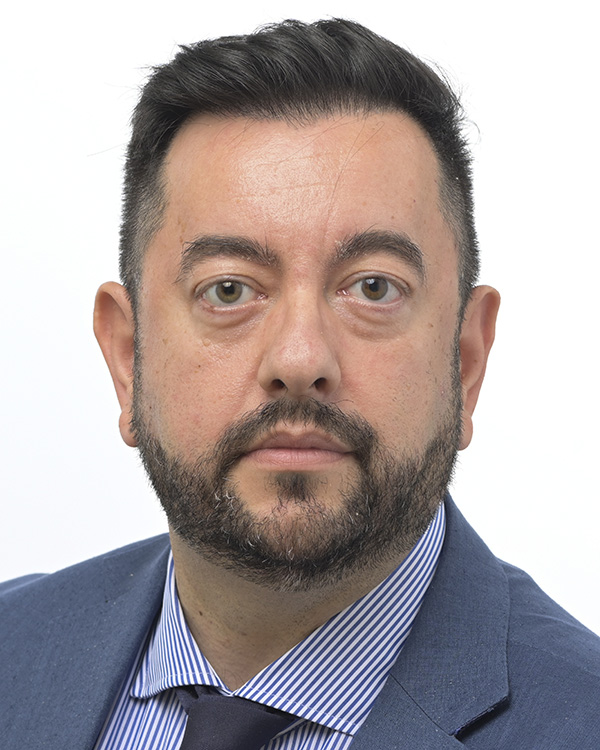






| Rank | Name | Country | Group | Speeches | |
|---|---|---|---|---|---|
| 1 |
|
Lukas Sieper | Germany DEU | Non-attached Members (NI) | 390 |
| 2 |
|
Juan Fernando López Aguilar | Spain ESP | Progressive Alliance of Socialists and Democrats (S&D) | 354 |
| 3 |
|
Sebastian Tynkkynen | Finland FIN | European Conservatives and Reformists (ECR) | 331 |
| 4 |
|
João Oliveira | Portugal PRT | The Left in the European Parliament (GUE/NGL) | 232 |
| 5 |
|
Vytenis Povilas Andriukaitis | Lithuania LTU | Progressive Alliance of Socialists and Democrats (S&D) | 227 |
All Contributions (40)
Strengthening rural areas in the EU through cohesion policy (debate)
Madam President, Commissioner, ladies and gentlemen, when we talk about cohesion policies, we rightly think of reviving the internal areas and defending European diversity. But allow me to reflect. Who will repopulate these areas? Who will make you grow up and study your children? Who will invest their capital if there is no digital connection? Today it is central to the development of life in Europe to have a high-performance connection. Finally, in this House, thanks to Mr Nesci, we are talking about the revitalisation of rural areas, through the closure of the gap digital, through the guarantee of fast Internet access, 5G network, online education, implementation of modern and performing infrastructures. But today, thanks to you, Parliament has done even more, it has gone further, it has launched a challenge, it has addressed young people and it has talked about digitalisation. This is the challenge of challenges, and those who oppose this challenge will oppose the most beautiful cultural revolution we can make this year in this House.
A unified EU response to unjustified US trade measures and global trade opportunities for the EU (debate)
Mr President, Commissioner, ladies and gentlemen, I believe that the debate on trade relations between Europe and the United States must now take place on two different levels. The first, on which I think and hope we all agree, is that the European Union must give a unequivocal response to the demands that come from the other side of the Atlantic. The second is that this answer cannot be just the tug of war, because this would mean jeopardizing our production chains. Someone in this House this morning spoke of sanctions: We realise, Commissioner, what would it mean to apply sanctions? If anything to whom? Europe must instead think about the diversification of markets, the protection of producers, the fair exchange of goods. And I leave you with a reflection, dear Commissioner: By visiting companies on the ground, our entrepreneurs don't just say they're worried about American tariffs. Everyone is asking us to review the crazy decisions taken in this House in the last parliamentary term, which have imposed absurd costs and unachievable standards on our businesses. Let's start by removing these tariffs that Europe has imposed on itself and we will go in a better direction: We have great confidence in you, Commissioner.
European Action Plan on Rare Diseases (debate)
Mr President, Commissioner, ladies and gentlemen, over the last twenty years more than EUR 3 billion has been invested in research into rare diseases in Europe but, nevertheless, 95 % of them still do not have a specific cure. Italy, the country I come from, is the first country in Europe and the second in the world to take care of patients through the national health system but, without the help of the European Union, this system risks jumping. Europe needs to develop a common research strategy; must recognise the disability of people with rare diseases in order to be able to provide aid; It must contribute to the costs of treatment, which are often exorbitant. Allow me, Commissioner, to make a provocation: We begin to call them "frequent diseases" instead of rare diseases. Because in Europe there are 36 million people affected, half of the population of France and Italy, twice the population of Belgium and the Netherlands. Do you think it still makes sense today to call them rare diseases?
Topical debate (Rule 169) - Social Europe: making life affordable, protecting jobs, wages and health for all
Mr President, ladies and gentlemen, safeguarding and creating new jobs is one of the European Union's priorities to date; A socially fair and just transition towards climate neutrality will make the Green Deal a success for all Europeans. These phrases are taken from the European Pillar of Rights Action Plan, adopted by the Commission in 2021. Can we say something went wrong? We can say that fanaticism green, in addition to clashing with the aims of the social pillar, have they led to a reduction in competitiveness and scuttled entire industrial sectors? Shall we give an example? Next week in the EMPL committee, in Brussels, the Van Hool case will arrive, a Belgian company that has been producing buses and trailers for 77 years and that today has gone bankrupt and sent 2,400 people to the streets. Here's how the need to pursue goals green It turns into a boomerang that, instead of creating successes, causes business closures and failures in Europe.
Action Plan for Affordable Energy (debate)
Mr President, ladies and gentlemen, it is impossible not to agree with an action plan aimed at curbing energy poverty and curbing price increases. The doubts, if anything, come to us on the ways we want to put in place to achieve these objectives: In the next 25 years, EU energy consumption will double and national electricity grids will need to be extended by at least 70%. And by what economic means can we set ourselves the goal of achieving these goals? Will long-term bargaining be enough? Suffice it to say to the Member States: Do you reduce taxes? It will suffice to say: Do we improve the gas market? To date, the answer for us is "no". Concrete investments and concrete actions are needed; This is to keep, Commissioner, the promises you have made to resolve the issue of energy poverty. There are currently no recipes: I didn't hear a word from you about biofuel and biogas, for example, which are absolutely valid recipes to achieve our goals.
Union of Skills: striving for more and better opportunities to study, train or work in the EU and to bring our talents back home (debate)
Madam President, ladies and gentlemen, 'search the internet', 'give me the WiFi password', 'turn it over by email': How many times in a week do we repeat these phrases? Well, we must think that for a percentage ranging between 42 and 56% of the citizens of the European Union, we would be speaking Arabic. They wouldn't understand what we're saying. If we talk about ensuring concrete opportunities for study, training, work for future generations, even thinking that we can bring back to Europe those brains that have left, we must offer them a digitally literate habitat. And there is only one way: innovation, training and investment. This week we asked the Commission to know in detail how much money is on the table to train our companies, our companies, our universities to bring those brains now far from Europe, in a digitally performing environment.
European Semester (joint debate)
Mr President, ladies and gentlemen, the report stresses the importance of supporting depopulated rural areas by investing in services and opportunities. He talks about demographic challenges, ageing and work. Now I give you a news, which news is not: If, alongside every euro invested in the repopulation and enhancement of depopulated inland areas, there is not another euro to invest in digital infrastructure and one to invest in health, the euro invested will become a wasted euro. Who will ever create jobs where there is no connection? Who will bring a child into the world knowing that they will already be disadvantaged compared to those born in large urban areas? Who will want to grow old, where there is no proximity health care? The answer is: No one. Now, do we want our employment social priorities for 2025 to be addressed to no one? So let's think about it now, before it's too late.
US withdrawal from the Paris Climate Agreement, the World Health Organisation and the suspension of US development and humanitarian aid (debate)
Madam President, ladies and gentlemen, if we want to discuss the choices announced by Donald Trump in terms of climate, health and humanitarian aid, we must first ask ourselves whether we have the necessary arguments to counter the statements of the American President. Withdrawal from the Paris Agreement: If we look at our own house, we cannot help but see that certain rules have also been voted on in this House, perhaps even fed by direct subsidies from the European Parliament. lobbies environmentalist, they caused damage. Withdrawal from WHO: We still need to shed light on too many dark spots in the relationship between the EU and pharmaceutical companies in relation to the COVID period. Suspension of humanitarian aid: the world has not forgotten the investigation into alleged financial irregularities by the European Agency for Asylum Seekers. This is to say, and I close, that Trump's choices may not be solutions to problems, but if we want to be credible, we as the European Union must offer functional, transparent alternatives that are not perceived as hostile by citizens and businesses.
US AI chip export restrictions: a challenge to European AI development and economic resilience (debate)
Madam President, ladies and gentlemen, 'Americans will need the phone, we won't. We have a lot of messengers': This was Sir William Preece, chief engineer of the British Post Office in 1876. Commissioner, ladies and gentlemen, after 150 years, I do not think anyone wants to run for the new William Preece. Does anyone want to go down in history by saying that the Americans and the Chinese will need AI microchips while we do not, because we have CDs and DVDs at will? AI microchips are becoming the invisible engine of our daily lives. We cannot allow Europe to be strategically dependent on the US or China. Either we invest in manufacturing or, as I heard here today, in semiconductor co-production in Europe, opening up the opportunity to compete globally by strengthening our economic resilience, or we are doomed to digital subjugation, with all that this entails in terms of sensitive data and the future for our electronic components companies.
Links between organised crime and smuggling of migrants in light of the recent UN reports (debate)
Madam President, Commissioner, ladies and gentlemen, three numbers would suffice to explain the link between crime and illegal immigration: 360 000 illegal crossings of European borders per year; 90% of these crossings are managed by organised crime; 6 billion dollars a year in the coffers of the mafias. Yet there are still those who think that fighting illegal immigration means denying a young woman, a teenager or a politically persecuted person the chance to have a second chance at life here in Europe. With 90% of the traffic handled by the Mafia. But, in your opinion, a human trafficker who has to choose who to smuggle into Europe, between a desperate person who asks for help and a criminal with a suitcase of dollars collected who knows where, who will enter first? Like those who, in my Tuscany, some time ago, did not want to hear about the Nigerian mafia, because it was a racist expression and then we handed over the racket of prostitution and drugs.
Promoting social dialogue and collective bargaining and the right to strike in the EU (debate)
Mr President, Madam Vice-President, ladies and gentlemen, the Commission wants to promote the right to strike and social dialogue in the 26 countries of the Union. I wasn't wrong: I said 26, because in Italy we have other problems. In Italy we have Landini and the CGIL. In Italy we have the CGIL that pretends not to see when the government gives 6.5 billion to Stellantis and, three months later, Stellantis shares 5.5 billion with its shareholders. Landini is the one who today incites social revolt because the government cuts "only" 3 billion and 600 million to the banks to reduce the social wedge, while he was silent when the government took the money from the workers to save the friendly banks. The right to strike and collective bargaining are serious things, Vice President, very serious! And today the fact that we are here to discuss it supports this thesis. Are you sure that the way of doing unions that certain social forces have is the best way to defend workers' rights? I don't.
Promoting a favourable framework for venture capital financing and safe foreign direct investments in the EU (debate)
Madam President, ladies and gentlemen, foreign direct investment can be an opportunity for growth and innovation for those who receive it. But when dealing with this topic, however, at least a couple of distinctions are needed. The first one: the strategic nature of the investment sector: We must avoid the risk of controls in areas that are crucial to the life of each individual nation. The second: to date, the European Union does not have a homogeneous system of control of IDFs and this still makes us too permeable. FDI can, however, be a tool for employment protection. Last October, the Italian Prime Minister, Giorgia Meloni, met with the Chinese government inviting it to invest in our country, so as to turn an attack on the internal market into a job opportunity. Ultimately, a competitive Europe does not shy away from foreign capital, but defends the fundamental areas, placing the protection of security and safety at the top of its priorities. asset national strategies.
A stronger Europe for safer products to better protect consumers and tackle unfair competition: boosting EU oversight in e-commerce and imports (debate)
(IT) Mr President, ladies and gentlemen, today the European Union is suffering a real attack by certain foreign nations on non-compliant, very low-quality products, often even dangerous for the final consumer. An attack that exploits two flaws in our defense system: the first, the possibility for certain online platforms to easily circumvent the rules; and secondly, the fact that Europe has in recent years enacted a series of self-defeating regulations, which often seemed to favour those outside Europe rather than our businesses. It is essential for the European Union today to step up border controls, protect consumers and combat unfair competition. We need to improve cooperation, empower online platforms. Cooperation and accountability: These are the recipes for a stronger Europe that fights illegal trade.
Strengthening the security of Europe’s external borders: need for a comprehensive approach and enhanced Frontex support (debate)
Mr Ceccardi, you spoke today legitimately of the defence of borders and I wanted to ask you about immigration. I wanted to ask you how you combine this position with what the Tuscany Region has decided instead, the region from which you and I come, with the choice to refuse to build a residence center in the Tuscany Region, continuing to say that the model of widespread reception, the one that brought four Tuscan cities to the top four places in the ranking of the ten cities with the most complaints in Italy, is the only way to face immigration.