

| Rank | Name | Country | Group | Speeches | |
|---|---|---|---|---|---|
| 1 |
|
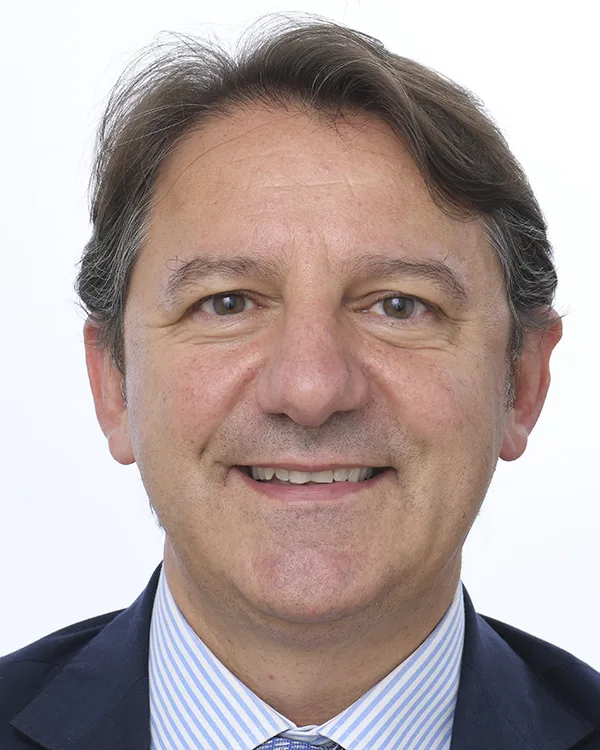
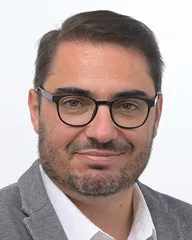
Lukas Sieper | Germany DE | Renew Europe (Renew) | 487 |
| 2 |
|
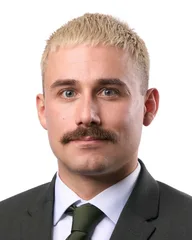
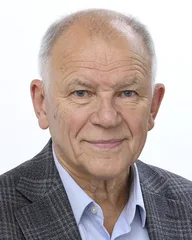
Juan Fernando López Aguilar | Spain ES | Progressive Alliance of Socialists and Democrats (S&D) | 454 |
| 3 |
|
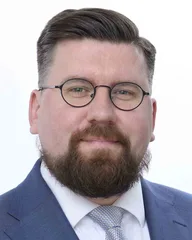
Sebastian Tynkkynen | Finland FI | European Conservatives and Reformists (ECR) | 451 |
| 4 |
|
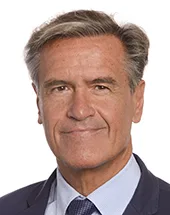
João Oliveira | Portugal PT | The Left in the European Parliament (GUE/NGL) | 284 |
| 5 |
|
Vytenis Povilas Andriukaitis | Lithuania LT | Progressive Alliance of Socialists and Democrats (S&D) | 273 |
All Speeches (28)
Madam President, ladies and gentlemen, it is a final moment in a process that has been very demanding, in which the spirit of compromise has been necessary, as well as rigour in control. Democratic legitimacy requires respect for the rules and, as we know very well, we representatives of the institutions are called not only to respect the formal rules and norms but we must adapt to the highest moral and ethical standards. And this is something we must not forget: We have a duty to be demanding of ourselves but also of the institutions that represent us and that represent millions of citizens. For this reason, any lack of transparency, any delay - even in correcting problems, irregularities, shadow areas - weakens the European project that we care about. The point is simple: We cannot demand rigour from the Member States, from others, if we are not the first to demonstrate this, even when it bothers us. We cannot defend the rule of law outside these institutions if even in the smallest matters we do not apply it to the full. Let me reiterate this: The credibility of the European Union is measured not only by the great principles but also by the small daily actions. To build this better Europe, we must first of all make transparency, the management of public resources, our main line to which we must adapt. Europe must not be satisfied, we must not be satisfied: Zero tolerance for abuse. And in this way we can build a fairer Europe, a Europe that is inspired by the idea of justice, by the idea that our founding fathers handed down to us.
Mr President, ladies and gentlemen, budgetary discharge is not just a technical procedure: It is a fundamental political act. This is the moment when this Parliament, elected by the citizens of Europe, exercises its function of democratic control, verifying that public money is spent in a legitimate, efficient and consistent way with the values we have given ourselves. It is an act of democratic legitimacy in the fullest sense of the term, because without control there is no responsibility and without responsibility there is no democracy. As rapporteur for the other institutions, I have tried to play this role with enormous rigour. I have tabled amendments that aim to strengthen the transparency of the institutions, to improve the working conditions of staff and trainees, to ensure gender equality at all levels, because we cannot ask Member States to respect high standards if the European institutions do not start on their own. Credibility is built by example. We have worked together, we have made important compromises, we have exercised our role as legislators to the fullest. One thing was common for everyone: The rule of law in Europe is non-negotiable. It is the foundation of the social contract on which the European Union is based. And that contract exists because the European institutions have a mandate to represent and protect citizens. To betray that mandate, to tolerate opacity, to allow impunity, to ignore irregularities, is to erode the very foundations of this common project. And we have also often had external stresses to which we have been very attentive. However, we have had, as usual, important solicitations from the press – the free press – which we must always listen to, especially when it exercises that role of control, too, from outside. And here I want to be clear about just that, about what we mean when we talk about rights and when we talk about freedom: In this House, we often make freedom and rights our identity value of the European Union, together with other values, such as gender equality, judicial independence, fundamental civil rights. These are precious values that we must defend with determination. But there is one issue that cannot be evaded: Those rights alone are empty if they are not accompanied by economic rights and social rights. Freedom of the press is a fundamental principle. But if media ownership is concentrated in a few hands and journalists work in precarious conditions, that freedom remains unfulfilled. The right to a fair trial exists on paper, but if you cannot afford an adequate legal defense, that same right is effectively denied to you. Women's rights, which we rightly defend, remain on paper if women earn less than men, if precariousness forces them to choose between work and family. Civil rights and individual freedoms have real value only if people have the material conditions to exercise them. This is where the union between freedom and economic rights, with the European Union's responsibilities in social rights, is important. Those in this House who claim to want to defend individual freedom must be willing to acknowledge that inequality and poverty limit that freedom in as real a way as a repressive law. Redistribution of resources and dignity for all are not concessions: These are preconditions for a democracy to really work. Every euro in the European budget must be accounted for. But it must also serve to build a fairer Europe, in which no one is left behind: a social Europe.
Urgent actions to revive EU competitiveness, deepen the EU Single Market and reduce the cost of living - from the Draghi report to reality (debate)
Date:
11.02.2026 10:34
| Language: IT
Speeches
No text available
No text available
Mr President, ladies and gentlemen, Ukraine, Venezuela, Iran, Greenland and perhaps tomorrow Mexico, Norway, Canada and who knows, France, Spain. All these Trump threats, direct and indirect, are a humiliation for Europe and are upsetting the geopolitical balance, our old certainties. NATO, the UN and even the European Union are in an identity crisis and risk being swept away by oligarchies more powerful than a head of government. Orwell's prophecy is coming true in which the elite of powerful rule over all. The European Union is at a crossroads: It must choose whether to fight this modern form of authoritarianism or whether, once again, eighty years after the end of the Second World War, it must fight for democracy, its freedom and its sovereignty. We have tools to respond to Trump: the anti-coercion instrument, tariffs, digital tax, but we can't shut up. At the next Council, European leaders show that they are up to this challenge, say: We are not vassals. And also the majority of this European Parliament. Take a clear stand against Trump and his arrogance.
Incentivising defence-related investments in the EU budget to implement the ReArm Europe Plan (debate)
Date:
15.12.2025 19:10
| Language: EN
Answers
Thank you very much, colleague, for your question. Actually, I think that the European Union as such, as a Union, should invest in European defence. We are not actually investing in European defence. We are allowing Member States to invest each other in their own defence. For instance, a big state like Germany, which has huge fiscal room to invest even more, one thousand billion dollars, actually it is increasing security within Europe. I say that Europe needs to look for its own strategic autonomy economically, technologically and even from a defence point of view. But now, what we are doing is even investing more in arms, buying more arms from Americans, rather than building a European mechanism of defence.
Incentivising defence-related investments in the EU budget to implement the ReArm Europe Plan (debate)
Date:
15.12.2025 19:09
| Language: EN
Speeches
Are you happier now that Mr Trump is actually speaking with Mr Putin instead of us? Are you happy with that? So, I am actually not happier that Trump is speaking alone now with Putin. That is why I wanted a different strategy from Europe from the very beginning. Following the only way of war is not reaching the peace, my dear.
Incentivising defence-related investments in the EU budget to implement the ReArm Europe Plan (debate)
Date:
15.12.2025 19:07
| Language: EN
Answers
As I said, I condemn in all the means the aggression of Russia against Ukraine. I think that the way to reach peace is not the one that Europe is following, because actually we are allowing Member States to increase defence expenditure asymmetrically. We are even, in derogation of the stability pact, allowing big Member States to increase defence. And this is even dangerous for Member States which have a bigger fiscal space against the others. It's basically a counter-position of each Member State against the others.
Incentivising defence-related investments in the EU budget to implement the ReArm Europe Plan (debate)
Date:
15.12.2025 19:07
| Language: EN
Answers
This is a question?
Incentivising defence-related investments in the EU budget to implement the ReArm Europe Plan (debate)
Date:
15.12.2025 19:05
| Language: IT
Speeches
Madam President, Commissioner, ladies and gentlemen, politics is not the art of preparing for war, it is the art of preventing it. And Europe exists because it has learned on its own skin that strength, without dialogue, only leads to ruin. Today someone tells us that we must get used to the idea of conflict, that our children will have to suffer as our grandparents did. I oppose this logic: If Europe accepts this narrative, it has already lost. This race for rearmament does not strengthen the European Union, it divides it. In 2025, the "Security and Defence" chapter of the budget increased by more than 10% and, adding to this the asymmetric increases in national plans, we arrive at disproportionate, even opposing, interests between the various member countries. This is not European defence, we are rewriting the European budget items – for the EIB, for the Cohesion Fund and for InvestEU – that were created to reduce inequalities and are being converted, or at least used, as financial instruments for militarisation, also guaranteeing private profits and passing the risk of this profit on to taxpayers. This, again, is not common security: This is an escalation that weakens the Union as a whole. We say no to a Europe that turns war into a bargain for the few and we also say it in solidarity with Ukraine. We were elected to leave a better future for our children, not to prepare them for war.
Increasing the efficiency of the EU guarantee under the InvestEU Regulation and simplifying reporting requirements (debate)
Date:
25.11.2025 21:30
| Language: IT
Speeches
Madam President, Commissioner, ladies and gentlemen, today we are debating InvestEU at a time when Europe is called upon to look at its position in the world. As we follow progress towards a peace agreement between Ukraine and Russia, a dissonance emerges: We can find unity in the face of conflict, but we disperse it when it comes to building our industrial future and strategic autonomy. We are approaching a geopolitical turning point, but the indicators tell us more: Europe is losing ground. The gap with the US and China widens; They invest in data center, artificial intelligence and infrastructure, while we move with fragmentation and delays. We postpone a real industrial strategy; the 'automotive declines; We are delaying the launch of the digital euro. We do not oppose an autonomous strategy to American tariffs, nor do we succeed in taxing multinational digital services to have adequate resources and strengthen our production capacity, and we only think of competitiveness as a product of the market while the stagnation of GDP is a reality. If the world runs, Europe cannot limit itself to administering the existing, we need a real industrial policy that reduces the technological gap and mobilizes capital, bringing critical infrastructure back to Europe.
Mr President, Commissioner Šefčovič, ladies and gentlemen, while we are debating here and while Europe continues to negotiate as if we were still in the world of free trade, the United States has already collected over $100 billion in tariffs, applying selective protectionism that rewards its interests and punishes our economy. Why are our companies, Commissioner, being hit by unilateral measures, while American multinationals still continue to sell in Europe, taking advantage of our great single market and not paying taxes fairly? This is not just a commercial issue, it is a question of social justice, economic sovereignty and dignity. Enough with asymmetry, enough with economic dependence. Our welfare is at risk, if we allow those who make profits here not to return anything to the community. We call for symmetrical countermeasures and targeted and selective tariffs. If we do not do so, we risk undermining the single market. We demand the introduction of a digital tax, Mr Šefčovič, we demand the digital services tax. This is the time: Either we defend Europe now or we condemn our economy to economic and political irrelevance.
(IT) Mr President, ladies and gentlemen, Parliament's control of the executive of the European Union through the so-called discharge is fundamental to the smooth functioning of democracy. An exercise that for us should once again be inspired by the values of the founding fathers: peace, solidarity, human rights, the prosperity of our citizens. Instead, questioning the legitimacy of NGOs receiving funds from the European Union weakens the European Union's own action in the most fragile areas of the world. Attacking NGOs but also the UN Relief and Works Agency for Palestine Refugees at a time when Palestinians are being starved in Gaza is inhumane. We also strongly oppose the approval of the European rearmament plan through an extraordinary procedure, without real involvement of Parliament. This represents a serious precedent, a theft of our democracy, which should be condemned by this House, as indeed was done by the Committee on Legal Affairs two weeks ago. I conclude with an appeal: Let us return to the spirit of the Ventotene Manifesto: a united but not closed Europe, strong but not aggressive, attentive to accounts but also to rights. Discharge is not just a management judgement: It is a reflection of our idea of union. Let's defend her uncompromisingly.
A unified EU response to unjustified US trade measures and global trade opportunities for the EU (debate)
Date:
06.05.2025 10:23
| Language: IT
Speeches
Mr President, Commissioner, ladies and gentlemen, Trump's trade policy reflects the mercantilist logic that a trade deficit is a threat. In 2023, the US imported around €157 billion worth of goods from the European Union. But we have to look at services and here we notice that it is the United States that has a surplus of 109 billion. This reminds us of how complex economic relations are and must be read as a whole. Today the tariffs are suspended but tensions remain and meanwhile many large US companies, especially in the digital sector, continue to make exorbitant profits. It is a matter of justice: We need to take care of this situation. This is why we need a tax on digital services. In addition, the European Union should expand its trade ties with other emerging countries, the BRICS, and not depend on Trump's unilateral choices. Let us not forget the economic fallout of tariffs, the recession. That is why we must also focus on wage growth, domestic demand and consumption. Europe must overcome the challenges with greater force against the powerful in Washington.
Conclusions of the European Council meeting of 20 March 2025 (debate)
Date:
01.04.2025 10:02
| Language: IT
Speeches
Madam President, Commissioner, ladies and gentlemen, Europe was not born of fear, but of hope. From men and women who, in the rubble of war, had the courage to imagine a different future, a Union based on cooperation, democracy and peace. Today, this vision is under severe strain: We are witnessing an unjustified, useless, fragmented rearmament race, lacking even a common strategy that strengthens us and, instead, exposes us to weaknesses, to greater geopolitical tensions. Without European coordination, with uncoordinated investment and a disparity in the spending capacity of individual states, countries like Italy will face new debt and our debt will reach 150% of GDP. But security is not built only with weapons, but with technological and economic independence and social stability. This rearmament, with 800 billion euros, will lead Italy to have to cut welfare and health, but not only Italy, all the member countries. That is why on 5 April we will be in Rome to demonstrate against this rearmament, for a Europe of justice and peace.
Social and employment aspects of restructuring processes: the need to protect jobs and workers’ rights (debate)
Date:
12.03.2025 17:08
| Language: IT
Speeches
Madam President, Commissioner, ladies and gentlemen, Europe must choose between protecting work and dignity or succumbing to precariousness and inequality. Deindustrialisation, the ecological transition, in particular in the sector automotive, and global trade tensions cannot be a pretext to reduce wages; We need a minimum wage where there is not yet, as in Italy, to guarantee decent incomes and stop wage dumping. But it's not enough. Commissioner, work alone is very often not enough to lift people out of poverty. We need a European minimum income, a European citizenship income, financed with fair taxation on large multinationals, calibrated to the poverty line of each Member State. The technological transition must strengthen our social model, not widen inequalities. For this reason, as Five Star Movement we call for a fund to accompany workers in the change, the introduction of the short week and the reduction of working hours, together with a universal minimum income. We want to stand by work against poverty, against inequalities.
Madam President, Commissioner, ladies and gentlemen, the Commission's work programme for 2025 raises a number of concerns, with so many shadows and very few lights. On the investment front, the programme focuses too much on defence, while there are no concrete measures for the protection of citizens, workers and support for industrial sectors in difficulty, such as the industrial sector.automotive. The revision of the EDIP, the defence industrial programme, provides new funds for the development of armaments and paves the way for a escalation that we don't accept. In addition, amending the REACH Regulation on the authorisation of chemicals risks reducing environmental protections in a dangerous way. As regards the labour market, there is a lack of structured support to address industrial transitions. Furthermore, we have called for the establishment of a new instrument for industry, as was SURE during COVID, to boost competitiveness, a programme in particular that serves theautomotive in the conversion to the electric, but there are no answers in this sense. This proposal could be addressed under the Skills Union initiative. Finally, the housing plan is a good thing, it is an important theme for the 5 Star Movement, a step in the right direction, but its non-legislative nature and very limited resources risk severely limiting its effectiveness on high rents and the housing crisis in Italy as well as in all European countries. More concrete responses are needed to protect workers and support businesses, starting with industry, which is a asset strategic for the whole of Europe.
Cryptocurrencies - need for global standards (debate)
Date:
23.01.2025 10:48
| Language: IT
Speeches
Madam President, Commissioner, ladies and gentlemen, while in the United States, with Trump's inauguration, Bitcoin reaches historic values and even a single currency. meme Trump gains billions in capitalization, in Europe the debate on digital currencies remains stagnant, especially with regard to the digital euro. The digital euro issued by the European Central Bank would represent a public, secure and independent response, supporting our strategic and economic autonomy vis-à-vis cryptocurrencies, which, due to their volatility and lack of regulation, cannot offer a stable payment method. This project, however, remains blocked for some countries that veto it and political groups. We, on the other hand, strongly support the introduction of this instrument, because it would guarantee Europe's strategic independence from foreign, mainly American, giants that monopolize electronic payments, allow the construction of a European infrastructure for digital payments, reduce transaction costs for consumers and sellers and, moreover, increase financial stability. The digital euro would also be a crucial response in the fight against tax evasion, which deprives the European welfare state of €824 billion in tax revenue every year. Commissioner, we are asking you to go one step further than the digital euro.
Addressing EU demographic challenges: towards the implementation of the 2023 Demography Toolbox (debate)
Date:
22.01.2025 14:33
| Language: IT
Speeches
Mr President, Commissioner, ladies and gentlemen, demographic decline is a danger to the labour market and the sustainability of welfare. Among its most worrying implications is the sustainability of the pension system: if today there are 2.7 people of working age for every European pensioner, by 2100 this ratio will fall to 1.5, with a reduction of 54 million workers. In Italy, the situation is dramatic: For every pensioner, we have 1.4 employees. In order to cope with this change and increase the supply of labour, migration flows must be used in the short term and, in the long term, policies must stimulate the birth rate. This requires an increase in public childcare services and an increase in female employment rates. We know that where female employment rates are higher, fertility rates are higher. In Italy we have the lowest female employment rate in the EU, 53%, and the lowest fertility rate, around 1.2 children per woman. In addition, job insecurity and the absence of reconciliation policies worsen the situation. Compulsory paternity leave and adequate wages must be introduced in order to have greater incentives towards the birth rate.
Promoting social dialogue and collective bargaining and the right to strike in the EU (debate)
Date:
18.12.2024 15:34
| Language: IT
Speeches
Mr President, ladies and gentlemen, since there is no one on the right, the right to strike is a fundamental instrument of freedom and justice and is guaranteed by all our constitutions in Europe. Today, however, this right is under attack. In Italy, Salvini allows himself to prescribe the right to strike every time; It happened this year and it happened last year. This is unacceptable. Di Vittorio, a symbol of the workers' struggle, said that "when you strike, you are not fighting against a boss, but against a system that deprives workers of their rights and dignity", as Amazon workers in the United States do these days. The strike is not only an instrument of struggle, but also a crucial element in strengthening collective bargaining. In the last legislature, an important step was taken with the Minimum Wage Directive, with the introduction of the minimum wage, either by negotiation or by legal means. The Italian government has not yet transposed the Minimum Wage Directive, saying that workers are covered by collective bargaining. This is false: Collective bargaining does not effectively cover all workers in many services. We ask that bargaining be extended with specific criteria of representation, otherwise bargaining will be ineffective. We need to protect...
Madam President, ladies and gentlemen, technology has radically transformed the global economy, redefining the way companies operate and interact in markets. However, it has also contributed to widening economic inequalities, concentrating unprecedented wealth and power in the hands of a few. This shift has highlighted the structural gaps in our tax systems, with regulatory asymmetries that are unsuitable to meet the challenges of an increasingly digital and globalised economy. The declaration of the G20 leaders meeting in Rio represents a significant step towards a fairer tax system, committed to ensuring that large assets are properly taxed. Today, more than ever, the world needs a strong and effective multilateral system, capable of adopting fiscal policies that respond to new technological paradigms. We must lead this change, like Europe, by promoting fairness, reducing inequalities and ensuring essential resources for key priorities such as education, health and climate action. The new Commission and the new G20 Presidency of South Africa must act with ambition and courage. For Europe to give up this opportunity would mean abdicating the global leadership role that Europe is called upon to claim.
General budget of the European Union for the financial year 2025 – all sections (debate)
Date:
22.10.2024 13:17
| Language: IT
Speeches
Mr President, ladies and gentlemen, Turin, Melfi, Termoli, Pomigliano, but also Brussels, Zwickau: Car factories closed or in crisis are everywhere in Europe. In Italy alone, 100,000 jobs are at risk in the industrial sector.automotive Small and medium-sized enterprises are the most affected. If we do not want to make this European industry disappear, we must take immediate action, as during COVID, during which, thanks to the SURE programme in Italy alone, we have saved almost 500,000 jobs. The car crisis is European: We therefore need a European response. We have tabled an amendment to the 2025 Union budget, in which we propose the establishment of a new two-year SURE fund for theautomotive for 100 billion euros. In the past we distributed money in the rain and the big car managers continued to distribute dividends while workers were on layoffs. With this new SURE we turn the page: We save jobs, we help the industry but we oblige car manufacturers to make more investments for the transition to electricity, for training and not to lay off workers. The 1.1% European budget is too small: It has no ambition and with respect to global challenges it continues to have an insignificant dimension. Now we have a great opportunity: a common cause in Europe on which to invest in order to give greater prominence to the Union. SURE for theautomotive It's an opportunity. I therefore appeal to all Members of the European Parliament: save the European car industry, save hundreds of jobs, support the establishment of a new SURE forautomotive.
Taxing the super-rich to end poverty and reduce inequalities: EU support to the G20 Presidency’s proposal (topical debate)
Date:
09.10.2024 13:33
| Language: IT
Speeches
Mr President, ladies and gentlemen, today there is an inexplicable contradiction in Europe in the eyes of the citizens. On the one hand, the Member States are asked to repay, through cuts, EUR 100 billion per year in view of the new Stability Pact; Italy is asking for 13 billion euros, for example. On the other hand, it turns a blind eye to the tax avoidance practiced by multinationals on the immense wealth accumulated by the super-rich. Today, 1% of the population holds 46% of global wealth and the middle class is disappearing, squeezed between new poverty and the super-rich who move their residence to a tax haven that allows them to pay less tax. In Europe, billionaires increased their wealth by 33% between 2020 and 2023, while poverty and inequality increased. There is a proposal accepted by the Lula presidency at the G20 in Brazil. It was put forward by the economist Zucman and provides for a tax on the super-rich of 2% for over a billion. You don't want to hit people's homes or consumer goods. It is simply a contribution for those who have accumulated billions in wealth. According to an Oxfam report, progressive taxation of up to 5% in Europe in 2023 would provide around €300 billion more to the European coffers of each individual Member State, overall. These revenues could help struggling citizens with a minimum income, support small and medium-sized enterprises in the challenges of the energy transition, finance school health systems and put money trapped in financial markets back into the real economy. A fairer tax system would also strengthen the fight against climate change, because the richest 10% are responsible for 50% of CO2 emissions.2 globally, and would also increase demand. Economic growth would be stronger without inequality. The new European Commission is presenting a legislative proposal on this and we are ready to discuss it.
The crisis facing the EU’s automotive industry, potential plant closures and the need to enhance competitiveness and maintain jobs in Europe (debate)
Date:
08.10.2024 14:15
| Language: IT
Speeches
Madam President, ladies and gentlemen, Mr Vice-President, half of the factories producing cars in Italy are in crisis, at risk of closure. In Turin, Melfi, Pomigliano, Termoli, the workers of Stellantis, formerly GKN, we have thousands of workers in redundancy, an induced of about 100 000 workers in crisis. Looking to the past is useless. Of course, he won't come back. So let's focus on the future, on what we can do so that demand for consumption and production meet. This is the main problem today. The future of European mobility can only start from building electric cars for all citizens and not only for the rich. We need a chain of public investment made not only of cars, but also of buses and public and electric vehicles for transport, which provide supplies and, in the short term, can close that sector. gap Today there is a gap between supply and demand for electrical consumer goods. We therefore need a European sustainable and public mobility plan that encourages the use of electric cars for private mobility, including by saving factories, jobs and the climate. We need a European industrial policy, Mr Dombrovskis, we need a European fund to support electric cars. Europe has set the right goals. Now also put the resources to reach them.