
| Rank | Name | Country | Group | Speeches | |
|---|---|---|---|---|---|
| 1 |

|
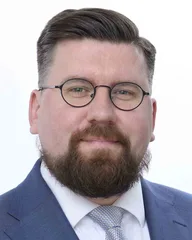
Lukas Sieper | Germany DE | Renew Europe (Renew) | 494 |
| 2 |
|
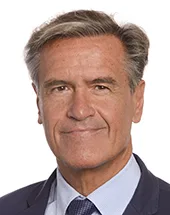
Juan Fernando López Aguilar | Spain ES | Progressive Alliance of Socialists and Democrats (S&D) | 463 |
| 3 |
|
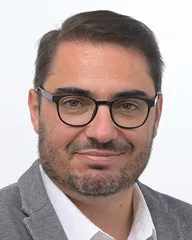
Sebastian Tynkkynen | Finland FI | European Conservatives and Reformists (ECR) | 460 |
| 4 |
|
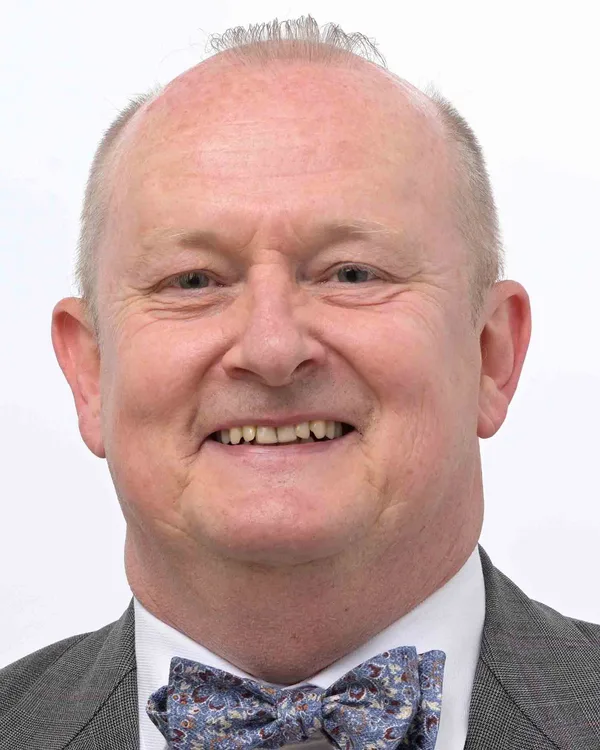
João Oliveira | Portugal PT | The Left in the European Parliament (GUE/NGL) | 288 |
| 5 |
|
Vytenis Povilas Andriukaitis | Lithuania LT | Progressive Alliance of Socialists and Democrats (S&D) | 276 |
All Speeches (45)
Estimates of revenue and expenditure for the financial year 2027 – Section I – European Parliament (A10-0124/2026 - Michalis Hadjipantela) (vote)
Date:
30.04.2026 12:16
| Language: SV
Speeches
Madam President, thank you very much. We underline that Parliament's monthly move between its two places of work wastes enormous amounts of energy and millions of euros of taxpayers' money every year. Recalls that the suspension of part-sessions in Strasbourg during the COVID pandemic contributed to savings of over EUR 26 million, according to Parliament’s Secretariat; Recalls, furthermore, that, according to the European Court of Auditors' 2014 analysis, ending the move from Strasbourg to Brussels could lead to annual savings that, adjusted for inflation and expressed in current prices, would amount to around EUR 152 million per year, as well as a one-off saving of around EUR 820 million if the Strasbourg buildings were sold successfully; Calls on Parliament and the Member States to put an end to this practice and to ensure Parliament’s meeting in one place without further delay in order to save energy, money and benefit the citizens of the Union;
Mr President, thank you very much. Granting discharge does not sound sexy, but it is Parliament’s most important task, and it is our strongest instrument of power – for us as Members of Parliament. Unfortunately, Parliament does not use this instrument very often to reject institutions. Too much misuse is accepted. Too much mosquitoes are missed. Many of the EU's many institutions cannot be justified from a cost-effective perspective. Many of them should be shut down or merged. We should also listen to the Court's warnings about increased borrowing and rising interest costs. We in the Sweden Democrats will continue to mark against this, until the discharge process becomes sharper, that we are really doing good as MEPs in preserving taxpayers' money and using it in the best possible way. There is so much to do here. There is, of course, a great deal of desire for all kinds of things, but this cannot be done at European level, and what is being done must be done with great efficiency and respect for the fact that we are taking out of our citizens' wallets and with greater seriousness.
Interim report on the proposal for the multiannual financial framework for 2028-2034 (debate)
Date:
28.04.2026 10:23
| Language: SV
Speeches
Mr President, thank you very much. When the government of Löfven for Sweden negotiated the current long-term budget, expenditure increased by 68% and the basis was laid for introducing a wealth of taxes for the Union. The Democrats backed the Democrats here. Only the Swedish Democrats and the Left Party voted against it. The EU is now refusing once again to rationalise, streamline and cut back. Forget all the beautiful talk about competitiveness! If we do not change course, we will get more of an inefficient planned economy that weakens growth and competitiveness. It impoverishes the welfare of all Europeans. This is simply the wrong way to go.
Protection of the European Union’s financial interests – combating fraud – annual report 2024 (debate)
Date:
27.04.2026 20:24
| Language: SV
Answers
Now we see how the left is using an important discussion of principle about how to structure the European Union to engage in political pie-throwing, and also about money that has nothing to do with the EU at all. As far as I know, there are many issues, when it comes to this aid money, that are up for discussion, so it is not just those that concern my party. That's wrong. We need to be able to discuss the principles of this case. We can address these other things in other contexts. We need to make principles and regulations work well so that we use every euro in the best possible way.
Protection of the European Union’s financial interests – combating fraud – annual report 2024 (debate)
Date:
27.04.2026 20:22
| Language: SV
Speeches
Mr President, thank you very much. I find it sad that an important principled discussion is being made into party-political pie throwing. These various issues raised by the left are under preparation in other contexts. These are issues of principle where the fight against fraud is not only about catching the wrongdoers but also about protecting every euro that the taxpayer entrusts to the EU. Therefore, the EU's financial interests must be measurable. We have to get value for money. We must be able to see and evaluate in a better way, not least because the EU's debt mountain is growing. This could exceed €900 billion by 2027. I think we should discuss the principles of the European Union, how we safeguard the money and resources in this matter. Not these other things. You're running away from responsibility, and I think that's wrong.
Control of the financial activities of the European Investment Bank Group – annual report 2024 (debate)
Date:
27.04.2026 18:13
| Language: SV
Speeches
Madam President, thank you very much. I think it has been an interesting debate, and we have heard here that there are visions of the perfect Europe – if you invest in green, everything will be fantastic. I am a little allergic to it because it is taxpayers' money and they have to be managed in an extremely efficient way. We need to know "value for money" – what is the added value of the investments we make? That is why, in the report, we have pushed for greater transparency so that we can see more of how this work is done. Because then we might also be able to get a little more consensus on how we view these different investments, where it is pulled in all sorts of different directions. It would be easier to assess these investments if we had a little more transparency, if, for example, the European Court of Auditors came into the picture that gives us in Parliament extremely important information about very many other institutions. As far as Northvolt, the Swedish company, is concerned, I raised it precisely because it is in my home country where this failure has occurred. I want to show that there are failures and that you must then be able to evaluate such projects so that you learn something from it – that you do not end up there again, that you get on with more experience. It is not evil that is behind these demands that we make, but it is in order to be better, more efficient and use taxpayers' money more efficiently, so that we get more out of them. That is the very purpose of this report. Thank you for this debate.
Control of the financial activities of the European Investment Bank Group – annual report 2024 (debate)
Date:
27.04.2026 17:25
| Language: SV
Speeches
Madam President, thank you very much. Europe lacks venture capital, especially private and commercial capital. While the US tends to focus on growth and innovation, Europe opts for a precautionary approach characterised by regulation and the status quo. It weakens our competitiveness. Here, the European Investment Bank and the European Investment Fund fill a gap through their lending. But this arrangement poses a danger. Those who invest their own money are more involved in the risky investments they choose. If risk-taking goes badly, you lose your own resources. When we in the EU use tax money instead, it is easy to invest venture capital in things that sound good and hopeful without being so. The report gives an example of a well-intentioned, but naive and overly optimistic green investment: The Northvolt battery plant in northern Sweden received close to one billion euros from the EIB, but went bankrupt in March last year. We call for a proper evaluation of how the risk assessment is done in green investments. There is a lot of political pressure here. Does this mean that the bank takes too much risk with tax funds from an ideological perspective? As far as energy is concerned, the report emphasises technological neutrality in the assessments, which means that investments can also be made in nuclear power. The report also highlights that in cooperation with non-EU countries, the EIB must be able to include requirements for countries to readmit migrants who have no right to stay in the EU. The report calls for greater transparency and points out that the EIB has lower transparency than other multilateral institutions such as the World Bank, the Asian Development Bank and the African Development Bank. For example, we want the European Court of Auditors to be given a mandate to audit the EIB. At the same time, we welcome the fact that the EIB Group is cooperating with OLAF, EPPO and Europol on suspected fraud and misuse. We highlight the role of the EIB in strengthening the financing of defence and security in Europe. In order to free up resources, the report argues that the EIB should be more careful to focus on investments that have a cross-border benefit, and thus not on what constitutes national competence. We also point out that it is extremely important to invest in added value. It must become a key word in the Union when it comes to evaluating all financial efforts. It shouldn't just be about formalities and volumes. We need to be able to see what benefits our citizens. As we say in Sweden: What the hell do I get for the money? Parliament's evaluation is naturally devoted to matters on which we have comments. But in the name of fairness, I shall also point out that for 2024 the EIB is showing a stable result and that its creditworthiness is triple-A, the highest possible. I would also like to take this opportunity to thank the shadow rapporteurs and the Committee on Budgets for their good cooperation.
Global Gateway – past impacts and future orientation (debate)
Date:
26.03.2026 10:35
| Language: SV
Speeches
Madam President, thank you very much. It sounds very beautiful, this thing with Global Gateway and this strategy. It has been running since 2021 and spends EUR 300 billion. However, the fact is that various audit bodies, including the European Court of Auditors, criticise a lack of transparency, a lack of governance and a lack of evaluation. We have heard from some speakers here that it is very difficult to get this together in a workable way. We must, of course, take up competition with China. We will do this by creating competitiveness and developing Europe to once again become the strongest force in terms of economic growth. We do not do this by distributing billions to other parts of the world. It'll be all wrong. I would suggest deleting the Global Gateway in the next multi-annual budget. This is not how we're supposed to work. We will create competitiveness in Europe, jobs and development that way.
Guidelines for the 2027 budget - Section III (debate)
Date:
10.03.2026 15:50
| Language: SV
Speeches
Mr President, thank you very much. These guidelines for the 2027 budget require increased spending across the scale. They are striving for higher taxes and new own revenues. They increase the regulatory burden and include green activism and gender perspectives. And this without any restraint on costs or meaningful priorities. The frugal position is absent. Those of us who want to see a more disciplined, focused budget that adds genuine value and respects net contributors don't have much to gain. When you say you prioritize everything, the brutal truth is that you don't prioritize anything.
Housing crisis in the European Union with the aim of proposing solutions for decent, sustainable and affordable housing (debate)
Date:
10.03.2026 10:22
| Language: SV
Speeches
Madam President, thank you very much. The housing market is a national, regional and local competence. It is not a cross-border issue. That is why the EU should keep its fingers off. The reason is obvious: The housing market is very different in different Member States. What applies in Barcelona and Berlin does not work in the Swedish countryside north of the Arctic Circle. Europe's housing problems are urgent, as many speakers have said here today, but the solution is no more centralisation with Brussels. The 2008 financial crisis started when the US Congress had exactly the same ambitions as discussed here now. But the result was not more cheap housing, but it meant that families had to leave houses and homes when the market crashed due to unreasonable political conditions. Instead of more rules, we need deregulation and let the Member States take care of housing policy. It's best that way.
Addressing subcontracting chains and the role of intermediaries in order to protect workers’ rights (debate)
Date:
11.02.2026 19:42
| Language: SV
Speeches
No text available
A new action plan to implement the European Pillar of Social Rights (debate)
Date:
22.01.2026 11:04
| Language: SV
Speeches
Madam President, thank you very much. The social networks in our Member States are, of course, absolutely fundamental in order to provide security for the many people, but I think the oral question that was asked is wrong. It assumes that there would be stronger protection if centralisation were to take place and if the European Union were to determine more and more of the regulatory frameworks. That's not true. Here I have a letter from the Swedish major trade unions, who are critical of the proposals to introduce a statutory minimum wage. In Sweden and the Nordic countries, we have a partnership agreement between employers and employees, which formulates the wage conditions in the market. It has been an extremely successful model and we should not abandon it. We must protect the Nordic model of collective bargaining and we must reject binding legislation from the EU.
European Democracy Shield – very large online platform algorithms, foreign interference and the spread of disinformation (debate)
Date:
18.12.2025 11:26
| Language: SV
Answers
No text available
European Democracy Shield – very large online platform algorithms, foreign interference and the spread of disinformation (debate)
Date:
18.12.2025 11:25
| Language: SV
Speeches
No text available
Mr President, thank you very much. The European Parliament's draft budget clearly shows how far we are from reality. When the Member States in the Council cut a billion euros because the economy is on its knees, growth is lousy and deficits are running, then Members of this House are running in the opposite direction, demanding that the whole amount be restored. It doesn't stop there. In addition, colleagues here are demanding more money for programmes that the EU's own Court of Auditors has already criticised for lack of transparency and questionable value for taxpayers. To top it off, they want to add an additional billions to aid outside the region. It is not responsible, and it is not solidarity with European taxpayers. It is a waste that only widens the gap between the EU and its citizens. For Democrats, the election is easy. We will stand up for restraint and respect for taxpayers. More people in this house should do that.
Presentation of the Court of Auditors' annual report 2024 (debate)
Date:
22.10.2025 15:34
| Language: SV
Speeches
Mr President, thank you very much. I would also like to thank the European Court of Auditors for this solid annual report. It is extremely important to remove it, and I would like to thank the Commission for underlining that it will work hard to reduce the level of error, which is still far too high. However, I would like to mention something that I find remarkable about the recommendations, and that is that the audit has not been able to ensure full access to documents, financial documents – to check how the costs have been incurred and how they have been used. This applies, on the one hand, to international organisations, where the Court has been calling for clearer rules for international organisations to provide input for the audit for five years. If this documentation is not received quickly enough, the Commission will simply have to withhold the money from non-compliant organisations. Another side of it is, as mentioned by several speakers here as well, the final beneficiaries of the coronavirus fund (Recovery and Resilience Facility). There are no conditions for this to be declared and therefore there can be no audit opinion on the regularity of the costs. It is also something that is extremely remarkable, that it is not possible to document fully here. This methodology is not allowed to enter into the next multi-year budget that is sometimes discussed. We must keep track of how the money is spent, the Court of Auditors must be able to audit it. Another end point here is that the Court also shows that there is a need to have control over when investing in infrastructure projects, that there are sufficient funds for maintenance and operation going forward. I think this is an extremely important part that should be included in the decision-making process.
General budget of the European Union for the financial year 2026 – all sections (debate)
Date:
21.10.2025 21:19
| Language: SV
Speeches
Mr President, thank you very much. It's easy to be generous with other people's money. This report on the 2026 budget is shameless in its waste. Advocating for new sources of income that slap taxpayers, that is not acceptable. The report disapproves of the Council cutting back, saving some of the Commission's proposal. But here can be cut down more, in the frugal spirit. Instead of building air castles, Europe should return to what is at the heart of this cooperation, of European cooperation. It is security, free trade and competitiveness. This can't get away. We must return to the core task of getting Europe back on its feet and ensuring that Europe does not fall behind.
Promoting EU digital rules: protecting European sovereignty (debate)
Date:
08.10.2025 16:32
| Language: SV
Speeches
Mr President, thank you very much. This debate on digitalisation is marked by two opposing perspectives. One side wants to control, regulate and censor, the other side protects freedom, openness and development. We should have learned that when policy interferes with technological development, the capacity to innovate is limited. Detailed governance and regulatory approaches are lagging Europe behind. If Europe is to become competitive, we need to safeguard digital freedom – yes, all freedoms – and not regulate ourselves apart and together.
Implementation of EU-US trade deal and the prospect of wider EU trade agreements (debate)
Date:
10.09.2025 15:57
| Language: SV
Speeches
Mr President, thank you very much. We must remember that at the beginning of the year it was the EU that had higher tariffs on the US in important areas such as cars and agricultural products. This has prompted the new US administration to react with its own protectionism. At this point, this means for me that it will be necessary to praise the Commission for agreeing an agreement with the US, even though I personally would have rather seen zero: zero – tariffs on both sides. The Commission did not sink into childish attacks on the United States demanding retaliatory tariffs on whiskey, jeans and Harley Davidson. Our trade relations are far too important for prestigious posing. Let us continue to work for reduced tariffs with responsible realism.
Mr President, thank you very much. The historian Niall Ferguson speaks of a Cold War 2.0, i.e. a major global contradiction, especially between the United States and China. It is about technology, about natural resources and about territories. In this, too, trade and tariffs are a quarrel that has arisen in this. We are more of a spectator on that part, and I think our task is to ensure that we get as low tariffs as possible and in both directions. Europe has had higher tariffs on the United States in certain areas than the United States has had on Europe, so we should not be so superior in that we would be in favour of free trade more than the United States. It is important to find the common denominator and choose whether we are on the side of the West or whether we are on the side of China.
Digital Markets, Digital Euro, Digital Identities: economical stimuli or trends toward dystopia (topical debate)
Date:
18.06.2025 21:04
| Language: SV
Speeches
Mr President, thank you very much. Digitalisation in our time has enormous advantages, but when the EU claps into this area, there is reason to be vigilant. Instead of boosting the economy, the EU's Digital Markets Act (DMA) penalises companies that create jobs and force lucrative technology development to flee Europe. Then there are the plans for the digital euro. It risks promoting expansionary monetary policy, which would erode financial stability. The idea of digital identities also has significant downsides. They can become tools for tracking citizens every step of the way and destroying privacy. Instead of approaching a digital dystopia where freedom is sacrificed and growth hampered, the EU should advocate digitalisation, protect individual privacy and free market innovators. That's how we create the future.
Implementation report on the Recovery and Resilience Facility (debate)
Date:
17.06.2025 14:13
| Language: SV
Speeches
Madam President, thank you very much. The good thing about this implementation report is that it takes note of the Court's warnings that the grant economy entails significant administrative burdens. Several members in this debate today, from left to right, have pointed out the major shortcomings that the Corona Fund RRF entails. It risks weakening productive entrepreneurs that strengthen competitiveness in Europe and favouring unproductive grant projects that impair competitiveness. The lesson of the RRF is that we should not devote ourselves to loans and EU taxes. It leads to the opposite of what we wish for all of us. This leads to a planned economic colossus that stifles development. Europe is worth better.
Madam President, thank you very much. As far as the European Court of Auditors is concerned, it is interesting to hear that no one has proposed savings on this activity. We have very different political views in this House, but I think it is a strength that we agree that the European Court of Auditors is doing an excellent job. A reflection: The ECA budget represents less than one-tenth of the EU budget. That is a very small sum for the work and strength that it entails for the Union to have an audit that does proper work and reveals the problems that exist. 0.1% should be increased so that we can have even better reports and even more reviews on the activities that the European Union is doing. Then perhaps we could even be a little more in agreement on what the Union is doing, if we know that these are reasonable projects and that they are being carried out in a good and efficient way. So I think we should think hard about whether the European Court of Auditors should not have a much larger budget in order to be able to do more audit work for the Union.
Mr President, thank you very much. As rapporteur for this proposal, I would first like to underline the importance of the work of the European Court of Auditors. The ECA plays a unique role within the Union. The ECA carries out independent audits of the Union’s substantial spending and, through its work, reinforces the lack of democratic legitimacy that the EU suffers from, by providing increased transparency and accountability. For 2023, the Court’s budget amounted to around 175 million euro, representing an increase of just under 8 %. I consider this to be a very small increase given that the ECA’s work has expanded and now also includes the multi-billion-dollar coronavirus fund to be audited. In view of the increased need for auditing following the significant increase in the volume of resources through the Coronavirus Fund, the ECA’s cost increases may be seen as too small to carry out an effective audit. The Corona Fund was a response to a crisis, but crises must never be an excuse for lax controls. We must therefore be vigilant so that external factors do not obscure the visibility of potential internal control weaknesses. Several years ago, the Court of Auditors warned that the level of error in EU budgets is increasing significantly. In 2023, the auditors’ error rate increased to 5,6 %. These amounts are now enormous. Particularly with regard to the disbursements of the coronavirus fund, widespread fraud can be observed. According to the Court, it is simply not possible to follow the money to see where it has gone. Weaknesses in control systems and the very low level of on-the-spot checks are used by national authorities, companies and organisations to seize EU money. It is fraudulent towards taxpayers to allow this abuse to continue. Billions of dollars are spent wrongly every year. I therefore welcome the fact that, in the report, a unanimous Committee on Budgetary Control calls for a further increase in the scrutiny carried out under the heading: European public administrationnotes with concern that 30 % of the transactions analysed were affected by error; The wide-ranging errors signal the need to step up efforts to identify and combat fraud and irregularities. This is why, among other things, it is of the utmost importance that the Court of Auditors has full access to tools that can help their efforts. The ECA should have access to the Commission’s and Member States’ databases on fraud cases linked to EU funding. The Commission grants the ECA access only to certain modules of FENIX, the database that monitors the expenditure of the coronavirus fund. The Commission also fails to ensure that the information in the modules is updated quickly enough. It cannot be the case that institutions responsible for scrutinising Union funds are forced to work with incomplete or outdated information. The Commission should therefore provide the Court of Auditors with full and unhindered access to the modules in Fenix without delay. It is important to bear in mind that resources spent on auditing the EU's grant stream reveal misuse and save large amounts of money. I thank you for the cooperation in committee on this report. I hope that the groups in this Parliament can agree to support the important work of the European Court of Auditors.
A revamped long-term budget for the Union in a changing world (debate)
Date:
06.05.2025 13:44
| Language: SV
Speeches
Madam President, thank you very much. On the part of the Sweden Democrats, we have long been sounding the alarm about the EU's unsustainable budgetary policy, about the problems with joint borrowing and about the corona fund, the RRF. We warn that increased budgets lead to misinvestment and that billions are lost through fraud and irregularities. The Commission, on the other hand, is pushing for an increase in the budget and power at the expense of the nations. The report we are now discussing fits in with the wishes of the Commission. It insists that the next long-term budget be given increased resources. The historic restriction that the budget does not exceed 1% of GNI is to be waived. To this we should say no, no, no. The long-term budget must be reduced and responsibility returned to the Member States. The EU must stop signalling goodness. Through economy, the EU can carry out its core tasks with greater cost-effectiveness for the benefit of all.