
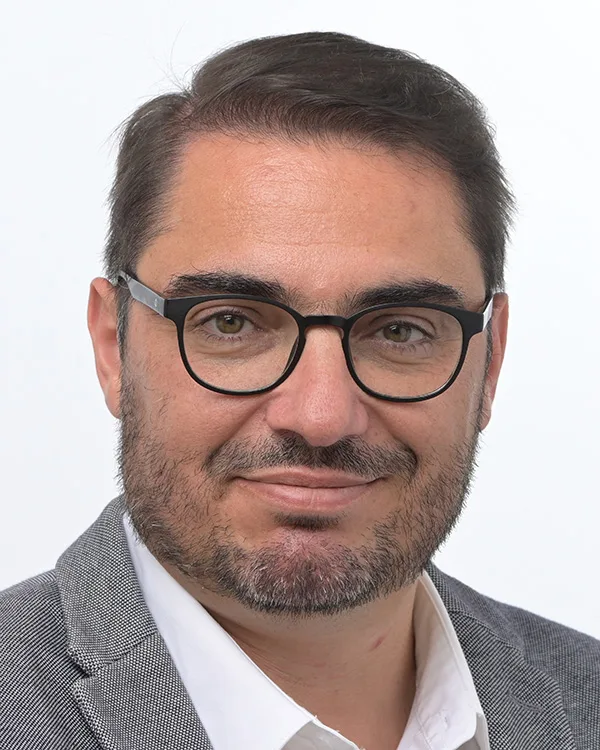

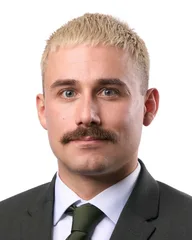
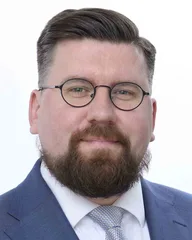
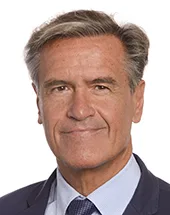
| Rank | Name | Country | Group | Speeches | |
|---|---|---|---|---|---|
| 1 |
|
Lukas Sieper | Germany DEU | Non-attached Members (NI) | 390 |
| 2 |
|
Juan Fernando López Aguilar | Spain ESP | Progressive Alliance of Socialists and Democrats (S&D) | 354 |
| 3 |
|
Sebastian Tynkkynen | Finland FIN | European Conservatives and Reformists (ECR) | 331 |
| 4 |
|
João Oliveira | Portugal PRT | The Left in the European Parliament (GUE/NGL) | 232 |
| 5 |
|
Vytenis Povilas Andriukaitis | Lithuania LTU | Progressive Alliance of Socialists and Democrats (S&D) | 227 |
All Contributions (365)
The Autumn 2024 Economic Forecast: a gradual rebound in an adverse environment (debate)
No text available
2025 budgetary procedure: Joint text (debate)
No text available
Reinforcing EU’s unwavering support to Ukraine against Russia’s war of aggression and the increasing military cooperation between North Korea and Russia (debate)
No text available
Reinforcing EU’s unwavering support to Ukraine against Russia’s war of aggression and the increasing military cooperation between North Korea and Russia (debate)
No text available
One-minute speeches on matters of political importance
Mr President, general increases in wages and pensions; upgrading careers and working conditions; strengthening public investment in housing and the responsiveness of public services, health, education, social security and culture; support for productive sectors and scientific and technological development; a fair taxation policy with the alleviation of taxes on labour and the effective taxation of economic groups and large fortunes. These are some of the demands that the workers and the Portuguese people take to the streets on November 29, in a major action that was called by the CGTP Intersindical Nacional against the State Budget, which the PSD and CDS Government will make approved, with the support of the Socialist Party and the parties to its right. This is a response that Portuguese workers are giving to a policy that does not serve their interests, that does not serve the development of the country, that does not respond to any national problem, but that satisfies the interests of large economic groups and the financial sector, and that has behind it, in many circumstances, the guidelines of the European Union. We want to express here our solidarity with this important struggle that the workers are taking forward.
Outcome of the UN Biodiversity Conference 2024 in Cali, Colombia (COP16) (debate)
Mr President, the rate of biodiversity loss is now at rates that experts consider to be unprecedented in the period of human history. The announcement of targets is not enough to halt this trend, particularly in international protocols. Moreover, the European Union is well aware of the failure of such an approach, failing to meet the objectives of halting the loss of biodiversity in the territories of its Member States by 2020. This COP16 has made it clear that, beyond targets, the means are needed to develop policies to meet social needs within the framework of a harmonious and sustainable relationship between human beings and nature. In good time, we have proposed to increase the European Union's budget in this area. Regrettably, it has been rejected here. Alongside the means, the preservation of biodiversity, the restoration of ecosystems needs a profound change in the productive paradigm, responding first and foremost to the interests of the peoples, which EU policies continue to deny.
International Day for the Elimination of Violence against Women (debate)
The struggle for a life free from exploitation, discrimination and inequality is a millennial struggle of the human being. But the recognition of women's rights is only part of recent history and, in many cases, even today, it is only a proclamation with no concrete consequence in women's lives. Domestic and dating violence, prostitution, sexual violence, discrimination and harassment in the workplace, denial of sexual and reproductive rights are some of the forms of violence against women that continue to mark our reality. They are one of the cruelest expressions of an unequal society, which does not allow all human beings a full realization. Women's rights must be in the law and in the reality of life, including equality at work, in the family and in society. Denouncing violence against women and demanding policies to eradicate it are urgent tasks. Eradicating violence against women is a fight for democracy.
EU actions against the Russian shadow fleets and ensuring a full enforcement of sanctions against Russia (RC-B10-0161/2024)
Madam President, the scheduling of this debate and the corresponding resolution are part of the logic of instigating and promoting confrontation and escalation of the conflict in Eastern Europe, with the serious dangers it entails for the Ukrainian and Russian peoples, but also for the peoples of Europe. The resolution confirms this, first of all, by insisting on the strengthening of sanctions and the omission of their consequences in the worsening of the economic and social situation in several countries, a worsening that is being paid for by workers and peoples. That is also why we have distanced ourselves from the resolution tabled by our group. What is urgent is the creation of initiatives that promote dialogue and the political solution of the conflict, to which this resolution does not contribute, but seeks to obstruct. It is a resolution that highlights the hypocrisy of the European Parliament which, at the same time, covers up and sustains Israel's genocidal policy against the Palestinian people. We need peace, not more war.
One-minute speeches on matters of political importance
Mr President, Portugal is currently experiencing a difficult situation with regard to health care, particularly in the area of medical emergency and INEM. And some of those responsible for these difficulties in Portugal are sitting in this Parliament. Here sit those responsible for approving policies of privatization of public services and favoring the business of disease, instead of defending the right to health. Those responsible for policies of budgetary constraints, limitations on public investment, obstacles to improving the functioning of public health services and increasing their responsiveness sit here. Here sit those responsible for policies of devaluation of workers, their careers, their professions, their working conditions, their working hours, which, being deregulated, disarticulate work and family life and lead to exhaustion and exhaustion of professionals, and lead to the abandonment of public services and the refusal to present themselves for competitions to be hired when they are needed. This happens in general, but it happens in particular in relation to doctors, nurses and pre-hospital emergency technicians at INEM. And that was all that was missing, was that the workers were now held accountable for the policies imposed on them.
Order of business
Madam President, the Israeli Parliament has decided to block the work of the United Nations Relief and Works Agency for Palestine Refugees in the Near East. This inhuman and intolerable decision leaves hundreds of thousands of Palestinians without the humanitarian aid they need, imposing a brutal degradation of their already weak living conditions. The Commissioner-General of this UN agency said that this legislation will only deepen the suffering of the Palestinian people, particularly in the Gaza Strip, where people live – and I quote – ‘pure hell’, even putting at risk an entire generation of Palestinian children. The UN Secretary-General found it unacceptable that the implementation of such laws could have devastating consequences for Palestinian refugees. The silence of the European Parliament or the postponement of this debate would mean complicity with this inhuman and criminal decision of the Israeli Parliament. We therefore propose that this debate be held and that it be held now, because it is now that it is urgent.
Closing the EU skills gap: supporting people in the digital and green transitions to ensure inclusive growth and competitiveness in line with the Draghi report (debate)
Mr President, labour productivity has always risen above real wage developments. The consequence of this is the transfer of wealth created by the workers to capital, and this problem can only be solved by increasing wages and ensuring a fairer distribution of the wealth created. That is the bottom line. However, this debate on competitiveness focuses only on the competitive comparison with the United States and China. Draghi's report is a kind of unconfessed Bible of the European Commission. In this report, workers are seen only as parts of a production cog, their rights and needs are not considered and competitiveness is addressed, giving priority to the creation of pan-European monopoly companies, the concentration and centralisation of capital, the aggravation of the exploitation of those who work. The path of development and social justice is another and must have workers, their rights, their wages, their living conditions and a fairer distribution of the wealth created by work at the centre of political concerns and priorities.
Closing the EU skills gap: supporting people in the digital and green transitions to ensure inclusive growth and competitiveness in line with the Draghi report (debate)
Mr Sérgio Humberto, in your speech you spoke of the importance of education and training for the qualification of workers. And I want you to tell us: How can this be done by accepting the budgetary constraints that the European Union imposes on us? How is this done – as is currently the case in Portugal – with the government that you support submitting a proposal for a State Budget which, accepting the budgetary constraints imposed on us by the European Union, does not invest in public schools, does not invest in hiring and requalifying teachers' careers, does not invest in hiring and valuing educational aids, specialised technicians? How does all this happen? Otherwise, his speech is a contradiction with practice.
Need to strengthen rail travel and the railway sector in Europe (debate)
Mr President, it was not because of a so-called fragmentation of the European railway area that Portugal lost its international rail link, going back 100 years, or that it lost 1 200 kilometres of railway lines. This has happened within the framework of European Union policies, which have promoted public disinvestment in this strategic sector. It is necessary to discuss the consequences of the policies of the European Union and its railway packages on the dismemberment and weakening of the sector, favouring a path of privatisation and concentration in the hands of multinationals. It is in this context of sacred liberalisation that the creation of yet another high-speed public-private partnership between Lisbon and Porto is now under discussion in Portugal, when financing is already guaranteed by the European Investment Bank. Profits are privatised, investments are mutualised, infrastructures serving the interests of multinationals are favoured. It is necessary to strengthen public investment, but in a public management network that serves the country and its regions, integrating its various dimensions and valuing workers in the rail sector.
Need to strengthen rail travel and the railway sector in Europe (debate)
Mrs Vasconcelos, you have brought us concerns about the railway, and I would like to ask you: Why don’t you criticise – o mea culpa – the policies of liberalisation of the sector, which have forced privatisations and concentration of the railway sector in the hands of multinationals? Why don't you tell us your opinion on the project to create a public-private partnership on the high-speed connection between Lisbon and Porto, with money, with financing guaranteed by the European Investment Bank? Does liberalism only work when it is sustained with public money and particularly with European funds? Is this your idea of the road to the railway in Portugal and the rest of Europe?
Findings of the Committee on the Elimination of Discrimination against Women on Poland's abortion law (debate)
Madam President, the report of the United Nations Committee on the Elimination of Discrimination against Women concluded that the situation in Poland has dramatically deteriorated. Polish women do not have access to safe and legal IVG and are forced to take desperate measures, often looking for unsafe alternatives, or to travel abroad to access necessary care. The situation in Poland is a real demonstration that sexual and reproductive rights and women's rights are not a gift, nor are they guaranteed forever, and must be conquered and defended as a structuring aspect of any democratic society. In 2007, after much struggle, Portugal took a historic step by legalizing the voluntary termination of pregnancy. The inclusion of this right in the law was a great victory of the decades-long struggle for women's rights, but many of them still do not have access to IVG, because health services do not guarantee its realization. That is why we continue to fight so that, in Poland or Portugal, women's rights are a reality in law, but also in life.
Managing migration in an effective and holistic way through fostering returns (debate)
Madam President, safe and legal pathways for migration, investment in social integration policies, respect for social and labour rights as universal rights, rejection of discrimination and combating the instrumentalisation of migration by major economic interests – none of this guides the policies of the European Union. From the Migration Pact to the 2025 Budget and the latest European Council conclusions, what the EU has to present is the preference for closing and retaining migrants and refugees at borders, detentions and the difficulties of asylum procedures, it is such a selective migration policy that it becomes insurmountable even for those seeking refuge from war, hunger or death. Hiding the indecency of its policies behind the sarcasm, the European Union now designates return promotion as a policy of expulsion of migrants and refugees. There is a need for another policy, an inclusive migration policy, respect for human rights and the dignity of all individuals, regardless of their origin. That's what people need.
Managing migration in an effective and holistic way through fostering returns (debate)
Madam President, Ana Catarina Mendes, the members of the Socialist Party have approved the Pact for Migration – which contains a large part of the inhumane measures with which migrants are treated today – and the group of Socialists and Democrats, of which you are one, is preparing to approve the European Union budget for 2025, which even refers to the physical infrastructure to contain migration. And what I'm asking you is: How is it possible to make this discourse of defending the humanist values of a migration policy and, at the same time, to be in agreement with policies and measures of this nature?
One-minute speeches (Rule 179)
Mr President, the post-electoral survey carried out by the European Parliament has shown that the main concern of peoples is the cost of living. This Parliament should be discussing the solutions to this problem, but no other political group has agreed to hold such a debate. No other political group wanted to discuss options to combat the rising cost of living, measures to control and fix the prices of essential goods, measures to combat speculative prices that guarantee the billionaire profits of energy and fuel distribution groups, telecommunications or banking. We should also be discussing the consequences of the new economic governance rules. In Portugal, the Government has just presented a proposal for a State Budget that shows well the impacts of these new rules, which shows budgetary constraints and restrictions, limitations on public services and social functions of the State, restrictions on investment; This is in contrast to the policies of privilege for economic groups and multinationals. This debate has also been held because, for a large part of this Parliament, the living conditions of the people really matter little.
Implementation of the Single European Sky (recast) (debate)
Mr President, it is true that this new version of the Single European Sky Regulation does not go as far as the position that the European Parliament had adopted, with all that it represented of an unambiguous attack on national sovereignty, in an openly mercantilist approach and even greater liberalisation of the air sector, aiming at its concentration and centralisation. But these are still traits that persist in the final document, even if in a nuanced form, traits that we reject. In the name of what this proposal is not, there will certainly be no shortage of those who seek to go beyond it, particularly in Portugal, giving continuity and consequence to the threats that have fallen on the NAV, with a view to the dismemberment of its activity, to the detriment of national sovereignty and the economy. For our part, we reaffirm that we will continue to intervene, rejecting the path of liberalization of air control and in defense of NAV, a strategic public company for national development.
Empowering the Single Market to deliver a sustainable future and prosperity for all EU citizens (debate)
Madam President, seen from the board of a multinational, the deepening of the single market may seem like a vein; seen from the reality of workers and peoples, micro, small and medium-sized enterprises, the development possibilities of a country like Portugal, the deepening of the single market is a heavy burden that drags us to the bottom. A few decades ago, PCP member and former Member of this Parliament, Sérgio Ribeiro, anticipated that the transfer of policy instruments to the supranational sphere, namely through the transfer of monetary and financial policy to the ECB, would lead to a one-size-fits-all policy. Through the single market and the policies associated with it, which Mr Letta now calls the engine of change for the European Union, national governments have been deprived of decision-making powers, more scope has been opened up for the concentration and centralisation of capital, and social and labour rights have been under attack. Deepening the single market serves multinationals, but it does not serve economic development or social justice.
Empowering the Single Market to deliver a sustainable future and prosperity for all EU citizens (debate)
Madam President, defending the single market by advocating competition policy, ignoring the concentration and centralisation to which that policy and that market have led, does not do us much good. Just look at the Portuguese banking sector and realize that, without the deepening of the single market, all banks were in the hands of foreign capital, with the exception of Caixa Geral de Depósitos, which, because it is public, remains national. Bringing here the defence of the single market from the idea that this is what makes it possible to reduce prices – when the energy sector shows exactly the opposite, with rising energy costs – or now from the financial sector, thinking that this is what solves the problems, can serve multinationals, but it does not serve a country like Portugal, Honourable Member.
Signature of acts adopted in accordance with the ordinary legislative procedure (Rule 81)
Madam President, I would like to express my total disagreement with your unsubstantiated and discretionary decision to reject, without justification, the proposal for a debate on the worsening humanitarian situation in Gaza, following the statements by the UN Special Coordinator for the Middle East Peace Process. On Thursday, the UN declared that more than 1,800,000 Palestinians face extreme hunger. Yesterday, that UN special coordinator issued a statement talking about nightmares, horrifying scenes in the northern area, relentless Israeli attacks and an ever-worsening humanitarian crisis and, I quote, that "nowhere is safe in Gaza", condemning the continued attacks on civilians. The person in charge said: The war must stop now. Although all this took place under conditions that allowed the debate to take place here, you refused to accept the proposal at all. I challenge you to put this request for a debate to the vote. As long as bombs continue to rain on Gaza, children, women and civilians die, this debate will always be urgent and indispensable.
World Mental Health Day - need for a comprehensive EU strategy on mental health (debate)
Mr President, mental health problems are serious health problems which have various origins, and some of them are well established, linked to the consequences of the inappropriate organisation of working time. The fact that there are health professionals in a situation of burnout is perhaps the most caricature example of the socio-labour background that has many of the mental health problems. Other than the origins, the truth is that we need a global response to mental health problems, and this requires investment in the responsiveness of health care and, in particular, the public response that needs to be given in this regard. It is not acceptable that economic conditions determine who has and who does not have a response to mental health problems and, for this, it is necessary to invest in public services, it is necessary to hire professionals, it is necessary to have real policies of prevention, treatment, diagnosis, monitoring and reintegration of people with mental illness. And it is absolutely essential that this is done within a framework other than budgetary constraints and economic constraints.
Urgent need to revise the Medical Devices Regulation (debate)
Madam President, the pandemic has shown that access to medical devices is a matter of vital interest to any country. The retention by some countries of ventilators that were lacking in neighbouring countries was a dramatic portrait of this. It is essential that there are rules for the production of medical devices that meet public interest criteria and guarantee quality standards that are indispensable for the protection of public health and safety. And it is essential that this standardization does not leave the production of these devices only within the reach of large multinational companies, otherwise health services and users will be held hostage to accessibility conditions that are out of step with their needs or unbearable prices, as is already the case today. It is also essential to support policies that develop national production capacities, that ensure the incorporation of scientific and technological developments for the benefit of users, that guarantee socially fair conditions of access to these devices. These are some of the priorities that should be considered.
Ensuring sustainable, decent and affordable housing in Europe - encouraging investment, private property and public housing programmes (debate)
Mr President, Commissioner, the difficulty of finding affordable housing is an ever-increasing problem, affecting people in poverty, but more and more middle-class people. Housing difficulties are a consequence of the liberalisation of the sector, the favouring of real estate funds and speculation, the precariousness of the rental regime, the abandonment of the role of the state, the high interest rates of the ECB. More than propaganda, policies and measures are needed to guarantee the right to housing. The protection of tenants on the lease and the reduction of ECB interest rates are urgent. There is an urgent need for additional and targeted EU funding for national policies to expand public housing supply. There is an urgent need to combat real estate speculation. This is what we defended on September 28 in the street with the Portuguese people. These are the solutions that we bring to this Parliament today.