| Rank | Name | Country | Group | Speeches | |
|---|---|---|---|---|---|
| 1 |
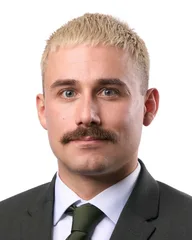
|
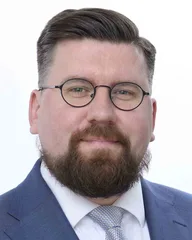
Lukas Sieper | Germany DEU | Non-attached Members (NI) | 390 |
| 2 |
|
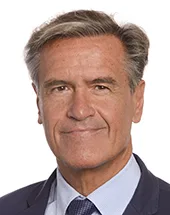
Juan Fernando López Aguilar | Spain ESP | Progressive Alliance of Socialists and Democrats (S&D) | 354 |
| 3 |
|
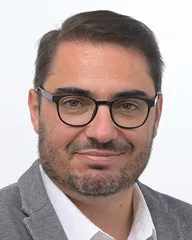
Sebastian Tynkkynen | Finland FIN | European Conservatives and Reformists (ECR) | 331 |
| 4 |
|
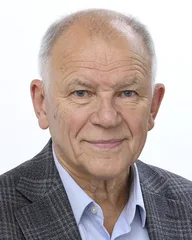
João Oliveira | Portugal PRT | The Left in the European Parliament (GUE/NGL) | 232 |
| 5 |
|
Vytenis Povilas Andriukaitis | Lithuania LTU | Progressive Alliance of Socialists and Democrats (S&D) | 227 |
All Contributions (63)
Rise of political violence, notably by far-left organisations (debate)
No text available
Rise of political violence, notably by far-left organisations (debate)
No text available
Rise of political violence, notably by far-left organisations (debate)
No text available
One-minute speeches on matters of political importance
Mr President, the safety of European citizens is a non-negotiable priority. Combating terrorism requires determination, cooperation and effective means. But it is precisely because we value security that we must also uphold the fundamental principles of our democracies. The new ProtectEU project presented by the European Commission raises a serious concern: the expansion of the concept of counter-terrorism into increasingly vague territories, including the field of political ideas and convictions. It is one thing to combat real terrorist networks, it is quite another to create mechanisms that can confuse legitimate dissent or criticism of the European institutions with radicalisation. History teaches us that when political power begins to watch over ideas, a dangerous precedent is set. We believe in order and security, but we also believe in freedom of expression and pluralism. If we start treating political beliefs as security threats, we are weakening precisely the values we want to protect. In 1943, in a speech at Harvard, Churchill warned us: The empires of the future will be the empires of the mind. Protecting Europe cannot mean policing thought. Security must serve freedom, never replace it.
International Day of Education, fighting inequalities in access to education (debate)
Madam President, Commissioner, in the autumn of 1743, a 14-year-old boy, poor and barefoot, stuttering and hunchbacked, entered Berlin through the Rosenthal Gate, the gate of the city wall reserved for cattle and Jews. It is said that the porter asked him, with contempt, what he was going to do to the city: ‘Smuggling?’ The little poor man replied only: "Learning". So came into Berlin that young man who only wanted to learn. Less than two decades later, he would become one of the greatest philosophers of Enlightenment Europe. The boy who had aroused contempt for a cattle inspector would become worthy of Kant's admiration. If we want to understand the transformative force of education, in the lives of individuals and in civilization itself, just remember that autumn day when a poor boy, barefoot, stuttering and hunchbacked, crossed Rosenthal's Gate to become Moses Mendelssohn. Education is everything. Education is civilization. Education is the condition of fulfillment of the most beautiful self-evident truth ever: That all men are created equal.
Extreme weather events in particular in Portugal, southern Italy, Malta and Greece: European response in strengthening readiness, preparedness and solidarity mechanisms (debate)
No text available
Extreme weather events in particular in Portugal, southern Italy, Malta and Greece: European response in strengthening readiness, preparedness and solidarity mechanisms (debate)
No text available
Extreme weather events in particular in Portugal, southern Italy, Malta and Greece: European response in strengthening readiness, preparedness and solidarity mechanisms (debate)
No text available
Preparations for the EU-India summit (debate)
No text available
One-minute speeches on matters of political importance
Mr President, there are times when power believes that time has stopped. Tyranny lives from this illusion: seem eternal, inevitable, natural. But the human being was not born to accept what denies him. As Albert Camus wrote, "Man revolts when he says no", and in this "no" there is already contained a "yes" to dignity. We see this "no" that is a "yes" to the Venezuelan people, spread around the world, celebrating the fall of the tyrant. It is no coincidence that Venezuelans dance: It is the body that breaks the spell of submission. We see this "no" that is a "yes" in the Iranian people, in the streets of a country that is an immense prison disguised as a political regime. Almost half a century of terror was not enough to tame the Persian people. Between tyranny and freedom there is always a moral gulf. The first reduces the human to animal obedience; The second is born out of the awareness that humans are not animals. When people rise up, they do not immediately enter paradise. They get up, first of all, to get out of hell. And tyrants know that, of all, this first step is the most fearsome.
Grave political situation in Guinea-Bissau after the coup of 26 November
Madam President, Commissioner, Guinea-Bissau is going through yet another serious political crisis that cannot be ignored. The coup d'état represents a profound setback for a people who, since their independence, have been fighting for stability, dignity and the right to freely choose their leaders. There is no development possible without democracy, and there is no democracy when power is conquered by force of arms. Defending the peaceful transfer of power is defending the life, security and hope of Guinean citizens. Political conflicts must be resolved through dialogue, respect for the Constitution and the popular will expressed at the polls, never by violence. As a country of the Portuguese-speaking community, Guinea-Bissau shares with us a common history, language and values. Lusophony must also be an area of solidarity, cooperation and uncompromising defence of freedom. The future of Guinea-Bissau requires peace, strong institutions and respect for the will of its people, which can be supported by Europe. We remain firm in our commitment to do everything possible to ensure that Guinea-Bissau continues to deserve and benefit from the support of the European Union, in particular in the field of official development assistance. Such support is essential to meet the basic needs of the population, strengthen institutional capacities and create the conditions for sustainable development, which cannot be penalised by political crises. As Eça de Queirós once wrote: "There would be no right to win if there were no right to forgive." Let everyone know how to overcome this difficult moment.
One-minute speeches on matters of political importance
Mr President, in one of Zürau's aphorisms, Franz Kafka wrote: A cage went in search of a bird. Today, this unusual image describes well certain theories that wander the world in search of ancient guilt to justify present penances. In the name of simplistic post-colonial morality, they want to reduce the history of Portugal – and Europe – to a permanent court of indictment. They imprison the past in guilt, the present in shame, and the future in penance. This logic does not dignify anyone. Neither the Portuguese nor the Europeans, urged to deny their memory, nor the peoples once colonized, treated as eternal victims, incapable of responsibility and historical autonomy. True friendship between peoples is based on mutual respect, not ritual humiliation, of anyone. As much as they insist on turning our history into a penitential cage, Portugal is an immense adventure of the spirit – too indomitable in its memory and dignity to allow itself to be captured in flight.
One-minute speeches on matters of political importance
No text available
Renewing the EU-Africa Partnership: building common priorities ahead of the Angola Summit (debate)
Mr President, Portugal and Europe have Africa in their flesh. Not only in maps, trade routes or diplomatic treaties, but in veins, in blood, in the living memory of our collective being. Álvaro de Campos wrote about the "old ships", the "ports of Africa" and the "winds of the South" he felt in his flesh. Like the poet, we feel Africa in our flesh, because our destiny has intersected with hers, in pains, hopes, exchanges and promises. So for us, Africa is much more than a resource-rich continent or a stage of dispute between the great powers. And that is why when, in Nigeria, Mozambique or Congo, Christians are persecuted and killed, a wound opens up in our common body. Now, as we celebrate the 25th anniversary of the EU-Africa partnership in Luanda, let us remember that to forget that common body is to lose one’s soul. To forget the flesh of Africa is to lose the soul of Europe.
One-minute speeches on matters of political importance
Madam President, since the beginning, men have dreamed of freedom with the face of a woman. It's not by chance. The feminine contains the alchemy of the world: the tenderness that consoles, the fury that liberates, the patience that knows no surrender, the beauty that does not consent, sir. She was Athena in the marbles, Joan of Arc in the flames, Marianne in the barricades and the colossal freedom in bronze illuminating the exiles. Before each and every one of them, she was Antigone, facing the absurd orders of men. Today, the flame of freedom burns again in a South American Antigone: María Corina Machado. Because only the feminine preserves, before death, the gift of the metamorphosis of life: falls, bleeds and is reborn. No tyranny will survive. Freedom is coming to Venezuela with the face of a woman who has, in her right hand, the Nobel Peace Prize and, in her left hand, the Sakharov Prize.
Rising antisemitism in Europe (debate)
Mr President, today, on the second anniversary of 7 October, Europe is filled with demonstrations, not to remember it, but to erase it, not to remember the victims, nor to demand the release of the hostages still in Gaza, but to ignore them. Europe is sick again, with the same moral infection that less than a century ago led to the persecution and extermination of the Jews. In Europe of never again, the Jews, in order not to have to leave, go back into hiding, and those who do not want to hide go back into hiding. Every day we see the reversal of the Holocaust, the miserable appropriation of the suffering of the Jewish people to accuse the Jews themselves. Today, Europe is once again surrendering to its two favourite passions: Condolence and condemnation. He loves to show condolences for dead Jews and condemn Jews who refuse to die. Today, each of us can still choose where we stand in the fight against anti-Semitism. What we cannot choose is the place that history holds for us, or against us, for all eternity.
One-minute speeches on matters of political importance
No text available
Summer of heatwaves in the EU: addressing the causes and providing adequate housing and health policies to address record-breaking temperatures (debate)
Thank you for your question. I will make an effort to speak in French. My colleague is not here. She is able to answer for herself. But what I can say is that Portugal this summer has done a lot of things, but I don't have the... I don't have the numbers to compare these years with the previous years, so actually I cannot respond to your question except to say that my colleague is very good and she can answer for herself.
Summer of heatwaves in the EU: addressing the causes and providing adequate housing and health policies to address record-breaking temperatures (debate)
Mr President, Europe is facing increasingly intense heat waves, with significant impacts on public health, especially among the most vulnerable groups, such as the elderly, children and the chronically ill. This happens in Portugal, where we also had the largest wave of fires in the whole of Europe, which further evidenced the insufficient protection of the populations. I take this opportunity to pay tribute to the victims of this summer's fires in Portugal and to the Portuguese firefighters, the true national heroes. It is imperative that Member States take responsibility for addressing these challenges by developing solutions tailored to the cultural and social specificities of each country. The effectiveness of the measures depends on their adequacy to the local context. However, in the fight against both heat waves and fires, negligent actions and political omissions persist that put our safety and well-being at risk. The European Union should not impose uniform rules, as the basic principle of subsidiarity says, but support the 27 countries to lead effective policies, respecting their particularities and ensuring the protection of the most exposed citizens. Above all, we need leadership and action, because, as Dante wrote, "laws already exist, but who applies them?"
A new vision for the European Universities alliances (debate)
Mr President, 'education is everything. We don't need small changes, we need gigantic, monumental changes. Schools should be palaces, competition for the best teachers should be fierce. These words from the series The West Wing They remind us that education is not a building like any other. It must rise like a palace: with foundations of cooperation that add strength, and columns of competitiveness that refine excellence. We therefore agree, as a matter of principle, with alliances between universities that act as true monuments of European knowledge, able to compete with the rest of the world: from the United States to the United Kingdom, increasingly passing through Asia itself. But no palace can resist if it is occupied and captured by ideologies dedicated to demolishing palaces. The de-politicization and de-wokization of academic institutions, long captured by political militancy, is absolutely indispensable. Only in this way will universities fulfill their promise to be spaces of light, not dungeons of militancy, temples of reason, not trenches of ideology.
Outcome of the Conference on the Financing for Development in Seville (debate)
Mr President, last month the plenary of the European Parliament rejected the report on the Seville Conference. There were 340 MEPs against, 282 in favour. A new political majority has realized that what many pretend not to see: the current development finance model is exhausted. The Seville Conference ended with more vague promises and a general declaration, the so-called 'Seville Commitment', where everything is repeated and little is committed. Meanwhile, the Court of Auditors of the European Union continues to warn that there are serious flaws in the way European funds are allocated to NGOs, often without criteria or visible consequences. It takes courage to say "enough." And it is emerging – the European Commission has already withdrawn the directive from Green Claims, yet another environmentalist legislative delusion, with no scientific basis or practical impact. These are victories of the Right – conservative and realistic – advocating a new paradigm: Less ideology, more results. Instead of weeping at USAID's departure from the scene, we should follow Margaret Thatcher's advice: Do not follow the crowd, let the crowd follow you. Europe must lead – with its own solutions, serious bilateral partnerships with governments and local actors, more active multilateral development banks, well-implemented funds and a full focus on results and accountability. No more funding doctrinal speeches. It's time to finance impact. It is time to demand responsibility and not mere rhetoric.
One-minute speeches on matters of political importance
Madam President, in 1945, contemplating the devastating power of the atomic bomb, Oppenheimer, leader of the Manhattan Project, quoted the Hindu Vedic scriptures: Now I have become Death, the destroyer of worlds. Nuclear proliferation is the most serious threat to international security. She is the slow poison of our age: silent, strategic, relentless. Every clandestine facility, every centrifuge hidden in the desert, is a step closer to the destruction of worlds. When, in Iran, the tyranny of the Ayatollahs was clandestinely advancing along this path, threatening not only their neighbours but world peace, it was necessary to say 'No'. And we have to thank Donald Trump for doing so. In ordering the surgical destruction of three Iranian nuclear facilities, Trump did not destroy worlds. Trump has preserved worlds. He did what many before him feared to do: acted. With courage and precision. It did not escalate the war: It did not increase the risk of escalation: And in so doing, it saved more than one region: He saved a world of possibilities.
One-minute speeches on matters of political importance
Mr President, in the doctrine of Ordo Amoris, St. Augustine taught that love must be ordained: from the nearest to the furthest. First to God, then to the family, then to the community, and then to the most distant. Today, with family reunification at the heart of migration policy, it is essential to assert our position head-on against policies that promote uncontrolled immigration. Portugal already has 1.6 million immigrants. Without limits, we will exceed 2 million. This pressure erases our identity, undermines our security, challenges national cohesion and puts Schengen, now celebrating its 40th anniversary, at risk. We have to have a heart, but also a head. Generosity doesn't have to be naive. Our first obligation is to our community and who elected us. The river out of the bed becomes a flood. The medicine, without measure, makes you sick. Even good, when ungoverned, can destroy. So that we do not destroy the cohesion of our countries and the Schengen Europe, we will fight the family reunification of migrants.
Discharge 2023 (joint debate)
Mr President, Thomas Hobbes' monumental work 'Leviathan' refers to the image of a monstrous state in size and absolute in power, which becomes an end in itself and lives for its own survival and expansion. The budgets of the European Union – what is under discussion today and the previous ones – increasingly resemble Hobbes’s Leviathan, a huge financial monster, sustained by taxpayers, but dedicated above all to a bureaucratic machine that keeps growing. In particular for development funds, this budget reflects a worrying lack of rigour and scrutiny. In 2023, the External Action Service managed billions of euros, but the effectiveness of these funds in third countries remains opaque, with reports from the Court of Auditors pointing to serious weaknesses and serious risks of corruption. It is time to tackle waste in politically oriented programs that consume resources without tangible results. We don't need Leviathans. we need open societies based on individual freedom and the scrupulous management of public affairs.
One-minute speeches on matters of political importance
No text available