
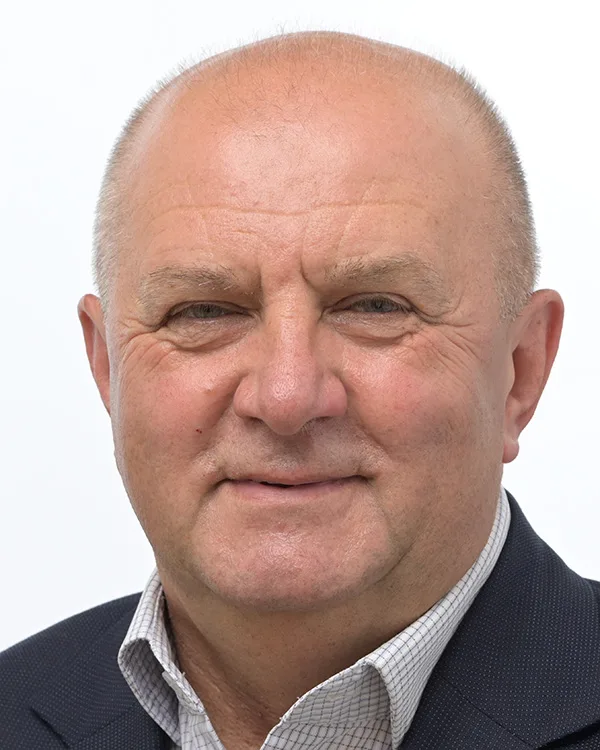

| Rank | Name | Country | Group | Speeches | |
|---|---|---|---|---|---|
| 1 |
|
Lukas Sieper | Germany DEU | Non-attached Members (NI) | 390 |
| 2 |
|
Juan Fernando López Aguilar | Spain ESP | Progressive Alliance of Socialists and Democrats (S&D) | 354 |
| 3 |
|
Sebastian Tynkkynen | Finland FIN | European Conservatives and Reformists (ECR) | 331 |
| 4 |
|
João Oliveira | Portugal PRT | The Left in the European Parliament (GUE/NGL) | 232 |
| 5 |
|
Vytenis Povilas Andriukaitis | Lithuania LTU | Progressive Alliance of Socialists and Democrats (S&D) | 227 |
All Contributions (28)
The devastating floods in Central and Eastern Europe, the loss of lives and the EU’s preparedness to act on such disasters exacerbated by climate change (debate)
First of all, I would like to thank from this place those who are still tirelessly fighting the element. Residents, administration, services and, above all, volunteers. Poland is a country where solidarity is not an empty slogan. With us, solidarity is real action. I am touched by this attitude and very proud. The authorities of flooded villages, towns and cities are not even able to estimate the damage and losses yet, and some places are just expecting the worst. We need to think about support now. I believe that the European Commission will deal with all requests for assistance available under the various funds as a matter of urgency and with due diligence. I would also like to call for the adoption of a regulation that will allow for a flexible approach to fully exploit the potential of cohesion funds, as well as the Recovery and Resilience Fund, in tackling the consequences of this crisis, as was the case during the COVID-19 pandemic and after the outbreak of the war in Ukraine. In March 2020, just two weeks after the outbreak of the pandemic, the regulations were amended, which gave us the opportunity to intervene very close to people. Similarly, in 2022, the response to the outbreak of the war in Ukraine was in line with needs and expectations here in the EP. I look forward to and ask for the full commitment of all institutions to the people affected by natural disasters in Europe.
Developing a new EU anti-poverty strategy (debate)
No text available
A new action plan to implement the European Pillar of Social Rights (debate)
Madam President, I'm sorry. The European Pillar of Social Rights is an expression of our concern for people, their dignity, security and opportunities for development in a rapidly changing world. Europe will not win the global competition with low wages or lowering standards. It will win by investing in people and protecting workers during the transition: digital, green, but also increasingly demographic. Responding to the needs of the labour market, education, access to training throughout professional life and stable, quality employment are the foundations of an innovative, resilient economy. It is important that the implementation of the Pillar is pragmatic and based on social dialogue. It is important that it fosters job creation and competitiveness rather than overburdening businesses, especially small and medium-sized enterprises. The European Pillar of Social Rights is not an addition to economic policy. It is an integral part of it. It is he who helps to build a Europe that is at the same time competitive and fair, modern and solidarity-based. This is the Europe we want to pass on to the next generations.
Digitalisation, artificial intelligence and algorithmic management in the workplace – shaping the future of work
No text available
Digitalisation, artificial intelligence and algorithmic management in the workplace – shaping the future of work
Dear Mr President, Dear Commissioner, Ladies and Gentlemen, We are fortunate to live in interesting times, a time of revolution, in which the rapid development of new technologies is changing the way we live, communicate, take care of our health, spend our free time, and how we work. Algorithmic management, which is the subject of today's debate, already plays a significant role in the workplace. As a result, more and more decisions regarding the organization of work, evaluation of results, assignment of tasks or even hiring and dismissal of employees are made in whole or in part by algorithmic systems. Initially, this mainly concerned work through so-called platforms. Currently, however, other sectors of the economy are adapting this model in their employee management system. I am one of those people who sees these processes primarily as an opportunity. Algorithmic management has great potential. It can increase efficiency, reduce costs, help organize work, reduce arbitrariness of decisions and support innovative business models. For many companies, including small and medium-sized enterprises, it is a real tool for increasing competitiveness in the global economy. At the same time, however, we must be clear: It is an ever-evolving technology that can also pose risks. Lack of transparency in the functioning of algorithms, automatic decisions without real human control, excessive monitoring or performance pressure – these factors can lead to violations of fundamental rights, deterioration of mental and physical health and a sense of helplessness towards systems whose functioning no one can clearly explain. The issue therefore concerns both employers and 200 million workers in the European Union. Therefore, I believe that it is our duty as MEPs to act proactively. We need to support the transition and all its participants in such a way that it combines economic competitiveness with social progress. The key is a human-centered approach. The rights, safety and dignity of both parties in the employment relationship must be absolutely respected. I would like to address all those who are concerned that we are not creating another unnecessary bureaucracy. I want to make it clear: This report is not directed against innovation or the development of artificial intelligence. On the contrary, I believe that clear, proportionate and forward-looking rules build trust in technology and help it develop responsibly. They give companies certainty of operation, and employees protection and a sense of agency. The process of implementing new technologies and adapting to them is still ongoing. Our report has a chance to set the direction in which they should go so that the rules are clear and transparent for everyone. For Europe to succeed in the technological revolution, we need real access to information on how systems affecting work work work, training opportunities and the right to human oversight of decisions that shape working life. I am convinced that this is an approach that fosters innovation and fair competition. Ladies and Gentlemen, by voting in favour of this report tomorrow, we are sending a strong signal: Europe is able to combine the modernity of companies with social responsibility. I encourage you to support this approach and to vote in favour of the report.
European Defence Industry Programme and a framework of measures to ensure the timely availability and supply of defence products (‘EDIP’) (debate)
Madam President, I'm sorry. Paris is safe only if Warsaw is safe, and Rome is safe only if Helsinki is safe. Russian provocations have confirmed that European defence must be taken seriously across the Union. Today we are adopting the first ever European Defence Industry Programme. This is a historic moment for Europe and a crucial step towards deterring Russia as soon as possible. EDIP marks a turning point in the creation of a fully functioning single market for defence. The programme will strengthen our defence industry by ensuring that no one is left behind and that companies from Central and Eastern Europe and small and medium-sized enterprises receive full European support to develop and increase production. Moreover, for the first time, we are creating a framework for Europe's collective defence. European defence projects of common interest, such as the East Shield, are now recognised and will receive dedicated funding because our Union is strongest when it works together. EDIP is a tangible proof that the European Union is first and foremost a peace project. Oh, thank you.
Boosting vocational education and training in times of labour market transitions (debate)
Ladies and Gentlemen, I would like to focus on three elements that, in my opinion, are essential in this topic. Firstly, close, systemic and institutional cooperation between business schools and businesses. In my region in the Opole region in Poland, we have created 54 school information and career points. These are specific showrooms of regional companies, places to gain knowledge about running your own business. Another key element is the proper preparation of educators and career advisors in schools and staff in enterprises. Employers need to be aware of their role and ready to deploy workers who will be responsible for caring for trainees. The third very important aspect is the contact of students with local entrepreneurs at the earliest possible stage, even in primary school, before choosing the educational path. Employers, seeing a substantive, open partner, engage in the educational process. The European Social Fund Plus plays an important role here, from financing apprenticeships, educational exchanges, to building and equipping the workshop. I would like to draw the attention of the European Commission to the need to ensure the widest possible cross-financing for ESF Plus when planning the new cohesion policy.
Regional Emergency Support: RESTORE (debate)
I sincerely thank you for your contribution to the debate, for the good cooperation across the divisions of all political groups. I am glad that we were able to carry it out several weeks after the traumatic events that affected many European regions. Nowadays, when everything is rushing, every news practically the next day becomes outdated. It often seems that yesterday's problem no longer exists. No, ladies and gentlemen, the victims of floods and fires are still very often in a tragic situation. Many families do not have their own roof over their heads for the winter. That is why this debate and tomorrow's vote are of particular importance. Firstly, to show that we have not forgotten about the victims, and secondly, to confirm that we have fulfilled our promise of help. We did it reliably and as fast as we could.
Regional Emergency Support: RESTORE (debate)
Madam President, thank you very much. Mr. Commissioner, I would like to thank you. Ladies and Gentlemen, First of all, I would like to express my heartfelt thanks to the people and institutions who have enabled me to stand on the rostrum today and present this report. First of all, I would like to thank my co-rapporteur, the shadow rapporteurs, the European Commission and the Member States. The subject we are talking about is extremely important to me, also for personal reasons. I come from and live in a region that was one of the hardest hit by the September floods. Natural disasters occur suddenly and unforeseenly, and their effects do not end with water subsidence or fire extinguishing. I still visit these places, I see the sadness and helplessness of people. It is with them in mind, in a spirit of solidarity, that we have worked on the RESTORE Regulation. We agreed to apply an exceptional procedure, the so-called fast track, without amending the Commission's proposal, in order to speed up the adoption of the Regulation as much as possible and to ensure that assistance to victims arrives as soon as possible. I also believe that we should accept these minor amendments, which the Council has proposed in its position. At this point, I would like to thank my co-rapporteur and all the political groups for their agreement and cooperation on this issue. This is proof that the European Parliament can be very effective when it comes to urgent and important matters, it is able to go beyond its internal political divisions. It is also a strong signal of support that we send to affected communities. The changes we will adopt tomorrow concern three funds: the European Regional Development Fund, the Cohesion Fund and the European Social Fund Plus. It is important that we are not talking about a new budget, but only about the possibility of transferring 10% of the funds currently allocated to operational programmes. In the case of my region, Opole, it is about 96 million euros. Another important point is the funding at the level of 95% from European funds. This is a significant amount, but at the same time secured by an overpayment control mechanism. In addition, we provide advance payments of 25%, which meets the needs of local governments. I also agree with my colleagues that this aid must be one-off and that its limitation in time is justified. We will conclude the procedure in Parliament tomorrow, but this work is still ongoing in the affected regions. Within six months, Member States will have to create a new specific objective for RESTORE, followed by investment projects. I am convinced that by adopting the proposed solutions, we will show that the European Union is able to react quickly, flexibly and deliver real help to those for whom we are here – our citizens. I therefore call on all of you to support the amendment and the report in tomorrow's vote.
Closing the EU skills gap: supporting people in the digital and green transitions to ensure inclusive growth and competitiveness in line with the Draghi report (debate)
Mr President, thank you very much. Commissioner, thank you very much. The Draghi report and many other studies and documents show that people in Europe need to be able to improve their competences and qualifications for their own professional security and sense of personal value. We want them to have the conditions for lifelong learning. It is difficult to measure these values from the perspective of the needs of entrepreneurs, but they indicate that economic competition requires highly qualified personnel. On the other hand, no European should be afraid of not being able to do something and of taking on new challenges. The European Social Fund has a huge but still untapped potential in providing targeted training and upskilling opportunities. Therefore, the programme should continue beyond 2027, with an adequate, high budget, so that it can play a key role in equipping our society with the skills of the future.