

| Rank | Name | Country | Group | Speeches | |
|---|---|---|---|---|---|
| 1 |
|
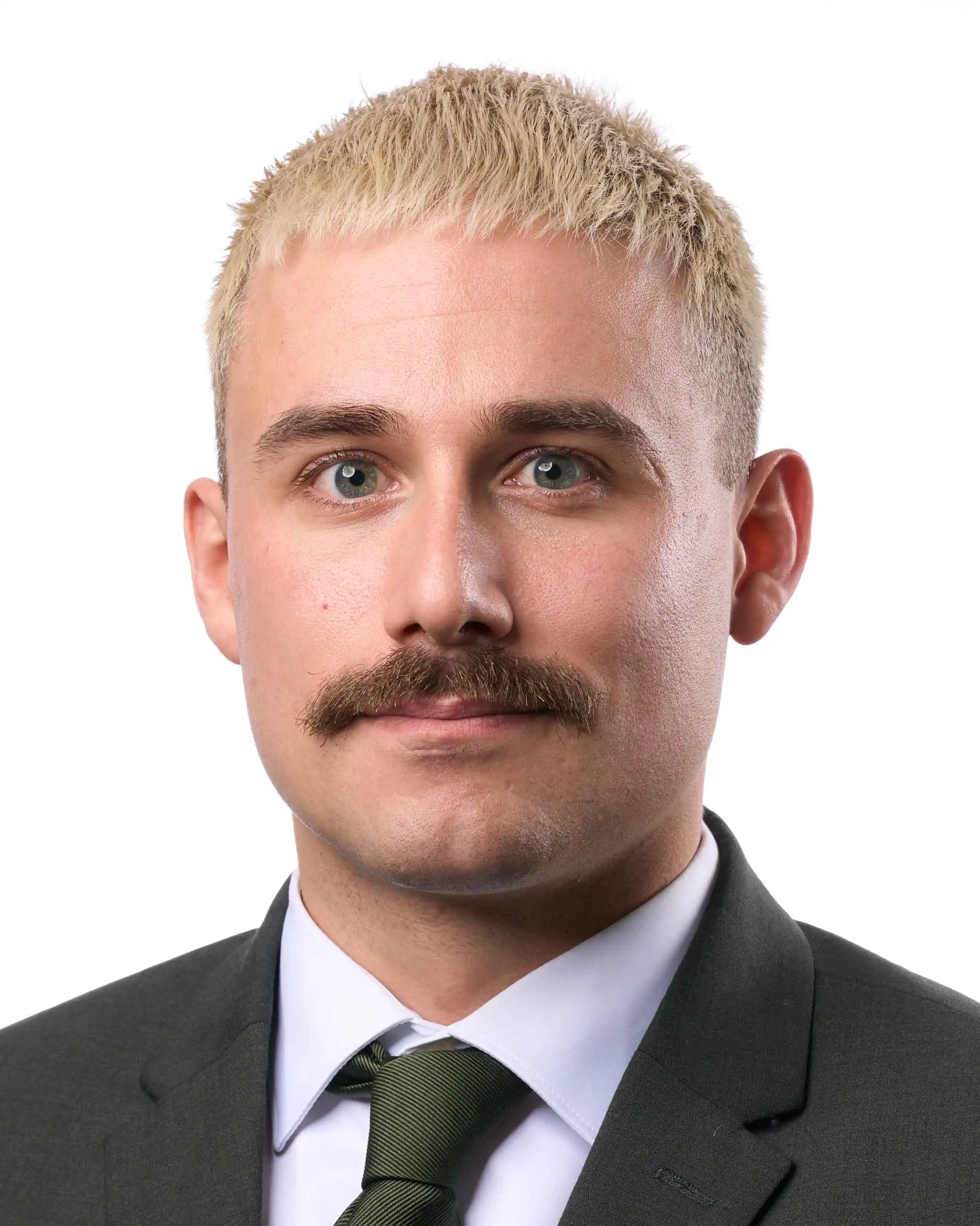
Lukas Sieper | Germany DE | Renew Europe (Renew) | 487 |
| 2 |
|
Juan Fernando López Aguilar | Spain ES | Progressive Alliance of Socialists and Democrats (S&D) | 454 |
| 3 |
|
Sebastian Tynkkynen | Finland FI | European Conservatives and Reformists (ECR) | 451 |
| 4 |
|
João Oliveira | Portugal PT | The Left in the European Parliament (GUE/NGL) | 284 |
| 5 |
|
Vytenis Povilas Andriukaitis | Lithuania LT | Progressive Alliance of Socialists and Democrats (S&D) | 273 |
All Speeches (30)
Need to fight the systemic problem of gender-based violence in Europe (debate)
Date: N/A | Language: PL Written StatementsLadies and Gentlemen, women's organisations estimate that more than 800,000 women in Poland experience violence every year. Unfortunately, the scale of this phenomenon is still growing. These figures are not just cold facts - behind them lies drama, suffering, fear, and sometimes life lost forever. As the European Union, we must support all actions that combat violence against women. We must step up our efforts to legislate, educate, support victims and punish perpetrators. But above all, there is a need to increase the reporting of cases of violence against women, which is still dramatically low. Here I would like to stress the importance of social campaigns such as the 16 days of gender-based violence, which play a key role in raising public awareness. Thanks to such initiatives, we can break the silence around violence, which is often hidden and underestimated. I myself, for many years, have been patronizing in my region, the Silesian Voivodeship, many events supporting women in this field and I co-organize such events. But campaigns aren't everything. We need coherent European legal solutions and financial support for anti-violence programmes. The European Union should strengthen its monitoring of the implementation of the Istanbul Convention and support local initiatives that directly help women in need. That no woman in the European Union will ever again be left without help.
Gender pay and pension gap in the EU: state of play, challenges and the way forward, and developing guidelines for the better evaluation and fairer remuneration of work in female-dominated sectors (debate)
Date:
09.03.2026 21:15
| Language: PL
Speeches
Mr President, thank you very much. Ladies and Gentlemen, First of all, I would like to thank you very much for this debate, for the fact that we were able to discuss here and differ from the right to the left. This is the essence of our democracy. But it is also worth remembering that it did not happen by itself that a lot of women for many years had to fight for these rights. These rights were won by our predecessors – women who fought for the right to education, the right to work, the right to participate in public life and, finally, the right to vote. This path was not easy and required great courage and determination. Therefore, today we also have a responsibility not to take these rights as something obvious that we have been given once and for all. We need to take care of them and strengthen them. We owe it not only to women today, but also to those who were before us and who will come after us.
Gender pay and pension gap in the EU: state of play, challenges and the way forward, and developing guidelines for the better evaluation and fairer remuneration of work in female-dominated sectors (debate)
Date:
09.03.2026 19:38
| Language: PL
Speeches
Madam President, I'm sorry. Ladies and Gentlemen, More than 100 years ago, the inhabitants of St. Petersburg took to the streets with simple slogans: ‘Bread!’, ‘Peace!’ and ‘Down with war!’ fought for dignity, justice and the right to a normal life. A century has passed, and these slogans still sound familiar. Although we live in the 21st century, many women's problems remain unresolved. And that is why it is so important that today we talk not about gestures, but about facts and concrete actions. What do the numbers say? In 2023, the wage gap in the European Union was 12%. Women still earn less than men for work of equal value. Almost 28% of women work part-time. Among men, it is only 7.7%. And, ladies and gentlemen, this is often not a choice, it is a consequence of the lack of access to care for children and loved ones. Women work an average of 54 to 67 days a year for free. And if we add unpaid work at home, caring for loved ones, cooking, organizing family life, there are more than 8 additional weeks of work per year. The effects can be seen in pensions. The gender pension gap in the EU is as high as 25.4%. Less stable work, career breaks, lower wages – all this translates into lower benefits and a higher risk of pension poverty. These effects can already be seen very well. These are not abstract statistics, ladies and gentlemen. Behind each of these numbers are real women: Workers, mothers, babysitters, leaders. Their time, effort, and labor have real economic value that systems still fail to see. Now, what do we propose? In the report, which I had the pleasure of co-creating, we indicate two key lines of action. First, available care. Without nurseries, kindergartens and support for carers, there is no real professional equality. Second, women in the sectors of the future. Science, technology, new technologies – this is where the European economy of tomorrow will be born. Women have to be there. If we want a strong, innovative Europe, we must not waste the potential of half of society. And finally, women need equality, justice and the right to live on their own terms, without barriers, without stereotypes, without glass ceilings. Europe can be a real support for women not through declarations, but through concrete decisions and policies. This report is proof that this is possible. By supporting them, we are sending a clear signal: Women's rights are not an addition to politics. This is the foundation of a fair and modern Europe.
Madam President, I'm sorry. I just want to be clear: we keep coming back to this artificial division: excellencescientific excellence, or wideningequal opportunities between countries, as if it were a choice, as if one excludes the other. That's not true. Everyone who is close to science and innovation knows this. When, at a university or research facility, ideas are outstanding and infrastructure limps and grants don't reach or the best researchers run away, it's not their failure, it's the failure of our imperfect system, Commissioner. This is also underlined by the Draghi report on Europe's competitiveness. He points out that research and innovation should be treated as a true single market, as should the internal market. In this context, the European Research Area should become a viable tool for cooperation in Europe, reducing fragmentation, increasing the mobility of researchers and making better use of the research potential of the Union as a whole. The ERA Act is an opportunity to change this, not by lowering standards, but by unleashing a potential that already exists, but is now somehow blocked. Better mobility of researchers, less bureaucracy, more real cooperation across borders, a stronger European Research Area is a project for the whole of Europe. Science works better when it has a wider talent base and fewer artificial barriers. Because only if Europe acts as one can we truly compete globally.
Recommendation to the Council on EU priorities for the 70th session of the UN Commission on the Status of Women (debate)
Date:
12.02.2026 09:41
| Language: PL
Speeches
No text available
Urgent actions to revive EU competitiveness, deepen the EU Single Market and reduce the cost of living - from the Draghi report to reality (debate)
Date:
11.02.2026 11:29
| Language: PL
Speeches
No text available
Tackling AI deepfakes and sexual exploitation on social media by making full use of the EU’s digital rules (debate)
Date:
20.01.2026 10:22
| Language: PL
Speeches
Madam President, I'm sorry. The use of deepfakes and disinformation poses a serious threat to the stability and security of Europe as a whole. Third countries and our enemies seek to undermine public trust in democratic institutions, to divide society and to undermine European unity. Attacks are often subtle, persistent and tailored to the vulnerabilities of each country, making them difficult to detect and counter. Our enemies not only interfere in our electoral process, they undermine faith in democracy, but they use these methods as hard weapons against us citizens, especially women and children. What we are witnessing is only the beginning. This is not a one-off challenge, it is a long-term strategic threat to our security. That is why I and my political group are deeply committed to preparing a sustainable and coordinated, well-equipped European response to this threat. We are already working to protect our electoral integrity, to protect our democratic values, and above all citizens, women and children.
European Citizens’ Initiative ‘My voice, my choice: for safe and accessible abortion’ (debate)
Date:
16.12.2025 20:19
| Language: PL
Questions
No text available
Phasing out Russian natural gas imports and improving monitoring of potential energy dependencies (debate)
Date:
16.12.2025 10:00
| Language: PL
Speeches
No text available
Incentivising defence-related investments in the EU budget to implement the ReArm Europe Plan (debate)
Date:
15.12.2025 18:59
| Language: PL
Speeches
Mr President, thank you very much. If we stop helping Ukraine, we can all start learning Russian. It is Kai Kallas' words that clearly show how serious the situation is today. Therefore, mobilising European funds for security and defence is a necessity, not a choice. Europe should have built its defence beforehand, protecting not only its citizens, but also key critical infrastructure. The most important thing today is one thing: Let us work together and strengthen the security of the continent with full commitment. During its presidency, Poland has consistently said: Safety, Europe! The ongoing war beyond the eastern border of the Union has made it clear that peace, which was the main objective of the creation of the European Union, has no guarantees and stability on our continent and is no longer a matter of course. Today's report shows how to make better use of existing funds and infrastructure for projects that can serve both civilian and defence purposes. This means safer infrastructure, the development of modern technologies, strengthening European industry, including industry, in my Silesian Voivodeship, without creating new financial instruments. There's no time to waste. Either we invest in security now, or we pay a much higher price later. Europe, you must be strong, united and ready to defend, according to the principle: If you want peace, prepare for war.
EU position on the proposed plan and EU engagement towards a just and lasting peace for Ukraine (debate)
Date:
26.11.2025 11:51
| Language: PL
Speeches
No text available
Ending all energy imports from Russia to the EU and closing loopholes through third countries (debate)
Date:
22.10.2025 22:38
| Language: PL
Speeches
Mr President, thank you very much. Mr. Commissioner, I'm sorry. Friends and colleagues! No more funding for Putin's war machine. Russian oil in our cars or gas in our homes are Russian soldiers on the territory of Ukraine, soldiers who murder, rape and rob. Every drop of this oil has the smell of innocent people's blood. Europe cannot talk about values and solidarity if it still allows the money from trade to go to Moscow. We must immediately end energy imports from Russia, close all loopholes through which Russian raw materials reach us through intermediate countries. It is not a question of the economy, it is a question of the political will of the rulers to finally say: Enough compromise with the aggressor. Any circumvention of sanctions is a silent complicity in the crime. If we are truly on the side of the values of democracy and human dignity, we must be consistent. Every euro that flows to Russia is fuel for Putin's war. No more of that.
Declaration of principles for a gender-equal society (debate)
Date:
09.10.2025 09:25
| Language: PL
Speeches
Mr President, thank you very much. Friends and colleagues! When I look at this room today, from left to right, I have the impression that for some, issues of equality are still the inventions of women who have imaginary problems. I want to be clear: no, these are not fictions. It is the daily experience of millions of women at work, in politics, in private and public life. Unequal wages, economic and domestic violence, lack of access to decision-making positions, underrepresentation – the list is long. And while we have been talking about equality for decades, progress has been dramatically slow. According to UN data, at the current pace, full equality in the world can take – attention – 286 years. It's an alarm signal. If we don't speed up today, our grandchildren will continue to fight for the rights that, in theory, have already been granted to us. Therefore, the role of the European Parliament is crucial. It is here that we can make equality not only a beautiful slogan, but a valid standard. And I reassure all concerned men: It's not about privileges. It is about equal opportunities, about being able to participate in social, political life – without barriers, without condescending tone, without explaining that this is not the moment. I invite you to cooperate, because modern feminism without men does not exist. As a Polish parliamentarian, I had the honour to support women in difficult situations: victims of violence, single mothers, women fighting for their independence. It's a difficult experience, but I also know that we can do a lot when we have space to act. I worked with fantastic women – smart, strong, determined. That's why I'm saying one thing today: Don't block us! Give us a level playing field and we will build a fair Europe.
Intergenerational fairness in Europe on the occasion of the International Day of Older Persons (debate)
Date:
06.10.2025 19:51
| Language: PL
Speeches
Madam President, I'm sorry. Europe is ageing faster than it was able to prepare for. Across the European Union, people aged 65 and over now make up 21.6% of the population, and this share continues to grow. This is a challenge that requires a common response in labour policy, in health and in intergenerational solidarity. Polish society is ageing the fastest in the European Union, which is why we have appointed the first ever minister for senior policy. We have put in place concrete solutions: a senior voucher, a widow's pension and a number of programmes supporting the activity and health of the elderly. Already a decade ago, Prime Minister Ewa Kopacz, today's Vice-President of the European Parliament, spoke about the importance of the "silver" economy. But I would like to stress one thing: the situation of women who, after years of hard work and raising their children, receive pensions 30% lower than those of men is unacceptable. Equality among seniors must become a real standard. Colleagues, age is not an obstacle, it is a value. Is the European Commission, Commissioner, taking sufficient action to strengthen senior policy across the European Union? The development of care services, digital education for seniors and intergenerational programmes? Because the future of Europe depends not only on young people, but also on how we treat older citizens and how we use their potential.
Presentation of the Stockpiling Strategies - strengthening response capacities for a changing risk and threat landscape (debate)
Date:
09.07.2025 18:27
| Language: PL
Speeches
Mr President, thank you very much. Commissioner, I'm sorry. Until recently, few of us thought that disruptions in supply chains thousands of miles from Europe could literally stop production. The pandemic has shown us that a cyberattack in another time zone can immobilize a hospital in our district, that from day to day there may be a shortage of basic medicines. These are not scenarios from the future, it is already our reality, which will return in various forms. The changing world no longer gives us the comfort of predictability. That is why, by adopting a stockpiling strategy with appreciation, the initiative is much needed today. This is not only a technical issue, but the foundation for building a Union of preparedness capable of acting not only reactively, but also in advance. In Poland, the Government Agency for Strategic Reserves plays a large role here, taking care of the health and raw materials security of citizens. This proves that responsible management of reserves is possible. Now is the time for a common European response. We need to secure not only critical raw materials, such as rare earths, but also basic goods: food, water, medicine. They are the ones that are most needed in a crisis. The Union and the Member States must be ready regardless of the source of the threat. Adequate reserves are not a luxury, it is a necessity.
Electricity grids: the backbone of the EU energy system (debate)
Date:
18.06.2025 18:01
| Language: PL
Speeches
Mr President, thank you very much. Friends and colleagues! Electricity is the bloodstream of the modern state. Without it, nothing works – schools, hospitals, institutions, factories, and even, as the reporter said, we cannot drink coffee in the morning. However, without an integrated energy system, also transitionally based on natural gas, but also nuclear and hydrogen, the European Union will not be energy secure. Friends and colleagues! The world we live in is also about aggressive regimes attacking our values, our borders, but also our infrastructure, especially our critical infrastructure. We must be ready not only technologically, but also strategically. We have to be resilient. Unfortunately, the European electricity grid remains incoherent and dispersed. This is why we have produced a report that responds to calls for better coordination, strategic funding, simplification of procedures and real support for European network industries. We have made sure that the report is not ideological, does not impose a single model or energy mix on Member States. The transition must be collaborative, not coercive. I want to commend the Polish government, because the Polish electricity networks will spend as much as PLN 64 billion on modernising and modernising the network by 2034. And the next three main companies – PLN 14 billion. This will increase the reliability and resilience of the network of the entire system. This is a good and necessary report. Thank you very much to everyone who worked on it.
Freedom of assembly in Hungary and the need for the Commission to act (debate)
Date:
18.06.2025 14:56
| Language: PL
Speeches
Mr President, thank you very much. In March 2025, when the Hungarian government passed a law restricting freedom of assembly, it was not just about one social group or the exclusive blocking of the equality parade in Budapest. This was the next stage of the gradual dismantling of democracy, which has been going on in Hungary since 2010. This is no longer a value dispute. This is a real loss of civil rights. The European Parliament has unequivocally recognised that Hungary has ceased to be a full democracy not only because of the restriction of minority rights, but also because of the subordination of courts and media to the executive branch. The effects of such governments are well known wherever populists and the far right take power. State institutions are weakened and civil liberties are threatened. In Poland, we managed to reverse this trend in 2023, but we should remember that democracy is not given to us once and for all and does not disappear overnight. It is gradually lost with every restriction of civil rights and freedoms. That is why today it is worth saying: The dream of Budapest, Warsaw or any other European capital has nothing to do with freedom or the rule of law. It's a warning, not a role model.
The role of gas storage for securing gas supplies ahead of the winter season (debate)
Date:
07.05.2025 19:27
| Language: PL
Speeches
Mr President, thank you very much. Mr. Commissioner, I'm sorry. A secure Europe is a Europe prepared for difficult and unpredictable times. And this is exactly what full gas storage is needed for. They allow us to secure energy supplies in difficult times, especially in the face of crises such as the war in Ukraine or Russia's energy blackmail. It is worth recalling that Prime Minister Jerzy Buzek was one of the first to call for joint gas storage facilities in the EU. Today we see what a far-sighted initiative it was. Gas storage facilities show that it is only through cooperation at European level that we are able to effectively manage our energy security. We must also wisely optimise the level of filling of warehouses so as not only to ensure delivery, but also to guarantee the best possible prices for citizens and businesses. Because energy security is not a luxury, it is the foundation of a stable and solidarity-based Europe.
EU support for a just, sustainable and comprehensive peace in Ukraine (debate)
Date:
07.05.2025 10:02
| Language: PL
Speeches
Mr President, thank you very much. Ladies and Gentlemen, There will be no free and secure Europe without a free and secure Ukraine. These aren't just words. It's a truth that most of us understand. That is why we are supporting Ukraine and will continue to support it for as long as it takes. Because peace is the most important thing and it cannot mean that Ukraine will give up its land and freedom. Because it wouldn't be peace. That would be capitulation. And we do not agree to peace on the terms of the Kremlin. What can we say to the families of fallen soldiers? Your children, your fathers, your husbands fought for nothing? It is as if we felt that defending our country, life and freedom made no sense. She had, has, and will have. We need to support Ukraine. Let's not be fooled. Peace must be just, lasting and based on truth, not fear and submission. Fame to Ukraine!
Madam President, thank you very much. Mr. Commissioner, I would like to thank you. Europe's energy-intensive industry is crying out for help, and its main problem is energy costs. They represent from a dozen to several dozen percent. For example, let me give you: only in the ceramic industry in the European Union, the cost of energy is 30 percent, in aluminum 40. High energy prices have a huge impact on the competitiveness of our European companies and businesses. I would therefore like to thank my colleagues who have tabled amendments to this document with me. These amendments highlight a number of important points. Firstly, one of the most important is the recognition of gas as a transitional fuel in some regions, I am also thinking of my country Poland, and more investment in the capture and storage of CO2 and the development of low-carbon hydrogen. Ladies and Gentlemen, in order to restore the competitiveness of European industry and at the same time achieve climate goals, it is necessary to take into account regional conditions, but also to invest in innovative solutions and technologies. Let's save our industry. That's why we're here.
US AI chip export restrictions: a challenge to European AI development and economic resilience (debate)
Date:
11.02.2025 19:39
| Language: PL
Speeches
Madam President, thank you very much. Commissioner, I'm sorry. The United States has divided Europe, countries that receive chips for artificial intelligence, into those that have an unlimited limit, such as Italy, France and Germany, and 16 countries, including Poland, where this limit is limited to 50,000 with the possibility of doubling. For what reason? What were the criteria and what was the reason for this? We won't have answers to these questions. This can significantly hamper the development of AI in Europe and increase inequalities between countries. But one thing is certain. As Europe, we must stand on our own feet. Commissioner, invest faster and more and become a global player. Poland is a good example. Yesterday, at the conference, Prime Minister Donald Tusk announced investments, large, hundreds of millions of zlotys, in supercomputer centers in Poznań, Krakow, where research on artificial intelligence is carried out. We have an Idea Research Institute with outstanding experts in this field. I invite you to use our experience. Good cooperation at EU level will be key. Only in this way can we ensure Europe's economic resilience and restore its competitiveness. Commissioner, will that be the case?
Powering Europe’s future - advancing the fusion industry for energy independence and innovation (debate)
Date:
20.01.2025 21:07
| Language: PL
Speeches
Madam President, I'm sorry. Mr. Commissioner, I'm sorry. Europe faces many challenges, but one of the most important is access to clean, cheap and secure energy. In the face of climate change, the demand for energy from clean technologies is increasing. Work is underway, as has already been said here today and the Commissioner has ensured, on ITER nuclear fusion. And as many scientists claim, these results of this work are very promising, because they claim that it will be a certain energy, emission-free, without permanent nuclear waste. But on the other hand, we hear that the fusion industry will be too expensive, and it will be almost impossible to design a nuclear reactor technologically. So we, as parliamentarians, should demand an in-depth analysis of information about merger technology - both technological and economic conditions. In a word, whether these technologies of the future, such an expected 10-year, 20-year, make sense and will be commercialized. That is why I am asking this question, Commissioner, how long will we wait for the concrete commercialisation of these technologies over a certain period of time, which is obviously not perfectly accurate, because it cannot be done. And aren't more advanced nuclear technologies being developed at the same time?
Rise of energy prices and fighting energy poverty (debate)
Date:
27.11.2024 16:37
| Language: PL
Speeches
Madam President, colleagues, Commissioner, I would like to thank you for your support. The cost of energy, fuel and gas is very often the basic cost of life for many millions of Europeans. And I say this because, in particular, the price of electricity in Europe – compared to other regions of the world, the US, not to mention China – is several times higher than the price of energy. This affects not only the standard of living of Europeans, but also the competitiveness of our economies. This is why I am calling for systemic solutions to be urgently developed and for measures to be directed, firstly, to lower electricity prices, secondly, to increase investment in renewable energy sources, transmission and distribution networks, as well as interconnectors, and thirdly, to increase funds for a just energy transition and to direct these funds to regions that face huge challenges, such as the region that I represent, the region of the Silesian Voivodeship in Poland. Ladies and Gentlemen, it is time for Europeans in the 21st century to have access to cheap, clean energy.
International Day for the Elimination of Violence against Women (debate)
Date:
25.11.2024 17:54
| Language: PL
Speeches
Mr President, thank you very much. The International Day for the Elimination of Violence against Women makes us wonder why, after many years of action, the problem is still widespread. Because it affects women regardless of their social status, age or nationality. According to the European Institute for Gender Equality (EIGE), One in three women in the European Union has experienced physical or sexual violence. In France, ladies and gentlemen, every three days a woman is killed by her partner or ex-partner. According to the STER Foundation, 87% of Polish women have experienced some form of sexual violence, and 37% have experienced physical or sexual violence. Many victims are afraid to report to the police for various reasons, so these statistics are even more frightening. And the economic cost of domestic violence is estimated at €256 billion a year. In my country, Poland, the Act on Counteracting Domestic Violence has been in force since 2005. We have a Blue Card procedure, but access to specialised facilities such as shelters, psychological and legal support is still insufficient. Friends and colleagues! Our responsibility does not end with words and statistics. We have to act. Both legislative changes and organizing social campaigns are important, such as the one organized in my city, Bielsko-Biała, where there are 16 days against women's violence, where we organize marches, performances, meetings. And as a member of parliament, mother and grandmother of five girls, I appeal: Let's not be indifferent, let's act!
Foreign interference and hybrid attacks: the need to strengthen EU resilience and internal security (debate)
Date:
23.10.2024 19:32
| Language: PL
Speeches
Mr President, thank you very much. As the events in Moldova have clearly shown, threats in the form of external interference, in this case Russia, hybrid attacks are real and affect the fate of citizens, and sometimes they can change the course of history. Fortunately, despite the efforts of the Russian Federation and the allocation of significant expenditures on financing propaganda and buying votes of voters, Moldova has chosen a pro-European direction. Good for Moldova. But this example is an important lesson for all Member States, because it shows how external interventions allow political opponents to influence public opinion, political destabilisation and the erosion of trust in state institutions, and as a consequence can lead to serious political, economic and social turbulence. A key step in addressing these risks is the creation of a common system of information exchange mechanisms for all Member States. It is also important to increase investment in cybersecurity to protect critical infrastructure and information systems. In addition, educating citizens about disinformation and the ability to recognise fake news should become a priority to strengthen societal resilience against manipulation.