
| Rank | Name | Country | Group | Speeches | |
|---|---|---|---|---|---|
| 1 |
|
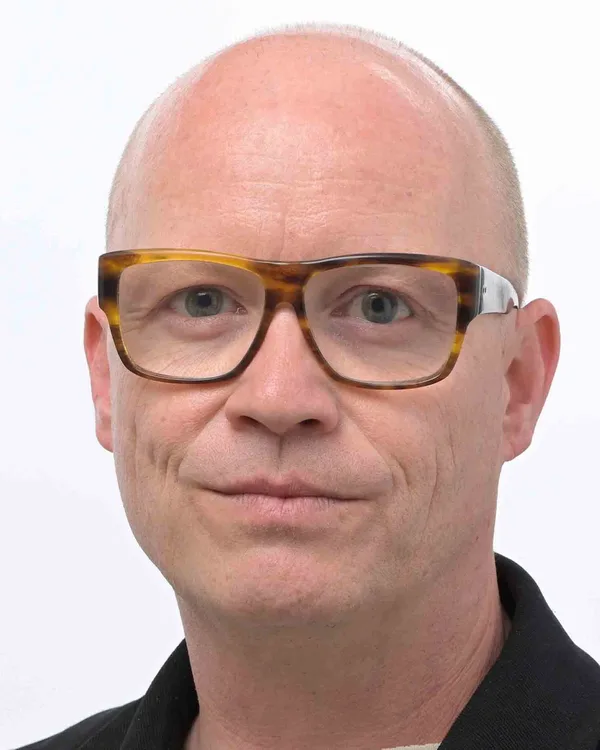
Lukas Sieper | Germany DEU | Non-attached Members (NI) | 390 |
| 2 |
|
Juan Fernando López Aguilar | Spain ESP | Progressive Alliance of Socialists and Democrats (S&D) | 354 |
| 3 |
|
Sebastian Tynkkynen | Finland FIN | European Conservatives and Reformists (ECR) | 331 |
| 4 |
|
João Oliveira | Portugal PRT | The Left in the European Parliament (GUE/NGL) | 232 |
| 5 |
|
Vytenis Povilas Andriukaitis | Lithuania LTU | Progressive Alliance of Socialists and Democrats (S&D) | 227 |
All Contributions (39)
Single Market: how to move from an incomplete single market to one market for one Europe (debate)
Madam President, it was mentioned once only by the Commissioner and that one time: circularity. If we mean a single market, we need to create a single market for secondary raw materials – to live up to the promises in the Clean Industrial Deal and the proposal for the Industrial Accelerator Act. We can fix it by actually looking at the patchwork of slow, unpredictable and costly procedures for shipping waste within the EU, which prevent us from actually growing a recycling industry and compete on the basis of environmental performance. But we also need to look into stopping the leakage of materials outside the EU – and I mean the scrap materials that we are exporting. This can actually create the secondary raw material market if we keep it here, just like other regions are doing. So, if we actually mean that we want one market for one Europe, the Circular Economy Act coming this fall will be key in achieving this.
Rule of law, fundamental rights and misuse of EU funds in Slovakia: the need for an EU response (debate)
Madam President, it's both a shame and really worrying that we need to have a discussion about the deteriorating situation of the rule of law and democracy and fundamental rights in Slovakia, but it's needed when we see the government's interference with the judicial independence, when we see journalists and NGOs under increasing suspicion, financial pressures and attacks, and when we see Roma and LGBTQI people in particular experiencing increased marginalisation, weakened protection and a more hostile public discourse. This is undermining fundamental European rights. What we see right now in Slovakia has to be acted upon straight away, so that we don't see the situation we have seen in Orbán's Hungary, but we actually act before it comes to that. So, we need to act from this House, but indeed we need to see the Council act as well. You haven't done what you needed to do with Hungary in time, but you need to get your act together right now and here for the people of Slovakia.
Presentation of the action plan against cyberbullying (debate)
No text available
Implementation of the rule of law conditionality regime (debate)
Madam President, credibility, fairness and accountability – that should be at the core of how EU spends its money. Citizens rightly expect that EU funds are spent in line with our values everywhere in the EU at all times. But right now, this is not the case. Take a look at Hungary. We are looking into, right now, sending even more money to Hungary through SAFE, at a time when we freeze other parts of their funds. That cannot be the reality we are looking into. Rule of law should be applied consistently, impartially and in a timely manner across all EU money. We have to stick with this. We have to do this for fairness. We have to do it for clarity and for transparency also for union citizens. And I think it is quite interesting to hear the debate today that we hear from the far right; they are defending Orbán and his regime instead of defending taxpayers – European taxpayers who pay in money to the budget. How can you defend that instead of standing up for clear rules? Because that's all we are asking for: transparency and clear rules for everybody, including Orbán.
The urgent need to combat discrimination in the EU through the horizontal anti-discrimination directive (topical debate)
Mr President, equality is a core value of the European Union. We say it, we repeat it, but we do not enforce it. We all know that it's both unacceptable and undeniably wrong to discriminate people because of their gender, sexual orientation, religion, gender expression, or any other reason. And yet it continues for far too many people every day. And that is why this debate is not only about anti-discrimination, it is not only about the economy, as some colleagues also have brought up, but it's about common sense and it's about equality for Europeans. The continued absence of the horizontal anti-discrimination directive leaves measurable gaps in equal treatment and the protection of fundamental rights. So that is why we are here today, and Parliament has been quite clear for years and years: we need the Council to start to work and we need to close this gap. We need to do this for all Europeans.
Fishing opportunities 2026: ensuring the sustainability of fish populations, marine ecosystems and coastal communities
Madam President, it's really not complicated. Fishery quotas exist for one simple reason: to ensure there are fish in the sea in 5, 10 or 20 years. Everyone knows this and yet, year after year, it's forgotten by Member States who choose to sidestep expert advice. When ministers set quotas above the recommended levels, they turn their back on their responsibility. Just look at cod: a stock on the brink of collapse. Still, ministers sit around the table and negotiate bycatch quotas. That has no grounding in reality, as if the bycatch doesn't count. This is not just irresponsible. It's absurd. Overfishing is damaging our seas, it's putting pressures on already dwindling stocks, and in ways that we can no longer pretend not to see it. So let's drop the fiction of fishery policy and try and make a policy that actually reflects the realities in the sea.
Conservation and sustainable use of marine biological diversity of areas beyond national jurisdiction (debate)
Madam President, Europe is so much more than our land borders – it is also the vast life in the ocean. Whales crossing continents, deep sea corals that have stood for centuries and plankton forming the base of our food chains. This is all part of the world we depend on and, yet, until now, much of this has been left without real protection. Today we take an important step to change that. What we have before us is a legal necessity to bring into EU law the UN treaty, which sets the rule to protect the high seas. We want to ensure that it is done, faithful to the agreement, of course, and clarify EU coordination when Member States make their management plans with the BBNJ Secretariat. The directive allows for the EU and its Member States to ratify, implement and enforce these rules and we are really happy for the result that we got together.
The new 2028-2034 Multiannual Financial Framework: architecture and governance (debate)
Mr President, a budget is only a tool. It's a tool to prioritise, a tool to organise, and the European budget is also a democratic tool. Therefore, it has been very important for us to ensure an active role of the regions in these proposed new plans from the Commission. And this is why it's so important to ensure the Parliament's role in the entire budget, and not just part of it. We are, therefore, very happy to have taken on the work, together with the three other pro-European parties, to push the Commission and the Council when it comes to the role of regions and when it comes to the Parliament. And this is not just a power play. This is about actually achieving the involvement of the people of Europe and to achieve transparency. Also, while I have the floor, I want to address, Commissioner, that in this budget, we need to also commit to green spending. What we see in your proposal is unfortunately too weak. It needs to be strengthened so that we live up to a budget for the people and the planet, and all of Europe.
Polarisation and increased repression in Serbia, one year after the Novi Sad tragedy (debate)
Madam President, Commissioner, for one year the people of Serbia have been demanding change. People have gone to the streets because they saw that their own government values the financial gain of a selected few allies over the safety of their own people. Corruption is swept under the rug, critical voices are silenced, protesters are met with brutal violence. Vučić is right now dismantling the Serbian society with disinformation and hateful narratives in the media, which, of course, he is controlling. The free media and civil society are being harassed and silenced. Last month I was in Novi Sad. I joined a peaceful protest that began with 16 minutes of silence commemorating the 16 people who died. The silence was haunting. All that could be heard was the crows in the air, and then people crying for the people lost. Let them not cry in vain, and let them not protest in vain.
Time to complete a fully integrated Single Market: Europe’s key to growth and future prosperity (debate)
Madam President, the EU single market is, without question, one of Europe's greatest achievements. The foundation of shared prosperity, and it could be an engine for real change. So the crucial question is: why are we not using this massive asset better to reach our core objectives and specifically our green, industrial and circular economy goals? The single market is not just about moving goods, it is about optimising the future. The circular economy means removing barriers so that the circulation of products and materials can be smart and fast, so they can be repaired, remanufactured and recycled. The Commissioner was talking about waste definition, but also when it comes to, for example, extended producer responsibilities – how can that be better aligned between Member States? Right now, the reality for businesses is discouraging when it comes to the circular economy, and we need to fix that. We need to fix that to create jobs for our competitiveness, our security, and not least for our planet.
Wave of violence and continuous use of force against protesters in Serbia (debate)
Madam President, Friday evening I was in Novi Sad. I met students, ordinary families, health workers, veterans, all kinds of people peacefully protesting for democracy. It all began with 10 minutes of silence to commemorate the people that lost their lives in the tragic collapse at the railway station last year, 10 months ago. Never have I been at a place where thousands of people were so silent and it was only broken by the sounds of bird screams, almost like an alarm of the future that Serbia faces if we let Vučić lead Serbia down the authoritarian path. The free media have been suffocated, young people detained. And this for 10 months. Hundreds of thousands have taken the streets to protest Vučić's oppressive policies, widespread corruption and the police brutalities. We cannot have a leader right at the doorsteps of the EU, who kisses Putin's hands on one day and shakes hands with von der Leyen the next. The EU needs to review all funds that we give to Serbia, because I know for sure that right now the funds do not benefit the people of Serbia, but only Vučić.
Announcement by the President
Madam President, on Friday 5 September, I had a very concerning experience in Serbia, where I was attacked and threatened with prosecution by Aleksandar Vučić, the President. In a late‑night televised address, the President repeatedly referred to the European Green Party delegation – composed of co‑chair Vula Tsetsi and myself – as scum, and explicitly threatened to prosecute us. These attacks followed a press conference in the National Assembly with our Serbian member party and our show of solidarity with the peaceful demonstrators in Novi Sad. Such personal insults, threats, intimidation and disinformation from the head of state of an EU candidate country go far beyond political disagreement. They are an attack on European democracy, on civic freedom in Serbia and on the European political family. Madam President, I urge you to respond to this very aggressive and unacceptable attack on fundamental rights, on democracy and on freedom of speech.
The EU’s post-2027 long-term budget: Parliament’s expectations ahead of the Commission’s proposal (debate)
Madam President, today we are discussing our expectations for the long-term budget. To be honest, my expectations are actually pretty low, but my hope is very high. It's high because it needs to be. We are standing at a crossroad. The climate crisis is no longer a distant threat; it's here and it demands action now. At the same time, we're in the middle of a biodiversity crisis, economic and social insecurity and geopolitical instability. All this we need to tackle in the long-term budget. It means, of course, that we should not just tweak a little on what we have today. We have to rebuild it. We need to be serious about the green industrial policy. We need to be bold, and we need to be smart. We cannot do this budget without having a strong green spending target. It's needed for the environment, for the climate, for nature. We need to work actively with the principles of 'do no significant harm', and of course, we need to create a standalone nature fund to invest in biodiversity. At the same time, we need social conditionality to meet the citizens of Europe. So perhaps my expectations are not that high, but I actually think Europeans' expectations are, and they should be, because we need every euro in the coming budget to move us closer to a climate-neutral, competitive and just economy.
The EU’s post-2027 long-term budget: Parliament’s expectations ahead of the Commission’s proposal (debate)
Madam President, today we are discussing our expectations for the long-term budget. To be honest, my expectations are actually pretty low, but my hope is very high. It's high because it needs to be. We are standing at a crossroad. The climate crisis is no longer a distant threat; it's here and it demands action now. At the same time, we're in the middle of a biodiversity crisis, economic and social insecurity and geopolitical instability. All this we need to tackle in the long-term budget. It means, of course, that we should not just tweak a little on what we have today. We have to rebuild it. We need to be serious about the green industrial policy. We need to be bold, and we need to be smart. We cannot do this budget without having a strong green spending target. It's needed for the environment, for the climate, for nature. We need to work actively with the principles of 'do no significant harm', and of course, we need to create a standalone nature fund to invest in biodiversity. At the same time, we need social conditionality to meet the citizens of Europe. So perhaps my expectations are not that high, but I actually think Europeans' expectations are, and they should be, because we need every euro in the coming budget to move us closer to a climate-neutral, competitive and just economy.
Freedom of assembly in Hungary and the need for the Commission to act (debate)
This is not about what I like or don't like. This is not about what somebody else likes or doesn't like. This is about freedom of speech. It's about the freedom of assembly. It's fundamental rights in a democracy. And I find it extremely interesting that a political party elected to a democratic assembly can question democracy in that way. Extremely interesting.
Freedom of assembly in Hungary and the need for the Commission to act (debate)
Mr President, thank you. I am appalled and alarmed that in 2025, a European government is trying to erase LGBTQI people from the public space. That's not law and order. It's oppression. By banning Budapest Pride, the Hungarian Government are sending a chilling message that diversity is not welcome, equality is expendable, and that censorship is preferable to democracy and freedom of speech. That's the reality. It's also the reality we hear from the far right here today who is trying to dehumanise LGBTQI people by calling us an ideology. But we're not. We're human beings. I think it's very important that the LGBTQI community of Hungary, the people of Hungary, know that we stand with them for democracy, freedom of speech and freedom to be who you are. And I think it's utmost important that the Commission step up and act to show exactly the same to the people of Hungary.
European Ocean Pact (debate)
Madam President, Commissioner, the Ocean Pact is and should be about international ocean governance and protection. And what better way to evaluate what the Pact can deliver than looking at the UN Conference on Oceans last week: a moratorium on deep-sea mining announced by President Costa, with growing numbers of countries supporting, and a helpful push once more to finally secure an ambitious plastic treaty, with 95 countries calling for a comprehensive binding treaty covering the full life cycle of plastics. This call includes a proposal to phase out harmful chemicals, and represents a critical move away from the downstream clean-up to actually an upstream control. But what we also saw at UNOC, in the same way as in the proposed Ocean Pact, is a lot of declaratory quick fixes to measures or targets that should have been implemented years ago. Something as simple as forbidding one of the most obvious negative activities in our ocean – bottom trawling – yes, even on this, we don't see any meaningful action in marine target areas where bottom trawling is actually existing. So, what we need now is actually shared accountability on the issues of ocean protection, and much less declarations.
The Hungarian government's drift to Russia-style repression: legislative threats to freedom of expression and democratic participation (debate)
Mr President, Commissioner and colleagues, it's really extreme to see the smokescreen the far right are trying to throw over today's debate with their 'whataboutism'. Really funny and extreme. But this is actually a serious matter – it's a serious matter for the citizens of Hungary, for the civil society researchers, journalists and the LGBTQI community. Therefore it is also urgent, dear Commissioner, that we see concrete action from the Commission. It's a nice speech that you gave today. We have heard a lot of good speeches, but we need to see concrete action. We need to see it urgently. People in Hungary are demanding it, and the civil society cannot hold up unless we are there for them. I hope also I will see you and your colleagues together with the rest of us on 28 June for Budapest Pride to actually show that you mean all the good words you are saying.
A revamped long-term budget for the Union in a changing world (debate)
Mr President, thank you to the co-rapporteurs, and thank you to good colleagues who have been working on collaborating on this report, which sends a very clear message – that Europe should not settle for less, we need to be bold. What we are discussing here today is not about figures, it is about people. It is about the future that we want for our children, for our communities and for our planet. In this report, we urge the Commission to ensure that the green transition does not stall, but accelerates. That we invest not only in clean energy and climate resilience, but also in people, in green jobs, in education, in fair opportunities across regions because no one should be left behind. Fairness and sustainability cannot succeed without strength. We need an economy that is competitive, innovative and forward looking. And a strong economy is not in opposition to climate and social justice – they are interlinked. So yes, we call for a larger and more focused EU budget, one that reflects the real needs of people, regions and businesses, and a budget that protects what matters: our environment, our health and our future. Above all, we call for a budget that brings citizens on board, that keeps civil society involved, upholds our values, and shows that the EU is not just an institution, but an actual promise.
Recent legislative changes in Hungary and their impact on fundamental rights (debate)
Madam President, it's actually easy to feel embarrassed when you listen to the far right today. All your hate and your lies is embarrassment to this House. I'm sorry, we're standing here today discussing fundamental rights in EU. It's in the Treaty. We are all here because we want to be here. All the countries part of EU is here because they want to be here. And your answer is lies and is hate. I want to say to all the gays, lesbians, bisexuals, trans people, intersex people of Hungary, we stand with you. We stand with you today. We did yesterday. We do again tomorrow. And we do, of course, on 28 June. We will not step down because of hate and lies from the far right. And we will not stand down just because of Orbán's bigotry. It's time now to act. And it's also time for the Commission and the Council to act. We have had enough talk. We need action, and you know what to do.
Clean Industrial Deal (debate)
Madam President, how can we ensure that 'circular economy' is more than just words in the headlines in the EU's new industrial policy? That is more or less the question I asked you at your hearing in October, Commissioner. Here we are now with the Clean Industry Pact proposal, which, I admit, contains the word 36 times. circular or circularity. But where are the concrete policies and financing to build a secondary raw material market? How can we ease transport and recycling materials across EU borders? Nothing concrete. And looking at one of the industries in dire need of transition, the textile industry, what are we missing to actually scale up fibre-to-fibre recycling? You might answer that this will come as part of the circular economy act, but we will have to wait 21 months for that, so no real action will be taken to boost the circular economy with this industrial policy. My fear is that this is more than a mismatch in timing. This is actually a real strategic mistake.
US withdrawal from the Paris Climate Agreement, the World Health Organisation and the suspension of US development and humanitarian aid (debate)
Madam President, the time is now for the EU to step up and show global leadership. We have been in this situation before. Last time that man took office in the US, his first act was to undermine global cooperation in the field of climate change. And today it's the same. It's all about 'drill, baby, drill', instead of actual actions. We hear from the far right today that there's no money for green transition. And that in a year where we've seen droughts, floods, fires. Wake up! This is reality. The time is now for us to step up, together with everybody who is willing to do the same. It's no time for backtracking, and it should go without saying that when the US said they are out, we are more than in. We need to step up our support for climate action also in vulnerable and poor countries. This is about climate justice and it's our responsibility.
Political crisis in Serbia (debate)
Madam President, the other day, I read from world famous artist Marina Abramović on her social media that the students of Serbia are the heroes of today, and they are. They are – and the protests are indeed something that should call us to stand up and stand next to them, because what is the protest about? It's about fighting corruption, it's fighting for transparency, for accountability and for democracy. So let's step up both in the Commission, in this House and also in the Council, step up and be on the side of the future, be on the side of the heroes, because the heroes are in the streets right now in Serbia and they are fighting for European values.
EU financing through the LIFE programme of entities lobbying EU institutions and the need for transparency (debate)
We live in a challenging time where political dialogue and debate are at risk of being silenced. Civil society organisations and NGOs are crucial contributors to our common know‑how, our cohesion and our lawmaking. Without civil society, public policy will end up being dominated solely by the interests of multinational corporations. Let me give you one example: PFAS. If we only listened to industry that has money and even receives EU funds as well, and some even have politicians on their payroll, nobody would be aware of the destructive consequences PFAS have on us, our health and our nature. No, it's only because of independent researchers, independent journalists and a vibrant civil society that we know this. Despite all this, we see that the right has been fighting civil society organisations and NGOs for years, and is now openly trying to silence critical voices of regulations and beyond. So I have here a very clear message to those on the right side in this House who still believe in democracy: this is not about green NGOs, this is about democracy. If we only allow NGOs that do not criticise us to receive funds, that would be an insult to democracy and to political participation. Any healthy democracy must enable a level playing field where the voices of businesses, civil society and citizens are being heard.
Restoring the EU’s competitive edge – the need for an impact assessment on the Green Deal policies (topical debate)
Mr President, I was both surprised and really concerned when I saw the topic line of today's debate. Good impact assessments on the Green Deal were already carefully done and reviewed. So what new assessment could we draw today that regulatory action to tackle environmental degradation and growing greenhouse-gas emissions is even more pressing today than it was yesterday? These policies are precisely what we need to build a more competitive and resource-efficient European economy. So the main conclusion of this debate today is that the far right here in the Parliament are prepared to do European self-sabotage. The only thing we will achieve by questioning the Green Deal today is to weaken the regulatory certainty that is precisely what businesses actually need. So all in all it's plainly irresponsible, politically. This is about our future. It's about our planet, and it is about our competitiveness.