| Rank | Name | Country | Group | Speeches | |
|---|---|---|---|---|---|
| 1 |
|
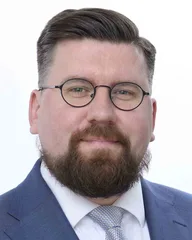
Lukas Sieper | Germany DEU | Non-attached Members (NI) | 390 |
| 2 |
|
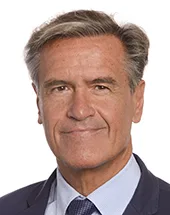
Juan Fernando López Aguilar | Spain ESP | Progressive Alliance of Socialists and Democrats (S&D) | 354 |
| 3 |
|
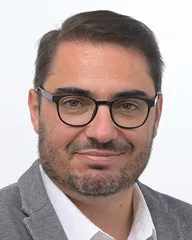
Sebastian Tynkkynen | Finland FIN | European Conservatives and Reformists (ECR) | 331 |
| 4 |
|
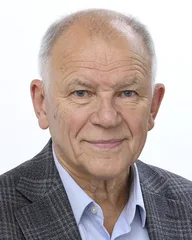
João Oliveira | Portugal PRT | The Left in the European Parliament (GUE/NGL) | 232 |
| 5 |
|
Vytenis Povilas Andriukaitis | Lithuania LTU | Progressive Alliance of Socialists and Democrats (S&D) | 227 |
All Contributions (38)
Prevention and treatment of obesity (debate)
Madam President, Commissioner, obesity has become one of the main public health challenges, as more than half of the adult population is overweight. It has profound implications for the health of Europeans. We know well the risks associated with this disease because this is how it should be treated: its close link with diabetes, hypertension, cardiovascular disease and increased premature mortality. One of the biggest challenges we face is precisely the lack of knowledge and awareness about its risks and consequences. Therefore, it is essential to strengthen prevention policies and promote greater awareness among the population. We now have an initiative, the EU Plan for Cardiovascular Health, which gives us a real opportunity to act in the field of prevention. We must take advantage of this framework to promote effective policies that contribute to improving the health and quality of life of all European citizens.
Activities of the European Ombudsman – annual report 2024 (debate)
Madam President, Madam Ombudsman, ladies and gentlemen, very good morning, what we are discussing here today is the Annual Report on the activities of the European Ombudsman in 2024, which highlights a fundamental premise in democratic systems and, in particular, in the proper functioning and accountability within the European Union: strengthening citizens' trust in the institutions. We have tried to reconcile right and left, but polarization has no middle terms and, in the end, it is the institutions that suffer. The Ombudsman is first and foremost the voice of citizens and his work is about trust, transparency and visibility. However, despite the importance of this institution, it is still little known to many Europeans. But their role is not limited to accessing documents or ensuring administrative transparency, but to maintaining direct contact with citizens and listening to their concerns. The report we are analysing rightly highlights the importance of strengthening the presence and contact of Member States through the media, networks of national ombudsmen and civil society. And, in my opinion, bringing this institution closer to the citizens is one of the most important tasks. Finally, I wish the new European Ombudsman, Mrs Teresa Anjinho, who took office in February last year, every success in this important mission of defending citizens' rights in the European Union.
World Cancer Day (debate)
No text available
Amending Regulations on agricultural products as regards market rules and sectoral support measures in the wine sector and for aromatised wine products (debate)
No text available
Framework for strengthening the availability and security of supply of critical medicinal products as well as the availability of, and accessibility of, medicinal products of common interest (debate)
No text available
The new 2028-2034 Multiannual Financial Framework: architecture and governance (debate)
Mr President, Commissioner, when we MEPs speak, we are the voice of the people and, therefore, what we are crying out to you today is to listen to the people. We are debating a proposal for the future budget today, but in reality what we are debating is the future of Europeans, and no one can be above the Treaties. They know that cohesion, the CAP and fisheries are in the DNA of the Treaties – this is what makes Europe great – and none is at the heart of this proposal. President von der Leyen said this afternoon that the structure of the budget changes, but that our values remain. I would tell you that structure is what is changing our values. Renationalising is the opposite of the Union, because it is dividing. Without cohesion, without regions, without cities and without towns, there is no competitiveness possible. Therefore, what I am sure of is that you have rectified; To rectify is wise. Continuing to speak and rectify is even more wise.
Breast cancer: the importance of screening (debate)
Madam President, we all know women who have suffered or are suffering from breast cancer, and screening is indeed essential for early detection: This must be our concern, as it is today for Mr Moreno Bonilla. It embarrasses me that women are used to do politics and it embarrasses me that they intend to screen Mr Moreno Bonilla. You are using this issue ideologically when you have put rapists on the street, when you have unprotected victims of gender-based violence, when you have governments that, for years, have left their women unscreened – many are not there either; You prioritize the use of women, but women don't care. Or is it that the women of Castilla-La Mancha are less than the Andalusian women? You fail in speech, you fail women, you fail to use Mr. Moreno Bonilla as you always fail women.
World Mental Health Day - addressing the socio-economic factors (debate)
Mr President, Mr Vice-President, pandemics, economic insecurity, wars, climate change, frustrations, losses: All of them silent scars on millions of Europeans. Every day we take to act is a lost day. Anxiety and depression are already the second leading cause of prolonged disability in Europe. And this reflects not only a major health problem, but an open wound on productivity, on employment, on the social cohesion of the European Union. It's not just social media. The problem is much broader. Addressing mental health from a socio-economic perspective means recognising its cross-cutting impact on education, on the labour market, on the sustainability of our welfare system. Taking care of the mental health of Europeans is not just about protecting their health: is to protect their ability to move forward, to innovate, to grow and to believe in their own future. Let us now push forward with the European Action Plan for Mental Health.
Deliberations of the Committee on Petitions in 2024 (debate)
Mr President, Mr Vice-President, Commissioner, the Committee on Petitions is the highest representative of the voice of citizens in the European Union. Through this committee, citizens can express their concerns, concerns and demands, making it a bridge institution between citizens and the European Union itself. In 2024, Parliament received a total of 1,518 petitions, reflecting an increase over previous years and demonstrating above all citizens’ interest in participating. Due to the volume and diversity of petitions received, it is not always possible to give voice to all petitioners and invite them to participate live, but the truth is that the committee takes note of all of them and works with dedication to ensure that all of them are treated with care. I would like to take this opportunity to thank Mr Beleris. his work as rapporteur. I also express my appreciation to the various political groups for their commitment and I would like to point out that this cooperation and citizen participation strengthens democracy and makes the European Union a project truly close to the people. A joint work that allows citizens' concerns to be adequately reflected in the activities of the Committee on Petitions.
Arbitrary detention of EU citizens Javier Marañón Montero and David Rodríguez Ballesta in Equatorial Guinea
Madam President, ladies and gentlemen, Javier Marañón and David Rodríguez are two of the Spanish citizens arbitrarily detained in Malabo by a regime, that of Equatorial Guinea, considered an authoritarian dictatorship characterized by serious human rights violations, arbitrary arrests and detentions that endanger life with the use of violence and indiscriminate torture. Today we want to raise our voices for all of them, for Javier and for David, for their families. They were arrested in mid-January 2025. Since their capture they have been subjected to inhumane conditions, and last April they were transferred to the Black Beach prison, known for its extreme brutality and serious violation of the rights of prisoners. Both were isolated and deprived of contact with their lawyers and their families. The deterioration of his health is alarming – especially that of Javier, who has led him to a forced hunger strike – and they have not received adequate medical care. The situation of both is unsustainable and requires urgent action. The situation requires a clear and firm response from the European Union and the Spanish authorities. We cannot accept that any European citizen should be arbitrarily deprived of his liberty. The systematic corruption of the regime, its links with Russia, the continuous violation of human rights, mean that we cannot look the other way and that today we strongly condemn the repeated cases of unacceptable arrests and ill-treatment of prisoners in Equatorial Guinea and demand the immediate release of Javier Montero Marañón and David Rodríguez Ballesta. Javier and David are our compatriots and as European citizens they must be firmly defended. We cannot and must not allow injustice to prevail. It is time to raise our voices and for the regime in Equatorial Guinea to take responsibility for these abuses. We ask that Javier and David can be safe, that they embrace their families again. They are European citizens. Europe cannot and must not remain indifferent to torture and injustice. That is why we demand the immediate release of Javier Montero Marañón and David Rodríguez Ballesta.
Cohesion policy (joint debate)
Madam President, Commissioner and Vice-President of the European Commission. For decades, cohesion policy has emerged as a substantial part of the acquis communautaire: Europe's link with its territories, the tool of its own growth according to its real needs. We want more competitive regions and we want to face different situations and challenges: from just transition to infrastructure or housing. But, certainly, with 0.3% of European GDP, no miracles can be worked either. And I have a story to tell you, too. In Spain, the left-wing, progressive, coalition government promised us the construction of 184,000 homes that are neither waiting nor waiting for them. State housing plans that are neither in nor expected. And a large public housing park that is neither waiting nor waiting for it. That is why we also need European cohesion funds. And that is why we also do not want a cohesion policy that removes regions and municipalities from the equation. You know how important cohesion policy is to regions and municipalities for their progress and for their way forward. That is why we do not want to leave cohesion in the hands of central governments either. Europe is about being and being cohesive. Cohesion makes Europe and not the other way around.
Devastating wildfires in Southern Europe: the need to strengthen EU aid to restore the massive loss of forests and enhancing EU preparedness (debate)
Mr. President, I see many political arsonists here, trying to take advantage of misfortunes. In front of the opportunists who are complaining, in front of the "ecolojetas", Commissioner, what we ask from the Popular Party is more countryside and more rural world, which is what the presidents of our autonomous communities are crying out from the Spanish Popular Party, such as Guardiola, Mañueco, Rueda or Moreno, who fight to combat the policies that attack the countryside and against our peoples. Our solidarity with Portugal, Greece, the Netherlands, Italy and with so many countries devastated by fire this summer. But above all, our thanks to those who have helped us from the heart of Europe, and also from our land, to combat them. I would remind the members of the Socialist Party to find out who manages, for example, fire prevention in Extremadura, because they are the deputies and are governed by the Socialist Party itself. Less matches, it's not gonna burn out.
EU framework conditions for competitive, efficient and sustainable public transport services at all levels (debate)
Mr President, Commissioner, today we are debating framework conditions for efficient, competitive and sustainable public transport services in the European Union, but let me speak from reality and, as a best example, from Extremadura, which is my land, where these conditions shine through their absence. Just yesterday, Commissioner, it took me 12 hours to get to Strasbourg: I could have made it to America. How can we talk about sustainability or efficiency if there are entire regions that still do not have decent, modern and safe rail connections? This European framework we are talking about should oblige national governments to comply with the objectives set out in the TEN-T. Because I remind you that Spain and Portugal should have a high-speed train connecting Madrid and Lisbon by 2030, as stipulated, and we cannot allow any further delays. We were promised in 2010 and millions of Europeans are living this reality. Extremadura does not ask for privileges, it asks that the right to decent public transport be a reality, not only in Brussels, Paris or Madrid, but also in Cáceres and Badajoz. If we really want to achieve territorial cohesion and move towards sustainable development, the train in Extremadura cannot continue to be an unfulfilled promise. Of course, for that, the Spanish government should not have – presumably – put its hand in our transport infrastructure.
Deliberations of the Committee on Petitions in 2023 (debate)
Mr President, it is the citizens who are addressing Parliament, so I ask you not to insult them. The Spanish Socialist Party intends to instrumentalize even the European Parliament. It confuses their way of doing with the right of the Spaniards to convey their concerns to this Parliament and their concern about the permanent attacks on the rule of law that we are suffering. Because Spaniards, in 2023, were the citizens who submitted the most petitions to this committee. This is the consequence of our Government's assault on the CIS, the attack on judges and courts, the colonization of companies and the use of the Prosecutor's Office, the Constitutional Court and the Bank of Spain. It is the consequence of cases such as the Koldo case, that of the president's brother, the amnesty for those convicted by the procés, the right to protest the accusation of the president's wife and a long etcetera. That's what we should be worried about. The Committee on Petitions is here to respond to these problems. Don't insult them.
An urgent assessment of the applicability of the Political Dialogue and Cooperation Agreement (PDCA) with Cuba (debate)
Madam President, what the PP thinks is defended by the PP, and we will not be silent. The citizens of Cuba have been demonstrating and protesting for years about the shortage of food and medicines, about a regime that drowns them, about the blackouts, about the arbitrary imprisonments, about the multiple violations of human rights. Thousands of Cubans have been forced to leave their land to escape ill-treatment, torture and unjustified arrests. José Daniel Ferrer has been re-incarcerated just three months after his release. Yours is not an isolated case: The regime has a long history of repression for political reasons and today it is estimated that there are up to 1 154 imprisoned for these reasons in Cuba. The European Union can no longer look the other way. It must act in defence of human rights. It makes no sense to send messages of solidarity while sustaining the regime through a Dialogue Agreement that has been systematically ignored and betrayed. And that's why we say: Cuba deserves to be free. Homeland and life.
A revamped long-term budget for the Union in a changing world (debate)
Mr President, Commissioner, if you have listened to this Parliament today, what you have been asked to insist on is that, in the next budget, cohesion should remain the central pillar, because cohesion policy is recognised in our Treaties and serves to promote convergence, the social and territorial economy. Cohesion is not an instrument of crisis mitigation or a tax on solidarity, but a policy of growth so that all Europeans have comparable standards of living, wherever they live. Giving up de facto With fewer resources, this growth target would have very serious implications for the policies of the European Union. As we have also said, a single national plan merging the CAP and the Cohesion Fund is not acceptable, because the role of local and regional authorities must be guaranteed in order to safeguard them from arbitrariness such as that caused by Sanchez in our country with his sectarianism. This budget will mark the next decade. Don't forget. Thank you to the speakers for their work.
The importance of trans-European transport infrastructure in times of stalling economic growth and major threats to Europe’s security (debate)
Mr President, Commissioner, investing in all cross-border transport infrastructure is more crucial than ever. Europe's lack of demand in meeting the deadlines of the rail transport network has also caused us to be caught by the train at an increasingly uncertain geopolitical moment. The Madrid-Lisbon high-speed network, which passes through my land, through Extremadura, is more than 20 years behind schedule, and we cannot afford any further delays or fragmentation. It is time to strengthen trans-European infrastructure, to demand better management of funds and to speed up the modernisation of our strategic connections. Mobility weighs heavily on the economy and, of course, also on employment, but today it is security that prevails on the horizon. Cohesion in infrastructure is also absolutely key. We Extremadurans demand a decent train. Today, what we are asking of Europe is that it deigns to call on those States that fail and that delay not to look the other way.
Improving the implementation of cohesion policy through the mid-term review to achieve a robust cohesion policy post 2027 (debate)
Thank you very much for the question, Mrs García Hermida. Of course we can work together on this. We have also defended from our group the need to respect the principle of paternity and the multilevel principle. The role of regions and local authorities is key in cohesion policy to achieve such convergence. Your territory and mine, Extremadura, still need these funds to be able to compete on equal terms with the rest of the European Union. And, therefore, of course we are going to find ourselves in this fight.
Improving the implementation of cohesion policy through the mid-term review to achieve a robust cohesion policy post 2027 (debate)
Mr President, Commissioner, the mid-term review of cohesion policy is the time to build on lessons learned, make funds more accessible and address threats. Challenges require making decisions that are up to par. However, we cannot leave aside the question of how Europe wants to remain on the ground. In order for the Union to preserve its presence on the ground without impairing its capacity to act, it is key that it continues to invest the funds in those regions for which they were earmarked, respecting the work of local and regional administrations in their design and implementation. Convergence can be achieved in many ways, with projects able to address several priorities at the same time, projects that strengthen competitiveness, security, connectivity, social well-being or water management, as has been said. The means must serve at last. The ultimate aim must continue to be to promote convergence, because that is the Europe that citizens value. We trust you.
Action Plan for Affordable Energy (debate)
Mr President, Commissioner for Energy, in your purpose you have the enemy at home: Mrs. Ribera. We face a crucial challenge in Europe: ensuring sustainable and secure affordable energy for families and businesses that provide jobs. The science is clear: the combination of renewable energy and nuclear energy is key to reducing emissions and protecting our planet. While the United States extends the useful life of nuclear power plants by up to eighty years, Sanchez closes them in Spain without caring about families in Extremadura or Catalonia. Therefore, the decommissioning of the Almaraz nuclear power plant, on my land, which supplies more than 4 million homes in Spain and prevents the emission of 7.2 million tons of CO2 Every year, it's a sacrifice we can't afford. That is why I ask all of you to support the no to the closure of the Almaraz nuclear power plant.
Presentation of the proposal on Critical Medicines Act (CMA) (debate)
Madam President, ladies and gentlemen, Commissioner, I think the message is clear and almost unanimous: Europe has to be self-sufficient and, with this law being presented today, the Commission must ensure that citizens' access to essential medicines is guaranteed. Shortages of essential medicines have become a challenge in the European Union. Fragile and dependent supply chains are a vulnerability for our health systems and our patients. It is essential to strengthen innovation, production and distribution within the European Union, as is being done, for example, in my land, Extremadura, where companies such as Natac are innovating in the plant sector and are helping in the manufacture of orphan medicines such as those that treat Friedreich's ataxia. The Essential Medicines Act is much needed. We know what needs to be done; Tell us, Commissioner, when and how, because it is needed now, you have no doubt.
Silent crisis: the mental health of Europe’s youth (debate)
Mr President, Commissioner, ladies and gentlemen, the deterioration of mental health is a silent crisis. Yes, silent. I wish our young people would raise their voices in the face of hopelessness. It is a threat that, according to the World Health Organization, suffers one in seven young people. And with these statistics, Europe cannot look the other way. We are not aware of the current environment in which our young people have to live: bullying, cyberbullying or the influence of social media, which can upset their lives with anxiety, depression or stress. In spite of all this, when one of them dares to ask for help, they are often ridiculed, ignored, belittled or the gravity of this situation is also devalued. In this hostile environment, it is necessary, with such devastating data – suicide is the third leading cause of death among young people aged 15 to 29 – not to look the other way. The establishment of a European action plan for mental health is a priority for the European People's Party, Commissioner. It is a plan that must be focused on young people. Young people are our priority and, if it is also yours, you will have our full support.
The need to address urgent labour shortages and ensure quality jobs in the health care sector (debate)
Mr President, Commissioner, we need health care and we need health care. The shortage of 1.2 million professionals is a drama, especially in rural areas, with a shortage that puts the fairness and right to health of European citizens at risk. In my region, Extremadura, after more than thirty years of socialist and leftist governments, there is a real medical desert: patients who need to travel for healthcare; doctors, nurses and other professionals who work in a strenuous manner. This situation, which is currently being reversed, must be remedied. There are very desired places, but there are places that are deserted and, therefore, it is urgent to create a stable framework of decent work for these professionals, better conditions, especially for the so-called places of difficult coverage, and that the right to stay can be exercised. The shortage ends up causing endless waiting lists, aggressions against unjustified professionals. And that is why I am glad that the Commission is finally tackling this problem, that it is on the agenda and that it is going to be on the agenda now. We must ensure that, wherever we live, we receive attention and, for this, we cannot take lightly the present needs of professionals, but, above all, neither those of the future.
Addressing EU demographic challenges: towards the implementation of the 2023 Demography Toolbox (debate)
Mr President, Commissioner, I am very happy to hear your proposals, because Europe's underlying problem is demographic and hence the rest. We can no longer look the other way in the face of falling birth rates and aging rates. How can we expect more innovation or greater competitiveness if we ignore that Europe has been dying from its base for decades and forgetting young people? In more than 64% of the municipalities in my region, Extremadura, one in four inhabitants is 65 or older and, in Spain, the vegetative balance has been negative since 2015. I ask from this rostrum to urgently assist all the regions devastated by this demographic disaster, including the demographic variable – as the Commissioner has said – and territorial in European agendas and programmes. But to reverse this, it is necessary to invest in dual digital and transport connectivity, access to essential public services, cross-border cooperation and, of course, support for families, fathers and mothers. Reality requires, Commissioner, imminent action.
Situation in Venezuela following the usurpation of the presidency on 10 January 2025 (debate)
Mr. President, despite his resounding and obvious defeat at the polls, Maduro has proclaimed himself president of Venezuela. The dictatorship oppresses its opponents, although they are an example of the struggle for freedom, like the heroine María Corina Machado, who does not need our congratulations, but our action. The international community has not stood idly by: The European Union has added 15 Venezuelan officials and senior officials to its list of restrictive measures for its blow to democracy. But this is not enough; We have to do more. The European Union must recognize Edmundo González Urrutia as the elected president of Venezuela and, if it has not been done before, it is because it has not stood up to countries like mine, which give oxygen to a dictator like Maduro. Therefore, from this rostrum I tell Mr. Sanchez to reconsider, to put himself on the right side of history. It's not opposition, it's telling the truth. Don't shut us up, because that's what Maduro does.