| Rank | Name | Country | Group | Speeches | |
|---|---|---|---|---|---|
| 1 |
|
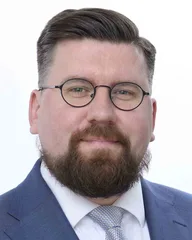
Lukas Sieper | Germany DEU | Non-attached Members (NI) | 390 |
| 2 |
|
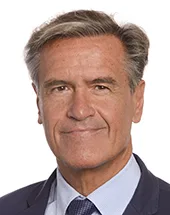
Juan Fernando López Aguilar | Spain ESP | Progressive Alliance of Socialists and Democrats (S&D) | 354 |
| 3 |
|
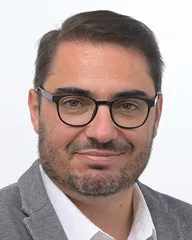
Sebastian Tynkkynen | Finland FIN | European Conservatives and Reformists (ECR) | 331 |
| 4 |
|
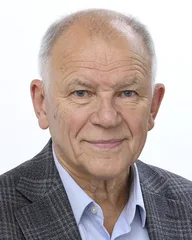
João Oliveira | Portugal PRT | The Left in the European Parliament (GUE/NGL) | 232 |
| 5 |
|
Vytenis Povilas Andriukaitis | Lithuania LTU | Progressive Alliance of Socialists and Democrats (S&D) | 227 |
All Contributions (77)
Rail transport safety in the EU – lessons learnt from the Adamuz accident and three years after the Tempi tragedy (debate)
Madam President, I'm sorry. Mr. Commissioner, I'm sorry. Today's debate on rail safety in Europe is absolutely necessary and perhaps more than ever. Because we are no longer just talking about accidents, we are talking about a new dimension of threats to European infrastructure. And let me tell you about the Polish case, which took place at the end of last year in Poland. In my country, there was an act of sabotage on a key railway line. An explosive device was placed on the Warsaw-Lublin route, which destroyed a fragment of tracks on the line leading towards Ukraine. And all this could have ended in a huge, huge tragedy. A train with hundreds of passengers could have derailed and crashed. Fortunately, this has been avoided, but similar incidents have also taken place in Italy, Sweden and in the Czech Republic, as mentioned a moment ago by the Commissioner. And these are no coincidences. European transport infrastructure is becoming a target of sabotage and destabilisation. This is part of a broader Russian diversionary campaign against Europe. That is why I want to say and emphasise here from this point of view the importance of all the programmes that the European Union has prepared today, including Military Mobility and the almost EUR 17 billion that we will allocate for this purpose in the new perspective. I am also talking about this as the European Parliament's shadow rapporteur on the Schengen military programme, which is extremely important and important. This is an investment in Europe's security, just as important as measures such as SAFE. And it's not just about moving troops fast. There's more to it than that. It is about the resilience of our infrastructure – railways, bridges, logistics, which must be safe for citizens and resistant to sabotage. The safety of Europe's railways today is not just a matter of transport. This is a matter of security for the whole of Europe. And let me thank the Commissioner for his contribution and what he said today - that railway safety is a priority for him.
EUCO and situation in the Middle East (joint debate)
No text available
Presentation of the Energy Package (debate)
Mr President, thank you very much. This energy package is a step in the right direction and a good signal. But our European economy needs breath and cheap energy today. These climate goals, which we adopted a few years ago, were created in completely different realities. There was no war from the East. There was no war in the Middle East. There were no high energy prices. And in the end, there was no brutal competition from China and the US. And yet, the European Commission succeeds in saying that nothing has changed at all. If we do not revise the ETS, European industry will be fleeing Europe. Moreover, citizens' bills will increase. And I want to say very clearly that the Polish delegation of the EPP believes that this is the time for change. At this point, when we see huge prices, including oil and gas, this is the time when this revision needs to be done. This is also the time to make climate goals a reality, because jobs and the economy are just as important as climate. We will present our proposals in the near future.
Presentation of the Energy Package (debate)
I wanted to ask you, in the era of all that we say in this room and what we hear outside this room, are you able as a faction to sit down and talk about the revision of the ETS? On the one hand, to maintain these high, ambitious climate targets, but at the same time to keep the jobs that the left is fighting for.
Presentation of the Energy Package (debate)
Everyone in this room is talking about energy prices, about the fact that ordinary citizens have a problem, and it does not matter whether they live in Poland, whether they live in Spain or in Germany. Everyone in this room has been talking for months about the fact that the European economy is also having huge problems. Yeah, one by one. Specific industries: glass, ceramics, steel, aluminium, metal – all these industries come to us here. And we know that one of the reasons is the lack of competitiveness, that is, this ETS tax. Is your faction ready to sit down and talk about the revision of the ECJ?
Urgent actions to revive EU competitiveness, deepen the EU Single Market and reduce the cost of living - from the Draghi report to reality (debate)
Madam President, 'if Europe becomes the most expensive place to produce, it will cease to be a place of production at all'. This sentence perfectly captures the moment where we are today. To be honest, I think that Europe can be the world's greatest engine of growth, but only if competitiveness is placed at the head of decision‑making. Today is not the time for diagnosis. It is time for decision. If Europe wants to regain its competitiveness, it must do three things. First, as we know in this House, reduce energy costs, and stop – we have to stop ETS2. Second, the same standards that apply to European companies must apply to importers. Competition? Yes. Unfair competition? No. And third, invest in Europe through a strong competitiveness fund and simplify regulation. Europe does not have to choose between climate and the economy. It must choose a smart transition over the loss of its industrial base.
Presentation of the action plan against cyberbullying (debate)
Mr President, thank you very much. Thank you very much for this very important debate. I wanted to ask a question today to Mr Wąsik from the ECR, who was speaking today at that rostrum, but he did not accept the question and left the room. And I'd like it to sound like it. On the one hand, the European Commission presents a very important plan, a plan to protect children. I myself am the father of two children and I know how important it is for Europe to adopt such a plan. On the other hand, I hear ECR politicians and Patriots saying, coming out here to the lectern, that it is unnecessary, that it is supposedly some kind of censorship. So I'd like to ask you in public: Why does Mr. Wąsik not want to protect children from pornography on the Internet? I would like to know what are the real reasons for this decision. Why does Mr. Wąsik not want to protect against bullying on the Internet? Online bullying should be punished in the same way as street bullying. If he doesn't see the children's dramas that we all see here discussing, then the question is, what do they even see? And in my opinion, there is nothing to turn around and look at lobbyists, but do your own thing. Let's just protect the kids. That's our job.
World Cancer Day (debate)
Mr President, thank you very much. Cancer knows no boundaries. Cancer doesn't know opinions. Every day in Europe, thousands of families hear a diagnosis that changes everything, absolutely everything. But today we also have a reason for some hope. Spanish scientist Mariano Barbacid has discovered a cure for pancreatic cancer. He needs money, 30 million euros, to start clinical trials on humans. He's already eliminated the disease in mice. 71,000 people have contributed money to date and have already raised nearly 87% to continue these clinical trials. And this is absolutely a breakthrough. We have something to boast about. We are proud of it, because European science can save and save lives, but it is also our duty, as we are here, to secure adequate resources, to support such scientists and such doctors. We need to speed up access to innovative therapies and build a Europe where cancer ceases to be a judgment.
Preparations for the EU-India summit (debate)
Madam President, I'm sorry. Commissioner, I'm sorry. Today's vote on Mercosur here in the European Parliament makes it clear that no agreement, but no agreement, should be signed without the participation of those directly affected. And today we are discussing another agreement between the European Union and India, which is very important, very important and very much needed. But again, there are certain sectors, even strategic industries, which are already calling for help today. It is the ceramics industry, the aluminium industry or the steel industry. Last year, at the end of last year, they made a pact and called for support, for help. Why is that? I will give an example of only the ceramic industry, which is very important, because each of us, when doing renovation at home, needs to buy ceramic tiles. In India, ceramic tiles are sold for one euro. With us, the cost of production – not only in my country, Poland, but in Europe – is 3 euros, that is 1 in 3, and customs duties are between 7 and 8%. If we, Commissioner, do not help these companies today – not in 3 years, but today – and do not raise these tariffs, do not protect the market, then this ceramics industry will stop working at all. How long can you compete when it's three times more expensive? And it is more expensive, among other things, not because it is less competitive, but because there are different production standards in India, environmental, energy and social. That is why I appeal, Commissioner, until it is too late, for support and assistance for these industries, especially for the ceramics industry, because this is a very important industry from a European point of view.
Air passenger rights (debate)
No text available
Presentation of the automotive package (debate)
No text available
EU Defence Readiness (joint debate)
No text available
Development of an industry for sustainable aviation and maritime fuel in Europe (debate)
Mr President, thank you very much. If the transformation is to be real and harmless, we must look at the facts where we see that the goals set are falling apart with reality. Europe wants to produce, as we hear, 20 million tonnes of green fuels by 2035 and we need, as the Commissioner said, almost EUR 100 billion, but we have planned less than EUR 3 billion for this. Of course, green fuels are much more expensive – up to 10 times more expensive – than fossil fuels, so without financial mechanisms such as subsidies or long-term contracts, industry may not invest. And that threatens the wrong wheel. On the one hand, the lack of demand, then the lack of investment and, of course, maintaining high prices. So without a guarantee of stable prices, airlines as well as shipping companies will not sign long-term contracts. What's more, we hear that there is still a lack of a simple system that would allow to increase demand faster and launch investments. So if we don't close this financial, regulatory hole, we won't even meet our own goals, and there's no way to be a global leader. It's not about new declarations. It is about some funding, clear rules and introduction book and claimto turn ambitions into real production. Europe can build this industry, but only if the targets finally match the tools we really have at our disposal.
EU response to the continuous airspace violations and sabotage of critical infrastructure in the EU originating from Russia and Belarus (debate)
No text available
EU position on the proposed plan and EU engagement towards a just and lasting peace for Ukraine (debate)
No text available
Commission Work Programme 2026 (debate)
Mr President, thank you very much. Today's debate started with the slogan "Our Europe must be an independent Europe" and we all agree on that. There are two pillars that should be implemented over the coming months. The first is, of course, the issue of security, and here Europe has focused on security: Shield East, Safe program, EDI program. Today, Europe is much safer, it invests in security and we know that this is the most important thing. But on the other hand, we have competitive economies that we are talking about all the time in this room, and we have several industries that are waiting for support, for help. It is a metal industry that is threatened by high energy prices. It is a ceramics industry that is threatened by the import of cheap ceramics from India. After all, it is the chemical industry, which was three times stronger than China 20 years ago, and today it is the European industry that must chase China. And finally, the automotive industry. Therefore, there is a need to revise climate targets, to invest in the economy and to protect the European economy. Oh, thank you.
Chemicals (joint debate)
Mr President, thank you very much. The chemical industry is the foundation of the European economy because it provides materials, components, technologies that are essential for agriculture, defence and modern industrial sectors. In my country alone, 340,000 people work in this sector and account for almost 10% of GDP. Without a strong chemical sector, there will be no European industry. Therefore, any regulatory reform, common data platform or European Chemicals Agency should strengthen, not undermine, Europe's ability to produce or innovate. Europe already has the most advanced chemical assessment system in the world. No other region collects as much data and applies such strict security standards. It is therefore important to ensure that new responsibilities do not turn into a new wave of bureaucracy. I am talking here in particular about small and medium-sized enterprises, which are the backbone of the European chemical industry. And the most important thing: effective implementation of the Chemical Industry Action Plan, i.e. a plan that is to be a signal of real support for the chemical industry. The Polish chemical industry together with its partners from Central Europe appealed to the European Commission for concrete actions to strengthen the competitiveness of the industry. This is the time when you have to implement this plan, because this industry can no longer wait.
Deliberations of the Committee on Petitions in 2024 (debate)
Mr President, thank you very much. Ladies and Gentlemen, The Committee on Petitions is the bridge between citizens and the institutions of the European Union. And, of course, it plays such a special role in the work of the European Parliament, because this is the only forum where citizens of the European Union can not only present their problems and challenges they face, but also, most importantly, they can speak in committee meetings in person. And it is here that every resident of the European Union, no matter what country he or she is from, what language he or she speaks, can, of course, be heard. Petitions are an effective channel of direct contact, which we are discussing today, and open dialogue. And I would like to give two examples. One of them is a petition submitted by a Polish citizen on the introduction of a minimum allowable legroom for all airlines operating in the European Union. This case demonstrates how the committee can address issues directly affecting the comfort and safety of travellers, as well as affecting EU consumer rights regulations. And the second example, also from Poland, on addressing the selective enforcement of European Union rules in the smoked salmon industry. This petition stresses the need to ensure uniform application of the rules on the processing of fishery products throughout the European Union in order to avoid competitive inequalities and ensure fair conditions for all companies in the industry. And the task of Members in the European Parliament is not only to listen to these voices, but to act concretely. And that's what we do. I would like to thank the rapporteur, Fredis Beleris, and all my colleagues for their cooperation. Please support this report.
Europe’s automotive future – reversing the ban on the sale of combustion cars in the EU (topical debate)
Mr President, thank you very much. I would like to take this opportunity to appeal today to the President of the European Commission, Ursula von der Leyen, to immediately present a proposal to move away from the ban on the sale of combustion cars in 2035. We are consistent as a Polish delegation on this matter and I do so on behalf of 22 million drivers from Poland and nearly 200,000 employees who produce parts, produce cars for others, because we do not yet produce our own, but produce for others. If we do not move away from this draconian ban, the European automotive industry will fall. I don't think we have any doubts about that. Just look at Belgium. There were 7 plants, there was one - Chinese. We produce Volvo. Let's look at what's happening in France. More layoffs of several thousand people. Renault itself says 3,000 people have been made redundant, and in Germany 50,000 have been made redundant in the last year, and if we do nothing over the next 5 years, another 100,000 will be made redundant. As we will look at the results of 2024, nearly 13 million cars sold in Europe, of which more than 11.5 were combustion cars, only one and a half million were electrics, of which a large part of Chinese electricians, which are subsidized by the Chinese government only to take over European cars. Europeans want to have a choice. We can't ban it. We can promote hybrids and electrics. That's what we should be doing. But let's not ban people from what kind of car they want to drive. Today, five percent of new car sales in Europe are made up of Chinese cars. There has to be a strong response, and we have to defend this big industry and this big branch of the economy, because it provides 13 million jobs.
United response to recent Russian violations of the EU Member States’ airspace and critical infrastructure (debate)
Madam President, I'm sorry. Mr. Commissioner, I'm sorry. Thank you very much for this debate, because it is crucial for the security of the whole of Europe. Not only is Russia already threatening, but Russia is also attacking – with drones, cyberattacks and provocations at our borders. And these are not individual cases. It's a systemic test of our resilience in Europe and an attempt to see if we're going backwards or if we're going to be together. Today, Europe faces a choice: Fear or strength. We choose strength, we choose unity, and we choose defense. Because if we don't defend the eastern border, we won't defend any. Russia is provoking, and Europe must respond firmly, together and effectively. That is why, as the EPP delegation, we are proposing concrete solutions, not declarations. A real common defense system against drones, protection of ports, airports, energy infrastructure, but also the East Shield. The East Shield, which is the true line of defence of the European Union.
New Strategic EU-India Agenda (debate)
Mr President, thank you very much. I am very pleased with this strategic agreement with India, but at the same time I would like to call on us to safeguard the interests of Europe and the countries of the European Union. I want to talk about a very important industry. In my country alone, 100,000 people work in this industry. It's about the ceramics industry. Yes, we are, as Europe, flooded with ceramic tiles from India. Why is that? This is because we have imposed tariffs of 70% on China and only 6-8% on India, so that all production from China has moved to India and thus sells tiles to Europe for 5 euros. And in Poland, Italy or France, you have to pay at least €13-14 to produce such tiles. Therefore, it is impossible to compete. And this is the moment to level the playing field in the market. And that is why I would like to call on the Commissioner from this point on, as in the case of China, to also impose such dumping duties on India, so that we can protect several hundred thousand jobs, one of the very important industries, and so that we can say that we have succeeded in doing so within the framework of the competitiveness of the European economy. In fact, we should do it not today, but now.
Role of EU policies in shaping the European Sport Model (debate)
No text available
Solidarity with Poland following the deliberate violation of Polish airspace by Russian drones (debate)
Madam President, I'm sorry. Mrs Zajączkowska-Hernik just said that Putin laughs every day. Yes, he laughs, because you give him reasons for this, for this joy, every day. And I want to say that this fifth column of the European Union, which preaches Russian propaganda every day, is both here – in this room – and in every country of the European Union. And there were, and there are, in this room and in the European Union, those who said that this is not our war. Even today we heard it. And yesterday 19 drones flew into Polish space. Whose war is this? Oh, that's right. The European Union must arm itself and defend itself. And thanks to this, there is also the SAFE program. But there are and there were those who said: Why should the European Union spend any one euro on arms? Only Poland will receive 180 billion for armaments. What's the point? To defend the borders of Poland and the European Union. And these manipulations of yours don't stand a chance against unity. Today I would like to thank, on behalf of – I think – the entire Polish nation, not only for the words of solidarity, but also for the words and for the money that the European Union gives to the armament and security of Europe.
Serious threats to aviation and maritime transport from Global Navigation Satellite System interference: urgent need to build resilience against spoofing and jamming (debate)
Dear President, Ladies and Gentlemen, Mr. Commissioner, I'm sorry. It was supposed to be a speech about satellite navigation, but on September 10, 2025, around midnight, 19 Russian drones flew into Poland. And not only did they reach the eastern border, but they also reached central Poland. And today I have to talk about solidarity and common defence, of which modern navigation is, but will also be, an integral part. As I said, a dozen Russian drones violated Polish airspace last night. And we all, absolutely all know that this was not a coincidence, but it was just a provocation. Poland reacted firmly and adequately. This was not the reaction of one country. We responded on behalf of a Europe of solidarity, because our borders, NATO and the European Union, are our borders. If they are tested, we are all tested. And that is why I would like to thank Europe, the European Union, the European Commission for almost 180 billion zlotys, 44 billion euros, which will be invested from the SAFE programme in Poland to defend Poland and to defend Europe. These measures will, of course, strengthen our air and digital defenses, but security is not just about missiles and radars. It's also satellite-resistance and precise navigation. I want to make it very clear today that the night that has passed has been a clear signal to Europe. Only unity can protect us in Europe. The Polish border is the border of Europe. A safe Europe is a safe Europe.
One-minute speeches on matters of political importance
Mr President, thank you very much. A few years later, today in Poland, the Supreme Audit Office filed a complaint with the prosecutor’s office concerning one of the biggest scandals – GetBack. This is one of the biggest financial scandals in the history of Poland. Nearly 10,000 people have been scammed for nearly $3.5 billion. The notification includes the name of former Prime Minister Mateusz Morawiecki, today the head of the ECR. The Polish state institution states that, as the person responsible for supervision, it has committed omissions that enabled this drama of thousands of people. And I want to make it very clear that this was no ordinary scandal. It was a political and business arrangement in which the state was on the side of dirty interests, not people. And we can't pretend nothing happened. A man with such accusations cannot lead a European political party. Mr Mateusz Morawiecki should immediately step down as head of the ECR. The decency, credibility and responsibility towards millions of affected citizens demand this.