
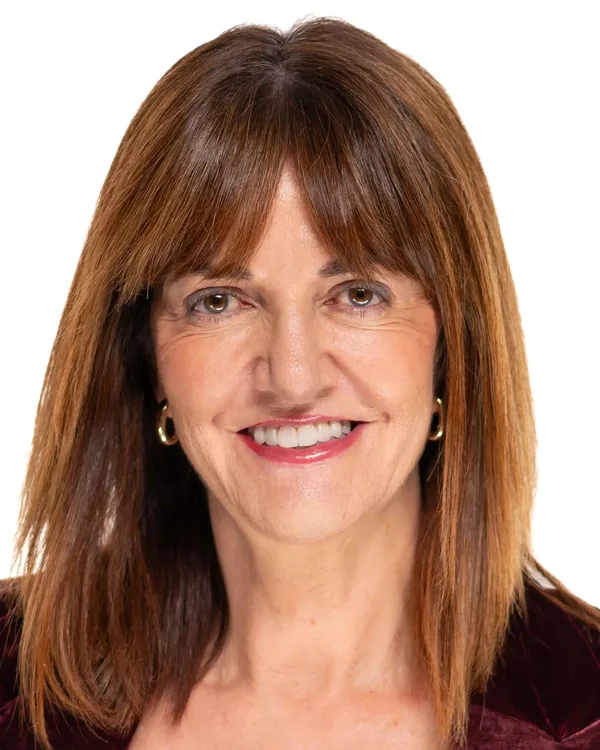
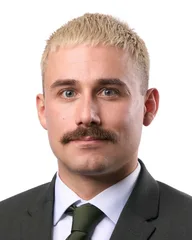
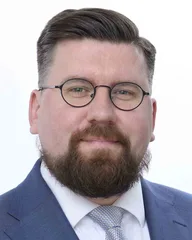
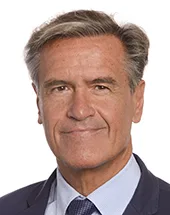
| Rank | Name | Country | Group | Speeches | |
|---|---|---|---|---|---|
| 1 |
|
Lukas Sieper | Germany DEU | Non-attached Members (NI) | 390 |
| 2 |
|
Juan Fernando López Aguilar | Spain ESP | Progressive Alliance of Socialists and Democrats (S&D) | 354 |
| 3 |
|
Sebastian Tynkkynen | Finland FIN | European Conservatives and Reformists (ECR) | 331 |
| 4 |
|
João Oliveira | Portugal PRT | The Left in the European Parliament (GUE/NGL) | 232 |
| 5 |
|
Vytenis Povilas Andriukaitis | Lithuania LTU | Progressive Alliance of Socialists and Democrats (S&D) | 227 |
All Contributions (66)
Territorial integrity and sovereignty of Greenland and the Kingdom of Denmark: the need for a united EU response to US blackmail attempts (debate)
The socialist group has pushed for this debate to be held in the face of unacceptable US threats to the territorial integrity and sovereignty of Greenland and Denmark and we have managed to change the title of the debate to underline the need for a united EU response to the Trump administration's attempts at blackmail. The current situation obliges the EU to rethink its traditional policy frameworks, forgetting the manuals on geopolitics and diplomacy, as the current context requires new political tools. The European response can only be built from internal cohesion and rejecting any element that could weaken us. The Union must be able to agree on the basic aspects of its foreign policy and then appear before the world and European citizens as the bloc we claim to be. To this end, it is imperative that the Commission and the EEAS raise the volume and tone of their message, which is also necessary to stem the growing loss of public trust in EU leaders.
European Semester for economic policy coordination 2026 - European Semester for economic policy coordination: employment and social priorities for 2026 (joint debate)
Madam President, Madam Vice-President, I have worked for this European Semester to ensure convergence, stability and growth, but also social cohesion, which is our European identity. Because Europe cannot be guided by the Competitiveness Compass alone if we want a strong, competitive and secure Europe, we also need a Semester that measures and ensures what makes us better and unique, our real competitive advantage: quality employment, investment, social cohesion and a just transition for all. Europe has already learned at too high a cost that austerity breaks trust, widens inequalities and weakens the European project. That is why I am convinced that we cannot repeat it and we are not going to do it. Competitiveness cannot be built at the expense of the social dimension. That is why our agreement means that, in addition to competences, the fight against poverty, access to housing, public health for all, social protection that guarantees essential care and services should not be left in the background: that safety net that strengthens Europe and the armour. I am convinced that a social Europe is not the brake on competitiveness, but precisely the opposite: your engine.
Gender pay and pension gap in the EU: state of play, challenges and the way forward, and developing guidelines for the better evaluation and fairer remuneration of work in female-dominated sectors (debate)
Mr President, we still have a serious pay and pension gap problem. Women are still concentrated in the lowest-valued and lowest-paid sectors and are also the majority in part-time employment. And the result is clear: poverty has a woman's face during working life, but also in old age. Many retired women today live on pensions that do not allow them to live with dignity. Therefore, our duty is twofold: closing this gap for the present and for the future, but also protecting today's older women. The Commission has presented its intergenerational equity strategy with young people and future generations in mind, but forgets those who are older, older women. Don't they have the right to adequate services? Don't they have the right to a decent life, to a decent pension? I ask the Commission not to forget the elders: They need a strategy that responds to their problems.
Addressing subcontracting chains and the role of intermediaries in order to protect workers’ rights (debate)
Mr President, working cannot mean, at this stage of the 21st century, risking one's life, and if we analyse the accident rate in Europe, the data tell us that there is more in temporary contracts and, above all, in those that are made under the abusive umbrella of subcontracting. Workers do not receive training in risk prevention and companies believe that it is not up to them. The accidents are still from the 19th century: falls in height, entrapments... concentrated in very specific sectors. Today we ask for a regulation that puts a stop and light to the formula of subcontracting, especially to those long chains of subcontractors that make it impossible to find the person responsible for the abuses and illegalities. And this initiative is not against companies, on the contrary: favours SMEs, which make up 90% of the economic fabric. And in this Parliament, where we hear our colleagues talking every day about simplification: attentive, there is nothing simpler than hiring your workers directly or directly to the company that does the work.
Developing a new EU anti-poverty strategy (debate)
No text available
International Day of Education, fighting inequalities in access to education (debate)
No text available
Urgent actions to revive EU competitiveness, deepen the EU Single Market and reduce the cost of living - from the Draghi report to reality (debate)
No text available
A new action plan to implement the European Pillar of Social Rights (debate)
Madam President, Madam Vice-President, I want a Europe that protects, that offers living wages, that guarantees housing and in which children are not condemned to poverty. The new action plan should serve to correct errors and reinforce it. It cannot be a catalogue of good intentions. We need guaranteed rights and sufficient funding to achieve the results. Just this week, the International Monetary Fund warned of a tsunami in the labor market. 40% of posts are already affected by artificial intelligence; in advanced economies, up to 60%. Without rules and guarantees, this change does not mean progress or better wages, but precariousness, inequality and insecurity. The new plan should ensure inclusive employment. We need to fight ageism and age discrimination; a plan that strengthens solidarity between generations and improves the working conditions of carers. The care economy is essential. This new action plan should be a qualitative leap forward: move from big words to clear commitments. Without cohesion there is no Europe, Madam Vice-President.
Preparations for the EU-India summit (debate)
Madam President, I take this turn to make a wake-up call to all those colleagues who voted today to weaken Europe, sending a message of weakness to our trade and political allies. To paraphrase Canadian Prime Minister Carney, the question for Europe is not whether we adapt to this new reality, the question is whether we adapt by building higher walls or whether we try to do something much more ambitious and novel. The EU-India Summit is about that, it is an opportunity to close the fringes of the trade agreement that we have been working on for years. But above all, it is the opportunity to send a powerful message that we can build a different world in parallel to the United States, Russia or China. We must build bridges between everyone else, seeking what unites us and putting aside everything that has separated us so far. We Europeans are a reliable partner and loved by many countries. We must take advantage of it. Let's have self-confidence and vision for the future. And, above all, let's not waste time.
The urgent need to combat discrimination in the EU through the horizontal anti-discrimination directive (topical debate)
Madam President, Commissioner, the rise of intolerance and extremism is leading to a rise in discrimination. Hate speech and prejudice are the order of the day. We are certainly living in very dark times, and Europe is the only hope for many people, that is why the need for the horizontal anti-discrimination directive. Women, migrants and people with disabilities, among many other groups, deserve Europe to resolutely combat all discrimination. Most of these groups – it is true – already have specific anti-discrimination strategies in place by the Commission, except for one: the elderly. They remain unprotected: their voices don't count and their lives don't matter. This Directive is a guarantee for older people to have more protection of their human rights. I therefore call on the forthcoming Council Presidencies and the Council as a whole to listen to this Parliament and put all their efforts into unblocking this proposal. Delaying their approval is denying equality to millions of people, and we can't wait any longer.
Fishing opportunities 2026: ensuring the sustainability of fish populations, marine ecosystems and coastal communities
No text available
EU strategy for the rights of persons with disabilities post-2024 (debate)
No text available
Implementation of the EU-UK Trade and Cooperation Agreement (debate)
No text available
Political situation in Myanmar including the humanitarian crisis of the Rohingya (debate)
Madam President, Commissioner, we must condemn the continuous and permanent violation of human rights that the Junta has been carrying out since the coup d'état in 2021: against the Rohingya especially, but also against other ethnic and religious minorities. We must reject an illegitimate electoral call of the Junta, made in clear violation of democratic principles, with persecutions, massive displacements and continuous arbitrary detentions. We must denounce it because the Board, with these elections, what it seeks is to legitimize itself, and there are countries willing to help it. And the only credible path to peace and democracy is through an end to violence and the devolution of power to a transitional civilian authority that restores democratic institutions and legitimate civilian leaders. To recognize these elections would be to betray our values and abandon the people of Myanmar. That is why the international community must stand firm. Without freedom, without rights and without guarantees there is no legitimate choice possible.
Establishment and functioning of European Works Councils - effective enforcement (debate)
Madam President, in these uncertain times, workers need guarantees to protect their jobs. And the proposed reform is going in the right direction. Above all, I would like to thank the rapporteurs for their excellent work. This new business culture, which should prevail in these times, must have the voice of the workers, with the role of the unions to succeed in the disruptive transitions we face. Unfortunately, the Spanish PP, once again, does not understand what democracy is and in my opinion I do not think it knows very well what the work that day-to-day entrepreneurs and workers face. And in my opinion, and in my experience, it is much more successful to navigate crises – be they digital transitions, green transitions or company crises – with a sincere and accurate dialogue between employers and trade unions to address this success. And I also find regrettable the attitude of the employment spokesperson of the Spanish Popular Party, who, being president of the Intergroup on Social Economy and Services of General Interest, I think should step aside because she does not believe in the participatory democracy of workers in companies. Because the social economy, cooperatives, precisely go from that and have demonstrated their success and resilience in a time of crisis that they have had so far.
Time to complete a fully integrated Single Market: Europe’s key to growth and future prosperity (debate)
Madam President, Europe must move forward, Commissioner. As Letta says, with more market integration, yes. But also with more common public policies that guarantee social Europe. Therefore, more integration, yes. But also more social Europe. We must combine the risks and opportunities to advance the competitiveness of our economies and our businesses. But it cannot be done at the expense of Europeans' rights, of labour rights. The commissioner quotes Jacques Delors. Well, follow their example: economic growth with social progress. Because, if we do not do so, the enemies of the European project will win; the external ones, but above all the internal ones. Populists and the far right. Because we cannot ignore our European citizens in this advance of Europe in the integration of markets and their policies.
Intergenerational fairness in Europe on the occasion of the International Day of Older Persons (debate)
No text available
Implementation report on the Recovery and Resilience Facility (debate)
Madam President, I thank the rapporteurs for their work and for taking into account the opinion of the Committee on Employment and Social Affairs. We are at a crucial moment for the future of Europe and it is essential to take stock, but also to project towards the future. The Recovery and Resilience Facility has been our European response to an unprecedented crisis, based on European values of justice, equality and territorial cohesion. It has therefore worked: it has prevented the fragmentation of our internal market and has helped to reduce economic and social divergences between states. Inclusive reforms, such as those in Spain, have reduced poverty and created quality jobs in strategic and emerging sectors like never before. It has helped mitigate the social impact of the pandemic, protecting jobs and businesses and improving the situation of the most vulnerable, including young people and people in rural areas. Therefore, another Europe is possible: has taught everyone that public investment is not an expense, but a competitive investment for the future of Europe. Recovery and resilience mechanisms are proof that, when we act together, we are much stronger.
European Ocean Pact (debate)
Madam President, Commissioner, vague promises are not worth it, because it is the future of future generations of our sons and daughters that is at stake. The Pact is a step in the right direction to address threats, but it needs to contain more concrete measures for fishermen. It is important that the Pact puts small-scale fishermen at the centre, addressing their real challenges, which are none other than generational renewal, fishing capacity and overfishing by third countries. The aim is to protect, promote and provide fishermen with sufficient means to improve the competitiveness of the sector, betting on fishing activity, increasing the sustainable production of fishery products, while protecting the oceans and supporting the economic development of our coastal communities and their traditional way of life. For socialists it is an opportunity, but only if we provide it with concrete measures and with sufficient funding. This issue should not have ideologies because it is a matter of survival: It is the future of Europe that is at stake.
Preparation of the EU-UK summit (debate)
No text available
Topical debate (Rule 169) - Social Europe: making life affordable, protecting jobs, wages and health for all
Mr President, Commissioner, the social Europe that makes us unique and that we must preserve has been built as a safety net for people. But today we have a key challenge: how to respond to the loss of purchasing power and the increased risk of exclusion in Europe? One hundred and twelve million people are at risk of poverty or social exclusion. Too many people today face difficulties to reach the end of the month, suffer from job insecurity and low wages and cannot access housing. And those who suffer most are young people, women and migrants. And for people to live safely we don't need survival kits with matches and batteries. We need decent work with fair wages, housing and strong public services such as public health and education, which allow us to revive the social elevator and give equal opportunities to all people in Europe.