
| Rank | Name | Country | Group | Speeches | |
|---|---|---|---|---|---|
| 1 |
|
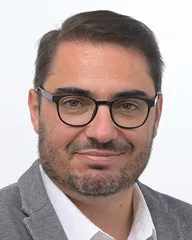
Lukas Sieper | Germany DEU | Non-attached Members (NI) | 390 |
| 2 |
|
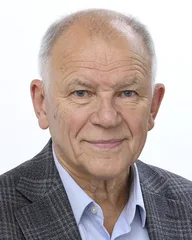
Juan Fernando López Aguilar | Spain ESP | Progressive Alliance of Socialists and Democrats (S&D) | 354 |
| 3 |
|
Sebastian Tynkkynen | Finland FIN | European Conservatives and Reformists (ECR) | 331 |
| 4 |
|
João Oliveira | Portugal PRT | The Left in the European Parliament (GUE/NGL) | 232 |
| 5 |
|
Vytenis Povilas Andriukaitis | Lithuania LTU | Progressive Alliance of Socialists and Democrats (S&D) | 227 |
All Contributions (93)
Rail transport safety in the EU – lessons learnt from the Adamuz accident and three years after the Tempi tragedy (debate)
Madam President, look, we are not here to add more pain to the already suffered by Adamuz and Tempi train accidents out of respect for the victims, their families and friends. Responsibilities will have to be clarified in court. Here what we have to do is try to give solutions so that all this does not happen again. The maintenance and modernisation of infrastructure must be a top priority in the European Union. Failures in infrastructure, in signalling, in supervision can have devastating consequences and we have seen it in Tempi and Adamuz. The European Union must ensure the full implementation of European legislation on railway safety and accelerate the deployment of modern safety systems and more, if possible, now that a very clear commitment is being made to rail transport and high speed. We cannot build an effective high-speed network if it is not secure. And for this to be possible we really need close cooperation and clear engagement between Member States, between infrastructure managers and regulators to ensure that strategic railway infrastructures are built and maintained with high and homogeneous safety standards and across the European Union. Rail and high speed are the pillar of sustainable mobility and European connectivity and deserve ambition because they will strengthen innovation and strategic autonomy. We need to take advantage of all the tools offered by public procurement, digitalisation and technological innovation. This area is an opportunity for competitiveness and security. It is clear that we cannot change what happened, but Tempi and Adamuz must be a turning point for the new Connecting Europe Facility to be provided with the necessary resources.
EUCO and situation in the Middle East (joint debate)
No text available
Housing crisis in the European Union with the aim of proposing solutions for decent, sustainable and affordable housing (debate)
Madam President, today we all have our heads set on Iran, on the humanitarian and economic crisis that all this is generating, and without taking our eyes off what happens there, we have to talk about housing and I want to do it by echoing what the cluster of the construction of the Basque Country was moving us a few days ago: want to be part of the solution to the housing problem and, beyond the big developers and builders, there is an industry, there are 122 000 jobs in Euskadi, there are small companies – window factories, cement, materials, electricians, masons, engineering, waste management, robotics and innovation – and they want to contribute to ensure access to decent housing. And from today I want to make that call so that the steps and actions that come out of this report – reduction of bureaucracy, aid for young people and vulnerable groups, mobilisation of supply – go hand in hand, in collaboration with a public-private model, putting limits on abusive practices and giving a real and comprehensive solution, which has a direct effect on the real estate market. And, in the end, that each person can freely choose their option – buy or rent – and have access to decent housing.
State violence in Minneapolis and the rule of law in the United States (topical debate)
No text available
Spain’s large-scale regularisation policy and its impact on the Schengen Area and EU migration policy (debate)
I'm going to summarize it very briefly. Point number one: I have read a few articles about false information circulating regarding what the consequences of this regularization would be. We have all heard this here and those of us who have read a little know it. And, with respect to those discourses that seriously and dangerously link migration to security, look, we promote transparency. I also invite you to look at what we are doing in Euskadi with regard to the publication of information and security data to guarantee transparency to citizens, which is what they are asking for, and not lies.
Spain’s large-scale regularisation policy and its impact on the Schengen Area and EU migration policy (debate)
Mr President, ladies and gentlemen, you are going to allow me not to enter the mud because, of course, we are not going to be the ones to give the extreme right even half a space of opportunity for growth. Since the 1980s, six regularization processes have been carried out with both socialist and popular governments. It is nothing new that the European Union loses population, ages and has on the table a major demographic challenge that it must address. As a party, we have made it very clear what needs to be regularized and that is why we support the Popular Legislative Initiative in Madrid. We are consistent and we have told you that by active and passive. Of course: We do not understand that after having negotiated for a year and a half a decree law is now put on the table. What's going on? That we've just been hanging out? Being able to share in large part the end, the forms and the chosen path, of course, these have not been the desirable ones. We and we would not have done so; we would have linked it much more to the workplace to ensure real integration, coexistence and sustainability of the systems. That is the model we want at European level: an orderly, humane and possible model. That said, we hope that our comrades in Madrid will receive the explanations they deserve and that this issue will be treated with the diligence, seriousness and transparency that is owed to it. Europe and the Basque Country deserve more comprehensive plans and fewer headlines.
Amending Regulations on agricultural products as regards market rules and sectoral support measures in the wine sector and for aromatised wine products (debate)
No text available
Presentation of the Digital Networks Act (debate)
Madam President, Madam Vice-President, after listening to Donald Trump in Davos, it is really difficult to focus the debate. But perhaps today, more than ever, we welcome the Digital Networks Act. We are ready to take the lead that is needed to drive real change in the way the European Union regulates the digital ecosystem. We believe in comprehensive reform that strengthens our ability to achieve global competitiveness and sovereignty. Europe needs high-performance connectivity to realise its digital ambitions. We need a modern and simplified legal framework that accelerates the transition from copper to fibre, from 4G to 5G and 6G, and from legacy systems and infrastructures to more modern and more capable ones. Furthermore, we understand that their proposed scaling up of cross-border networks and services is key for investment, innovation and for that digital single market; They propose to reduce administrative burden, facilitate investment in areas such as satellite and protect the consumer. Therefore, perhaps today, more than ever, it is time to support initiatives like this that make us more independent and freer from the United States.
Situation in Venezuela following the extraction of Maduro and the need to ensure a peaceful democratic transition (debate)
Madam President, High Representative, the military intervention by the Trump administration in Venezuela is a clear violation of international law and the UN Charter, as we have already said; and that such an incursion is an alarming precedent, too. Sustainable peace, democratic legitimacy and justice cannot be guaranteed by military force. Venezuela deserves a democratic future. Nicolás Maduro is an illegitimate dictator who remained in power and this Parliament has already recognized Edmundo González Urrutia as legitimate president of Venezuela. If he had taken office, we probably wouldn't be here today talking about this. At the moment, the situation remains very unstable. The regime remains in power at the hands of Donald Trump. We welcome the release of political prisoners, but we also demand the unconditional release of all those people who are arbitrarily imprisoned for political reasons. Change in Venezuela must come from within, from its people, and Europe must defend the rule of law without double standards. In a new world scenario where the strongest seems to win, international law and Europe must finally do what it takes to become a true global power. We call, from here, for a strategic commitment with the Latin American peoples and leaders to respond in a balanced and fair collaborative democratic way to the challenges we face.
Presentation of the Cybersecurity Act (debate)
Madam President, we very much welcome this cybersecurity package. We do this because we have been talking about the importance of security in a holistic way for a long time. Undoubtedly cybersecurity is an element that is strategic. We can't just remember it when the power goes out, when an airport, a hospital needs to be closed, or when a supply chain fails. It is an area that is strategic for our sovereignty and for our autonomy in the technological and digital field. We want to protect our infrastructure and our people, our people, from our European values. In this regard I would like to make just one request: that this reinforcement of the European Union Agency for Cybersecurity will be used to work hand in hand with other existing agencies, such as the Basque Cybersecurity Centre, to add capacities and for Euskadi and Europe to be truly strategic and sovereign in the technological field and in cybersecurity.
Preventing sexual harassment in public institutions: latest revelations and resignations in Spain and institutional responses (debate)
No text available
Presentation of the automotive package (debate)
No text available
Presentation of the European Affordable Housing Plan (continuation of debate)
No text available
Development of an industry for sustainable aviation and maritime fuel in Europe (debate)
Mr President, the regulation is approved, we know that, and the challenge we have at the moment is that we achieve those objectives with the real European industrial policy that has to be behind them, that we are realistic and that we are pragmatic. European industry does not compete only on climate targets. It does so also in cost of capital and speed to deploy clean fuel plants, including, of course, biofuels as well. Welcome are all the support for investments that add up to accelerate and to give stability and security to the investments we need, because it is really urgent to develop European value chains: If not, we will continue to buy this green transition to clean fuels outside. And that impoverishes us. As Europeans, we need sustainable and European fuels.
Fishing opportunities 2026: ensuring the sustainability of fish populations, marine ecosystems and coastal communities
No text available
EU strategy for the rights of persons with disabilities post-2024 (debate)
No text available
Digital Package (debate)
Mr President, European technological sovereignty is as important as energy sovereignty. We depend on technology for virtually everything we do today. And we already know that the made in Europe in this case it shines by its absence. I also want to be possible because in Euskadi and in Europe we have capabilities in cybersecurity, in artificial intelligence, in clean technology, in technological infrastructures and in European clouds. But there we have the continuing threats from the United States, which today still tell us that we have to relax our rules if we want to work on steel tariffs. A few minutes ago we talked about protecting our children online. Now we talk about competitiveness and digital independence. After all, everything is united. We need infrastructures, products, own developments that drive us in strategic sectors, but we have to do it from our values. And all this help must go to our companies, which have to compete on equal terms with American and Chinese companies, but with a red line, because people must be sovereign of their data.
Protection of minors online (debate)
Mr. President, I was saying that today, from here, we want to send a very clear message that our children are not a business. We are totally in favour of digitalisation, seizing all the opportunities of digital transformation, adapting and growing with digital platforms, learning to combine the physical and the digital, as well as using the potential of artificial intelligence. But look! We are concerned about the increase in mental illness and violent, extremist, fascist and illegal attitudes that are sometimes being promoted unfiltered and unchecked. So we need some order in those algorithms, which we neither know nor control. We know they're working on it. We know that it is not easy either because it affects many strategic areas, but there must be red lines and the manipulation of our minors is undoubtedly one of them, because they are our future.
Escalation of the war and the humanitarian catastrophe in Sudan (continuation of debate)
Madam President, this week there have been many calls for an end to the violence in Sudan, which is experiencing a civil war that has caused one of the worst humanitarian crises on the planet, even if it does not have the visibility or importance that others do. And this week too, those who have sown terror in all these last years and months have shown themselves willing to collaborate with the United States to achieve peace. And they do so after Donald Trump announced his intention to start working to stop the conflict and activate a mediation mechanism with Saudi Arabia, Egypt and the United Arab Emirates. And here my question is very clear: What is the European Union going to do in this scenario and what will be the role that we are going to have at the moment?
Changing security landscape and the role of police at the heart of the EU’s internal security strategy (debate)
Mr Vice-President, we have been talking for some time about ensuring security in a holistic way and being autonomous and sovereign, and we are only aware of this when we have a situation that leaves us in check, such as the one we lived with Amazon Web Services yesterday. We can only live in peace and quiet if we are able to guarantee minimal physical, digital, air, maritime and energy security. This is a matter of strategic sovereignty. Without security there is no freedom. In Euskadi – in my country – we were clear about this and that is why we opted for a comprehensive police force as a principle of autonomy. They can and should count on the Ertzaintza to develop the European security model. (She spoke in an unofficial language).
Recent peace agreement in the Middle East and the role of the EU (debate)
Mr President, very briefly: We are seeing the fragility of this peace process. We believe that it is time to do a lot of work, and to do it very discreetly, to prevent all those people, agents, States that want to destabilize the process from not succeeding. Because – let us not deceive ourselves – there are also many competing interests that we have in this peace process. Therefore, they make it really difficult. So let's not get lost. All our efforts must be aimed at complying with the agreement and stabilizing the area, ensuring that humanitarian aid enters and that all the basic needs of the civilian population are met. And all our efforts must be directed towards ensuring that nothing, and no one, prevents us from moving towards a peace that is just, true and lasting.
Europe’s automotive future – reversing the ban on the sale of combustion cars in the EU (topical debate)
Mr President, let us be very clear and clear. We do not agree to renounce the sustainability and environmental goals we have achieved. And we are not going to give wings to climate change denialism. If what we are talking about is advancing hand in hand with the sector, protecting jobs, using all existing technological advances and strengthening European supply chains and the circular economy, then welcome this debate. It is the way forward that we already proposed when these objectives were approved and we understand that Europe has to take firm steps towards climate neutrality and zero emissions taking into account its strategic industries, among which is the automotive sector, which is also strategic for Euskadi. And we have to analyze how autonomous and autonomous we are in production, if we have the capacity to manufacture at a reasonable and competitive price, if we have the necessary infrastructure for deployment. And we have to ensure a market that is fair to the made in Europe and for the made in Basque Country. We have the Action Plan launched in March and, in September, the third strategic dialogue with the sector. The mid-term evaluation of the regulations will be advanced and we have a range of technological solutions with which we must work so that we meet the objectives of decarbonization and electrification, with resilience in supply chains and with a clear shared industrial agenda.