
| Rank | Name | Country | Group | Speeches | |
|---|---|---|---|---|---|
| 1 |

|
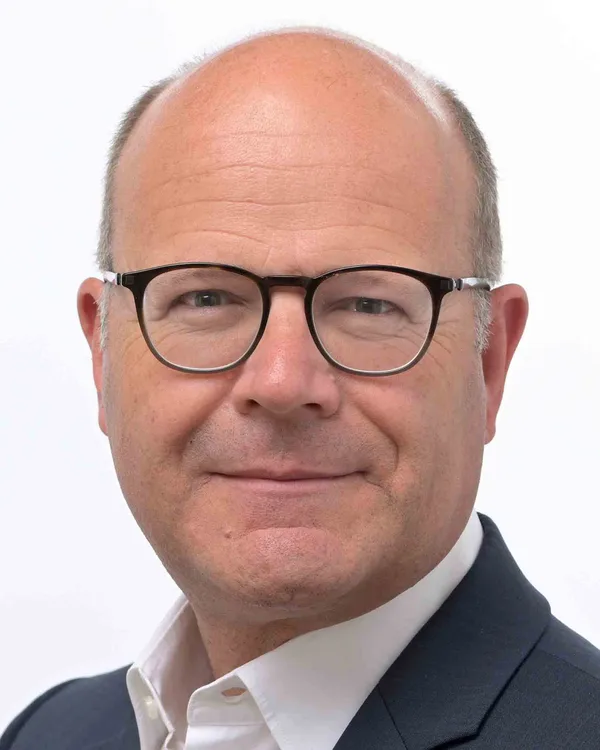
Lukas Sieper | Germany DEU | Non-attached Members (NI) | 390 |
| 2 |
|
Juan Fernando López Aguilar | Spain ESP | Progressive Alliance of Socialists and Democrats (S&D) | 354 |
| 3 |
|
Sebastian Tynkkynen | Finland FIN | European Conservatives and Reformists (ECR) | 331 |
| 4 |
|
João Oliveira | Portugal PRT | The Left in the European Parliament (GUE/NGL) | 232 |
| 5 |
|
Vytenis Povilas Andriukaitis | Lithuania LTU | Progressive Alliance of Socialists and Democrats (S&D) | 227 |
All Contributions (16)
Post-election situation in Uganda and threats against opposition leader Bobi Wine
No text available
World Cancer Day (debate)
Mr President, ladies and gentlemen. Almost three million people in Europe are diagnosed with cancer each year; That's five diagnoses per minute. At the same time, we know: Four out of ten cancer cases would be preventable through better prevention. Therefore, it is clear: The treatment of cancer does not start with the diagnosis; It starts with prevention. Thanks to excellent research, we now understand cancer better and better. But we still do not understand enough how we prevent it and how preventive measures actually work in everyday life. We need to explore how prevention reaches people, how healthy knowledge becomes healthy action, and what actions really make a difference. In Europe we see: Some countries are in the Public healthPrevention is much more successful than others. The crucial question is: Why can't reforms be implemented here and elsewhere? With the Europe's Beating Cancer Plan We have the right instrument. Now we need to use it consistently to strengthen prevention research and to learn from each other. When we think and strengthen prevention in Europe, we fight cancer sustainably and protect lives. Let's get it off the ground together in this house.
Framework for strengthening the availability and security of supply of critical medicinal products as well as the availability of, and accessibility of, medicinal products of common interest (debate)
Madam President, ladies and gentlemen! The past few years have shown: Shortages in the supply of medicines are a real threat to patients, to our health systems and a strategic risk to Europe's ability to act. If we want to secure the supply of critical medicines, one thing applies: Reliable supply does not come with new bureaucracy, but only with a strong and competitive pharmaceutical industry in Europe. The Critical Medicines Act must be understood as a necessary response to this challenge and explicitly also in terms of industrial policy. Production, innovation and stable supply chains cannot be dictated. They need reliable framework conditions, investment incentives and planning security. But I also say clearly: The CMA must not perish in a sea of contradictions. If we do not create new incentives here, we must not do the opposite elsewhere by imposing excessive requirements and imposing new burdens. At the Urban wastewaterRegulation will show whether we can rethink in the interest of the future supply of medicines. Our standard must be: More European added value, more innovation, less dependence. A Europe that only imports critical medicines is not resilient, it is blackmailable.
Outcome of the UN Climate Change Conference - Belém (COP30) (debate)
No text available
Outcome of the UN Climate Change Conference - Belém (COP30) (debate)
No text available
Effective use of the EU trade and industrial policy to tackle China’s export restrictions (debate)
Madam President, Commissioner, ladies and gentlemen! Rare earths are the basis of the technologies that shape our everyday lives. But value creation is now more and more in Chinese hands and this dependence makes us vulnerable. If our digital transformation, our military capability and our energy systems depend on political decisions outside Europe, that is a strategic threat. But we are not at the mercy of this situation. It is up to us to reduce dependencies. Firstly: we need to strengthen our research, from new materials to more efficient processes and modern recycling technologies. Innovation is our strongest lever against dependencies. Secondly: National projects on raw materials must be expanded and the Critical Raw Materials Act be implemented more quickly. Political decisions must finally lead to permits, investments and real projects. Thirdly: We need more value creation in Europe. It is not enough to secure raw materials, we have to translate them here into industrial production. This is the only way to create real resilience. Europe should remain open, but not naive.
UN Climate Change Conference 2025 in Belém, Brazil (COP30) (debate)
Madam President, Commissioner, ladies and gentlemen! In a few weeks, the climate conference COP 30 will start in Belém. There, the world community will talk about ambitious goals, and that's good. But what matters is whether we reach them. Europe is strong in setting goals, but we also need to be strong in implementing them. Ambition alone is not enough. We need courage to enable, less bureaucracy, more incentives, more trust in innovation and technology. Climate protection is not created by bans, but by ideas, competition and smart framework conditions. An intrusive policy that regulates everything down to the last detail takes away people's will to shape things. We need confidence in the creative power of Europe's bright minds. Then the innovations that drive us forward will also emerge. Then we will have growth that will provide us with the means to finance the necessary developments while at the same time complying with the Paris Agreement on climate change. We gain nothing if we set ourselves ambitious goals, but lose jobs, industry and people along the way because our economy is paralyzing. And we must be careful not to isolate Europe. We would have desired the same ambition from China and an active commitment from the United States to climate protection instead of destruction. Especially in East Germany we know: After 1990, it was the market economy that promoted environmental protection. Climate protection will also become strong if we integrate it into our market – not against, but with the economy. That's what it's about now. Ambition yes, but with a sense of proportion, freedom and trust in our own strength.
Presentation of the proposal on Critical Medicines Act (CMA) (debate)
Madam President, ladies and gentlemen, Commissioner! The list of critical medicines is now over 270 active ingredients and substances, including simple cough juices for children, and makes the urgency for the Critical Medicines Act clear. Globalization and strong cost pressures have led to a churn in production and a concentration on a few manufacturers in China and India. But supply bottlenecks are avoidable. They are the result of political frameworks that set national and European policies. We can change this framework; The CMA will contribute to this. We can reduce dependencies and create stable supply chains if we work for a strong, sustainable and internationally competitive pharmaceutical industry in Europe. The current bottlenecks are wake‐up call. Europe needs a strong pharmaceutical industry. To do this, we need to think industrial, research and health policies together, look at the entire value chain and send the right signals to companies. We need to incentivise our own production in Europe of critical agents and antibiotics, two thirds of which are now produced in Asia. For this, we need financial incentives, and we need faster approval procedures that reward entrepreneurial commitment. My expectation for the CMA is therefore very clear: It must contribute to improving the availability of medicines by incentivising more production, more stable supply chains and more solidarity among themselves.
US AI chip export restrictions: a challenge to European AI development and economic resilience (debate)
Madam President, Madam Executive Vice-President! Ladies and Gentlemen! Sanctions are imposed on those who are vulnerable. Unfortunately, this is where our European weakness in the chip industry comes to light. We must therefore be bold in our efforts to strengthen European microelectronics. The Chips Act was a good first step, but it is far from sufficient in its current form and not stimulating in its bureaucratic appearance to the extent that some of us have hoped for. Because the truth is: We have fallen from 8% to 6% of world production. What does that mean for us? The production of semiconductors is one of the most challenging tasks that technologically exist. They do not arise in an Fab, but in complex networks and clusters. Grenoble, Catania and Dresden with Silicon Saxony They are European lighthouses. Unsurprisingly, it is precisely at these locations that investments are now being made again and not on the green meadow. If we are serious about our claim to play a leading role in chip production, we must therefore think regional and cluster policy together. In the future, the Chips Act must also open up the possibility of investing in suppliers and infrastructure in order to open up the possibility of strong, globally competitive semiconductor clusters with us in Europe. In this way, Europe must free itself from its technological dependence on the USA and other chip regions and massively strengthen its own production. Without the chip industry, there are no cars, machines, medical devices, defense and much more. That is why we must not wait any longer, but must start swiftly with a revision of the Chips Act and invest massively in the future together with the Member States.
Misinformation and disinformation on social media platforms, such as TikTok, and related risks to the integrity of elections in Europe (debate)
Mr President! Commissioner, ladies and gentlemen! Social media has a huge impact on our society. In a few years, they have radically changed our information behavior and our way of conducting debates. At the same time, we see how the new information monopolies endanger or even destroy previously established media. For our democracy, which depends on good media, this is an alarm signal that we must not ignore. Instead of journalistically well-researched content, there are too often filter bubbles in which fake news and conspiracy theories flourish. Instead of transparency, we have algorithms, instead of publishers and editors-in-chief, the responsibility of the interests of the platform owners. This is how liberal democracies are being attacked around the world – in Europe and elsewhere. Information deserts and fake news were also important reasons why people stormed the Capitol in the US, according to Timothy Snyder. They were ill-informed in the echo chambers of the network. Our political response needs two thrusts: First, we need to understand that the space of social media is not a purely private space, but also a public space. The rule of law must consistently pursue hate crime on platforms and unequivocally require providers to delete criminal content. Second, our liberal democracy thrives on free media. We need independent media with diversity and well-paid journalists. This includes strong private providers as well as strong public broadcasting. What we currently see in other countries must therefore be a wake-up call for us to protect our media from monopolization and our society from fake news and controlled algorithms.
World Mental Health Day - need for a comprehensive EU strategy on mental health (debate)
Mr President, Commissioner, ladies and gentlemen! I am very grateful that we are having this debate here today. Experts predict that mental illness will be one of humanity's biggest problems in the coming years. Even today, one in eight people in my home country is affected by depression. It is predicted that this will be the most common disease in Europe by the end of the decade. However, the rapidly growing number of mental illnesses not only has a direct impact on patients themselves, but also poses a growing challenge to the healthcare system, the labour market and the economy. According to the OECD, the total cost of mental illness in Europe alone amounted to over €600 billion before the COVID pandemic, representing 4% of the EU's total GDP. We know that the pandemic has exacerbated the global mental health crisis. I therefore believe that three points are necessary in the short term. Firstly: We need to better link national research and create a European Mental health-launch a project that pools national efforts and provides targeted support. Secondly: Researchers, doctors, politicians and patient representatives need to be better networked and, in a joint dialogue process, identify measures with which we can better prevent, research and heal. And thirdly, we need more educational campaigns to reduce stigma, taboos and hostility to disease in social interaction. We owe that to the patients, ladies and gentlemen, all of us.
The devastating floods in Central and Eastern Europe, the loss of lives and the EU’s preparedness to act on such disasters exacerbated by climate change (debate)
Mr President, ladies and gentlemen! I am grateful for today's debate and the contributions of many colleagues, especially from the countries concerned. These hours and days are about help on the ground, and it is a strong sign of mutual solidarity and good neighbourly cooperation that we stand by each other in this need. Even from the afflicted Ukraine, there are offers of support for the affected neighbors. At the same time, it is depressing to see those who have come to help become victims of this disaster. Together we commemorate her and the other victims of these terrible floods. But we still need this solidarity even when the images of destruction have disappeared from the media. I am glad that the Prime Minister invited Tusk to a meeting tomorrow to visit the floodplains with the President of the Commission and to talk about concrete measures of support. But we need to better protect ourselves against the consequences of these increased floods. In doing so, we must not only rely on better flood protection, but also talk about what each individual can do to protect and secure their property. Anyone who trusts that the state will step in every time to settle claims will find that even in rich countries it can quickly become overburdened. That's why we need to come up with sensible and affordable insurance solutions that help people protect themselves against floods and other natural damage. Currently, owners too often rely on the state to intervene in the event of damage, so we also need an obligation to take out such an elementary damage insurance.



