| Rank | Name | Country | Group | Speeches | |
|---|---|---|---|---|---|
| 1 |
|
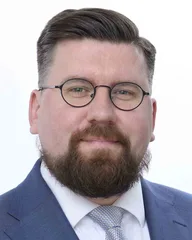
Lukas Sieper | Germany DEU | Non-attached Members (NI) | 390 |
| 2 |
|
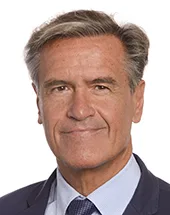
Juan Fernando López Aguilar | Spain ESP | Progressive Alliance of Socialists and Democrats (S&D) | 354 |
| 3 |
|
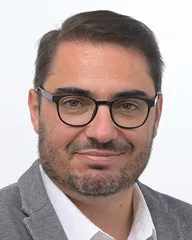
Sebastian Tynkkynen | Finland FIN | European Conservatives and Reformists (ECR) | 331 |
| 4 |
|
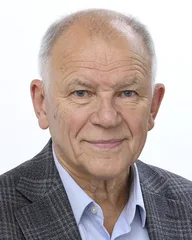
João Oliveira | Portugal PRT | The Left in the European Parliament (GUE/NGL) | 232 |
| 5 |
|
Vytenis Povilas Andriukaitis | Lithuania LTU | Progressive Alliance of Socialists and Democrats (S&D) | 227 |
All Contributions (26)
Presentation of the Energy Package (debate)
Mr President, Commissioner! For many people in Europe, energy policy starts with the energy bill at the end of the month and with the question ‘Can I still heat my home?’ ‘Can my business still bear the electricity costs and can I afford the next winter?’ Around 42 million Europeans still cannot heat their home sufficiently in winter. For these people, energy policy is not an abstract debate. It is a question of dignity, of security, of social justice. That is why the Citizens' Energy Package is important. It strengthens consumer rights, creates more transparency and gives citizens more opportunities to control their energy costs. People should be able to switch providers more easily, they should be able to produce and share their energy themselves. And they should better understand what they are actually paying for. And that's right, because energy policy must always be a citizen's policy. But we also have to be honest at the same time. More transparency alone does not make energy affordable. If we really want to reduce energy prices in Europe permanently, then we must also solve the structural problems. Europe needs more cheap energy, more investment in networks and infrastructure and an energy market that really works.
Gender pay and pension gap in the EU: state of play, challenges and the way forward, and developing guidelines for the better evaluation and fairer remuneration of work in female-dominated sectors (debate)
First of all, the EPP is also a party that does not only European politics, but also national politics. The whole issue of childcare, of structural challenges, is to a large extent also located in the Member States. And we are putting a very, very big focus on municipal childcare, on the all-day school, on the development of childcare structures in order to relieve children and women – and men – there too. At EPP ‑ level we say: We stick to the Wage and Pay Transparency Directive, but we also need to look at it honestly and simplify it where it brings more bureaucracy than added value for women.
Gender pay and pension gap in the EU: state of play, challenges and the way forward, and developing guidelines for the better evaluation and fairer remuneration of work in female-dominated sectors (debate)
(Start of speech when microphone is switched off) …, and not only for me, but also for my EPP ‑ group, that we clearly stand for equality between men and women and the closing of the wage gap, and quickly – but not through bureaucracy.
Gender pay and pension gap in the EU: state of play, challenges and the way forward, and developing guidelines for the better evaluation and fairer remuneration of work in female-dominated sectors (debate)
Thank you for the question, Mrs Demirel. First of all, I have made it very clear what I mean by tackling structural disadvantages, and that is the issue of fighting for more education, fighting for more entrepreneurship, fighting for more care places – the structural issues that we have. Let me also be very clear on the subject of the Pay Transparency Directive. Transparency helps to create transparency in order to also present differences. But what does not help is the bureaucracy – and if you have read the Pay Transparency Directive carefully, then it applies from 100 employees. These are already small bakeries that are not in a position to do so and are bureaucratically overwhelmed. Tariff binding is not taken into account accordingly and they have an annual reporting cycle that is not aligned with sustainability reporting. That's what bureaucracy does.
Gender pay and pension gap in the EU: state of play, challenges and the way forward, and developing guidelines for the better evaluation and fairer remuneration of work in female-dominated sectors (debate)
Madam President, Commissioner, ladies and gentlemen, This week we celebrated International Women's Day, and it reminds us that equality has always been linked to economic independence. In doing so, Europe has produced wonderful role models. In my native Baden-‑Württemberg, Bertha Benz wrote history of technology with the first long-distance journey in automotive history. She has shown: When women get and seize opportunities, innovation arises. There is growth. And that is why we need to be very honest about the gender pay gap. In Germany, the adjusted wage gap is around 6 percent. Let me make one thing very clear: Any share of wage discrimination, in this 6 percent, is absolutely unacceptable. But the 6% difference is also caused by structural differences in career paths, career choices, industry choices, leadership responsibilities and career breaks. These structural differences are not addressed at all by the Wage Transparency Directive instrument. No, quite the opposite: The Wage and Pay Transparency Directive does a disservice to women's equality. It threatens under the guise of equality with more and more bureaucracy and more and more reporting obligations, without really solving the structural causes. Therefore, let us give an honest European answer to the wage gap: De-bureaucratisation of the Wage and Pay Transparency Directive, tackling structural disadvantages and fighting for more education, more entrepreneurship, more women in innovation and technology and encouragement. We do not achieve equality through forms, but only through honest and effective policies.
Addressing subcontracting chains and the role of intermediaries in order to protect workers’ rights (debate)
Thank you very much, Mrs Scuderi, for the question! I have not said that we do not need legislation, but I have said that we must implement the legislation that we have accordingly. According to the principle of subsidiarity, we do not have to regulate everything at European level. That was the statement, and it's clear. For example, we have a directive – the 2014 directive – which already regulates clear principles of subcontracting, precisely for the public sector. And I believe that we already have sufficient legal bases in this context, both at national and European level.
Addressing subcontracting chains and the role of intermediaries in order to protect workers’ rights (debate)
Mr President, ladies and gentlemen, Everyone knows subcontracting from everyday life. Building a house: You don't hire a company for everything. there is the general contractor, including electrician, roofer and tiler. It is precisely this division of labour that makes projects work – specialised, efficient and affordable. It is precisely on this subcontracting that we are voting here in Parliament this week. One thing is clear: Subcontracting abuse must be fought hard. Exploitation, wage fraud, criminal sham structures - there must be no such thing; There must be no tolerance. But I think a new directive on subcontracting chains is fundamentally wrong, because subcontracting is not a peripheral phenomenon: In the EU, around 17% of all SMEs are subcontractors. And anyone who wants to limit chains on a flat-rate basis intervenes in the freedom of contract in a historically unprecedented way. This weakens competition and innovation and puts employment at risk. This is the crucial context: In our current geostrategic, tense situation, competitiveness is no minor matter. That is why I clearly call for: not new directives, but a strict enforcement of existing laws. Macron spoke this week about the need for Europe to wake up; He said: If we do nothing, Europe will be swept away in five years. And I say quite clearly: Even if we do the wrong thing, Europe has been swept away in the five years – and that is exactly what is at stake here and now.
Grids package and tackling raising energy prices through robust infrastructure (debate)
No text available
Phasing out Russian natural gas imports and improving monitoring of potential energy dependencies (debate)
No text available
Ending all energy imports from Russia to the EU and closing loopholes through third countries (debate)
Mr President, dear Mrs Gedin! We are not in a fantasy world here, but unlike you, we are writing history here. Just as in Europe peace was once forged out of coal and steel, so today we forge our energy security and our freedom out of wind, sun and reason. The end of Russian energy imports is more than energy policy. It is a bloodletting for a war economy that breathes longer with every kilowatt hour from Europe. We stand by our responsibility towards our citizens, towards Ukraine and towards our own sovereignty. But: Energy in Europe must also be affordable. And bureaucracy must not become the sand in the transmission of our energy supply. We are building dams against blackmail, not against our partner countries that import energy into Europe, and not against those that invest, diversify, save and produce in Europe. Therefore, our compass is very clear in the following negotiations: Our energy policy decisions must stop the lights in Europe, the heaters warm, our industry strong, but at the same time turn the money tap towards the Kremlin. With this legislation, ladies and gentlemen, we have the chance to make history. Let us seize this opportunity – for energy security and for Europe!
Electricity grids: the backbone of the EU energy system (debate)
Madam President, Commissioner Zaharieva, Mrs Stürgkh, Anna, ladies and gentlemen! Europe's electricity grids are the backbone of our strategic energy future. Recent projections show: Global electricity demand will almost double by 2040. Without stable, high-performance networks, however, any electrification strategy remains an empty promise. What we see, however, is that regional demand and infrastructure are far from being in harmony today, and so we have to work hard on it. We need resilient and autonomous energy systems through local grid structures that ensure supply even in crises. But let me also make one thing clear: Today, in many places, we are experiencing a difficult situation – massive grid expansion without sufficient generation capacity or real consumer demand. The need for grid expansion must be based on the real relationship between supply and demand. Let me also make it clear: Electrification must not mean that other energy sources are pushed to the brink. Electrons and molecules must go hand in hand. This is the only way to secure a technologically open and resilient energy future. Let me also make it clear: When it comes to network expansion, we need to think about cyber security as strategically and imperatively as we do about strategic sovereignty. Ladies and gentlemen, Europe's electricity grids are the backbone of our strategic energy future. Let's expand the networks wisely, safely, on demand and open to technology.
The role of gas storage for securing gas supplies ahead of the winter season (debate)
Mr President, Commissioner, ladies and gentlemen, Today, in the context of gas storage, we are debating important issues – issues that concern not only the reality of life of our European citizens, but also the competitiveness of our industry. On the issue of the extension of the EU gas storage regulation, we decide on energy security and the reduction of gas prices in Europe. In 2022, the adoption of the EU Gas Storage Regulation with specific filling levels was absolutely justified in the very concrete crisis situation of the Russian war of aggression. But the framework conditions have changed fundamentally. European dependencies on Russian gas imports will soon be history. Gas sources have been diversified and the share of renewable energies has increased. But we are seeing that the current regulation leads to massive market distortions and excessive gas prices. And it is therefore time for a return to a market-based order. That is why we as the EPP Group are calling for a new balance between security of supply and market economy thinking. We therefore support a lowered storage target of 83 percent, flexibility of a further 8 percent, a flexible filling period, the deletion of intermediate targets and the immediate application of the new rules from 2025. I would like to expressly welcome the Commission's announcement that it is open to flexibility. Ladies and gentlemen, let us reduce energy prices in Europe sustainably without risks to the security of supply of our citizens.
Accelerating the phase-out of Russian gas and other Russian energy commodities in the EU (debate)
Mr President, Commissioner Jørgensen! Russia's war against Ukraine has shown us very painfully that Europe's energy dependence on autocratic regimes was a strategic mistake. And the European Union has responded – and successfully has done so – and will continue to do so; Thank you very much for that too. But let me make one thing clear: The crucial question is not only the phase-out Russian fossil fuels. The crucial question is: How do we make sure we don't get from one dependency to the next? We must not make the mistake of falling into new dependencies. And when we talk about renewable energy, we must not forget that there have also been recent warnings about the risks in Chinese inverters in European PV and wind power plants and thus in our critical infrastructure – and that must be a wake-up call for us. Anyone who can also control our energy supply digitally has control over our energy security. This is why the era of geopolitical naivety is over. We also need to think about ourselves: build our own capacity and advance our own energy technology and production.
Clean Industrial Deal (debate)
Madam President, Commissioner Séjourné! We live in a time of profound geopolitical upheaval, and the post-war order, which has brought us stability and security for so long, but also prosperity, is also a thing of the past. In a world full of uncertainty, one thing is clear: Europe must be united in security and peace, but also in economic strength, because without a strong economy, Europe cannot defend its values. Without industrial competitiveness, we remain dependent, and without technological sovereignty, we risk the future of Europe. You know that, Commissioner, and that is why you have come to Baden-Württemberg, to the heart of the European automotive industry – and thank you again. And now go with it Clean industrial deal an important step, and it takes up many of the central demands of the CDU and EPP: strengthening Europe's location, promoting research and innovation and guaranteeing affordable energy. But that's not enough. Europe needs more speed of implementation, more pragmatism, more confidence in the market and its companies. The time to act is now.
Powering Europe’s future - advancing the fusion industry for energy independence and innovation (debate)
Madam President, Commissioner Micallef! We in this House represent the people of the European Union, and they want and demand a stronger role for the EU in energy policy. People expect European solutions for their energy poverty, for rising energy prices, for Europe's energy independence and for climate-neutral energy. And energy must not become a social issue, so we are called now. And we Europeans must not only think about next winter, but also think about the long term. And a long-term mindset means that nuclear fusion must also play a crucial role. With ITER, the largest merger project in the world, Europe has already laid a solid foundation. The European Union accounts for 45.5 percent of the total costs, and this huge investment must necessarily be directed into the future. We Europeans should be the first to bring fusion energy to industrial maturity. However, fusion energy must also be a building block in a resolute European energy strategy. Further building blocks must be tackled decisively in the interests of openness to technology. Alternative fission reactors such as thorium liquid salt reactors are already technologically tangible today and can offer great potential for safe and flexible CO2–Poor energy production. We need to think fusion energy, alternative fission technologies and renewable energy together to ensure a sovereign, affordable and clean energy future for all of us.
Rise of energy prices and fighting energy poverty (debate)
Madam President, Commissioner Simson! First of all, I would like to thank you very much for your work for the citizens of Europe over the last five years – thank you very much! With all the successes we can celebrate, one thing remains very clear: Energy prices in Europe have long since passed a critical point, and Europe is characterised by energy poverty. Massive imbalances are weighing on our citizens and our entrepreneurs, which is why decisive action is needed – immediately – both at European level and in the Member States. In the short term, Member States need to adjust taxation and network charges in order to provide tangible relief in the short term and effectively tackle energy poverty. Energy-intensive industries such as steel, aluminium, cement and chemicals also need targeted support to remain competitive. In the long term, however, we need to further develop the foundations for a sustainable, secure and competitive energy supply here in Europe. Therefore, we need to simplify and implement the existing legislation, while at the same time Green Deal Take competitiveness as a basis, but at the same time put competitiveness at the heart of our energy policy. Europe needs to develop energy infrastructure, creating a smart and interconnected system across Europe that can effectively integrate renewable energy and ensure energy security. Europe needs to expand its energy supply pragmatically, relying not only on technological openness but also on the rapid ramp-up of renewable energies. Finally, Europe needs to boost energy storage capacity and grid flexibility and understand citizens as part of energy transformation. Ladies and gentlemen, Europe’s high energy prices and energy poverty call for an ambitious energy policy – now! We must take responsibility for our citizens without delay. We parliamentarians are ready.
Outcome of COP 29 and challenges for international climate policy (debate)
No text available
Closing the EU skills gap: supporting people in the digital and green transitions to ensure inclusive growth and competitiveness in line with the Draghi report (debate)
Dear Mr President, Ladies and Gentlemen! Last night I sat down with many young people from the textile industry, who are the bearers of hope in this industry. But I also sat down with many entrepreneurs who want to put this industry in the hands of the next generation with confidence. The discussion revolved around the question: “How can we, young and old, stand together in Europe to shape Europe’s transformation towards a sustainable, digital future?” There were always the same two challenges: There is a lack of young talent in the textile industry, as well as in many other sectors; and secondly, across the entire workforce, we see a lack of essential skills, especially in the artisanal and digital sectors. We can even put these challenges into concrete figures. Almost three million young people in Germany between the ages of 20 and 34 do not have a vocational qualification. They lack the essential skills, the qualifications that our labour market also needs. This is not a German phenomenon; If we look at Mr Draghi's report, we see that 42% of Europeans do not have the digital skills they need for the future in Europe. It's not just an alarm signal, it's an order for us. We urgently need to focus on digital and technical skills and put that at the heart of our educational landscape. We need to focus on lifelong learning and also give the older generation a chance for further education. For us Christian Democrats, people are at the heart of our politics. When we invest in our citizens, our young talents, our experienced forces, we invest in the future of Europe.
Strengthening Moldova's resilience against Russian interference ahead of the upcoming presidential elections and a constitutional referendum on EU integration (debate)
Mr President, Commissioner, ladies and gentlemen! We are facing a historic moment that could decide the future of peace and stability in Europe. In a few days, the people of Moldova will vote in a referendum on whether Moldova wants to become part of the European Union. In recent years, the people of Moldova have stood up for freedom, democracy and the rule of law in a way that impresses us all. But it is precisely this path that is threatened by Russia's destabilization. This is an attack on our principles of democracy and sovereignty in Europe. That's why we need to position ourselves clearly. We support the Republic of Moldova out of the awareness that the security of this country is directly linked to the security of Europe. The Moldovan people have already demonstrated that they share the values of the EU and, by welcoming Ukrainian refugees, have sent a clear signal for a Europe of humanity, peace, freedom and prosperity. We as the European Union therefore have a clear responsibility. Moldova needs not only our solidarity, but concrete political and economic perspectives. The reforms launched by President Sandu deserve recognition and our full support. At the same time, we must ensure that Moldova fully meets the conditions for EU membership. Let us not miss this historic opportunity to support the Moldovan people on their way to the EU. If the Republic of Moldova wants to make its way into the European Union, we say: You are very welcome!
State of the Energy union (debate)
Dear Mr President, Dear Commissioner, thank you very much for the work you have done over the last five years and also for the report on the Energy Union. But let's be honest today and look at the next five years. Europe is facing huge energy challenges. Energy prices in Europe are far too high, and that is why Europe needs to act now and complete the European internal energy market. Let's be honest: The expansion of renewable energy is progressing too slowly, especially when we see China building twice as much solar and wind capacity as all the other countries in the world combined. That is why Europe needs to act now, remove bureaucratic hurdles and adapt the current electricity market design through capacity mechanisms. Let's also be honest: Europe's dependence on external energy suppliers is far too high. From dependence on Russian energy, we have become dependent on Chinese technologies and raw materials, and that is why Europe must act now to secure energy sovereignty by expanding domestic resources. Let's be honest: Energy security will also be of great importance in the next legislature. Not only do we now see the volatility of energy infrastructure in floodplains, but we also need to make them resilient to cyberattacks. Let's be honest: The innovation dynamics in the field of climate protection technologies have suffered greatly in recent years. We see that the increase in patent applications in innovation markers is mainly due to an increase in Asian applicants. That is why Europe must act now and invest in the competitiveness of our own industry. Ladies and gentlemen, we must ensure safe, affordable and sustainable energy for the people of Europe. It's time to deliver.