
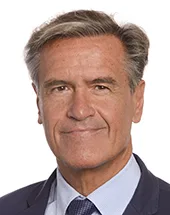
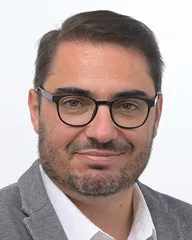
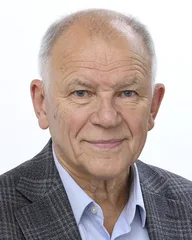
| Rank | Name | Country | Group | Speeches | |
|---|---|---|---|---|---|
| 1 |
|
Lukas Sieper | Germany DEU | Non-attached Members (NI) | 390 |
| 2 |
|
Juan Fernando López Aguilar | Spain ESP | Progressive Alliance of Socialists and Democrats (S&D) | 354 |
| 3 |
|
Sebastian Tynkkynen | Finland FIN | European Conservatives and Reformists (ECR) | 331 |
| 4 |
|
João Oliveira | Portugal PRT | The Left in the European Parliament (GUE/NGL) | 232 |
| 5 |
|
Vytenis Povilas Andriukaitis | Lithuania LTU | Progressive Alliance of Socialists and Democrats (S&D) | 227 |
All Contributions (42)
Building Europe's clean, independent and secure energy following the 2026 North Sea Summit (debate)
No text available
Presentation of the Energy Package (debate)
Mr Popescu, I want to compliment you on your contribution. I think we can easily agree that safe energy is made in Europe, is made local, and that is the way to make it affordable for our citizens. So how do you feel about Ms Montserrat making political games out of our energy debate at the expense of our citizens, instead of putting our best foot forward to make sure that we make renewable energy, clean energy, and that we make it in Europe?
Presentation of the Energy Package (debate)
Mr President, seeing as Ms Montserrat is cool enough to rant on Ribera, but not cool enough to take a blue card, I will use my speaking time to respond on that. Because it was Ms Montserrat who was spreading ghost stories after the Spanish blackout, saying it was all the fault of the green agenda, but it's Ms Montserrat and her political games that cause Europe now to fear high energy prices, that we are not making enough progress. It is Ms Montserrat and her political games that mean our Europeans have to fear the high energy bills and can't pay them. How many times do we have to make the same mistake over and over before we understand that making European energy ourselves is the safest way, the cheapest way, and the way to go forward? This is the way to go forward and not playing games. Please get real.
Housing crisis in the European Union with the aim of proposing solutions for decent, sustainable and affordable housing (debate)
Madam President, Europe is in a major housing crisis, and when you cannot find your home, you cannot build a life. The European Parliament has finally assumed its responsibility on tackling this crisis, and that is essential. And I was happy to negotiate it, because while Europe may not build your home, it can make building easier and cheaper by creating an internal market for construction materials, by cutting red tape, and by lowering the energy bills, by ensuring sustainable housing. Let me say this: whatever laws we make and whatever policies we create, it's the skilled workers that are going to build our houses. And I am proud that this European Parliament recognises how crucial the efforts are of the vocational trained professionals. I want a Europe in which construction workers, electricians, plumbers work across Europe with the same ease as everybody else. This is the only way that we can build houses for all Europeans.
Addressing subcontracting chains and the role of intermediaries in order to protect workers’ rights (debate)
Mr President, people working excessive hours and unpaid overtime, people not being able to take a break, people working in unsafe working conditions – this is reality for millions of people working in Europe. And when it happens, and when we ask the question, 'who is actually responsible?', we see in the whole chain, 'it wasn't me. It wasn't me. It wasn't me. It wasn't me.' This is what we need to fight. I think that this report found the right balance because subcontracting as a concept is not the problem – abuse is the problem, and we need to fight that. We need to fight that because it has nothing to do with competitiveness, it has to do with unfair competition – it has to do with unfair competition at the cost of people. Or, as maybe Shaggy would say it, 'you may think that you're a player, but you're just completely lost'.
International Day of Education, fighting inequalities in access to education (debate)
Mr President, I would like to talk about the inequality that education also causes. Because last week I received 28 MBO students here in Parliament. Together they started the first VET Student Advisory Board: a group of MBO students advising MEPs. And they told me about their reality, like often not getting an internship allowance and having fewer opportunities to go abroad. But what struck me the most was a participant who said: “Finally, I finally feel seen and heard.” Because our education has become a separation in our society. Look at our parliaments and look at all those organisations that influence our policies. There is actually no one with an MBO background, while more than half of our Europeans have completed vocational training. That causes blind spots in our political agenda and it causes a lack of contact. A lack of contact leads to a lack of trust. That is why I call on our colleagues: puncture that bubble, see all forms of education as equal, invest in craftsmanship and make policy for professionals, together with professional professionals and professional students. This is how we make Europe truly for everyone.
Urgent actions to revive EU competitiveness, deepen the EU Single Market and reduce the cost of living - from the Draghi report to reality (debate)
When it comes to simplification, innovation, we strongly agree with each other that we need to work on that. But I want to talk about European preference, and I want to know – because I agree with our Commission President that it is a fine line to walk and that we should focus on our strategic sectors – but my question to you is: are you willing to walk with us that fine line for the strategic sectors that so desperately need our European support?
Urgent actions to revive EU competitiveness, deepen the EU Single Market and reduce the cost of living - from the Draghi report to reality (debate)
Dear colleague, when we talk about the single market, of course, we can immediately agree. When we talk about the simplification agenda, we can agree. But can we also agree that the free market alone is not enough anymore to protect Europe? Can we agree that we need a European preference? If we look at China, with their 'made in China' policy, they made sure that our car industry moved to China. If we look at the US, with their Inflation Reduction Act, they made sure that their green industries came back to the US. Should we not do the same in Europe? I would like to hear the opinion of the EPP about that.
Presentation of the European Affordable Housing Plan (debate)
Madam President, having your own place, a spot in the sunshine and someone in the neighbourhood that can always love you. This is the start of a nostalgic hit song in the 1980s in the Netherlands, because it was such a given that everybody had their own home. But how different are things now? Europeans pay more than 60 % more for housing than in 2015, and in Hungary that's even 200 %. The cost of housing grew almost four times more than our wages and this means that many young Europeans only leave their house when they are in their mid 30s. They are forced to pass on opportunities or delay crucial decisions like starting a family because they cannot find a place to live. People are rightfully furious and rely on policymakers to come up with solutions, and the EU is now assuming its responsibility – besides local, regional and national governments, we are enabling these solutions. The plan is comprehensive and it focuses directly on the construction workers and the technicians who are going to build our houses, because bricks don't stack themselves. We are investing in people and we will prove it can be done.
Grids package and tackling raising energy prices through robust infrastructure (debate)
No text available
Effective use of the EU trade and industrial policy to tackle China’s export restrictions (debate)
Madam President, listening to this debate, I can conclude that we all agree that it's really not favourable that we are this dependent on China. So we do know what we need to do, but how do we do it? The Member States and the EU really have to get on their feet and, together with industry, build strong partnerships with trusted partners. We also need to set clear partners on when industry needs to be diversified. We need to both push and pull. The Vice-President of the Commission said in his introduction that he needs our support and asks for our support. We are ready for the next step. Tell us where and when, and we will be there to support you.
Effective use of the EU trade and industrial policy to tackle China’s export restrictions (debate)
It's insane that you say that we have to keep our relationships with China while we are way too dependent on China. If we do this, the EU is dumber than a cat. A cat knows not to drink from one source, because if they drink from one source and that source is poisoned, they will get poisoned. They diversify their sources, and we also need to diversify our sources of raw materials and not become too dependent on China.
UN Climate Change Conference 2025 in Belém, Brazil (COP30) (debate)
The claims you make are refuted by science time and time again. In addition, floods, heatwaves, droughts and wildfires cost €43 billion in economic damage last summer alone. What do you say to all the people who have lost their homes, who have seen their habitat destroyed? What do you say to those people when you deny that climate change is a problem that we must solve together?
UN Climate Change Conference 2025 in Belém, Brazil (COP30) (debate)
Mr President, EUR 400 billion. This is how much Europe pays annually for fossil energy from countries outside our continent. EUR 400 billion flown to oil sheiks and often to undemocratic leaders. And who's gonna pay for that? The ordinary European, who pays a skyrocketing energy bill, and our industry, which suffers from these gigantic energy prices. We have long known that green energy is the cheapest energy. That is why it is now time to cut down on coal and opt for a future without fossil fuels. There's no way back. There is only the way forward. And that way forward leads to clean, European energy. Firstly, we are cheaper, secondly less dependent and thirdly, we are building our cleantech industry in which Europe can play a leading role in the world. And now it's time for the climate summit and it's time for the rest of the world to take a step forward. Four years ago, at the climate summit, we talked about phasing out fossil energy and phasing out coal. But in the meantime, it appears that China and many other countries are not only investing in cleantech, but are also still building ‘cheerful’ coal-fired power plants. That is why my question to the Commission and to Mr Hoekstra is: What is your plan for cutting coal?
Establishment and functioning of European Works Councils - effective enforcement (debate)
Madam President, the European Union is not only a single market; it's also a social strength. And it is important to support the position of employees in these rapidly changing times. At the same time, we do not want to be standing in the way of competitiveness. This file shows that one does not have to counter the other, but that it actually can strengthen it when finding proportionate outcomes. By unifying and by 'eurofying', we create a system which is easier to navigate for businesses, while at the same time supporting employees all across the Union. The outcomes of these negotiations will make living, working and doing business in the EU more democratic. I would like to thank the rapporteur, Dennis Radtke, for his hard work. It was not easy and we still have aspects where we differ in position, but overall I am very happy with the good compromises that we found. I think we found the right balance both for workers and for businesses in the EU.
Time to complete a fully integrated Single Market: Europe’s key to growth and future prosperity (debate)
Mr. Gotink, you are the brake. You are very much in favour of the internal market here, but you are the brake. Because in your election program, I read: “We want tasks, powers and budgets that remain ours. This is how we preserve our sovereignty.” You are the brake. The government in which your party played the leading role prevented us from recognising vocational training diplomas across Europe. You are the brake. When are you really going to give gas to this internal market?
Motions of censure (joint debate)
Mr President, this month thousands of trainees are starting in our European institutions. Of course it's a happy day for them, but I'm sick of it. I am disappointed that these traineeships are not accessible to VET students or vocational education students. May I remind you that two thirds of Europeans do not have a university education, but vocational training? Why are our internships not accessible to that group? I am, of course, very pleased that this is the last year that the European Commission will only hire trainees with a university degree, because it has announced that it will make 100 places available for vocational students for its Blue Book traineeship next year. But where are we? Where is the European Parliament and how do we ensure that we also involve professionals in our offices? I call on all my colleagues to hire a VET trainee and introduce everyone to Europe.
European Social Fund (ESF+): specific measures to address strategic challenges (debate)
Mr President, ESF+: let's talk about the successes we've gained, but also about the rule of law. During trilogues, this was discussed thoroughly and we have made steps. But some members of our group still have concerns, and I hope that Madam Executive Vice-President can respond to them. First, on the fund itself. It is important to renew the European Social Fund Plus because it is a fund that invests in people, their opportunities and their skills. To invest in people means asking: 'What do Europeans need to thrive in times of change?' And that is why we have worked hard to make the ESF+ ready to respond to our crises. Whether it is helping someone to gain new skills for a greener economy or to gain new skills for defence for a safer Europe, for example, through vocational education and training. For Renew, this is of great importance and we are happy with the results – and also thank you to the rapporteur for providing those. But then, the rule of law. Let me be clear, we have made important steps, but my concern is that with this revision, we still leave open the possibility to reprogramme funds in a way that allows the circumvention of rule-of-law provisions. And I want to hear from the European Commission. Do we agree that money from this fund cannot go to Hungary through any route, for as long as they have not made real progress and change? The European Commission gave us this statement during the trilogues, but can you please confirm that we agree on this position here in plenary?
Need for the EU to scale up clean technologies (debate)
Mr President, in the region where I come from, very nice new companies have started. For example, a company that first made pipes for oil and gas. Or a company that first threw away normal waste and now makes new raw materials from it. And for example, a company that turns seaweed into green fertilizer and a company that turns pipes that used to be for oil and gas into pipes for hydrogen. All from the Just Transition Fund that Europe has invested in. I would like to congratulate Europe on this. However, I am also told by all these companies: It was a very complicated process and the rules often stand in our way. For example, what does a pragmatic definition of hydrogen stand in the way of mass production of green hydrogen? Or what are the rules for end-of-waste status preventing us from really building that circular future? Or how many rules prevent farmers from innovating and using greener fertilisers. So let us, Mr President, Commissioner, not be the Europe of vested interests, but the Europe of innovation, where ideas are given space, where innovation is given space. Not necessarily with fewer rules, but with forward-looking rules...
Need for the EU to scale up clean technologies (debate)
Mr President, in the region where I come from, very nice new companies have started. For example, a company that first made pipes for oil and gas. Or a company that first threw away normal waste and now makes new raw materials from it. And for example, a company that turns seaweed into green fertilizer and a company that turns pipes that used to be for oil and gas into pipes for hydrogen. All from the Just Transition Fund that Europe has invested in. I would like to congratulate Europe on this. However, I am also told by all these companies: It was a very complicated process and the rules often stand in our way. For example, what does a pragmatic definition of hydrogen stand in the way of mass production of green hydrogen? Or what are the rules for end-of-waste status preventing us from really building that circular future? Or how many rules prevent farmers from innovating and using greener fertilisers. So let us, Mr President, Commissioner, not be the Europe of vested interests, but the Europe of innovation, where ideas are given space, where innovation is given space. Not necessarily with fewer rules, but with forward-looking rules...
Energy-intensive industries (debate)
Mr President, a few weeks ago I stood in the square next to the European Parliament with a large group of steel workers from all over Europe, including from my region. From my region there was a group of boys and girls of less than twenty years who are in training to become professionals at the Hoogovens in IJmuiden. They stood there for their future and I stand here for their future. They must be able to work in a factory where no dirt comes out of the chimney, where green steel is made and where you can live next door without getting sick. We need to produce green steel for windmills, cars and batteries, so that our professionals can make it from our steel. They should be able to be proud of what they make, without having to fear for what the future brings. The same goes for recycled plastic and for clean ovens for glass and ceramics. The people who work in these sectors are eager to contribute to the energy transition. They want certainty about what the future will bring, for them and for the companies where they work. We must act now to make this future possible. Our companies can no longer compete with polluting imports and low energy prices. We have to do something about this. I am proud of the resolution we have drawn up on this subject. However, the people who work in the heavy industry have not yet been reassured. The Commission's proposal does not yet provide sufficient certainty. Therefore, let's make sure that there is a plan for every large factory that provides clarity about the future of the factory, its employees and the region in which it stands. Only when we have answered these questions can I go home satisfied. My region and our young people deserve clarity.
European Steel and Metals Action Plan (debate)
Mr President, I would like to thank the Commissioner for Climate Action, Net-Zero and Clean Growth for his plan. I understand he's working with the resources he has, but is that enough? Isn't it time to call for a real, integrated European energy market? Is it not time to ask all steel mills for a specific plan for the future of each steel region and to determine where we want to invest in green steel, the defence industry and clean technology? What does the Commissioner need to tempt the Member States to really take a European approach? We would like to hear this, because we want to help with this. We also want to know where the plans are going.
Social and employment aspects of restructuring processes: the need to protect jobs and workers’ rights (debate)
Madam President, change is Europe's biggest challenge, but we are not always very good at it. Sometimes Europe seems to wait until it's an absolute crisis for things to change. But to face climate change, the digital transition and the unstable world, Europe needs to anticipate the future and transform itself. This resolution helps in some ways to do that. We should support companies in adapting to a new economy. Reskilling and upskilling our workforce should be the primary way of helping citizens to get better jobs, and where companies cannot avoid major restructuring, regions and citizens should be able to rely on the EU and the Member States for help to find new economic opportunities. We should not resist change by imposing more rules on companies. We should embrace it, and we should turn it into an opportunity for a better Europe.
Union of Skills: striving for more and better opportunities to study, train or work in the EU and to bring our talents back home (debate)
Mr President, Commissioner, during the hearing, I asked you the question: 'can you commit to making skills truly transferable and vocational training diplomas recognised across Europe by the end of this term?' And we are very happy to see in a Union of Skills, first of all, that there is a good amount of attention for vocationally educated professionals, and, second of all, that diploma recognition is one of the core ambitions. Thank you very much for listening. We are looking forward to working closely with you on this, also on the pilot that you propose. And seeing that the Benelux cooperation is often a frontrunner in unifying policy, I want to suggest that we start piloting diploma recognition in the Benelux. But I do want to ask for your attention regarding some other things. First of all, I want to ask for your attention in involving people with practical skills in policy-making. I want to ask for your attention for fair salaries for professionals with practical skills. And I want to ask for your attention in investing in VET teachers. And I want to echo my colleague Radtke on this: skilled people are at the core of every policy. Especially in these unfortunate times, it is where Europe has to find its strength. We need to invest in the people now more than ever.
Boosting vocational education and training in times of labour market transitions (debate)
Mr President, around 77 % of the companies in the EU have indicated that they are facing difficulties of finding employees with the required skills. To work on this challenge, we really have to recognise that there is a gap in our society between the practically educated and the theoretically educated. We have to be so much more conscious that our vocational professionals are carrying our society. What can we do to really do something about this? I'm inspired by Karim Amghar: he is a vocational educator in the Netherlands and, together with him, I want to plead to stop discrimination on the basis of educational level, to increase the salaries of vocational-trained professionals and to change our language: no longer 'higher education' and 'lower education', but let's talk about the professional specialists and the hi-tech craftsmen that they are. Let's stop talking about professionals as merely tools for our goals, because we are in this together: equal. The lack of appreciation and recognition of the practically educated professionals, and the lack of a human-centred approach, is the largest problem we have to win this battle.