
| Rank | Name | Country | Group | Speeches | |
|---|---|---|---|---|---|
| 1 |
|
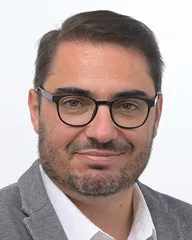
Lukas Sieper | Germany DE | Renew Europe (Renew) | 494 |
| 2 |
|
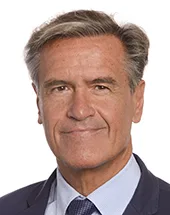
Juan Fernando López Aguilar | Spain ES | Progressive Alliance of Socialists and Democrats (S&D) | 463 |
| 3 |
|
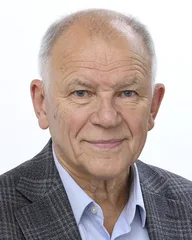
Sebastian Tynkkynen | Finland FI | European Conservatives and Reformists (ECR) | 460 |
| 4 |
|
João Oliveira | Portugal PT | The Left in the European Parliament (GUE/NGL) | 288 |
| 5 |
|
Vytenis Povilas Andriukaitis | Lithuania LT | Progressive Alliance of Socialists and Democrats (S&D) | 276 |
All Speeches (109)
Thank you. You're from Lega, right? Didn't your party kill a proposal in Italy to introduce 'only yes is yes' legislation for rape?
You said that the rule of law does not protect individual citizens, and that it aims to destroy freedom of expression, online particularly. I was wondering if you consider that freedom of expression should be extended to, for example, the 62 million visitors of online rape academies, or we might want to implement and enforce our European legislation against that sort of practice online – also part of the rule of law.
See, Mr László, that is the beauty of rule of law systems. When there is a suspicion, people are prosecuted, people are taken to court and an independent judge needs to make a decision. I would like to know how many convictions for corruption there have been in Orbán's circle in the last few years in Hungary, how fast and what the penalties were. And my information says there were not many. So yes, the clock is ticking for all of us, but we are here defending the institutions which we have, and I am very proud of that.
Mr President, thank you, Commissioner, dear colleagues, as you know, fairy tales have often inspired me when talking about Viktor Orbán here in this house; Orbán the evil queen stealing from the Hungarian people, Orbán as the emperor without clothes, and now Orbán sent to political never-ever-again land by his own people. I do feel bad giving Péter Magyar the same treatment, because I am really happy that he won a majority to clean up the mess, like Cinderella, but he also needs to move quickly before the clock strikes midnight – that will be tough. This Parliament does want European funds to flow back to Hungary to improve people's lives, their schools, their healthcare. For that to happen, we count on the new government to restore the rule of law and put an end to rampant corruption so that taxpayers' money can be spent safely and with accountability. The rule of law is no fairy tale. It is the only guarantee that the government treats you fairly, and the Hungarian people deserve their happy ending.
Dear Mr Schwab, you know how much I appreciate working together with you, usually in the context of the Conference of Delegation Chairs. Today, I would like to ask you about something else. I agree with you that we need to be better, more accountable to our citizens about the funds and the way that we use them. That's why I was wondering whether we could not work together on finally implementing the EU ethics body as the final instrument in the system of checks and balances, where we, the platform groups, including the EPP, can ensure that we have one extra layer of safety in the good management of funds.
Mr President, dear Commissioner, dear Minister, dear colleagues, Today I would like to focus on a horizontal responsibility which should guide every budgetary procedure in all of the institutions: gender budgeting. Gender equality is not optional. It is a core European value and a Treaty obligation. Our budgets must reflect that, and gender mainstreaming and gender budgeting should therefore be central to how Parliament and the Commission, but today Parliament, especially, accounts for public funds, especially our own spending. Yes, this Parliament has taken steps forward, but progress must be measurable and transparent. We need clear objectives, reliable monitoring and consistent implementation across all areas of our work, and this is why Parliament's action plan on gender mainstreaming should be made public. If we expect others to deliver on quality, we must lead by example ourselves. Colleagues, I hope that next year we will be able to assess the real impact of these efforts in this Chamber, open to the scrutiny of our citizens.
Protection of the European Union’s financial interests – combating fraud – annual report 2024 (debate)
Date:
27.04.2026 20:13
| Language: EN
Speeches
Mr President, Commissioner, it is a pity that Mr Zdechovský has already left, because I wanted to tell him that Renew Europe really values the cooperation within the platform when it comes to the rule of law and the protection of the Union's financial interests or our taxpayers' money. So I was actually quite shocked when I learned that the EPP had decided to team up with the far right on this one, especially on points where the far right has proven to be quite destructive. So I am wondering how it is possible that our Hungarian colleagues of Tisza would accept a text with very little recognition of the role of independent media in investigative journalism in the fight against corruption, after having seen how essential these media were to uncover Viktor Orbán's crony regime. And how is it possible that our Polish EPP colleagues would accept a text that does not sufficiently insist on the fundamental link between the financial interests of the Union and the rule of law, having been through the rule of PiS? So I believe this must be a mistake, I believe we can do better as a Parliament, and I believe you, colleagues, also believe that as well.
Importance of consent-based rape legislation in the EU (debate)
Date:
27.04.2026 19:05
| Language: EN
Speeches
It is a lie that this did not happen before. I am really sorry for your daughter, I have three, but I will tell you this: that story about a girl – she was not German. She was Spanish. She went to Italy. It was me. So, this happens and it happened already almost 20 years ago.
Importance of consent-based rape legislation in the EU (debate)
Date:
27.04.2026 19:03
| Language: EN
Questions
Mr Sell, if a German girl goes on holiday to Italy and she meets an Italian guy, and they decide that they want to have a nice time together, and they go to bed and, you know, she is feeling all right, but at some point he wants to do something that she does not want to do, but she freezes. Don't you want that German girl in Italy to be able to go to the police station the next morning – like she would be able to do in Germany – and not be treated as if she was not credible, not be asked why she went home with that guy, not be asked if she resisted? Wouldn't you want the same protection that that girl has in Germany in Italy?
Madam President, I should like to thank the Commissioner for his kind words and for his commitment again. Thank you to the Chair of the LIBE Committee, Mr Javier Zarzalejos, for the good cooperation, and when it has been necessary, also, the good advice. I would like to address some of the issues that have been raised by colleagues, because I acknowledge that, as I said in my opening statements, this directive could have been a bit more ambitious. But I don't like that we spread things that are not exactly true. This directive does cover Union officials. Union officials are residents of Member States. We live in Member States. We are political functionaries in a Member State, and in that sense we are covered by this law. I think it is important to say this, because it is the reality and it will make a difference in investigating and prosecuting corruption also at the European level. So I wanted to set that straight. I would also like to emphasise the need for fast and appropriate implementation by Member States. I truly hope that Member States do not choose an approach of the minimum common denominator, but that they go for the maximum allowed by this directive and that they are motivated in the transposition. I would also like to say the following: I am very happy as rapporteur to accept that not everyone is happy about the result. I appreciate that, particularly from colleagues who have engaged at every step of the way in these negotiations. But I would also like to say: if you didn't take the time to come to the table, don't come saying that this directive is not what it should be. That's something that we have heard today, and I really don't like that. I think that's not a courtesy to our citizens. I would like to say this: it has been said already, but our work is not done and it won't be done for a very long time. But nothing of value is easy. Jan, Daphne and so many others paid the high price. May their names be the last ones we need to remember in such a way. For them, and for all 450 million Europeans, we must go on. This directive will be the stepping stone to do so with confidence and determination.
Madam President, dear Commissioner, dear colleagues, tomorrow this Parliament will vote on a historic piece of legislation: a binding law to tackle corruption all around the European Union. A first. But not all of our citizens will get to celebrate. Journalist Daphne Caruana Galizia, who exposed corruption in Malta. Slovak investigative reporter Jan Kuciak and his fiancée Martina Kusnirova. The passengers on a bus on a road that was poorly maintained near Svoge, Bulgaria. The travellers, most of them students in their 20s, on trains near Tempi, Greece, running on tracks that were out of date. Those just waiting under a railway station canopy in Novi Sad, in Serbia. And without a doubt, so many more, maybe still unknown to most of us. All of them had hopes and dreams for their lives in Europe. But they are no longer among us as a result of corruption and fraud, sometimes at the highest level. And this is why this law matters. Corruption kills. It costs us billions. It hurts trust in our governments. It undermines our democracy and eventually, our Union. Because corruption, more and more intertwined with transnational international crime, does not understand borders and differences in legal provisions. That is why this law is necessary and urgent. Member States will need to evaluate their anti-corruption measures and update them where needed. They will have to develop strategies to combat and prevent corruption and include preventive measures. Authorities will get more time to investigate and prosecute corruption offences, and those offences will be punished in a more similar way across the EU, to avoid a race to the bottom. Judges will be able to apply higher, more deterrent penalties. But also, exactly because the stakes are so high and this subject is so important to so many of our citizens, I have to tell the honest story that this law could have been better. More ambitious, more hard-hitting, more in line with the wishes of this Parliament. Yes, all of that is true. And it was a tough fight. The national governments on the other side of the negotiating table did not make it easy. And at some point, I think all of us were afraid that this would slip through our fingers and be put on hold, with an uncertain future. But we pulled through. We all came back to the negotiating table. We talked, and most importantly, we listened to each other and we got a deal and a number of major wins. 'We' plural. Because yes, I am speaking here today as your rapporteur, as chief negotiator. But every major step forward in European history is, per definition, a collective effort. So let me use this moment to acknowledge the work of all those involved: my own team, Parliament staff, the LIBE Secretariat, the Legal Service, the lawyer-linguists, the interpreters whose life was not made easy by me switching from English to Spanish in the middle of a meeting without notice. And also the ambassadors of both Poland and Denmark and their teams, the European Commission, and in particular, Commissioner McGrath, for their role as honest broker. And above all, the team of shadow rapporteurs. You were committed and sharp, fierce in defending our mandate but willing to compromise where needed. And I am certain that our unity has been crucial in delivering the best possible result for our citizens. It was a pleasure and a privilege to work with you, and I thank you. The new anti-corruption directive will bring a Europe free of corruption a few steps closer. A safer Europe for journalists and travellers. A Europe where getting a job or a permit does not depend on your connection to people in high places. A Europe where citizens trust that their governments are looking out for them, instead of for themselves. So colleagues, help us achieve that Europe. I look forward to the debate.
European Citizens’ Initiative 'Ban on conversion practices in the European Union' (debate)
Date:
25.03.2026 19:39
| Language: NL
Speeches
Mr President, when it comes to trans people and specifically young people who want to use gender-affirming care, the far right is shouting murder and fire here that we must protect young people from something that would have been imposed on them from woke culture – we have just heard again. Today we are talking about therapy that does just that: imposing a worldview on young people. A therapy that we know harms young people, leads to suicide and leads to years of trauma, because ‘freedom of faith’. But no, because the faith of religious fanatics does not deserve freedom. What we don't accept for practices like female genital mutilation, we shouldn't accept for things like conversion therapy. That should be banned.
Activities of the European Ombudsman – annual report 2024 (debate)
Date:
12.03.2026 09:44
| Language: EN
Speeches
Madam President, colleagues, the Ombudsman – or Ombudswoman in this case, in the previous case – is one of the biggest fighters for transparency in our Union, and more specifically for the right to access public documents. She has rightly pointed out that the Commission President's deliberate deletion of text messages is a case of maladministration. I note in my conversations – and we have seen it very often in this Parliament – that this has given ammunition to the extremes to come up with all sorts of crazy conspiracy theories. This has unfortunately hurt trust in the EU enormously. President von der Leyen has to understand that citizens, civil society organisations and journalists exercising their right to transparency is not a threat; it is not a sign of mistrust that should be limited or thwarted. Proactive transparency is not a luxury. It is an opportunity, a necessity, to show our citizens how we make decisions, to involve them and to regain the lost trust, because cover-ups and half-truths rarely stand the test of time.
Situation of the rule of law in Greece, following the Court decision on Predator spyware (debate)
Date:
11.03.2026 19:47
| Language: EN
Speeches
Madam President, Commissioners, spyware is, in most cases, illegal, and we cannot say it loud enough or often enough. Greek judges have delivered some justice for this illegal use of spyware, and four people have been sentenced. That is real, it is tangible, and we should applaud it. But the fact remains that no high-ranking official in the Greek government has offered any democratic accountability. The fact remains that protection for journalists in Greece is still the worst in the EU. The fact remains that the Greek government keeps seeing civil society as a threat. The fact remains that it still possesses spyware to bully and intimidate journalists, as do other countries in the EU. I applaud the Greek judiciary, but this sentence is a fork in the road. Do we take the road towards real accountability for the use of spyware, or do we take this sentence as a pacifier and go back to sleep as if nothing happened?
Guidelines for the 2027 budget - Section III (debate)
Date:
10.03.2026 15:36
| Language: EN
Speeches
Mr President, dear colleagues, on behalf of the FEMM Committee, two days ago on 8 March, the world celebrated International Women's Day. Two hours ago, this Parliament did the same. Our timelines were full of marches and beautiful shows of solidarity and admiration for and from women, yes, but also thankfully from men. Men like our own Manfred Weber, who posted an inspiring video praising and celebrating women, saying the EPP won't stop being a champion for our rights and we act. So let's act. Colleagues, let's act together. Let's put our money where our mouth is. Let's ensure that the positive answer given by the European Commission, by Ursula von der Leyen herself, to the 'My Voice, My Choice' citizens' initiative does not remain a paper tiger. Let's ensure safe and accessible abortion for every woman in the EU so that, in the same words of Mr Weber, women are equally treated and have a fair chance in our societies. It should not be hard. Europe is watching.
Madam President, colleagues, I will try to strike a slightly different tone. Listen, we are a house of democracy, and we should have a lot of freedom to engage in also radical ways of calling for the attention of citizens for different subjects. But we have had already two plenary sessions when banners, including this one that we have seen today, have been hung without permission, infringing the Rules of Procedure of this House. And I will go into the message, because this banner that six or seven boys have hung out here is directed to intimidate and scare the women of this House and beyond. So I would like this House to take action, and the President to take action.
Recommendation to the Council on EU priorities for the 70th session of the UN Commission on the Status of Women (debate)
Date:
12.02.2026 09:47
| Language: NL
Speeches
No text available
Recommendation to the Council on EU priorities for the 70th session of the UN Commission on the Status of Women (debate)
Date:
12.02.2026 09:45
| Language: NL
Questions
No text available
Rule of law, fundamental rights and misuse of EU funds in Slovakia: the need for an EU response (debate)
Date:
11.02.2026 15:00
| Language: EN
Speeches
Madam President, dear colleagues, Europeans want a strong and united Europe in times of international turmoil – just like the majority of Slovaks do. However, Europe can only be as strong as our weakest link. And if we tolerate corruption running rampant in one of our European capitals, it weakens all of us. Corruption kills trust: trust between citizens and their governments, but also trust between our countries. And that is exactly what Robert Fico wants. Fico's government has abolished the national anti-corruption agency and shortened sentences for corruption. Yes, the number of prosecutions dropped by 70 %, but – breaking news – that's not because there is less corruption; it is simply not being investigated, let alone taken to court. So don't be fooled: corruption is only getting worse. The people in Slovakia deserve better, just like European taxpayers do. So it is our duty in this Parliament and the Commission to protect them both.
Madam President, madam Commissioner, dear President Costa, in the words of California Governor Gavin Newsom, it is time to buck up and have a backbone, and growing a backbone will take more than words, even though I do appreciate President von der Leyen saying yesterday in Davos, nostalgia will not bring back the old order. And that is why I would like to remind you and all of us in this House, that the United States is currently threatening Europe of getting rid of the visa-free travel to the US if we do not give them free access to our biometric police databases. And why on earth is the Commission going along with this? And why did the Member States approve a mandate to negotiate with the US on this in December, when we could all see the direction that things were taking? The Commission must put all negotiations on this matter on hold. We will not be blackmailed.
Pending approval of the Hungarian national plan for Security Action for Europe (SAFE) funding in light of persistent concerns around the allocation of public funding (debate)
Date:
20.01.2026 22:03
| Language: EN
Speeches
Madam President, colleagues, the days of Viktor Orbán at the head of possibly the most corrupt government in the EU are numbered. And so I guess he thinks that desperate times ask for desperate measures. And that must be exactly why Hungary has requested billions from Europe, this time from the SAFE loans programme, despite vowing – vowing! – to stay out of the same defence cooperation which SAFE aims to strengthen. It's just more taxpayers' money to get his hands on. And I get it: you do you, queen! But why on earth do the Council and the Commission think that it is a good idea to lend Orbán EUR 16 billion while he keeps rolling out the red carpet for Trump and for Putin – and that without any real improvements to the rule of law? So to me this is like a '6-7' situation where I really don't understand what's going on. So let me ask the Commission and let me ask the Council to be the adults in the room here, to do the right thing and not to lend any money to Orbán, to protect our safety and protect our budget.
Tackling AI deepfakes and sexual exploitation on social media by making full use of the EU’s digital rules (debate)
Date:
20.01.2026 10:27
| Language: EN
Speeches
Madam President, colleagues, we have heard many, many good things today, but I think that we have heard too little about enforcement and why it's taking us – why it's taking the Commission – so long sometimes to publish investigations, to come up with the fines, to enforce the rules that we already have in place. I wonder: might this have something to do with the threats that we're getting from some tech oligarchs in the United States and their protector in the White House – as has been said in this room today? I think that there are a lot of Europeans who are looking at us on this day, this week of all weeks, as the week of truth. What are we going to do as the European Parliament to break our tech dependency on the United States and claim not only our digital but our general sovereignty? I think this is the moment of truth, and I call on the Commission to take action swiftly in this domain and also other policy fields.
Framework for strengthening the availability and security of supply of critical medicinal products as well as the availability of, and accessibility of, medicinal products of common interest (debate)
Date:
19.01.2026 19:41
| Language: EN
Speeches
Madam President, what we are trying to do here is to guarantee supply of medicines for which inefficient supply would result in serious harm or risk of serious harm to patients. Now, let me remind you that there are a lot of women in Europe who are still not enjoying the right to safe and legal abortion, and this situation will only become worse if we do not include abortion medicines in the list of critical medicines. Please, when you are going to vote tomorrow to decide whether we do include these medicines in this list or not, think about friends, think about sisters, think about daughters. Think about what happened if they, for whatever reason, including medical reasons, needed an abortion and the medicines were not available. Do you think that there would be fewer abortions? No there won't. There will be more unsafe abortions with health risks and deaths as a result. Please reconsider your position.
Framework for strengthening the availability and security of supply of critical medicinal products as well as the availability of, and accessibility of, medicinal products of common interest (debate)
Date:
19.01.2026 19:27
| Language: EN
Questions
I was shocked to hear that, in trilogues, essential medication for women was simply dismissed as non‑essential – I am talking about abortion medication – and this while women in Europe still die today because of lack of access to safe abortion. Now, we could be solving this on a European level, and groups such as yours still refuse. Your party leader, Marine Le Pen, supported enshrining abortion as a fundamental right. So, I do expect you to vote tomorrow for the amendments which try to achieve this at European level. Could you confirm that you will do so?
European Democracy Shield – very large online platform algorithms, foreign interference and the spread of disinformation (debate)
Date:
18.12.2025 11:01
| Language: NL
Questions
No text available