

| Rank | Name | Country | Group | Speeches | |
|---|---|---|---|---|---|
| 1 |

|
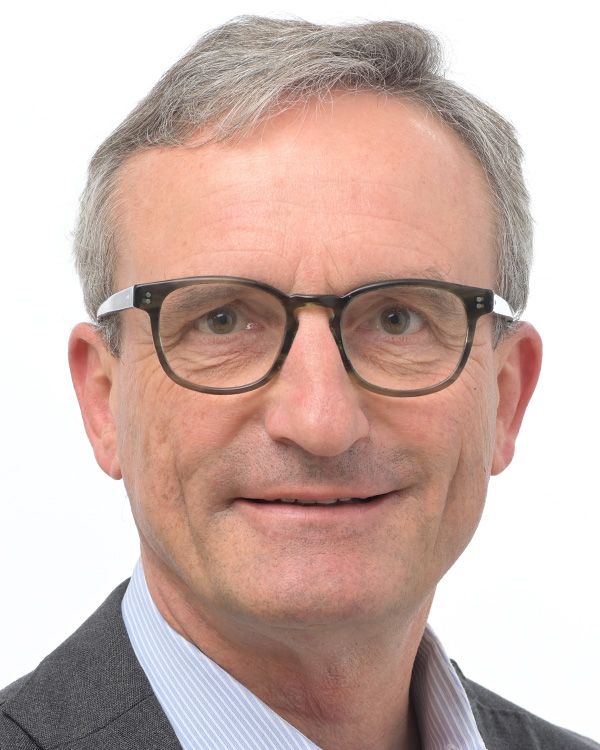
Lukas Sieper | Germany DE | Renew Europe (Renew) | 494 |
| 2 |

|
Juan Fernando López Aguilar | Spain ES | Progressive Alliance of Socialists and Democrats (S&D) | 463 |
| 3 |

|
Sebastian Tynkkynen | Finland FI | European Conservatives and Reformists (ECR) | 460 |
| 4 |

|
João Oliveira | Portugal PT | The Left in the European Parliament (GUE/NGL) | 288 |
| 5 |

|
Vytenis Povilas Andriukaitis | Lithuania LT | Progressive Alliance of Socialists and Democrats (S&D) | 276 |
All Speeches (40)
Russian energy phase-out, Nord Stream and the EU's energy sovereignty (debate)
Date:
21.05.2025 21:29
| Language: DE
Speeches
Mr President, Commissioner, ladies and gentlemen! The Commission's decision to end all gas purchases from Russia by 2027 is a very stupid decision. Firstly, because we are still dependent on natural gas for decades to come. The new German Minister for Economic Affairs has just announced the construction of new gas-fired power plants with a capacity of at least 20 gigawatts in order to ensure security of supply. Secondly, the alternatives are not attractive. Iran, Qatar and Azerbaijan might be ready as suppliers, but do they really prefer us to Russia? This is more likely to drive out the devil with the Beelzebub. Remains liquefied fracking gas from the USA: This is ecologically and climate-politically a disaster and would stipulate that energy in Europe will remain more than twice as expensive in the long run as in America. And thirdly, energy sovereignty It is likely to remain an illusion in Europe for the time being. And that is why the Commission should ensure a diversified gas supply portfolio, including Russian gas, of course, especially since we should not give up hope that the war in Ukraine will eventually – and hopefully soon – come to an end.
(Start of speech off mic) ... of the Rules of Procedure of this Parliament, I would like to raise the following point. A joint meeting of the LIBE, CONT and BUDG Committees took place on 13 May, during which two professors presented their views on the Smart Rule of Law Conditionality presented. In the debate on this subject, the representatives of the political groups first took the floor. I then spoke as a non-attached Member. The chair of the meeting, Mr Zarzalejos, refused me the right to ask questions and to speak, apparently also because of an intervention by the representative of the committee secretariat. I accepted his apology, of course. I would like to take this opportunity to remind you all, and in particular the Bureau of this Parliament and the Conference of Committee Chairs, that all Members of this House, whether they belong to a political group or not, must be able to exercise their rights and duties as freely elected Members.
The role of gas storage for securing gas supplies ahead of the winter season (debate)
Date:
07.05.2025 19:25
| Language: DE
Speeches
Mr President, Commissioner, ladies and gentlemen! If you look at the turbulence in the European gas markets, you can only say: Something like that comes from something like that. At the instigation of the European Commission, gas markets were liberalised, with the result that most long-term contracts, such as those with Norway, were dissolved. At the same time, the door and gate were opened to the producers. Gazprom was able to acquire the largest gas storage facility in Germany. And in the panic after the start of the war in Ukraine, traders and speculators in particular became rich, because the Commission's fill level specifications have led to the fact that gas prices have been bought at any price and, of all things, in the summer, gas prices have exploded. The regulation now proposed creates even more bureaucracy without solving the problem. We depend on natural gas. We can live with this as long as we have many different suppliers. And it is, of course, completely absurd to want to permanently exclude the most important, potent and cost-effective supplier – and that is Russia – from the market. Commissioner, this is really not a good idea.
The importance of trans-European transport infrastructure in times of stalling economic growth and major threats to Europe’s security (debate)
Date:
02.04.2025 18:19
| Language: DE
Speeches
Mr President, ladies and gentlemen, Commissioner! What is it called so beautiful? Nothing is so bad that it doesn't have its good. The war in Ukraine has led to fears of menace, which, although not subject to reasonable scrutiny, are at least sacrificing to it all sorts of principles that Europe has upheld for so long. Suddenly, for example, debts can be communitized. Soon Europe will be liable for armaments expenditures of financially weak member countries in the amount of 150 billion euros. And for the war-ready expansion of the transport infrastructure, three-digit billions are to be mobilized at once and all debt brakes are to be lifted. If you look at the condition of many roads, rails and bridges in Europe, that's probably not a bad idea. However, it is enough for trucks and freight trains to roll over to supply the internal market – tanks would rather not.
Madam President, ladies and gentlemen! You can, of course, play ‘Wish you something’. Europe is supplied exclusively with renewable energies, and in the dark we have an energy storage system in the form of green hydrogen that is available at all times. But this is probably an illusion, but at least future music. We need affordable energy today, here and now if we want to maintain the competitiveness of our industry. We will have to rely on natural gas for many years to come. Europe has no significant gas sources; This is why we depend on imports. Of course, the more diverse the gas sources are and the more pipelines and LNG terminals supply the European market, the lower this dependency will be. In this respect, an attack on import pipelines is an attack on Europe's security of supply. Politically motivated exclusion of certain gas sources drives energy prices even higher. Whoever, like Germany, procures long-term liquefied American fracking gas on behalf of Qatar, commits an ecological crime, acts against his economic interests and replaces the aggressor in Ukraine with Hamas's main financier for years. It would be better if we renounced this pseudo-morality.
One-minute speeches on matters of political importance
Date:
10.03.2025 21:30
| Language: DE
Speeches
Madam President, ladies and gentlemen, One thing President Trump has done: Europe is only talking about defence, armaments and weapons. The Commission President von der Leyen wants to spend 800 billion. to rearm Europeto arm Europe again. Even more worrying than the sheer sums, however, seems to me to be what the money is to be spent on. A study by armaments lobbyists from Germany with the distinctive name Sparta Now give information about it. It is about creating ‘asymmetrical superiority’. It is about ‘digital leadership superiority, intelligence and impact superiority, which should be immediately available and deployable in the short term’. Clearly, this has nothing to do with national defense. Nor with a balance of military forces, and even less with the structural non-aggression capability that NATO once posited for itself. Here the war as a means of politics is to be made courtable again. The European Union certainly did not receive the Nobel Peace Prize for this.
Establishing the Reform and Growth Facility for the Republic of Moldova (debate)
Date:
10.03.2025 20:40
| Language: DE
Speeches
Madam President, ladies and gentlemen, The EU wishes to provide the Republic of Moldova with EUR 2 billion in funding; The aim is to make the country fit for an upcoming EU accession. But who really wants to join? Moldova's population is deeply divided on this issue. In the referendum in November last year, the supporters of EU accession were able to assert themselves only very narrowly, namely due to the votes of the non-Moldovan foreign Moldavians. The people of Europe are not questioned about this. After all, a study was presented to us in Parliament's Committee on Budgets, according to which the inclusion of the three former Soviet republics of Moldova, Georgia and Ukraine would push the Union to the limits of its resilience. Without a dramatic increase in Member States' payment obligations or drastic cuts in the Common Agricultural Policy or the Cohesion Fund, this will not be possible. Ladies and gentlemen, in view of the already growing tendencies of division within the Union, we are endangering the future of our Union with these enlargement plans. We shouldn't do that.
Madam President, Commissioner! Dear colleagues! Do you know Karl Valentin's words? Hopefully it won't be as bad as it already is. I was thinking about this when I heard that Mrs von der Leyen announced an unprecedented reduction in bureaucracy with the Compass for Competitiveness. This is because it is deliberately concealed that it was Mrs von der Leyen's Commission that has been building up an unprecedented bureaucracy over the last five years. Her party friend Friedrich Merz – who wants to become chancellor in Germany – has apparently recounted: 13,500 regulations are the sole responsibility of this President of the Commission. Most of it, by the way, according to Mr Merz Pipifax. And it is precisely this Commission that is now to put an end to this. With permission, you make the goat a gardener. Those who believe this also believe that it is precisely the parties that have been running down Germany for 20 years that are bringing this country forward again. I don't.
EU financing through the LIFE programme of entities lobbying EU institutions and the need for transparency (debate)
Date:
22.01.2025 18:39
| Language: DE
Speeches
Madam President, Commissioner, ladies and gentlemen! When I first heard about this, I honestly couldn't believe it. The European Commission is paying its own lobbyists. In 2024 alone, more than 15 million euros were spent on lobbying organisations in a rather non-transparent process, apparently to provide an inclined backdrop for the Green Deal to create. I really wonder: What kind of commission is this that pays its own impetus, claqueure and lobbyists? But also: What are these for NGOs, i.e. non-governmental organisations, which are paid for by the Commission, i.e., in a way by the government? And what are we for parliamentarians if we grant funds that also serve our own manipulation? Dear colleagues, who Green Deal It should serve climate protection. Under this commission, it has become a multi-million dollar deal between the commission and a self-chosen environmental lobby, which also seems to rely on green rope groups themselves. For the sake of climate protection, but above all for the sake of political hygiene, this comradeship must be ended as soon as possible.
Uniting Europe against actors hostile to the EU: time to strengthen our security and defence (topical debate)
Date:
22.01.2025 13:38
| Language: DE
Speeches
Madam President, Commissioner, ladies and gentlemen! “Time to strengthen our defence” is the topic of this debate. And rearmament does indeed seem the Flavour of the Day Mr Kubilius would like to invest €500 billion in common defence, and there is a real competition for overbearing within NATO, according to the motto: Can it be a little more? I used to be happy with 2 percent. Mr Habeck of the German Greens is now demanding 3.5 per cent, and Mr Trump has now set the bar at 5 per cent of gross domestic product – also amid the cheers of the self-proclaimed AfD peace party. 5% would mean for most Member States that about half of the budget would be spent on weapons – this is obviously overstated. But perhaps this absurd discussion should give us reason to ask what Europe's strength really lies in. Let me remind you: The Iron Curtain did not fall because the West was militarily superior to the Soviet Union, it fell because our social model was more attractive and successful. This is what Europe should focus on. We do not want to be a armed military alliance, but a joint project for peace, freedom and prosperity.
Need to ensure swift action and transparency on corruption allegations in the public sector to protect democratic integrity (debate)
Date:
18.12.2024 19:14
| Language: DE
Speeches
Mr President! Commissioner, ladies and gentlemen! The reason for this item is the accusations made against former Commissioner Reynders. These are indeed serious, although, at least according to my research, they have not yet been conclusively proven. In this respect, the presumption of innocence also applies to Mr Reynders, which must also not be sacrificed to the need for swift action. It is true that Mr Reynders should have exercised that care during his term of office. As Commissioner for the Rule of Law, he was often very quick when it came to accusing unwelcome governments, such as those in Poland, Hungary or Slovakia, of alleged violations of the rule of law and undemocratic conduct. So you could say: That kind of thing comes from that kind of thing. But maybe a little less excitement would be appropriate or, right now at Christmas time, a little more mercy and humility. With this in mind, ladies and gentlemen, I wish you a merry Christmas.
Presentation by the President-elect of the Commission of the College of Commissioners and its programme (debate)
Date:
27.11.2024 10:46
| Language: DE
Speeches
Madam President, ladies and gentlemen! I fear that with the Commission that Mrs von der Leyen has put together, the importance of Europe will continue to decline. I am particularly concerned about the Commission's position on foreign and security policy. This is the responsibility of Ms Kallas and Mr Kubilius. They represent a foreign policy that is clearly directed against Russia. This may be understandable in terms of their history and the history of their countries of origin, but it is disastrous for Europe. Russia's president has attacked a neighboring country in violation of international law. This is reprehensible, but it must not be taken as an opportunity to permanently break down all bridges between the European Union and Russia, after all, the largest European country, and to make the trenches ever deeper. Instead of fuelling the war in Ukraine with more and more weapons and arming Europe more and more, a new Eastern policy of the European Union is needed, which overcomes the division of Europe and thus creates the conditions for Europe to still play a role in the concert of world powers. Europe must ensure peace in Europe. We cannot leave that to the United States of America.
General budget of the European Union for the financial year 2025 – all sections (debate)
Date:
22.10.2024 13:21
| Language: DE
Speeches
Mr President, Mr Minister, ladies and gentlemen! I have not been in this Parliament for a long time, but I have the impression that the same procedure always applies to the budget: The Commission puts forward a draft budget, the Council then puts it down a bit, and then Parliament comes, restores the Commission's draft and puts something on it here and there. I am not sure that this ritual really does justice to our responsibilities and our role as parliamentarians. It is regrettable enough that this Parliament does not have the right to introduce legislative initiatives itself and can only decide what is presented to it by the Commission. This makes it all the more important for Parliament to carry out its task of overseeing and supervising the Commission. And this cannot be about giving the Commission ever new competences and ever more resources. Rather, the principle of subsidiarity applies: The Commission should only take on the tasks that overwhelm the Member States, tasks that could not be carried out more closely, transparently and efficiently by the Member States, perhaps also their provinces and their municipalities. And we should be careful to ensure that Europeans' tax money is handled carefully and sparingly. I do not feel that these aspects have been sufficiently taken into account in this budget.
The crisis facing the EU’s automotive industry, potential plant closures and the need to enhance competitiveness and maintain jobs in Europe (debate)
Date:
08.10.2024 13:49
| Language: DE
Speeches
Madam President, Commissioner, ladies and gentlemen! It is true that the European automotive industry is in crisis. But before we want to save them now with protective tariffs and subsidies, we should also ask ourselves what we actually contributed to it ourselves. I am convinced: The ban on internal combustion engines from 2035, which was also passed in this House, was a big mistake. It is not the policy's job to ban technology. It is the task of politicians to create framework conditions that enable a climate-friendly future. This can be done, for example, by shifting the costs of climate change to those who cause it. Whether this ultimately means that only electric vehicles are on the road in traffic, or whether perhaps highly efficient combustion engines are being developed, we can confidently leave that to the market, consumers and companies. If we want to help the automotive industry, it is through clear and reliable framework conditions. Technology bans and bureaucratic micromanagement, on the other hand, do not help innovation or the competitiveness of the European automotive industry.
The devastating floods in Central and Eastern Europe, the loss of lives and the EU’s preparedness to act on such disasters exacerbated by climate change (debate)
Date:
18.09.2024 10:31
| Language: DE
Speeches
Madam President, ladies and gentlemen! The images of the destruction caused by the severe weather disasters in Romania, Poland, the Czech Republic, Hungary and Austria have all moved us. Many people have lost everything. Basements need to be pumped out, houses and buildings need to be rebuilt, roads, rails, bridges - the damage to them needs to be repaired. Above all, fast and unbureaucratic help is now important. Experience has shown that it works well in cooperation between neighbouring European states and fire brigades, emergency services, technical aid agencies, and, where necessary, the military. Of course, the European Solidarity Fund also has a role to play here. But if the funds cover only a small fraction of the damage and, above all, if they are paid only when the damage has been quantified in detail and when the damage has been verified by the European Commission, then, as they say, it will happen. Too little too late. In this respect, let us urge that these funds be used more effectively and efficiently in the future!